Understanding 好, 不好, and 好不好 in Chinese
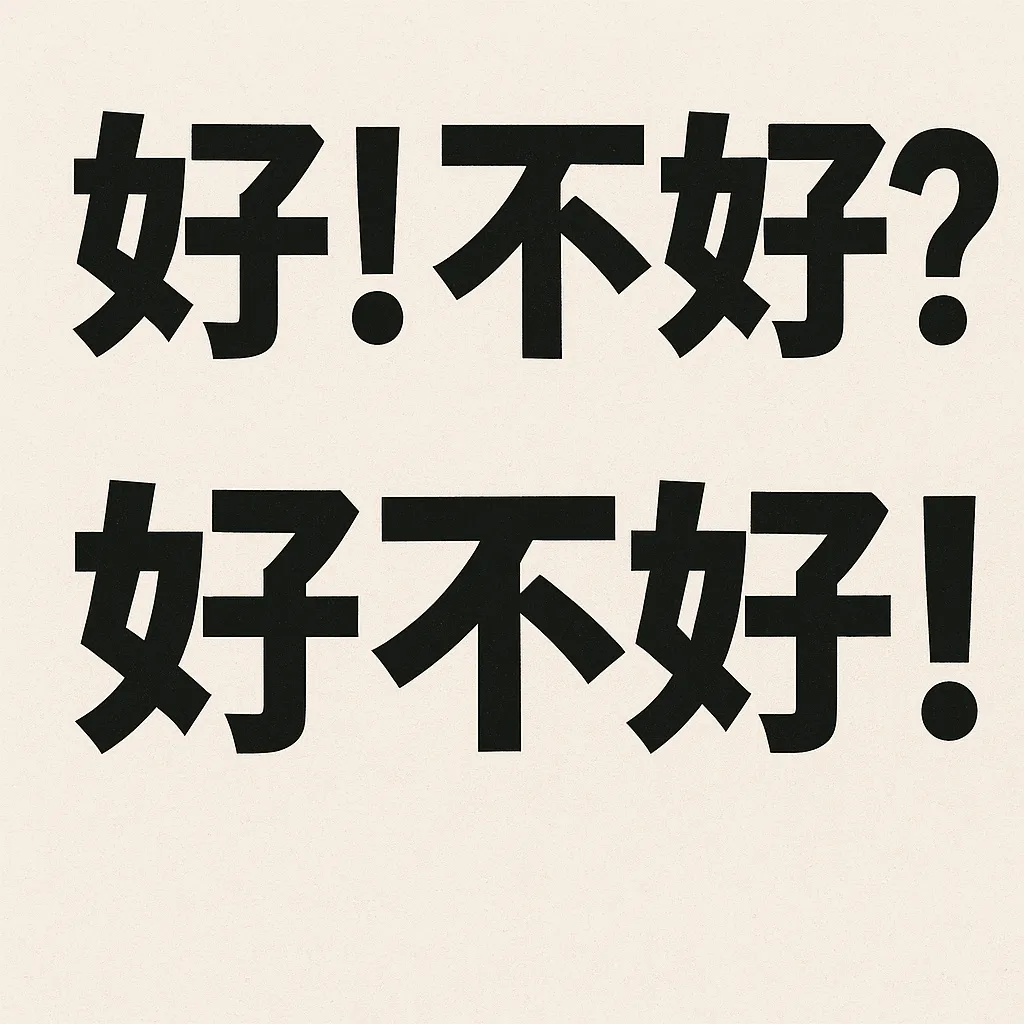
When learning Chinese, three of the most fundamental expressions are 好 (hǎo), 不好 (bù hǎo), and 好不好 (hǎo bù hǎo). These simple words are used in everyday conversation to express agreement, disagreement, questions, and suggestions. Understanding their usage will make your Mandarin more natural and conversational.
1. 好 (Hǎo) – “Good / OK / Agree”
好 is one of the most versatile words in Chinese. It can mean “good,” “well,” “fine,” or simply “okay” depending on the context.
Common Uses● Agreeing:
Chinese: 好,我去帮你。
Pinyin: Hǎo, wǒ qù bāng nǐ.
English: Okay, I’ll help you.
● Describing quality:
Chinese: 这个菜很好吃。
Pinyin: Zhè ge cài hěn hǎo chī.
English: This dish is very delicious.
● Polite responses:
Chinese: 好,谢谢你!
Pinyin: Hǎo, xièxiè nǐ!
English: Okay, thank you!
好 is flexible and can be used as an adjective, adverb, or interjection.
2. 不好 (Bù hǎo) – “Not Good / Bad / Disagree”
不好 literally means “not good.” It’s used to express that something is unsatisfactory, unpleasant, or incorrect.
Common Uses● Describing negative quality:
Chinese: 天气不好。
Pinyin: Tiānqì bù hǎo.
English: The weather is not good.
● Expressing disagreement or refusal politely:
Chinese: 不好,我不去。
Pinyin: Bù hǎo, wǒ bù qù.
English: Not okay, I won’t go.
不好 is straightforward and often paired with situations, feelings, or objects that are undesirable.
3. 好不好 (Hǎo bù hǎo) – “Is it OK? / Alright?”
好不好 is a common phrase used to form polite questions or suggestions. It’s equivalent to asking “Is it okay?” or “Shall we…?” in English.
Common Uses● Making suggestions:
Chinese: 我们一起去看电影,好不好?
Pinyin: Wǒmen yīqǐ qù kàn diànyǐng, hǎo bù hǎo?
English: Let’s go watch a movie together, okay?
● Seeking agreement:
Chinese: 你帮我一下,好不好?
Pinyin: Nǐ bāng wǒ yīxià, hǎo bù hǎo?
English: Can you help me for a moment, okay?
● Friendly confirmation: Often used at the end of sentences to soften a request or make it polite.
好不好 combines 好 and 不好 in a yes/no question, giving the listener an easy choice: agree (好) or disagree (不好).
4. Additional Tips for Usage
Tone matters:● Saying 好 with enthusiasm shows excitement.
● 不好 can sound harsh if not softened with polite language.
● 很好 (hěn hǎo) – very good
● 不太好 (bù tài hǎo) – not very good
● 可以吗?(kěyǐ ma?) – can also be used instead of 好不好 in casual requests
● 好 and 不好 can describe objects, situations, or feelings.
● 好不好 is always used in questions or suggestions.
Conclusion
Learning 好, 不好, and 好不好 is essential for basic Chinese communication. These simple words allow you to agree, disagree, describe situations, and politely ask for confirmation.
Practice using them in daily conversations—whether agreeing with friends, describing how you feel, or asking someone politely if something is okay. Mastering these expressions will make your Mandarin sound natural and friendly.