What is the Chinese currency called?

China has the world’s second largest economy and Chinese money plays an increasingly important role in global financial transactions. That said, there's still a great deal of confusion when it comes to Chinese currency. Even the question of what to call Chinese money can be puzzling.
Read on to discover the different between Chinese renminbi (RMB) and yuan (CNY) and learn to talk about China’s currency in both English and Chinese.
At first glance, the question seems simple. Most countries have one clear name for their currency: the US dollar, the euro, the Japanese yen. China, however, appears to have two commonly used names for its money, which often leads to uncertainty among travelers, students, business professionals, and even seasoned investors.
You might hear people say “yuan” when discussing prices inside China, while international financial news frequently refers to the “renminbi.” On currency exchange boards, you will often see the abbreviation CNY, yet in economic reports, RMB is just as common. This mix of names and abbreviations raises a natural question: are these different currencies, or simply different ways of referring to the same thing?
The short answer is that renminbi and yuan are closely related, but they are not identical in meaning. Understanding the distinction requires looking at how China names its currency at both the official and everyday levels, as well as how it is represented in international finance.
In simple terms, renminbi (人民币) is the official name of China’s currency, while yuan (元) is the basic unit of that currency. This relationship is similar to how “pound sterling” refers to the British currency system, while “pound” is the unit people use in daily life. However, because English speakers are not always familiar with this distinction, the terms often get mixed together.
This confusion is not just academic. It affects how people read exchange rates, understand bank statements, talk about prices in China, and even how they describe money when learning Chinese. For anyone planning to travel, study, work, or do business in China, knowing the correct terminology can prevent misunderstandings and make communication far smoother.
In the sections that follow, we will break down what renminbi, yuan, RMB, and CNY actually mean, how they are used in real-life situations, and how to talk about Chinese money naturally in both English and Chinese. By the end, you’ll be able to recognize which term to use and when, without second-guessing yourself at the exchange counter or in conversation.
RMB or CNY?

Why are there two names for Chinese money? Does China have two different currencies? What is the difference between RMB (renminbi) and CNY (Chinese yuan)?
There is, in fact, very little practical difference between the terms RMB (renminbi) and CNY (Chinese yuan), and you will often hear these two words used interchangeably. In every day vernacular, RMB and CNY are the exact same thing.
If you ask an economist, however, they will tell you that these terms are actually somewhat different. It comes down to the difference between currency and units of currency.
The word renminbi came into use the same year the People’s Republic of China was founded, in 1949. The word yuan, however, is much older, and was originally used to refer to the silver coins that European merchants used to trade with Chinese merchants almost 500 years ago.
For most people, especially travelers and casual learners, this distinction rarely matters in daily life. When you pay for a meal, check a price tag, or withdraw cash from an ATM in China, the amount is usually quoted in yuan, even though the official currency name remains renminbi. This is why you might hear locals say “ten yuan” or “fifty yuan,” rather than “ten renminbi.”
In international contexts, however, terminology becomes more formal. RMB is commonly used to describe China’s currency as a whole, especially in discussions about monetary policy, foreign exchange reserves, and global trade. CNY, on the other hand, is the official ISO currency code used in banking systems, exchange platforms, and financial software worldwide. In this sense, CNY functions much like USD for the US dollar or EUR for the euro.
This explains why exchange rate boards typically list USD/CNY, while news articles may discuss the strength or weakness of the RMB. They are referring to the same currency, but from different angles: one technical and standardized, the other more descriptive and institutional.
From a linguistic perspective, the distinction also mirrors how Chinese people themselves talk about money. In Chinese, 人民币 (rénmínbì) emphasizes the idea of “the people’s currency,” reflecting its political and historical roots. 元 (yuán), meanwhile, is the counting unit, used naturally in everyday speech, just like “dollars” or “pounds” in English.
Understanding this difference helps clear up a common misconception: China does not have two separate currencies. Instead, it has one currency with different names depending on context, audience, and level of formality. Once you grasp this framework, the apparent confusion around RMB, CNY, and yuan starts to make much more sense.
How do people in China refer to their money?
If you find the difference between currency and units confusing, it might seem like a good idea to figure out which word for money is most popular in China and use that one.
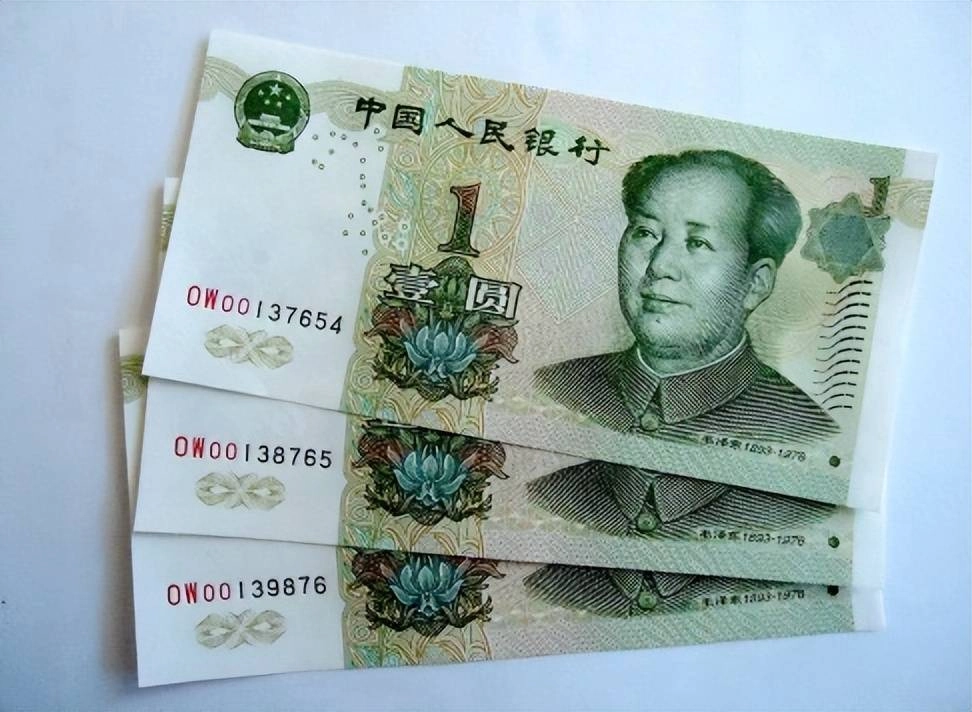
Unfortunately, however, neither the word “yuan” nor the word “renminbi” is commonly used in China. Instead, most people in China refer to their money as “kuài” (块).
For example, if you go to buy a steamed dumpling for breakfast and ask how much it costs, the vendor might respond, “yī kuài” (一块), by which he or she means that it costs one yuan. Kuai is actually a Chinese measure word which is commonly used in many different contexts to mean “one piece.”
This is why you may also hear vendors in China say that something costs “yī kuài qián” (一块钱). Since “qián” means “money,” if translated literally, “一块钱” means that your steamed bun costs “one piece of money.”
Referring to yuan as “kuai” in China is similar to the way that Americans refer to US dollars as “bucks.”
For learners of Chinese, this can be one of the most surprising discoveries. Textbooks often teach prices using yuan, but real-life conversations sound quite different. In markets, restaurants, taxis, and small shops, kuai is the default term, and using it instantly makes your Chinese sound more natural and less “textbook.”
This informal usage is deeply embedded in everyday speech. While renminbi sounds official and institutional, and yuan feels neutral and standard, kuai is casual, fast, and practical. It reflects how people actually think about money in daily transactions, especially when dealing with small amounts.
It is also worth noting that kuai is typically used for whole yuan amounts. When prices involve decimals, Chinese speakers often switch terms. For example, máo (毛) or jiǎo (角) may be used for tenths of a yuan, while fēn (分), though still recognized, is becoming increasingly rare in spoken Chinese. This flexible system can seem confusing at first, but it becomes intuitive with exposure.
From a cultural standpoint, this habit shows how language evolves around convenience rather than formal correctness. Just as English speakers rarely say “United States dollars” in casual conversation, Chinese speakers rarely say “renminbi” when buying breakfast. Using kuai signals familiarity with daily life and helps bridge the gap between classroom Chinese and street-level communication.
For anyone planning to live, study, or travel in China, understanding this distinction is more than a vocabulary lesson. It is a small but powerful step toward sounding natural, being understood instantly, and feeling more at ease in everyday interactions.
Does China still accept cash?
Learning how to talk about and identify the numbers on China’s money is important, but if you have been following the news about the rise of mobile payments in China, you might wonder if it will even be necessary for you to use physical Chinese renminbi while in the country.

If you aren’t quite sure how to use Chinese mobile payment platforms, you’ll be pleased to know that China does still accept cash. However, it is important to recognize that although physical bills are still very much in circulation in China, mobile payment options such as WeChat Pay and Alipay are becoming more and more common.
It is even possible to spend an entire day paying for everything with a smartphone instead of cash. Even the owners of small vegetable stalls in traditional wet markets accept mobile payments.
For many visitors, this is one of the most surprising aspects of daily life in China. In large cities especially, mobile payments are not just a convenience but the default method for almost every transaction. Ordering coffee, paying for public transportation, splitting a restaurant bill with friends, or buying fruit on the street can all be done with a quick scan of a QR code.
That said, cash has not disappeared. Legally, merchants in China are still required to accept physical renminbi, and cash remains an important option for older residents, rural areas, and situations where mobile payment access is limited. You will still see paper bills used in taxis, smaller shops, and local businesses, even if they are no longer the first choice for many people.

The practical reality is that China operates in a hybrid system. Mobile payments dominate everyday life, but cash acts as a reliable backup. For travelers who are unfamiliar with Chinese payment apps or who face difficulties linking foreign bank cards, carrying some cash can provide peace of mind, especially during the first few days in the country.
Understanding this balance also helps set realistic expectations. While it is entirely possible to live “cash-free” in China for extended periods, doing so usually requires advance preparation, such as setting up mobile payment apps and verifying your identity. Without that setup, cash remains a useful and accepted alternative rather than a relic of the past.
In short, learning how to recognize Chinese banknotes and talk about prices is still worthwhile. Even in one of the world’s most digitally advanced payment environments, physical renminbi continues to play a supporting role in everyday transactions.
How much cash should I bring to China?

If you are traveling to China for the first time, you might be wondering whether or not to bring any cash.
Legally, you are permitted to bring 20,000 CNY, 5,000 USD or the equivalent in other foreign currencies into China with you when you come. Since this number can sometimes change, be sure to check to make sure this is still the case before you travel.
While these legal limits define the maximum amount you can carry, they do not necessarily reflect how much cash you actually need for daily life in China. For most travelers, bringing the maximum amount is unnecessary and often impractical.
In reality, many visitors find that a relatively small amount of cash is sufficient, especially if they plan to rely primarily on mobile payments or international bank cards where accepted. Cash is most useful during your first few days, when setting up payment apps, purchasing small items, or handling situations where digital payments are inconvenient.
It is also worth considering how you plan to exchange money. Exchanging foreign currency at major Chinese banks is possible, but the process can be time-consuming and may require a passport and additional paperwork. For this reason, some travelers prefer to arrive with a modest amount of Chinese yuan already exchanged, rather than converting everything after arrival.
Security is another factor. Carrying large amounts of cash is generally unnecessary and increases the risk of loss or theft. Instead, spreading your funds across different payment methods, such as a combination of cash, bank cards, and mobile payments, offers greater flexibility and peace of mind.
Ultimately, the ideal amount of cash depends on your travel style, destination, and comfort with digital payment systems. Bringing some cash is still a smart move, but in modern China, it serves more as a backup than your primary way of paying for everyday expenses.
Don’t spend it all in one place!

Using a new currency in an unfamiliar country can feel exciting and even a little adventurous. Still, before you start spending freely, it’s important to pause and understand what those prices really mean in your home currency. A quick mental conversion can help you avoid surprises at the end of the day.
China’s currency has strengthened against the US dollar in recent years, and as a result, China is no longer the bargain destination it once was in many people’s minds. While some things remain affordable, prices in major cities can be comparable to those in other global urban centers.
Once you have some renminbi in your wallet, take a moment to really look at it. Notice the design, think about the history behind it, and consider how one currency can be known by so many different names. From renminbi and yuan to kuai, RMB, and CNY, China’s money tells a story not just about value, but about language, culture, and change.
FAQ
Q: What is the official currency of China?
A: The official currency of China is the renminbi (RMB). It is the legal tender issued by the People’s Bank of China and used throughout the country.
Q: Is RMB the same as CNY?
A: Yes. RMB (renminbi) and CNY (Chinese yuan) refer to the same currency in practice. RMB is the name of the currency, while CNY is the official ISO currency code used in international banking and exchange rates.
Q: What is the difference between renminbi and yuan?
A: Renminbi is the name of China’s currency system, while yuan is the basic unit used to count money. In daily life, prices are usually quoted in yuan rather than renminbi.
Q: Why do Chinese people say “kuai” instead of yuan?
A: In everyday spoken Chinese, people commonly use “kuai” (块) to refer to yuan. It is an informal term, similar to how Americans say “bucks” instead of dollars.
Q: Does China still accept cash?
A: Yes. Cash is still legal tender and must be accepted in China. However, mobile payment methods like WeChat Pay and Alipay are far more commonly used in daily transactions, especially in cities.
Q: How much cash can I bring into China?
A: Travelers are generally allowed to bring up to 20,000 CNY, 5,000 USD, or the equivalent in other foreign currencies into China. Since regulations can change, it is best to confirm the latest limits before traveling.