Decoding the Chinese Family Tree
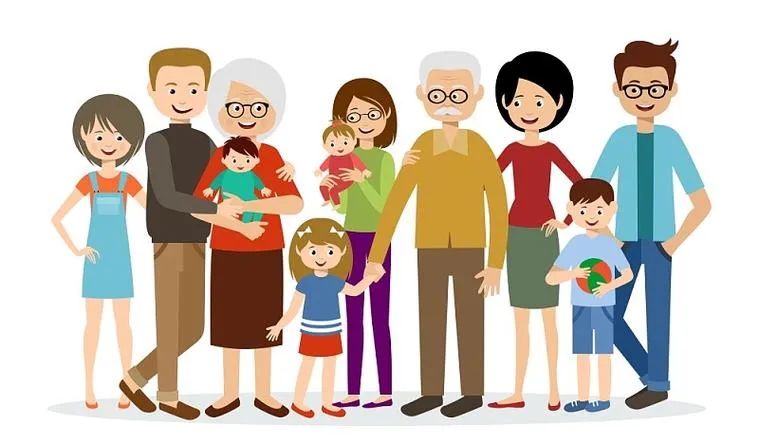
Table of Contents
China is widely regarded as one of the world’s most family-oriented societies, and this deep-rooted emphasis on kinship is woven directly into the Chinese language itself. Unlike English, Chinese uses highly specific terms to address family members, with distinctions based on age, gender, generation, and even whether relatives come from the maternal or paternal side. In this article, we’ll unpack the vocabulary, grammar, and cultural logic behind the Chinese family tree, helping you make sense of what can initially feel like a linguistic labyrinth.
Family in Chinese Culture: More Than Bloodlines
Family traditions in China are both intricate and enduring, shaped by centuries of social values while gradually adapting to modern life. To truly understand the famously detailed system of Chinese kinship terms and grammatical rules, known collectively as 家谱 (jiāpǔ), it’s essential to first appreciate the central role family plays in Chinese society.
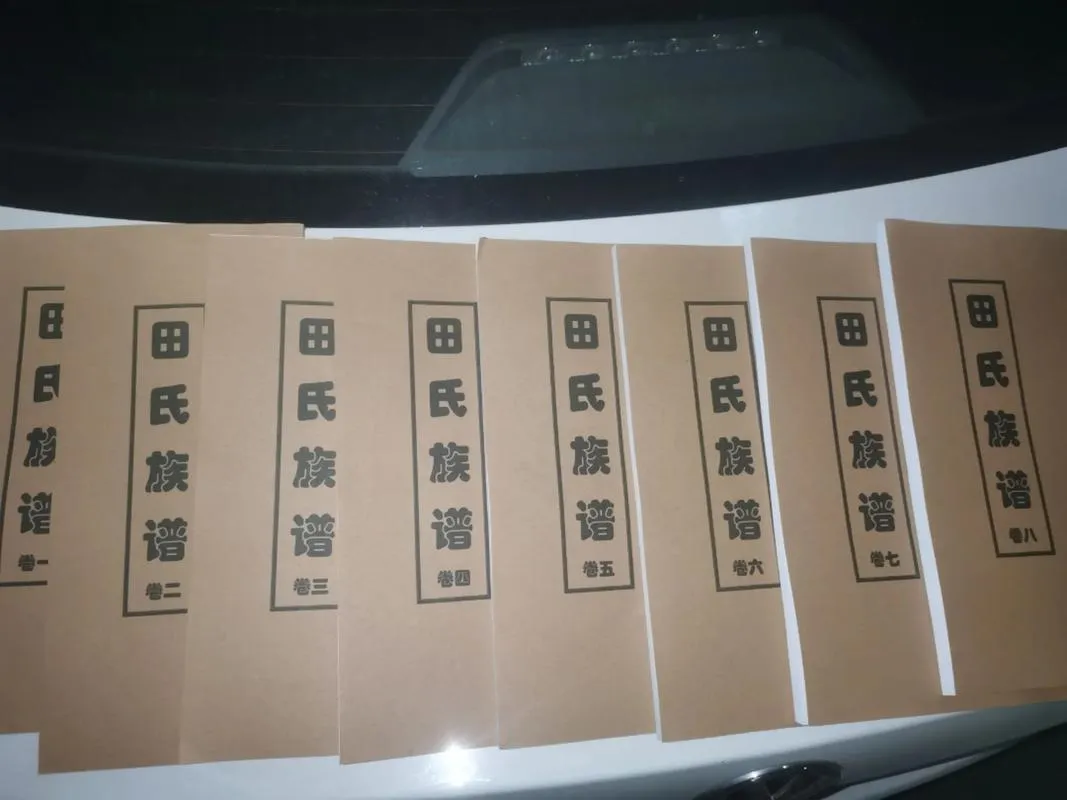
Historically, the family was not just a private unit but a core social institution that defined identity, hierarchy, and responsibility. Respect for elders, clear generational order, and clearly defined roles within the household all influenced how people spoke to and about their relatives. These cultural priorities gave rise to a kinship system so precise that a single English word like "uncle" can correspond to several entirely different terms in Chinese.
By understanding this cultural foundation, the structure of the Chinese family tree begins to feel less overwhelming and more like a carefully organized map of relationships, one that reflects how Chinese society understands respect, belonging, and continuity across generations.
Confucianism: The Philosophical Backbone of Family in China

To understand traditional Chinese culture, most learners eventually arrive at Confucianism, one of China’s oldest and most influential systems of thought. This philosophy was established by 孔子 (Kǒngzǐ, known in the West as Confucius), a philosopher and educator who lived during the 6th to 5th centuries BCE. His ideas were later preserved, refined, and widely spread by generations of devoted followers.
At its core, Confucianism is built around a framework of moral principles and social values, known in Chinese as 伦理 (lúnlǐ). These principles emphasize proper behavior, ethical relationships, and social responsibility. Central to Confucian thought is the belief that the family is the fundamental building block of society.
Confucius argued that harmony within the family arises from clearly defined roles and a well-ordered hierarchy, where each person understands their responsibilities and obligations. When families function smoothly under this structure, harmony naturally extends outward, fostering stability within communities and ultimately contributing to peace and order across the entire nation.
Filial Piety and Family Hierarchy in Traditional China
In traditional Chinese society, it was common for large, multi-generational families to live together, often sharing a single household. These extended family structures were governed by a clearly defined hierarchy rooted in the concept of 孝顺 (xiàoshùn), usually translated as “filial piety.” More than simple respect, 孝顺 represents a core moral ideal that includes loyalty to one’s family, obedience to elders, lifelong care for parents, and reverence for ancestors.
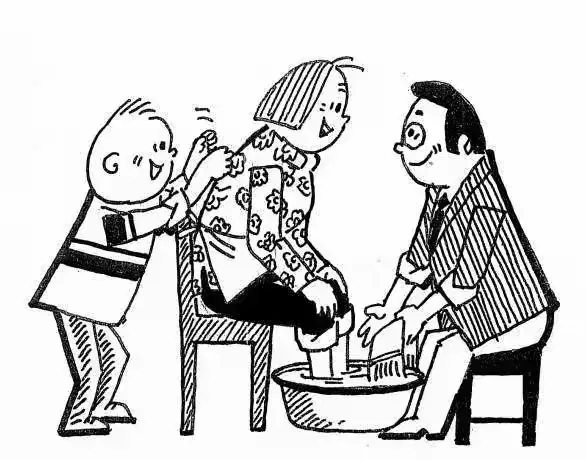
Under Confucian influence, younger family members were expected to follow their parents’ guidance without dispute, seek elders’ approval before making major life choices, and remain committed to supporting their parents well into old age. Respect was not optional but seen as a moral duty essential to personal virtue.
Traditional family hierarchies also placed significant authority in the hands of fathers and husbands, who were regarded as the heads of the household. Women and children were expected to defer to them, reinforcing a patriarchal structure that mirrored Confucian ideals of order and stability.
Confucianism taught that social harmony depended on everyone fulfilling their assigned role within a structured network of relationships, such as father and son, husband and wife, and elder and younger. When each role was respected and each responsibility carried out, both the family and society at large were believed to function smoothly.
This deep emphasis on hierarchy and role-based relationships is embedded directly into the Chinese language itself. The remarkable precision of Chinese kinship terms reflects these distinctions, assigning different words to relatives based on age, gender, and family side, a topic explored further in the sections on Chinese family vocabulary.
How to Address Family Members in Chinese
Because family ties sit at the very heart of Chinese society, the language used to describe relatives is remarkably precise. What may feel simple in English quickly becomes more detailed in Chinese, where every relationship is carefully named and clearly defined.
In English, we usually distinguish family members by generation and, sometimes, by gender. Whether someone is related to us through our mother or our father rarely affects the word we use. An “aunt,” for example, can be your mother’s sister, your father’s sister, or even the wife of an uncle, all under the same label.
Chinese takes a very different approach. Kinship terms change depending on multiple factors, including whether a relative comes from the maternal or paternal side, whether the connection is by blood or marriage, and whether the person is older or younger than the parent in question. As a result, there isn’t just one word for “aunt,” but several, each pointing to a very specific family role.
When talking about family in Chinese, clarity is essential. Speakers are expected to identify relationships as precisely as possible, reflecting the importance placed on lineage, hierarchy, and respect. These distinctions are not linguistic trivia; they mirror deeply rooted cultural values surrounding family structure and social order.
Using the correct term of address is widely seen as a sign of good manners and cultural awareness. Conversely, calling a family member by the wrong title can come across as careless or even disrespectful. Learning how to talk about family members in Chinese, therefore, is not just a vocabulary exercise—it’s a window into how family relationships are understood, valued, and maintained in Chinese culture.
Talking about immediate family in Chinese
Let’s begin by learning the terms of address for the basic family unit. Happily, these are relatively straightforward in Mandarin.
Vocabulary for immediate family
| 汉字 | Pīnyīn | English |
|---|---|---|
| 母亲 | mǔqin | mother (formal) |
| 妈妈 | māma | mom (informal) |
| 父亲 | fùqin | father (formal) |
| 爸爸 | bàba | dad (informal) |
| 妻子 | qīzi | wife (formal) |
| 老婆 | lǎopo | wife (informal) |
| 丈夫 | zhàngfu | husband (formal) |
| 老公 | lǎogōng | husband (informal) |
| 哥哥 | gēge | older brother |
| 姐姐 | jiějie | older sister |
| 弟弟 | dìdi | younger brother |
| 妹妹 | mèimei | younger sister |
| 儿子 | érzi | son |
| 女儿 | nǚ'ér | daughter |
Talking about extended family in Chinese
When discussing extended family members—collectively known in Chinese as 亲戚 (qīnqi), or “relatives”—the terminology quickly becomes more intricate. Unlike immediate family, extended kinship terms in Chinese are carefully organized to reflect generation, lineage, and marital ties.
To make this complexity easier to navigate, it’s helpful to group these terms by generation. This approach mirrors how family relationships are traditionally understood and discussed in Chinese culture.
Let’s begin at the top of the family tree with elders. This group includes grandparents as well as others of the same generational standing, such as parents-in-law. These senior family members occupy a position of particular respect, and the language used to address them reflects their elevated status within the family hierarchy.
Vocabulary for grandparents and older relatives
| 汉字 | Pīnyīn | English |
|---|---|---|
| 奶奶 | nǎinai | paternal grandmother |
| 爷爷 | yéye | paternal grandfather |
| 外婆 | wàipó | maternal grandmother |
| 外公 | wàigōng | maternal grandfather |
| 公公 | gōnggong | husband's father (father-in-law) |
| 岳父 | yuèfù | wife's father (father-in-law) |
| 婆母 | pópo | husband's mother (mother-in-law) |
| 岳母 | yuèmǔ | wife's mother (mother-in-law) |
As mentioned earlier, traditional Chinese society viewed marriage as a process in which a woman left her natal family and became part of her husband’s household. This long-standing belief is encapsulated in the expression 嫁出去 (jià chūqù), literally meaning “to marry out.”
This way of thinking is embedded directly in the Chinese language, especially in the terms used to address grandparents on the maternal side. Maternal grandparents are called 外婆 (wàipó, maternal grandmother) and 外公 (wàigōng, maternal grandfather). Both terms include the character 外 (wài), meaning “outside.”
The presence of 外 reflects the traditional notion that relatives on the mother’s side are considered “external” to the core family line, which was historically defined through the father’s bloodline. Rather than being members of the patrilineal household by birth, maternal relatives were understood as connected through marriage. This linguistic distinction offers a clear window into how ideas about lineage, gender roles, and family structure shaped everyday speech in traditional China.
With that foundation in mind, we can move down the family tree to aunts and uncles—a category where Chinese kinship terms become especially detailed and, for learners, famously tricky.
Vocabulary for aunts and uncles
| 汉字 | Pīnyīn | English |
|---|---|---|
| 伯伯 | bóbo | dad's older brother |
| 叔叔 | shūshu | dad's younger brother |
| 姑夫 | gūfu | dad's older sister's husband |
| 姑夫 | gūfu | dad's younger sister's husband |
| 舅舅 | jiùjiu | mom's older or younger brother |
| 姑妈 | gūmā | dad's older sister |
| 姑姑 | gūgu | dad's younger sister |
| 伯母 | bómǔ | dad's older brother's wife |
| 婶婶 | shěnshen | dad's younger brother's wife |
| 姨妈 | yímā | mom's older sister |
| 阿姨 | āyí | mom's younger sister |
| 舅母 | jiùmu | mom's brother's wife |
| 姐夫 | jiěfu | older sister's husband |
| 妹夫 | mèifu | younger sister's husband |
| 嫂子 | sǎozi | older brother's wife |
| 弟妹 / 弟妇 | dìmèi / dìfù | younger brother's wife |
It’s worth noting that although China’s one-child policy (1979–2016) dramatically reduced the number of families with multiple children, siblings have by no means disappeared from Chinese family life. Blended families, rural households, and families formed before or after the policy mean that you may still encounter people with several brothers and sisters.
When there are multiple aunts or uncles who share the same familial role, Chinese speakers distinguish between them by adding ordinal numbers in front of the kinship term. Common prefixes include 大 (dà, eldest), 二 (èr, second), 三 (sān, third), and so on. For instance, 二姨 (èr yí) refers specifically to the second eldest sister on one’s mother’s side. This numbering system helps clarify both birth order and relative seniority, which are culturally important in Chinese family relationships.
With aunts and uncles sorted, we can now turn our attention to cousins—an area where Chinese kinship terms become even more precise and revealing of family structure.
Vocabulary for cousins
| 汉字 | Pīnyīn | English |
|---|---|---|
| 堂兄 | tángxiōng | older male cousin on dad's side |
| 堂弟 | tángdì | younger male cousin on dad's side |
| 堂姐 | tángjiě | older female cousin on dad's side |
| 堂妹 | tángmèi | younger female cousin on dad's side |
| 表哥 | biǎogē | older male cousin on mom's side; sometimes also older male child of dad's sister |
| 表弟 | biǎodì | younger male cousin on mom's side; sometimes also younger male child of dad's sister |
| 表姐 | biǎojiě | older female cousin on mom's side; sometimes also older female child of dad's sister |
| 表妹 | biǎomèi | younger female cousin on mom's side; sometimes also younger female child of dad's sister |
Looking at the vocabulary list above, you may notice that the character 堂 (táng) is typically used for cousins on the paternal side of the family, while 表 (biǎo) generally refers to cousins related through the maternal line. That said, usage is not entirely uniform. In some families and regions, 表 (biǎo) is also used for the children of female relatives on the paternal side, rather than 堂 (táng). These subtle variations offer yet another glimpse into how traditional Chinese distinctions between patrilineal and matrilineal bloodlines continue to shape everyday language.
Despite the highly specific terminology available for cousins, real-life usage is often more relaxed. It’s very common, especially among children and young adults, to refer to cousins simply as “brother” or “sister” using 哥哥 (gēge), 弟弟 (dìdi), 姐姐 (jiějie), or 妹妹 (mèimei), based on relative age and gender rather than strict genealogical position.
This habit is widely seen as a legacy of the one-child policy, which left many only children without siblings and encouraged cousin relationships to take on a sibling-like role. At the same time, it reflects a deeper cultural emphasis on family closeness and unity, echoing earlier eras when large extended families commonly lived together under one roof.
Chinese kinship terms remain just as precise when it comes to nieces and nephews, who are also addressed according to gender and whether they belong to the paternal or maternal side of the family tree.
Vocabulary for nieces and nephews
| 汉字 | Pīnyīn | English |
|---|---|---|
| 侄女 | zhínǚ | brother's daughter |
| 外甥女 | wàishengnǚ | sister's daughter |
| 侄子 | zhízi | brother's son |
| 外甥 | wàisheng | sister's son |
Pay special attention to the character 外 (wài), meaning “outside,” which is used when referring to nieces and nephews from one’s sister’s family. Once again, this linguistic choice reflects the traditional view that relatives connected through a woman’s marriage are considered part of an “outer” family line rather than the core patrilineal branch.
If all these kinship terms are starting to feel a little dizzying, you’re not alone. The Chinese family tree is famously intricate, even for native speakers. For a clearer, step-by-step breakdown of how all these titles fit together, check out the video below, which walks through the full structure of Chinese family relationships in an easy-to-follow way.
A Note on Chinese Dialects
While Mandarin Chinese, also known as Putonghua, is the national standard, China is linguistically rich and home to a wide variety of regional dialects and language groups. Depending on where you live or study, you may hear alternative or entirely different terms used to address family members, especially in areas where dialects such as Cantonese, Shanghainese, Hokkien, or Hakka are commonly spoken.
At first, this diversity can feel confusing. However, learning a few regional expressions can add depth and authenticity to your Chinese, and it’s often appreciated by locals as a sign of cultural curiosity and respect.
That said, Mandarin serves as a shared linguistic bridge across the country. Even speakers who primarily use a local dialect will understand standard Mandarin family terms. By mastering the vocabulary introduced above, you’ll be fully equipped to discuss family relationships confidently with Chinese speakers from any region.
Grammar for Talking About Family Members
Now that you’ve learned the vocabulary for Chinese family members, the next step is understanding how to use these terms correctly in sentences. Below are several practical grammar structures commonly used to introduce and talk about family in Mandarin.
1. Saying "I have…" in Chinese
One of the earliest sentence patterns most Chinese learners encounter is:
我 (wǒ; I) + 有 (yǒu; have) + (number) + 个 (gè; common measure word) + (family member)
This structure is equivalent to “I have + number + family member” in English and is used to describe how many relatives you have. For example:
我有两个妹妹。
Wǒ yǒu liǎng gè mèimei.
I have two younger sisters.
我有一个哥哥和一个弟弟。
Wǒ yǒu yī gè gēgē hé yī gè dìdi.
I have one older brother and one younger brother.
This sentence pattern is simple, versatile, and frequently used in everyday conversation.
2. Introducing a Family Member
Another useful structure for talking about family is:
他 / 她 (tā; he / she) + 是 (shì; is) + 我的 (wǒ de; my) + (family member)
This pattern means “He/She is my…” and is commonly used when introducing relatives or explaining family relationships, such as when looking at photos or discussing a family tree. For example:
他是我的侄子。
Tā shì wǒ de zhízi.
He is my nephew (my brother’s son).
那是我的伯母。
Tā shì wǒ de bómǔ.
She is my aunt (my father’s older brother’s wife).
Although Chinese family terms can seem complicated at first, this structure allows you to describe relationships clearly and accurately.
3. Putting It All Together
While Chinese family vocabulary may feel overwhelming in the beginning, consistent practice will quickly make these terms familiar. The best way to master them is through real-life usage, whether by speaking with native Chinese speakers, studying family trees, or immersing yourself in Chinese culture.
Knowing how to properly address relatives, in-laws, or even your Chinese friends’ family members demonstrates cultural sensitivity, linguistic confidence, and a deeper understanding of Chinese society. Keep practicing, stay curious, and 加油!
FAQ
Q: Why does Chinese have so many different words for family members?
A: Chinese kinship terms reflect age, gender, and whether a relative comes from the paternal or maternal side of the family. These distinctions are culturally important and help clarify family hierarchy and relationships.
Q: Do I really need to learn all these specific family terms?
A: You don’t need to master them all at once, but knowing the most common terms will greatly improve your communication and cultural understanding. Native speakers appreciate accurate usage, especially in family-related conversations.
Q: What is the difference between 堂 (táng) and 表 (biǎo) cousins?
A: 堂 cousins are related through your father’s side of the family, while 表 cousins are related through your mother’s side. In some regions, 表 is also used for cousins from a father’s sisters.
Q: Why are nieces and nephews from a sister’s side called 外甥 or 外甥女?
A: The character 外 means “outside” and reflects the traditional patrilineal view that relatives connected through a woman’s marriage belong to an outer family line.
Q: Is it acceptable to call cousins 哥哥 or 姐姐?
A: Yes. In everyday life, many people casually refer to cousins as brothers or sisters based on age and gender. This usage is very common and sounds natural in conversation.
Q: Will people understand me if I use Mandarin family terms in different regions of China?
A: Yes. While regional dialects may use different expressions, Mandarin family terms are widely understood and serve as a common linguistic bridge across China.