
The Meaning and Cultural Significance of the Chinese Character 高
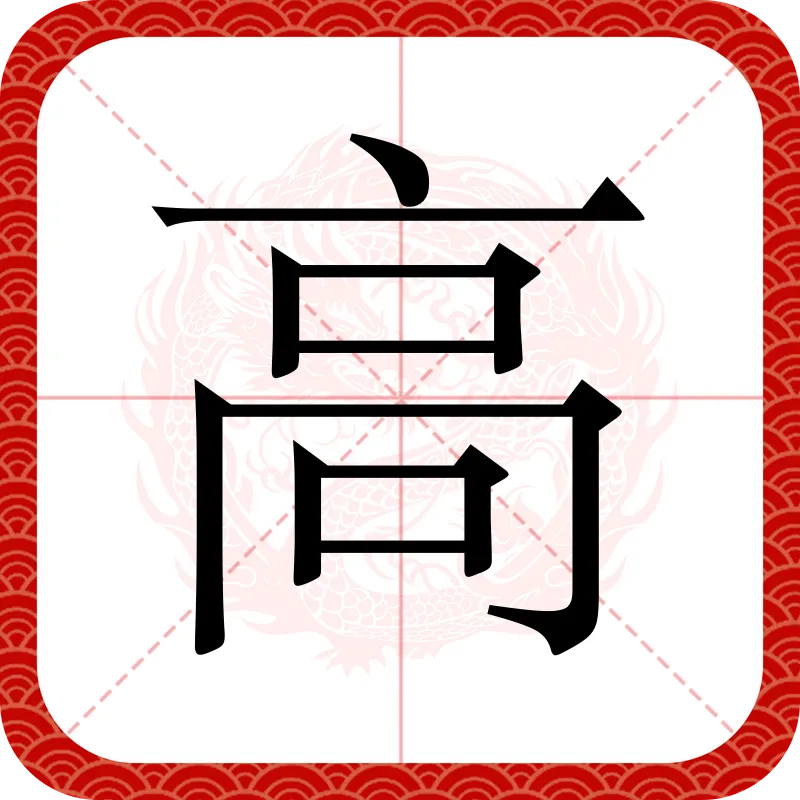
Simplified: 高
Traditional: 高
Pinyin: gāo
Meaning: high; tall; elevated; superior; lofty
The Chinese character 高 (gāo) represents the fundamental concept of vertical elevation and superiority. It is a visually descriptive character whose form directly reflects its meaning, appearing like a tall, multi-storied tower. Understanding 高 is essential for describing physical dimensions, social status, quality levels, and abstract concepts of excellence in Chinese language and culture.
Basic Meaning of 高
The character 高 is one of Chinese's most visually intuitive pictographs. Its earliest form in oracle bone script depicted a tall, multi-storied tower or pavilion with elevated foundations - an architectural structure that literally embodied "height" in ancient societies. This elegant representation shows a structure rising above its surroundings, with the upper part representing the elevated building and the lower part symbolizing the raised platform or foundation. The character has maintained this essential silhouette throughout its evolution, making it one of the most recognizable and semantically transparent characters in the writing system.
Common Combinations with 高
Physical Dimension:
- 高度 (gāo dù) - height; altitude
- 高峰 (gāo fēng) - high peak; rush hour
- 高楼 (gāo lóu) - tall building
- 高山 (gāo shān) - high mountain
Quality & Status:
- 高级 (gāo jí) - high-class; advanced
- 高贵 (gāo guì) - noble; prestigious
- 高尚 (gāo shàng) - noble; lofty (in character)
- 高兴 (gāo xìng) - happy; delighted (elevated mood)
Measurement & Comparison:
- 提高 (tí gāo) - to raise; to improve
- 高速 (gāo sù) - high-speed
- 高温 (gāo wēn) - high temperature
- 高血压 (gāo xuè yā) - high blood pressure
Personal Attributes:
- 身高 (shēn gāo) - body height
- 高手 (gāo shǒu) - expert; master (high hand)
These combinations demonstrate how 高 extends from physical descriptions to abstract qualities of excellence and superiority.
Extended Meanings of 高
Beyond its literal meaning, 高 has rich extended applications:
- Social Hierarchy: Indicates superior social position or rank
- Quality Excellence: Denotes superior quality or advanced level
- Academic Achievement: Used in educational contexts (高分 - high score)
- Moral Elevation: Describes noble character and virtuous conduct
- Age Reference: Politely refers to older age (高龄 - advanced age)
- Volume & Intensity: Modifies sound levels (高声 - loud voice)
Cultural and Symbolic Significance
In Chinese culture, 高 carries profound symbolic meanings that reflect core values:
- Academic Aspiration: The character appears in 高考 (gāo kǎo), the national college entrance exam that represents the pinnacle of educational achievement and social mobility.
- Moral Idealism: "高尚" (noble) represents the Confucian ideal of cultivated moral character that rises above common concerns.
- Architectural Ambition: Traditional Chinese tower architecture, like the "高台楼阁" (high platforms and multi-storied pavilions), symbolized connection between earthly and heavenly realms.
- Social Achievement: The concept of "步步高升" (rising step by step to a high position) expresses the cultural value placed on continuous improvement and social advancement.
- Natural Reverence: Mountains (高山) have long been revered in Chinese culture as sacred spaces representing stability, endurance, and spiritual elevation.
Example Sentences
- 这座山很高,爬上去需要四个小时。
(This mountain is very high; it takes four hours to climb to the top.) - 他高考取得了很高的分数。
(He achieved a very high score on the college entrance exam.) - 听到这个好消息,我们都很高兴。
(We were all very happy to hear this good news.) - 这位老人有着高尚的品德。
(This elderly person has noble moral character.) - 高速公路上的车速很快。
(The vehicles move very fast on the high-speed road.)
Related Vocabulary
| Chinese | Pinyin | English |
|---|---|---|
| 高 | gāo | high; tall |
| 高度 | gāo dù | height; altitude |
| 高级 | gāo jí | high-class; advanced |
| 高兴 | gāo xìng | happy; delighted |
| 提高 | tí gāo | to raise; improve |
| 高峰 | gāo fēng | peak; rush hour |
| 高贵 | gāo guì | noble; prestigious |
| 高山 | gāo shān | high mountain |
FAQ: Common Questions About the Chinese Character 高
Q1: What's the difference between 高 and "长" when describing height?
A: 高 specifically describes vertical height from bottom to top (身高 - body height, 山高 - mountain height). "长" describes horizontal length from end to end (路长 - road length, 时间长 - time length). For people, we use 高 for height and "长" for hair length or nail length.
Q2: Why does "高兴" mean "happy" when 高 means "high"?
A: "高兴" literally means "high mood" or "elevated spirits." This reflects the conceptual metaphor where positive emotions are associated with upward direction, similar to English expressions like "feeling high" or "in high spirits."
Q3: How is 高 used in formal titles and respect language?
A: 高 frequently appears in honorifics: 高见 (your esteemed opinion), 高徒 (your distinguished student), 高寿 (your advanced age). This usage reflects the cultural association of height with superiority and respect.
Q4: What's an effective way to remember this character?
A: The character itself looks like what it means - a tall tower with multiple floors. Visualize it as a multi-storied pagoda: the top dot is the spire, the main body represents different floors, and the base shows the elevated foundation. This visual connection makes 高 one of the easiest characters to memorize.