
The Meaning and Cultural Significance of the Chinese Character "低"
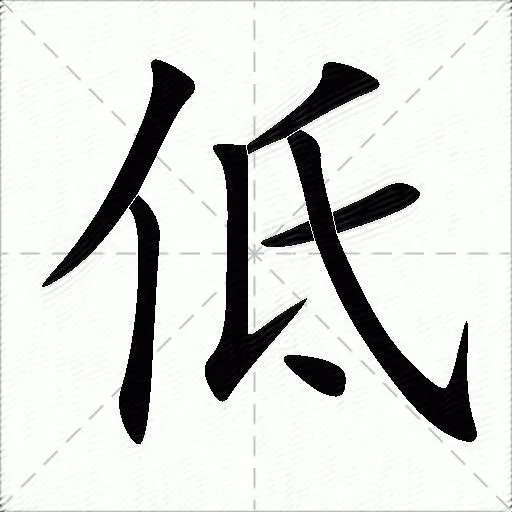
Simplified: 低
Traditional: 低
Pinyin: dī
Meaning: low; lowly; to lower; to hang down
The Chinese character "低" (dī) represents the fundamental concept of lowness and downward orientation. As the direct antonym of 高 (gāo, high), it is essential for describing physical height, social status, quality levels, and subdued states. Understanding "低" provides crucial balance in Chinese expression, allowing for descriptions of the full spectrum from superior to inferior, elevated to humble.
Basic Meaning of "低"
The character "低" is a pictophonetic character composed of two elements: the radical 亻(人, rén) meaning "person," and 氐 (dǐ), which serves as both a phonetic component and a meaningful element suggesting a foundation or base. The character originally depicted a person bowing or lowering their head, physically making themselves "low." This core imagery of downward human posture effectively conveys the concepts of lowness, submission, and inferior position that define this character's meanings.
Common Combinations with "低"
Physical Dimension:
- 低矮 (dī ǎi) - low and shallow (of buildings)
- 低温 (dī wēn) - low temperature
- 低空 (dī kōng) - low altitude
- 低声 (dī shēng) - low voice; whisper
Quality & Status:
- 低级 (dī jí) - low-level; vulgar
- 低贱 (dī jiàn) - lowly; humble
- 低端 (dī duān) - low-end
- 低人一等 (dī rén yī děng) - inferior to others
Measurement & Economics:
- 降低 (jiàng dī) - to reduce; to lower
- 低价 (dī jià) - low price
- 低成本 (dī chéng běn) - low cost
- 低收入 (dī shōu rù) - low income
States & Conditions:
- 低头 (dī tóu) - to lower one's head; to yield
- 低迷 (dī mí) - depressed; sluggish (market)
- 低潮 (dī cháo) - low tide; depression
These combinations demonstrate how "低" extends from physical descriptions to qualitative assessments and various states of reduction or inferiority.
Extended Meanings of "低"
Beyond its literal meaning, "低" has important extended applications:
- Social Hierarchy: Indicates inferior social position or humble status
- Quality Assessment: Denotes poor quality or primitive level
- Economic Status: Used in financial contexts (低收入 - low income)
- Moral Judgment: Sometimes describes vulgar or base character
- Psychological State: Reflects depressed or subdued mood
- Spatial Orientation: Indicates downward direction or position
Cultural and Symbolic Significance
In Chinese culture, "低" carries complex symbolic meanings that reflect nuanced social values:
- The Virtue of Humility: While "低" can indicate inferiority, the related concept of "谦虚" (modesty) is highly valued. The ability to "低头" (lower one's head) appropriately demonstrates wisdom and social grace.
- Daoist Idealization: Daoist philosophy often praises the "lowly" position, as expressed in the saying "上善若水" (the highest goodness is like water), which benefits all things but occupies the low places others avoid.
- Social Reality: The term "低人一等" reflects the hard reality of social hierarchy and the psychological burden of perceived inferiority in traditional status-conscious society.
- Economic Development: In modern contexts, "低成本" (low cost) has become a key concept in China's manufacturing and economic strategy.
- Educational Context: "低分" (low score) represents academic pressure and the competitive nature of China's education system.
Example Sentences
- 这个房间的天花板很低。
(The ceiling of this room is very low.) - 请降低音量。
(Please lower the volume.) - 他因为失败而情绪低落。
(He felt depressed because of the failure.) - 这家公司生产低成本的产品。
(This company produces low-cost products.) - 在长辈面前要懂得低头。
(One should know how to lower one's head before elders.)
Related Vocabulary
| Chinese | Pinyin | English |
|---|---|---|
| 低 | dī | low; lowly |
| 高低 | gāo dī | height; high and low |
| 降低 | jiàng dī | to reduce; lower |
| 低头 | dī tóu | to lower one's head |
| 低级 | dī jí | low-level; vulgar |
| 低温 | dī wēn | low temperature |
| 低声 | dī shēng | low voice; whisper |
| 低成本 | dī chéng běn | low cost |
FAQ: Common Questions About the Chinese Character "低"
Q1: What's the difference between "低" and "矮" when describing shortness?
A: "低" describes lowness in position or level (声音低 - low voice, 价格低 - low price). "矮" specifically describes short physical stature (人矮 - short person, 墙矮 - short wall). For buildings, both can be used but "低" emphasizes the low height from ground, while "矮" emphasizes the short appearance.
Q2: Is "低头" always a negative action?
A: Not at all. While "低头" can indicate submission or defeat, it also demonstrates respect, humility, and social wisdom. In Chinese culture, knowing when to "低头" is often seen as a sign of maturity and emotional intelligence.
Q3: How is "低" used in business and economics?
A: "低" appears extensively in economic terminology: 低价 (low price), 低成本 (low cost), 低端市场 (low-end market), 低增长 (low growth). These terms are neutral descriptors of market positioning and economic conditions.
Q4: What's an effective way to remember this character?
A: The character shows a "person" (亻) in a "low" position. Remember the imagery of a person bowing or lowering their head - this physical act of making oneself "low" is captured perfectly in the character's composition. The association with the downward human posture makes "低" logically memorable.