The Meaning and Cultural Significance of the Chinese Character "难"
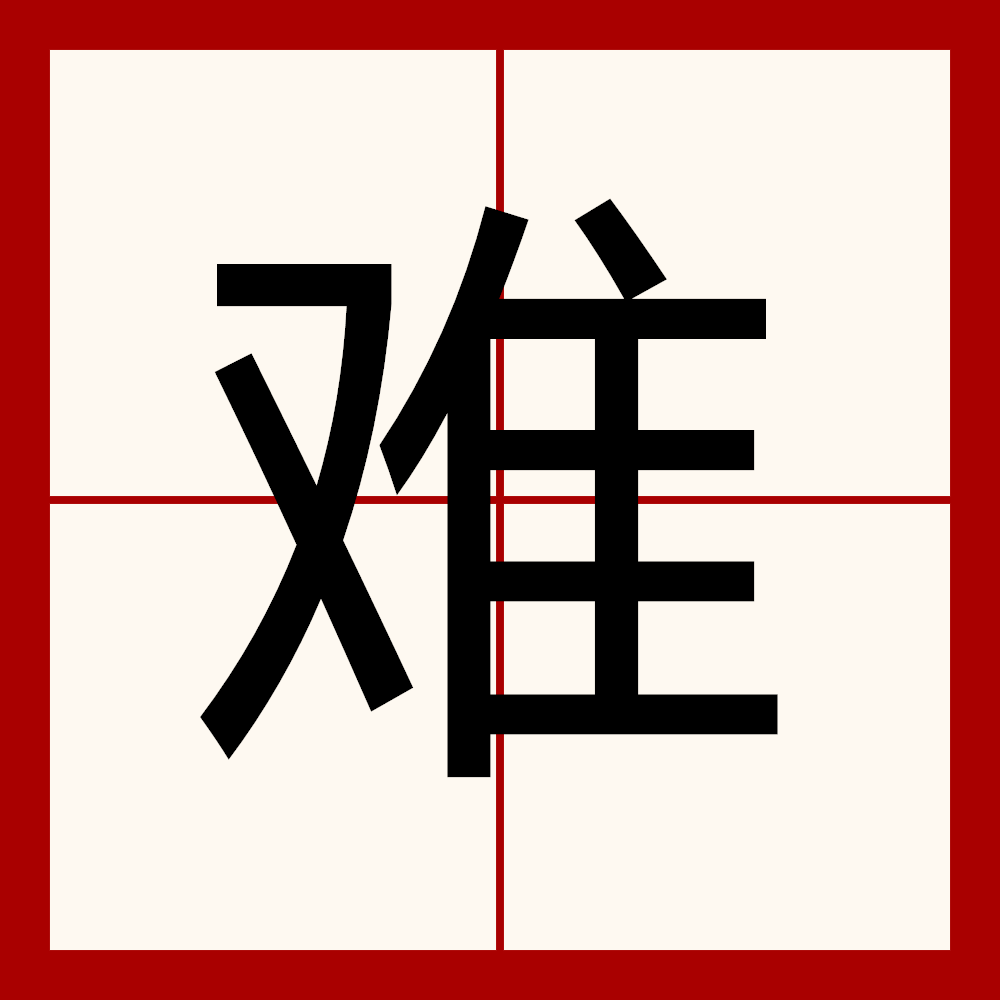
Simplified: 难
Traditional: 難
Pinyin: nán (difficult), nàn (disaster)
Core Meaning: hardship; misfortune; adversity
Basic Meaning of "难"
The character "难" embodies two profound dimensions of human experience: the subjective feeling of difficulty and the objective reality of disaster. Its evolution from traditional to simplified form reflects both historical etymology and modern linguistic simplification.
Character Origin and Evolution:
- Traditional "難": The original character consists of two components:
- 堇 (jǐn): Represents clay or hard soil
- 隹 (zhuī): Depicts a short-tailed bird
- Semantic Concept: A bird trapped in sticky clay, struggling to escape - this vivid imagery perfectly captures the essence of being in distress or difficulty
- Simplified "难": The modern standardized form:
- 又: Serves primarily as a simplification marker, replacing the complex "堇" component while partially indicating pronunciation (both "难" and "又" share the initial sound)
- 隹: Retained as the semantic anchor, preserving the connection to the original meaning
Common Combinations with "难"
With reading "nán" (difficult/hard):
- 困难 (kùn nan) - difficulty, hardship
- 难过 (nán guò) - to feel sad, to have a hard time
- 难受 (nán shòu) - to feel unwell, uncomfortable
- 难题 (nán tí) - difficult problem
- 难免 (nán miǎn) - hard to avoid, inevitable
With reading "nàn" (disaster/calamity):
- 灾难 (zāi nàn) - catastrophe, disaster
- 难民 (nàn mín) - refugee
- 遇难 (yù nàn) - to perish in an accident
- 逃难 (táo nàn) - to flee from disaster
Extended Meanings of "难"
Beyond its core meanings, "难" extends to:
- Challenge Indication: 难做 (hard to do), 难懂 (hard to understand)
- Trials and Ordeals: 磨难 (tribulation, ordeal)
- Censure and Blame: 责难 (to censure, to blame) - used in formal contexts
Cultural and Symbolic Significance
The character "难" carries deep cultural connotations in Chinese society:
- Confucian Resilience: Emphasizes endurance and maintaining virtue in adversity - "君子固穷" (the gentleman remains steadfast in hardship)
- Daoist Acceptance: Recognizes the natural cycle of difficulty and ease, as expressed in "祸福相依" (misfortune and blessing are interconnected)
- Collective Fortitude: Historical experiences have forged a cultural spirit of "共度难关" (overcoming difficulties together), highlighting communal solidarity
- Character Testing: Facing "难" serves as a measure of one's moral mettle, with idioms like "知难而进" (advancing despite difficulties) celebrated as virtues
Example Sentences
With "nán":
- 这个数学题很困难。 (This math problem is very difficult.)
- 听到这个消息,我很难过。 (Hearing this news, I feel very sad.)
- 工作中遇到难题是难免的。 (Encountering difficult problems at work is inevitable.)
With "nàn":
- 地震是一场巨大的灾难。 (The earthquake is a huge disaster.)
- 战争导致大量难民流离失所。 (The war has caused numerous refugees to be displaced.)
- 他在空难中不幸遇难。 (He unfortunately perished in the plane crash.)
Related Vocabulary
| Chinese | Pinyin | English |
|---|---|---|
| 难 | nán/nàn | difficult/disaster |
| 困难 | kùn nan | difficulty |
| 难过 | nán guò | sad/having hard time |
| 灾难 | zāi nàn | catastrophe |
| 难民 | nàn mín | refugee |
| 难免 | nán miǎn | inevitable |
| 遇难 | yù nàn | perish in disaster |
| 难题 | nán tí | difficult problem |
FAQ: Common Questions About "难"
Q1: How to distinguish between "nán" and "nàn" readings?
A: Use context: "nán" describes subjective difficulty or discomfort (困难, 难过); "nàn" refers to objective disasters or tragedies (灾难, 难民). Memorize common word combinations.
Q2: What's the difference between "难过" and "难受"?
A: "难过" emphasizes emotional sadness (我因为失败而难过); "难受" can describe both emotional distress and physical discomfort (浑身难受).
Q3: What's the cultural perspective toward "难"?
A: Chinese culture views hardship as both a challenge and an opportunity for growth. The proverb "艰难困苦,玉汝于成" illustrates how difficulties can temper character, much like polishing jade.
Q4: Any tips for remembering this character?
A: Use the character's origin story: a bird (隹) trapped in clay (堇) represents both difficulty and disaster. For the simplified form, remember that "又" replaces "堇" as a phonetic marker while "隹" retains the meaning.