Wudang Mountain(武当山): The Sacred Taoist Sanctuary of China
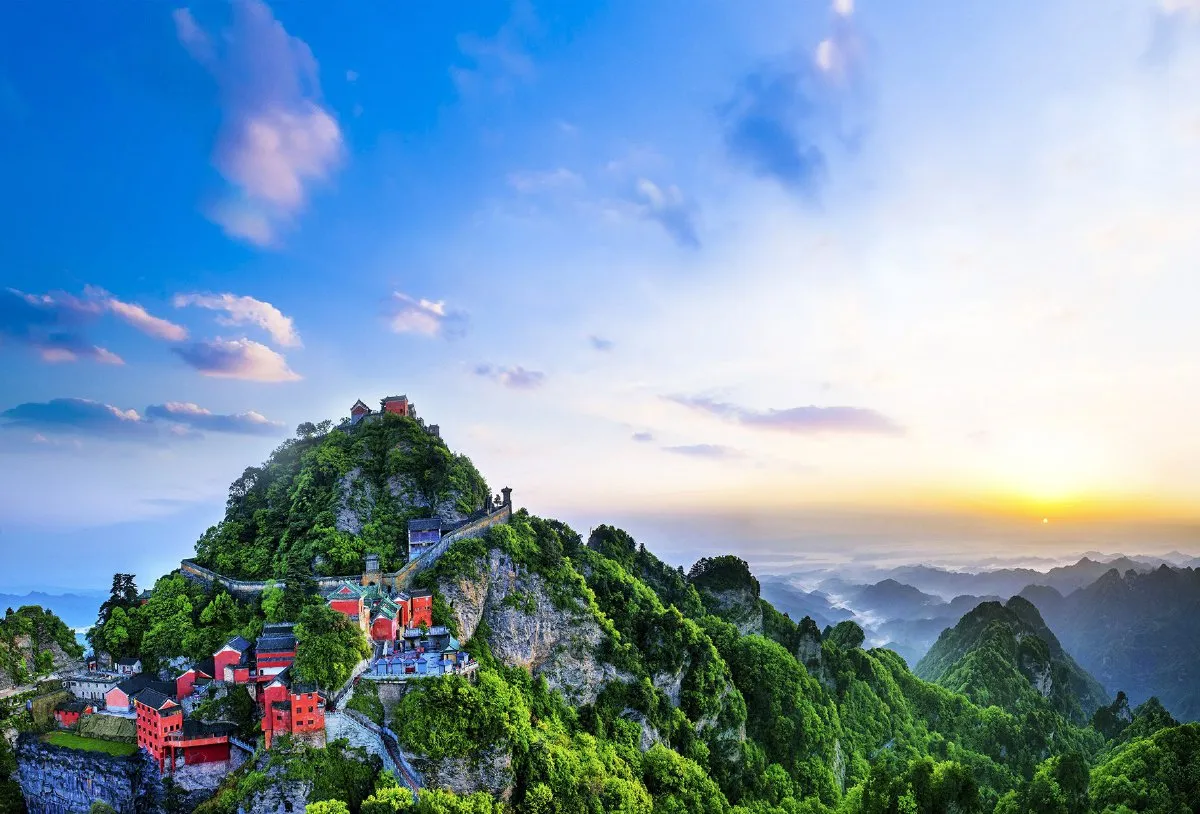
Nestled in the northwestern part of Hubei Province, Wudang Mountain is one of China’s most revered spiritual and cultural landmarks. Famous for its breathtaking landscapes, ancient Taoist temples, and association with Chinese martial arts, Wudang Mountain has attracted pilgrims, scholars, and travelers for centuries. This article explores the historical significance, cultural heritage, martial arts traditions, and modern tourist appeal of Wudang Mountain, revealing why it remains a symbol of spiritual and cultural China.
History and Taoist Significance
Origins as a Taoist Center
Wudang Mountain’s spiritual importance dates back over a thousand years. During the Tang and Song dynasties, Taoist monks established temples on the mountain to practice meditation, alchemy, and Taoist rituals. It is traditionally regarded as a center for the Daoist philosophy of harmony between humans and nature.
The mountain complex is dedicated to the worship of the “Dark (Black) Emperor” Xuanwu, a deity representing immortality and spiritual power in Taoist cosmology. Over centuries, successive dynasties contributed to building temples, palaces, and monasteries, making Wudang Mountain a major religious center.
UNESCO World Heritage Status
In 1994, Wudang Mountain was recognized as a UNESCO World Heritage Site. The listing highlighted its outstanding architecture, historical value, and natural beauty. The complex includes nearly 50 ancient buildings, including the Golden Hall (Jinding), Nanyan Palace, and Purple Cloud Temple, each harmoniously integrated with the surrounding mountainous landscape.
Wudang Temples and Architecture
The Unique Taoist Architectural Style
Wudang Mountain is renowned for its unique architectural style, blending traditional Chinese building techniques with Taoist cosmology. Temples and palaces are carefully positioned according to the principles of Feng Shui, aligning with natural features like cliffs, valleys, and streams.
Key structures include:
● Golden Hall (Jinding): Sitting at the peak, made of gilded copper and wood, it symbolizes the pinnacle of Taoist spiritual power.
● Purple Cloud Temple (Zixiao Gong): Known for its elegant courtyards and intricate carvings reflecting Taoist philosophy.
● Nanyan Palace: A Taoist monastery combining meditation halls with stunning scenic views, offering both spiritual practice and aesthetic delight.
The architecture not only serves religious purposes but also demonstrates remarkable engineering skills of ancient Chinese builders. Elevated platforms, curved roofs, and wooden brackets create a sense of balance, harmony, and integration with the natural environment.
Wudang and Chinese Martial Arts
The Home of Internal Martial Arts
Wudang Mountain is often called the cradle of internal Chinese martial arts, particularly Tai Chi (Taiji). Taoist monks developed martial arts not just for self-defense, but also for cultivating qi (vital energy), enhancing health, and spiritual development.
Wudang martial arts emphasize softness, circular movements, and breathing techniques rather than brute strength. Styles such as Wudang Sword (Wudang Jian) and Taiji Quan are practiced widely across China and internationally. Martial arts schools on the mountain continue to train disciples in these ancient techniques, preserving centuries-old traditions.
Visitors to Wudang can watch monks and students perform slow, flowing Tai Chi routines, offering a glimpse into the integration of philosophy, health, and martial skill that defines Taoist practice.
Scenic Beauty and Outdoor Exploration
Natural Landscapes
Beyond its spiritual and martial significance, Wudang Mountain is famous for stunning scenery. Towering peaks, dense forests, and winding streams create an idyllic natural environment. Trails and steps lead visitors through bamboo groves, moss-covered rocks, and misty valleys, evoking a sense of peace and transcendence.
Popular Activities
● Hiking: Well-maintained trails lead to peaks like Golden Summit for panoramic views.
● Photography: The combination of ancient architecture and natural scenery offers spectacular photo opportunities.
● Cultural Tours: Guided tours explain Taoist rituals, temple history, and martial arts heritage.
The mountain’s unique combination of cultural landmarks and natural beauty makes it an ideal destination for those seeking both spiritual insight and outdoor adventure.
Modern Tourism and Cultural Experience
Visiting Wudang Mountain Today
Today, Wudang Mountain attracts thousands of tourists, martial arts enthusiasts, and pilgrims annually. Visitors can participate in Tai Chi classes, attend Taoist ceremonies, or explore the many ancient temples. Local accommodations and scenic facilities provide comfort while preserving the traditional ambiance.
Cultural Significance
Wudang Mountain continues to influence Chinese culture, from martial arts films and literature to traditional medicine and philosophy. It remains a symbol of harmony, resilience, and the enduring appeal of Taoist thought in modern China.
Conclusion
Wudang Mountain is more than a scenic attraction; it is a living testament to China’s spiritual, cultural, and martial heritage. Its temples, martial arts traditions, and breathtaking landscapes combine to create a unique experience that blends history, philosophy, and natural beauty.
For travelers seeking a deeper understanding of Chinese culture, a visit to Wudang Mountain offers not just sightseeing, but an immersive journey into Taoism, martial arts, and centuries of tradition. Whether you are a lover of Chinese culture, Wudang Mountain embodies the harmony between nature, human endeavor, and spiritual practice.