When Beijing Turns Red: A Journey Through Fragrant Hills Park
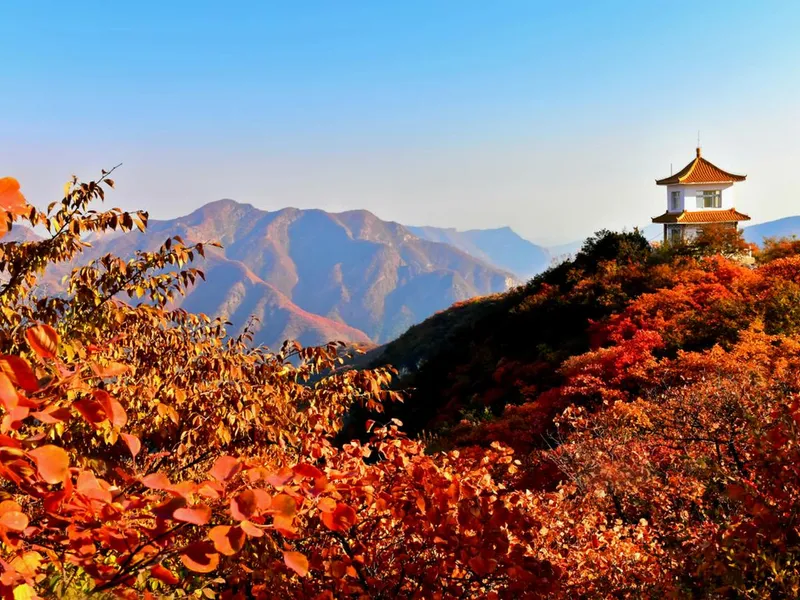
Despite its name, Fragrant Hills is not known for a particular flower or tree. Its “fragrance” comes from the misty pine forest that once covered the mountain—when wind passed through the needles, it carried a clean, resin-rich scent that lingered like incense. During the Liao and Jin dynasties, this quiet mountain was chosen as an imperial retreat. Emperors hunted here, practiced archery in the open valleys, and built temples where smoke curled from bronze incense burners.
By the Yuan dynasty, philosophers and monks found the mountain equally irresistible. They shaped paths, carved stones with poems, and built meditation halls tucked behind pine groves. Even centuries later, when most people think of Fragrant Hills, the natural scenery steals the attention—but beneath the red leaves lie layers upon layers of stories carved by emperors, monks, soldiers, and more recently, travelers who climb the mountain with cameras instead of swords.
The Imperial Heart: From Pleasure Garden to RuinsFragrant Hills reached its greatest glory during the Qing dynasty. Emperor Qianlong—famous for his refined tastes and unstoppable curiosity—expanded the area into Jingyi Garden, an astonishing summer retreat filled with pavilions, mirrored ponds, stone bridges, and hidden paths. He designed the landscape to feel like a journey through poetry: every turn revealed a new frame, a new mood, a new chapter.
But history can be cruel. In 1860, during the Second Opium War, Allied forces burned the garden complex to the ground, the same tragedy that befell the Old Summer Palace. Forty years later, during the Boxer Rebellion, the ruins suffered again. Today, visitors can still see fragments—stone steps mossed over, foundations of halls that once housed royal banquets, and traces of water channels that once fed the lotus ponds. They stand quietly, not as ghosts of the past, but as reminders of a garden that refuses to be forgotten.
A Red That Belongs to BeijingAsk anyone in Beijing when Fragrant Hills is at its most beautiful, and they will answer without hesitation: mid-October to early November. The forests of the mountain are filled with smoketrees—known in Chinese as 黄栌 huánglú—famous for turning fiery red. When the temperature drops, the entire hillside transforms into a burning sea of color. Seen from below, it resembles a dragon’s back; seen from above, it is as if someone poured an ink painting across the landscape, then dipped the brush in red.
What makes the red leaves here unique is not only their quantity but their texture. They are not bright like maple leaves nor thin like oak leaves—they glow with a velvety depth, creating layers of crimson, wine, and ember. When sunlight filters through them, the mountain looks like it’s made of stained glass.
Visitors slowly climb the stone stairs, breathing in the cool air and hearing the mountain's subtle sounds—rustling leaves, children laughing, photographers whispering directions. Others avoid the climb and take the Fragrant Hills cable car. As it moves over the treetops, the world becomes a floating tapestry of red, orange, and gold.
Temples, Trails, and the Quiet Corners Most Tourists Never SeeWhile the red leaves are what draw crowds, the soul of Fragrant Hills lies in its quieter, often overlooked places.
Bright Temple (香山寺)
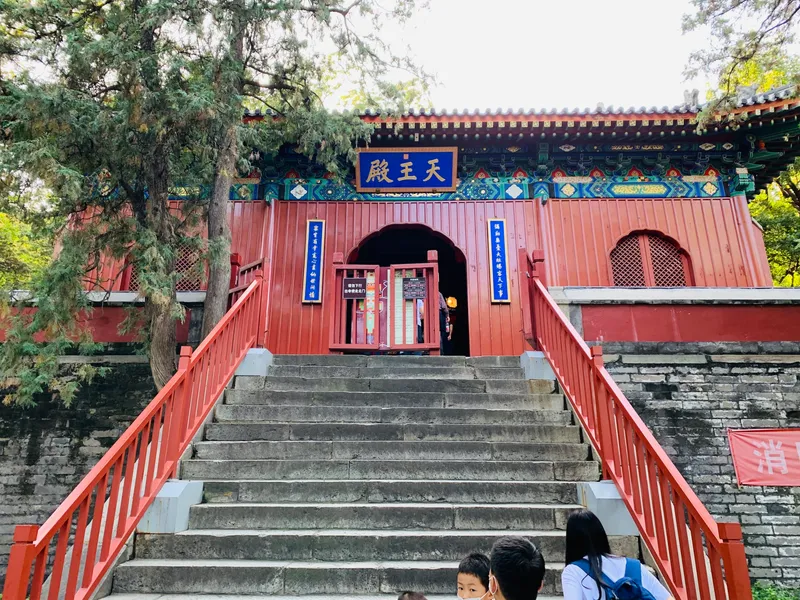
A Buddhist temple built during the Tang dynasty and later expanded in the Qing, it has long served as a sanctuary for monks and scholars. Today, incense still burns softly inside, and pilgrims still bow in front of golden statues whose paint has darkened with time.
Shuangqing Villa (双清别墅)
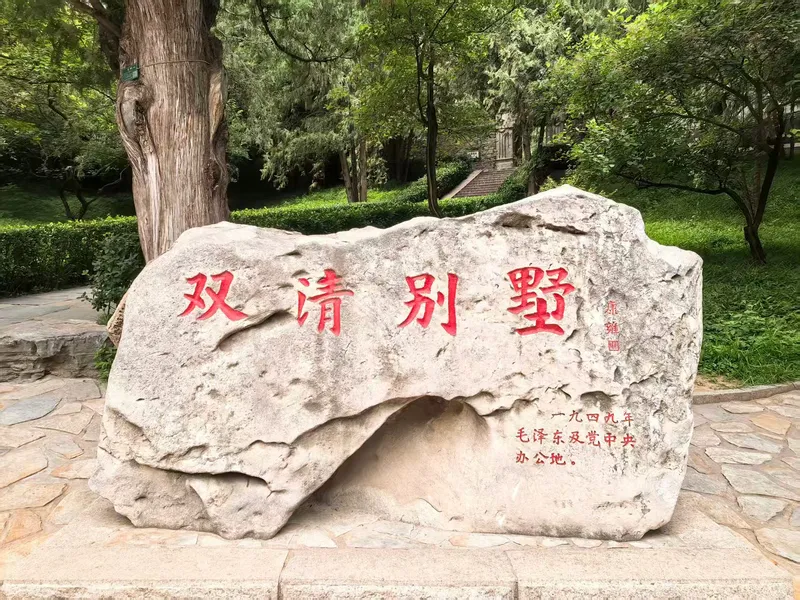
Once used by Mao Zedong in the early days of the People's Republic, the villa is now a historical museum. Its rooms echo with old telephones, handwritten documents, and photographs capturing the uncertainty and determination of a nation's earliest years.
The 1,640-Step Trail to the Incense Burner Peak
The highest point of the entire park. It is not a gentle climb—many travelers begin full of enthusiasm and end silent, breathing hard, focused on each step. But the reward is worth it. From the top, Beijing unfolds as a giant scroll painting. Some days the sky is crisp and blue; on others, mist wraps the city like a drifting veil.
And if you choose the small paths—those rarely used side trails covered in pine needles—you may walk alone for long stretches, feeling the mountain breathe around you.
Fragrant Hills in Every SeasonAlthough autumn is the star, the park changes personalities throughout the year:
- Spring: Magnolia and peach blossoms scatter pastel colors across the valleys.
- Summer: The mountain feels like a cool refuge, with deep green forests and shaded ponds.
- Autumn: The legendary red leaves turn the entire park into a natural festival.
- Winter: Snow turns Fragrant Hills into a monochrome watercolor painting, calm and timeless.
Each season is beautiful, but each tells a different story.
A Mountain That Belongs to MemoryAlmost every Beijinger has at least one memory at Fragrant Hills—school outings, first dates, family hikes, solitary walks after difficult weeks, or spontaneous adventures just to “see if the leaves have turned yet.”
It is a place where the city slows down. Where history rises from the soil. Where people catch their breath, look down at Beijing, and feel—just for a moment—that life can be simple.
Fragrant Hills Park is not merely a tourist attraction. It is a part of Beijing’s soul. And every autumn, when the mountain turns red again, it is as if the city whispers: “It is time to return.”