Guangdong-Hong Kong-Macao Join Hands: Xiyangyang and Lerongrong Illuminate the 15th National Games
On the evening of November 9, the Guangdong Olympic Sports Center was ablaze with lights as the 15th National Games of the People’s Republic of China, the 12th National Paralympic Games, and the 9th Special Olympics kicked off in grand style. At the center of the stage, two adorable figures instantly captured the audience’s attention — the official mascots of this National Games: “Xiyangyang” and “Lerongrong.”
From the moment they were unveiled, the mascots won the hearts of the public with their charming and playful designs. They are not only symbols of the Games but also embody the cultural essence of the Guangdong-Hong Kong-Macao region, adding a unique vitality and warmth to the event.
The Birth of the Mascots: From Inspiration to Debut
The story of “Xiyangyang” and “Lerongrong” began in June 2024, when the renowned designer Liu Pingyun and his team were invited to create the official mascots for the 15th National Games. After months of sketches, revisions, and careful design, the mascots finally made their debut on the evening of November 9, 2024.
● Xiyangyang: Its name comes from the Chinese idiom “xiqi yangyang” (full of joy), representing the joy and excitement of athletes on the competition field.
● Lerongrong: Named after “qile rongrong” (harmony and delight), it embodies the spirit of unity and collaboration throughout the Games.
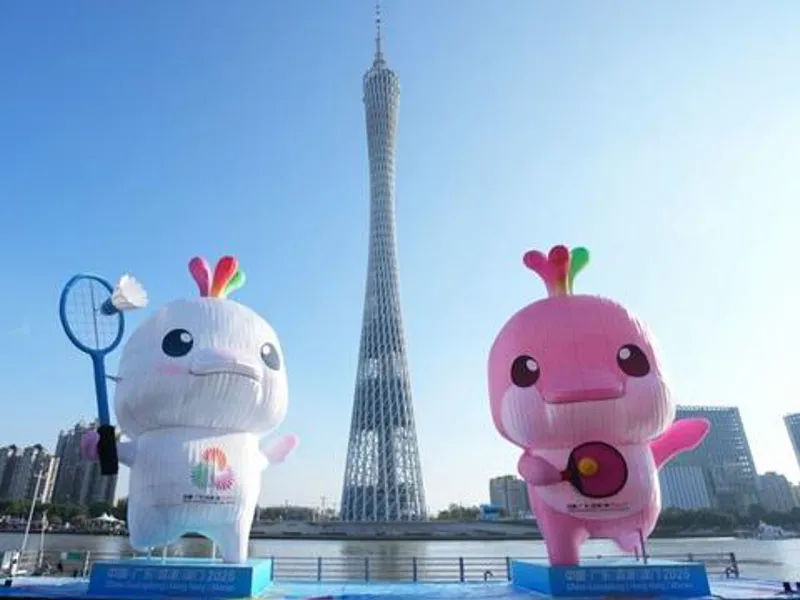
Both mascots are inspired by the Chinese white dolphin, a national first-class protected species. The dolphin is not only a unique ecological symbol of the Guangdong-Hong Kong-Macao Greater Bay Area but also represents teamwork, reflecting the cooperative spirit of athletes. Interestingly, Lerongrong’s pink hue is inspired by the pale pink color the dolphin’s skin takes on during activity, blending ecological awareness with a playful, athletic character.
During the opening ceremony, martial arts students from Huang Feihong Martial Arts School in Foshan brought the mascots to life, performing acrobatic flips, handstands, and playful dances, captivating both the live audience and viewers nationwide.
Design Details: Playful Shapes with Cultural Significance
At first glance, “Xiyangyang” and “Lerongrong” are simply cute mascots, but every detail carries cultural meaning:
● Proportions: Both adopt a “two-heads-tall” design, with head and body in a 1:1 ratio, enhancing cuteness and movement expressiveness.
● Three Water Droplets: Positioned on the top of their heads, these droplets represent Guangdong, Hong Kong, and Macao, colored in Kapok Red, Bauhinia Purple, and Lotus Green, symbolizing the cultural connection of the three regions.
● Color Symbolism: White Xiyangyang represents purity and vitality, while pink Lerongrong signifies harmony and warmth, together reflecting the core values of the Games.
The design concept also incorporates China’s new development principles: innovation, coordination, green development, openness, and sharing. The mascots combine ecological awareness, cultural heritage, and modern aesthetics, allowing the public to feel the spirit of the Games through their charming appearance.
Beyond the Stage: Mascots Bring the Games to Life
The presence of Xiyangyang and Lerongrong extends far beyond the opening ceremony. They appear throughout the city, bringing the Games closer to the public:
● Metro Themed Tickets: Blue one-day tickets and pink-orange three-day tickets feature the mascots alongside Guangzhou Metro’s YOYO, integrating local landmarks and cultural symbols, creating a lively visual experience.
● Collectible Metro Ticket Set: Includes a ticket booklet, one-day tickets, and themed postcards. The number “15” shines like a trail of stars, capturing historic moments while showcasing landmarks, Cantonese opera, local cuisine, and crafts, alongside the mascots dancing with YOYO.
● Metro Station Themes: At Huangcun Station, Xiyangyang and Lerongrong adorn the walls, welcoming athletes and visitors from across China. The exhibition introduces competition rules and highlights through cartoon visuals, enhancing engagement.
● Large-Scale Installations: Two 15-meter-high floating installations feature the mascots holding badminton and table tennis equipment. Crafted using the Lingnan intangible cultural heritage technique of “Cai Zha,” combining bamboo structures with colored paper, they merge traditional craftsmanship with modern design. At night, integrated lighting makes the mascots sparkle, creating new landmarks along the Pearl River.
Each appearance not only delights visually but also conveys the spirit of sportsmanship and urban culture, turning the mascots into a cultural symbol shared by all citizens.
Cultural Significance: Ecology, Unity, and Greater Bay Area Identity
The popularity of Xiyangyang and Lerongrong is rooted not only in their cuteness but also in the cultural and ecological messages they convey:
● Ecological Awareness: Using the Chinese white dolphin as inspiration emphasizes conservation.
● Teamwork: The dolphin’s social nature reflects cooperation among athletes.
● Cultural Fusion: The three water droplets connect Guangdong, Hong Kong, and Macao, highlighting regional collaboration.
● Heritage Innovation: Incorporating the Cai Zha technique showcases the evolution of Lingnan intangible cultural heritage.
● Public Engagement: From metro tickets to city installations, the mascots bring sports spirit into daily life, making the Games accessible to everyone.
Through Xiyangyang and Lerongrong, the National Games are not just a competition but a cultural celebration, allowing the public to experience the joy of sports and city life in every interaction.
Conclusion
Xiyangyang and Lerongrong are more than mascots—they are a symbol of Guangdong, Hong Kong, and Macao joining hands to realize dreams together. From the opening ceremony to city metro stations, from collectible tickets to monumental installations, they convey youth, energy, unity, and the fighting spirit of the Games.
These adorable mascots transform the National Games from a sporting event into a shared cultural experience, allowing everyone to feel the joy and warmth brought by sports. As their names suggest, Xiyangyang and Lerongrong perfectly embody the Greater Bay Area’s vision of working together to create a bright and harmonious future.