Spring Equinox in China: Meaning, Traditions, and Cultural Significance
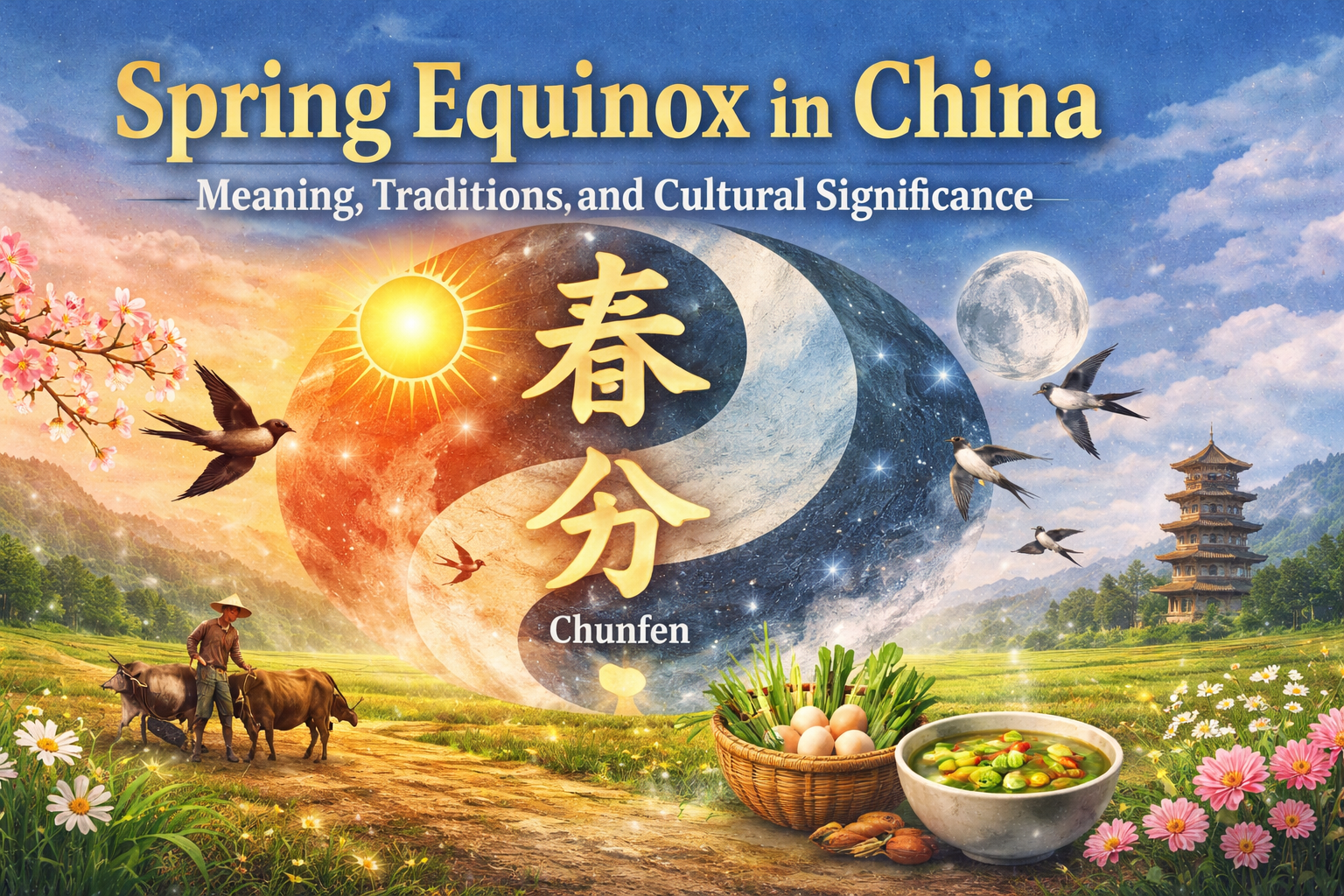
As the hands of time quietly turn toward mid-to-late March, the winds of the Northern Hemisphere shed winter’s sharp edge. What replaces it is something gentler, carrying the scent of soil and the subtle fragrance of blooming flowers, brushing softly across the land. On March 20, 2026, a Friday, we welcome the fourth solar term of the traditional Chinese calendar: the Spring Equinox (春分, chūnfēn), an important seasonal marker in Chinese culture and the 24 solar terms system.
“Day and night are equally divided; even the swallows do not fear the chill among peach blossoms.” With poetic grace, ancient observers captured the magic of this moment. The sun stands directly above the equator, and day and night are nearly equal across the globe, each lasting about twelve hours. This is not merely an astronomical event, but the midpoint of the ninety days of spring. From this day forward, winter makes its final retreat, warmth steps confidently onto the stage, nights grow shorter, and days begin to lengthen.
The Spring Equinox represents the perfect balance of yin and yang (阴阳, yīn-yáng), a core concept in Chinese philosophy and traditional Chinese culture. It is a season of awakening, vitality, and quiet symmetry, revealing the universe’s sense of order and harmony. At the same time, it carries humanity’s enduring longing for renewal, hope, and equilibrium.
I. The Astronomy of Balance: A Precise Turning Point
Astronomically, the Spring Equinox holds profound significance in both science and traditional Chinese calendar knowledge. On this day, the sun reaches 0° celestial longitude, shining directly on the Earth’s equator. The terminator line—the boundary between day and night—passes through both poles, dividing the Earth into two equal halves of light and darkness. No matter where you stand (except at the poles), you experience nearly equal day and night.
Yet this balance is not a static endpoint, but the beginning of change. After the equinox, the sun’s direct rays move northward, bringing longer days and gradually rising temperatures to the Northern Hemisphere. Spring is now halfway through, and summer begins to approach.
Still, the season is not defined by steady warmth alone. As the saying goes: “At the Spring Equinox, yin and yang are equal; thus day and night balance, and cold and heat are in harmony.” This “harmony” does not mean calm weather. In fact, it marks one of the most dynamic periods of atmospheric interaction.
Cold northern air still lingers, while warm, moist southern currents surge northward. Their collision often brings strong winds, sudden temperature drops, and even late cold snaps. Meanwhile, increasing atmospheric instability gives rise to thunder—an ancient sign of spring’s arrival. Lightning follows, rain falls, and the earth is awakened by these dramatic exchanges. Each rainfall nourishes crops, cleanses the land, and coaxes flowers into bloom.
Traditional Chinese phenology divides the Spring Equinox into three phases, reflecting ancient Chinese seasonal observation and agricultural wisdom:
- First phase: Swallows arrive – Swallows return from the south, building nests under eaves, announcing the return of warmth.
- Second phase: Thunder begins – The stirring of yang energy produces thunder, awakening hibernating creatures.
- Third phase: Lightning appears – Storms intensify, bringing rain that accelerates growth and renewal.
II. Traditions and Customs: Wisdom Passed Through Generations
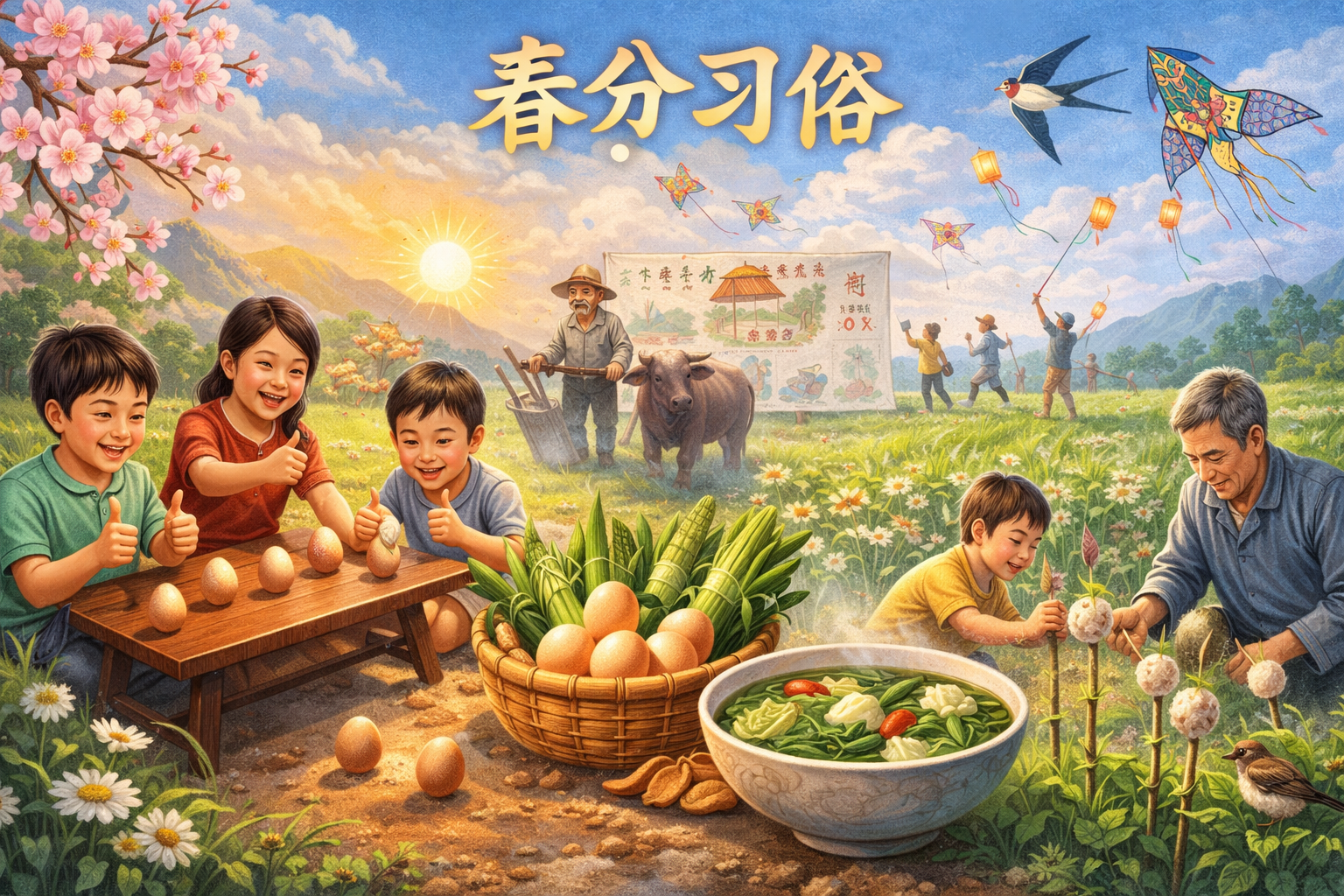
Beyond science, the Spring Equinox is rich in cultural meaning and traditional Chinese festivals and customs. Over centuries, people have developed vibrant customs that reflect both respect for nature and hopes for a prosperous life.
1. Balancing Eggs: A Ritual of Harmony
One of the most famous traditions is egg balancing, a popular Spring Equinox tradition in China. As the saying goes, “At the Spring Equinox, eggs stand upright.” It is believed that the Earth’s alignment makes it easier to balance an egg on this day. Scientifically, this can be done any day with patience, but the tradition has evolved into a symbolic ritual. Successfully balancing an egg is seen as a sign of harmony and good fortune.
2. Eating Spring Vegetables: Seasonal Nourishment
Another tradition is eating spring vegetables, part of seasonal eating in Chinese culture. During this time, wild greens are tender and rich in nutrients. In southern China, people prepare “spring soup” using fresh herbs and fish, symbolizing health and renewal. In the north, seasonal foods such as bamboo shoots, toon sprouts, and chives appear on the table. Eating according to the season reflects a deep understanding of nature’s rhythm.
3. Ancient Farming Customs
There are also older customs like “sending the spring ox”, related to Chinese farming traditions, where illustrated farming calendars were distributed to encourage timely planting, and “sticking birds’ beaks”, where sticky rice balls were placed in fields to keep birds from eating crops—a charming blend of hope and practicality.
4. Flying Kites: Releasing Worries
Flying kites is another beloved activity during the Spring Equinox, often associated with spring traditions in China. With gentle winds and open skies, people gather outdoors to send kites soaring. Traditionally, worries and illnesses were symbolically tied to the kite and released into the sky. At night, lantern-lit kites drifting like stars created a magical scene.
III. Health and Harmony: Living in Tune with the Season
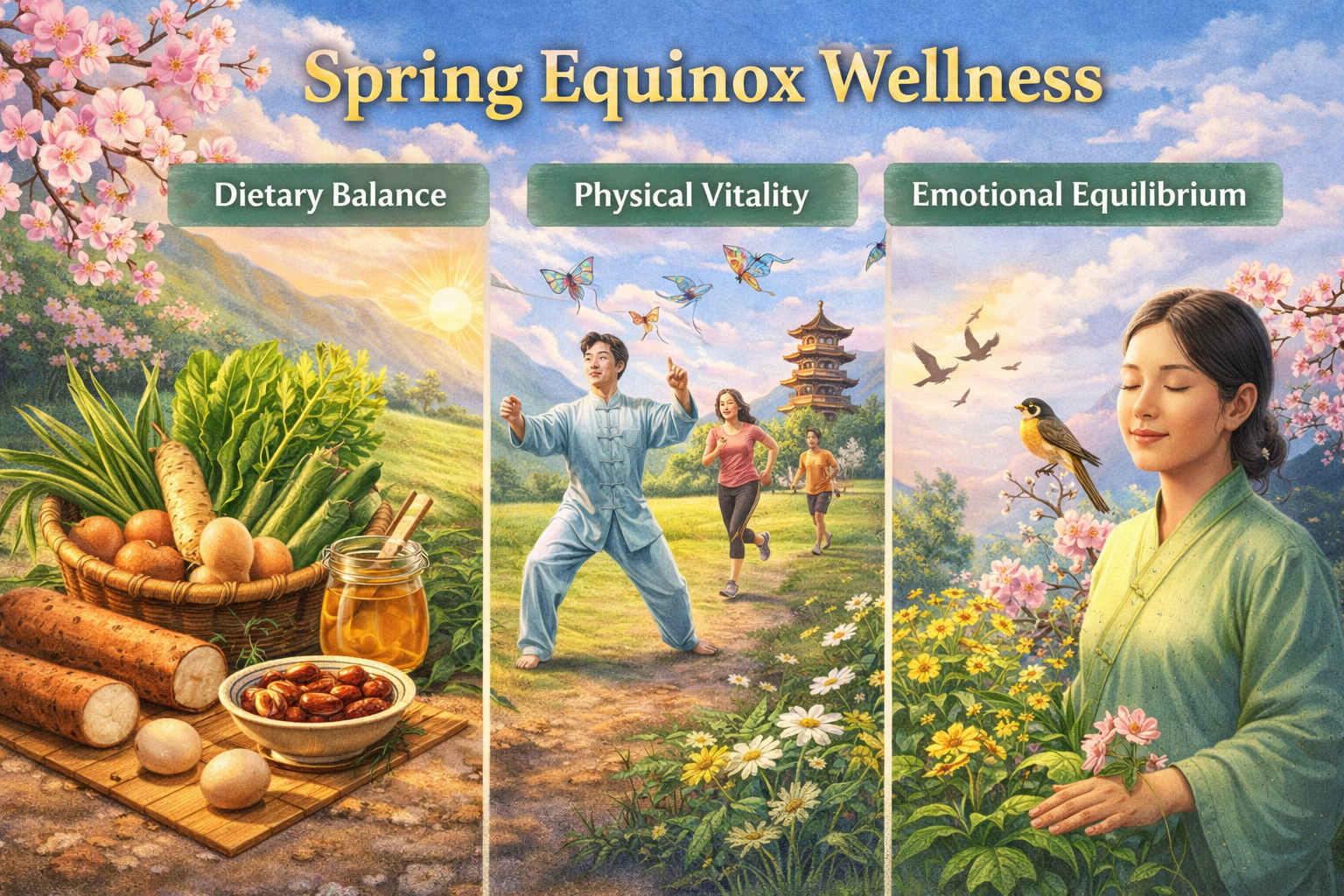
In traditional Chinese thought, humans and nature form a unified whole, a key idea in traditional Chinese medicine and seasonal health practices. Health depends on aligning with seasonal changes. During the Spring Equinox, balance is key.
Dietary Balance
Dietarily, it is advised to reduce sour foods and increase sweet flavors to support the spleen and regulate liver energy, reflecting principles of Chinese dietary therapy. Spring encourages liver activity, and excessive sourness may disrupt internal balance. Foods such as Chinese chives, spinach, yams, dates, and honey are recommended, while overly cold or heavy foods should be avoided.
Physical Vitality
Physically, many people experience spring fatigue. As circulation increases, the brain may receive less immediate blood flow, leading to drowsiness. Maintaining regular sleep, waking early, and engaging in outdoor activities—walking, jogging, tai chi, or kite flying—help revitalize the body.
Emotional Equilibrium
Emotionally, balance is equally important. Spring corresponds to the liver, which governs emotional flow. People may feel more irritable or restless. Staying connected to nature, observing flowers and listening to birds, can soothe the mind and restore inner calm.
IV. The Philosophy of Balance: A Lesson Beyond Seasons
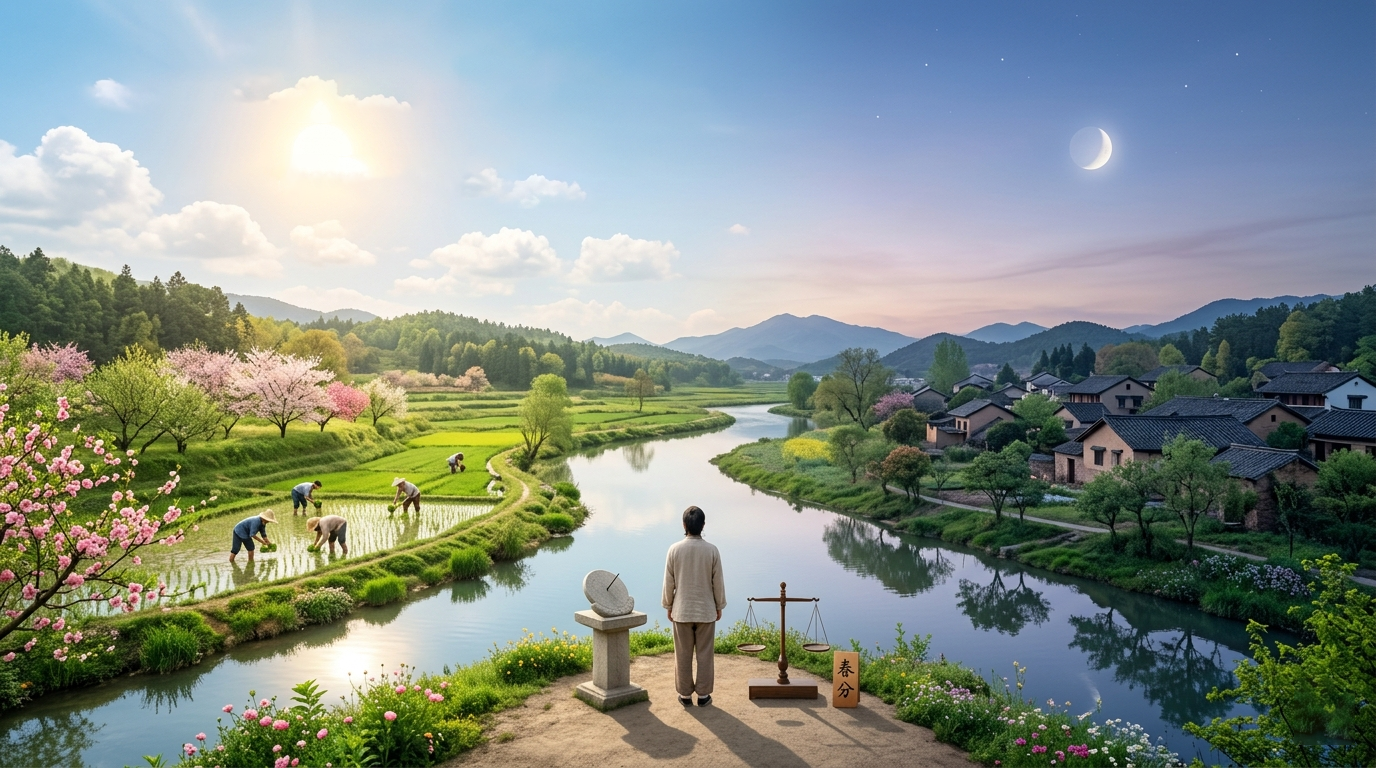
The Spring Equinox is more than a seasonal marker; it is a philosophical metaphor rooted in Chinese philosophy and the concept of harmony. Its perfect balance reflects the traditional Chinese ideal of moderation and harmony.
In nature, balance is dynamic, not fixed. Yin and yang constantly shift. The equinox represents a fleeting moment of equilibrium within continuous change. Life mirrors this rhythm. Work and rest, ambition and restraint, ideals and reality all require careful balance.
Excess leads to imbalance. Overwork drains vitality, while too much comfort dulls purpose. The equinox reminds us to remain centered, adaptable, and composed.
A farming proverb says: “At the Spring Equinox, every moment is worth gold.” This highlights the importance of timing. Efforts made now shape the harvest to come. For modern life, the message remains: pause, observe, and act in harmony with the right moment.
On a broader scale, the equinox embodies ecological wisdom and reflects the importance of balance between humans and nature. Humanity must coexist with nature, not dominate it. Environmental challenges today are, at their core, disruptions of balance. The equinox invites reflection and responsibility.
V. Embrace the Light, Grow with the Season
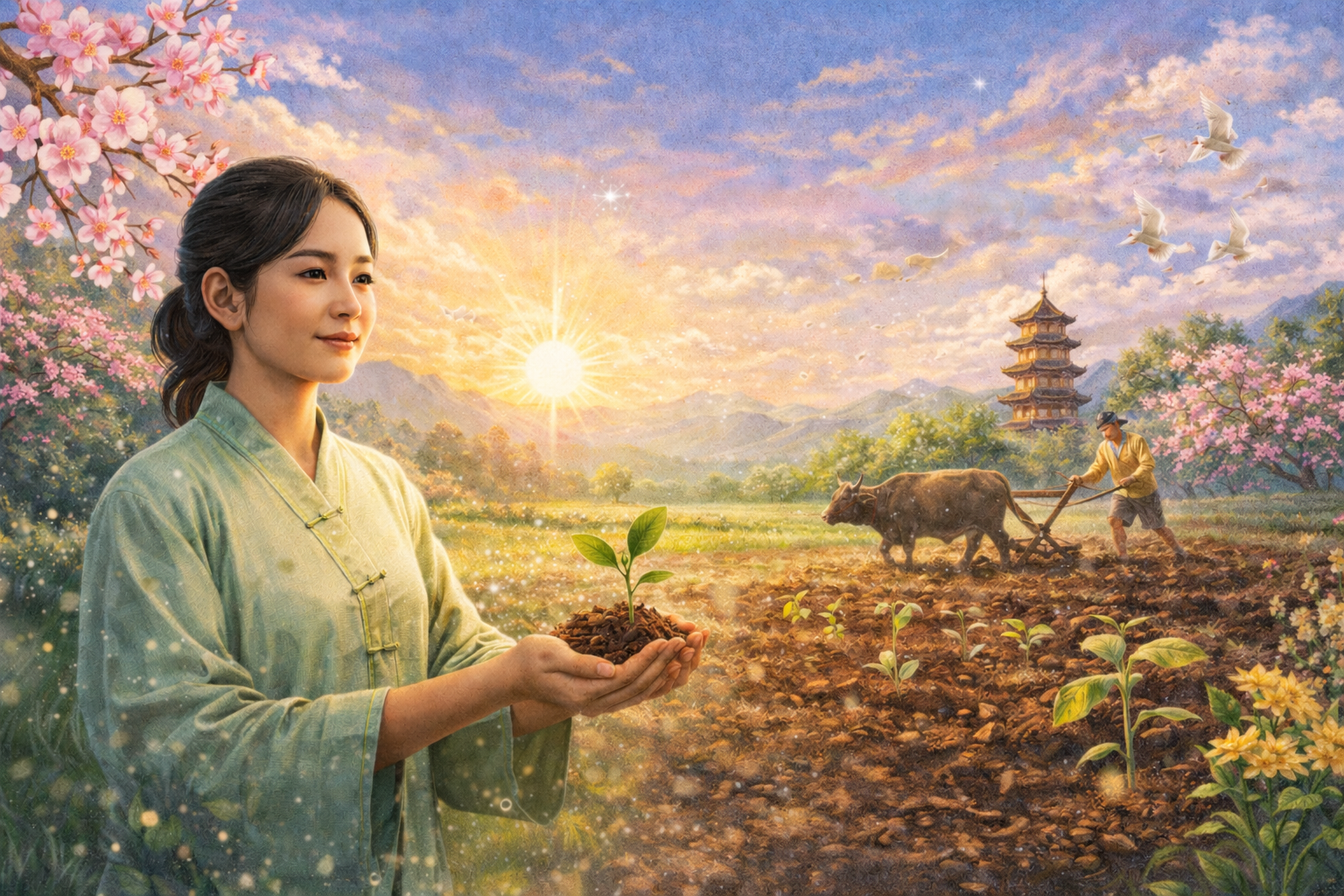
The Spring Equinox stands at the midpoint of spring, yet also marks a beginning. It divides the world into light and darkness, only to reunite them in a higher harmony.
Looking back, we may carry fatigue or regret. Looking forward, uncertainty remains. But the equinox offers reassurance: no night lasts forever, and no winter can resist the return of warmth.
What matters is whether we can live with balance, like this moment in time, and grow with quiet strength, like seeds breaking through the soil.
“Spring stands perfectly divided; the world enters its finest season.”
Step outside. Feel the breeze, watch the blossoms, taste the freshness of spring. Try balancing an egg, not for science, but for the joy of focus and stillness. More importantly, plant a seed of hope within yourself, nurture it with effort and patience, and guard it with calm.
May we not waste this radiant season. May we move toward the light, find our rhythm, and write our own harvest into the fields of time.
Because spring never fails those who embrace life—and the Spring Equinox is its most graceful promise.
FAQ
What is the Spring Equinox in China?
The Spring Equinox in China, known as Chunfen (春分, chūnfēn), is one of the 24 solar terms in the traditional Chinese calendar. It marks the moment when day and night are nearly equal, symbolizing balance in nature and the transition into the middle of spring.
What does the Spring Equinox mean in Chinese culture?
In Chinese culture, the Spring Equinox represents the balance of yin and yang (阴阳). It reflects harmony, renewal, and the idea of equilibrium in both nature and human life, making it an important concept in Chinese philosophy and seasonal thinking.
What are traditional Spring Equinox customs in China?
The Spring Equinox customs in China include egg balancing, eating seasonal spring vegetables, flying kites, and historical farming practices such as “sending the spring ox.” These activities reflect Chinese seasonal traditions and agricultural culture.
Why is the Spring Equinox important in the 24 solar terms?
The Spring Equinox is important because it marks the midpoint of spring within the 24 solar terms system. It signals longer days, warmer weather, and a key period for agriculture, making it essential in traditional Chinese seasonal planning.
How does the Spring Equinox relate to yin and yang?
The Spring Equinox is a perfect example of yin-yang balance, as day and night are equal. In Chinese philosophy, this balance represents harmony in the universe and serves as a reminder to maintain balance in health, emotions, and daily life.