An Introduction to Traditional Chinese Clothing
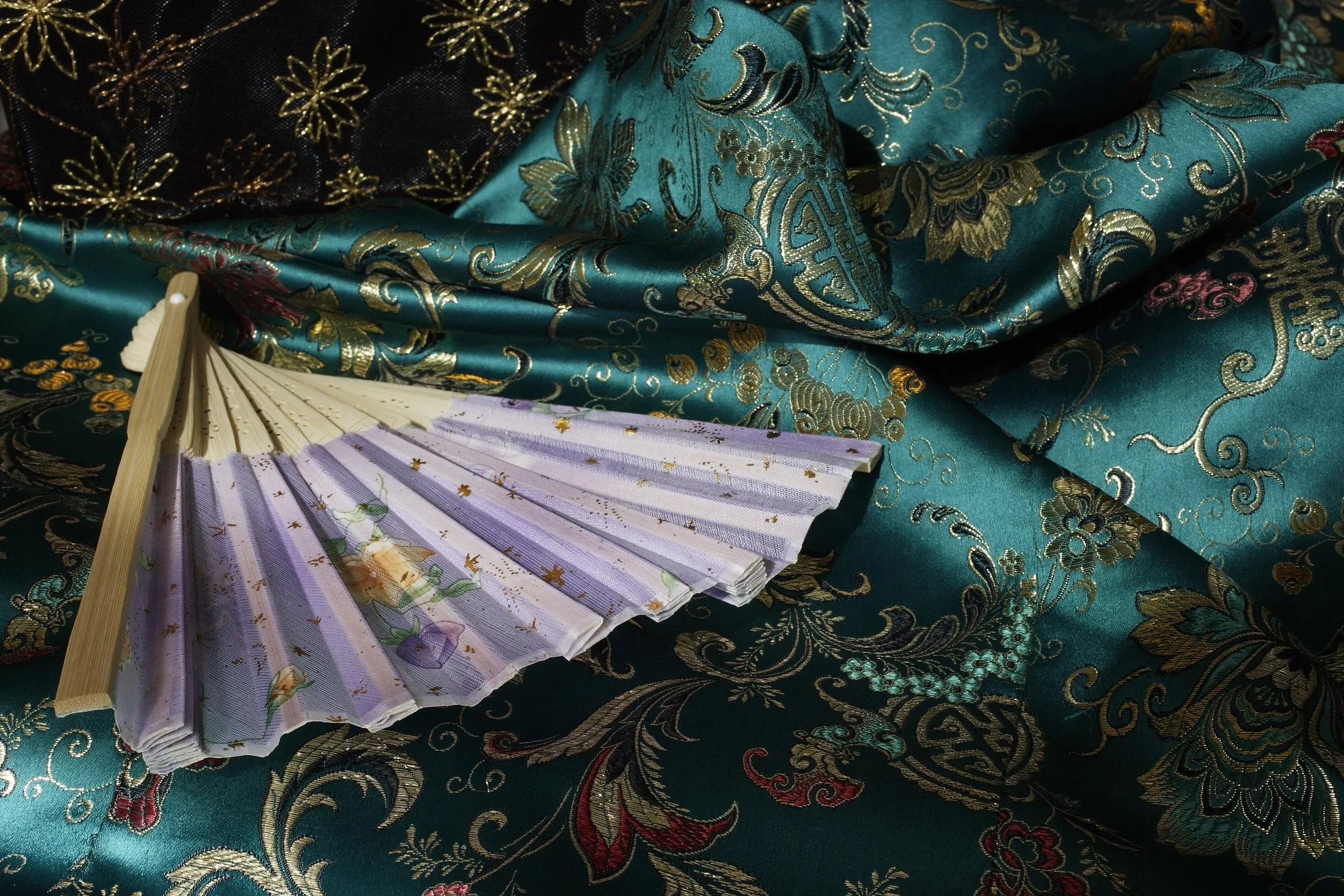
When people think of traditional Chinese clothing, images of flowing robes, intricate embroidery, and elegant silhouettes often come to mind. Yet Chinese traditional dress is far more diverse than any single style. Over thousands of years, each dynasty developed its own distinctive clothing traditions, shaped by social customs, aesthetics, and historical change.
In this article, we explore the evolution of traditional Chinese clothing across major dynasties, examine the rich and varied dress of China’s ethnic minorities, and look at how traditional garments continue to influence fashion and cultural identity in modern China.
Table of Contents
Clothing Throughout the Major Dynasties
China’s long and complex history spans dozens of dynasties, each leaving a distinct mark on politics, culture, and daily life. When it comes to traditional clothing, however, a few dynasties stand out for their lasting influence on how Chinese dress is understood today.
The Han Dynasty (206 BCE–220 CE)
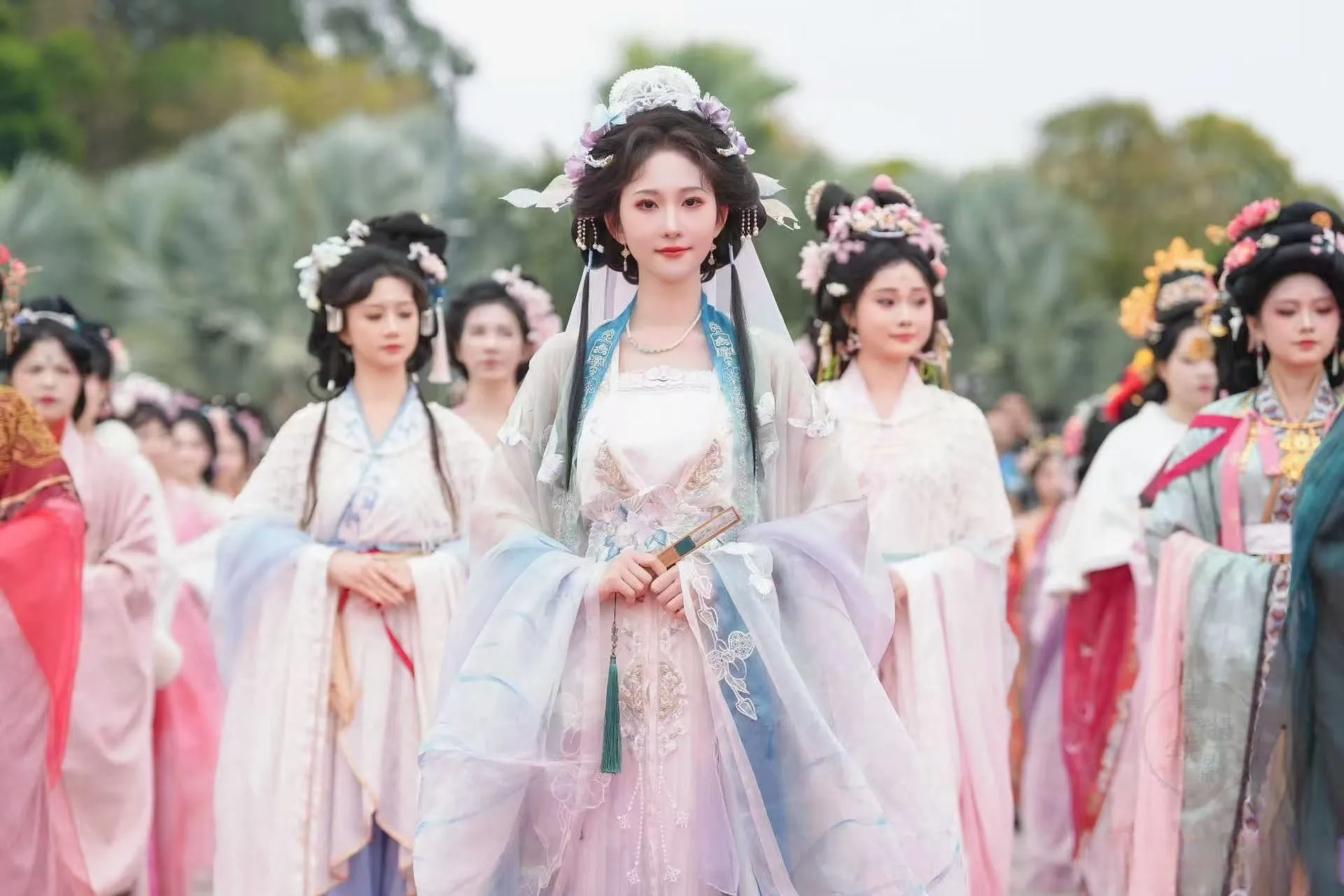
The Han dynasty, China’s second imperial dynasty, was a period of remarkable political stability and economic prosperity. It is widely regarded as one of the most influential eras in Chinese history, laying the cultural foundations of what later became known as “Han” identity.
To this day, the majority ethnic group in China is known as the Han people (汉族 hànzú). The Chinese writing system is called Han characters (汉字 hànzì), the Mandarin language is referred to as Han language (汉语 hànyǔ), and traditional Chinese clothing rooted in this era is known as Han clothing, or Hanfu (汉服 hànfú).
During the Han dynasty, men’s and women’s clothing shared similar silhouettes and construction. Gender distinctions were expressed through differences in color, fabric choice, decorative elements, and accessories rather than overall design. This period is often described as favoring a “dark style,” with black and red being the dominant colors.
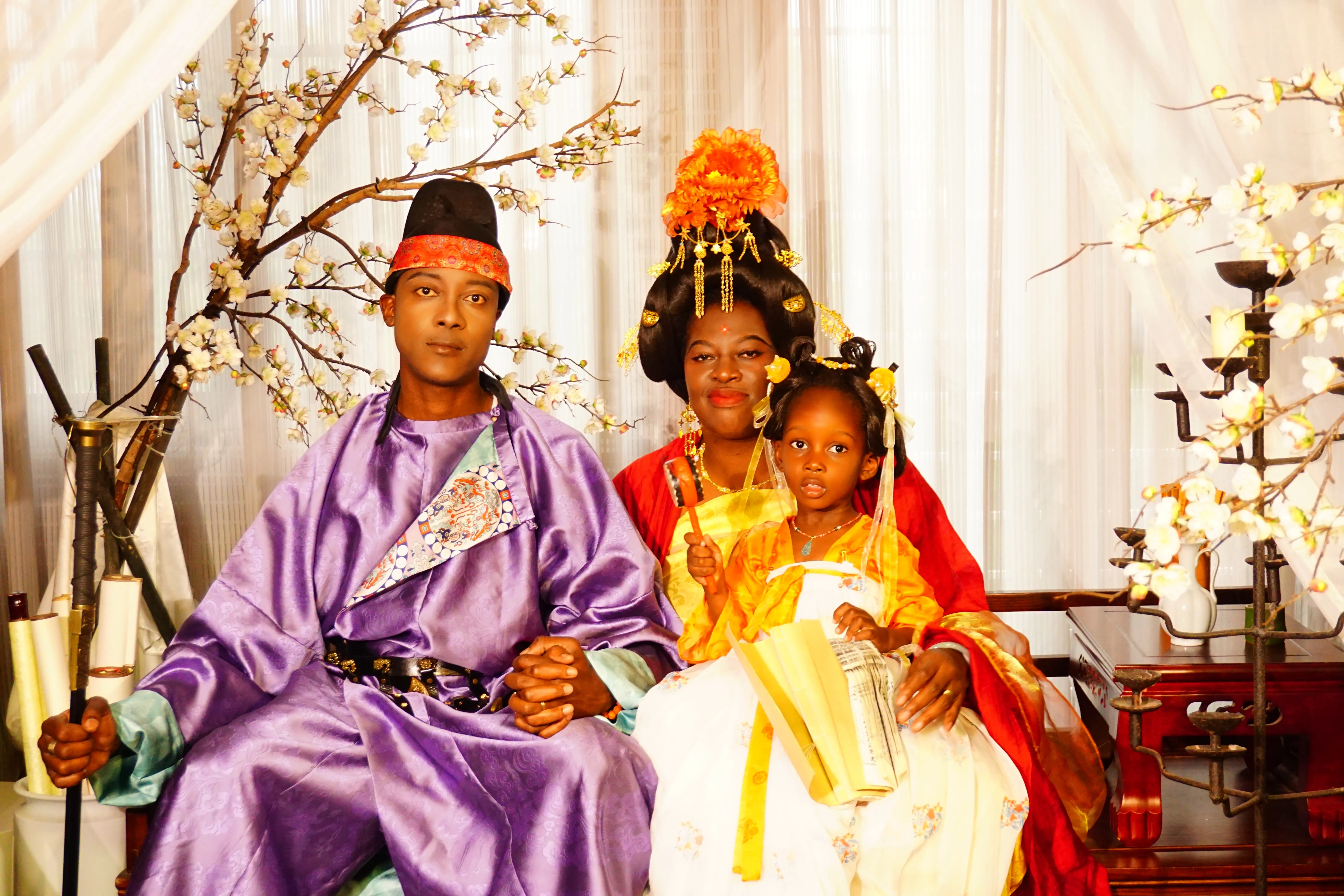
RPL students participating in a Hanfu experience event, showcasing traditional Han Dynasty clothing styles in a modern setting.
Han clothing is characterized by its wide sleeves, flowing lines, and loose, layered appearance. Outfits typically consisted of two or three garments, including a loose, open cross-collar inner robe, a long wrap skirt, and an outer robe fastened around the waist.
Two main robe styles were especially common: the curved-hem robe (曲裾袍 qūjūpáo) and the straight-hem robe (直裾袍 zhíjūpáo). Women could also wear the 襦裙 (rúqún), a combination of a cross-collar top paired with a long skirt, which became one of the most iconic forms of early Han clothing.
The Tang Dynasty (618–907 CE)
The Tang dynasty is widely regarded as one of the most prosperous, open, and culturally vibrant periods in Chinese history. Thanks to extensive international trade along the Silk Road, the Tang capital became a cosmopolitan hub where Indian, Persian, Central Asian, and even distant Western influences flowed freely into Chinese society.
This unprecedented cultural exchange introduced new fabrics, dyeing techniques, and aesthetic ideas, creating ideal conditions for dramatic changes in fashion. As a result, Tang-era clothing is often remembered for its bold colors, rich materials, and confident sense of style.
Tang fashion embraced vivid hues and careful coordination. Common materials included wool, linen, and silk, with silk serving as a clear marker of wealth and social status. Due to its high cost and prestige, silk was largely reserved for the nobility and upper classes. Gold and yellow, in particular, were strictly associated with the emperor and the royal family, gradually becoming enduring symbols of imperial authority. Other colors, however, were widely worn across different social classes.
Women’s clothing during the Tang dynasty was especially distinctive. Long-sleeved tops with wide sleeves and low, open collars were commonly worn, often revealing the neckline and upper chest. Compared with earlier dynasties, these garments were considered remarkably bold and expressive. The tops were typically paired with long, flowing skirts adorned with geometric patterns and secured by a sash tied high on the chest, creating the iconic high-waisted silhouette of Tang fashion.
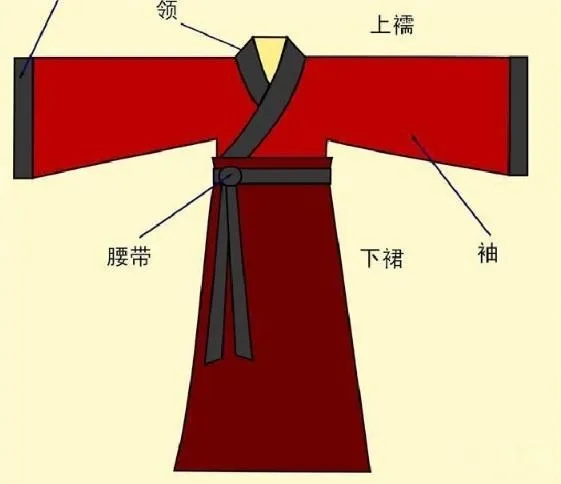
Structure diagram of Tang Dynasty women's clothing, showing key components like the collar, upper garment, waist belt, lower skirt, and sleeves.
Makeup styles of the era matched this confident aesthetic. Women often used lead-based face powder to achieve a pale complexion, painted elaborate eyebrows, and applied decorative floral or symbolic designs between the brows, turning the face itself into a canvas of artistic expression.
Men’s clothing largely evolved from Han dynasty styles but offered greater variety. Everyday attire usually consisted of solid-colored robes with rounded collars, complemented by leather belts and boots. This combination reflected both practicality and the growing influence of Central Asian dress, blending elegance with functionality.
The Ming Dynasty (1368–1644 CE)
The Ming dynasty marked a significant turning point, as it was a Han-majority regime that came to power after the fall of the Mongol-led Yuan dynasty.
The founding of the Ming dynasty symbolized a cultural restoration as much as a political one. Reasserting Han identity became a central goal of the new ruling elite, and clothing played a key role in this effort. Ming fashion consciously revived and reinterpreted earlier Han styles, while deliberately reducing foreign and minority influences that had been prominent during the Yuan period.
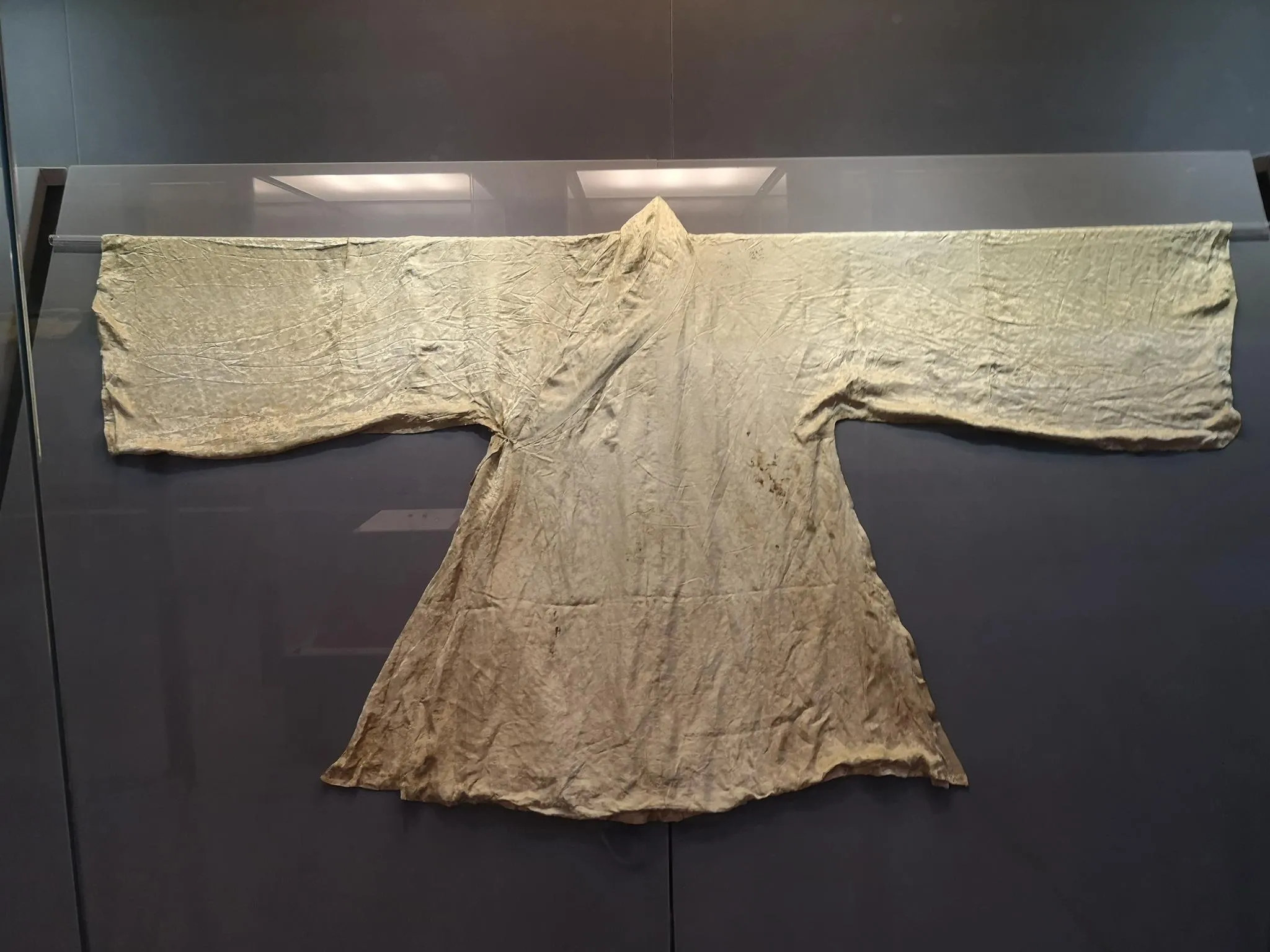
Women’s fashion during the Ming dynasty shifted toward a more restrained and elegant aesthetic. A common outfit consisted of a mid-length upper garment worn over a floor-length skirt, creating a long, graceful silhouette. Another popular style was the aoqun (袄裙 ǎoqún), which paired a pleated skirt with a cross-collar cotton top extending below the waist. Soft, light, and pastel tones were especially favored, reflecting the era’s preference for subtle refinement.
Embroidered capes also became a notable feature of Ming attire for both men and women. These capes typically featured straight collars and open sleeves, adding an extra layer of formality and decorative detail to the overall ensemble.
The Qing Dynasty (1636–1912 CE)
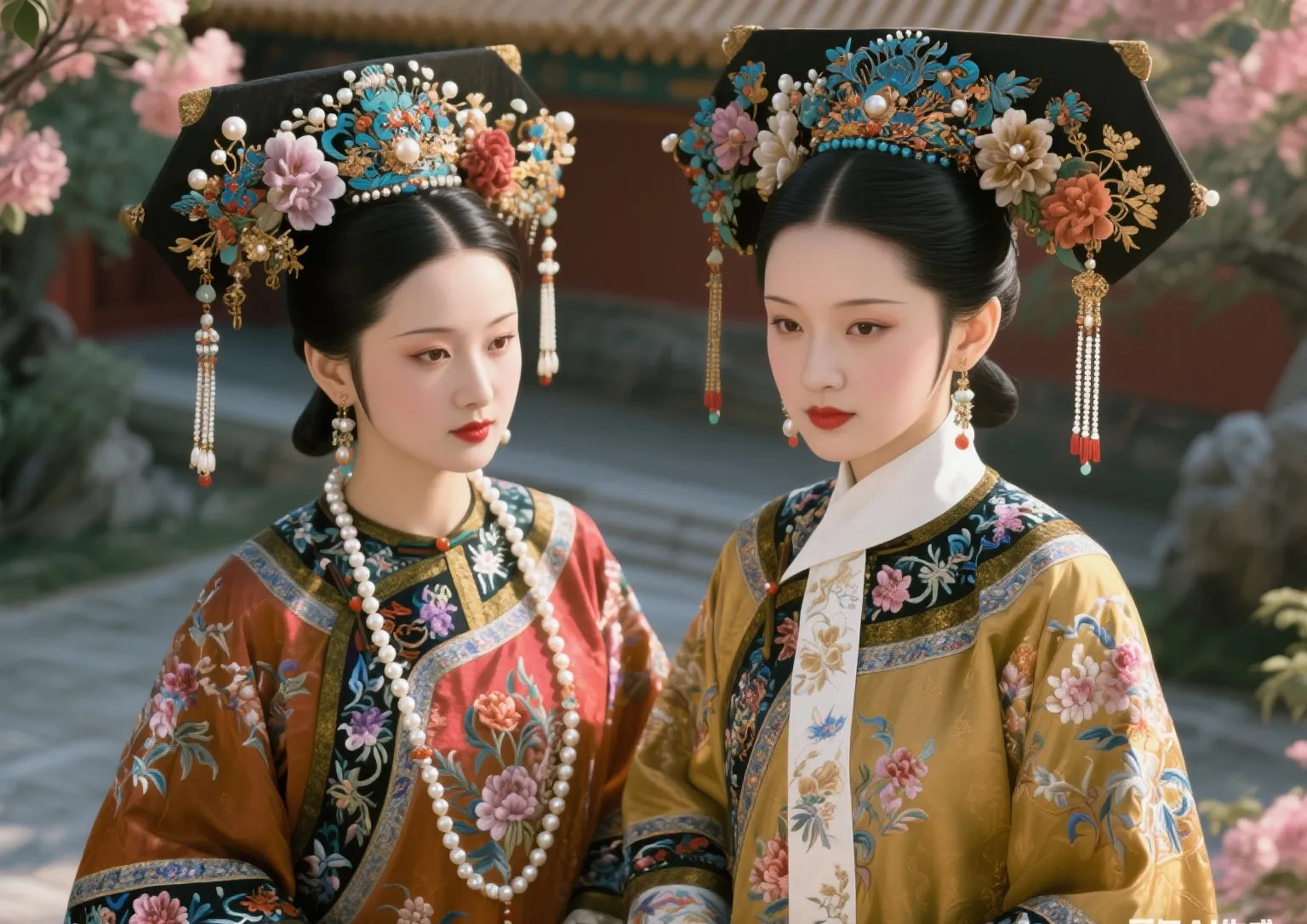
Qing Dynasty Beauty
In the 17th century, the nomadic Manchu people overthrew the Ming dynasty and established the Qing dynasty, the last imperial dynasty in Chinese history. Their rise to power brought profound political, cultural, and sartorial changes, many of which were reflected in the clothing system of the time.
Qing dynasty dress was highly regulated and intricately codified. Clothing functioned as a visible marker of identity, rank, and political allegiance. Colors, fabrics, and garment designs were all strictly controlled, with yellow holding the highest symbolic value. As the dynastic color, yellow was reserved exclusively for the emperor and members of the imperial family, reinforcing its association with authority and legitimacy.
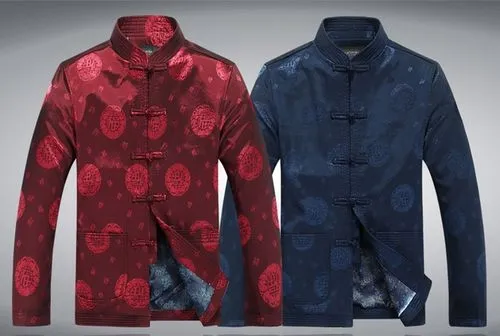
Manchu clothing traditions were deeply influenced by their origins as skilled horsemen. Practicality and mobility shaped Qing-era fashion, especially for men. A common male garment was the tangzhuang (唐装 tángzhuāng), a jacket with a straight collar derived from the short riding coats worn by Manchu cavalry. This was typically worn with an ankle-length wrap skirt. Hairstyles were equally distinctive: Manchu men shaved the front portion of their heads while wearing the remaining hair in a long braid, known as the queue, hanging down the back.
During the early Qing period, clothing regulations were enforced with exceptional severity. Han Chinese men were required to adopt Manchu hairstyles and dress, under the infamous policy summarized as “keep your hair and lose your head, or keep your head and cut your hair.” Failure to comply could result in execution. Over time, however, these rules were gradually relaxed and came to apply mainly to officials and scholars, rather than the general population.
Manchu women followed different sartorial traditions. Prior to marriage, women typically grew their hair long, while married women adopted elaborate hairstyles. The most iconic of these was the liangbatou (两把头 liǎngbǎtóu), famously worn by Empress Dowager Cixi. This striking style featured a tall, winged headdress with hair arranged symmetrically on either side of the head and adorned with flowers, ornaments, and decorative pins.
In contrast to men, Han women were largely permitted to retain Ming-style Han clothing throughout the Qing dynasty and were not required to adopt Manchu female hairstyles. Among women from affluent families, everyday attire often consisted of a side- or front-fastening robe paired with a wrap-around pleated apron skirt, blending practicality with understated elegance.
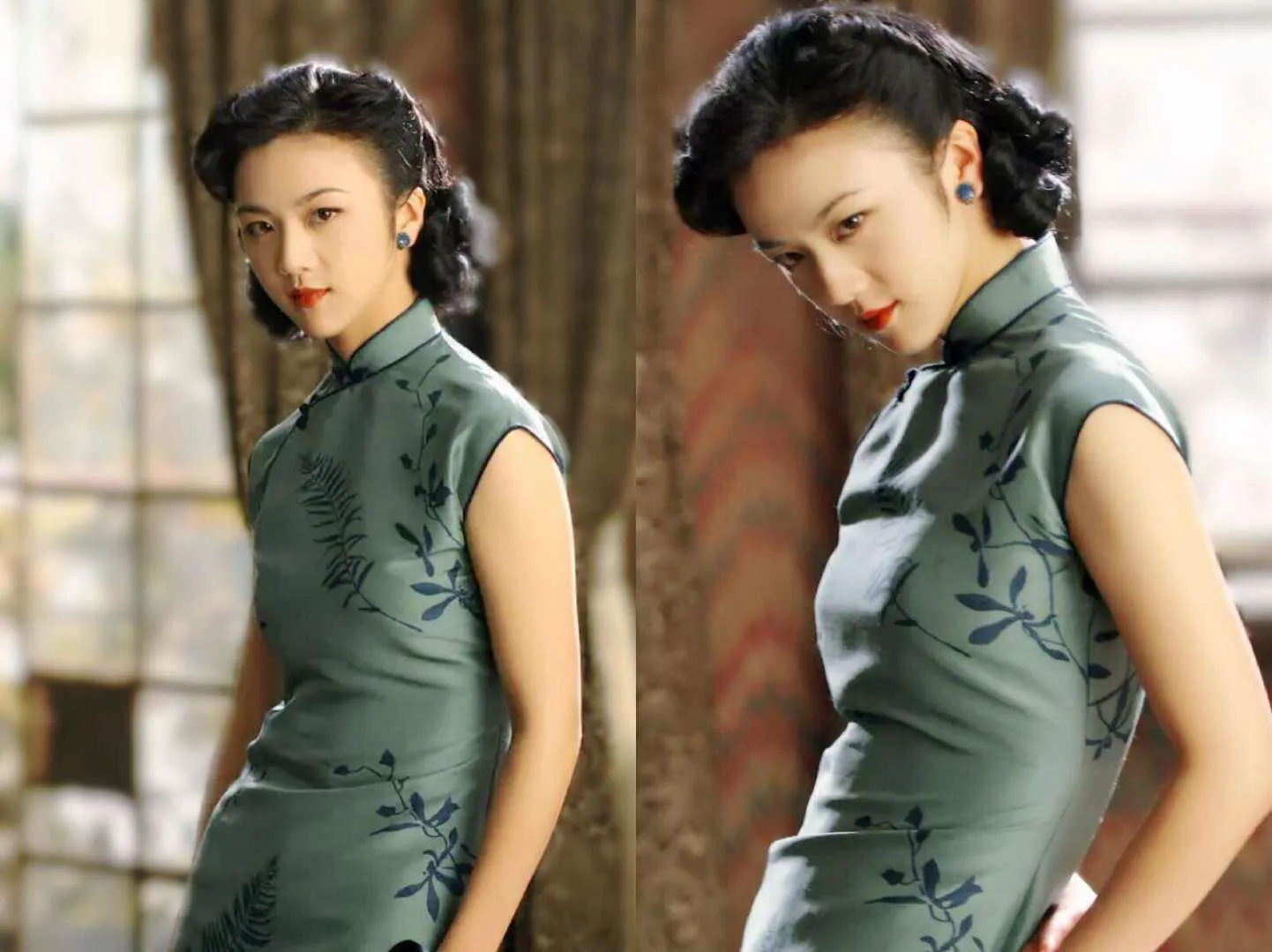
Qipao Beauty
When people today think of traditional Chinese women’s clothing, they often picture the qipao (旗袍 qípáo), also known as the cheongsam. While the qipao originated from the clothing of Manchu women during the Qing dynasty, it did not achieve widespread popularity until the 1920s, after the fall of the Qing. It was in cities like Shanghai and Hong Kong that the garment was reimagined into the form most recognized today, becoming a lasting symbol of modern Chinese femininity.
Traditional Clothing of China’s Ethnic Minorities
In addition to the Han majority, the People’s Republic of China officially recognizes 55 ethnic minority groups. As a result, traditional Chinese clothing encompasses far more than Han-style garments alone, reflecting an extraordinary diversity of regional, cultural, and historical influences.
The traditional attire of many ethnic minority groups has been carefully preserved and, in many cases, remains part of daily life today. This is especially true in rural and mountainous regions, where clothing continues to play an important role in expressing identity, heritage, and community belonging.
Below are a few notable examples of traditional clothing worn by China’s ethnic minorities:
Zhuang Ethnic Minority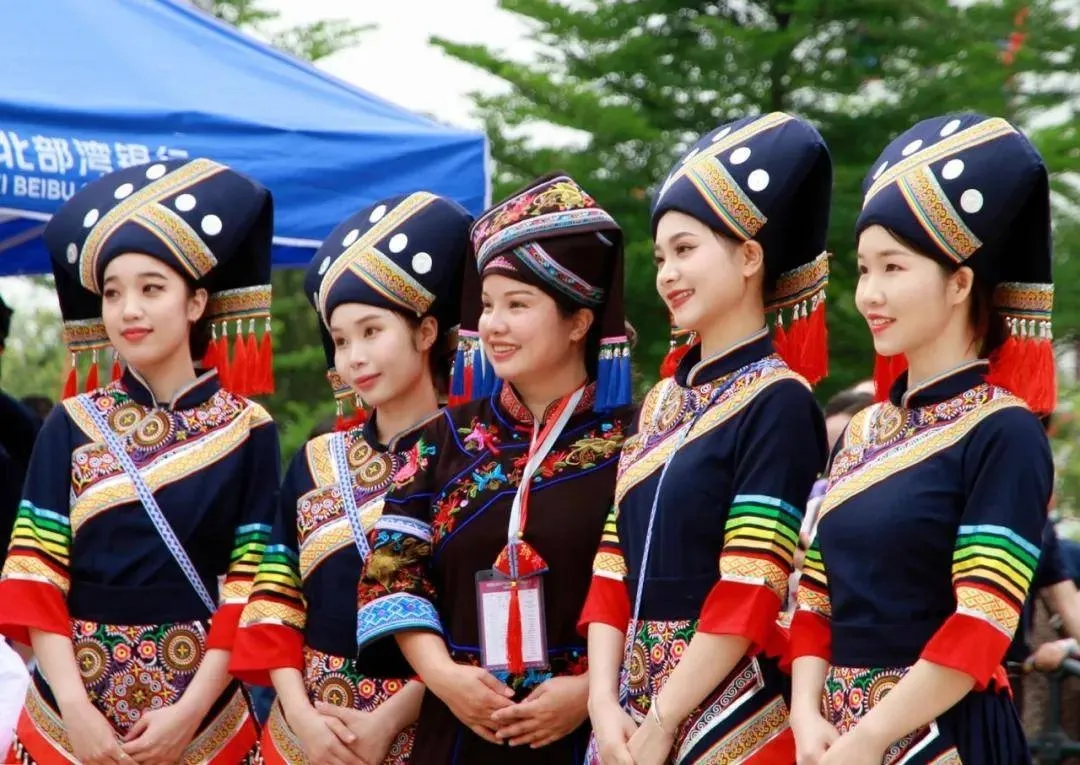
Zhuang Ethnic Minority Traditional Clothing
The Zhuang ethnic minority primarily resides in Guangxi Province. Their traditional clothing is understated and practical, typically featuring muted, earthy tones such as black, brown, and deep blue. Renowned for their craftsmanship, the Zhuang people have long relied on self-spun, self-woven, and self-sewn textiles, reflecting a strong tradition of self-sufficiency.
Zhuang men usually wear a black Tang-style jacket paired with loose-fitting trousers and a cloth waist tie. Depending on the season and weather, this outfit may be complemented with a simple turban.
Zhuang women commonly wear collarless jackets in shades of blue or black, matched with slightly wider trousers. Black headscarves or turbans are worn on the head, while aprons are tied around the waist. Delicate embroidery is often added to the cuffs and along the lower edge of the garment’s opening, introducing subtle decorative detail to an otherwise minimalist style.
Although their clothing is plain in appearance, it is frequently paired with silver accessories such as earrings, bracelets, and ornate headpieces. Straw shoes are also widely worn, particularly by those working in agricultural fields.
At rplschool, we regularly organize trips to the Longji Rice Terraces as part of our immersion programs. These visits allow students to experience the peaceful beauty of traditional village life while learning firsthand about the Zhuang ethnic minority, who make up a significant portion of the population in Ping’an (Zhuang) Village in Longsheng.
Uyghur Ethnic Minority (维吾尔族 Wéiwú’ěrzú)
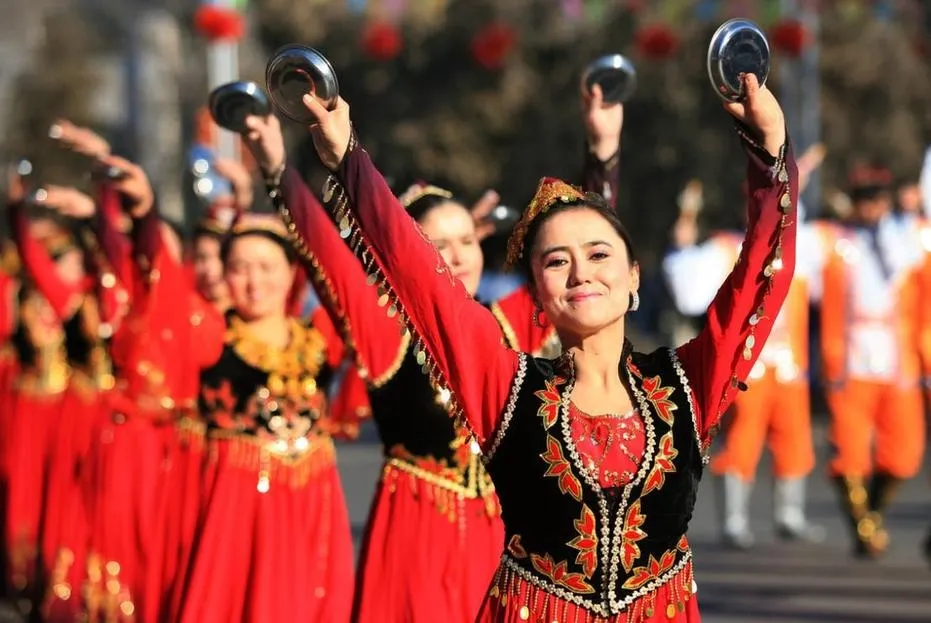
Uyghur Ethnic Minority Traditional Clothing
Uyghur traditional clothing is closely connected to Islamic culture and the region’s historic position along the Silk Road. As a crossroads of civilizations, Uyghur culture reflects influences from neighboring regions such as Central Asia, South Asia, and the Middle East, including present-day Kazakhstan, Pakistan, and Afghanistan.
Uyghur women traditionally wear long-sleeved dresses adorned with intricate silk embroidery. These garments are often vibrant and expressive, with gold, red, and black being especially favored colors. Xinjiang is one of the world’s major cotton-producing regions, making cotton a staple fabric in Uyghur clothing. Satin and silk are also widely used, particularly for formal wear. Silk headscarves are commonly worn, and outfits are frequently complemented with elaborate jewelry, which plays an important role in expressing personal style and cultural identity.
Uyghur men typically wear long robes or caftans, secured at the waist with a long scarf. During the colder winter months, they layer their clothing with a chapan, a traditional woolen overcoat designed for warmth. A distinctive feature of Uyghur men’s attire is the doppa, a square or rounded skullcap that is also worn by men in neighboring regions such as Uzbekistan and Tajikistan, highlighting shared cultural roots across Central Asia.
Tibetan Ethnic Minority (藏族 Zàngzú)
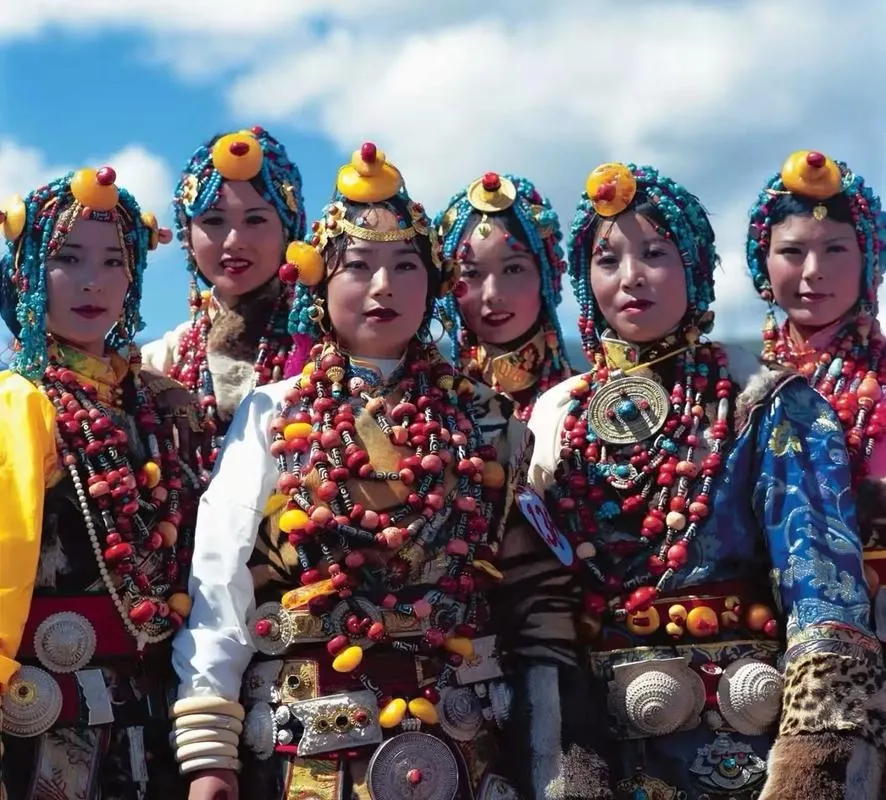
Tibetan Ethnic Minority Traditional Clothing
Life on the high Tibetan Plateau is shaped by extreme altitude, strong winds, and dramatic temperature shifts, and traditional Tibetan clothing reflects this demanding environment. To stay warm and protected, Tibetans have long relied on natural materials such as sheepskin, fur, thick wool, and sturdy leather footwear.
Because temperatures can change drastically between morning, midday, and evening, layering is essential. Garments are often added or removed throughout the day, with extra layers commonly tied around the waist when not in use.
Both men and women typically wear long, wrap-style robes made from wool, leather, cloth, or sheepskin, fastened at the waist with a belt or sash. These robes are practical yet distinctive, offering insulation while allowing freedom of movement. On special occasions, Tibetan women may wear ornate headdresses crafted from silver and adorned with coral and turquoise. These striking accessories are not only decorative but also convey social information, such as a woman’s age and marital status.
Miao Ethnic Minority (苗族 Miáozú)
Miao Ethnic Minority Traditional Clothing
The Miao people are famous for their vividly colorful and intricately embroidered clothing, as well as their dazzling silver accessories. Their garments are not just clothing—they are wearable stories, carrying cultural symbolism, family history, and local folklore.
Women’s clothing typically consists of a short jacket paired with a pleated skirt. The clothing is covered with elaborate embroidery, often depicting nature, animals, or mythical tales. Bright colors such as red, blue, and green dominate the palette, making the outfits extremely eye-catching. Silver jewelry is a hallmark of Miao fashion: women wear large silver necklaces, earrings, headpieces, and waist ornaments. During festivals, weddings, or other special occasions, the amount and intricacy of the silver accessories increase, symbolizing wealth, good fortune, and social status.
Men’s clothing is simpler but still distinctive, usually consisting of dark-colored jackets and trousers, occasionally accented with embroidery on cuffs or collars. Men may wear hats or headscarves depending on the occasion.
The Miao are also known for their artisanal skills—they spin, weave, and sew most of their own clothing, which makes every garment unique. Students on CLI Immersion Programs often have the chance to visit Miao villages, learning firsthand about the vibrant traditions and experiencing the local festivals where Miao clothing truly shines in all its colorful glory.
Bai Ethnic Minority (白族 Báizú)
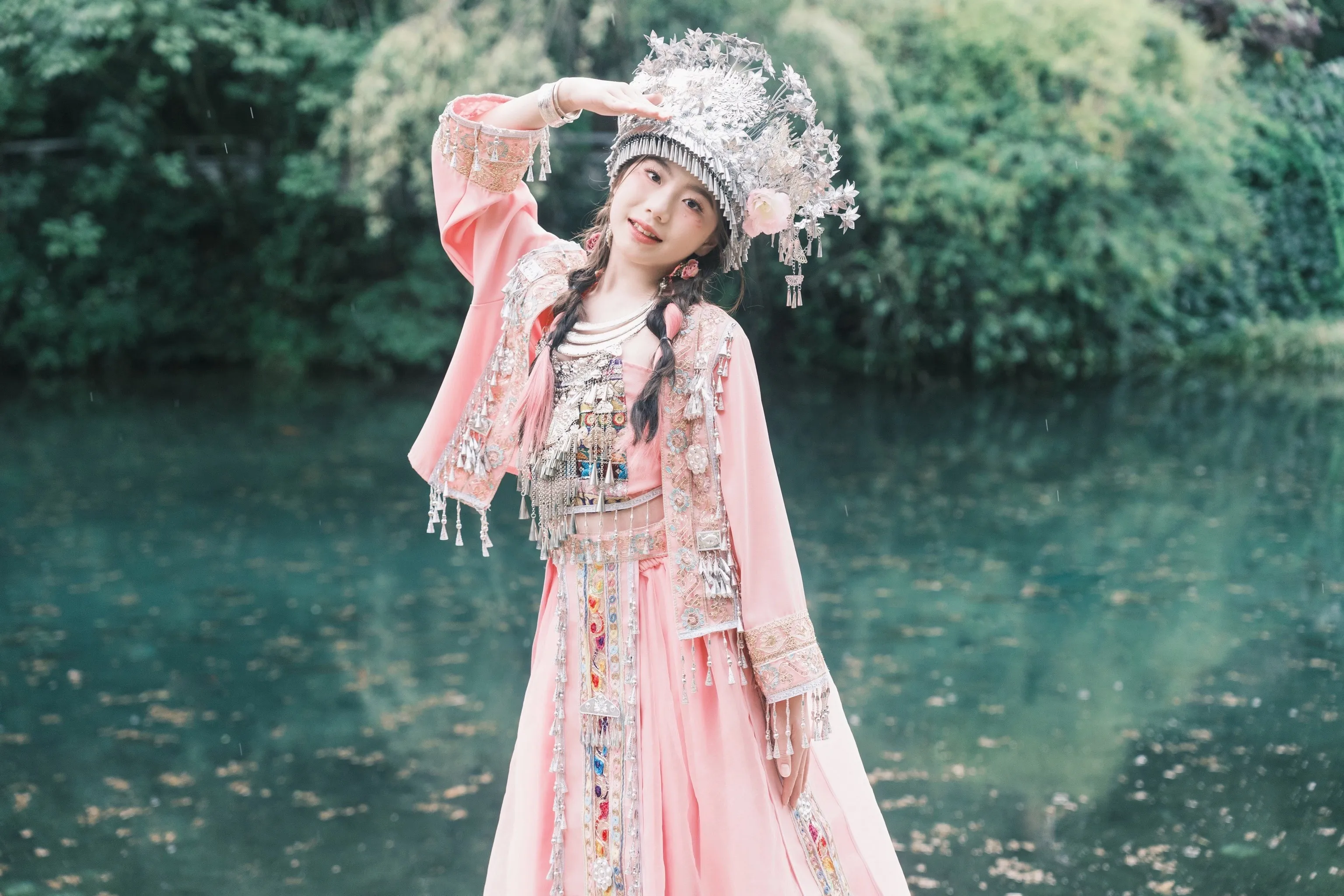
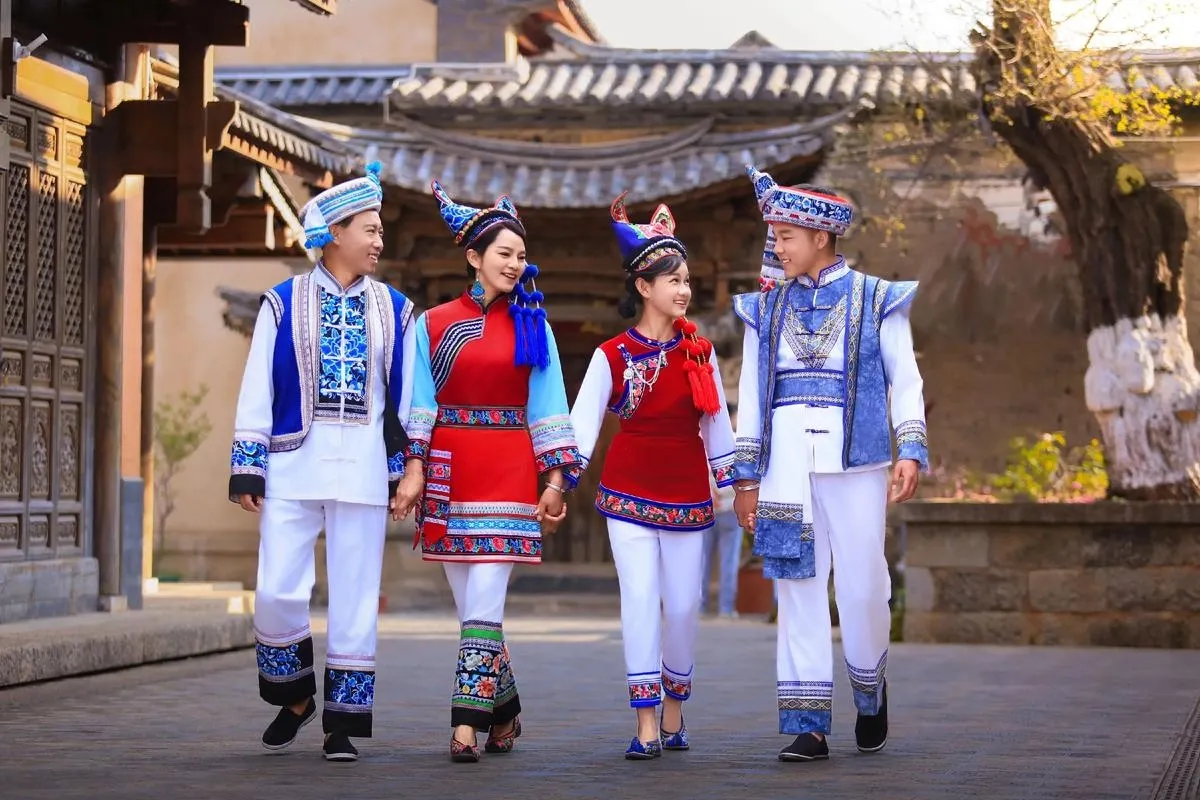
Bai Ethnic Minority Traditional Clothing
The Bai people, primarily living in Yunnan’s Dali region, are known for their elegant and understated traditional clothing, reflecting the Bai culture’s love of harmony, simplicity, and nature.
Women’s clothing usually features jackets with straight collars and long sleeves, paired with pleated skirts that often reach the ankles. The colors are generally light and muted—white, blue, and black are popular choices—symbolizing purity and calmness. Embroidery is common but tends to be delicate and minimal, often depicting flowers, clouds, or water motifs. Silver jewelry is worn for special occasions, but it is usually smaller and subtler than that of the Miao or Zhuang. Women may also wear embroidered headscarves or small headpieces, especially during weddings or festivals.
Men’s clothing is simple and practical, typically consisting of a dark-colored jacket over a shirt and trousers. Men’s garments often have straight collars and a few embroidered details around the cuffs or chest. Black or dark blue are the most common colors.
Bai clothing is not only practical for daily life but also expresses the Bai people’s appreciation for elegance and refinement. Students visiting Dali on CLI Immersion Programs often witness local Bai festivals, where traditional dress is worn proudly, offering a serene yet culturally rich glimpse into Bai heritage.
Traditional Clothing in Contemporary China
A Symbol of Heritage and Modern Expression
In recent years, interest in traditional Chinese culture has surged, fueled in part by the popularity of historical dramas and films. Among young people, there is a growing movement to embrace traditional clothing, especially Hanfu (汉服 hànfú), not just for special occasions but in everyday life.
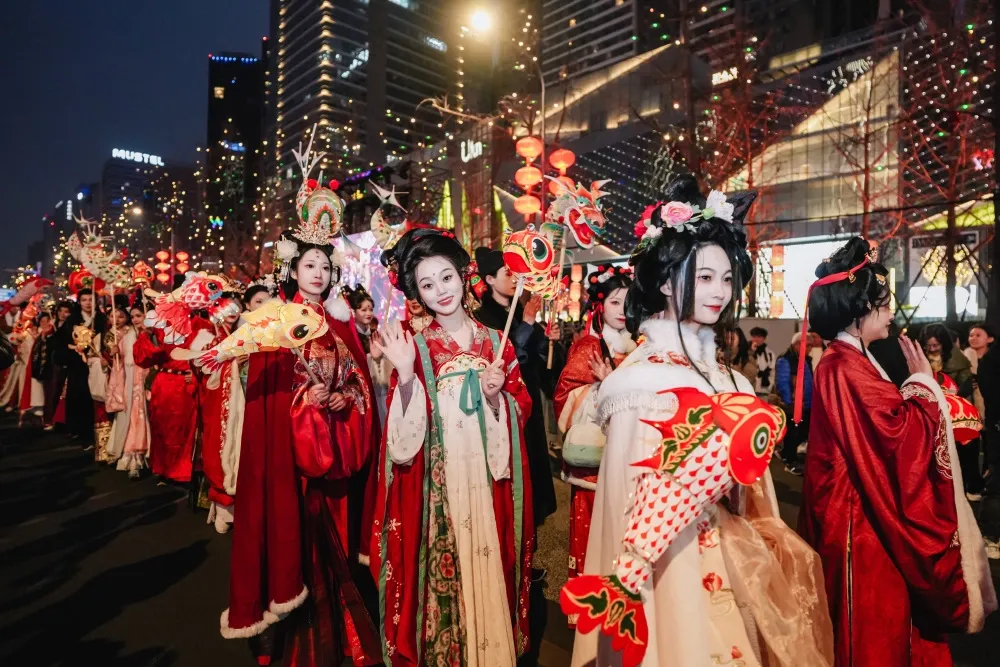
Hanfu Cultural Event
It’s increasingly common to spot groups of teenagers or young adults wearing flowing robes while enjoying a cup of bubble tea, exploring city streets, or taking photos in scenic areas. For many, donning traditional attire has become more than a fashion choice—it’s a way to celebrate Chinese heritage, express individuality, and show pride in the country’s long and rich history. Traditional clothing today serves as a bridge between past and present, connecting cultural legacy with contemporary lifestyle.
Formal Celebrations and Haute Couture
Traditional Chinese clothing continues to hold a special place in formal and celebratory settings. Women frequently choose the elegant qipao for events such as Chinese New Year banquets, weddings, and upscale galas. In some cases, qipaos are even incorporated as professional uniforms in luxury hotels and high-end restaurants, blending cultural tradition with modern service aesthetics.
Beyond everyday wear, traditional Chinese fashion has also become a source of inspiration in the haute couture world. Designers have creatively fused Chinese elements with international styles, reimagining what it means for fashion to be “made in China.” Renowned designers like Laurence Xu, Guo Pei, Huishan Zhang, and Wang Chen Tsai-Hsia (often called the Chanel of Taiwan) incorporate Chinese embroidery, silk, and imperial motifs into their collections. Even Western fashion houses such as Dior and Elie Saab have released lines heavily influenced by the artistry of Chinese textiles and imperial designs.
The Modern Revival of Ancient Elegance
In the fast-paced, digitalized world of the 21st century, many Chinese are turning to their ancestral dress for inspiration, seeking to reconnect with their heritage and infuse modern life with the grace of the past. Each dynasty’s clothing traditions continue to influence contemporary fashion, proving that Chinese attire is not just historical costume but a living, evolving art form. While fashion often moves in predictable cycles, perhaps the true trend today is rediscovering and reinventing centuries-old styles to create something uniquely modern yet timeless.
FAQ
Q: What is Hanfu and how is it different from other traditional Chinese clothing?
A: Hanfu (汉服 hànfú) refers to traditional clothing of the Han ethnic majority, characterized by flowing robes, wide sleeves, and layered garments. Unlike Qing dynasty clothing or ethnic minority attire, Hanfu emphasizes simplicity, elegance, and historical styles from the Han, Tang, and Ming dynasties.
Q: How did clothing styles differ between the major dynasties?
A: Clothing evolved significantly across dynasties. Han dynasty clothing favored wide sleeves and dark colors; Tang dynasty embraced bright colors and high-waisted skirts; Ming dynasty revived Han styles with structured designs and pastel tones; Qing dynasty enforced Manchu-style clothing with distinctive collars and hairstyles, while women often retained Han clothing traditions.
Q: What are some examples of ethnic minority clothing in China?
A: China’s 55 ethnic minorities have distinct clothing. For example, Zhuang clothing is practical with muted colors; Uyghur clothing features vibrant embroidery and silk fabrics; Tibetan clothing uses wool and sheepskin for cold climates; Miao clothing is colorful with intricate embroidery and silver jewelry; Bai clothing is elegant, understated, and harmoniously designed.
Q: How has traditional Chinese clothing influenced modern fashion?
A: Traditional clothing inspires contemporary fashion, appearing in Hanfu movements, qipao for formal events, designer collections, and even haute couture. Designers integrate embroidery, silk, and historical motifs into modern styles, bridging cultural heritage with current trends.
Q: Why has traditional Chinese clothing seen a revival among young people?
A: Young generations embrace Hanfu and other traditional garments to reconnect with cultural heritage, express individuality, and celebrate Chinese history. Social media, cultural clubs, and festivals have fueled this resurgence, making traditional clothing visible in daily life and urban spaces.
Q: Are traditional Chinese garments still worn for daily use?
A: While most traditional clothing is now worn for festivals, photoshoots, weddings, and cultural events, some young people wear Hanfu casually. Additionally, ethnic minority communities continue to wear traditional attire in rural and ceremonial contexts, preserving cultural identity.