Top 10 Legendary Horses in Chinese History
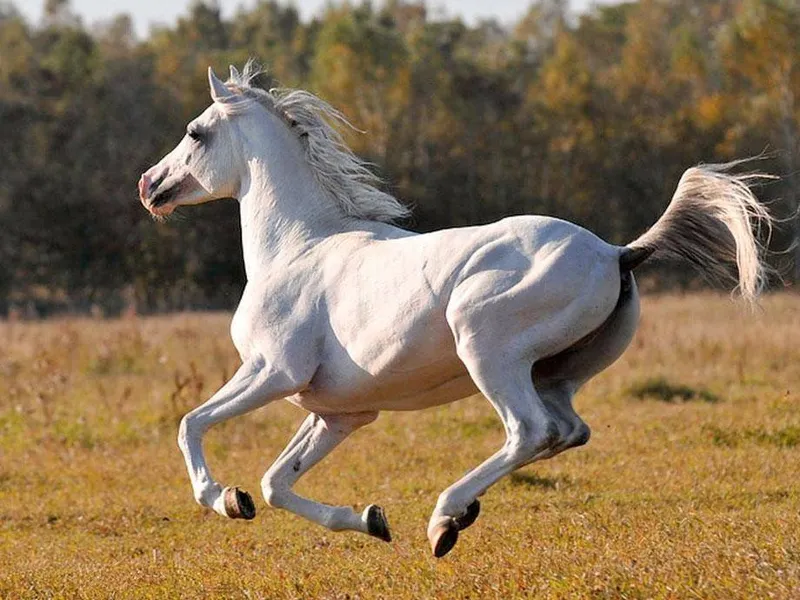
The warhorses that galloped through history—and into legend.
Throughout China’s long and turbulent history, battles were often decided not only by brilliant generals or powerful weapons, but also by the legendary horses beneath them. These remarkable creatures carried emperors, warlords, and heroes across mountains, deserts, and vast battlefields. Over time, they became more than animals—they transformed into cultural icons symbolizing loyalty, courage, strength, and destiny.
Below are ten of the most legendary horses in Chinese history, each with a story so vivid that it still echoes today.
1. Chìtù (赤兔马) – The Red Hare: King of Horses
Often hailed as “the king of all horses”, the Red Hare is perhaps the most famous steed in Chinese culture. With a fiery red coat and the ability to “travel a thousand li in a day and eight hundred at night”, Red Hare was said to be so fast that its hooves barely touched the ground.
It first belonged to the tyrant Dong Zhuo, then to the mighty warrior Lü Bu—whose ferocity was matched only by Red Hare’s own wild spirit. After Lü Bu’s death, the horse was given to the righteous general Guan Yu, with whom it formed a profound bond. When Guan Yu was killed, Red Hare refused to eat and died soon after—an enduring symbol of loyalty so deep it transcended life itself.
2. Dílú (的卢) – The Steed That Leapt the Tan Stream
Among the many tales of the Three Kingdoms period, few moments are as dramatic as the “Leap over the Tan Stream.” When Liu Bei was cornered by enemies and escape seemed impossible, his horse, Dílú, charged forward and leaped across the wide rushing river in a single astonishing bound.
This desperate jump saved Liu Bei’s life and cemented Dílú’s place in Chinese history. While not as famous as Red Hare, Dílú represents that crucial moment of fate when courage changes everything.
3. Wūzhuī (乌骓) – The Loyal Companion of Xiang Yu
Wūzhuī, the black stallion of Xiang Yu—the mighty warlord known as the Hegemon-King of Western Chu—was said to be unmatched in speed and strength. With a shimmering black coat and four snowy-white hooves, it was nicknamed “the Cloud-Stepping Stallion.”
Xiang Yu tamed it through sheer force and bravery, and together they conquered countless enemies. But their most moving chapter came at the end: when Xiang Yu took his own life by the banks of the Wu River, Wūzhuī refused to leave him. It leaped into the river and vanished from sight.
The story became a symbol of unwavering loyalty in the face of tragedy.
4. Juéyǐng (绝影) – The Shadowless Horse of Cao Cao
The name “Juéyǐng” means “so fast it leaves no shadow,” and the horse lived up to its reputation. It was the beloved steed of the powerful warlord Cao Cao.
During an unexpected night attack by Zhang Xiu, Cao Cao narrowly escaped death thanks to Juéyǐng. Even after being struck by multiple arrows, the horse continued to gallop at full speed, carrying its rider to safety.
It finally collapsed after being shot in the eye—its final act fulfilling its destiny as the horse that saved a dynasty-builder’s life.
5. Huángbiāo (黄骠马) – The Golden Warrior Steed
Recognizable by its golden coat dotted with pale markings, the Huángbiāo horse was admired for its endurance and elegant build. It became especially famous as the mount of the Tang dynasty hero Qin Shubao, one of China’s most celebrated warriors.
Known for its gentle temperament and fierce loyalty, Huángbiāo accompanied Qin Shubao through countless battles, ultimately becoming a symbol of steadfast companionship between warrior and horse.
6. Bùjǐng (步景马) – The Sun-and-Moon Stallion
A mystical horse recorded in Western Han legends, Bùjǐng was said to have spiral markings on its legs shaped like the sun and moon. These marks glowed by day and night, and its coat changed color with the seasons.
It was once the mount of Dongfang Shuo, a legendary court jester, scholar, and trickster figure. According to folklore, the horse wandered through celestial realms before descending into the human world, bringing with it a touch of cosmic mystery.
7. Zhǎohuáng Fēidiàn (爪黄飞电) – The Lightning-Hoofed White Stallion
With a pure white coat and four golden hooves, Zhǎohuáng Fēidiàn was a horse of commanding presence. Owned by Cao Cao, it was so noble and striking that Cao Cao usually reserved it not for battle, but for triumphant returns and ceremonial occasions.
The horse’s imposing beauty earned it the reputation of being a “living banner”—a symbol of victory wherever it went.
8. Zhàoyè Yùshīzi (照夜玉狮子) – The White Lion of the Night
A legendary steed from Water Margin, this horse was famed for its snow-white body and ability to run a thousand li in a single day. Originally belonging to a Jurchen prince, it was stolen, fought over, and eventually became the mount of Song Jiang, the leader of the 108 Liangshan heroes.
Its appearance—glowing white even under moonlight—gave it the poetic name “the Jade Lion That Lights the Night.”
9. Yīzì Bǎnlèi Yùqílín (一字板肋玉麒麟) – The Jade Qilin Horse
This magnificent horse, associated with the Song dynasty general Yang Yanzhao (Yang Liu-lang), was famed for its unique appearance: a single black stripe across its forehead, unusually shaped ribs, and a shimmering white coat like the mythical qilin.
Stolen from a tribute caravan and later gifted to Yang Yanzhao, the horse became his trusted partner in defending the northern borders of the Song dynasty.
10. Hànxuè Bǎomǎ (汗血宝马) – The “Blood-Sweating” Heavenly Horse
Known in the West as the Akhal-Teke, this horse was treasured for its metallic sheen, thin skin, and extraordinary speed. From a distance, it appeared to “sweat blood”—a poetic effect caused by its unique reddish coat and vigorous sweat glands.
During the Han dynasty, Emperor Wu became obsessed with obtaining these horses, believing they were “heavenly steeds.” His desire sparked the famous War of the Heavenly Horses, a long and costly campaign into Central Asia.
Few horses in history have ever caused a war—this one did.
Why These Horses Still Matter
These legendary steeds are more than footnotes in old chronicles. They embody values cherished in Chinese culture:
- Loyalty — horses that died with their masters
- Courage — leaping rivers, charging through battle
- Endurance — surviving deserts, arrows, and war
- Spirit — symbols of heroism, destiny, and companionship
For modern readers, they offer a glimpse into the emotional depth of Chinese storytelling—where even a warhorse can be a hero with its own fate.