The Chinese Dragon: Symbol, Art, and Spirit of China
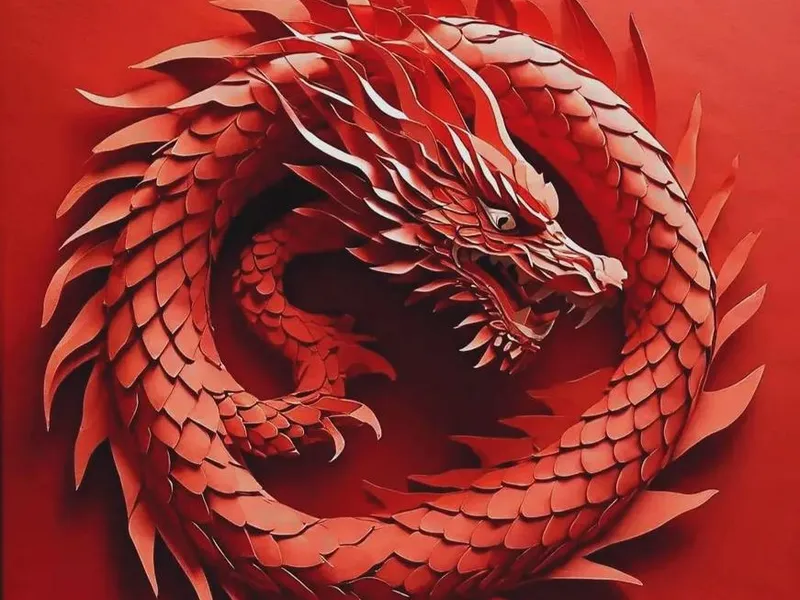
Few creatures are as instantly recognizable — or as deeply meaningful — as the Chinese dragon. With its flowing body, fierce yet noble expression, and elegant movement across Chinese art, festivals, and legends, the dragon (龙 lóng in Chinese) is more than a myth — it is the beating heart of Chinese culture.
To Western eyes, dragons may appear as fire-breathing beasts of destruction, but in China, the dragon is a symbol of life, power, and good fortune. It embodies the natural world, the emperor’s authority, and the enduring imagination of an ancient civilization.
In this article, we’ll explore the symbolism, art, and meaning behind the Chinese dragon — from ancient carvings to modern tattoos — and discover why, thousands of years later, this legendary creature still inspires awe around the world.
I. What Does the Chinese Dragon Symbolize?
If you ask ten Chinese people what the dragon means, you may get ten slightly different answers — but they all share one theme: positivity.
In Chinese culture, the dragon represents:
- Power (权力 quánlì): the strength to command respect and achieve greatness.
- Good fortune (好运 hǎo yùn): the ability to bring success and luck.
- Rain and water (雨与水 yǔ yǔ shuǐ): life-giving forces vital for crops and harmony.
- Transformation (变化 biànhuà): the idea that energy flows and nothing remains still.
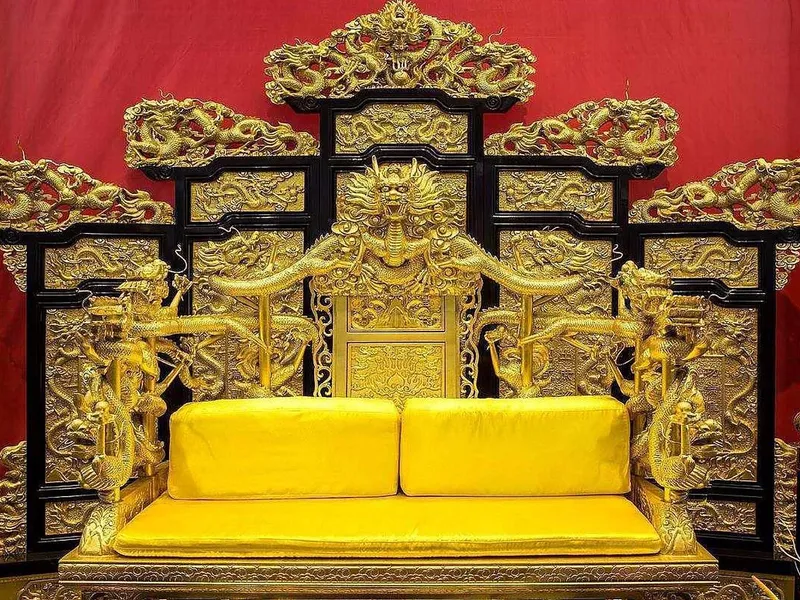
Historically, the dragon was considered the symbol of the Emperor, the “Son of Heaven.” Imperial robes were called dragon robes (龙袍 lóng páo), and the Emperor’s throne was known as the dragon seat (龙椅 lóng yǐ). To ordinary people, the dragon was a protector — a spirit that controlled the rain and rivers, ensuring bountiful harvests and peace.
Unlike Western dragons, which are often associated with greed or destruction, the Chinese dragon is benevolent, wise, and majestic. It doesn’t hoard gold or fight knights; it soars above mountains and seas, balancing yin and yang.
II. The Origins of the Chinese Dragon
The Chinese dragon’s story stretches back more than 7,000 years — to the Neolithic era. Archaeologists have found dragon-shaped carvings made of jade and pottery in ancient sites like Hongshan and Liangzhu cultures.
The dragon may have originated as a composite creature, formed by merging different animals admired for their strength or grace:
- The horns of a deer
- The head of a camel
- The eyes of a demon
- The scales of a carp
- The claws of an eagle
- The belly of a clam
- The tail of a snake
These elements created a mythical being that represented harmony among all creatures, capable of living in water, flying through clouds, and ruling the sky.
As Chinese civilization grew, the dragon evolved from a tribal totem to the supreme symbol of unity and identity — a creature that connected heaven, earth, and humanity.
III. Dragon vs. Western Dragon: Two Worlds, Two Myths
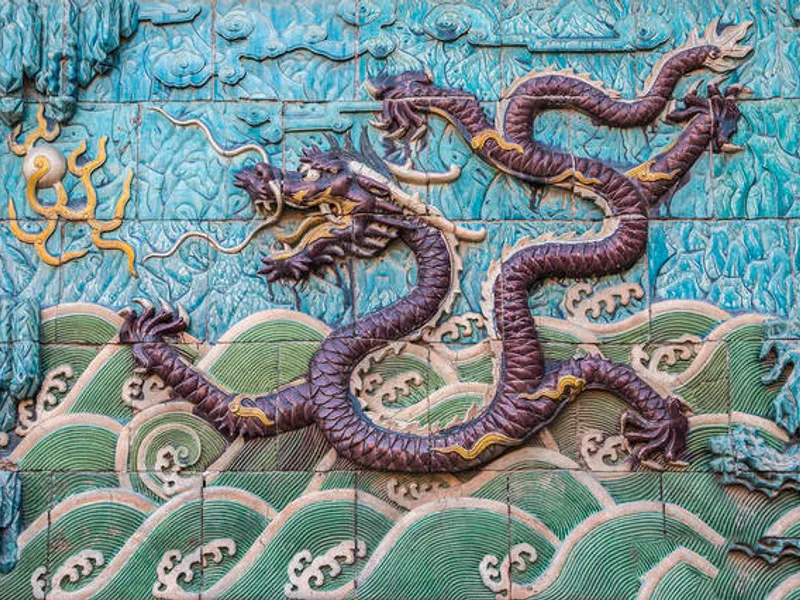
It’s often said that Westerners “fight dragons,” while Chinese people “worship dragons.” The contrast between the Chinese dragon and Western dragon reveals two different ways of viewing nature.
| Feature | Chinese Dragon | Western Dragon |
|---|---|---|
| Nature | Benevolent and wise | Destructive and evil |
| Element | Water and air | Fire and earth |
| Symbolizes | Power, luck, harmony | Chaos, greed, danger |
| Appearance | Serpent-like, wingless | Winged, reptilian |
| Cultural Role | Protector and ruler | Enemy or monster |
In the West, dragons guard treasure and threaten heroes. In China, the dragon is the treasure — a symbol of balance between heaven and earth, worshiped rather than slain.
This difference shows how deeply culture shapes mythology: in Chinese philosophy, nature is not something to conquer, but something to live in harmony with.
IV. The Chinese Dragon Head: The Spirit of Power
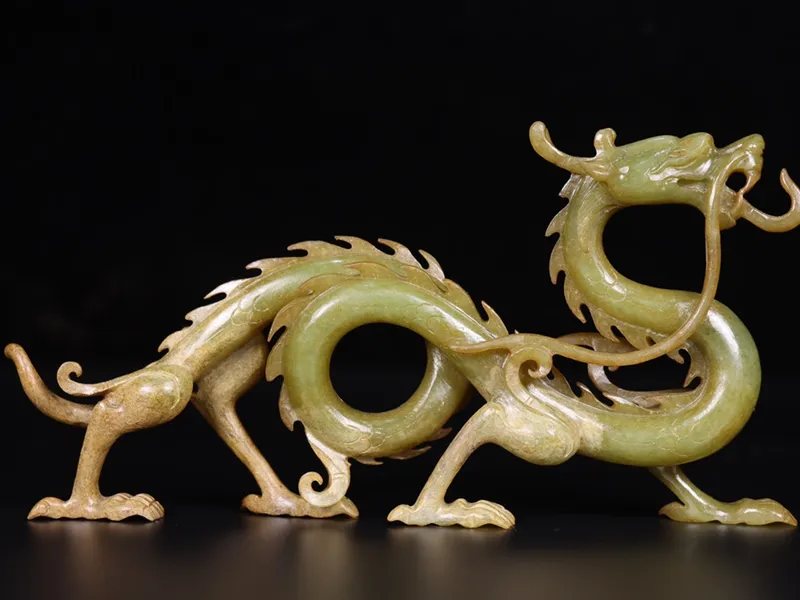
One of the most striking parts of the dragon is its head — fierce, detailed, and full of energy. The Chinese dragon head is a masterpiece of symbolism:
- The eyes are wide and fiery, representing vigilance and wisdom.
- The whiskers signify longevity and spiritual breath.
- The horns mark authority and divine power.
- The open mouth shows both strength and the voice of nature — wind and thunder.
In traditional dragon boat racing, the head of the dragon is always the centerpiece, painted in vivid red, gold, and green. The eyes are “opened” in a ceremonial ritual called 点睛 (diǎn jīng) — “dotting the eyes” — believed to bring the dragon to life.
Whether carved in wood, painted on silk, or worn on a festival costume, the dragon head embodies the spirit of vitality and protection.
V. Chinese Dragon Art: From Scrolls to Skin
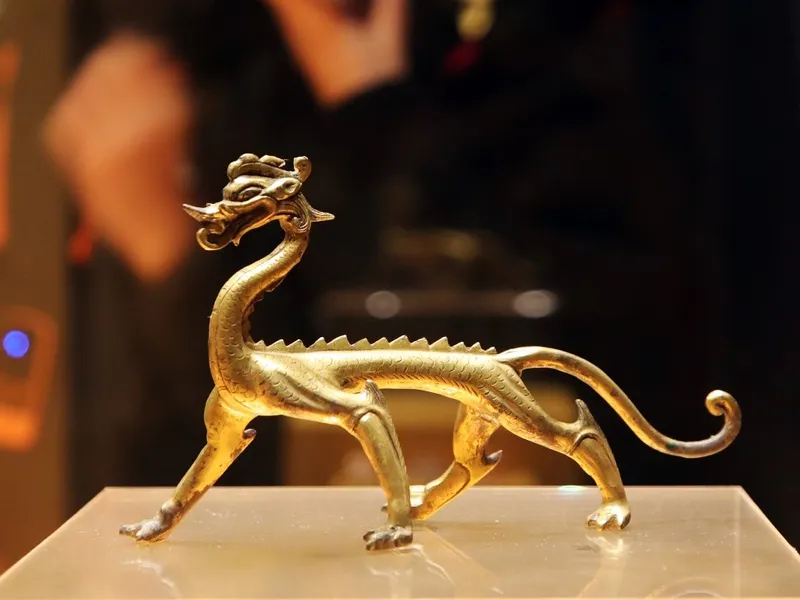
Throughout Chinese history, artists have portrayed dragons in countless forms — from imperial carvings to modern tattoos.
1. Ancient Art
In the Han dynasty (206 BCE – 220 CE), dragons appeared on bronze mirrors, pottery, and silk banners. They symbolized not just imperial power but also cosmic balance, circling among clouds and phoenixes.
2. Tang and Song Dynasties
As art evolved, so did the dragon’s appearance — more elegant, fluid, and dynamic. The Tang dynasty’s dragons are powerful and decorative, while Song dynasty painters like Zhang Zeduan brought them to life in motion and mist.
3. Modern Dragon Art and Tattoos
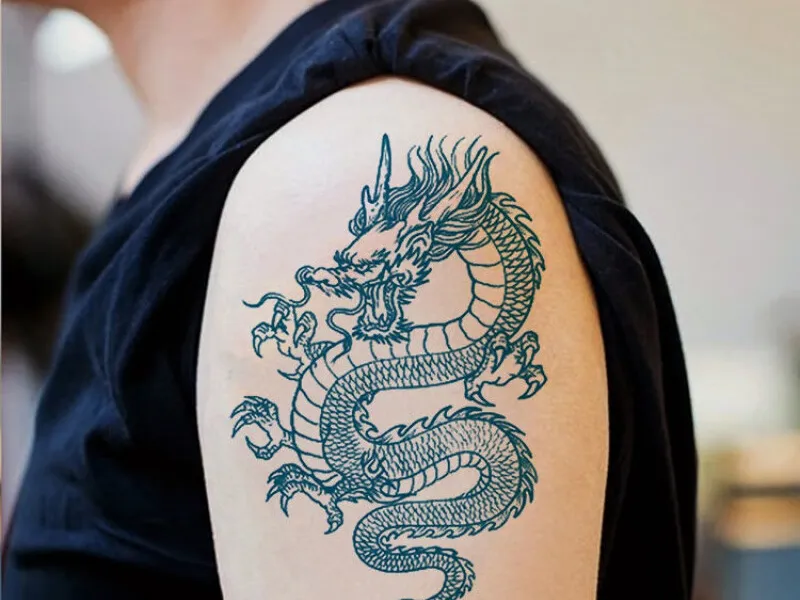
Today, Chinese dragon tattoos have become global symbols of strength and spirituality. A dragon tattoo often represents inner power, transformation, and freedom from fear.
- Courage and leadership
- Rebirth and resilience
- Connection to Eastern wisdom
It’s not merely decoration; it’s an emblem of identity and a reminder that real power comes from harmony, not dominance.
VI. The Chinese Water Dragon
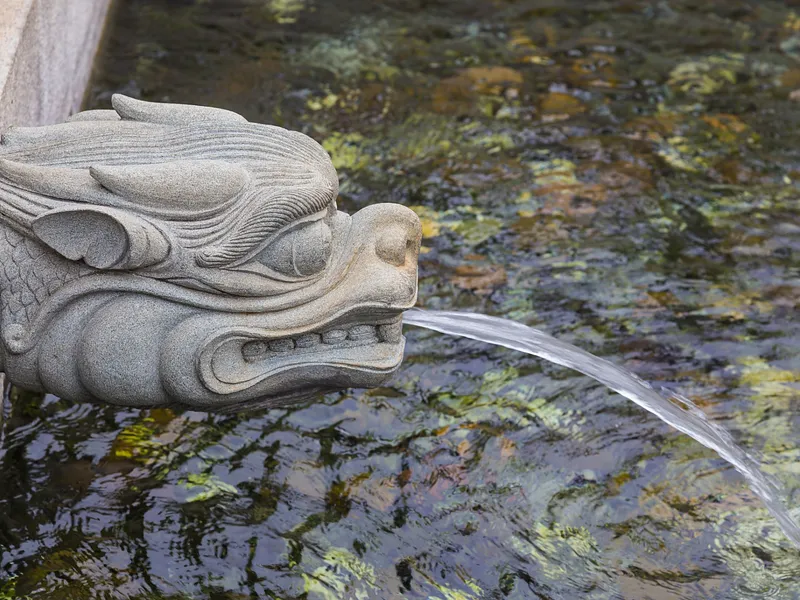
Among the many kinds of Chinese dragons, the Water Dragon (水龙 shuǐ lóng) holds special significance.
Unlike Western sea serpents, the Chinese water dragon controls rivers, rain, and seas. It is both gentle and fierce — a deity of balance. Ancient villagers prayed to the water dragon for rainfall during droughts and protection during floods.
Temples dedicated to the Dragon King (龙王 Lóng Wáng) can still be found along China’s coasts and riverbanks. Each Dragon King rules a different sea — East, South, West, and North — symbolizing the four directions and the balance of the natural world.
In modern times, the term Chinese water dragon can also refer to a real reptile (Physignathus cocincinus), popular as a pet for its beauty and calm temperament. Yet its name is no coincidence — both the myth and the animal share a sense of grace, fluidity, and mystery.
VII. Chinese Dragon Costume and Festivals
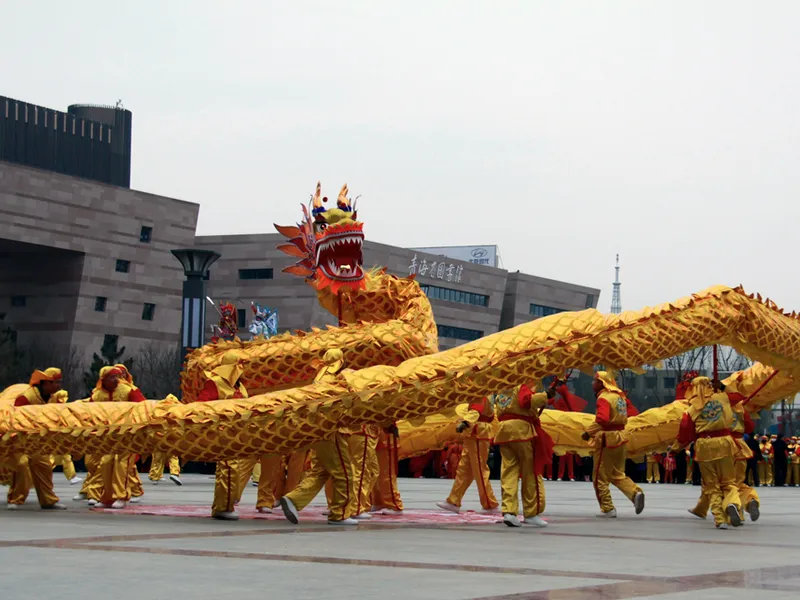
If you’ve ever watched a Chinese New Year celebration, you’ve likely seen a Chinese dragon costume dancing through the streets.
The dragon dance (舞龙 wǔ lóng) is one of the most iconic traditions of the Lunar New Year. A long dragon made of fabric, bamboo, and paper moves rhythmically through crowds, lifted by teams of performers holding poles beneath its body.
The dragon’s head leads the way, following a “pearl of wisdom” — a glowing orb that symbolizes energy and destiny. The dance represents the dragon’s flight from the heavens, bringing prosperity, rain, and good fortune for the year ahead.
In ancient times, these performances were believed to drive away evil spirits. Today, they unite communities and showcase the artistic creativity of Chinese culture.
Each region has its own dragon style — Southern dragons are longer and more detailed, while Northern dragons emphasize agility and speed. The costumes, often more than 30 meters long, are dazzling works of art.
VIII. How to Say “Dragon” in Chinese
The word for dragon in Chinese is 龙 (lóng), pronounced with a rising tone, like you’re lifting your voice slightly.
It’s one of the most culturally significant words in the Chinese language, found in idioms, names, and festivals.
- 龙的传人 (lóng de chuánrén) — “Descendants of the Dragon,” referring to the Chinese people.
- 卧龙 (wòlóng) — “Hidden dragon,” meaning a talented person not yet recognized.
- 生龙活虎 (shēng lóng huó hǔ) — “As lively as a dragon and a tiger,” describing someone full of energy.
Even in modern China, parents often name their children with “龙” to bless them with strength, dignity, and success.
IX. How to Draw a Chinese Dragon
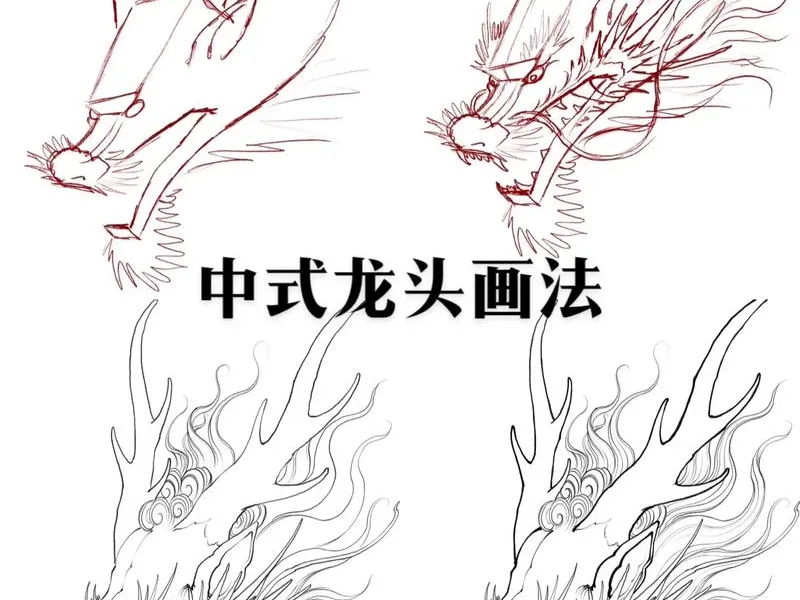
For artists and learners, knowing how to draw a Chinese dragon is a wonderful way to experience Chinese art and imagination.
- Start with the Head: Sketch a large, rounded head with sharp horns and a wide mouth. Add fierce, curved eyebrows and whiskers that flow outward.
- Add the Body: Extend a long, snake-like body — the key is rhythm, not perfection. The Chinese dragon’s strength lies in its motion, not symmetry.
- Draw the Claws: Imperial dragons have five claws, while ordinary ones have four. Each claw should look powerful but graceful.
- Add Details: Scales, fins, clouds, and fire patterns bring the dragon to life.
- Color Symbolically: Traditional dragons use red (luck), gold (wealth), blue (power), or green (nature).
Drawing a Chinese dragon isn’t just an art exercise — it’s a spiritual act. Every curve represents energy (气 qì), and every line flows like wind or water.
As a Chinese proverb says: “画龙点睛” (huà lóng diǎn jīng) — “To paint the dragon and dot the eyes.” Meaning: to add the finishing touch that brings something to life.
X. What Does the Dragon Mean in Chinese Culture?
To the Chinese people, the dragon means identity, continuity, and pride.
For centuries, China has called itself the “Land of the Dragon” (龙的国度). The Yellow Emperor, the mythical ancestor of the Chinese people, was said to have transformed into a dragon and ascended to heaven.
Even today, being called a “dragon” carries honor — a sign of success, energy, and creativity.
You’ll see dragons in architecture (temple roofs, bridges, gates), in celebrations (New Year, Dragon Boat Festival), and in the very fabric of Chinese philosophy — reminding people to stay balanced and strive upward.
XI. The Dragon in Modern China and Beyond
In the modern world, the dragon remains one of China’s most powerful symbols. It appears in:
- Logos and branding (to represent Chinese heritage or global power).
- Tattoos and fashion, as a fusion of ancient art and personal expression.
- Film and gaming, from “Crouching Tiger, Hidden Dragon” to fantasy role-playing.
During the 2008 Beijing Olympics, the dragon was used to symbolize a modern China — ancient yet dynamic, wise yet forward-looking.
Beyond China, the dragon continues to fascinate the world as an image of mystery and strength, bridging East and West through shared imagination.
XII. Conclusion: The Eternal Spirit of the Dragon
The Chinese dragon is more than a creature of myth. It is a symbol of life’s highest ideals — strength without cruelty, power with wisdom, movement in harmony with nature.
From Chinese dragon art and tattoos to festivals and folklore, the dragon carries the essence of China’s soul: confidence, grace, and the courage to rise again and again, like clouds over the mountains.
Next time you see a dragon painted on silk, carved in jade, or dancing through a festival street, remember — it isn’t just decoration. It’s a story thousands of years old, still breathing through every color and curve.
It’s the story of a civilization that learned not to slay its dragons, but to become them.