Start of Winter: A Millennia-Old Ritual of Life

The Twenty-Four Solar Terms are a "natural calendar" written by the Chinese people over thousands of years. They are not only a precise guide for agricultural production but also a cultural gene deeply embedded in our veins, shaping our unique understanding of time, nature, and life. They divide the sun’s annual journey into twenty-four poetic segments, each serving as a seasonal marker reminding us to harmonize with the rhythms of nature.
In this symphony of the four seasons, Start of Winter is the profound prelude to winter’s movement.
Around November 7th or 8th each year, when the sun reaches the celestial longitude of 225°, Start of Winter arrives. As an ancient saying explains, "立 (lì) signifies the beginning; 冬 (dōng) signifies the end, the time when all things are stored away." This captures the dual meaning of Start of Winter: it marks both the official commencement of winter and the wise choice for all living things to enter a state of rest and conservation.

For the Chinese, Start of Winter is not merely a climatic marker but a meaningful ritual embodying the wisdom of life:
- It is a signal to prepare in the material world: The autumn harvest concludes successfully, and grains are stored away. A steaming bowl of jiaozi or a pot of lamb soup to warm the body and ward off the cold becomes an intelligent choice to replenish energy for the harsh winter ahead.
- It is a call for introspection in the spiritual realm: As the world grows quiet, the human heart should also turn inward. As the Yellow Emperor’s Classic of Internal Medicine advises, "let the will reside as in hiding." Understanding the need to restrain one’s presence, dwell in peace, and reflect during winter reflects the profound wisdom of aligning with the season.
Start of Winter perfectly embodies the core spirit of the solar terms—doing the right thing at the right time. It declares the glorious end of the harvest and quietly raises the curtain on a period of tranquility dedicated to consolidation and accumulation.
Origins: Celestial Wisdom Applied to Human Life
The origins of Start of Winter are deeply rooted in the reverence of ancient Chinese civilization for heaven and earth, their keen observation of nature, and their meticulous planning for livelihood. It was not an arbitrarily created festival but a philosophy of time and a system of practice refined over ages through observing the skies and examining the earth.
The Astronomical Foundation: The Sun’s "Ecliptic Coordinate"It all began with precise observations of the sun’s path. The ancients divided the sun’s annual ecliptic path into 24 equal segments of 15° each. When the sun reaches 225° celestial longitude, the Start of Winter begins astronomically. This specific angle marks a key point in Earth’s orbit, where the Northern Hemisphere receives diminishing solar radiation, daylight shortens significantly, and cold begins to dominate.
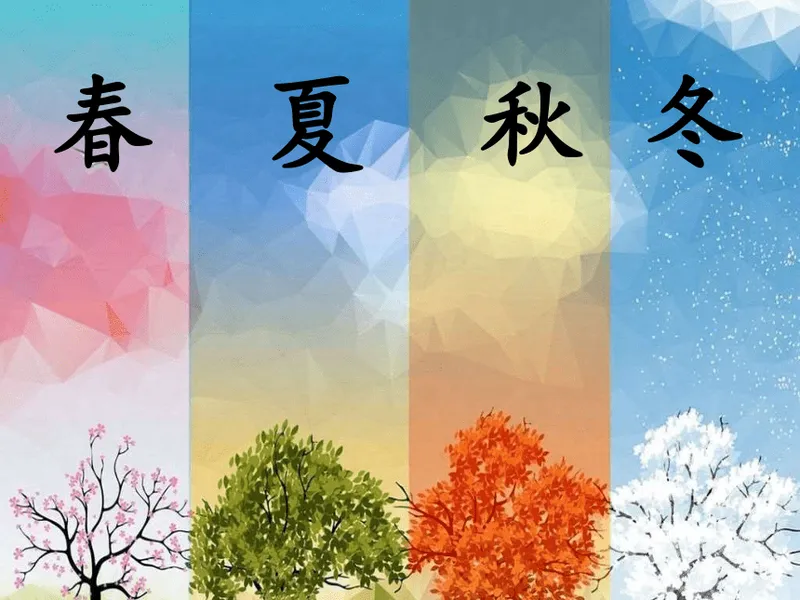
As one of the "Four Beginnings" (Start of Spring, Start of Summer, Start of Autumn, Start of Winter), it forms a fundamental pillar of the seasonal cycle. The character "立" itself carries the meaning of "to establish, to begin," solemnly heralding the official establishment of winter.
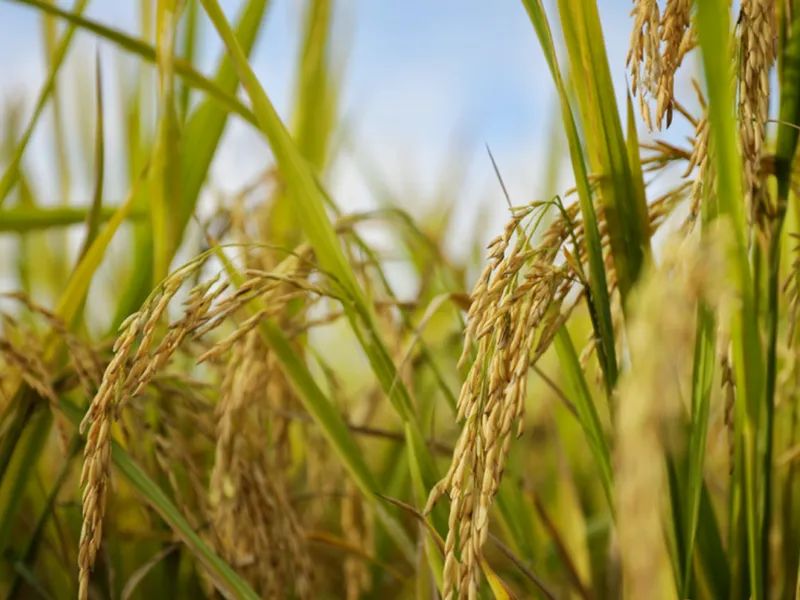
Subtle changes in the heavens directly guided the lifeline of agrarian society. By Start of Winter, the autumn harvest in central and northern China was largely complete. "The storage of all things" meant not just securing grains but also cellaring vegetables and preserving foods, fully preparing for the long winter. The chilling wind served as nature’s final command, urging people to complete all harvesting and storing tasks.
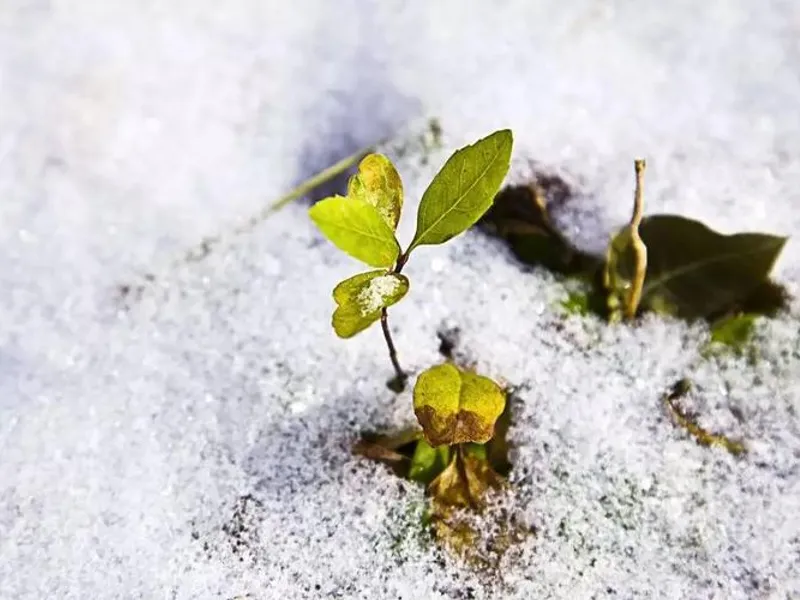
This also marked the beginning of rest and rejuvenation. Both the land and its people needed respite: crops entered dormancy, and farmers found temporary relief from the continuous labor of spring planting, summer weeding, and autumn harvesting. Start of Winter ritually initiated this mode of "rest and recovery."
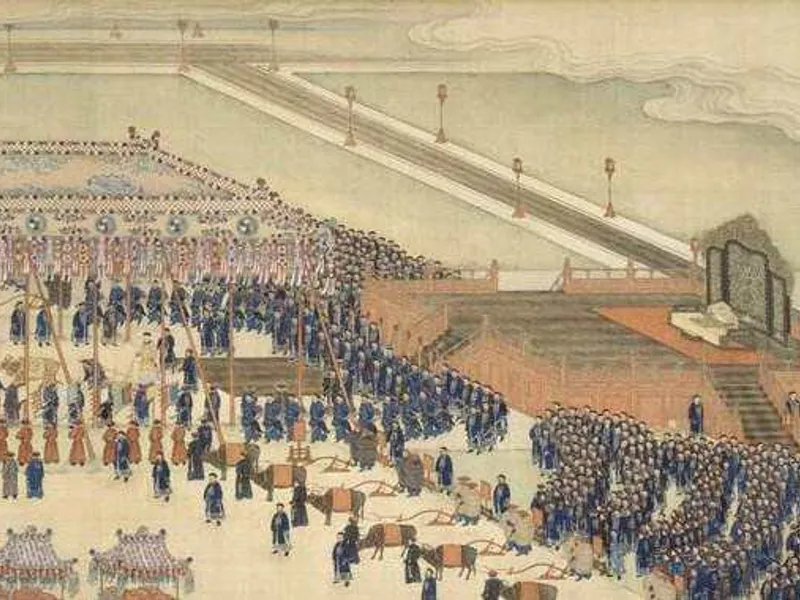
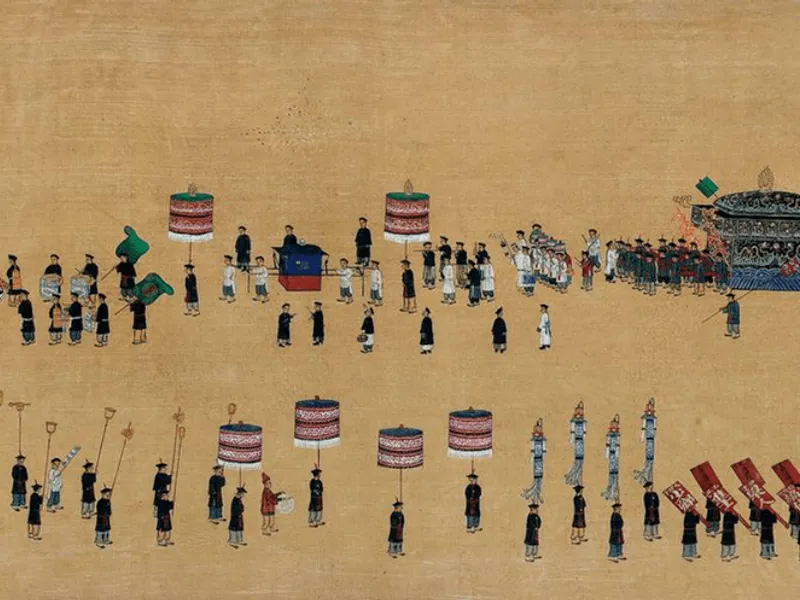
As early as the pre-Qin period, Start of Winter was elevated from folk practice to state ceremony, embodying the political philosophy of "following the ways of heaven and conforming to the seasons." The Book of Rites records: "On the day of Start of Winter, the Son of Heaven personally leads the three ducal ministers and nine high dignitaries to welcome winter in the northern suburb."
In this solemn "Welcoming Winter" ceremony, the procession wore black robes and headdresses, carried dark jade, and used black ritual vessels corresponding to the virtue of "Water," proceeding to the northern suburb of the capital to worship Zhuanxu (the deity of the north and winter). This series of solemn rites expressed reverence for nature and symbolically "welcomed" the arrival of the Winter God, praying for protection to ensure the state’s stability through the severe cold.
After the ceremony, the court would issue orders to comfort widows and orphans, bestow warm clothing, and distribute relief. This was not only an act of human compassion but also a manifestation of virtuous governance, demonstrating the ruler’s benevolence amidst winter’s austerity.
The origins of Start of Winter are also infused with the ancient concepts of Yin-Yang and the Five Phases. Winter belongs to "Yin" in Yin-Yang theory, symbolizing contraction, storage, and tranquility. As the beginning of winter, it initiates the period when Yin energy dominates heaven and earth.
Within the Five Phases, winter corresponds to "Water," characterized by coldness and associated with the emotion of fear. The ancients believed that the virtue of Water was in command during this time, and human conduct should emulate Water’s qualities—calmness, containment, and adeptness at accumulation. Thus, "storage in winter" evolved beyond the material act into a wisdom for spirit and life itself. It admonishes people that, in harsh external conditions, one should restrain their presence, nurture their spirit, and accumulate strength, laying a solid foundation for the rebirth of spring (associated with "Wood").
The origin of Start of Winter forms a complete chain: initiated by astronomical observation, tested through agrarian practice, solidified by state ritual, and ultimately enriched by philosophical thought. It transformed from a stark astronomical point in time into a cultural symbol brimming with warmth and life wisdom, still reminding us today: by following nature’s rhythm and understanding the value of restraint and consolidation, we can gather the profound strength to move toward the future.
The Evolution of Start of Winter: A Millennia-Long Journey from Agricultural Marker to Cultural Symbol
Start of Winter, like a sage traversing time and space, has seen its meaning and form continuously flow and reshape throughout history. Its evolution clearly traces China's path from an agrarian civilization to a modern society, reflecting the dynamic adjustment of the relationship between humans and nature.
Pre-Qin to Han: Foundation in State Ritual and Infusion of PhilosophyIn the dawn of Chinese civilization, the prototype of Start of Winter was already established. Its origins can be traced back to astral worship and phenological observations in antiquity. By the late Warring States period, the Lüshi Chunqiu contained complete records of the "Four Beginnings" solar terms, marking the initial formation of the Twenty-Four Solar Terms system.
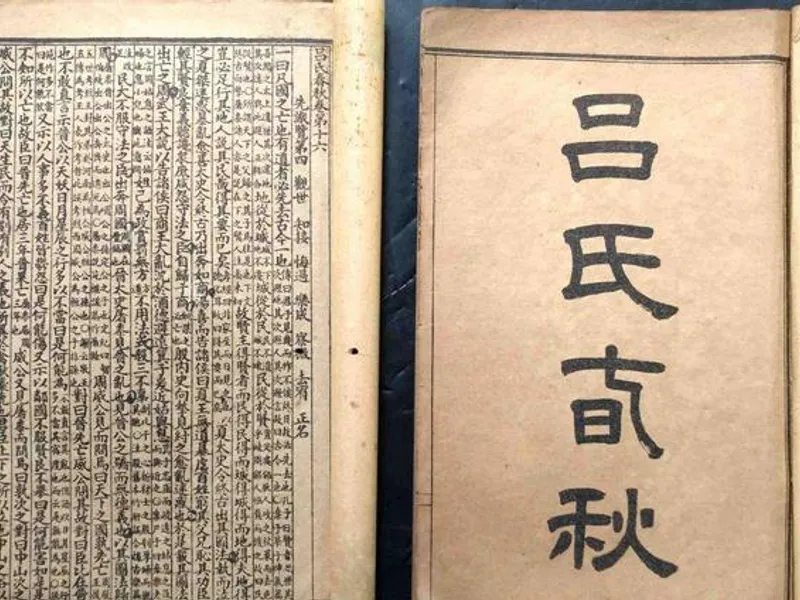
During this era, Start of Winter was incorporated into the grand framework of state governance. The Book of Rites - Monthly Ordinances details the solemn ceremony where the Son of Heaven, leading his officials, proceeded to the northern suburbs on Start of Winter to "Welcome Winter." This was not merely a sacrifice; it embodied the political philosophy of "governing in accordance with heaven." The rites established the legitimacy of winter's "closure and storage" and gave rise to social governance measures like "rewarding those who died in service and comforting widows and orphans."
By the Han Dynasty, with the prevalence of Dong Zhongshu's theory of **"Interaction between Heaven and Mankind"** and the concepts of Yin-Yang and the Five Phases, Start of Winter was endowed with profound philosophical meaning. It was no longer just the beginning of cold but a symbol of **Yin energy** reaching its peak and the virtue of **Water** taking command. The definition of "Winter signifies the end, the storage of all things" evolved from a simple phenological description into a worldview concerning contraction, accumulation, and the cycle of life.
Wei-Jin to Tang-Song: Saturation with Cultural Emotion and Flourishing Folklore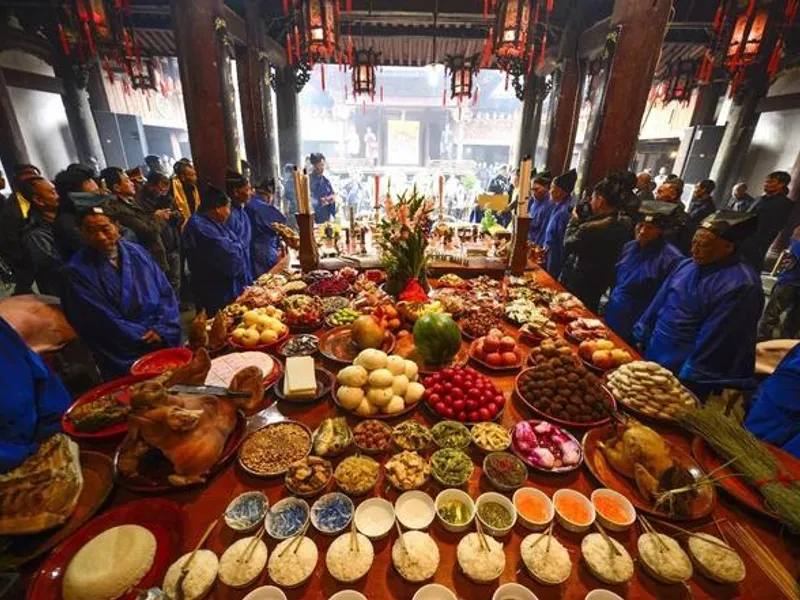
As society developed, Start of Winter began its journey from the imperial court to the common people, becoming saturated with rich humanistic hues. The solemn imperial "Welcoming Winter" ceremony gradually filtered down and simplified, evolving into folk customs known as "Worshipping Winter" or "Offering to Winter." Common people would make offerings to ancestors and household gods on this day, giving thanks for the year's protection and praying for a safe passage through winter.
Literati and scholars infused Start of Winter with deep emotion. Li Bai of the Tang wrote, "My frozen brush, too lazy to write new verse; by the cold stove, warm wine often served," depicting the leisure of warming oneself by the fire. Lu You of the Song expressed the subtle perception of seasonal change with, "Just past the month for receiving winter clothes, again I meet the days to begin wearing furs." Start of Winter became a literary image, fit for poetry and painting.
During the prosperous Tang and Song periods, the dietary customs of Start of Winter became more concrete. Although jiaozi (dumplings) were not yet the absolute star, the concept of "Supplementing Winter" (Bu Dong) was deeply rooted. People consciously began eating warming and nourishing foods at this time to resist the cold.
Ming and Qing: Solidification of Folklore and Clear Regional DistinctionsDuring this period, the customs of Start of Winter further solidified, displaying distinct regional characteristics. Folk wisdom crystallized into vivid sayings like "Start of Winter, replenish in winter; fill the empty mouth" (Li dong bu dong, bu zui kong), making food customs the core content of the solar term.
Benefiting from the popularization of wheat cultivation and the development of flour-based food culture, **jiaozi** gained their symbolic status of "the time of exchange" (jiaozi zhi shi) in the north, becoming an indispensable ritual food for Start of Winter. In the south, based on different local produce and climate, a rich variety of nourishing recipes developed, such as Suzhou's herbal paste (Gaozi), Fujian's Ginger Duck, and Guangdong's Lamb Stew, forming a culinary map that rivaled the north.
The widespread circulation of almanacs and the promotion of works like the Nongzheng Quanshu made agricultural proverbs like "Start of Winter clear, the whole winter icy; Start of Winter cloudy, the whole winter warm" household knowledge, continuing to guide the final wave of farming activities.
Modern to Present: Reinterpretation of Tradition and the Search for Modern Meaning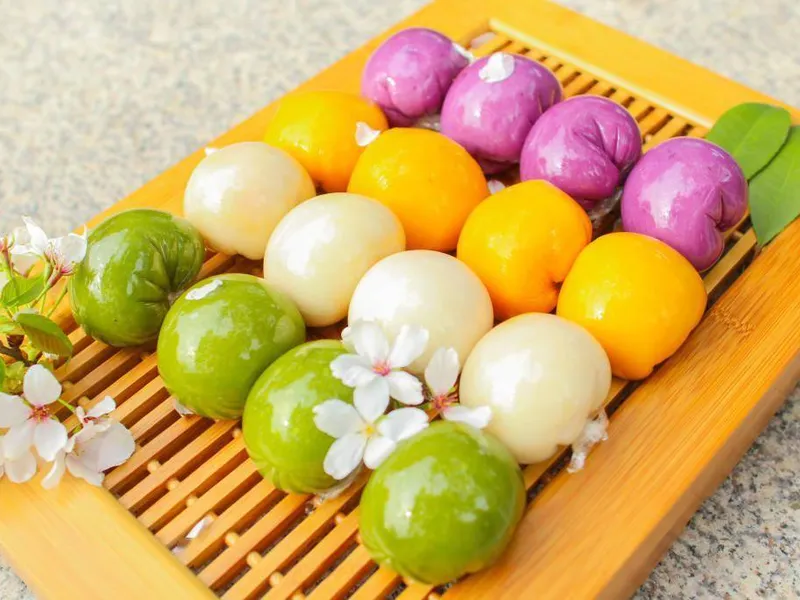
Entering the industrial and information age, Start of Winter faced challenges and rebirth. For urban populations distant from the land, its function as a production guide greatly diminished, no longer carrying an urgent, practical imperative.
Most complex sacrificial rites have vanished; the core that remains is "eating."Eating jiaozi or lamb has become a symbol of cultural identity and a bond for emotional connection. Driven by modern health concepts, the ancient wisdom of **"nourishing Yin in autumn and winter"** has been revitalized. It is no longer just about "tonification" but combines with scientific wellness, emphasizing regular routines, a peaceful mindset, and moderate exercise, becoming a guide for comprehensive physical and mental adjustment.
In the fast-paced modern world, **"Winter Storage"** has been endowed with new meaning. It reminds people, amidst the year-end sprint, to also know how to slow down, engage in summarization, reflection, and planning, accumulating energy for the coming year. This has become a life philosophy for countering anxiety and achieving sustainable development.
The evolution of Start of Winter is a fluid history—from state ritual to folk custom, and from production guide to cultural symbol. Traversing three thousand years, it has gradually transformed from a stern command concerning survival into a warm reminder about the quality of life.
Yet, its core spirit—the wisdom of "following the ways of heaven and conforming to the seasons" and **"biding time and nurturing strength"**—remains unchanged. Even today, on Start of Winter, we can still resonate with this ancient solar term through a bowl of hot soup, a moment of quiet thought, or an early night's sleep, finding in this changing era our own portion of stable and profound strength.
The Culture of Start of Winter: A Winter Prelude in Ink and Hearth
Start of Winter represents more than just a seasonal marker—it lives as poetic imagery in literary works and as daily rituals in household traditions. For centuries, it has carried profound wisdom and emotion, continuously celebrated through verse, song, and folk customs.
Start of Winter in Poetry: Cold and Warmth Between the LinesAncient poets captured the essence of Start of Winter with subtle elegance, preserving the many moods of the season through their brushstrokes.
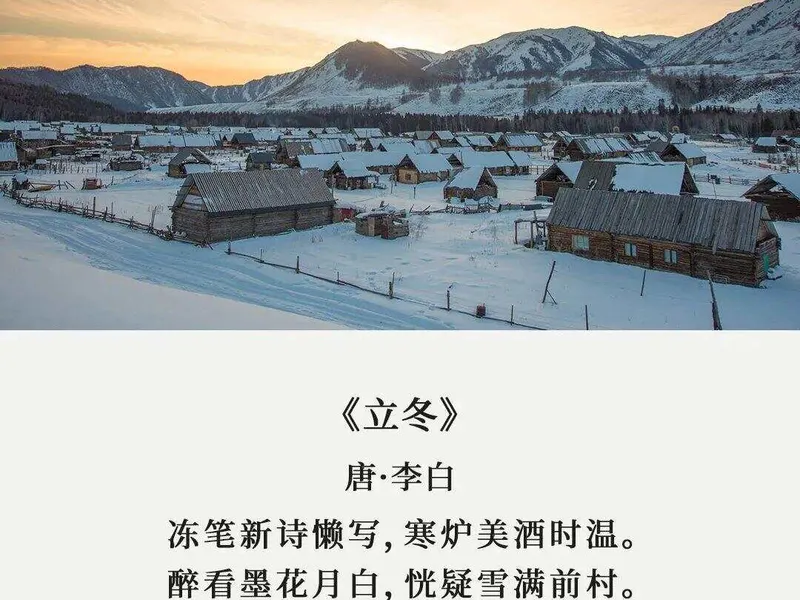
In Li Bai's 《立冬》 "Start of Winter," the opening lines—"冻笔新诗懒写,寒炉美酒时温" (My frozen brush too cold to write fresh lines; By the hearth, warm wine I sip from time)—paint a tranquil scene of a winter evening. As ink stiffens in the cold and poetic inspiration wanes, the poet turns to warming wine for solace. Gazing through a tipsy haze, he writes, "醉看墨花月白,恍疑雪满前村" (Drunk, I see blossoms in the moon's pale light; Mistook the yard in a dream of snow so bright)—blending the chill outside with a warmth within, conveying a spirit at ease with the world.
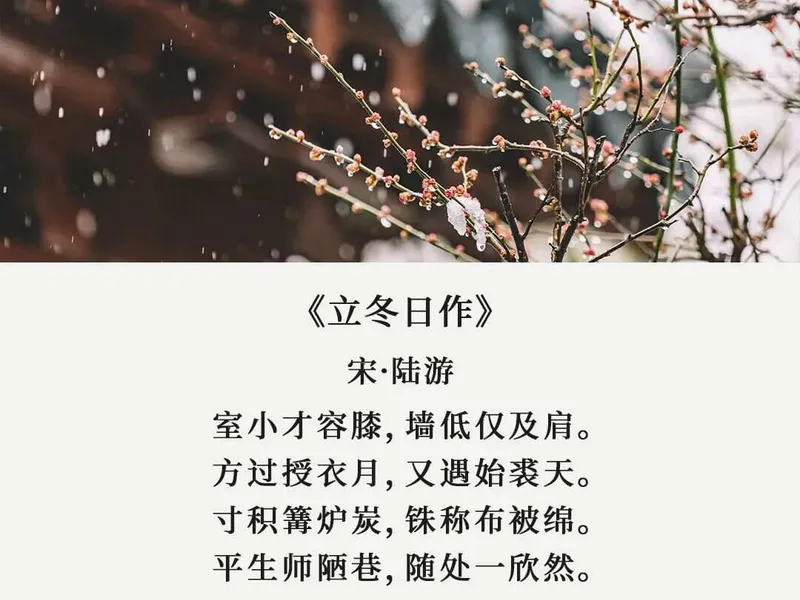
Lu You's 《立冬日作》 "Written on Start of Winter Day" offers another perspective. His verse "室小财容膝,墙低仅及肩" (My hut so small, it barely holds my knees; The walls so low, they hardly reach my shoulders) depicts a life of material simplicity, while "方过授衣月,又遇始裘天" (Just past the time to receive winter attire, Already the days to wear furs arrive) reflects the swift turn of seasons. The lines "寸积篝炉炭,铢称布被绵" (Scrap by scrap, I gather coal for the fire; Ounce by ounce, weigh the cotton for my quilt) portray a humble existence. Yet the poem culminates in resilience: "平生师陋巷,随处一欣然" (All my life I've admired those content in a humble lane; Wherever I am, my heart finds joy the same)—a tribute to inner peace amid outward scarcity.
In Yuan dynasty poet Qiu Yuan's 《立冬即事二首·其一》, the poet keenly observes the seasonal shift: "细雨生寒未有霜,庭前木叶半青黄" (A light rain brings the cold, not yet the frost; Before the courtyard, leaves half-green, half-lost). Even more striking are the closing lines: "小春此去无多日,何处梅花一绽香" (Not many days till Little Spring takes its turn; From where then comes the scent of a first plum bloom?)—a timeless expression of hope in Chinese culture.
Folk Wisdom: Start of Winter in Sayings and ExpressionsBeyond the world of poets, everyday language preserves the practical wisdom of Start of Winter in colorful and memorable forms.
- The saying "秋收冬藏" (Autumn Harvest, Winter Store) not only describes the agricultural cycle but also embodies a life philosophy—knowing when to gather, when to preserve, and when to wait.
- "雪兆丰年" (Snow Foretells a Good Year) expresses an optimistic belief that winter snow promises a rich harvest ahead.
- Weather-related proverbs also abound. "立冬补冬,补嘴空" (Nourish winter at Start of Winter, fill your mouth when it's empty) humorously underscores the tradition of eating well to brace for the cold. "立冬晴,一冬凌;立冬阴,一冬温" (Clear Start of Winter, icy season ahead; Cloudy Start of Winter, a warmer winter instead) forecasts the whole season's weather from that single day. "立冬北风冰雪多,立冬南风无雨雪" (North wind on Start of Winter, snow will be strong; South wind that day, no snow for long) predicts snowfall based on wind direction.
- Folk similes add wit and whimsy. "立冬打雷——空响" (Thunder on Start of Winter—all sound, no shower) pokes fun at empty promises or flashy gestures with no real outcome. "立冬的蛇——僵了" (A snake at Start of Winter—stiff and still) refers not only to creatures in hibernation but also to people frozen by cold or awkwardness.
Through such expressions, generations have connected celestial patterns with daily life—linking the movement of the heavens to weather, health, and human hope. This folk wisdom roots Start of Winter not only in the scholar's studio but also in the farmer's field, making it a lived and lasting cultural touchstone.
The Traditional Customs of Lidong: Life Wisdom in Harmony with Nature
The customs of Lidong (the Beginning of Winter) are deeply rooted in China's ancient agricultural civilization. Blending sacrificial rites, dietary traditions, health preservation, and social ethics, they represent a comprehensive preparation—from nourishment for the body to solace for the soul—to ceremoniously "welcome winter."
State-Level Ceremonies: The Son of Heaven Welcomes WinterIn ancient times, Lidong was an important day for state sacrifices. According to the Book of Rites, the Son of Heaven would lead his ministers to the northern suburbs to conduct the "Welcome Winter" ceremony. Black ritual vessels were used to worship Xuanming (the god of the north and water virtue, also associated with Zhuanxu). After the rites, rewards were given to orphans and widows, reflecting the governance philosophy of "ruling in accordance with heaven's will."
The saying **"Fill the winter at Lidong, fill the empty mouth"** vividly captures the diverse regional food traditions across China.
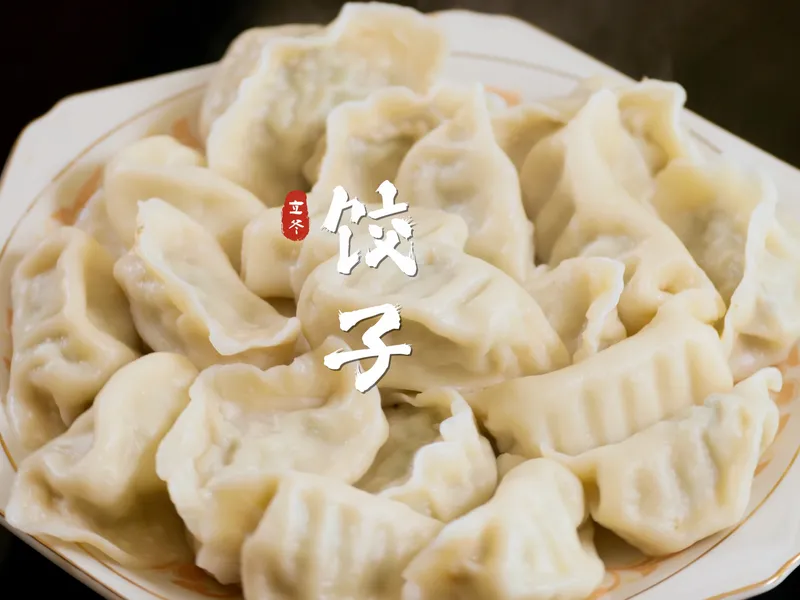
Northern CustomsIn northern China, customs carry profound meanings. In Beijing, Tianjin, and Hebei, the folk rhyme "If you don’t eat dumplings at Lidong, no one will care if your ears freeze" is widely known. Dumplings, shaped like ears, symbolize protection from the cold, while their name, jiaozi, homophonous with "transition of seasons," represents the smooth shift from autumn to winter. In Shandong and Shanxi, people prefer warming foods like mutton and dog meat, believed to provide essential warmth against the harsh cold. In the northeastern provinces, besides dumplings, hearty stews like **"New Year's Eve pork stew"** or "sauerkraut with vermicelli" are common choices.
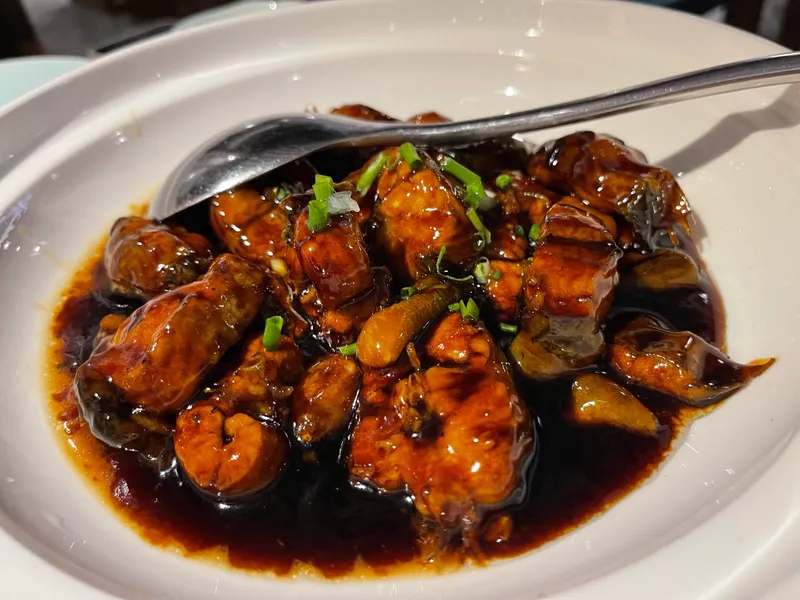
Southern China showcases even greater variety in winter nourishment. Cantonese practice "nourishing yin in autumn and winter," often enjoying dishes like lamb hotpot or ginger-duck stew, enhanced with herbs like wolfberry and angelica. In Fujian, sesame oil chicken and **"Siwu Tang"** (a four-herb soup with angelica, ligusticum, peony, and rehmannia) are renowned, the latter especially valued as a winter tonic for women. In Jiangsu and Zhejiang, Hangzhou locals simmer old duck soup on Lidong night, while Suzhou residents favor herbal paste supplements, and Nanjing people say, **"Eat scallions at Lidong, stay healthy all winter long."**
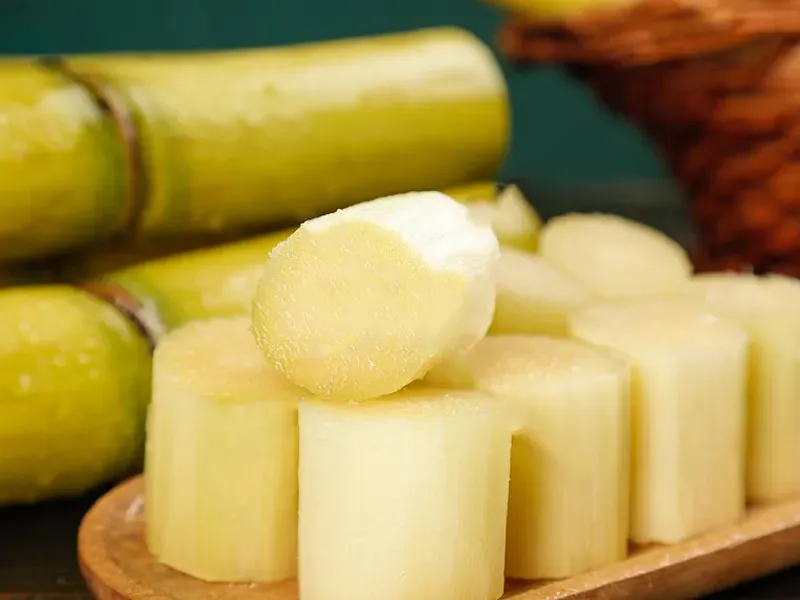
Unique local traditions further highlight the richness of Chinese culinary culture. In Chaoshan, eating sugarcane symbolizes both clearing heat and ushering in a **"sweet transition"** to better days. In Wuxi, people make rice balls with new harvest rice, offering them to ancestors while praying for family reunion. Shaoxing’s **"winter brewing"** tradition leverages stable low temperatures for perfect fermentation of yellow wine. In Sichuan and Chongqing, hotpot reigns supreme, driving away the damp chill with its fiery mala spice.
Social customs during Lidong are equally culturally significant. The Qing Dynasty text Yanjing Suishiji records the **"He Dong" (Winter Greetings)** custom: "On this day, scholars and officials pay respects to elders and visit each other. Commoners, dressed in fine new clothes, exchange greetings in a practice called **'Bai Dong' (Winter Worshipping)."** Regional variations abound: in Jiangsu and Zhejiang, juniors present "winter gifts" like new clothes or shoes to seniors; in Fujian and Guangdong, the saying "Fill the winter at Lidong, fill the mouth; **greet the winter at Lidong, greet connections"** emphasizes relationship-building through mutual gifting of tonics; in Beijing and Tianjin, the "teacher appreciation ritual" is especially solemn, with students visiting mentors with handmade snacks and fruits.
These vibrant customs not only reflect the Chinese wisdom of living in harmony with nature but also showcase a cultural tradition that values social bonds and ritual propriety. Through dietary care and human connection, Lidong becomes a vital link between nature and culture, the individual and the family, the past and the present.
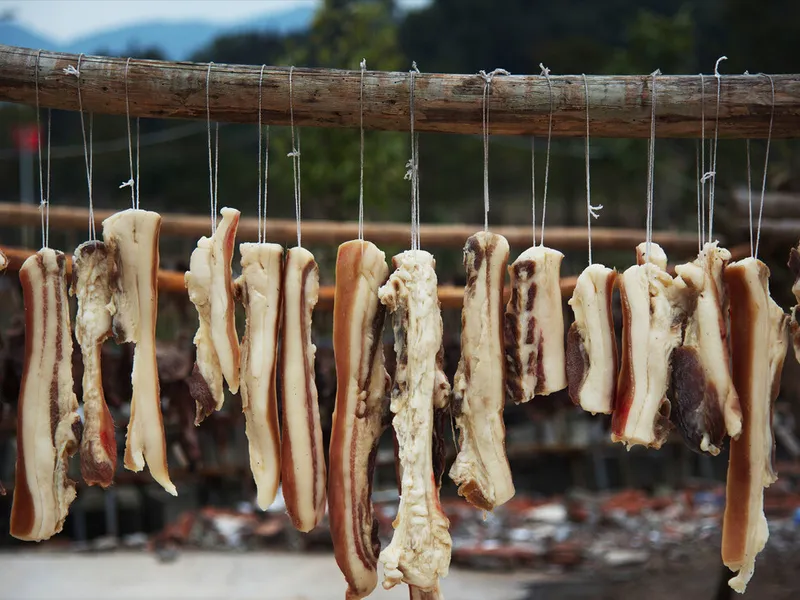
Farming Activities and Life WisdomLidong marks the end of a year’s toil for farmers. With the autumn harvest stored away, people begin making pickles and cured meats to prepare fully for winter. Ancient agricultural sayings like **"Clear Lidong, icy winter; cloudy Lidong, warm winter"** guided life and labor, demonstrating a profound understanding of natural rhythms.
Lidong health practices focus on **"nurturing storage."** In daily life, this means **"sleeping early and rising late, waiting for the sunrise,"** aligning with nature’s cycle. Spiritually, one should "keep ambitions as if hidden or dormant," maintaining inner peace. Diet follows the principle of **"tonifying deficiency, warming cold,"** emphasizing warm, nourishing foods. Exercise should be gentle, avoiding excessive sweating that depletes yang energy.
Cultural Essence: The Wisdom of Life Behind 'Winter Storage'Whether in the poetic imagery of literati or the folk sayings of common people, the underlying philosophy is one of **"harmony between humanity and nature."** The **"storage"** of Lidong is not passive retreat but active accumulation of energy. From Li Bai’s wine flask to Lu You’s charcoal fire, from the ancient admonition **"harvest in autumn, store in winter"** to the folk practice **"fill the winter at Lidong,"** all embody this timeless wisdom.

Today, while some customs may have simplified, their core spirit remains alive: it reminds us, in the cold of winter, to return to family, care for ourselves, store energy, and quietly await the vitality of spring. This wisdom, traversing millennia, still guides us in living harmoniously with nature and nurturing new hope in stillness.
Ode to Winter: The Eastern Wisdom of Eternal Renewal
As the last breath of autumn sweeps across the land, Lidong arrives with its unique serenity and depth, unveiling winter’s prologue. This is not merely the turn of a solar term—it is a cultural feast spanning millennia, a ritual of life in dialogue with nature.
From the solemn imperial rites welcoming winter to the warm, homely smoke of nourishing meals; from the dreamy intoxication in Li Bai’s verses to Lu You’s poetic embrace of humble contentment; from the profound philosophy of “harvest in autumn, store in winter” to the life wisdom of “nourish the winter at its start”—Lidong embodies the Chinese people’s deep understanding of natural rhythms and their masterful attunement to the pulse of life.
In today’s fast-paced world, the wisdom of Lidong feels more precious than ever. It reminds us that the richness of life lies not only in the brilliance of spring blossoms and autumn fruits, but also in knowing when to pause, reflect, and nurture body and soul. Just as winter’s quiet accumulation prepares the earth for renewal, our own **“winter storage”** in life allows us to begin anew with greater strength.
This Lidong, let us warm a pot of wine, sip a cup of tea, and in the quiet stillness, feel the gentle flow of time. Let us gather strength in reflection, for it is through knowing how to conserve that we learn to bloom more fully. This is the timeless revelation Lidong leaves us—the very secret to the unbroken continuity of Chinese civilization through the long river of time.
Related Vocabulary
| Chinese | Pinyin | English |
|---|---|---|
| 二十四节气 | Èrshísì Jiéqì | The Twenty-Four Solar Terms |
| 立冬 | Lìdōng | Start of Winter |
| 万物收藏 | Wànwù Shōucáng | All things are stored away |
| 秋收冬藏 | Qiūshōu Dōngcáng | Harvest in Autumn, Store in Winter |
| 天人合一 | Tiānrén Héyī | Harmony between Heaven and Mankind |
| 阴阳 | Yīnyáng | Yin and Yang |
| 五行 | Wǔxíng | Five Phases (Elements) |
| 迎冬 | Yíngdōng | Welcoming Winter (Imperial Ceremony) |
| 拜冬 | Bàidōng | Worshipping Winter (Folk Custom) |
| 贺冬 | Hédōng | Greeting Winter (Social Visits) |
| 祭祖 | Jìzǔ | Ancestor Worship |
| 补冬 | Bǔdōng | Nourishing in Winter |
| 饺子 | Jiǎozi | Dumplings |
| 羊肉汤 | Yángròu Tāng | Mutton Soup |
| 冬酿 | Dōngniàng | Winter Brewing (e.g., of rice wine) |
Lidong (立冬): The Start of Winter FAQ
What is Lidong?
Lidong (立冬) is the 19th of the 24 traditional Chinese solar terms (Jiéqi). It officially marks the beginning of winter in the traditional Chinese calendar. The character "Lì" (立) means "to establish" or "to start," and "Dōng" (冬) means "end" or "storage," signifying that autumn crops are harvested and stored, and nature enters a phase of hibernation and rest.
When does Lidong usually occur each year?
Lidong is determined by the position of the sun on the ecliptic. It typically falls on November 7th or 8th of the Gregorian calendar every year.
What is the astronomical and calendar significance of Lidong?
Lidong is the 19th of the 24 Solar Terms in the traditional Chinese calendar. It typically falls around November 7th or 8th when the Sun reaches the celestial longitude of $225^\circ$. It marks the official establishment of the winter season.
What is the dual meaning of the characters "Lì Dōng" (立冬)?
Lì (立): Means "to establish" or "to begin," signaling the formal start of winter.
Dōng (冬): Means "end" or "to store," emphasizing that all living things must enter a state of rest and conservation (like storing the harvest).
Does Lidong coincide with the meteorological start of winter?
Not necessarily. Lidong is an astronomical and lunar-calendar-based term, marking a change in season. Meteorological winter is scientifically defined, usually starting when the daily average temperature drops below $10^{\circ}C$ for five consecutive days. Therefore, on the day of Lidong, many regions (especially in Southern China) may still experience mild temperatures and have not yet entered meteorological winter.
Are Start of Winter (Lidong) and Winter Solstice (Dongzhi) on the same day?
No, they are not. Start of Winter (Lidong) is the "starting point" of winter, while the Winter Solstice (Dongzhi) is the mid-point of the winter season. It usually falls on December 21st or 22nd in the Gregorian calendar, marking the shortest day and longest night of the year in the Northern Hemisphere. Start of Winter signifies the arrival of winter, whereas the Winter Solstice represents the beginning of the "Counting of Nines" period, heralding the onset of the coldest phase.
What is the modern custom of "Winter Greetings" or "Winter Worshipping"?
Known as He Dong (贺冬) or Bai Dong (拜冬), this custom involves social etiquette where family members, friends, and students pay respects to elders and mentors, often exchanging gifts or winter tonics to maintain social bonds.
What is a key modern and active way people in some regions celebrate Lidong?
In contrast to quiet rest, some areas (especially those by cold waters) engage in Winter Swimming. This practice is seen as a way to challenge the cold, strengthen the body's resistance, and promote blood circulation.
What modern-day wisdom can we take from Lidong's "Winter Storage"?
In today's fast-paced world, "Winter Storage" serves as a reminder to:
- Pause and Reflect: Take time for personal reflection, summation of the past year, and planning.
- Conserve Energy: Slow down during the year-end rush to avoid burnout, ensuring a strong foundation for "rebirth" and activity in the spring.