Echoes of the Land: A Journey Through China’s Ethnic Instruments

Introduction
Across China’s vast landscapes, music has never been just sound. It is wind rolling over the grasslands, fire whispering inside nomad tents, rivers winding through terraced hills, and footsteps echoing in mountain villages. Every ethnic group across this wide land carved its own emotions into wood, bone, gourds, and strings. What grew from these hands were not just tools for melodies, but living companions that followed people through weddings, migrations, festivals, prayers, and long winters.
China’s ethnic instruments carry identities like passports. They reveal where a person comes from, how their ancestors survived, and what stories shaped their communities. Among the many, four stand out like bright sparks in different corners of the map: the 马头琴(Morin Khuur) of the Mongols, the 芦笙(Lusheng) of the Miao and Dong peoples, the 冬不拉(Dutar) from Xinjiang’s sunlit western plains, and the 彝族月琴(Yi Moon Lute), soft as moonlight over the mountains.
Below, we journey into each one—not as museum pieces, but as traveling partners alive with culture, sound, and memory.
马头琴(Morin Khuur)— The Horse-Head Fiddle of the Open Grasslands
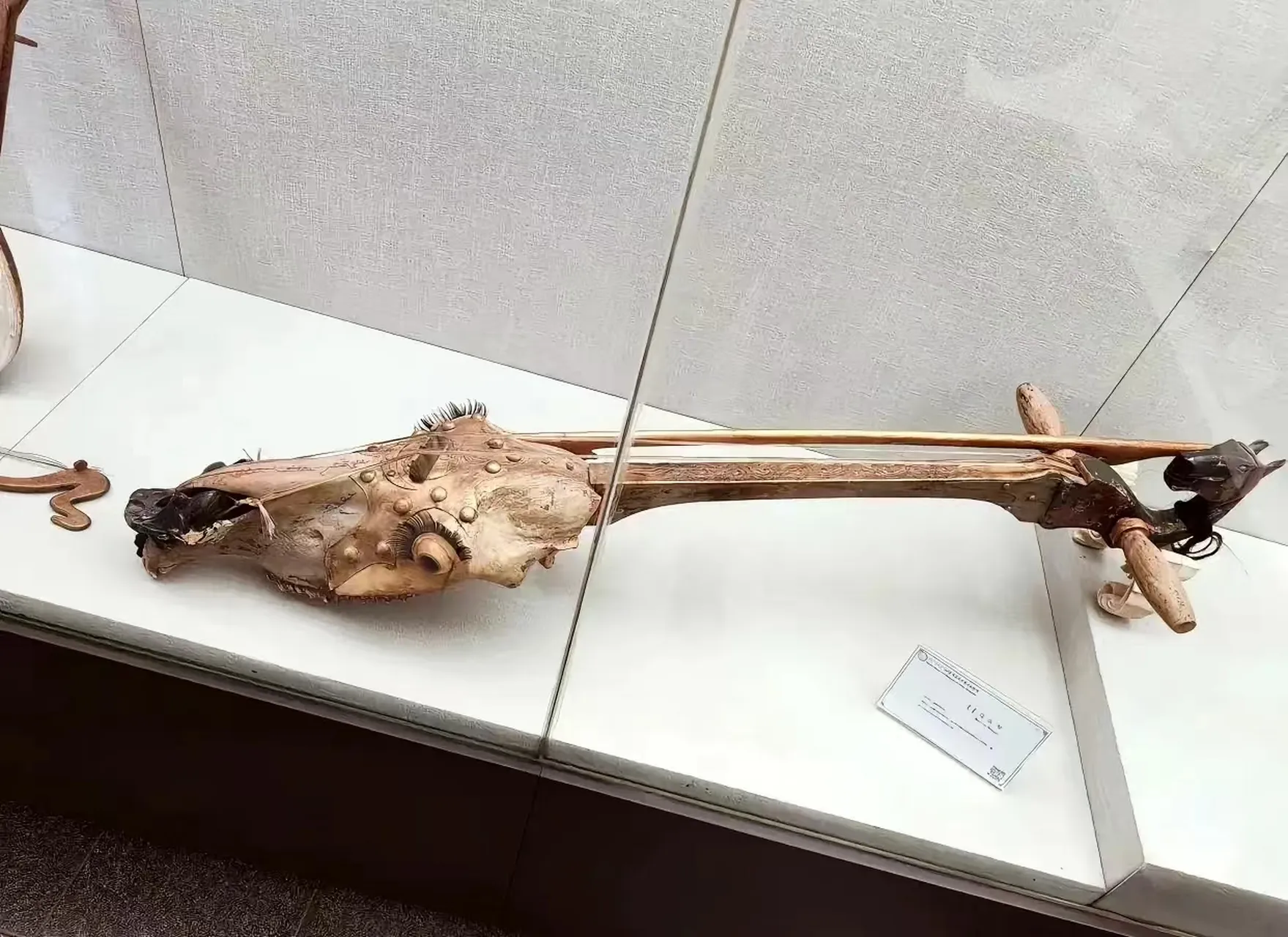
The 马头琴(Morin Khuur) is more than an instrument. To the Mongolian people, it is a voice for the land itself. Picture a grassland that stretches farther than a runner can breathe, and you’ll understand why Mongolian music needs long, open tones. The Morin Khuur answers that need with a sound that seems to ride the wind like a galloping horse.
The instrument’s name reveals its most striking feature: a carved horse head at the top of the neck. Mongolian herders believed horses weren’t just animals but spiritual companions. Many families had a horse that carried children, stood guard, or walked with them from one season’s camp to another. The Morin Khuur captures this deep bond both in shape and in tone. It produces a sound that can tremble like distant hooves or sing like a horse’s cry calling its herd home across the steppe.
Its body is a simple wooden box, yet its strings used to be made from actual horsehair. One string traditionally represented a “male” horse, the other a “female” horse, balancing strength and gentleness. When a skilled musician draws the bow, the two voices braid together, creating long phrases that seem to stretch across sky and earth.
Mongolian legends tell of a young herder whose beloved horse was killed. Heartbroken, he crafted a wooden body, stretched horsehair into strings, and carved the horse’s likeness at the top so its spirit could live on. From that loss came the instrument that became a cultural emblem. Whether or not the story is literal, it expresses a truth: the Morin Khuur is built from emotion as much as from wood.
Music played on the Morin Khuur often follows the rhythm of Mongolian life. Herding songs mimic the soft calling sounds used to soothe young animals. Epic songs stretch for hours, telling stories of warriors and wise horses. Modern composers even write symphonic pieces featuring the Morin Khuur as the lead voice, making it step into global concert halls while still carrying the scent of grass and winter smoke.
One of the most famous genres played on it is “long song,” where a single syllable might extend for several seconds, floating through the air like a kite that refuses to come down. When accompanied by the Morin Khuur, the music feels almost weightless, drifting over the listener like a quiet cloud.
Rituals also use the instrument. During blessings, shamans or elders might play brief melodies meant to call harmony into a family or guide travelers safely through far journeys. The sound is thought to calm restless animals and soothe stormy moods, something Mongolian children still hear in their households.
Even today, children in Inner Mongolia often learn the Morin Khuur at school. Performers sit with perfect posture, the horse-head silhouette rising above them like a guardian. Many competitions celebrate young musicians, preserving an art that once lived mostly in tents and grassland gatherings.
What makes the Morin Khuur especially captivating is how it merges simplicity with emotional depth. Nothing about it is complicated: two strings, one bow, a box. Yet through those pieces, it speaks in wild, open-sky poetry. It carries the feeling of galloping across endless land even when played in a crowded city.
In the hands of a master, the Morin Khuur is not just played—it breathes. It neighs, whispers, and remembers. It keeps the spirit of the Mongolian horse alive in modern times, a reminder that music can bridge human hearts with the natural world.
芦笙(Lusheng)— The Bamboo Voice of Unity in Miao and Dong Villages
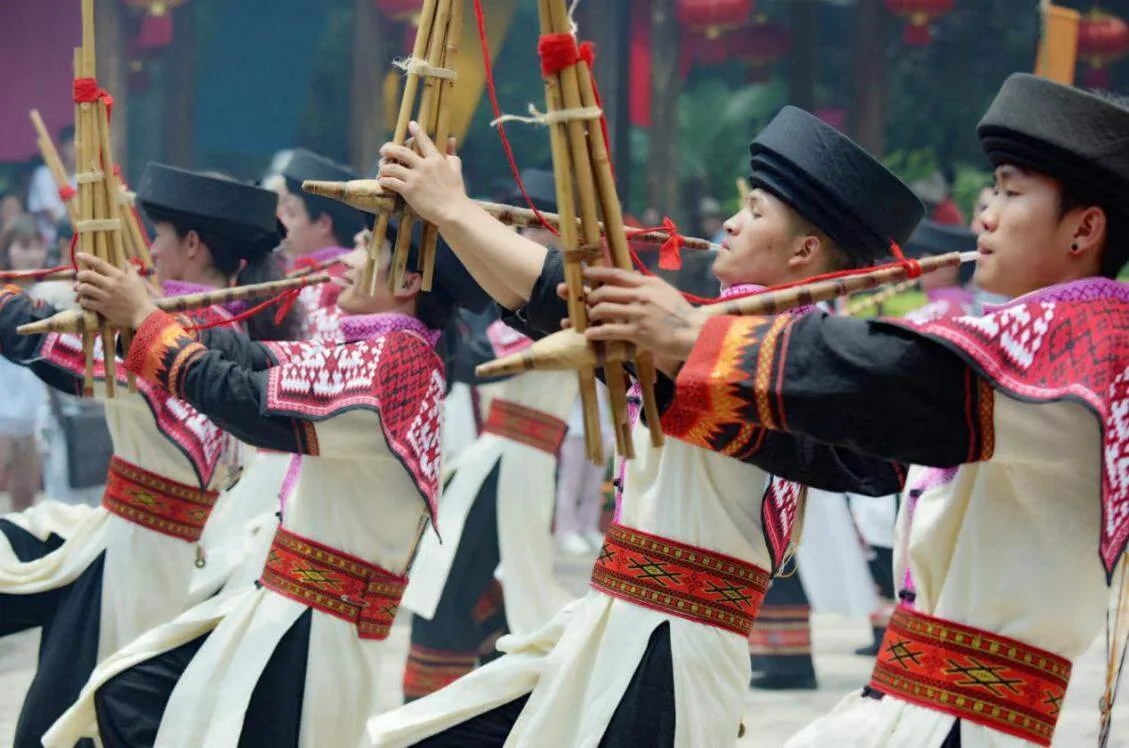
The 芦笙(Lusheng) rises from the mountain villages of the Miao and Dong peoples, where wooden houses balance on stilts and rice terraces curve down the hillsides like giant green bracelets. If the Morin Khuur is the sound of the open steppe, then the Lusheng is the sound of village festivals, laughter, and shared rhythms.
A Lusheng is made of several bamboo pipes of different lengths, each fitted into a wooden or metal wind chamber. When the player blows and moves the instrument, the reeds vibrate, creating bright, layered tones that weave into complex patterns. Some Lusheng are hand-sized and light; others stand taller than the musician, turning the performance into a dance as well as a musical act.
What makes the Lusheng special is that it rarely appears alone. It is an instrument of community. When one begins to play, others join in until the air fills with warm, interlocking melodies. Unlike instruments meant for solo expression, the Lusheng thrives in group settings—parades, weddings, seasonal ceremonies, harvest festivals, and courtship rituals.
The Miao people, in particular, associate the Lusheng with celebration. During Lusheng Festivals, entire villages move in circles to its pulsing rhythms. Young men play tall Lushengs while stepping in patterns, almost as if telling stories through walking. Women in embroidered dresses dance nearby, their silver ornaments flashing in the sunlight like sparks from a bonfire.
The Dong people use the Lusheng to accompany dances and to welcome guests. In traditional meetings between villages, the first sound often heard is the Lusheng greeting visitors, sending out a musical message: “You are welcome here.” Even today, many rural communities still host gatherings where dozens of Lusheng players form a wave of music that rolls out across valleys.
The materials used to make a Lusheng reflect the environment. Bamboo grows thick and tall in southern China, and its hollow structure makes it perfect for sound. Crafting a Lusheng is no simple job; the maker must choose bamboo at the right age, cut it during a specific season, and shape it precisely so each pipe matches the desired pitch.
The tones of the Lusheng are lively and cheerful. They jump, bounce, and flutter like birds playing above the rice paddies. Some say that the Lusheng carries the personality of the southern mountains: energetic, friendly, warm, and full of movement.
One beautiful tradition involves courtship. Long ago, during festivals, young men used the Lusheng to signal interest in someone. The girl would listen and, if she liked the sound, respond through dance or song. It wasn’t a loud, dramatic act but a soft conversation carried by music.
There are also ceremonial roles. In some communities, the Lusheng appears during rituals to honor ancestors or bless fields for a good harvest. The music invites good fortune, guiding families into a peaceful year.
Modern musicians continue expanding the Lusheng’s place in China’s cultural scene. Its bright, reedy sound now blends with orchestras, pop arrangements, and even fusion jazz projects. Yet its roots remain strong. Visit a Miao or Dong village during festival season, and you will still feel the ground tremble softly as dozens of Lusheng players form a musical river flowing through the streets.
The Lusheng, with its bamboo pipes and communal heart, reminds listeners that music does not always rise from solitude. Sometimes it rises from many voices breathing together.
冬不拉(Dutar)— The Two-Stringed Storyteller of Xinjiang
Travel west toward Xinjiang, and the land changes. The sky stretches sharper and bluer. Deserts shimmer with golden heat. Poplar trees stand like tall guards along the roads. In this region where Silk Road caravans once carried everything from spices to stories, music holds a different kind of fire—rhythmic, warm, and woven with storytelling.
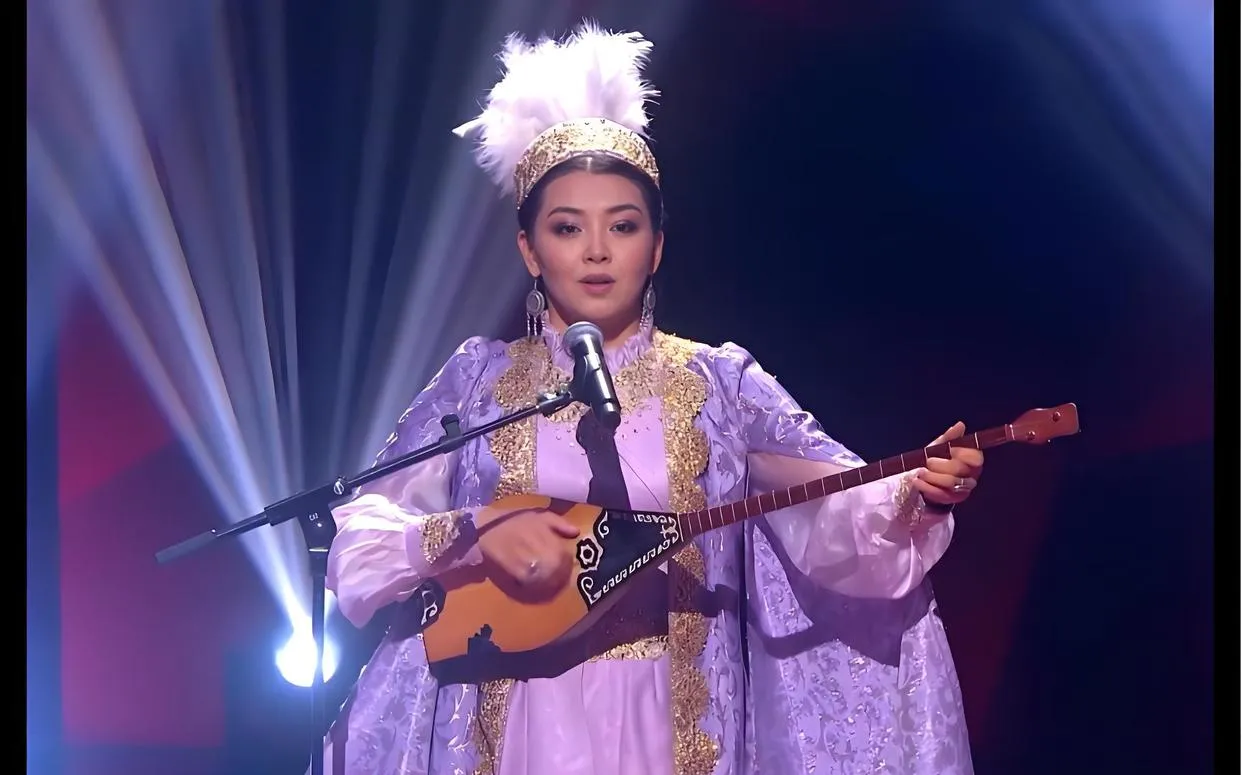
The 冬不拉(Dutar), a long-necked two-stringed lute, is one of Xinjiang’s most iconic instruments. Its name comes from Persian roots, hinting at cultural connections that trace back centuries. Light in the hands yet full in sound, the Dutar lives in Uyghur homes much like a friend who always has a story to share.
Structurally, the Dutar is simple. It has a pear-shaped wooden body, a long slender neck, and two strings that players pluck with their fingers. But when the music begins, simplicity fades into rich rhythm. The Dutar produces warm, resonant tones that dance between melody and percussion. Its sound is earthy, bright, and steady, echoing the energy of Xinjiang’s bustling bazaars and open landscapes.
One of its greatest roles is storytelling. Uyghur performers, called “ashiqs,” use the Dutar as both a musical and narrative tool. They tell tales of love, journeys, heroes, and moral lessons, with the Dutar weaving a steady musical spine through every scene. In a way, the Dutar is not an instrument but a companion in every story’s footsteps.
Many households keep a Dutar hanging on the wall, ready for gatherings. During meals, celebrations, or casual evenings, someone may pick it up and start a melody. Within minutes, others join with clapping, dancing, or singing, turning an ordinary moment into a warm, shared memory. Its presence transforms silence into connection.
Crafting a Dutar takes patience. The wood must be dried correctly, carved with care, and matched with strings that produce the right tension. Each maker puts part of their personality into the instrument, which is why no two Dutars feel exactly the same. The polished wood often shines like desert sunlight catching on river stones.
Culturally, the Dutar links different ethnic groups across Xinjiang. Uyghurs, Uzbeks, Tajiks, and Kazakhs all use variations of the instrument, shaping it to their styles and traditions. That shared use makes the Dutar a bridge between communities, almost like a shared language spoken through melody.
Its music is closely tied to dance. Xinjiang dances are lively, expressive, and often circular, mirroring the movement of desert winds. When the Dutar plays, feet tap, hands turn gracefully, and shoulders sway with a gentle rhythm. Songs can shift from slow, emotional lines to quick, playful patterns within seconds, keeping listeners alert and energized.
In modern times, the Dutar appears in concerts and fusion projects. Its warm timbre blends beautifully with modern guitars, violins, and percussion. Some young musicians experiment with new techniques, adding harmonics or rhythmic tapping to expand its voice.
Yet the heart of the Dutar still lies in its storytelling. Each plucked note carries the feel of caravan nights, the glow of tea houses, and the quiet warmth of family gatherings. It holds the memories of people who traveled far, survived harsh seasons, and sang to keep hope alive.
The Dutar is a reminder that music doesn’t need many strings to speak deeply. Sometimes two are enough to fill a room with stories that linger long after the final chord fades.
彝族月琴(Yi Moon Lute)— The Gentle Moon of the Mountain Peoples
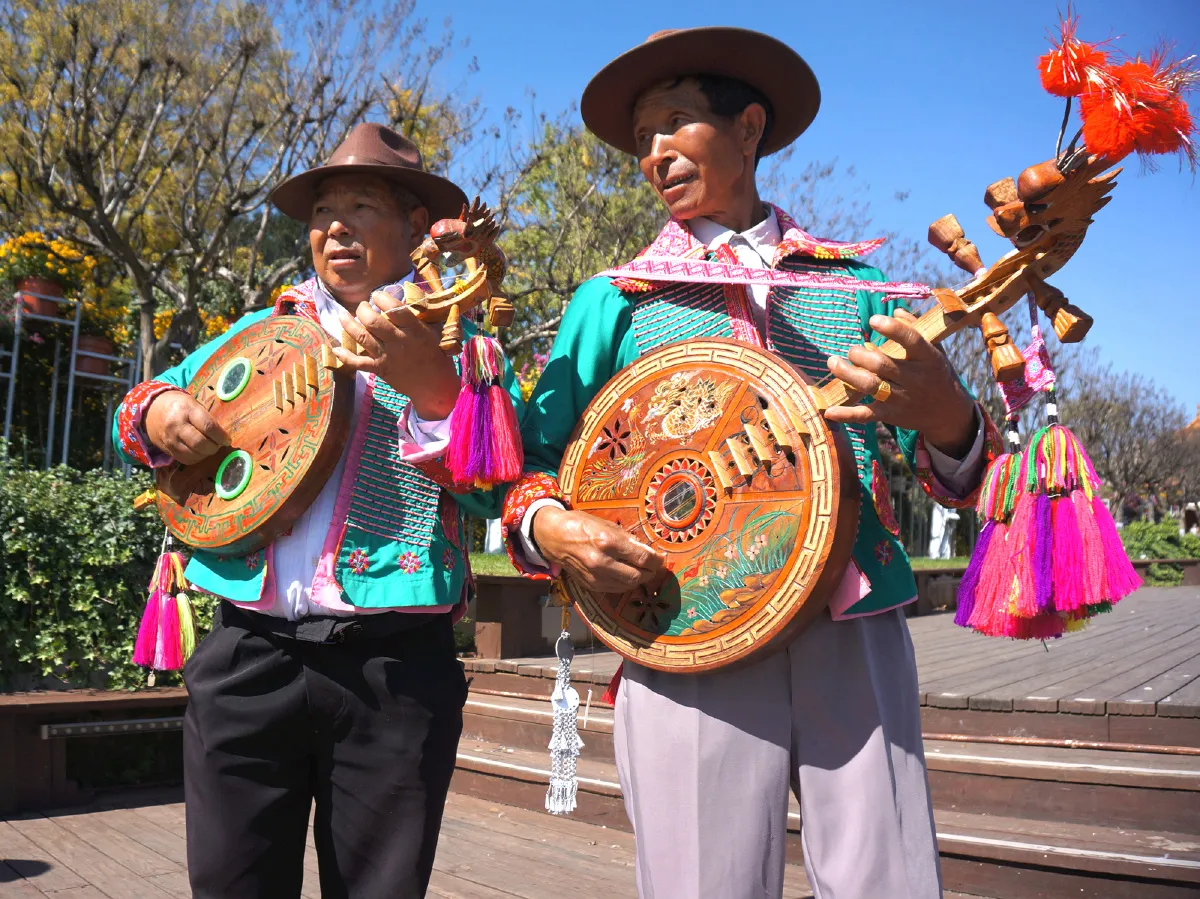
High in the mountains of southwest China, the Yi people shaped a musical world filled with nature’s quiet mysteries. Valleys echo with birdcalls, clouds drift low enough to touch, and forests breathe in slow rhythms. In this serene landscape, the 彝族月琴(Yi Moon Lute) was born—an instrument shaped like a full moon and played with an emotional softness that feels like night settling across the hills.
The Moon Lute, named for its circular body, is a plucked string instrument with a gentle voice. Its sound is never in a rush. Notes float out like falling petals or distant lantern light drifting across a river. It is an instrument made not for crowds, but for intimate spaces—courtyards, family gatherings, and firesides where stories grow slow and steady.
Its wooden body is carved into a round shape, symbolizing unity and harmony. The Yi people value the idea of the circle: the cycle of seasons, the shape of home gatherings, the return of travelers, and the moon that rises faithfully above village rooftops. The Moon Lute holds these ideas like secret messages. When someone plays it, they invite peace into the space.
Traditionally, the 彝族月琴 appears in storytelling, love songs, and gentle celebrations. Men and women use it to express feelings that words alone cannot hold. A young man might play the Moon Lute beneath a window, sending a soft melody to someone he admires. Families might bring it out after supper to play quiet songs while the fire crackles and elders share memories.
Unlike the energetic Lusheng or the rhythmic Dutar, the Moon Lute leans toward reflection. Its melodies often rise and fall like mountain paths—slow climbs, sudden drops, and long stretches of peaceful straightaways. It is music for thinking, remembering, or simply watching the night sky breathe.
The crafting of the Moon Lute demands attention to balance. The round body must be carved from carefully chosen wood, light enough to resonate but strong enough to last many seasons. The neck can be plain or decorated, sometimes with delicate carvings that tell small cultural stories. Each detail reflects the maker’s respect for the instrument.
Yi musicians often combine singing with playing. Their songs carry the character of their language, which has its own rhythm and flow. When paired with the Moon Lute, the performance becomes a kind of whispered poem. The sound doesn’t command the room; it settles into it the way fog settles into valleys.
One beautiful aspect of Yi musical culture is how the Moon Lute interacts with community traditions. During festivals, the music might accompany dances that imitate natural elements: the bending of trees, the circling of birds, the movement of water over stones. These dances are gentle and elegant, fitting perfectly with the Moon Lute’s personality.
In some regions, the Moon Lute appears in ceremonies honoring ancestors. The soft sound is believed to calm spirits and open clear communication between generations. It is not dramatic music but thoughtful music, guiding families into unity.
Modern musicians use the Moon Lute in creative ways. Some blend it with electronic soundscapes, letting its soft voice drift through modern beats. Others keep traditions alive by teaching it to children in mountain schools. Because the instrument is light and symbolic, young players often develop a sentimental connection to it. Many say it feels like holding a “small moon” in their arms.
The 彝族月琴 reminds listeners that not all music aims to impress. Some music aims to comfort. Some music brings quietness into noisy hearts. In a world filled with fast rhythms and bright lights, the Moon Lute offers a place to breathe. It shows that softness is its own kind of strength, and that gentle music can leave deep marks in memory.
Conclusion
These four instruments—the 马头琴(Morin Khuur), 芦笙(Lusheng), 冬不拉(Dutar), and 彝族月琴(Yi Moon Lute)—are not just expressions of sound. They are cultural diaries written in wood, bamboo, and string. Each one carries a landscape, a history, and a heartbeat. Together, they show China not as a single melody but as a vast orchestra of traditions, each voice shaped by environment, ancestry, and daily life.
For listeners abroad, these instruments offer more than exotic tones. They offer stories. They offer identity. They offer the feeling of walking into another world and finding that music is the bridge between hearts.
FAQ
Q: What are the most famous ethnic musical instruments in China?
A: China has many well-known ethnic instruments, including the Morin Khuur (Mongolian horsehead fiddle), Lusheng (Miao and Dong reed-pipe wind instrument), Dutar (a two-stringed long-necked lute from Xinjiang), and the Moon Lute used by the Yi people. Each instrument reflects the history, lifestyle, and artistic expression of its ethnic group.
Q: What makes the Morin Khuur unique?
A: The Morin Khuur is known for its carved horse head and deep, resonant tone. It plays a central role in Mongolian culture, often used to imitate the sounds of nature and horses. It is also an important symbol of nomadic life on the grasslands.
Q: How is the Lusheng used in Miao and Dong culture?
A: The Lusheng is commonly played during festivals, courtship events, and community celebrations. Its multi-pipe structure creates a vibrant, layered sound, making it a key instrument in traditional dances and ceremonies.
Q: What is the cultural significance of the Dutar in Xinjiang?
A: The Dutar is widely used among Uyghur and other ethnic groups in Xinjiang. Its warm and soft timbre makes it ideal for folk songs, storytelling, and dance performances. It is also a core instrument in traditional Muqam music.
Q: Why is the Yi Moon Lute called the “Moon Lute”?
A: The Moon Lute gets its name from its round, moon-shaped soundbox. It is often played during festivals, rituals, and social gatherings among the Yi people. Its bright tone adds a distinctive color to Yi folk music.
Q: Can these ethnic instruments be used in modern or fusion music?
A: Yes. Many contemporary musicians blend Morin Khuur, Lusheng, Dutar, and Moon Lute into modern genres such as pop, electronic, world music, and cinematic soundtracks. Their unique tones add cultural depth and fresh creative possibilities to modern compositions.