Decoding the Chinese Mind: 10 Characters That Explain China's Culture & Logic
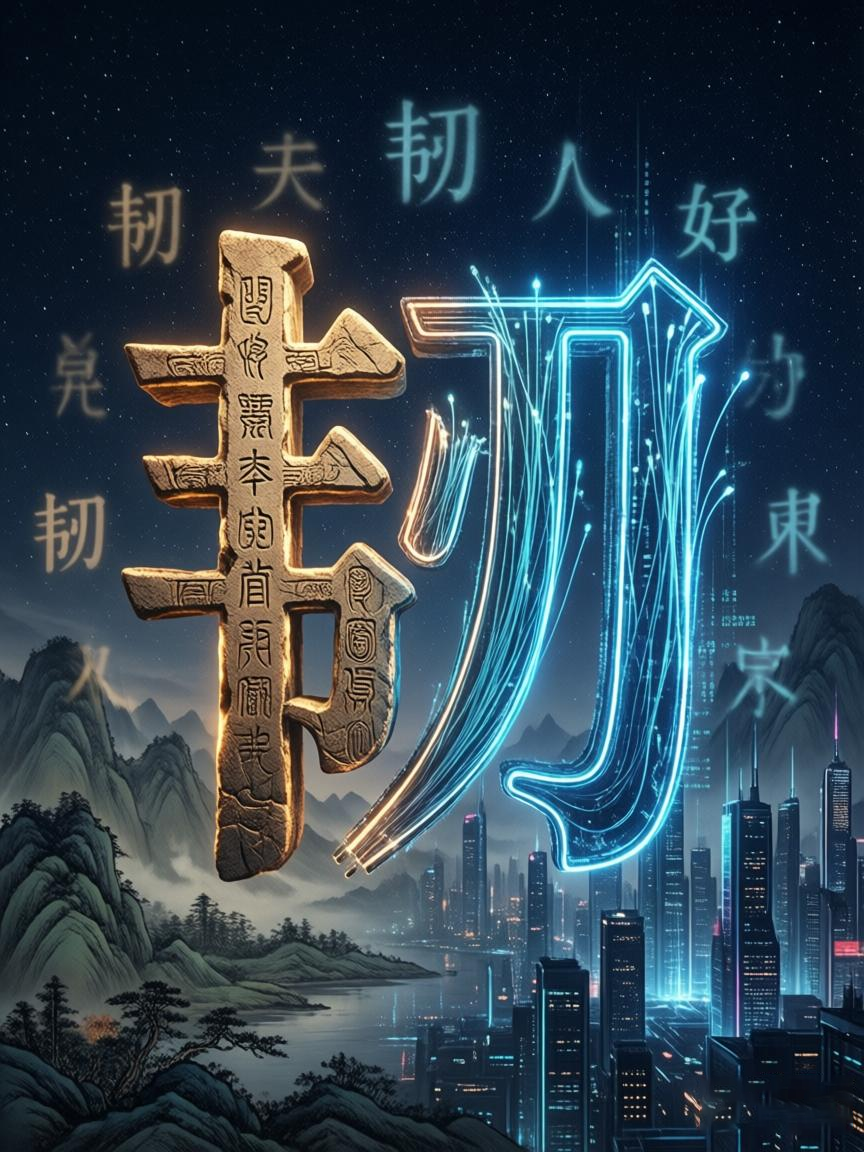
Table of Contents
- Introduction: Characters Are Not Just Words—They Are the Source Code of Thought
- Why "Rèn"?
- Self & Society — Understanding Chinese Social Logic Through Characters
- 1. 【人】(Rén): The Philosophy of Mutual Support
- 2. 【家】(Jiā): The Pig Under the Roof and Ultimate Belonging
- 3. 【信】(Xìn): The Contract Spirit of "Person + Word"
- Philosophy of Conduct — The Wisdom of Dynamic Balance
- 4. 【韧】(Rèn): The 2025 Character of the Year and Chinese Resilience
- 5. 【和】(Hé): The Art of Coexistence in Diversity
- 6. 【变】(Biàn): The Only Constant Is Change Itself
- Spiritual Pursuits — Inner Order and Aspirations
- 7. 【心】(Xīn): The Command Center of Body-Mind Unity
- 8. 【道】(Dào): The Path of Law and Bottom Line
- 9. 【福】(Fú): Concrete Happiness and Accumulation
- 10. 【梦】(Mèng): The Vision Connecting Reality and Future
- Conclusion: Meeting the Real China Between the Strokes
- Frequently Asked Questions (FAQ)
Introduction: Characters Are Not Just Words—They Are the Source Code of Thought
If you were to ask a foreign friend learning Chinese, “Which single character best represents China today?” they might hesitate for a long time, flipping through dictionaries without finding a perfect answer.
But as we look back from early 2026 at the year that just passed, one character emerged from thousands of candidates. Selected by the editors of Yao Wen Jiao Zi (a prestigious language journal) and millions of netizens as the “Character of the Year 2025,” it is: “韧” (Rèn).
Why "Rèn"?
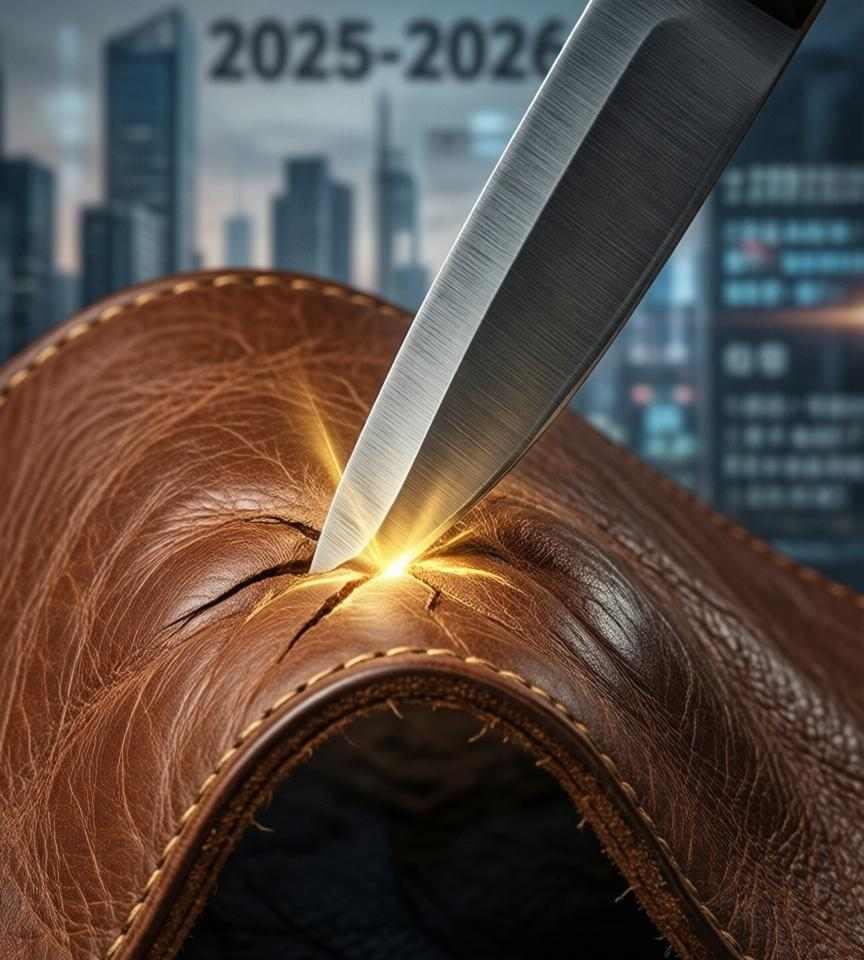
In Western contexts, facing pressure often emphasizes being "Hard" or "Strong"—implying unyielding resistance and refusing to bend. But "Rèn" is different. Its left component, "韦" (wéi), refers to tanned leather—soft yet elastic. Its right component, "刃" (rèn), means a blade. Together, they depict a life force that does not snap under the cut of a blade but bends, adapts, and springs back.
The selection of this character precisely captures the unique survival wisdom and spiritual state of Chinese society in 2025 amidst global economic fluctuations, accelerated technological change, and shifting living conditions: not meeting force with force, but overcoming hardness with softness; not giving up easily, but finding renewal through adaptation.
This is the magic of Chinese characters. They are not merely symbols for recording language; they are congealed philosophy, the “source code” of Chinese logic.
Unlike phonetic alphabets, Chinese characters are logograms. The structure of every character condenses the ancient creators' observations of nature, reflections on social ethics, and insights into cosmic laws.
- When you write “人” (Person), the mutual support of the two strokes tells you: In Chinese culture, no one is an island; a person is the sum of their relationships.
- When you see “信” (Trust), the combination of “Person” and “Word” warns you: A person’s word is their bond; a promise weighs heavier than Mount Tai.
- When you understand “和” (Harmony), the pairing of “Grain” and “Mouth” reveals: When everyone has food, there is peace; harmony stems from balanced interests.
For learners of Chinese, memorizing pronunciation and definitions only grasps the “skin” of the language. Only by decoding the cultural genes and logical structures behind the characters can you touch the “bone” of Chinese, understanding the deep-seated “why” behind Chinese behavior.
Why do Chinese people prefer saying “let’s discuss further” at the negotiation table? Why is the concept of “Home” so sacred? Why, when facing difficulties, do people tend to “endure” rather than “explode”? The answers lie hidden within these square characters.
In this article, we bypass dry grammar rules to select ten high-frequency characters rich in cultural depth. Divided into three dimensions—“Self & Society,” “Philosophy of Conduct,” and “Spiritual Pursuits”—we will peel back the layers like an onion, analyzing their etymological evolution, philosophical cores, and their vivid reflections in modern life in 2026.
Ready your curiosity. Let us step between the lines to decode a real, three-dimensional, and wise China.
Self & Society — Understanding Chinese Social Logic Through Characters
In Western individualistic cultures, “I” is often the subject of the sentence, the absolute center of action. But in Chinese logic, an isolated “I” is hard to find. The Chinese self-concept is established through interaction with others and within a collective coordinate system.
To understand this, we must start with three foundational characters: 人 (Rén), 家 (Jiā), and 信 (Xìn).
1. 【人】(Rén): The Philosophy of Mutual Support
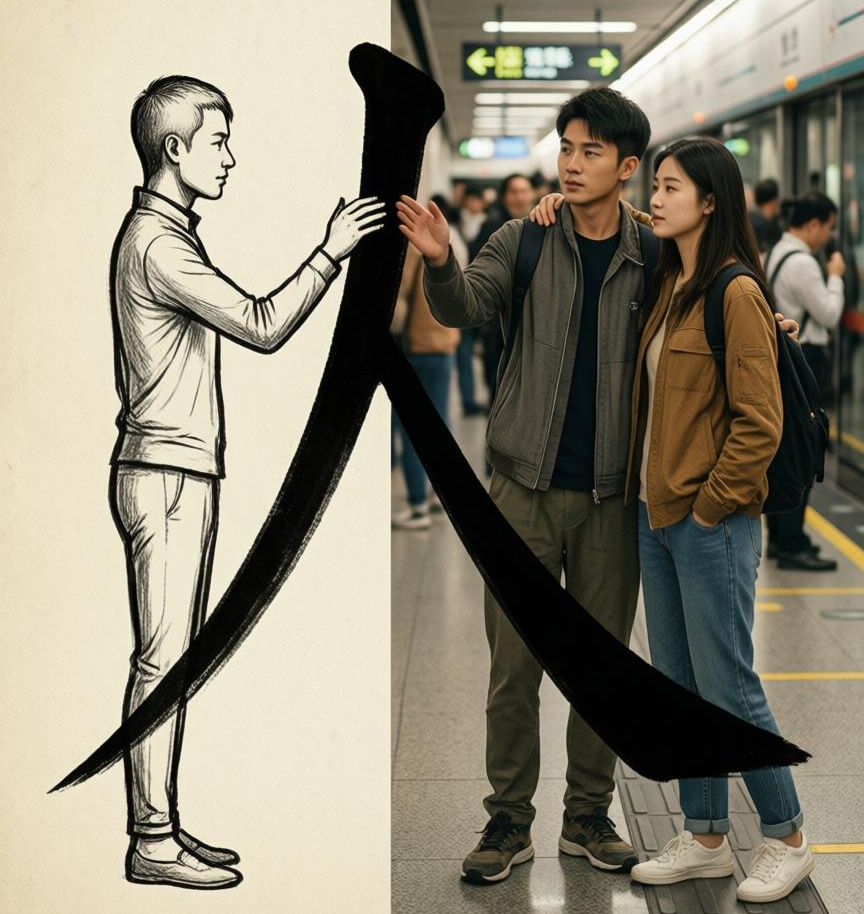
If you write the character “人” on paper, you’ll find it incredibly simple: one 撇 (piě, falling stroke) and one 捺 (nà, pressing stroke).
Decoding the Form
In Oracle Bone Script, “人” depicted a person standing sideways with arms hanging down, appearing humble and respectful. However, in the evolution to standard script, this structure acquired a deeper philosophical meaning: one stroke represents the self, the other represents others. Remove either stroke, and the character collapses.
The Logic
This is not just calligraphic aesthetics; it is the core metaphor of Chinese society: Humans exist through mutual support. Subconsciously, no one can survive completely independently. A person’s value is often determined not by solitary achievements, but by the role they play in their relationship network (family, friends, colleagues, society) and how they support others while being supported.
- This explains why asking strangers “Where are you from?”, “What do you do?”, or even “Are you married?” is not seen as invading privacy, but as a social instinct to locate you within a “relationship network.”
Reflections in 2026
Even in the highly digitalized world of 2026, this logic remains deeply rooted.
- Teamwork in the Workplace: “Lone heroism” rarely works in Chinese enterprises. Success is attributed to “everyone’s joint effort”; failure is blamed on “insufficient coordination.” HR managers value not just skills, but whether you “fit in” and can integrate into the “big family.”
- Social Networks: WeChat has become a “digital organ” not just as a communication tool, but as a massive “container of relationships.” Likes, comments, and shares on Moments are essentially efforts to maintain that supporting structure of strokes. Being “disconnected” on this network often implies social death.
Learning Tip: When you hear Chinese people say “It’s hard to be a person” (做人难), they aren’t just talking about survival hardships. They refer to the difficulty of maintaining balance in complex interpersonal relationships. Learning “how to be a person” means finding the perfect fulcrum between those two supporting strokes.
2. 【家】(Jiā): The Pig Under the Roof and Ultimate Belonging
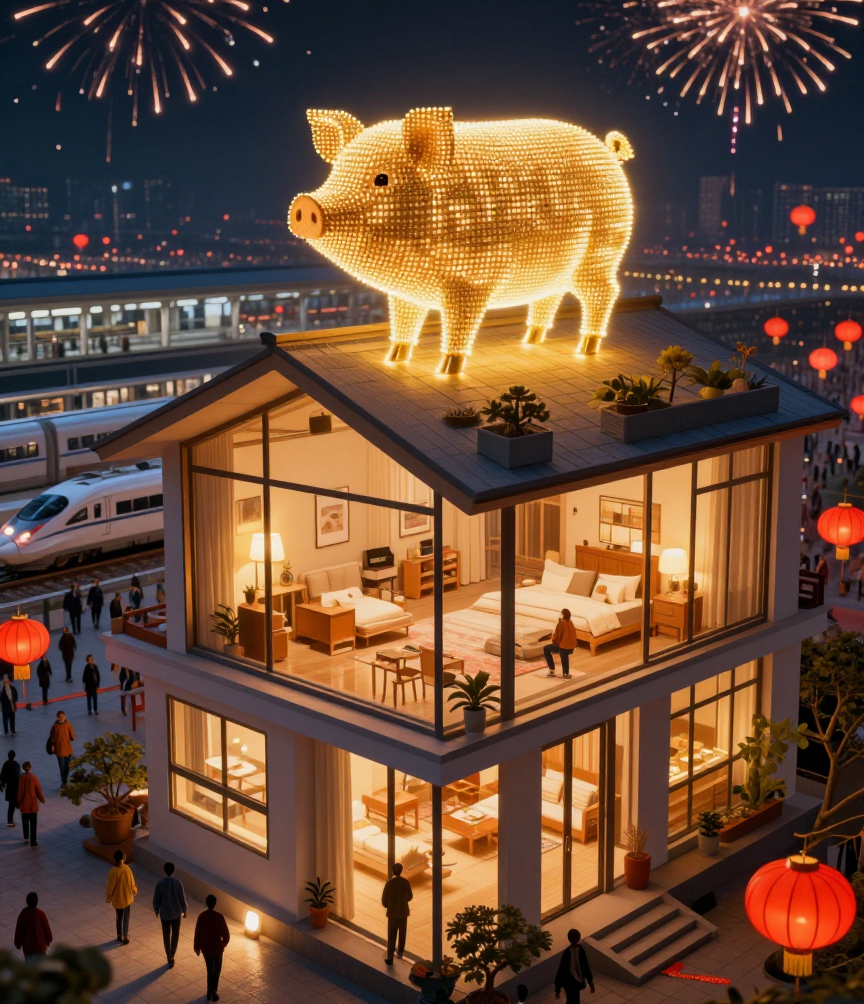
For many foreign learners, the mass migration during the Spring Festival (Chunyun) is baffling: Why endure crowding and sky-high ticket prices just to return to a place that might not even be comfortable? The answer lies in the character “家”.
Decoding the Form
“家” consists of two parts: “宀” (mián) on top, representing a roof or house, and “豕” (shǐ) below, meaning pig.
- You might wonder: Why a pig in the house? In ancient agrarian society, pigs were vital assets and food sources. A house with a pig meant not just shelter from wind and rain, but stable food reserves and the ability to reproduce. Only with a pig was it a stable home; only with savings was it true settlement.
The Logic
In Chinese culture, “家” far transcends the physical space of a “House.” It is an emotional sanctuary (Home), a fortress of security, and even a center of faith.
- Chinese sense of security largely stems from the stability of the “Home.” For “Home,” Chinese people are willing to make huge sacrifices. This extends into a unique logic of “Isomorphism of Family and State”: The state is an enlarged family; the family is a miniaturized state. Loyalty to the family naturally extends to loyalty to the collective and the nation.
Reflections in 2026
Although China is highly urbanized in 2026, and young people may live alone in small apartments, the cultural core of “Home” remains unchanged, though its form has evolved:
- The Homeownership Obsession: Why do young people take on massive mortgages to buy homes? Subconsciously, a rented apartment is just a “dormitory.” Only a property with ownership rights allows one to “keep the pig” (assets) and truly have a “Home.”
- Corporate Familism: Many Chinese companies call themselves a “big family,” with the boss as the “parent” and colleagues as “siblings.” This isn’t just politeness; it’s an attempt to transplant familial warmth and responsibility into business organizations to boost cohesion.
- Digital Kinship: Even miles apart, eating New Year’s Eve dinner via video call or sending red envelopes in family group chats reinforces the boundaries of “Home.” As long as hearts are together, the roof exists.
Cultural Insight: When a Chinese person invites you to their home for a meal, it is a supreme honor, meaning they treat you as “one of us.” Don’t be overly reserved; try to blend into the liveliness. You are sharing not just a meal, but trust and acceptance.
3. 【信】(Xìn): The Contract Spirit of “Person + Word”
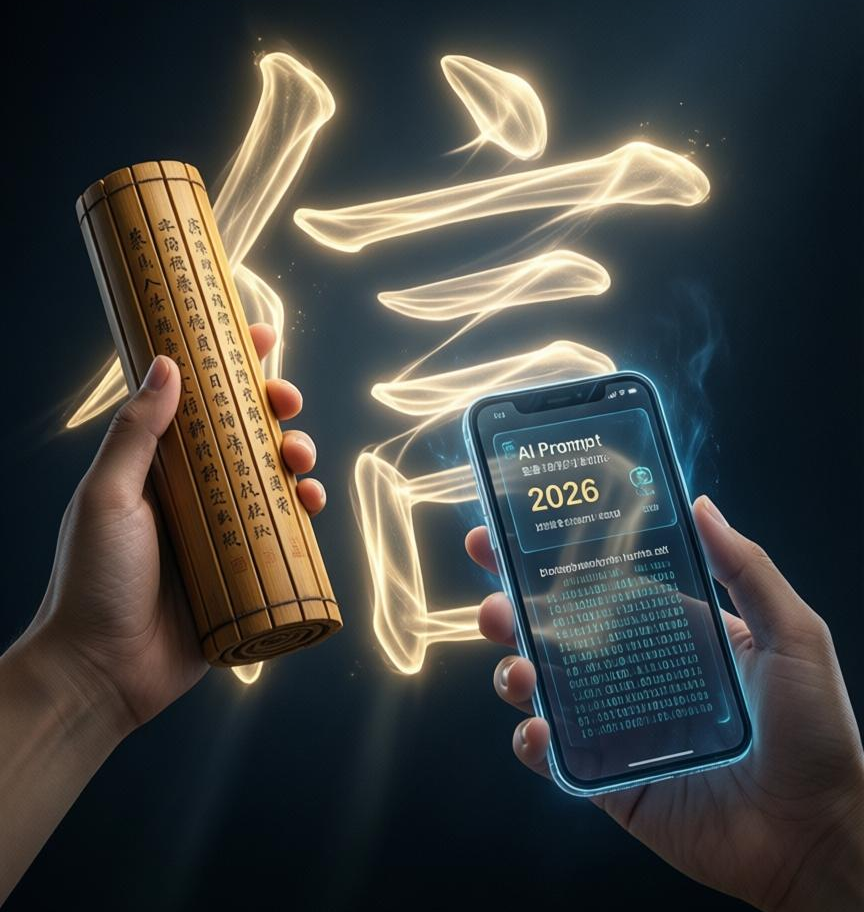
In business or daily interactions, Chinese people often speak of “integrity.” But this character “信” carries more moral weight than the Western concept of a “Contract.”
Decoding the Form
“信” is composed of “人” (Person) and “言” (Word/Speech). The creator’s logic is direct: A person’s words must count. If someone cannot fulfill their spoken words, they lose their basic qualification as a “person.”
- As the ancients said: “Without trust, a person cannot stand.”
The Logic
In traditional Chinese acquaintance societies, law was often the last line of defense, while “Trust” (Xin) was the first. A person’s reputation (“Face”) was their passport. Once trust was broken, the loss wasn’t just personal; it tarnished the reputation of the family and social circle. Thus, Chinese people value promises immensely; sometimes, a verbal commitment carries more moral binding force than a written agreement.
- This explains why doing business in China often requires “making friends” and building trust (Guanxi) before discussing contracts. Contracts are dead; “Trust” is alive and maintained by people.
Reflections in 2026
Entering 2026, with the rise of stranger societies and digital technology, the connotation of “Trust” is undergoing a profound modern transformation:
- From Morality to Data: Traditional “word-of-mouth” has become big data “Credit Systems.” Alipay’s Sesame Credit and bank credit reports quantify a person’s “Trust” into a score. High scores grant deposit-free rentals and fast loans; low scores make you immobile. This is the hardcore embodiment of “Person + Word” in the digital age.
- The Trust Economy of Live Streaming: On platforms like Douyin and Kuaishou, top streamers sell billions not because of the products themselves, but because of the fans’ “Trust” in the streamer personally. This trust based on personal charisma is unmatched by traditional advertising.
- Crisis PR: When corporate scandals arise, what the Chinese public forgives least is not the mistake itself, but “lying” or “shirking responsibility.” Once caught being “untrue to their word,” a brand image collapses instantly.
Pitfall Guide: As a learner, never make promises you cannot keep. If you say “I will help you,” in the Chinese context, this is often viewed as a serious contract. If unsure, express it more euphemistically: “I’ll try my best” or “I need to confirm first.” This is actually seen as a responsible attitude—another form of “Trust.”
Summary of Part I: Through “Person,” “Home,” and “Trust,” we see that the Chinese self is not an island, but deeply embedded in a network of mutual support, a sense of belonging to home, and a chain of keeping one’s word. Understanding these three points gives you the first key to entering Chinese society.
Philosophy of Conduct — The Wisdom of Dynamic Balance
Western thought often champions “truth becomes clearer through debate,” pursuing absolute logic and definite answers. But in the Chinese mind, the world is fluid, and contradictions can coexist. The best state is not “conquering” but “resolving”; not “static perfection” but “dynamic balance.”
This wisdom is concentrated in three characters: 韧 (Rèn), 和 (Hé), and 变 (Biàn).
4. 【韧】(Rèn): The 2025 Character of the Year and Chinese Resilience
Why did “Rèn” become the 2025 Character of the Year? Because it precisely summarizes the core Chinese attitude towards uncertainty.
Decoding the Form
“韧” consists of “韦” (tanned leather) and “刃” (blade).
- Wei: Tanned leather is soft and highly elastic; unlike raw hide which is brittle, it stretches without breaking.
- Ren: The blade represents external pressure, cutting, and challenges.
- Combined Meaning: Like tanned leather, even when faced with the cut of a blade and immense tension, it may deform and bend, but it will never snap. Once the pressure releases, it returns to its original shape.
The Logic
This is typical Eastern survival wisdom. Unlike the Western emphasis on being “Hard” (resisting head-on) or “Break” (collapsing), “Rèn” represents elastic adaptability.
- Chinese people believe: “What is too rigid breaks easily; what is soft endures.” In adversity, one need not always clash head-on. Temporary retreat, bending, and endurance are not weakness, but ways to accumulate strength and wait for the moment to rebound. This mindset of “bending to extend” has allowed Chinese people to survive and revive through countless crises in history.
Reflections in 2026
Looking back at 2025, with global supply chain restructuring, intensified tech blockades, and frequent climate anomalies, Chinese society demonstrated exactly this “Resilience”:
- Corporate “Spare Tire” Plans: Facing external supply cuts, many Chinese tech firms didn’t go bankrupt. Instead, they rapidly activated self-developed “spare tire” solutions. Though difficult initially (bending), they eventually broke through (rebounding).
- The “Side Hustle” Mindset: Facing workplace volatility, more young people no longer pursue a single “iron rice bowl” (lifetime job). They develop slash skills and side hustles. This diversified income structure is resilience at the individual level.
- Social Mentality: The trend of “Tang Ping” (lying flat) online is not true giving up, but a tactical “bending” and resting, aiming to “stand” for longer. As netizens say: “We can bend, but we will not kneel.”
Learning Tip: When you hear Chinese people say “Endure a bit longer” or “As long as the green hills remain, there will be firewood to burn,” they are not waiting passively. They are practicing the philosophy of “Rèn.” At such times, offering encouragement and patience fits their psychological needs better than suggesting an “immediate counterattack.”
5. 【和】(Hé): The Art of Coexistence in Diversity
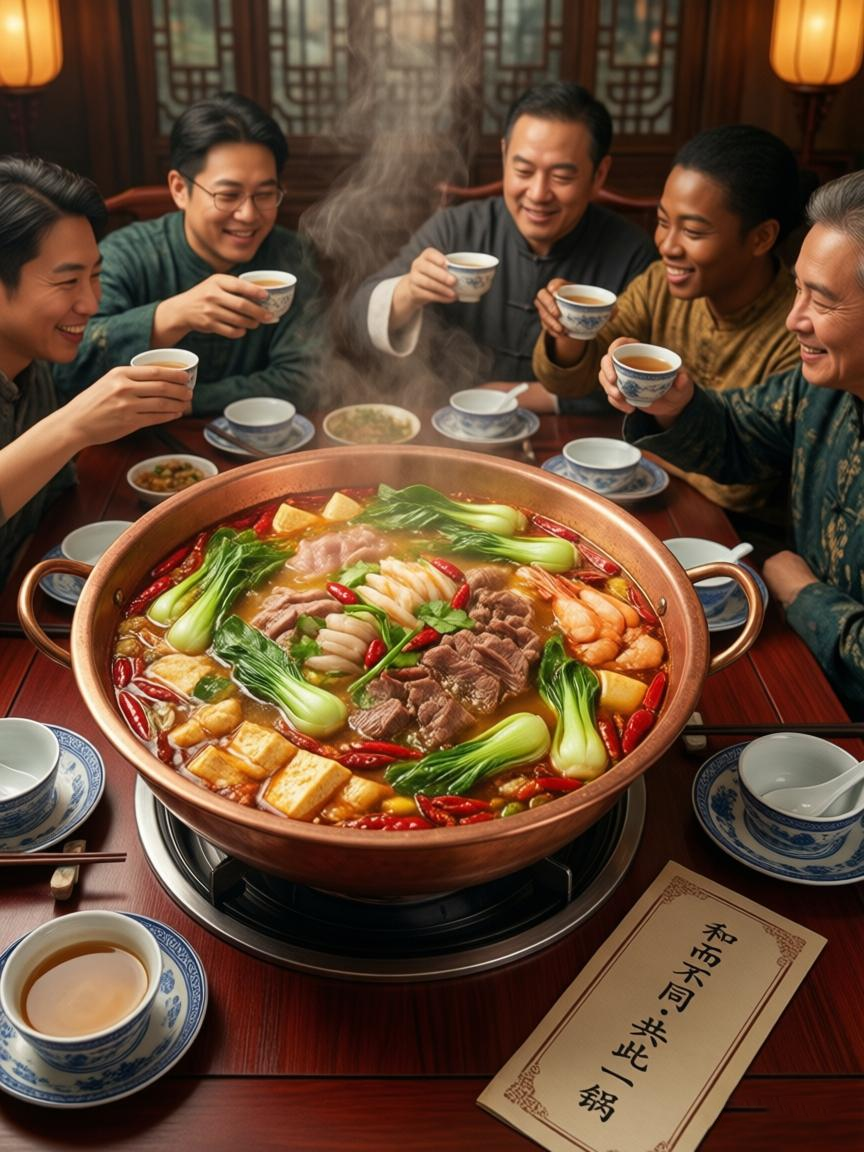
"Harmony" is one of the highest values in Chinese culture, but it is often misunderstood as "unprincipled compromise" or "total uniformity." Not so.
Decoding the Form
“和” has “禾” (grain/crops) on the left and “口” (mouth/person) on the right.
- Original Meaning: When everyone has food, the world is at peace. This is the most primitive logic of livelihood.
- Extended Meaning: Harmony in music (coordination of different tones) and cooking (blending of different flavors).
The Logic
Confucius said: “The gentleman seeks harmony but not uniformity; the petty man seeks uniformity but not harmony.”
- This is the essence of “He”: Harmony does not mean eliminating differences or forcing consensus. It means seeking coexistence and cooperation while acknowledging differences.
- Like a delicious soup, it needs the collision of salt, vinegar, fish, and meat to be savory. If there is only one flavor, it is bland. The Chinese pursuit of “Harmony” is the unity of diversity—“seeking common ground while reserving differences.”
Reflections in 2026
In this era of clashing ideologies in 2026, the wisdom of “He” is more crucial than ever:
- Business Negotiations: Chinese merchants rarely back opponents into a corner at the negotiating table. They tend to find the “greatest common divisor” of interests. Even if a full agreement isn’t reached immediately, they maintain “friendly relations” to leave room for the future. “Though the deal fails, the friendship remains” embodies this thinking.
- Social Governance: Facing diverse social voices and online public opinion, both officials and the public prefer to “mediate” conflicts through dialogue and consultation rather than simple suppression. Building a “Harmonious Society” remains the mainstream narrative.
- International Relations: China’s concept of a “Community with a Shared Future for Mankind” is essentially the global version of “He” culture: respecting differences in development paths and seeking win-win cooperation.
Cultural Insight: If you get into a dispute in China and the other party suddenly goes silent or changes the topic, don’t assume they are evading. They might be preserving surface “Harmony” to avoid escalating conflict. At this point, you should also step down gracefully, giving each other a way out. This often solves the problem better than arguing over who is right or wrong.
6. 【变】(Biàn): The Only Constant Is Change Itself
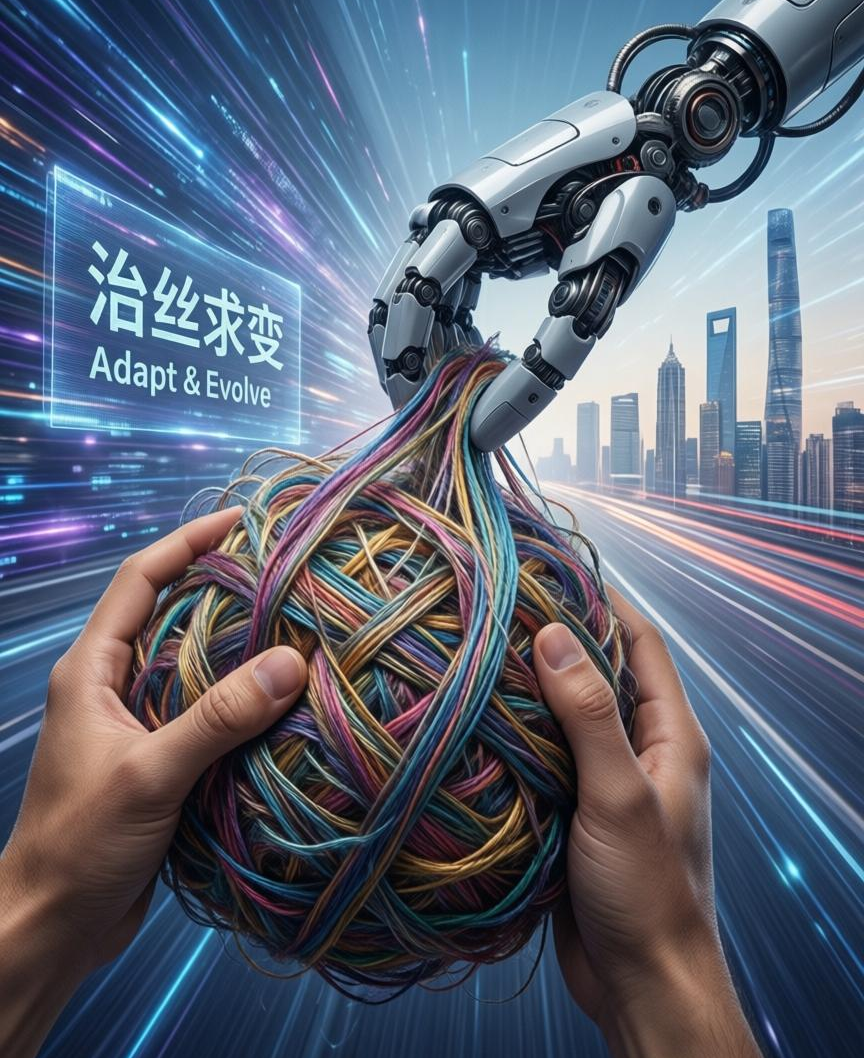
If Westerners like to make long-term, rigid plans, Chinese people have a natural sensitivity to and embrace of “change.”
Decoding the Form
The upper part of “变” (traditional: 變) is “糹” (silk thread), and the lower part is “攵” (hand holding a tool to strike).
- Original Meaning: Treating silk. Untangling messy threads to make them smooth. Silk is intricate and can knot or change direction at any time, requiring constant adjustment.
- Philosophical Source: The “I Ching” (Book of Changes), known as the foremost of classics, has “Change” as its core thought. Everything in the universe is changing every second.
The Logic
Chinese people believe “Plans cannot keep up with changes.” Therefore, instead of sticking rigidly to a perfect plan, it is better to cultivate the ability to respond to changes anytime.
- “When you reach an impasse, change; when you change, you find a way through; when you find a way through, you endure.” When the road is blocked, change the method to open up and develop long-term. This makes Chinese people extremely flexible and adaptable.
Reflections in 2026
In 2026, this mindset of “Change” has reached its peak in all aspects of Chinese society:
- Internet Speed: The iteration speed of Chinese apps is astonishing. Features popular today may vanish tomorrow; business models can be overturned the day after. Chinese enterprises are accustomed to “small steps, fast running, rapid trial and error,” seizing opportunities amidst change.
- Policy Adjustment: Facing new issues (like AI ethics, data security), the government often issues guiding opinions first, then adjusts and refines them in practice, rather than waiting for perfect legislation. This is the wisdom of “crossing the river by feeling the stones.”
- Personal Life: Flexible employment, digital nomads, and lifelong learning have become the norm. People no longer expect one job for life but are ready to “transform” and adapt to new professional roles at any time.
Pitfall Guide: As a foreigner, when you find rules, processes, or even agreements in China changing suddenly, don’t get angry or confused, thinking the other party is “unprofessional.” This is often an immediate adjustment to environmental changes. Showing your own flexibility and actively cooperating with the change will earn you respect and trust. Remember: In China, adapting to change is itself a core competency.
Summary of Part II: Through “Resilience,” “Harmony,” and “Change,” we see the three magic weapons of Chinese conduct: bending like leather under pressure, coexisting like seasoning amidst differences, and seeking change like treating silk for the future. This wisdom of dynamic balance allows Chinese society to always find a new equilibrium point through thousands of years of storms, thriving endlessly.
Spiritual Pursuits — Inner Order and Aspirations
In the fast-paced world of 2026, Chinese people still retain a unique spiritual anchor. This anchor comes not entirely from religion, but from a secular philosophy based on ethics, nature, and hope. This philosophy is hidden in four characters: 心 (Xīn), 道 (Dào), 福 (Fú), and 梦 (Mèng).
7. 【心】(Xīn): The Command Center of Body-Mind Unity
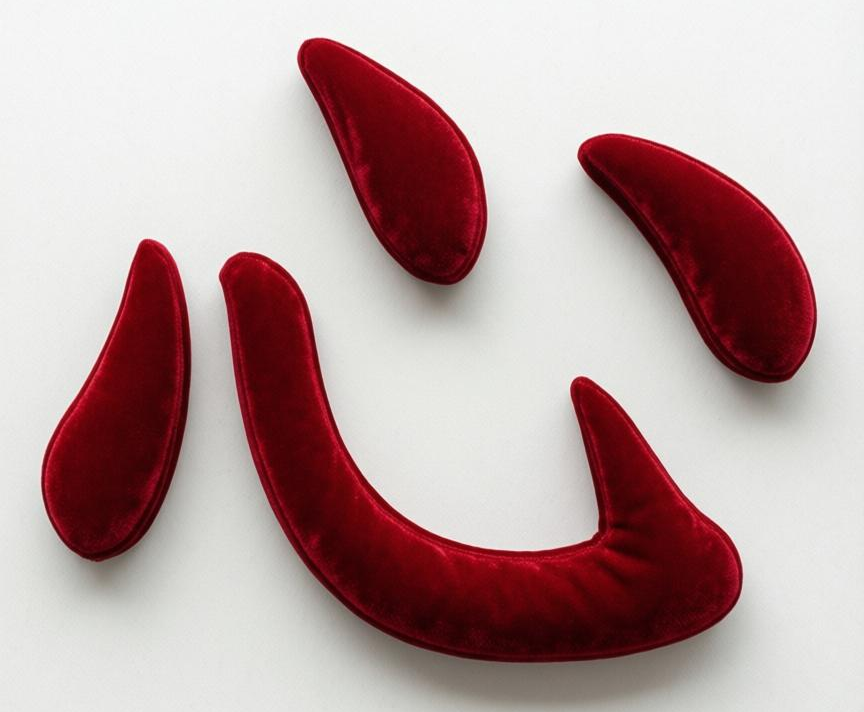
In Western anatomy, the heart is just a blood pump, and the brain is the command center for thought. But in Chinese culture and language, the “Heart” rules everything.
Decoding the Form
“心” is a pictograph resembling a real heart with chambers in Oracle Bone Script.
- The ancients believed: “The office of the heart is to think.” The heart is not only the container of emotions (love, hate, sorrow, joy) but also the source of intellect (thought, idea, memory, worry). Thus, almost all Chinese characters related to thinking and emotions carry the “Heart” radical (心 or 忄).
The Logic
Chinese people emphasize “Unity of Body and Mind” and the “Fusion of Reason and Emotion.”
- When making decisions, one must not only analyze logic with the brain but also feel with the heart whether it is appropriate. A person with only logic and no emotion is judged as “cold-blooded”; one with only emotion and no logic is “impulsive.” The ideal state is “doing things with heart”—fully engaged, blending emotion and reason perfectly.
- This explains why in China, attitude is often considered before ability. Because “Heart” represents your sincerity and level of engagement.
Reflections in 2026
- “用心” (With Heart) in the Workplace: In 2026, where AI handles massive logical tasks, the uniquely human “heart” becomes precious. Chatbots can reply instantly, but only humans can “feel with heart” a customer’s anxiety and offer comfort. When leaders say “You put your heart into it” (你走心了), it is the highest praise.
- Health Concepts: The TCM concept of “Nourishing the Heart” is reviving among urbanites. Meditation, mindfulness, and tea ceremonies are popular. People realize mental peace (“An Xin”) is the prerequisite for physical health. “Heart-tired” has become a more common complaint than “body-tired.”
- AI Ethics: When discussing whether AI has a “heart,” Chinese people focus not on consciousness, but on whether it can understand human “intentions” and practice “empathy” (putting oneself in another’s shoes).
Learning Tip: When expressing gratitude or appreciation, adding the words “with heart” (e.g., “Thank you for your thoughtful arrangement”) feels much warmer than a simple “Thanks.” It shows you noticed their emotional investment.
8. 【道】(Dào): The Path of Law and Bottom Line
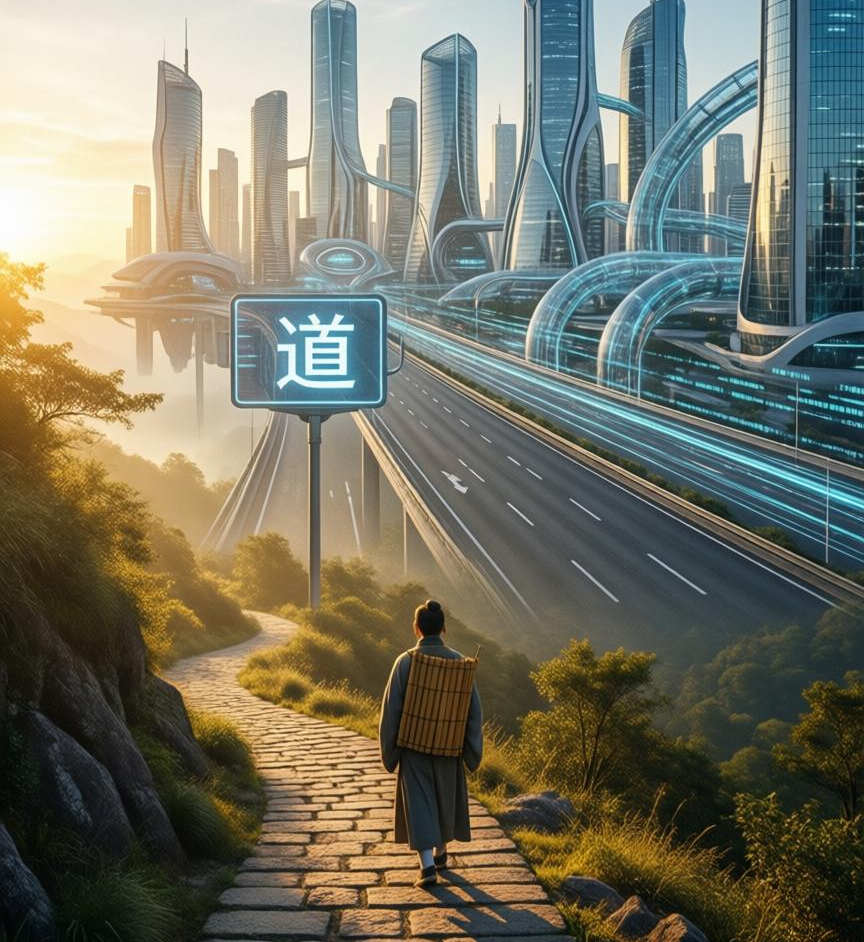
"Dao" is one of the most profound concepts in Chinese philosophy, yet it is very grounded.
Decoding the Form
“道” consists of “辶” (walk/move) and “首” (head/think/direction).
- Original Meaning: Walking while thinking about direction. Extended to mean road, path, or way.
- Philosophical Meaning: The law of the universe (Heavenly Dao), the code of social ethics (Human Dao), and the method of doing things (The Way).
The Logic
Chinese people believe everything has an intrinsic “Dao.”
- Going with the Flow: One must act in accordance with natural laws, not against them. This is “Dao follows Nature.”
- Bottom-line Thinking: One must have “Dao” in conduct—a moral bottom line. Using any means for profit is “deviating from the Dao” and will eventually backfire.
- Methodology: Any skill practiced to perfection becomes a “Dao” (e.g., Tea Dao, Sword Dao, Business Dao). It is not just technique, but a spiritual realm.
Reflections in 2026
- Business Ethics: In the 2026 business environment, “The Way of Business” is frequently mentioned. Companies engaging in false advertising or algorithmic price discrimination are condemned as “lacking virtue” or “without Dao.” Conversely, firms sticking to long-termism and social responsibility are seen as “having Dao” and go further.
- Lifestyle: Trends like “The Way of Wellness” or “The Way of Minimalism” among youth are attempts to find orderly rhythms and spiritual anchors in chaotic modern life.
- Tech for Good: With rapid AI development, people discuss the “Dao of Algorithms.” Technology is neutral, but the users must have “Dao,” ensuring tech serves human welfare, not vice versa.
Cultural Insight: If Chinese people evaluate something as “not following the Dao” or “unreasonable” (没道理), they are not just saying it’s illogical; they are negating it on a moral level. Arguing logic is often ineffective here; reflecting on whether the behavior aligns with public order and good customs is key.
9. 【福】(Fú): Concrete Happiness and Accumulation
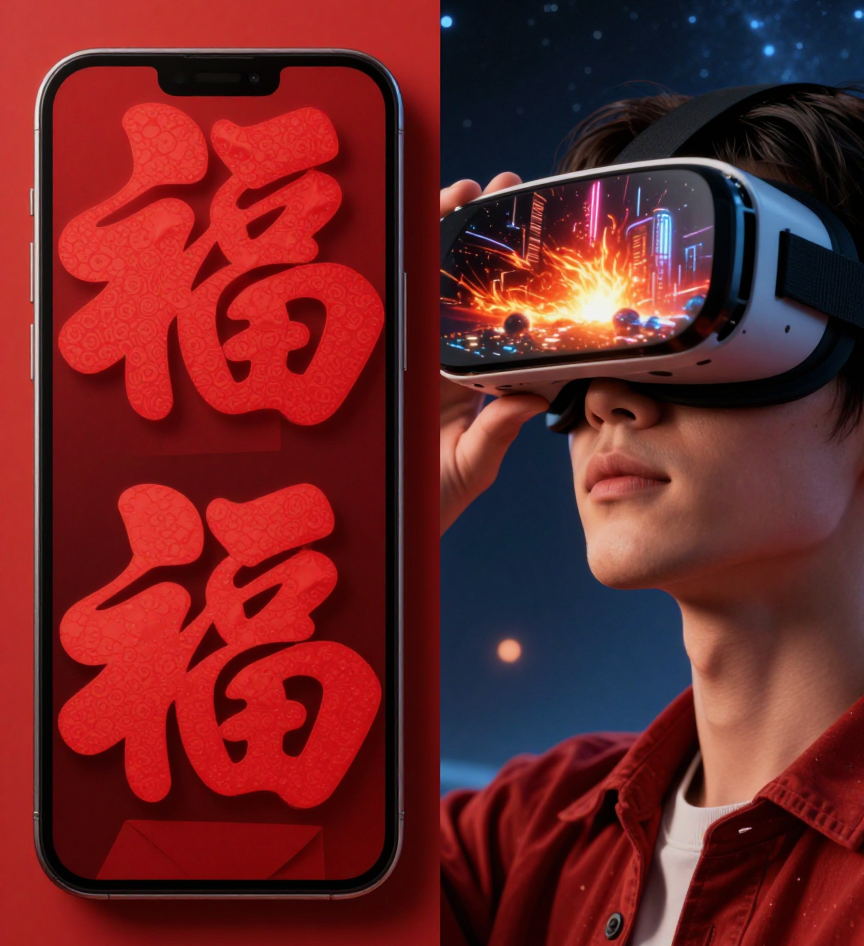
Westerners often view happiness as an abstract psychological state or a right. For Chinese people, “Fu” is more concrete, pragmatic, and often tied to material foundations and family completeness.
Decoding the Form
“福” has “示” (altar/spirit) on the left and “畐” (fú, a jar full of wine, representing abundance) on the right.
- Original Meaning: Praying to spirits for ample clothing and food.
- Implication: Having clothes, food, and wine is the greatest blessing.
The Logic
The Chinese view of happiness is secular and tangible. It doesn’t point to heaven after death, but to stability in the present world.
- “Fu” often needs accumulation (“accumulating blessings”) and can be strived for (“creating blessings”). It is not luck from nowhere, but the return of living well and treating others kindly. Moreover, “Fu” is usually shared; a family intact and healthy is “having Fu.”
Reflections in 2026
- Digital Blessings: Though sacrifices are rare, “Collecting Five Fu” (an Alipay Spring Festival event) has become a new custom in 2026. People collect “Patriotic Fu,” “Dedication Fu,” etc., on phones, essentially expressing longing for a better life through digital interaction.
- Small Certain Happiness: Under high pressure, young people pursue “Small Fu”—micro-certainties in life: a good cup of milk tea, leaving work on time, the company of a pet. This supplements grand narratives, bringing “Fu” back to daily life.
- Post-Moderately Prosperous Society: At the national level, “Fu” embodies the pursuit of a “Better Life.” It’s not just material wealth, but also environmental beauty, social equity, and spiritual fulfillment.
Pitfall Guide: During Chinese New Year, don’t just say “Happy New Year.” Saying “Wish you abundant Fu” or “Family Happiness” makes them happier. If you see the character “Fu” pasted upside down, don’t correct them! It’s a pun: “Fu upside down” sounds like “Fu has arrived.” It’s intentional auspicious symbolism.
10. 【梦】(Mèng): The Vision Connecting Reality and Future
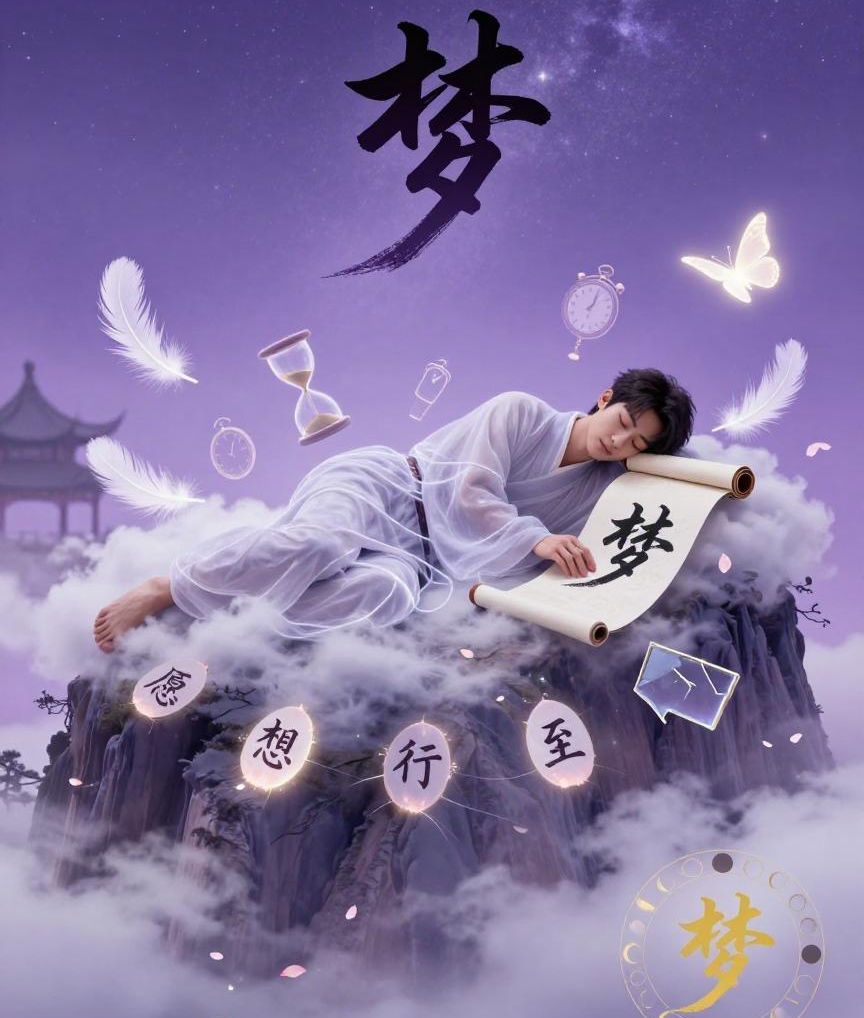
The final character is about the future.
Decoding the Form
“梦” (traditional: 夢) has “林/艹” (forest/grass, indicating blur) on top, “罒” (net/eye) in the middle, and “夕” (evening/night) at the bottom.
- Original Meaning: Blurry scenes seen by eyes at night.
- Extended Meaning: Dream, vision, ideal.
The Logic
In Chinese culture, “Dream” is not just a sleeping illusion; it is a force that drives reality.
- From Zhuangzi’s “Butterfly Dream” to the modern “Chinese Dream,” Chinese people use “Dream” to build consensus and inspire struggle. This dream is both personal (education, entrepreneurship) and collective (national rejuvenation). It connects current efforts with future glory, giving poetic color to arduous struggles.
Reflections in 2026
- Diversified Personal Dreams: In 2026, young people’s dreams are no longer singular. Some dream of being e-sports champions, others of revitalizing rural agriculture, or exploring Mars. Society is increasingly inclusive of diverse dreams.
- Tech Fulfilling Dreams: With VR/AR technology, “dream-making” is accessible. People can experience another life in virtual worlds, but this ironically sparks a stronger desire to realize dreams in reality—“combining virtual and real, prioritizing the real.”
- National Vision: The “Chinese Dream” in 2026 has entered a new stage, emphasizing high-quality development and common prosperity. Every individual’s small dream converges into the nation’s big dream, a narrative that remains powerfully inspiring.
Learning Tip: When Chinese people talk about “dreams” with you, they are often very serious. It’s not just small talk; they might be sharing their life plans. Sincere encouragement and affirmation (e.g., “Your dream will surely come true”) will quickly bridge the distance between you.
Conclusion: Meeting the Real China Between the Strokes
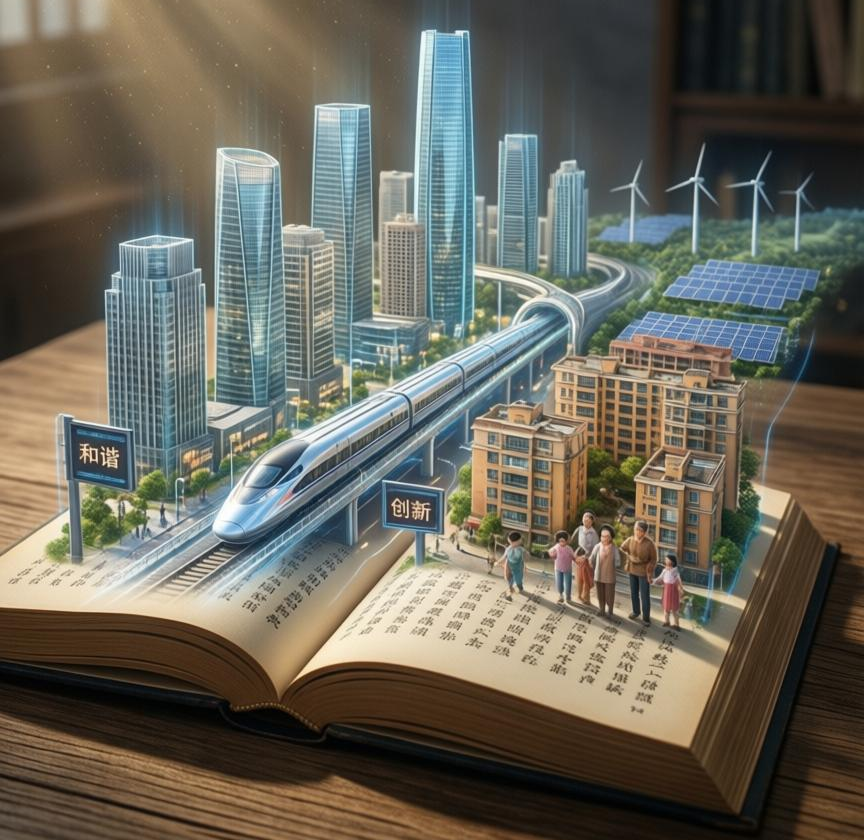
From the mutual support of “Person” to the deep belonging of “Home”; from the solemn promise of “Trust” to the flexible strength of “Resilience”; from the inclusive nature of “Harmony” to the adaptability of “Change”; and finally to the sincere dedication of “Heart”, the principled persistence of “Dao”, the pragmatic pursuit of “Blessing”, and the infinite aspiration of “Dream”.
These ten characters are like ten keys, unlocking the door to the depths of Chinese culture.
They tell us: China is not an abstract concept, but a community composed of countless vibrant individuals, possessing unique logical frameworks and emotional temperatures. Here, tradition intertwines with modernity, the individual coexists with the collective, and pragmatism blends with romance.
For learners of Chinese, mastering the logic behind these characters transforms your language from a mere tool of communication into a bridge. It allows you to hear the unspoken meanings, understand the gestures, and truly integrate into this ancient yet vibrant land.
Between the lines, there is a universe. May your journey in learning Chinese allow you not only to write beautiful characters but to read the real, three-dimensional, and lovely China behind them.
Interaction Time
Among these ten characters, which one touched you the most? Or, is there another character that you feel best represents China in your eyes? Welcome to share your stories and thoughts in the comments!
Frequently Asked Questions (FAQ)
1. What was the Chinese Character of the Year for 2025, and what does it mean?
The Chinese Character of the Year for 2025 is "韧" (Rèn), which translates to resilience or toughness with flexibility. Unlike the Western concept of being "hard" or unyielding, "Rèn" depicts a quality like tanned leather: it can bend under pressure (represented by the blade radical) without breaking, and springs back once the stress is released. It symbolizes the Chinese societal ability to adapt and survive through challenges.
2. How do Chinese characters reflect Chinese thinking and logic?
Chinese characters are logograms, meaning their structures often encode philosophical concepts directly. For example, the character for "Trust" (信, Xìn) combines "Person" (人) and "Word" (言), visually teaching that a person's word must be kept. Similarly, "Home" (家, Jiā) combines "Roof" and "Pig," reflecting the ancient agrarian belief that true security comes from having both shelter and food reserves. Understanding these etymologies reveals the collectivist and pragmatic logic underlying Chinese culture.
3. Why is the concept of "Family" (家) so important in Chinese society?
In Chinese culture, "家" (Jiā) is more than just a physical house; it is the fundamental unit of social stability and emotional security. Historically represented by a roof over a pig (symbolizing assets), the concept extends to a "family-state isomorphism," where loyalty to the family translates to loyalty to the community and nation. This explains why major life decisions, such as buying a home or career choices, are often made with the family's collective well-being in mind rather than just individual preference.
4. What is the difference between Western and Chinese concepts of "Harmony" (和)?
Western views often equate harmony with agreement or uniformity. However, the Chinese character "和" (Hé)—composed of "Grain" and "Mouth"—implies that harmony arises when everyone has their needs met while maintaining diversity. Confucius described this as "seeking harmony but not uniformity" (和而不同). In business and social contexts, this means resolving conflicts by finding a balance of interests ("the greatest common divisor") rather than forcing one side to win or eliminating differences.
5. How can understanding these characters help me learn Mandarin faster?
Memorizing characters as random strokes is difficult and inefficient. By understanding the logic and stories behind the radicals (e.g., knowing that "Heart" 心 relates to all emotions and thoughts), learners can group vocabulary logically rather than rote memorization. Furthermore, grasping the cultural context—such as why "Face" (reputation) is tied to "Trust"—helps learners navigate real-world conversations and business negotiations with greater cultural intelligence, moving beyond textbook Chinese to authentic communication.