The Chinese Legend of Table Tennis
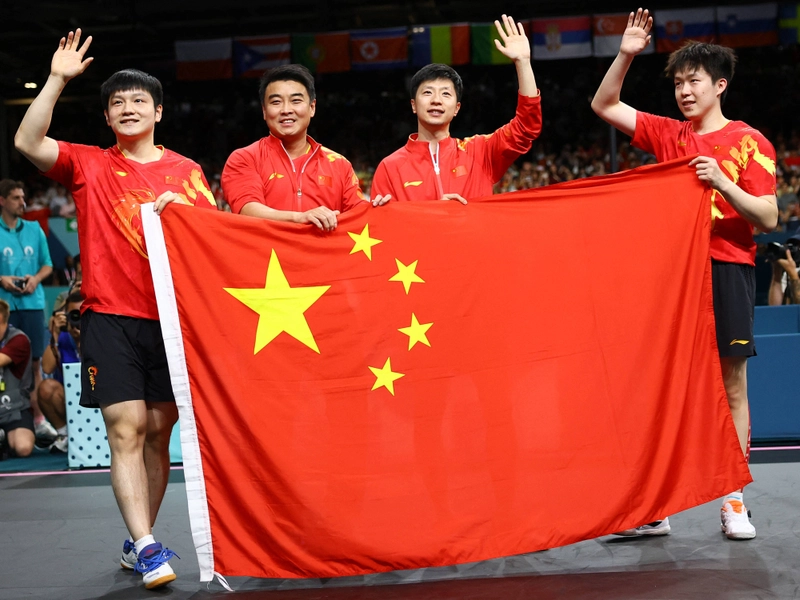
In China, table tennis holds a unique and unrivaled status, rightfully earning the title of "national sport." From the weathered stone tables in public parks to the brand-new tables in schoolyards, the crisp "ping-pong" sound forms the shared soundtrack to generations of daily life. Picture this scene: on one side, an athlete at the Beijing Olympic Games unleashes a powerful loop drive, sending the stadium into a roaring frenzy; on the other, two elderly individuals engage in a gentle rally at a simple concrete table on a chilly winter morning in their community. How can this tiny ball, weighing a mere 2.7 grams, simultaneously carry the glory of a nation and the everyday moments of hundreds of millions? To unravel this mystery, we must journey through time and space—tracing its path from its ubiquitous presence across the nation back to its unexpected origins. In the late 19th century, within the cigar-scented drawing rooms of British aristocracy, an elegant game named "ping-pong" was quietly born. This is a century-spanning history of a global sport's dissemination and, even more so, a legend intricately woven into the fabric of modern China.
Origins and Diffusion: Table Tennis's "World Tour"
When we watch a high-speed table tennis match today, it's hard to imagine that the prototype of this dynamic and passionate sport was born in the leisurely post-dinner parlors of the British Victorian aristocracy.
An Elegant Parlor Game in Britain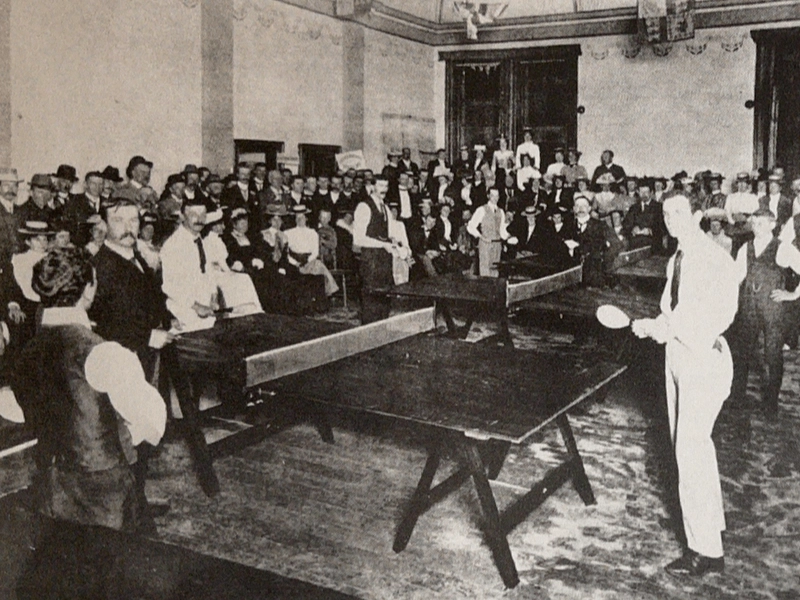
In the late 19th century, the popularity of tennis in Britain spurred the creation of its indoor "miniature version." Members of upper-class British society, after dinner, would casually pick up cigar box lids as paddles and carve champagne corks into balls, batting them back and forth across a green cloth-covered table. The game initially had various whimsical names, like "Flim-Flam" and "Gossima," and resembled more of an impromptu social pastime. Around 1890, a British engineer named James Gibb brought back hollow celluloid toy balls from the United States, which utterly transformed the gaming experience. The distinct "ping-pong" sound these balls made upon hitting the table was so vivid and evocative that the term "Ping-Pong" quickly caught on. In 1901, the company J. Jaques & Son Ltd astutely registered "Ping-Pong" as a trademark. From that point, the sport acquired its most globally recognized name and began its initial steps towards commercial promotion.
Going Global and Establishing an OrganizationThe introduction of the celluloid ball was the first crucial node in table tennis's journey to the world. It was inexpensive, easy to mass-produce, and its flight stability far surpassed that of earlier cork or rubber balls, providing the material foundation for table tennis to break out of aristocratic parlors and reach the general public. Leveraging the global influence of the British Empire, this brisk and novel pastime quickly crossed the English Channel, swept across continental Europe, and voyaged across the oceans to the United States and East Asian nations like Japan and China.
As table tennis staked its claim across the globe, the establishment of a unified governing body became imperative. In 1926, at the initiative of German doctor Georg Lehmann, the International Table Tennis Federation (ITTF) was formally founded in Berlin and held the first World Table Tennis Championships that same year. This marked table tennis's definitive departure from its initial identity as a mere "game," officially ascending onto the international stage of standardized, institutionalized competitive sport.
Technological Revolution and Competitive DevelopmentThe founding of the ITTF greatly facilitated the exchange and innovation of techniques and tactics. However, what truly ushered table tennis into the modern era was a revolution in the paddle. In the 1950s, Japanese players pioneered the use of a new type of racket: a wooden blade covered with sponge rubber. This invention was nothing short of a disruptive technological revolution—it geometrically enhanced the power, spin, and speed of the game. Traditional defensive chopping tactics quickly crumbled against the fierce topspin loop drives and rapid smashes of the Japanese team. Table tennis entered an era emphasizing proactive attack. Equipment innovation also spurred diverse playing styles, with different types of rubber surfaces like pimpled rubber, inverted rubber, anti-spin rubber, and long pips emerging successively, making tactical gameplay on the court unprecedentedly complex.
During this period, the epicenter of competitive table tennis began shifting from Europe to Asia. Armed with advanced sponge rackets and the innovative loop drive technique, the Japanese team broke the early dominance of European powerhouses like Hungary and Czechoslovakia, reigning over the table tennis world through the 1950s and 1960s. They deeply imprinted an Asian mark on the sport, simultaneously setting the stage for the subsequent rise of China.
Landing and Taking Root – The Birth and Rise of China’s “National Sport”
When table tennis was undergoing technical and power shifts on the European stage, it was still a “Western sport” quietly seeking fertile soil in the distant ancient kingdom of the East. Its destiny soon became tightly intertwined with the revival dream of an age‑old nation, composing a unique legend in world sports history.
Early Introduction and Initial Development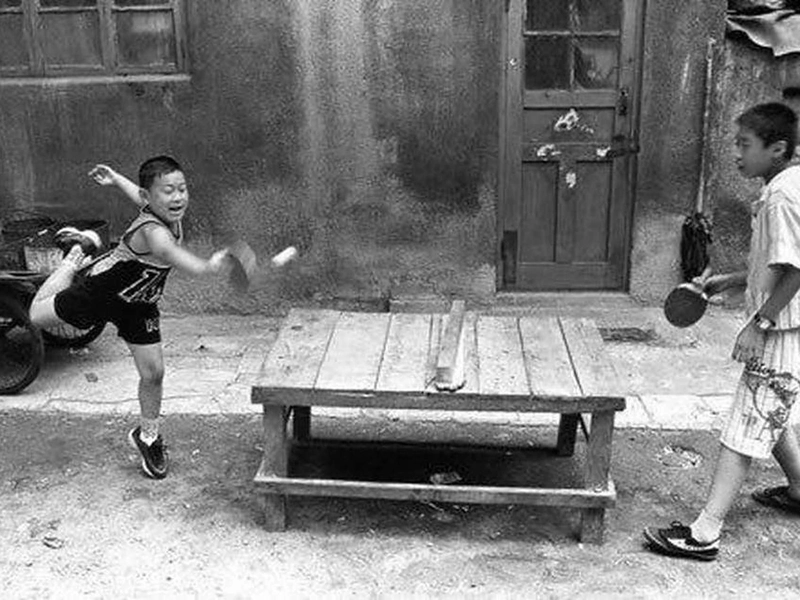
In the early 20th century, table tennis arrived in China aboard Western merchant ships and through colonial presence, entering via coastal treaty ports such as Shanghai and Guangzhou. At first it was merely a fashionable pastime for foreign expatriates and a handful of Chinese urban elites, appearing sporadically in clubs and missionary schools. Amid the constant wars and widespread hardship of the old Republic, the sport spread only within a narrow social circle and never reached the masses. Yet this accidental seed had already been planted, quietly awaiting the right spring breezes for vigorous growth.
“Competing for the Nation” – A New Historical Mission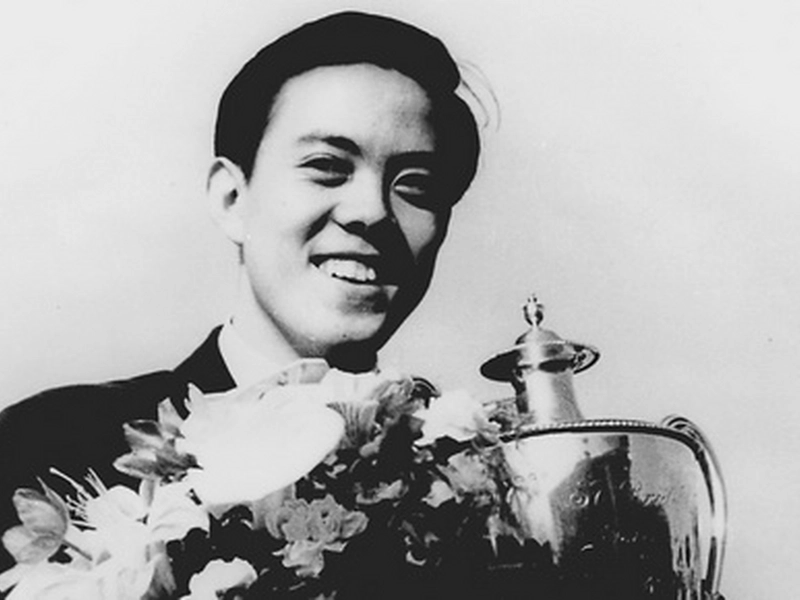
The founding of the People’s Republic endowed table tennis with a fresh historical purpose. In an era of reconstruction, when the nation needed to prove itself on the international stage, table tennis—requiring relatively low physical strength but demanding great skill, intelligence and will, and needing only a small venue and inexpensive equipment—was designated a priority sport and incorporated into the strategic framework of “developing sports, strengthening the people’s physique.” It ceased to be merely a game and was entrusted with the lofty hope of “revitalizing the national spirit.”
A historic breakthrough arrived in 1959. At the 25th World Table Tennis Championships, Rong Guotuan shouted the rallying cry “How many times can one fight in life? If not now, when?” and fought his way to the men’s singles title—the first world champion in the history of New China’s sports. The triumphant news set the nation ablaze. That gold medal meant far more than a sporting victory; it struck like a flash of lightning across the night sky, enormously boosting national confidence and announcing the new face of the People’s Republic to the world. From then on, table tennis became inseparably linked with “national glory,” laying the foundation for its status as the country’s “national ball.”
“Ping‑Pong Diplomacy” – A Small Ball Moving a Big Ball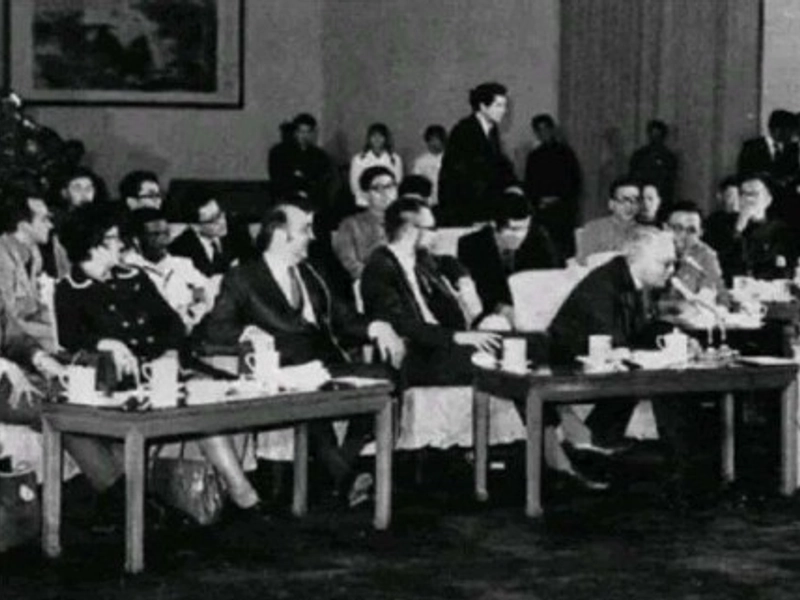
If Rong Guotuan’s championship enshrined table tennis in China, the “ping‑pong diplomacy” of the 1970s elevated it to a global political and cultural symbol. At that time, the United States and China were locked in Cold‑War confrontation. The turning point occurred at the 31st World Championships in Nagoya, Japan, in 1971: American player Glenn Kohn mistakenly boarded the Chinese delegation’s bus; Chinese athlete Zhuang Zedong stepped forward, greeted him, and presented a gift. This friendly gesture was widely reported by the media and broke the long‑standing ice between the two nations.
Chairman Mao Zedong and Premier Zhou Enlai swiftly seized this “accidental” incident, decisively inviting the U.S. table‑tennis team to visit China. The slogan “Friendship first, competition second” resonated on both sides. This breakthrough shocked the world; through a civilian sports exchange it pried open a heavy geopolitical door, paving the way for President Richard Nixon’s historic visit to China the following year. The story of “a small ball moving a big ball” thus entered popular lore, showing how table tennis transcended pure competition to become a diplomatic messenger between East and West. Its symbolic significance in Chinese politics and culture was elevated to an unprecedented height.
A National Sport: The Social Soil of Table Tennis in China
China's table tennis glory extends far beyond the gold medals and trophies won on the international stage. Its true strength stems from the vast and fertile social soil in which it is deeply rooted—a soil cultivated by the broadest mass participation and structured into a meticulously organized talent pyramid.
An Unrivaled Mass Foundation
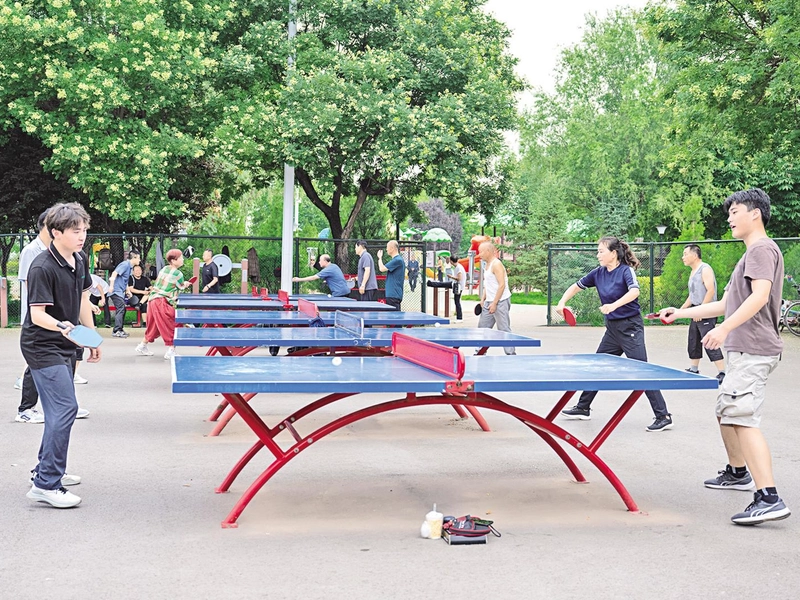
In China, the appeal of table tennis lies first and foremost in its ultimate "accessibility" and deeply ingrained "social nature." It is a truly "zero-barrier" democratic sport—requiring no expensive equipment, standardized courts, or peak physical conditioning. Just an open space, any table, a bamboo pole supported by two bricks, or even a simple white line drawn on a concrete floor can suffice to start a thrilling match. This unparalleled low cost and high adaptability allow it to completely transcend economic and geographical limitations, reaching from bustling cities to remote villages, making it a genuine national pastime.
The Sound of Ping-Pong is Home: A Cultural Landmark Across the Land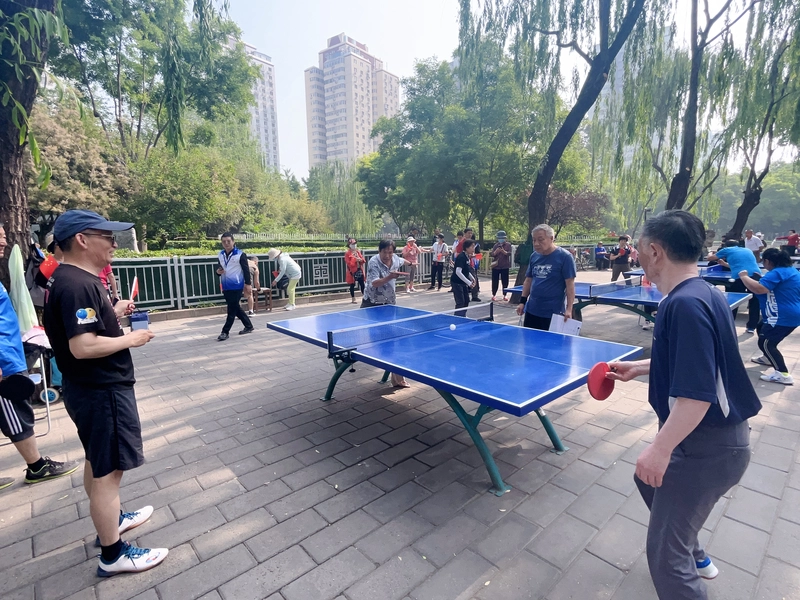
Consequently, table tennis tables are distributed like capillaries into every corner of Chinese society, becoming one of its most recognizable cultural landmarks. In schools filled with the sound of reading, it is a standard feature of physical education and the most intense arena during the ten-minute breaks, fostering the initial competitive spirit and friendships of countless individuals. In government offices during lunch breaks, it serves as the perfect medium for colleague interaction, the small table instantly transforming into an oasis for releasing work pressure. In bustling urban parks, outdoor stone tables are surrounded from dawn till dusk; silver-haired seniors rediscover their youthful vitality here, their astonishing skills often amazing onlookers. And in tranquil rural courtyards, it is the coolest toy for children, a window connecting them to the wider world.
That crisp, rhythmic "ping-pong" sound is more than just noise; it forms the shared background soundtrack for generations—the beginning of childhood fun, a companion for health in later years, and the most vibrant link in community life.
A 'Micro-Olympics' with Hundreds of Millions of Participants: The Deep Base of Players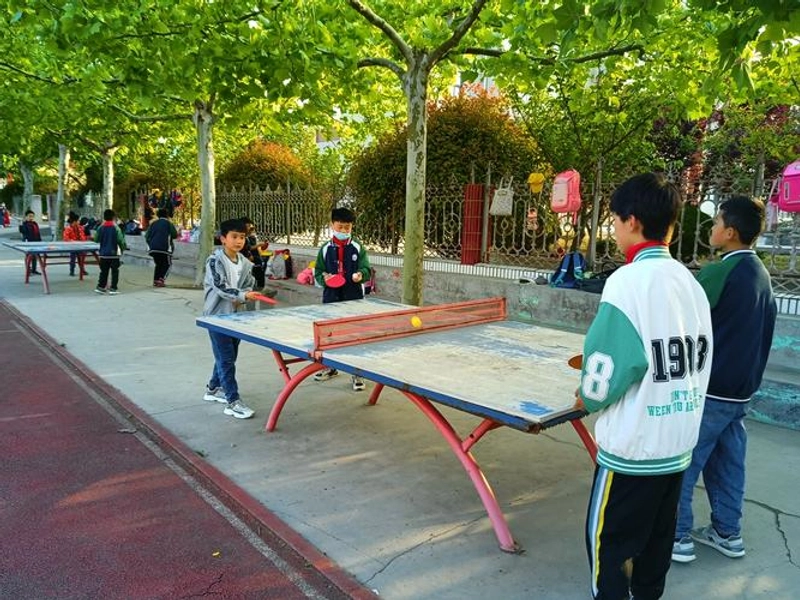
According to incomplete estimates, the number of people regularly playing table tennis in China reaches hundreds of millions, forming a uniquely vast "table tennis-playing population" on a global scale. This immense ocean of grassroots participation is the most solid foundation of China's competitive table tennis edifice. It means that any talented youngster is unlikely to go unnoticed; behind every world champion stand countless "hidden masters" from the masses who can challenge them. It is this ecology of "masters among the people" that allows China's competitive table tennis level to remain consistently high, creating a virtuous cycle where the "pinnacle" and the "base" of the pyramid nourish each other.
The depth of this foundation is reflected not only in the sheer number of participants but also in its profound integration into the social fabric. Table tennis has long transcended mere physical exercise to become a lifestyle, a social language, and an emotional bond that bridges generational gaps. This unparalleled mass base is the very source of strength and soul that allows Chinese table tennis to endure and renew itself.
A Systematic Talent Cultivation "Pyramid"
The deep mass foundation provides the broadest base for a talent pyramid that can be termed a "table tennis industrial system." In this precisely operating structure, each level fulfills a unique and crucial mission, forming a talent cultivation mechanism of rare efficiency in the history of world sports.
The Base: The Cradle of Initiation and Interest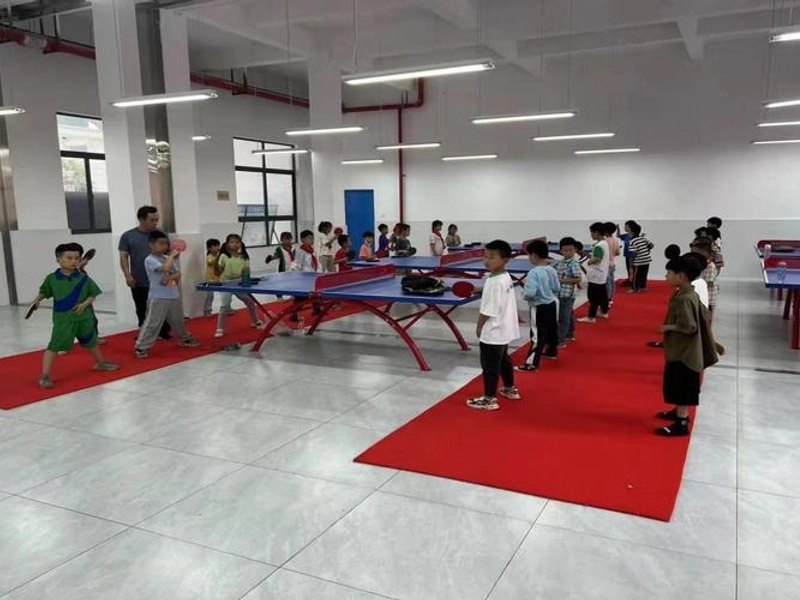
The bottom tier consists of amateur sports schools, primary and secondary school table tennis clubs, and community clubs spread across the country. This is where dreams begin, with millions of children picking up a paddle for the first time each year. Professional initiation coaches not only teach the most basic grip and footwork but also focus on fostering the children's interest in the sport. At this stage, "Happy Table Tennis" is the guiding principle, and the system filters for truly talented and passionate seedlings through play-based learning. Notably, China's school table tennis league system has become increasingly robust, providing a valuable platform for competition among young players.
The Body: The Crucible of Tempering and Elimination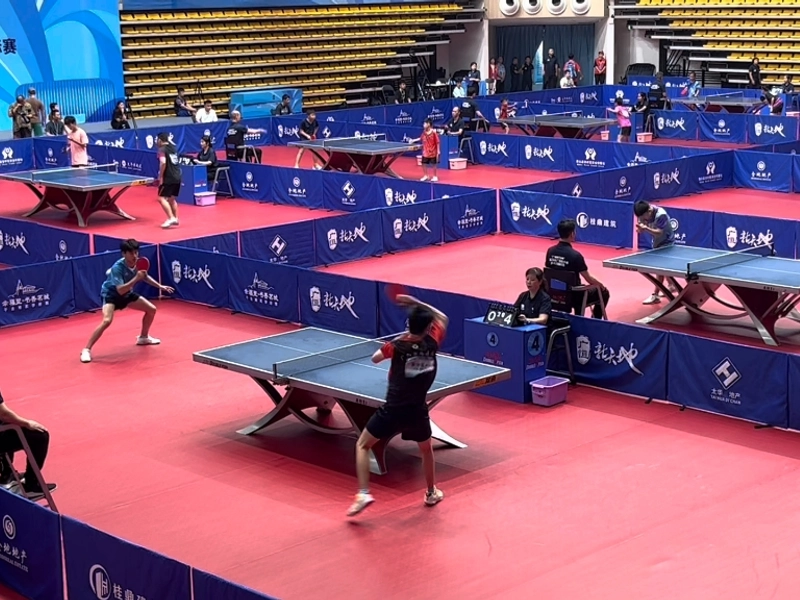
Athletes showing potential progress to the professional teams of provinces and cities. This is the most fiercely competitive part of the pyramid system. Athletes undergo day-after-day specialized training: thousands of repetitive strokes daily, systematic physical conditioning, and meticulous technical refinement. At this stage, they must not only perfect their techniques but also develop their own tactical style.
The competition between provincial teams is incredibly intense; the difficulty of the National Table Tennis Championships even surpasses that of many international tournaments. This is the origin of the saying, "Winning the national championship is harder than winning the world championship." Each provincial team boasts its own characteristic style—e.g., Beijing Team's steady comprehensiveness, Shanghai Team's speed and flexibility, Shandong Team's power-oriented play. This diversity ensures a richness of technical styles within the national team.
The Apex: The 'Dream Team' Pursuing Perfection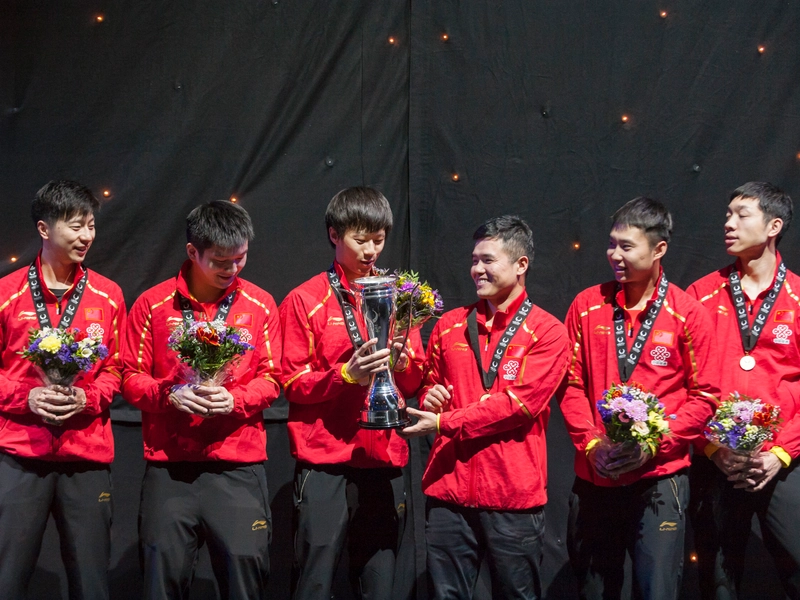
Players who break through to the national team are the best of the best. The national team employs one of the world's most advanced training systems:
- A technical analysis team uses high-speed cameras and data analysis software to optimize every player's technique down to the millimeter.
- In opponent simulation training, practice partners precisely replicate the playing characteristics of main international rivals.
- A composite support team, including fitness trainers, sports rehabilitators, nutritionists, and psychologists, provides all-around support for the athletes.
- A dynamic selection mechanism ensures the team remains vibrant; even world champions can be moved out if their form declines.
The most valuable aspect of this pyramid is its capacity for continuous evolution. In recent years, while maintaining traditional strengths, the system has consistently incorporated new elements: greater emphasis on athletes' cultural education, encouragement of personalized development, and the application of big data and AI in training. Simultaneously, the system has established sound "exit mechanisms," providing retired athletes with multiple career paths such as coaching, management, and education, forming a virtuous cycle.
This intricately structured, interlocking talent pyramid not only ensures that the most talented individuals are filtered layer by layer and meticulously honed but also creates an endogenous mechanism capable of constant self-improvement. This is the core secret behind Chinese table tennis's decades-long "enduring prosperity" on the world stage and a model example of China's sports talent cultivation system.
The Making of China's Dream Team
As the tides of world table tennis have shifted and dominance has changed hands multiple times, the Chinese national table tennis team has stood firm like an unshakable fortress, maintaining its position at the pinnacle of the sport for over half a century. The "formidable Chinese table tennis legion" is no longer just a sports phenomenon—it has become a compelling case study in management and success.
The Great Wall of the "Dream Team": A System Designed to WinThe strength of Chinese table tennis stems first and foremost from its nearly flawless "system." This system rests upon three core pillars:
A Scientific and Rigorous Training System: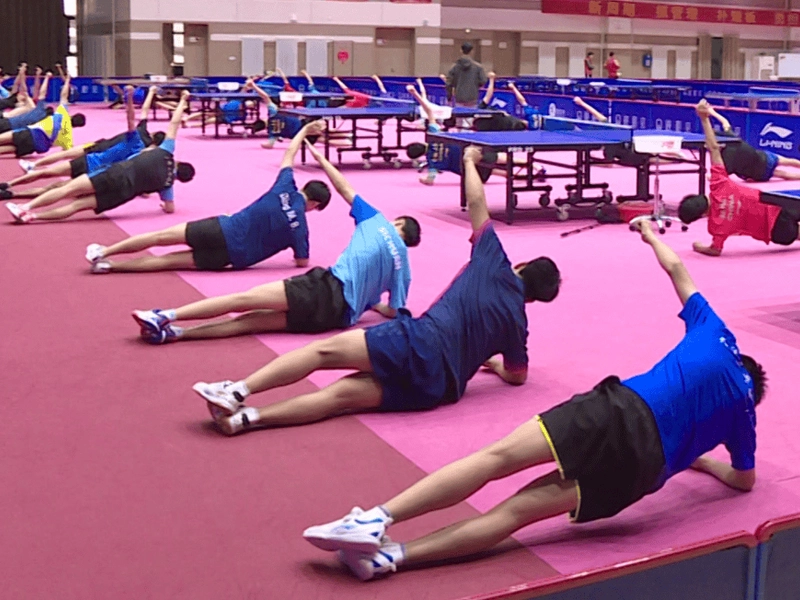
Training within the national team is not merely about accumulating hours; it is the crystallization of technology and intellect. From multi-ball drills and targeted tactical breakdowns to using high-speed video analysis of opponents' movements and data modeling to optimize shot placement, Chinese table tennis training has entered an era of "precision calculation." Furthermore, the team boasts a vast cohort of practice partners, including former world champions who selflessly play supporting roles. They mimic the styles of the world's top contenders, acting as "whetstones" to sharpen the skills of the core players. This model of "collective effort with focused breakthroughs" is a massive advantage that other nations find difficult to replicate.
A "Hellish" Internal Competition Mechanism: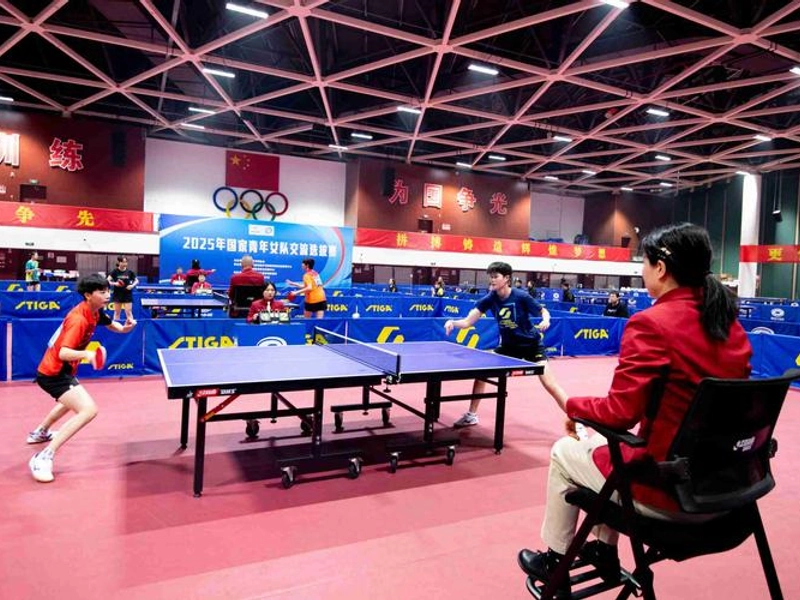
A famous saying circulates within Chinese table tennis: "Winning the national championship is harder than winning the world championship." This is no joke but a reflection of the brutal reality. The path from provincial teams, to the national second team, and finally to the first team is marked by exceptionally fierce competition at every stage. Internal round-robins and qualifying tournaments are often more intense than world-level competitions. The slightest complacency from any top player can lead to them being overtaken by ambitious younger teammates waiting in the wings. This "wolf-raising" tactic, applied internally, ensures that only the fittest, most motivated "survivors" ultimately earn the right to compete on the world stage.
Continuously Evolving Technical and Tactical Intelligence:While not always the originators of new techniques, the Chinese team has consistently been the most successful at integrating and innovating upon technical trends. From adopting the loop drive to blending it with their own strengths of speed, accuracy, power, variation, and spin, Chinese table tennis has maintained a high degree of technical awareness and self-renewal. Tactically, the wisdom of teamwork is fully demonstrated. Before every major tournament, the coaching staff and brain trust conduct a "pixel-level" analysis of main rivals, formulating multiple game plans to ensure players step onto the court with a thorough understanding of both themselves and their opponents.
A Constellation of Stars and the Passage of the TorchBuilt upon this powerful system stands a monument of honor forged by generations of uniquely talented players. Like participants in a relay race, each baton-carrier has shone with their own distinctive brilliance, collectively achieving the passage of Chinese table tennis from its rise, to its glory, and to its prolonged era of dominance. This legacy has been written by both its male players and its equally accomplished female champions, together composing a magnificent and sweeping historical panorama.
Pioneers of an Era: Rong Guotuan, Qiu Zhonghui, and Zhuang Zedong
In the pioneering era of New China's sports, these three trailblazers wrote their legends with table tennis rackets. Rong Guotuan’s triumph at the 1959 World Table Tennis Championships in Dortmund was not merely a personal victory—it was a declaration of national spirit. His famous words, "How many times can one strive in life?" continue to inspire athletes today. Even more profoundly, at the 1961 Beijing World Championships, he sacrificed his individual events for the sake of national honor, helping the team secure China’s first men’s team title. This selfless collectivism became embedded in Chinese table tennis DNA.
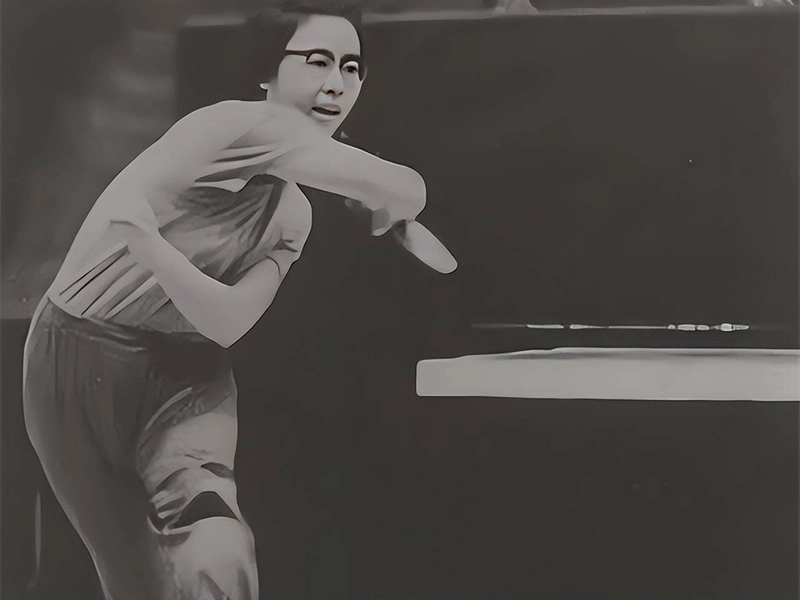
Qiu Zhonghui’s achievement in 1961 was equally groundbreaking. At the 26th World Championships held in Beijing, this young woman from Yunnan defeated Hungary’s star player, Maria Gógan, in the final to become New China’s first female world champion. Her victory shattered Western dominance in women’s events, proving that Chinese women could reach the pinnacle of global sport. Remarkably, after retirement she continued contributing through scientific research, making innovations in table tennis equipment development.
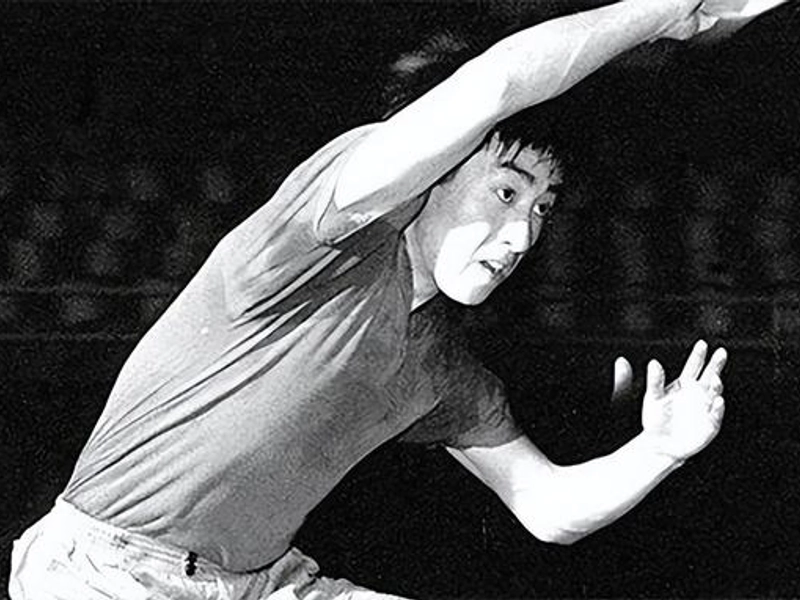
Zhuang Zedong’s legacy extends beyond his unprecedented three consecutive men’s singles titles (1961, 1963, 1965). He also played a pivotal role in “Ping-Pong Diplomacy.” At the 1971 Nagoya World Championships, his spontaneous conversation and gift of a silk tapestry to American player Glenn Cowan broke through Cold War barriers—an act Chairman Mao praised as “a small ball moving a big ball.” From champion athlete to diplomatic envoy, Zhuang Zedong embodied table tennis’ power to transcend sport.
 Visionary Leaders and the First Generation of "Grand Slammers"
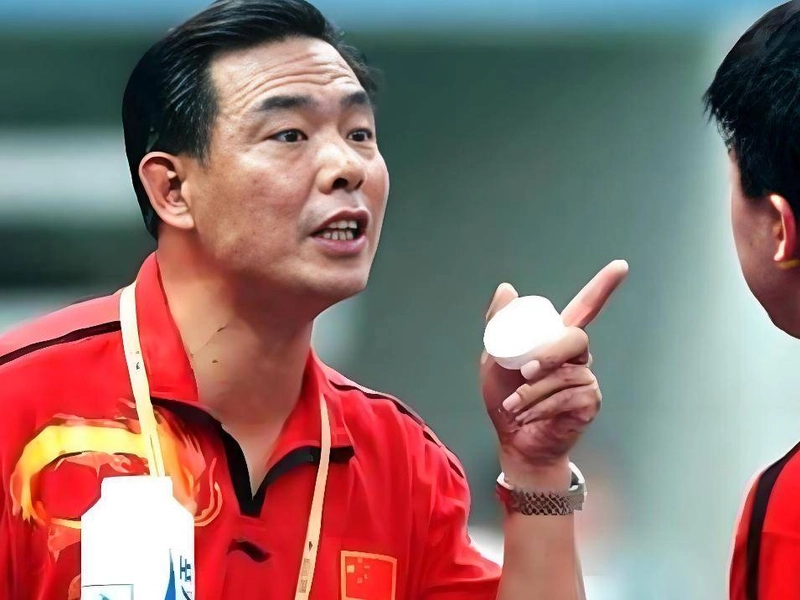
In the 1990s, Chinese table tennis entered a new golden age after a brief downturn. Cai Zhenhua's return to coach the national team in 1989 marked one of the most successful turnarounds in Chinese sports history. The former "unorthodox spin player" gave up a lucrative offer in Italy to come home and rebuild the squad with strict discipline. His innovative "collective warfare" strategy—using training partners to simulate foreign opponents—became a cornerstone of China's enduring dominance.
At the same time, Deng Yaping rewrote the history of women's table tennis in her own way. Rejected by provincial teams early on due to her height, this determined girl from Henan overcame physical limitations through relentless training, pioneering a unique style characterized by fast forehands and unpredictable backhands. Over her career, she won four Olympic golds and 18 world titles, showcasing the indomitable will of Chinese athletes to the world. Her cross-generational, cross-cultural friendship with IOC President Juan Antonio Samaranch remains a cherished story in Olympic history.
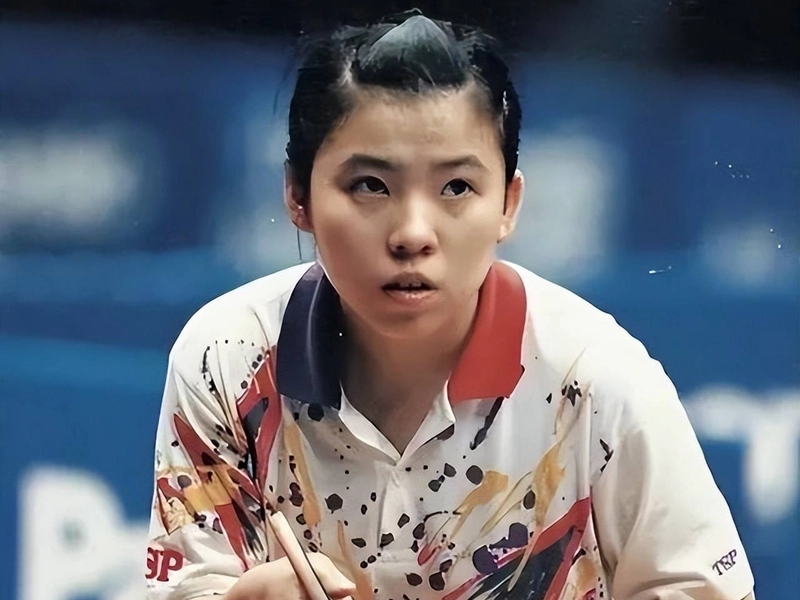
Entering the new millennium, Wang Nan and Zhang Yining ushered in a golden era for Chinese women's table tennis. After winning gold at the Sydney Olympics, Wang Nan bravely returned to competition following a diagnosis of thyroid cancer, setting a powerful example for younger generations. Zhang Yining elevated the women's game to new heights—her technical perfection and mental fortitude made her nearly invincible. At the 2008 Beijing Olympics, she successfully defended her women's singles title with near-flawless performance. The iconic handshake afterward poignantly captured what it means to be "so lonely at the top."
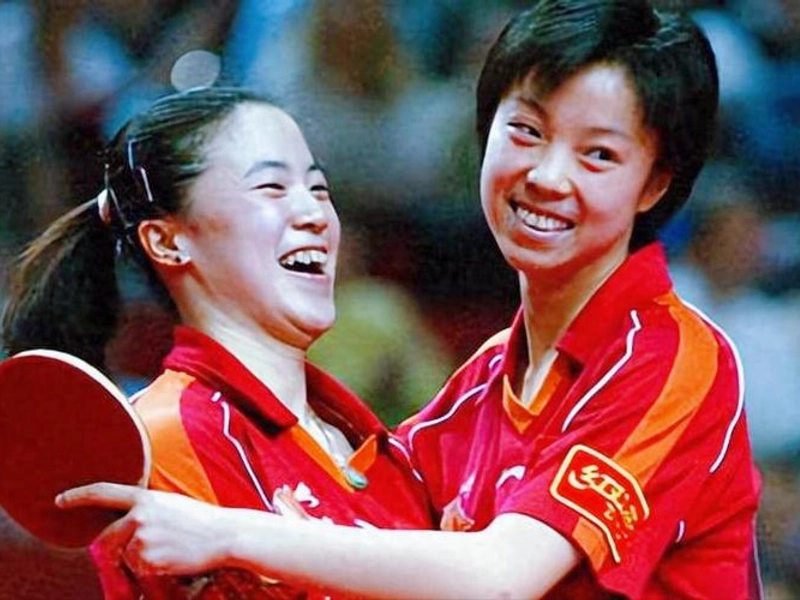 The Twin Stars and the "Dragon Captain"
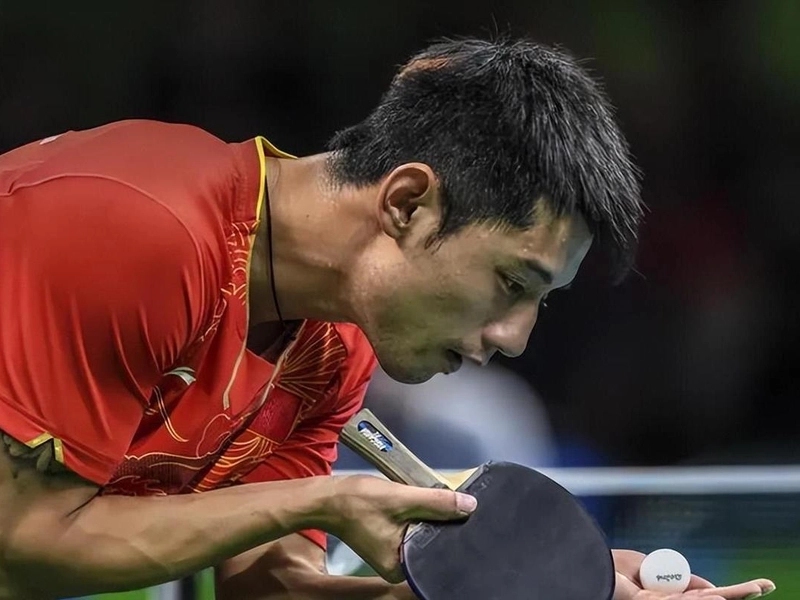
This period saw the emergence of arguably the strongest male and female players in Chinese table tennis history. Zhang Jike's rise was meteoric. His revolutionary "reverse backhand loop," known as the "Ba Wang Niu" (Overlord's Twist), transformed how the backhand is used. Between 2011 and 2012, he claimed the World Championships, World Cup, and Olympic singles titles—achieving the Grand Slam in just 445 days, a record unmatched to this day. On court, his fiery passion—epitomized by the iconic shirt-ripping celebration—showcased the boldness and intensity of Chinese athletes.
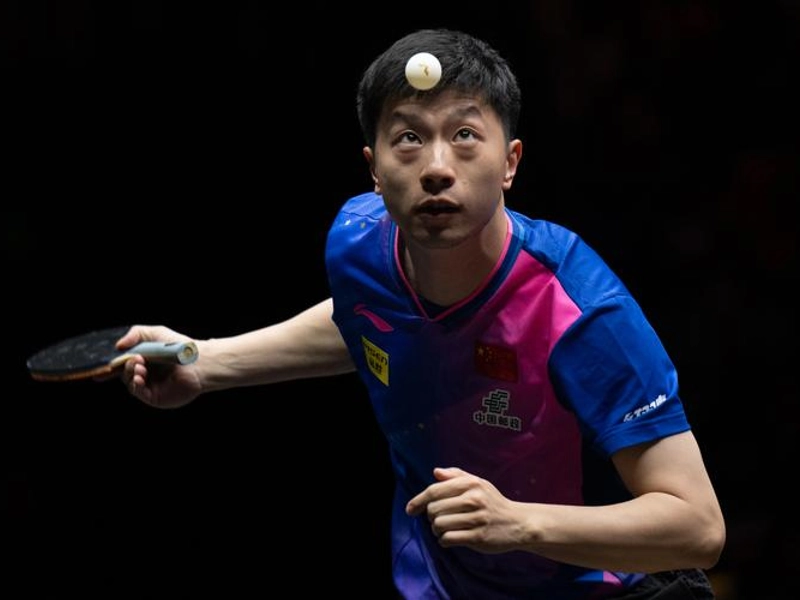
In contrast, Ma Long's achievements are even more extraordinary. He is the first player ever to win all major titles: Olympic Games, World Championships, World Cup, Asian Games, Asian Championships, Asian Cup, ITTF World Tour Finals, and National Games—all in singles. Even more impressively, later in his career, he completed a double career Grand Slam, refining his technique to near-perfection. Ma Long's greatness lies not only in his results but in his continuous self-overcoming—remaining among the world's elite well into his thirties.
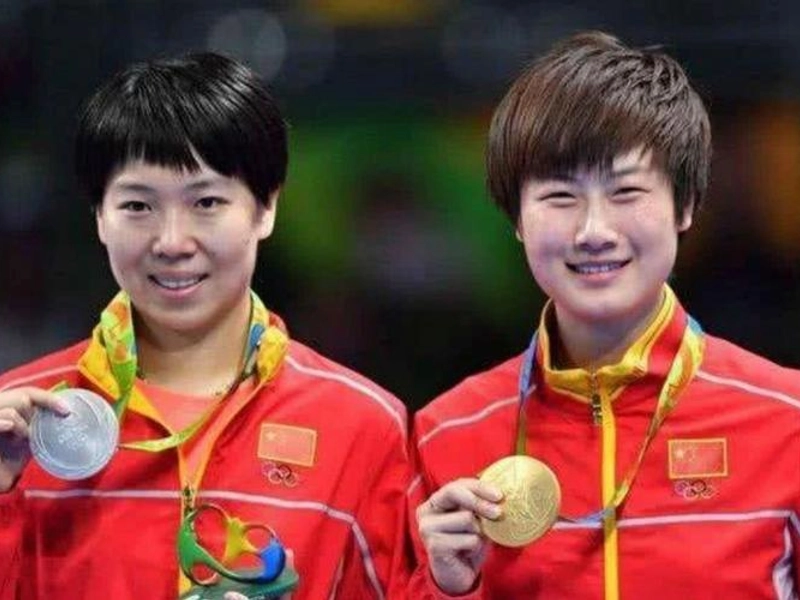
On the women's side, Li Xiaoxia and Ding Ning carried the torch forward brilliantly. Li Xiaoxia was renowned for her aggressive, male-style play, particularly her devastatingly powerful forehand drive—a rarity among female players. Ding Ning won legions of fans with her resilience, especially when she battled through injury to claim Olympic gold in Rio, embodying the true spirit of a champion. Together, they elevated Chinese women's table tennis to new levels.
 The Next Generation Under Pressure
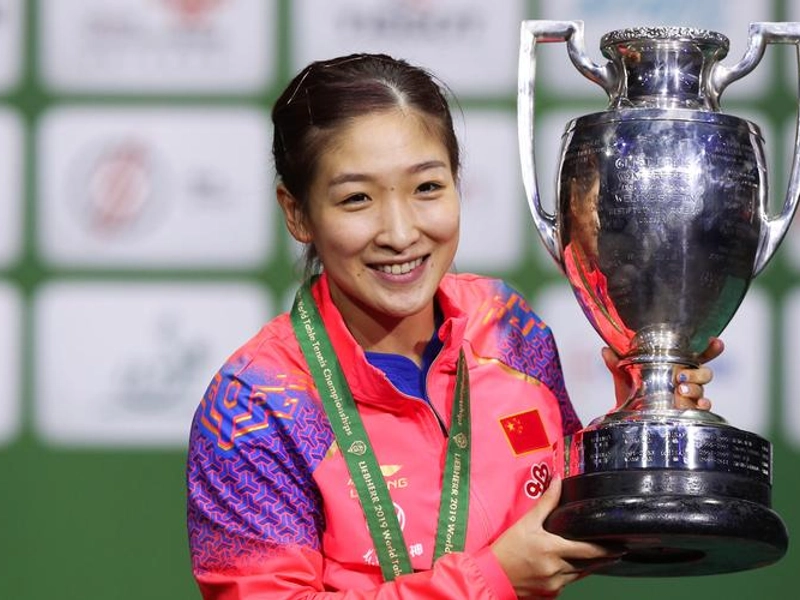
As a new Olympic cycle begins, the legacy continues. Liu Shiwen's career has been marked by setbacks, yet her performance at the 2019 Budapest World Championships was nothing short of legendary—she even recorded an 11–0 score in the final, demonstrating her burning desire for victory. Her perseverance stands as a testament to the enduring spirit of table tennis.
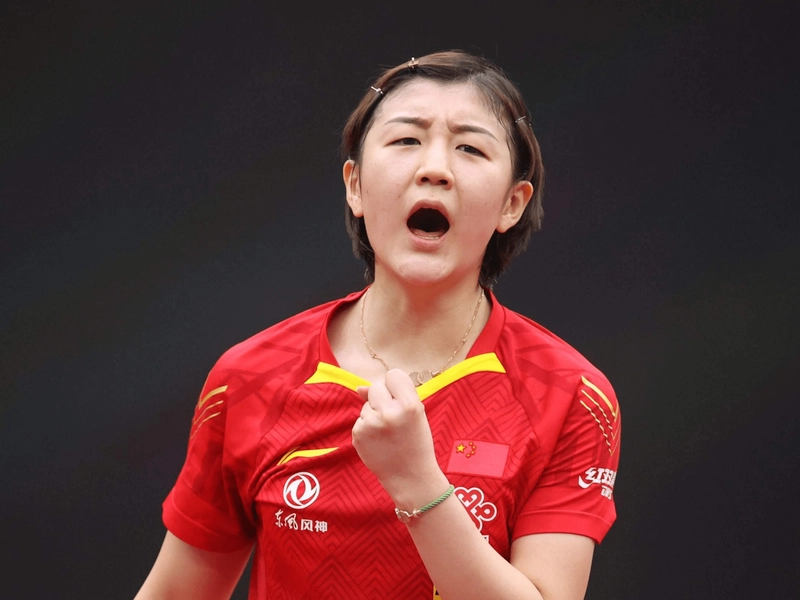
Chen Meng's Olympic triumph in Tokyo signaled the dawn of a new era. With solid technique and exceptional endurance in rallies, her post-victory declaration—"My era has arrived"—was not just emotional exuberance, but a confident assertion of the new generation stepping into leadership roles.
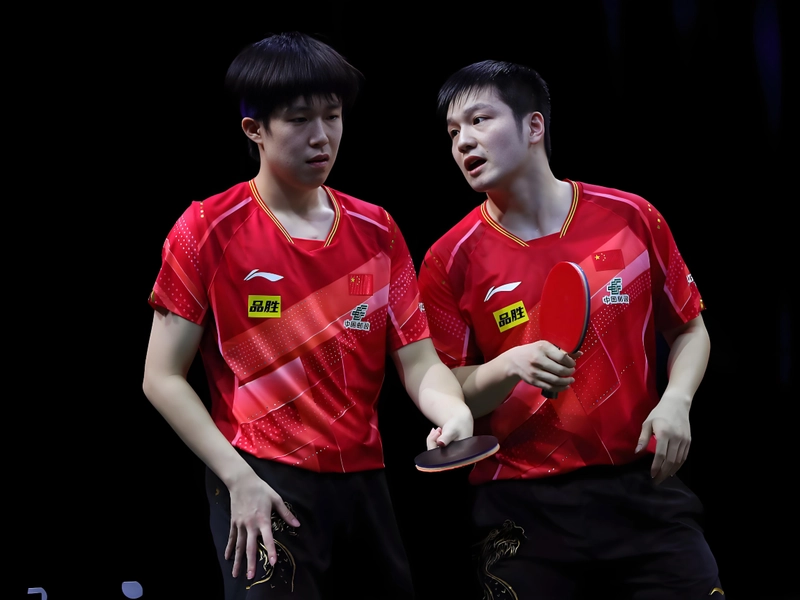
Today, Sun Yingsha and Wang Manyu form a dazzling "twin stars" rivalry—the most exciting narrative in women's table tennis. Sun captivates fans with her explosive forehand and maturity beyond her years, while Wang steadily refines her all-around game. Their healthy competition drives mutual growth. On the men's side, Fan Zhendong has gradually taken the baton from Ma Long; his aggressive, power-driven style points toward the future of the sport. Wang Chuqin, another rising star, combines comprehensive skills with strong mental toughness, already showing great promise on the international stage.
 Legacy and the Road Ahead
Generation after generation, these champions—men and women, each with distinct styles—have shared a common creed: "National honor above all," along with the team ethos of tenacity, intelligence, and relentless pursuit of excellence. From Rong Guotuan to Sun Yingsha, from Qiu Zhonghui to Wang Manyu, this six-decade-long lineage transcends mere technical evolution and medal counts. It is a continuity of spirit and character. The sustained dominance of China's women's team—even more pronounced than the men's—alongside the men's squad, has forged the glory of Chinese table tennis through sweat and wisdom. It is precisely this uninterrupted emergence of talent and intergenerational transmission of values that forms the spiritual core behind China's lasting vitality and supremacy in the sport.
Yet absolute dominance brings new challenges. The ITTF has repeatedly revised rules—introducing larger balls, restricting glue types, changing Olympic formats—in attempts to increase unpredictability and break China's monopoly. Meanwhile, nations like Japan and Germany have adopted China's training model, investing heavily and producing dynamic young talents such as Tomokazu Harimoto and Mima Ito, intensifying global competition.
Looking ahead, the challenge for China's table tennis dynasty is twofold: maintaining its competitive edge while promoting the global development and popularity of the sport. As former Chinese Table Tennis Association chairman Liu Guoliang once said: "The greatness of Chinese table tennis does not lie in never losing, but in our courage to pursue victory and face challenges head-on." It is within this mindset of constant vigilance and relentless refinement that this mighty team continues to write new chapters of legend.
A New Era of Globalization — The Contemporary Landscape and Future of Table Tennis
The Shifting Landscape of World Table TennisEntering the 21st century, the world of table tennis has presented an unprecedented level of complexity. While the long-term dominance of the Chinese team remains solid, this supremacy is now facing formidable challenges from across the globe.
The strength of Chinese table tennis has transcended the excellence of individual athletes, becoming a systemic phenomenon. The national team's establishment of an "opponent research" mechanism ensures every potential rival is placed under a microscope for analysis. However, this precise system, which produces "standardized" geniuses, has also sparked discussions about whether individuality and creativity might be diminished.
European power is experiencing a revival. Germany's duo – Timo Boll, still competing at the top level at 40, and Dimitrij Ovtcharov, achieving repeated success with his signature "submarine" serve and tenacious defence; Sweden's Mattias Falck, impressing with a retro, "unreasonable" style, and Truls Möregårdh, representing the technical innovation of Europe's new generation. These players not only continue the European tradition but also drive constant technical innovation.

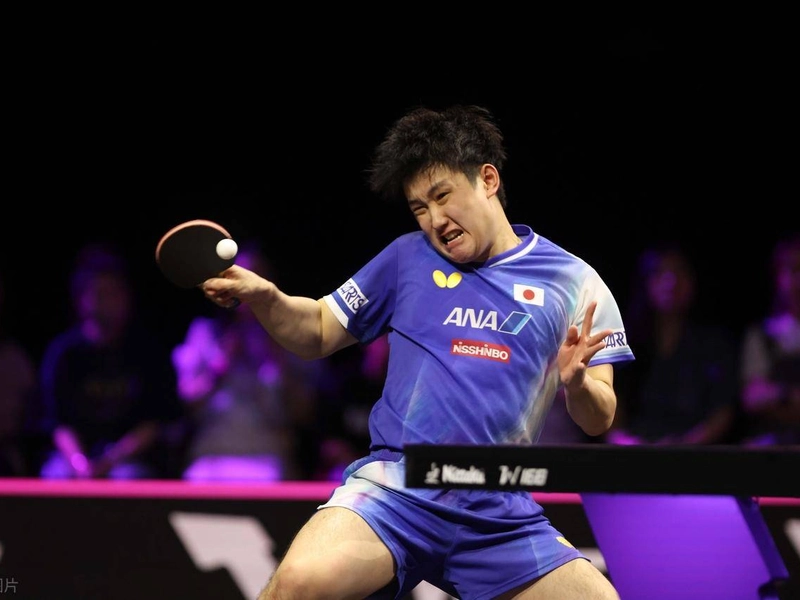
The rise of Asian forces is even more rapid. Japan's Tomokazu Harimoto and Mima Ito, having undergone systematic training from a young age, showcase techniques that blend the best of both Chinese and Japanese styles: Ito's penhold pips-out smashes and unpredictable serves, and Harimoto's backhand speed and competitive fire make them China's strongest challengers. Chinese Taipei's Lin Yun-ju, with his elegant and fluid style, is hailed as the "silent assassin." South Korea, while building on its traditional defensive chopping style, also continues to innovate. Most of these new-generation players started international exchanges early in life, resulting in more diversified technical styles and a more internationalized mental fortitude.
The ITTF's continuous rule modifications persistently attempt to balance the competitive landscape. In 2000, the ball diameter increased from 38mm to 40mm, reducing speed and spin. The implementation of the "11-point game" in 2001 significantly increased match unpredictability. The ban of speed glue in 2008 reduced racket elasticity and power. In recent years, the introduction of the "plastic ball" and adjustments to ranking rules have continually influenced the sport's trajectory. While these reforms have, to some extent, increased suspense, the robust Chinese system has always adapted most swiftly, turning new rules into fresh advantages.
The Expansion and Challenges of the Global AudienceDriven by both globalization and digitalization, table tennis is facing unprecedented opportunities for dissemination and transformative challenges.
Innovations in equipment and technique-tactics have greatly enhanced the spectacle of the game. The rackets used by players have evolved from traditional all-wood structures to today's carbon fiber, arylate, and other composite materials, with rubber technology also becoming more refined. These advancements have led to more expansive attacking rallies, significantly increasing the excitement of extended exchanges. Those super long rallies between Ma Long and Timo Boll, or Ovtcharov's desperate diving saves, captured through HD cameras and slow-motion replays, have elevated the aesthetic value of table tennis to new heights.
The revolutionary change in media distribution has allowed table tennis to reach a wider audience. Advancements in television broadcasting technology, especially the use of ultra-high-speed cameras, enable viewers to see clearly the trajectory and spin of the ball in flight. The proliferation of mobile internet, particularly the rise of short-form video platforms, fragments and disseminates highlights of table tennis matches, attracting a massive young viewership. Zhang Jike's "King Backhand," Xu Xin's "magical shots" have become viral hits on these platforms, popularizing table tennis in new forms among the youth.
However, the sport still faces profound challenges. The core question remains: how to increase match suspense and unpredictability while maintaining the pinnacle of athletic performance? The long-term monopoly of the Chinese team, while technically advancing the sport, might also lead to reduced investment from other countries and regions. In recent years, the ITTF has vigorously promoted reforms through the World Table Tennis (WTT) structure, attempting to create more attractive commercial events by increasing prize money, optimizing schedules, and enhancing presentation. Simultaneously, the CTTA proactively implements its "wolf culture" strategy, promoting the global development of table tennis by dispatching coaches and opening training resources.
The future of table tennis requires finding a balance between maintaining China's excellent system and promoting balanced global development. This necessitates not only the continuous optimization of competition rules but also synergistic innovation in commercial development, event operation, and youth training. As ITTF CEO Steve Dainton stated, "Our goal is not to weaken China, but to make the rest of the world stronger." Guided by this philosophy, table tennis is exploring a unique path to globalization—one that maintains the highest level of athletic performance while using innovative competition formats and dissemination methods to allow this sport, born as a Victorian parlour game, to radiate new vitality in the 21st century.
This art of balance is perhaps the core proposition that table tennis must continuously explore in its future development. When more players from more countries and regions can challenge the summit, when the suspense of a match lasts until the final point, and when innovative broadcasting allows a global audience to feel the sport's charm, table tennis can truly transition from being "China's national sport" to becoming a "global language."
Related Vocabulary
| Chinese | Pinyin | English |
|---|---|---|
| 乒乓球 | pīngpāng qiú | table tennis |
| 弧圈球 | húquān qiú | loop drive |
| 削球 | xiāo qiú | chop / slice |
| 直拍 | zhí pāi | penhold grip |
| 横拍 | héng pāi | shakehand grip |
| 反手 | fǎnshǒu | backhand |
| 正手 | zhèngshǒu | forehand |
| 发球 | fā qiú | serve |
| 接发球 | jiē fāqiú | receive |
| 大满贯 | dàmǎnguàn | Grand Slam |
| 世界锦标赛 | Shìjiè Jǐnbiāo Sài | World Championships |
| 国家队 | guójiā duì | national team |
| 陪练 | péiliàn | practice partner |
| 塑料球 | sùliào qiú | plastic ball |
| 11分制 | shíyī fēn zhì | 11-point system |
Table TennisFAQ
Q1: Besides China, which countries are table tennis powerhouses?
A1: Outside China, several nations have strong table tennis programs.
● Asia:
○ Japan: Rapidly improved in recent years, considered China's primary rival. Key players: Tomokazu Harimoto, Hina Hayata.
○ South Korea: A traditional powerhouse known for aggressive play and strong athletes. Key players: Jang Woo-jin, Shin Yu-bin.
○ Chinese Taipei: Technically skilled and highly competitive. Key players: Lin Yun-ju, Cheng I-ching.
● Europe:
○ Germany: The core European force with a well-established league system. Key players: Timo Boll (veteran), Dimitrij Ovtcharov.
○ Sweden: A former dominant force, now in a resurgence phase. Key player: Truls Möregårdh (rising star).
○ France: An emerging new force. Key players: The Lebrun brothers, Félix & Alexis (new generation).
Q2: Which foreign players currently pose the biggest threat to Team China?
A2: Notable challengers include:
● Men's Team: Tomokazu Harimoto (Japan), Timo Boll & Dimitrij Ovtcharov (Germany), Truls Möregårdh (Sweden), Félix Lebrun (France).
● Women's Team: Hina Hayata (Japan), Mima Ito, and Hitomi Sato (Japan).
Q3: What is the ITTF's "Wolf Plan"? Did China propose it?
A3: The "Wolf Plan" was introduced by the Chinese Table Tennis Association (CTTA). It aims to cultivate international competitors by supporting foreign players’ training, opening the Chinese Super League, and sending Chinese coaches abroad. The goal is to encourage global development and popularity of table tennis.
Q4: What are the most important world-class table tennis tournaments?
A4: The major global competitions include:
● Olympic Table Tennis Tournament: Held every four years with the highest prestige.
● World Table Tennis Championships: The oldest tournament featuring singles, doubles, mixed doubles, and team events.
● ITTF World Cup: Part of the “Triple Crown,” now integrated into the new WTT structure.
● WTT Series: Commercial events launched by ITTF:
○ WTT Grand Smash – highest level, like tennis Grand Slams.
○ WTT Champion Cup – features top-ranked players.
○ WTT Star Contender and others.
Q5: What is a "Grand Slam" in table tennis? Which players have achieved it?
A5: A table tennis "Grand Slam" means winning singles titles at the Olympic Games, World Championships, and World Cup.
● Men's Grand Slam Winners: Jan-Ove Waldner (SWE), Liu Guoliang (CHN), Kong Linghui (CHN), Zhang Jike (CHN), Ma Long (CHN).
● Women's Grand Slam Winners: Deng Yaping (CHN), Wang Nan (CHN), Zhang Yining (CHN), Li Xiaoxia (CHN), Ding Ning (CHN).
Q6: Why are Chinese provincial team competitions called "Hell Difficulty"?
A6: The domestic competition level in China is extremely high. Many provincial team players possess world-class skills, even if they are not on the national team. Thus, people often say, “Winning the National Championship is harder than winning the World Championship.”
Q7: What are the future trends in table tennis?
A7: Key trends include:
● Power & Speed Integration: Focus on athleticism and aggressive play.
● All-Round Technical Proficiency: Balanced forehand/backhand and versatile tactics.
● Mental Fortitude: Strong psychological resilience during high-pressure points.
● Globalized Competition: Increasing international investment will make global matches more competitive and unpredictable.