The 8 Most Popular Chinese-Style Tattoo Designs
Table of Contents
Tattoos have evolved into a powerful form of personal expression, blending aesthetics with identity, belief, and storytelling. Among the many styles embraced around the world, Chinese tattoo designs stand out not only for their striking visual appeal, but also for the rich cultural meanings embedded within each symbol.
In Chinese culture, symbols are rarely decorative alone. Characters, animals, and mythological motifs often carry centuries of history, philosophy, and spiritual significance. That’s why choosing a Chinese tattoo isn’t just about how it looks on the skin, but about understanding what it truly represents.
Before committing to a design, it’s essential to know the deeper meanings behind the symbols you choose. In this guide, we’ll explore some of the most popular and meaningful Chinese tattoo symbols for both men and women, uncovering the stories and cultural values that give them lasting power.
Read on and discover the symbolism behind these timeless Chinese tattoo designs.
1. Chinese Character Tattoos
Chinese character tattoos are among the most common and enduring Chinese tattoo styles. Minimal in form yet rich in meaning, they appeal to those who prefer understated designs with deep cultural significance.
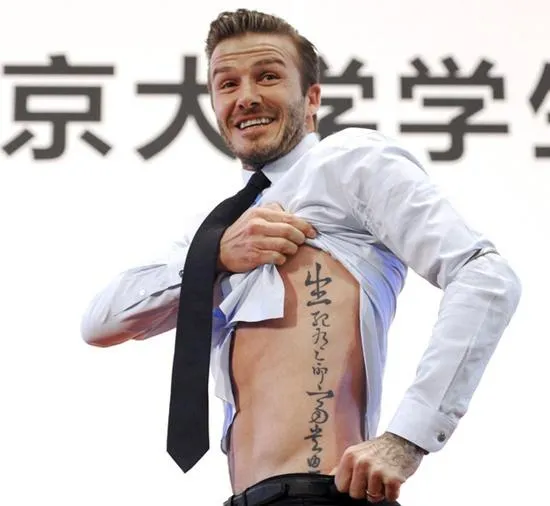
David Beckham showing his Chinese character tattoo
Unlike alphabet-based languages, a single Chinese character can express an entire idea, value, or emotion on its own. Popular choices include characters representing concepts such as friendship, love, courage, strength, fate, or destiny. Each character is composed of flowing strokes and balanced proportions, giving it a natural elegance that works beautifully as body art.
These tattoos are highly versatile in size and placement. Some people opt for a small, discreet character on the wrist, ankle, or behind the ear, while others choose a larger, more prominent design across the shoulder, back, or ribcage. The key is selecting a word or concept that resonates personally, translating it accurately into Chinese, and working with a skilled artist to bring it to life.
Important note: Chinese characters are precise and nuanced. A single misplaced stroke or incorrect character can completely change the meaning or render it nonsensical. For this reason, it’s crucial to research each symbol carefully and verify its accuracy with reliable sources or native speakers. Always choose a reputable tattoo artist, ideally one experienced in Chinese script, to ensure the design is both linguistically correct and visually refined.
2. Chinese Calligraphy Tattoos
Chinese calligraphy tattoos elevate written language into a true art form. Rather than focusing solely on the character itself, calligraphy emphasizes rhythm, balance, and movement through expressive strokes, subtle curves, sharp turns, and flowing lines.
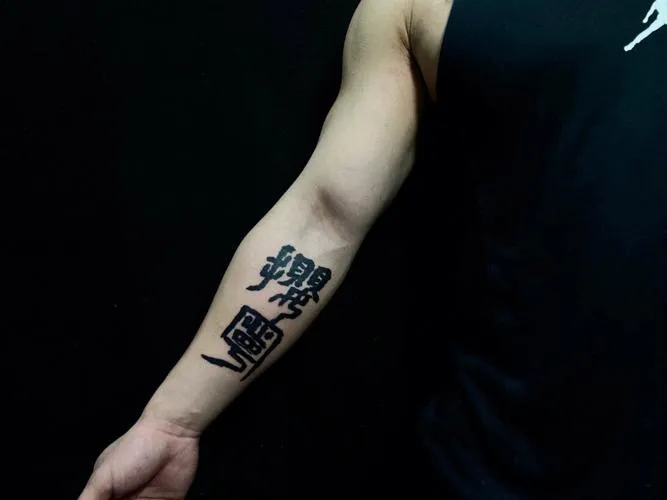
Chinese Calligraphy Tattoo
A calligraphy tattoo blends visual artistry with literary meaning. The same word can look bold and powerful in one script, or soft and poetic in another, depending on the calligraphic style used. Because of this, these tattoos are often chosen not just for what they say, but for how they feel.
Having a Chinese calligraphy word or phrase tattooed on your body is like carrying a living piece of art. It reflects refinement, cultural depth, and aesthetic sensitivity, making it one of the most elegant ways to incorporate Chinese symbolism into tattoo design.
3. Dragon Tattoos
As one of the most iconic symbols in Chinese culture, the dragon holds a revered place in both traditional and modern symbolism. It is also the only mythical creature in the Chinese zodiac, which makes it especially powerful and meaningful as a tattoo design.
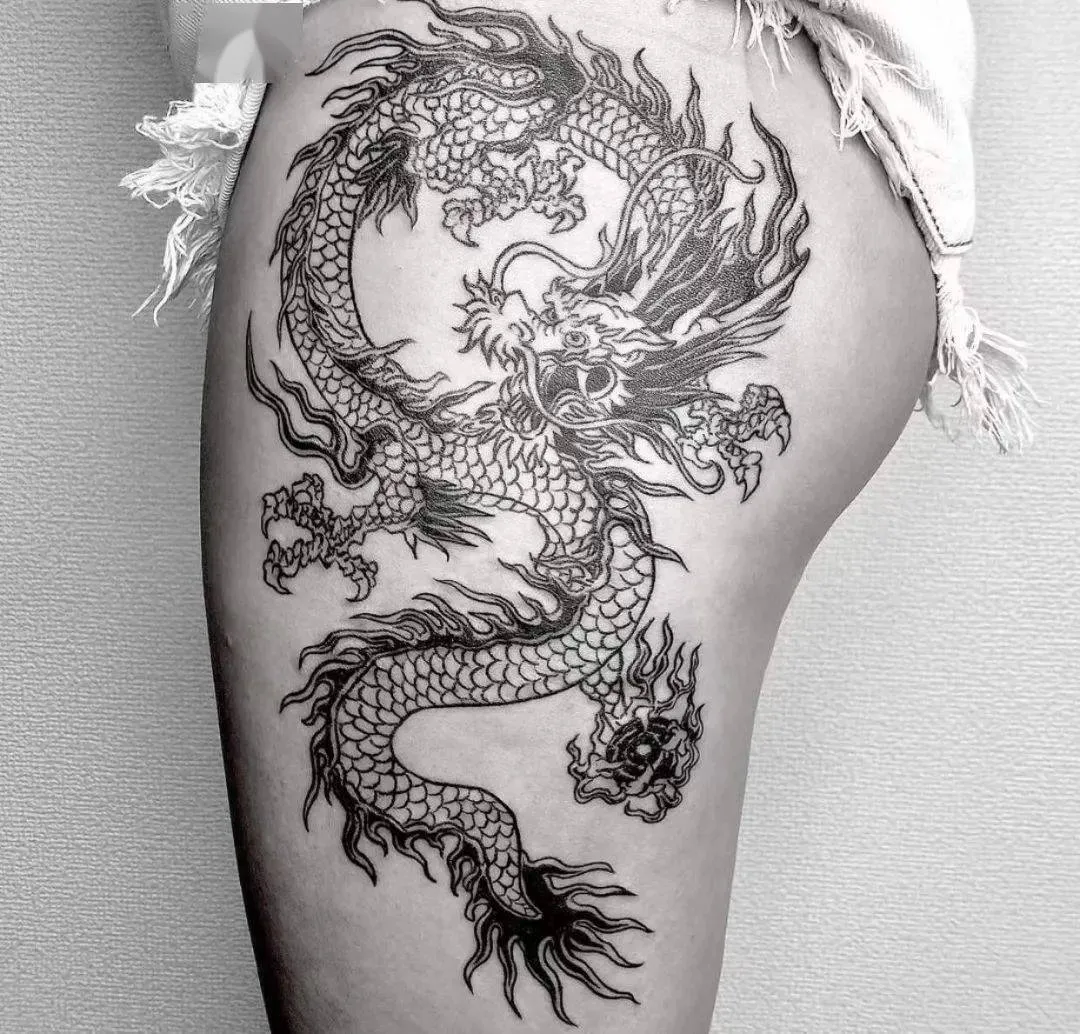
Chinese Dragon Tattoo
In Chinese culture, the dragon is not a fearsome monster, but a noble and auspicious being. It represents authority, wisdom, strength, independence, prosperity, longevity, and good fortune. Historically associated with emperors and cosmic power, the dragon embodies both spiritual insight and worldly success.
Dragon tattoos offer extraordinary creative freedom. They can be rendered as minimalist black ink outlines or brought to life with bold, vibrant colors. Design variations are nearly endless, from classic Chinese dragons with flowing bodies to jade dragons symbolizing purity, or dynamic depictions featuring fire, clouds, or expansive wings. Each style carries its own nuance while preserving the dragon’s timeless symbolism.
4. Chinese Phoenix Tattoos
The Chinese phoenix, known as 凤凰 (fènghuáng), is a powerful symbol of rebirth, renewal, and the promise of new beginnings. Unlike its Western counterpart, the Chinese phoenix is not merely associated with fire, but with virtue, grace, and harmony.
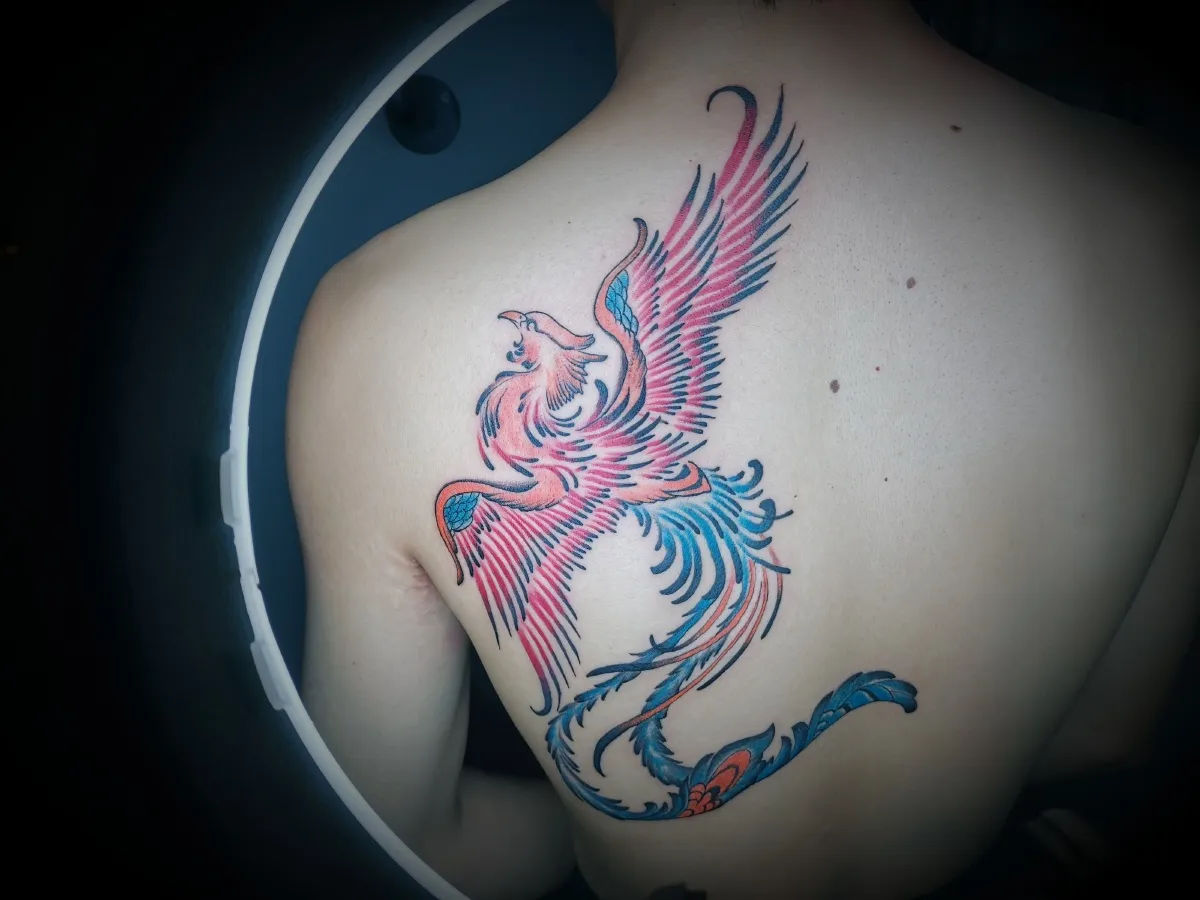
Chinese Phoenix Tattoo
In Chinese mythology, the phoenix rises after destruction, making it a potent emblem of transformation and resilience. A phoenix in flight or ascending from flames often represents someone who has endured hardship and emerged stronger, wiser, and renewed. For this reason, phoenix tattoos are frequently chosen to mark personal growth, recovery, or the closing of one chapter and the start of another.
Visually, phoenix tattoos are celebrated for their elegance and flowing movement. Long feathers, sweeping lines, and vibrant colors allow for highly expressive designs that balance beauty with symbolic depth. Whether rendered in a traditional style or a modern interpretation, a Chinese phoenix tattoo is a timeless expression of inner strength and rebirth.
5. Snake Tattoos
The snake is a widely admired tattoo symbol in Chinese culture, valued for its rich layers of meaning and striking visual form. Since ancient times, snakes have been associated with renewal, transformation, and life energy, largely due to their ability to shed their skin and emerge renewed.
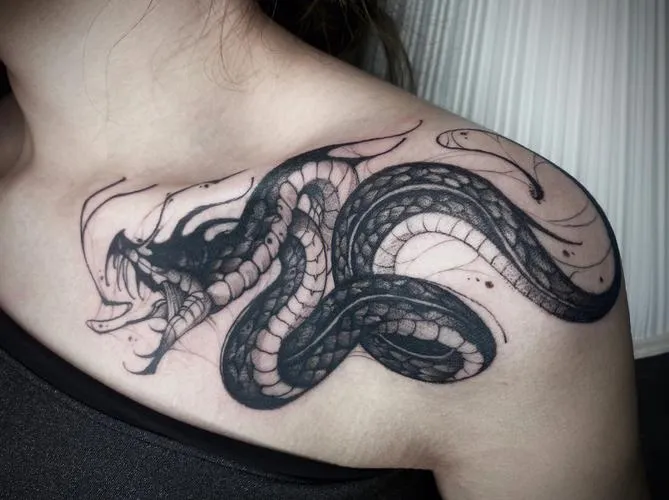
Chinese Snake Tattoo
In Chinese symbolism, the snake often represents wisdom, intuition, adaptability, and quiet strength. It is also linked to healing and regeneration, echoing broader cross-cultural associations such as the Caduceus and the Staff of Asclepius, both enduring symbols of medicine and recovery. These shared meanings help explain why snake imagery resonates so deeply across civilizations.
As a tattoo, the snake can convey personal growth, resilience, and the power to heal or reinvent oneself. Its sinuous shape lends itself beautifully to body contours, allowing for dynamic designs that feel both elegant and powerful. Whether depicted in a minimal line style or as a detailed, coiled guardian, a snake tattoo carries a timeless message of renewal and inner strength.
6. Chinese Buddha Tattoos
The Laughing Buddha is one of the most recognizable figures in Chinese-inspired tattoo art and is widely associated with happiness, abundance, contentment, and good fortune. His joyful expression and rounded form symbolize a life free from worry, where generosity and optimism invite prosperity.
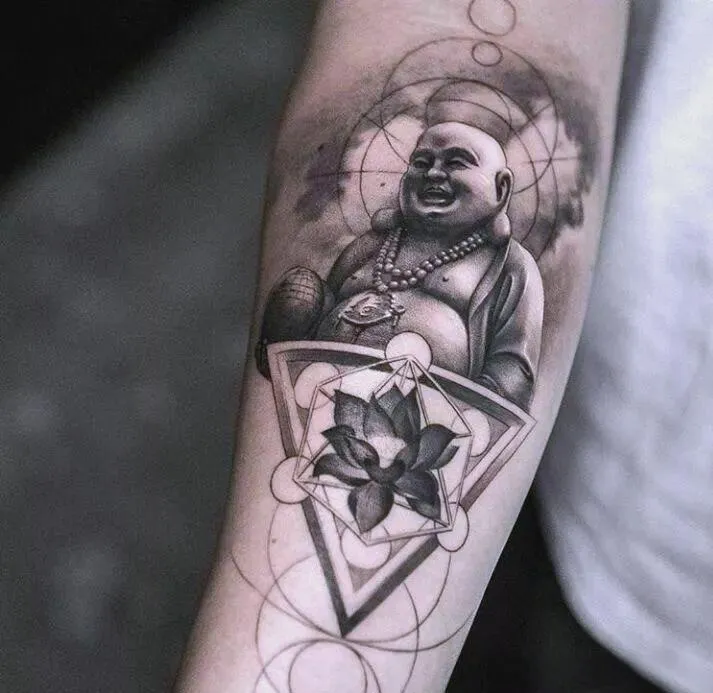
Chinese Buddha Tattoo
Much like religious symbols such as crosses or rosary beads, a Buddha tattoo often reflects the wearer’s spiritual values, inner peace, and respect for moral balance. Rather than representing strict religious devotion alone, it frequently conveys a broader philosophy of compassion, mindfulness, and harmony with the world.
Chinese Buddha tattoos are commonly rendered in black and white, emphasizing simplicity, calm, and timelessness. They are often paired with complementary symbols such as Yin and Yang, reinforcing themes of balance and unity. Visually serene and spiritually resonant, these tattoos tend to draw positive attention while quietly expressing reverence, wisdom, and a grounded outlook on life.
7. Chinese Yin-Yang Tattoo
The Yin-Yang symbol, rooted in ancient Taoist philosophy, represents the harmony and balance of opposing forces in the universe. It conveys the idea that light cannot exist without darkness, and every element in life is interconnected.
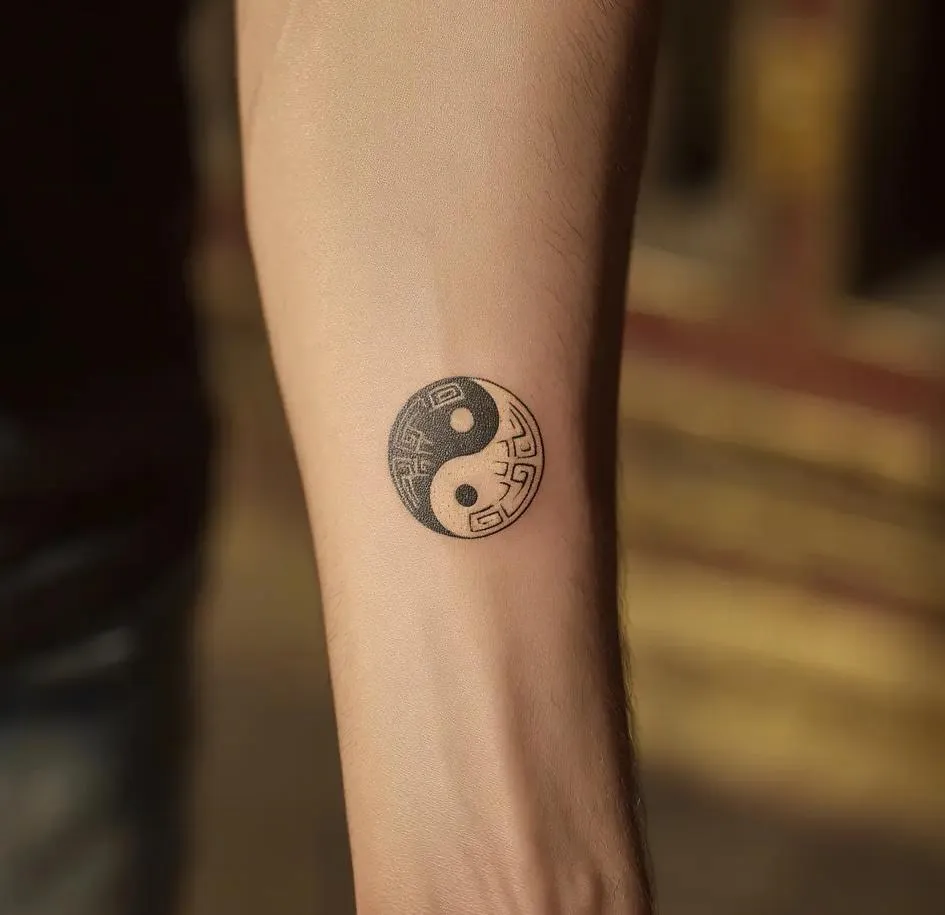
Chinese Yin-Yang Tattoo
In the symbol, Yin, the dark swirl, embodies femininity, intuition, protection, and the quiet ebb of energy, while Yang, the light swirl, signifies masculinity, vitality, growth, positivity, and the surge of life. Together, they create a visual representation of equilibrium, illustrating that contrasting forces are complementary rather than conflicting.
Yin-Yang tattoos are highly versatile. They are often combined with koi fish, representing perseverance and transformation, or personalized with names or meaningful dates, making them a unique expression of balance, connection, and personal significance.
8. Chinese Flower Tattoo
For those seeking a delicate, meaningful, and nature-inspired tattoo, Chinese flower designs are an excellent choice. They blend aesthetic beauty with deep cultural symbolism, making them both visually striking and spiritually significant.
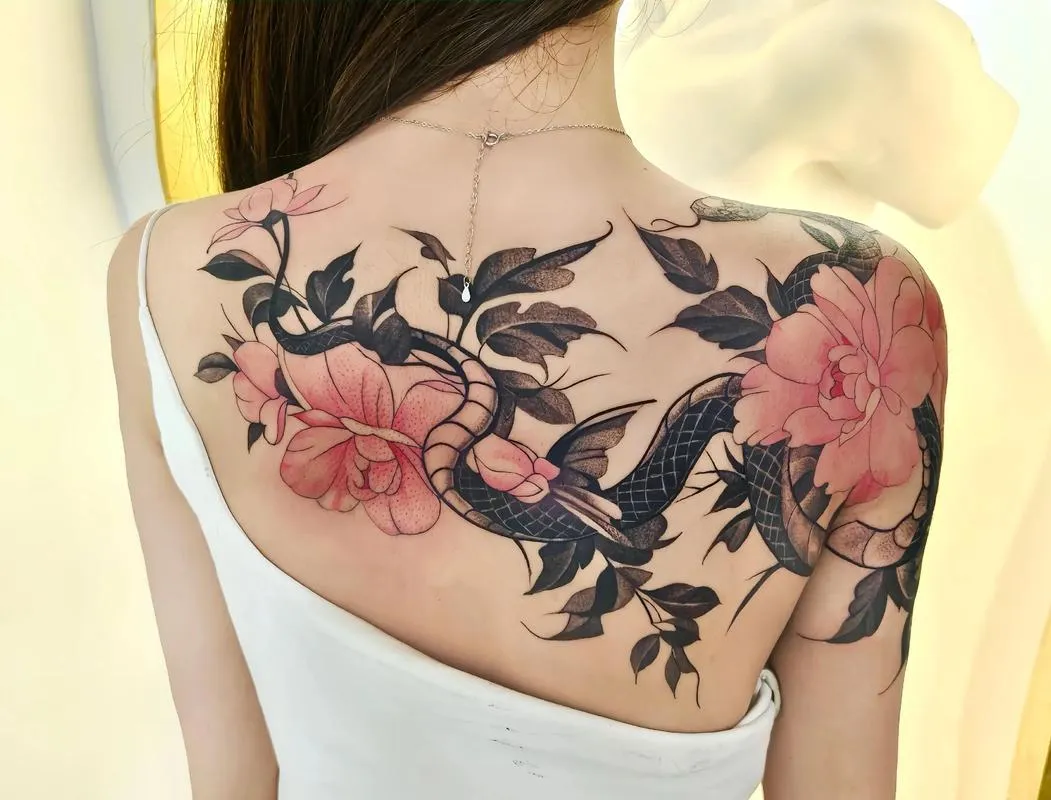
Chinese Flower Tattoo
Popular options include cherry blossoms, symbolizing femininity, love, and the fleeting beauty of life, and peonies, celebrated as the "king of flowers," representing wealth, honor, and prosperity.
Chinese flower tattoos generally convey themes of growth, vitality, elegance, and harmony, while also embodying love, admiration, and unity. Whether chosen for their artistic appeal or symbolic meaning, these tattoos capture the essence of beauty and strength in nature.
Bringing It All Together: Choosing the Right Chinese Tattoo
Chinese tattoos are much more than decorative art—they carry deep cultural meanings, personal symbolism, and aesthetic elegance. From the flowing strokes of Chinese characters and calligraphy to powerful symbols like the dragon, phoenix, Buddha, and Yin-Yang, each design tells a unique story about strength, love, wisdom, or transformation.
Whether you prefer a bold statement piece or a subtle, delicate design, taking the time to understand the symbolism ensures your tattoo resonates personally and culturally. By choosing thoughtfully and working with a skilled tattoo artist, you can create a design that is visually stunning, meaningful, and timeless—a true expression of your identity and appreciation for Chinese culture.
Your tattoo is more than ink—it’s a story, a symbol, and a piece of art you carry with you forever.
FAQ
Q: Are Chinese-style tattoos mainly decorative, or do they have deeper meanings?
A: Chinese-style tattoos are rarely chosen for decoration alone. In Chinese culture, symbols such as characters, animals, and philosophical icons carry layered meanings shaped by history, religion, and moral values. A dragon may represent power and wisdom, while a single character can express destiny, courage, or harmony. Understanding these meanings is essential, as a Chinese tattoo often reflects personal beliefs, life experiences, or aspirations rather than pure aesthetics.
Q: What should people be careful about when getting a Chinese character tattoo?
A: Accuracy is critical when choosing a Chinese character tattoo. A small mistake in stroke order, structure, or character choice can completely change the meaning or make it incorrect. Unlike alphabet-based languages, Chinese characters are precise and context-dependent. It is strongly recommended to verify the character with native speakers and work with a tattoo artist experienced in Chinese script to ensure both linguistic correctness and visual balance.
Q: Why are dragons such a popular symbol in Chinese tattoo designs?
A: Dragons occupy a unique position in Chinese culture as symbols of authority, prosperity, wisdom, and cosmic balance. Unlike Western dragons, which are often portrayed as destructive, Chinese dragons are benevolent and associated with good fortune and strength. Their flowing form also allows for highly dynamic tattoo designs, making them visually powerful while carrying deeply positive cultural symbolism.
Q: What does a Chinese phoenix tattoo typically represent?
A: The Chinese phoenix, or 凤凰 (fènghuáng), symbolizes rebirth, renewal, and moral virtue. It is often associated with overcoming hardship and emerging stronger after transformation. For many people, a phoenix tattoo marks a turning point in life, such as recovery, personal growth, or the beginning of a new chapter. Its elegant shape and symbolic depth make it especially meaningful beyond its visual beauty.
Q: How does Taoist philosophy influence Chinese tattoo symbolism?
A: Taoist ideas, especially the concept of balance, play a significant role in Chinese tattoo symbolism. The Yin-Yang symbol represents harmony between opposing forces rather than conflict. This philosophy also influences designs like snakes, which symbolize renewal and adaptability, and Buddha imagery, which reflects inner peace and balance. These tattoos often express a worldview focused on equilibrium, acceptance, and personal harmony.
Q: Are Chinese flower tattoos chosen mainly for beauty or symbolism?
A: Chinese flower tattoos combine visual elegance with symbolic meaning. Flowers such as cherry blossoms and peonies are admired not only for their appearance but also for what they represent—impermanence, love, wealth, honor, and vitality. These designs appeal to those who want a softer, nature-inspired tattoo that still carries cultural depth and emotional significance.