An Introduction to Chinese Numerology
Table of Contents

Chinese numerology may appear mysterious at first glance, but it continues to play a meaningful role in everyday life across China. Numbers in Chinese culture are often associated with luck, fortune, and symbolism, shaping choices ranging from phone numbers and addresses to wedding dates and business decisions. Understanding these numerical beliefs and taboos can help you better navigate common cultural practices in Chinese society.
In this article, we explore the core principles of Chinese numerology and explain how numbers influence modern Chinese culture, communication, and decision-making.
Chinese Numerology: The Meaning Behind Numbers
Homophones play a powerful role in the Chinese language, and their influence reaches far beyond everyday speech into the realm of cultural belief. In Chinese numerology, numbers are commonly regarded as either auspicious (吉利 jílì) or inauspicious (不吉 bùjí), largely because their pronunciations resemble words associated with luck, wealth, longevity, or misfortune.
Because Chinese is rich in homophones, even a single digit can carry strong symbolic meaning. As a result, numbers in traditional Chinese culture are rarely neutral. They influence choices such as phone numbers, license plates, floor numbers in buildings, wedding dates, and even business pricing strategies.
For example, 2, 8, and 9 are widely viewed as lucky numbers due to their positive associations with harmony, prosperity, and longevity. By contrast, 4, 5, and sometimes 7 are often avoided in certain situations, as their pronunciations may evoke ideas of death, imbalance, or loss depending on context.
Understanding these numerical associations offers valuable insight into how language, sound, and symbolism intersect in Chinese culture.
Auspicious Numbers: 2, 8, and 9
In Chinese numerology, certain numbers are strongly associated with positive meanings. Among them, 2, 8, and 9 are considered especially auspicious and are widely used in celebrations, gifts, and important life events.
The Number 2
In Chinese culture, pairs are seen as a symbol of harmony and completeness. This belief is captured in the saying “好事成双” (hǎo shì chéng shuāng), meaning “good things come in pairs.”
| Arabic Numeral | Simplified Chinese | Traditional Chinese | Pinyin |
|---|---|---|---|
| 2 | 二 | 贰 | èr |
This idea helps explain why 双喜 (shuāngxǐ, “double happiness”) is commonly displayed on wedding decorations, invitations, and couplets. During Chinese New Year, the same principle applies: people traditionally hang decorative couplets on both sides of the door, reinforcing the idea of balance and good fortune entering the home together.
The Number 8
The number 8 (八 bā) is widely regarded as the luckiest number in Chinese culture. This is because it sounds similar to 发 (fā), as in 发财 (fācái), meaning “to become wealthy.”
| Arabic Numeral | Simplified Chinese | Traditional Chinese | Pinyin |
|---|---|---|---|
| 8 | 八 | 捌 | bā |
Because of this association, the number 8 is highly prized in business, phone numbers, license plates, and important dates. People are often willing to pay large sums of money to obtain addresses or phone numbers containing multiple eights, believing the number brings prosperity and financial success.
The Number 9
The number 9 (九 jiǔ) sounds like 久 (jiǔ), meaning “long-lasting” or “enduring.” As a result, it symbolizes longevity, eternity, and lasting relationships.
| Arabic Numeral | Simplified Chinese | Traditional Chinese | Pinyin |
|---|---|---|---|
| 9 | 九 | 玖 | jiǔ |
Thanks to this symbolism, the number 9 frequently appears in romantic contexts. Couples may choose to marry on September 9th, give 99 roses, or include the number in engagement gifts as a symbol of everlasting love.
Fun fact: The gates of the Forbidden City feature 81 nails, arranged in a 9 × 9 grid. This design reflects the imperial association of the number 9 with power, authority, and permanence.
Lucky Numbers and Red Envelopes
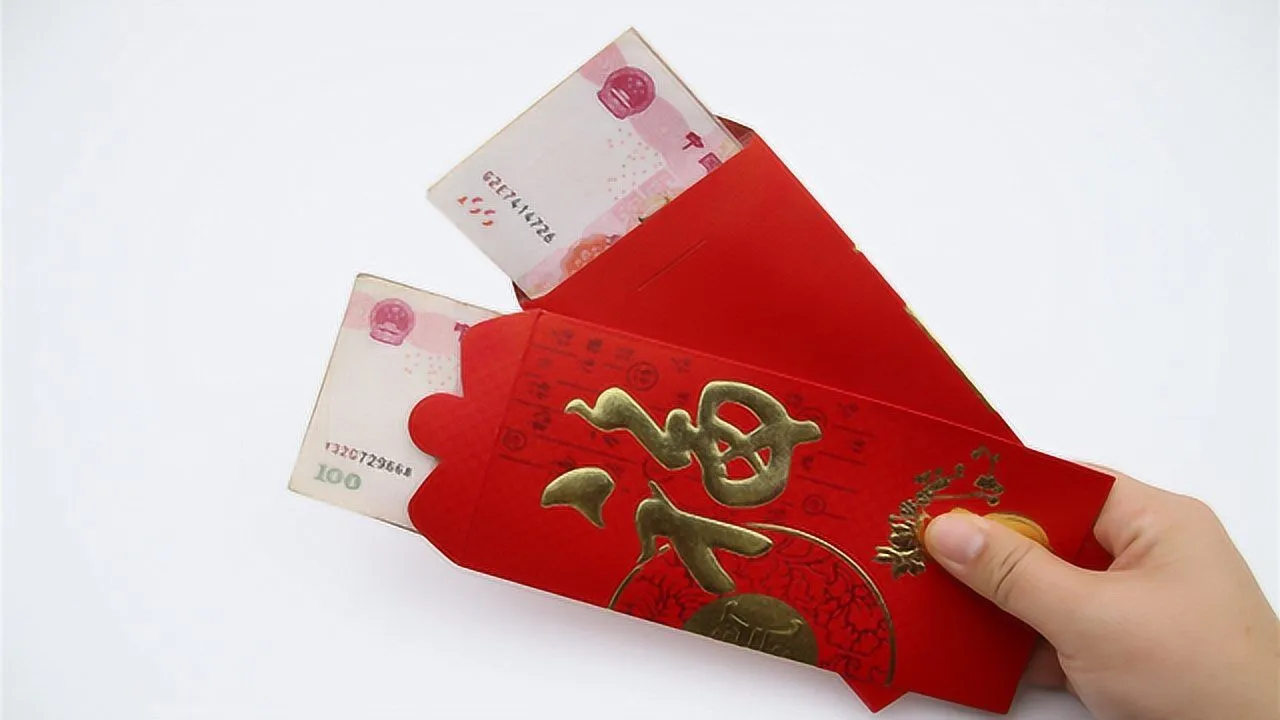
When giving red envelopes (红包 hóngbāo), Chinese people often favor amounts that include 2, 8, or 9. Common gift amounts include 88, 99, or 200, all of which reflect wishes for prosperity, happiness, and harmony.
In this way, numbers in Chinese culture function not just as quantities, but as expressions of goodwill and symbolic blessings.
Inauspicious Numbers: 4, 5, and Sometimes 7
Just as certain numbers are associated with good fortune in Chinese numerology, others carry negative or ambiguous connotations. Among these, 4, 5, and in some contexts 7, are often viewed as inauspicious due to their pronunciation or cultural associations.
The Number 4
The number 4 (四 sì) is widely considered the most unlucky number in Chinese culture. This is because it closely resembles the pronunciation of 死 (sǐ), meaning “to die.”
| Arabic Numeral | Simplified Chinese | Traditional Chinese | Pinyin |
|---|---|---|---|
| 4 | 四 | 肆 | sì |
Due to this strong association with death, the number 4 is frequently avoided in daily life. Many buildings in China do not label a “fourth floor” at all, skipping directly from the third to the fifth floor. Similarly, the number 4 rarely appears in house numbers, door numbers, or car license plates. When possible, people also avoid phone numbers that contain the digit 4.
Because of its cultural weight, 4 occupies a role in Chinese numerology similar to that of 13 in many Western cultures, symbolizing misfortune and bad luck.
The Number 5
The number 5 (五 wǔ) is sometimes regarded as unlucky because it sounds similar to 呜 (wū), an onomatopoeic character used to represent crying, whimpering, or mourning.
| Arabic Numeral | Simplified Chinese | Traditional Chinese | Pinyin |
|---|---|---|---|
| 5 | 五 | 伍 | wǔ |
As a result, the number 5 can evoke emotional discomfort or sadness in certain contexts. While it is not as strongly avoided as the number 4, it is still generally considered less favorable, particularly when used in isolation or in sensitive situations such as gift-giving.
The Number 7
Unlike clearly lucky numbers such as 8 or strongly unlucky ones like 4, the number 7 occupies a more ambiguous position in Chinese numerology.
| Arabic Numeral | Simplified Chinese | Traditional Chinese | Pinyin |
|---|---|---|---|
| 7 | 七 | 柒 | qī |
On the positive side, 七 (qī) shares similar sounds with characters such as 齐 (qí, meaning “even” or “harmonious”), 气 (qì, life force or energy), 和 (qí, “to rise”). Because of these associations, the number 7 is sometimes considered favorable for relationships or personal growth.
However, 7 also carries darker connotations. The Ghost Festival (鬼节 Guǐjié) takes place in the seventh month of the lunar calendar, a time traditionally associated with spirits and the afterlife. In addition, 七 (qī) sounds like 欺 (qī), meaning “to deceive,” which further complicates its symbolic meaning.
As a result, 7 is neither wholly lucky nor entirely unlucky, and its interpretation often depends on context, setting, and personal belief.
Chinese Number Gestures
Here’s a fun fact that surprises many first-time visitors to China: you can count from 1 to 10 using just one hand.
Chinese number gestures are widely understood across the country and are especially useful in noisy environments such as street markets, small shops, or vegetable stalls. When bargaining or confirming prices, hand gestures often communicate numbers faster and more clearly than words.
Because these gestures are so common, learning them is not just a novelty. It’s a practical cultural skill that can save time, avoid confusion, and occasionally earn you an approving nod from a vendor.
Numbers and Chinese Internet Slang
Thanks to the abundance of homophones in Chinese, numbers have taken on a life of their own online. Many popular internet expressions are created using only digits, a phenomenon known as 数字表示汉字 (shùzì biǎoshì hànzì, "numbers replacing characters").
These numeric expressions are widely used in text messages, social media, gaming chats, and online forums. Below are some of the most common and colorful examples.
1. 二百五 (èr bǎi wǔ, 250)
250 is a classic insult meaning “stupid,” “foolish,” or “not quite sane.”
There are several theories about its origin. One suggests it comes from an ancient coin system in which 1,000 coins were tied together with a string called a 吊子 (diàozi). Referring to oneself as 半吊子 (bàn diàozi, “half a string”) was a modest way to admit limited knowledge. Half of that again, 250, eventually became a way to insult someone as incomplete or foolish.
Another theory links it to money envelopes. 250 coins were known as 半封 (bàn fēng, “half an envelope”), which sounds like 半疯 (bàn fēng, “half-crazy”) in both Mandarin and Cantonese.
Whatever its true origin, calling someone 250 is never a compliment. Think of it as the Chinese equivalent of “not playing with a full deck.”
2. 五二零 (wǔ èr líng, 520)

520 sounds like 我爱你 (wǒ ài nǐ, "I love you"). Because of this, May 20th (5/20) has become an unofficial Chinese Valentine's Day, especially popular among younger couples.
It’s common to see romantic posts, gifts, and red envelopes labeled “520” on this date.
3. 七四八 (qī sì bā, 748)
748 sounds like 去死吧 (qù sǐ ba), meaning “Get lost!” or “Go away!”
Not exactly polite, but definitely something you might encounter in online arguments.
4. 五五五 (wǔ wǔ wǔ, 555)
As mentioned earlier, the number 5 resembles 呜 (wū), the sound of crying. Online, 555 is commonly used to express sadness, frustration, or emotional distress.
Think of it as the Chinese equivalent of “sobsobsobsobsobsobsobsobsobsobsobsobsobsobsobsobsobsobsobsobsobsobsobsobsobsobsobsobsobsob.”
5. 八八 (bā bā, 88)
88 sounds like “bye-bye” and is widely used at the end of messages or chat conversations.
Short, friendly, and extremely common.
6. 一三一四 (yī sān yī sì, 1314)
When read aloud, 1314 sounds like 一生一世 (yī shēng yī shì), meaning “for a lifetime” or “forever.”

Combine 1314 with 99 roses, and you’ve got yourself a textbook Chinese-style marriage proposal.
7. 七四五六 (qī sì wǔ liù, 7456)
7456 sounds like 气死我了 (qì sǐ wǒ le), meaning “You’re making me so angry!”
A favorite among netizens venting frustration.
8. 九九五 (jiǔ jiǔ wǔ, 995)
995 sounds like 救救我 (jiù jiù wǒ, “Save me!”).
Often used humorously to express exhaustion, stress, or desperation, especially at work or during exam season.
Numbers in Chinese aren’t just for counting. They’re a playful, expressive shortcut for emotion, humor, and cultural identity. You’ll also find numbers used in games and social activities. If you’re curious, check out our article on the popular Chinese 15-15-20 game to see how numbers come alive in everyday interaction.
The Difference Between 小写 and 大写 Numbers
Did you know that Chinese uses two different sets of characters to write numbers?
Because numbers in Chinese are written using characters rather than digits alone, two parallel systems exist in daily life: 小写 (xiǎoxiě, “lowercase”) and 大写 (dàxiě, “uppercase”). The lowercase form is used in everyday contexts, while the uppercase form is reserved almost exclusively for financial and legal transactions.
The standard number characters, or 小写, are simple and easy to write. While this makes them convenient for daily use, it also makes them vulnerable to tampering. A small change in a stroke can easily alter the value of a number, creating opportunities for fraud.
To address this risk, the Chinese banking and financial industries use a separate set of complex, highly distinctive characters known as 大写 numbers. These characters are intentionally harder to modify, making them far more secure for recording monetary amounts.
The use of 大写 numerals dates back to the Ming dynasty. Following a major corruption scandal involving officials who altered records to steal and resell state grain, the Hongwu Emperor Zhu Yuanzhang introduced a new system for writing financial figures. The officials involved were executed, and the new numerical system was mandated to prevent similar fraud in the future.
Today, 大写 numerals are often referred to as “banker’s anti-fraud numerals.” They remain standard practice in contracts, checks, invoices, and official financial documents across the Chinese-speaking world.
Simplified-to-Traditional Number Conversions
| 小写 | 大写 | English |
|---|---|---|
| 零 / 〇 (líng) | 零 (líng) | 0 |
| 一 (yī) | 壹 (yī) | 1 |
| 二 (èr) | 贰 / 两 (èr / liǎng) | 2 |
| 三 (sān) | 叁 (sān) | 3 |
| 四 (sì) | 肆 (sì) | 4 |
| 五 (wǔ) | 伍 (wǔ) | 5 |
| 六 (liù) | 陆 (lù) | 6 |
| 七 (qī) | 柒 (qī) | 7 |
| 八 (bā) | 捌 (bā) | 8 |
| 九 (jiǔ) | 玖 (jiǔ) | 9 |
| 十 (shí) | 拾 (shí) | 10 |
| 百 (bǎi) | 佰 (bǎi) | 100 |
| 千 (qiān) | 仟 (qiān) | 1,000 |
| 万 (wàn) | 萬 (wàn) | 10,000 |
| 亿 (yì) | 億 (yì) | 100,000,000 |
Numbers are a fascinating and surprisingly expressive part of the Chinese language. Far from being simple tools for counting, they carry layers of sound-based meaning, cultural symbolism, and social nuance. Now that you understand the beliefs and associations behind Chinese numbers, you’ll begin to notice them everywhere—from everyday conversations and online slang to gift-giving customs and traditional games.
With this knowledge, numbers become more than digits on a page. They turn into shortcuts for emotion, humor, and cultural insight, offering yet another playful and practical way to deepen your understanding of Chinese language and culture.
FAQ
Q: What is the difference between 小写 and 大写 numbers in Chinese?
A: 小写 numbers are the standard, simple forms used in daily life, while 大写 numbers are complex, anti-fraud characters used in financial and legal documents to prevent tampering.
Q: Why is the number 8 considered lucky in Chinese culture?
A: The number 8 (八 bā) sounds like 发 (fā), as in 发财 (fācái, “to become wealthy”), making it a symbol of prosperity and financial success.
Q: Why do some buildings in China skip the fourth floor?
A: The number 4 (四 sì) sounds like 死 (sǐ, “to die”), so it is considered unlucky. Many buildings skip the fourth floor to avoid negative associations.
Q: How are numbers used in Chinese internet slang?
A: Numbers are often used as homophones to represent words or phrases. For example, 520 sounds like 我爱你 (wǒ ài nǐ, “I love you”), and 1314 sounds like 一生一世 (yī shēng yī shì, “for a lifetime”).
Q: How do Chinese number gestures work?
A: Numbers from 1 to 10 can be shown using one hand with specific finger positions. These gestures are widely recognized and useful in noisy environments or when bargaining.
Q: Why are 大写 numbers called “banker’s anti-fraud numerals”?
A: 大写 numbers are complex and difficult to alter, preventing fraud in financial transactions. They have been used since the Ming dynasty to secure official monetary records.