Chinese Lanterns: From Ancient Illumination to Modern Symbolism
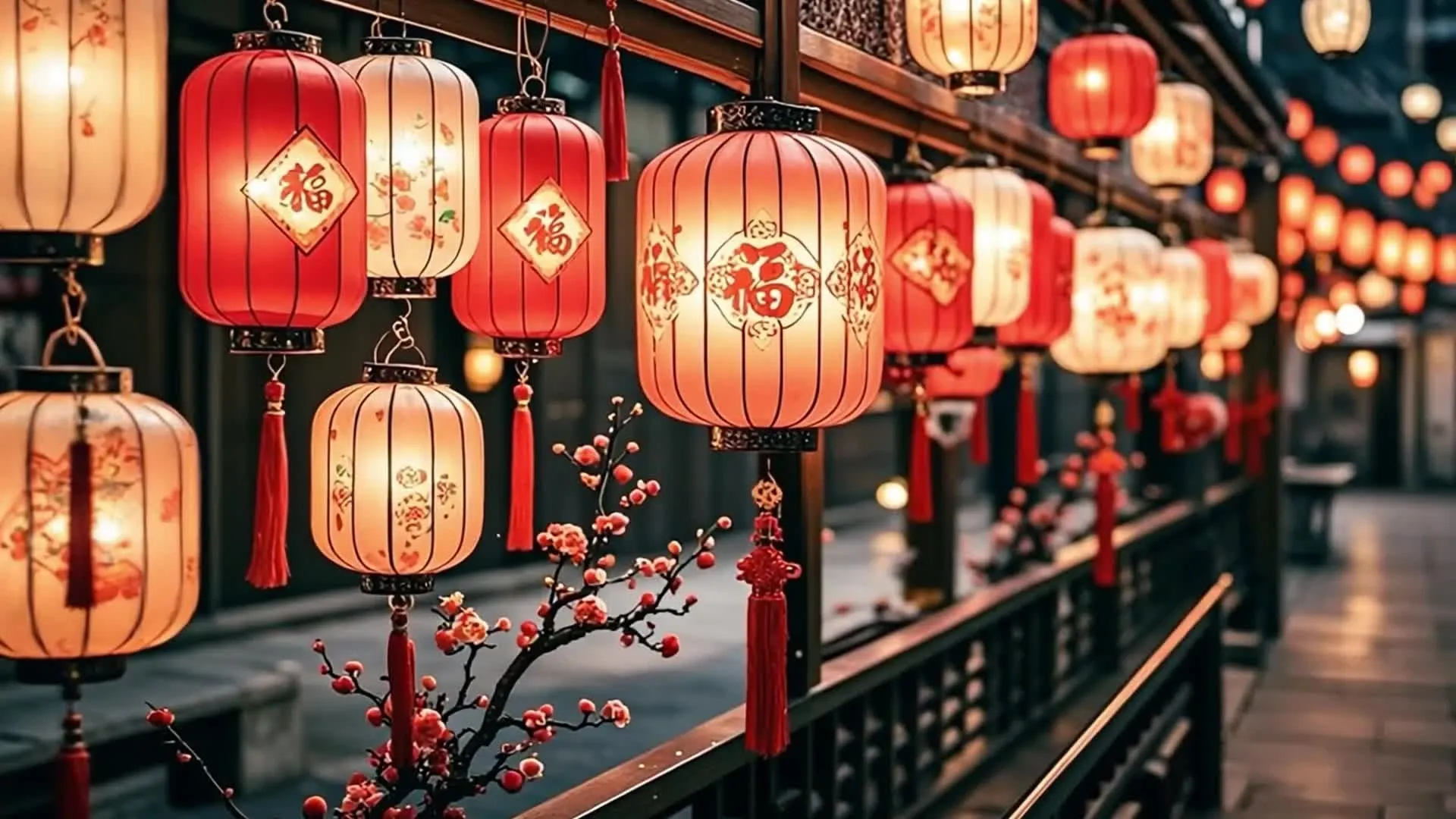
Table of Contents
- The History of Chinese Lanterns: Origins in the Han Dynasty
- From the Tang Dynasty to Modern China
- What Do Chinese Lanterns Symbolize?
- Red Lanterns
- Yellow Lanterns
- White Lanterns
- Other Lantern Colors and Their Meanings
- Different Shapes and Sizes
- What Are the Three Main Types of Chinese Lanterns?
- Hanging Lanterns
- Flying Lanterns
- Floating Lanterns
- How Are Chinese Lanterns Used During Festivals?
- FAQ
Like many enduring traditions in China, Chinese lanterns boast a history that stretches back thousands of years. What began as a practical source of light gradually evolved into a powerful cultural symbol woven into festivals, rituals, and everyday life.
Over time, lanterns became inseparable from moments of celebration and gathering. Today, they appear in many forms, each designed for a specific occasion and carrying its own symbolic meaning. From marking seasonal festivals to expressing wishes for good fortune, Chinese lanterns continue to glow with both historical depth and modern relevance.
The History of Chinese Lanterns: Origins in the Han Dynasty
Chinese lanterns trace their origins back nearly two thousand years, with historical records pointing to their appearance during the Eastern Han dynasty (25–220 CE). Early lanterns were both practical and ingenious. Artisans built lightweight frames from bamboo, wood, or wheat straw, then covered them with silk or paper. Once lit, the warm air from the candle caused the lantern to glow softly, creating an effect not unlike a gentle hot-air balloon.
These early lanterns were often decorated with traditional Chinese characters, symbols, and occasionally even messages advertising nearby shops, making them both functional and expressive. As their popularity spread, lanterns began to take on deeper cultural and religious significance.
Buddhist influence and religious symbolism
Buddhist monks were among the first to adopt lanterns for ceremonial use, incorporating them into acts of devotion to honor the Buddha. Lantern lighting became part of religious observances held on the twelfth day of the first lunar month. According to historical accounts, a particularly devout emperor later encouraged this practice across the empire.
As a result, people began lighting lanterns on a large scale, carrying them in procession to the imperial palace in Luoyang, transforming lanterns into symbols of faith, unity, and reverence.
From this period onward, lighting lanterns and setting them afloat in the sky or displaying them in public spaces became firmly woven into Chinese festive culture.
From the Tang Dynasty to Modern China
What began as a modest ritual gradually blossomed into one of China’s most beloved celebrations. During the Tang dynasty (618–907 CE), a golden age marked by political stability and cultural confidence, lantern customs reached new heights of popularity.
At the time, people released lanterns into the night sky as a joyful expression of national strength, peace, and prosperity. Sending lanterns upward became a symbolic way to give thanks for good fortune and to celebrate life’s abundance.
From this period onward, lighting lanterns and setting them afloat in the sky or displaying them in public spaces became firmly woven into Chinese festive culture.
The Lantern Festival in contemporary China
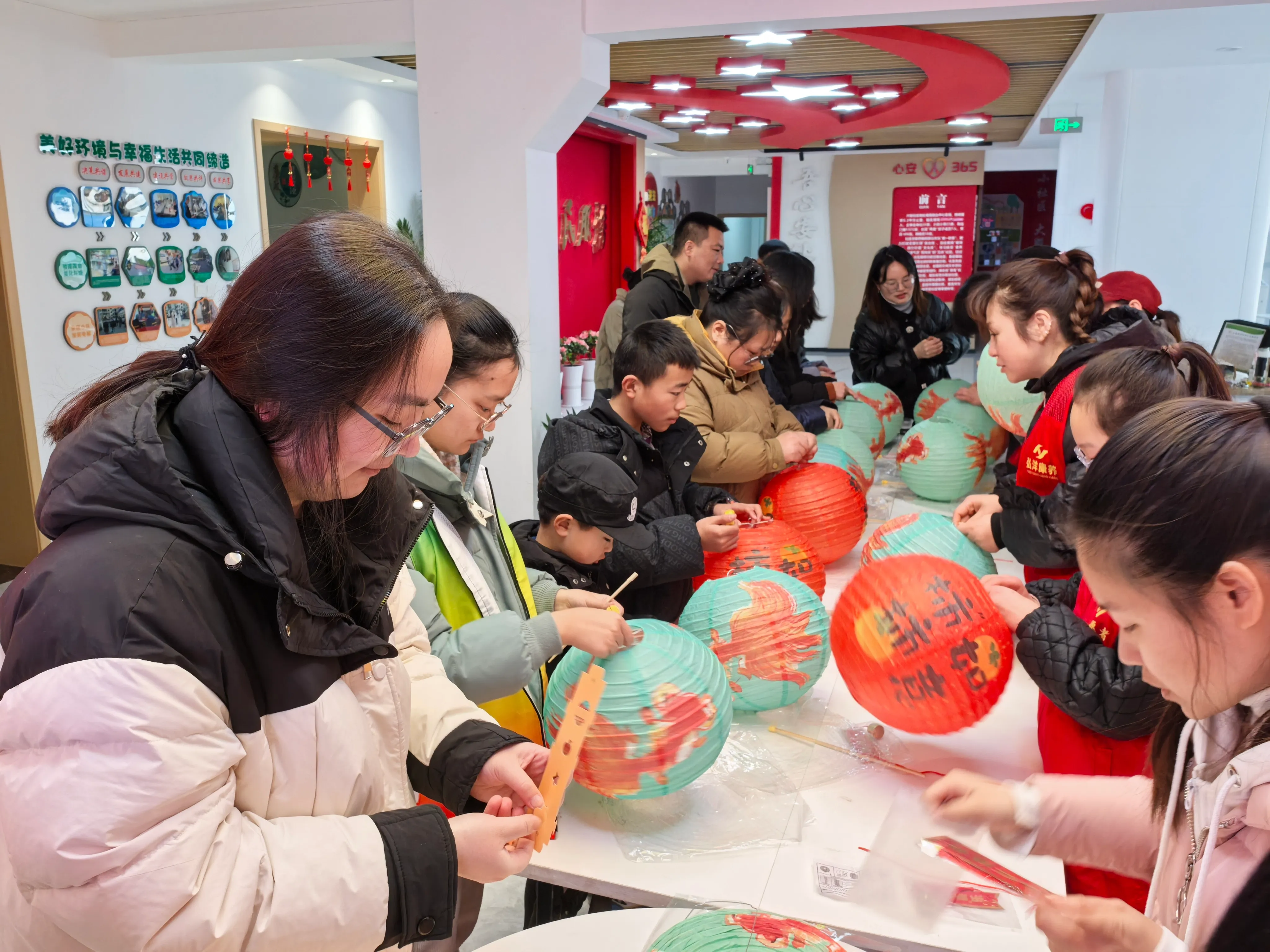
Today, this tradition lives on through the Lantern Festival, held on the 15th day of the lunar calendar and marking the official close of Chinese New Year celebrations. It is a warm, communal occasion when families and friends gather to admire lantern displays, enjoy seasonal foods, and welcome the year ahead.
Across Mainland China, cities and towns are illuminated with elaborate lanterns in countless shapes and designs, from animals and flowers to mythological figures. Many lanterns are adorned with riddles, and guessing these lantern riddles has become one of the festival’s most popular and playful traditions, blending celebration with wit and wordplay.
What Do Chinese Lanterns Symbolize?
While different styles of Chinese lanterns carry their own specific meanings, they all share a common theme: hope. At their core, lanterns represent wishes for light, prosperity, and a brighter future ahead.
Color plays a particularly important role in conveying these messages. In Chinese culture, colors are rich with symbolism and closely tied to traditional beliefs and superstitions. As a result, the meaning of a lantern can change dramatically depending on its color.
A lantern is not just a decorative object, but a visual message, expressing hopes for happiness, good fortune, health, or success through its hue.
Red Lanterns
In Chinese culture, red is the color of celebration, abundance, and success. It symbolizes wealth, fame, happiness, and prosperity, which explains why red dominates festivals, weddings, and other joyous occasions.
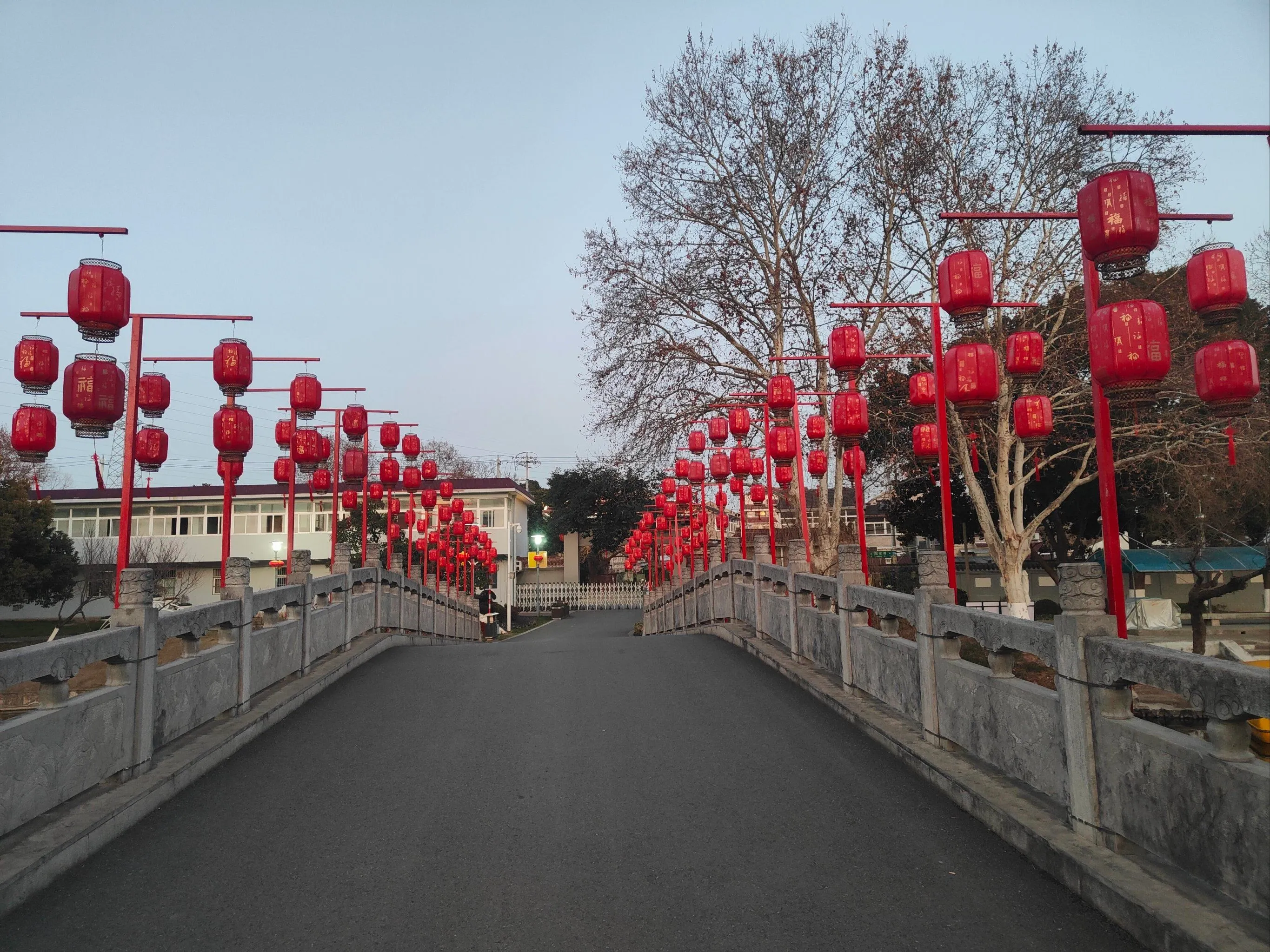
Unsurprisingly, most traditional Chinese lanterns are red, carrying wishes for a flourishing life and a thriving business.
Red lanterns are especially prominent during major festivals such as Chinese New Year and the Lantern Festival, when streets glow with warm red light. Outside of China, they have become an instantly recognizable symbol of Chinese culture.
In Chinatowns around the world, red lanterns often hang year-round outside Chinese restaurants and shops, serving as both decoration and a sign of good fortune.
Yellow Lanterns
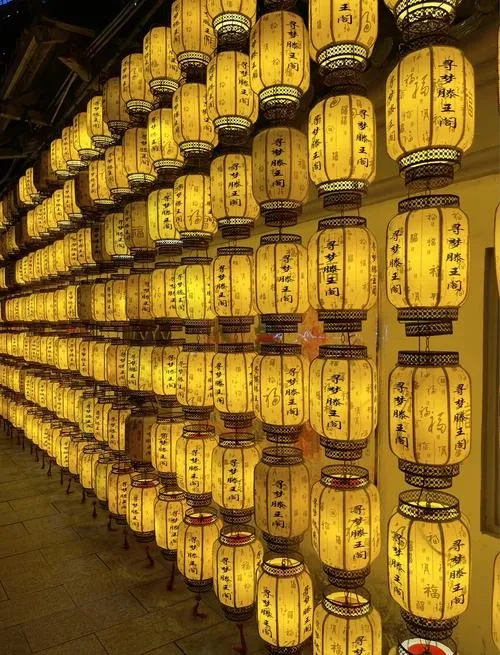
Yellow lanterns appear less frequently, but their symbolism runs deep. Traditionally, yellow was the color of the emperor and imperial authority, closely associated with power, balance, and good fortune.
It was also linked to the legendary rulers of ancient China, giving it a strong historical and cultural weight.
Beyond imperial symbolism, yellow represents detachment from worldly concerns and spiritual purity, which is why it holds an important place in Buddhism.
Today, yellow lanterns are often favored by students and young people, as they are believed to attract luck in studies, exams, and personal growth.
White Lanterns
White lanterns carry a very different meaning from their red and yellow counterparts. In Chinese culture, white is traditionally associated with mourning, remembrance, and funerary rituals rather than celebration.
For this reason, white lanterns are rarely used during festive occasions.
Instead, white lanterns are most commonly seen at memorial ceremonies, funerals, or events honoring the deceased. They symbolize grief, respect, and the transition between life and death.
Their soft, subdued appearance reflects values of solemnity and reflection rather than joy or prosperity.
Because of this strong cultural association, white lanterns are generally avoided in everyday decoration, weddings, or business settings.
However, in historical dramas, temples, or traditional rituals related to ancestor worship, white lanterns still appear as powerful symbols of remembrance and spiritual continuity.
Other Lantern Colors and Their Meanings
In addition to red, yellow, and white, Chinese lanterns appear in a variety of other colors, especially in modern celebrations and large-scale lantern festivals.
While these colors may not all have deep roots in classical tradition, they have developed widely accepted symbolic meanings over time.
Green Lanterns
Green is commonly associated with growth, vitality, and harmony in Chinese culture. Green lanterns often evoke images of spring, renewal, and nature.
Although the color green can carry negative connotations in very specific idiomatic expressions, these do not apply to lanterns.
In decorative and festive contexts, green lanterns are generally seen as positive and refreshing.
Blue Lanterns
Blue represents calmness, wisdom, and stability. Traditionally, blue was less prominent in lantern-making, but it has become increasingly popular in modern lantern displays.
Blue lanterns are often used to create a serene or elegant atmosphere and are sometimes associated with knowledge, reflection, and artistic expression.
Purple Lanterns
Purple has long been linked to nobility, auspiciousness, and mystery in Chinese culture.
The phrase “purple energy comes from the east” (紫气东来) is a well-known expression symbolizing good fortune and the arrival of something extraordinary.
Purple lanterns are often chosen for occasions that aim to convey elegance or spiritual significance.
Pink Lanterns
Pink is a relatively modern addition to Chinese lantern culture. Today, it is commonly associated with romance, affection, and gentleness.
Pink lanterns are often used during themed events such as weddings, Valentine’s Day celebrations, or commercial festivals.
Multicolored Lanterns
Multicolored lanterns symbolize joy, abundance, and celebration. They are especially common during the Lantern Festival.
Rather than conveying a single symbolic meaning, multicolored lanterns emphasize festivity and visual spectacle, contributing to the lively atmosphere that defines many traditional Chinese celebrations.
Different Shapes and Sizes
Beyond color, the shape of a lantern also plays an important symbolic role. While modern lanterns now appear in geometric forms or are crafted into Chinese zodiac figures, the round lantern remains the most traditional and widely used design.
The circular shape represents wholeness, unity, and togetherness, echoing the image of the full moon. This symbolism is especially meaningful during the Lantern Festival and the Mid-Autumn Festival, both of which center around reunion and make extensive use of lanterns in their celebrations.
Lantern decorations and artwork also carry layered meanings. Many lanterns feature calligraphy or short phrases expressing blessings for good health, longevity, prosperity, and a successful future.
Motifs are equally significant. Dragons symbolize strength and power, flowers and butterflies convey happiness and joy, bamboo represents resilience and integrity, and various plants are associated with growth and renewal.
Together, these shapes and designs turn Chinese lanterns into more than simple decorations—they become visual expressions of cultural values and shared hopes.
What Are the Three Main Types of Chinese Lanterns?
Traditionally, Chinese lanterns can be divided into three main categories: hanging lanterns, flying lanterns, and floating lanterns.
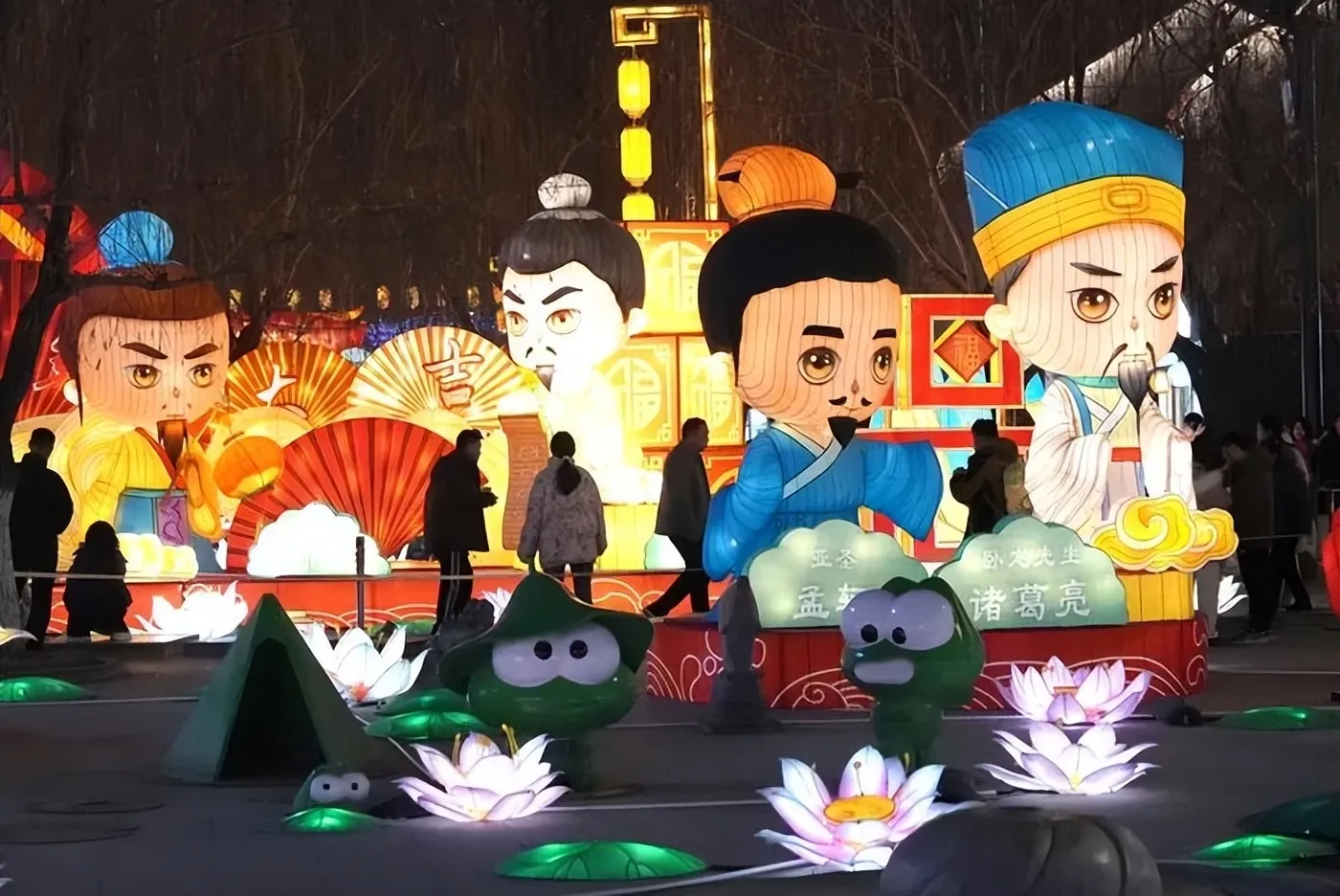
In more recent years, a fourth form has emerged in the public imagination—large-scale decorative lanterns, often elaborately designed to depict animals, historical figures, or mythological scenes.
Hanging Lanterns
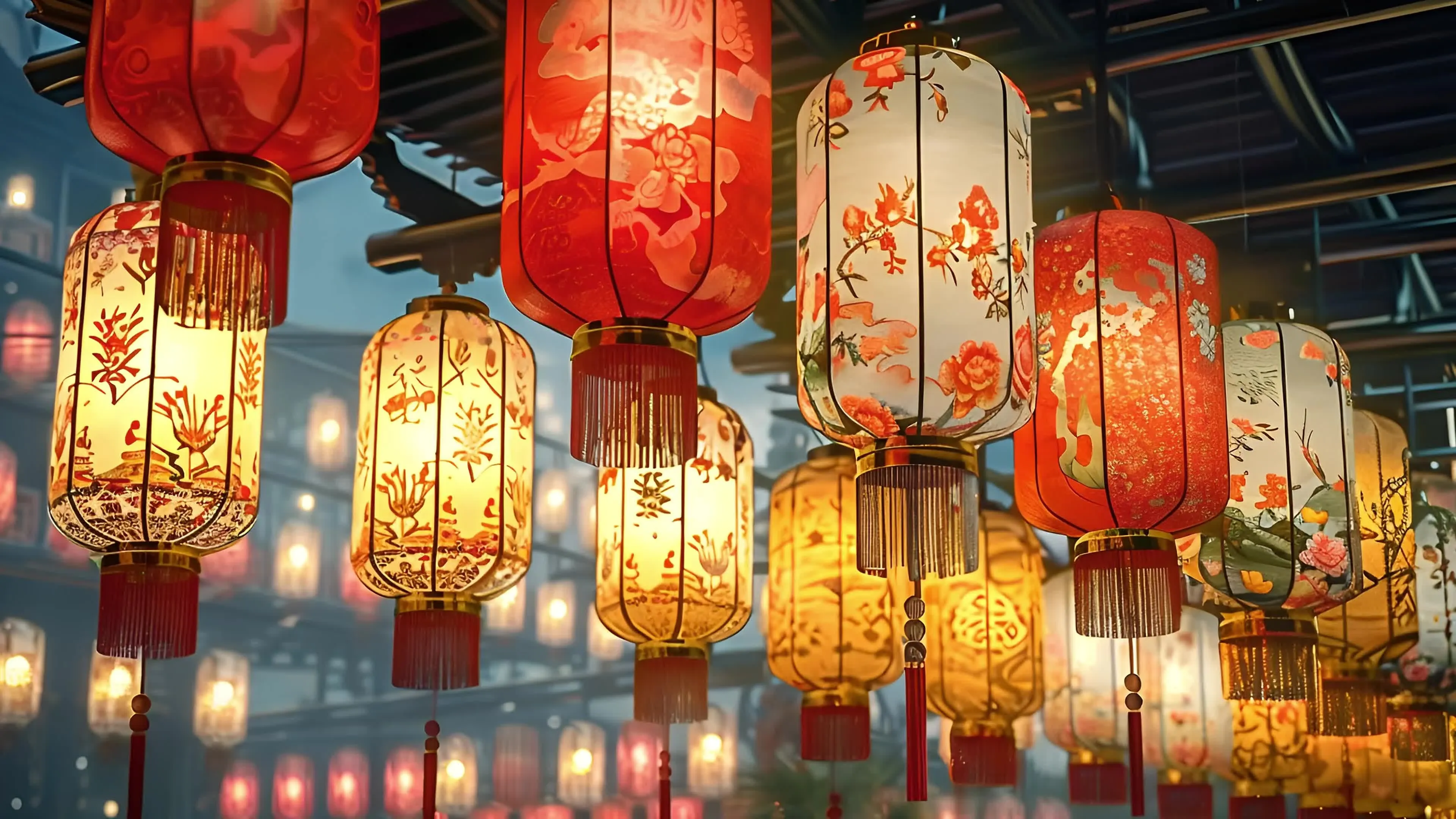
Hanging lanterns are by far the most familiar type. Today, they are commonly seen decorating Chinese restaurants, shops, and cultural venues around the world.
Within China, they appear everywhere—from streets and parks to storefronts, temples, and even as ornamental street lighting.
These lanterns are especially prominent during traditional festivals, as they are believed to attract good fortune and ward off misfortune.
During the Spring Festival, red hanging lanterns are traditionally thought to scare away the mythical Nian monster.
From the opening day of the Spring Festival until its conclusion on the 15th day with the Lantern Festival, red lanterns illuminate cities and villages alike, creating a warm and celebratory atmosphere.
Flying Lanterns
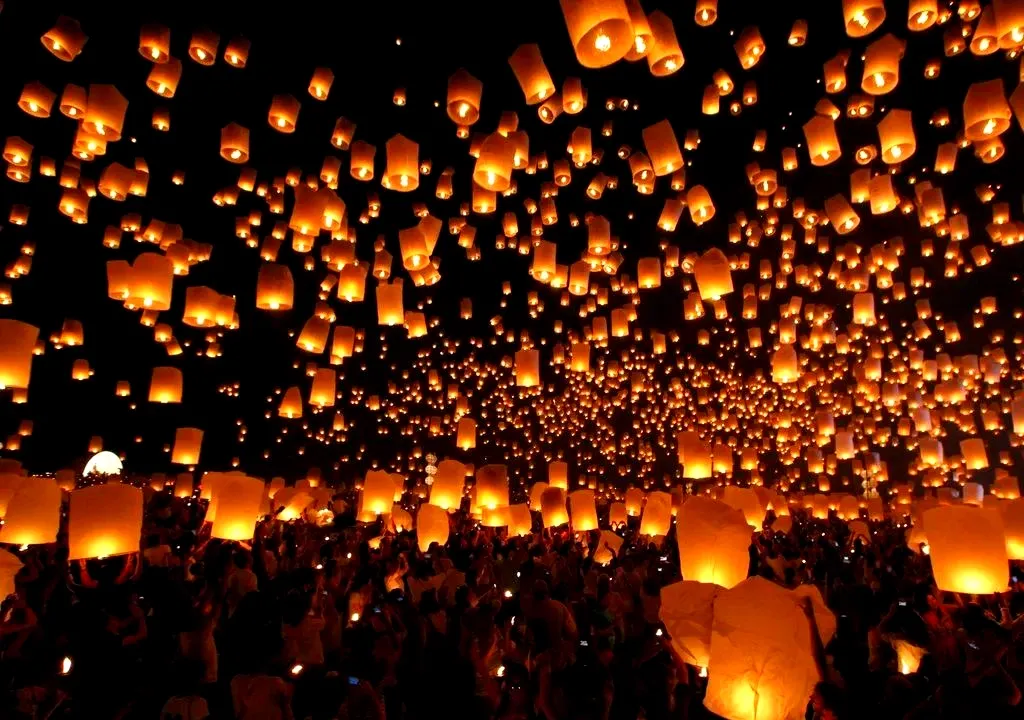
Flying lanterns, sometimes referred to as sky lanterns, operate much like miniature hot-air balloons.
A small flame inside heats the air, allowing the lantern to rise gently into the night sky.
These lanterns are typically released only during special occasions, such as the Mid-Autumn Festival, and always after dark.
They are often launched in large groups, transforming the sky into a sea of glowing lights and creating a truly mesmerizing spectacle.
Floating Lanterns
Floating lanterns form the third traditional category and are most commonly associated with large-scale festivals, particularly the Dragon Boat Festival.
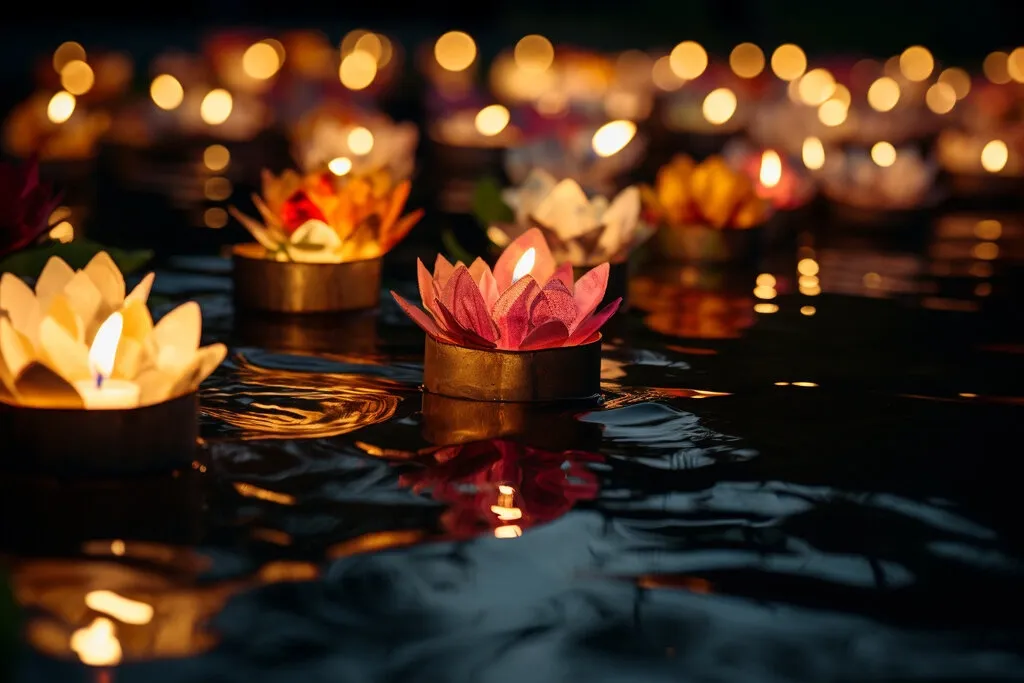
While similar in spirit to flying lanterns, these are designed to rest on water rather than rise into the air.
Floating lanterns come in a variety of shapes, including lotus flowers, boats, and heart designs, and are usually released onto rivers, lakes, or ponds.
As their light reflects off the water’s surface, a dreamlike illusion emerges—the lanterns appear to drift both across the water and into the sky at the same time.
This interplay of light and reflection creates one of the most visually striking scenes found in traditional Chinese celebrations, leaving a lasting impression on all who witness it.
How Are Chinese Lanterns Used During Festivals?
Unlike smaller hanging or flying lanterns, these monumental lanterns function much like artistic sculptures.
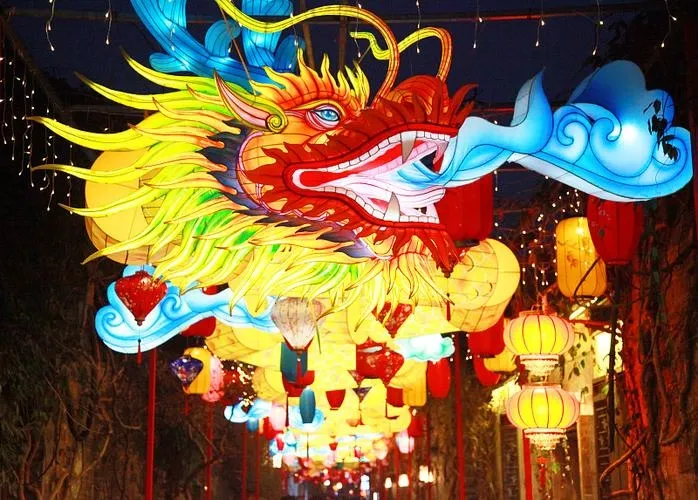
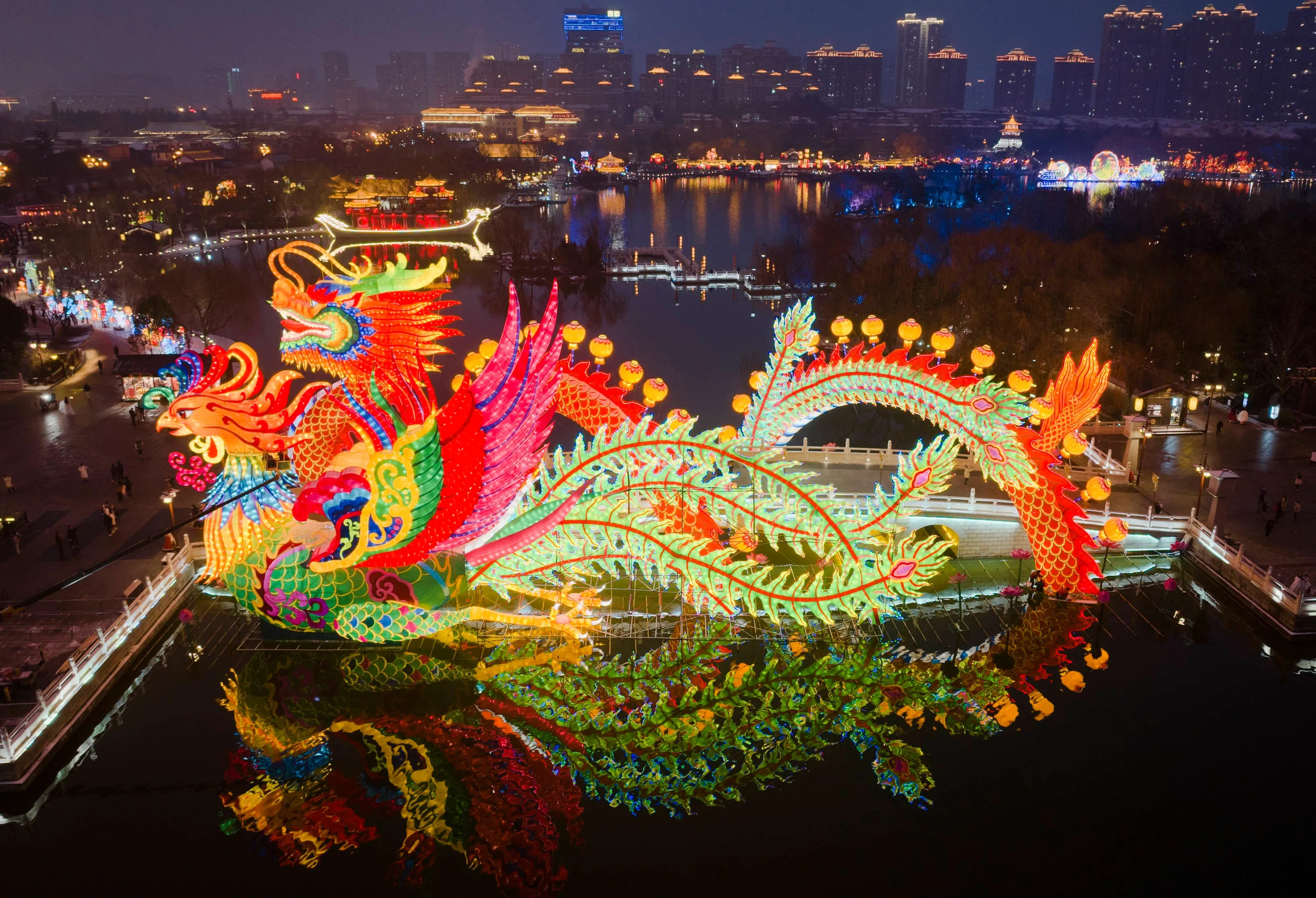
They are stationary installations that remain in place for the entire duration of the festival, allowing visitors to admire their craftsmanship and intricate details up close.
Whether illuminating city squares or lining winding streets, these festival lanterns create an enchanting atmosphere, blending centuries of tradition with contemporary creativity.
They remind all who see them of the enduring beauty and cultural significance of Chinese lanterns.
FAQ
Q: What do Chinese lanterns symbolize?
A: Chinese lanterns primarily symbolize hope, good fortune, and a bright future. They are often used to express wishes for happiness, prosperity, reunion, and success, especially during festivals and important celebrations.
Q: Why are red lanterns so common in Chinese culture?
A: Red is considered the most auspicious color in Chinese culture, symbolizing happiness, wealth, and success. Red lanterns are believed to attract good luck and ward off negative energy, which is why they are widely used during Chinese New Year and the Lantern Festival.
Q: What is the Lantern Festival and why is it important?
A: The Lantern Festival is held on the 15th day of the lunar calendar and marks the end of Chinese New Year celebrations. It is an important cultural event featuring lantern displays, riddles, family gatherings, and traditional foods, symbolizing reunion and hope for the year ahead.
Q: What are the main types of Chinese lanterns?
A: Traditionally, Chinese lanterns fall into three main types: hanging lanterns, flying lanterns, and floating lanterns. In modern times, large-scale decorative lanterns used in festivals have also become popular.
Q: Are flying lanterns still used in China today?
A: Flying lanterns are still used on special occasions such as festivals, but their use is increasingly regulated due to fire safety and environmental concerns. In many cities, they are replaced by large decorative lantern displays.
Q: Do different lantern colors have different meanings?
A: Yes. Lantern colors carry distinct symbolic meanings in Chinese culture. Red represents prosperity and joy, yellow symbolizes power and good fortune, white is associated with mourning, while colors like green, blue, and purple convey ideas such as growth, calmness, and elegance.