
Why “Wǒ Juéde” (我觉得) Is Not Always a Safety Cushion
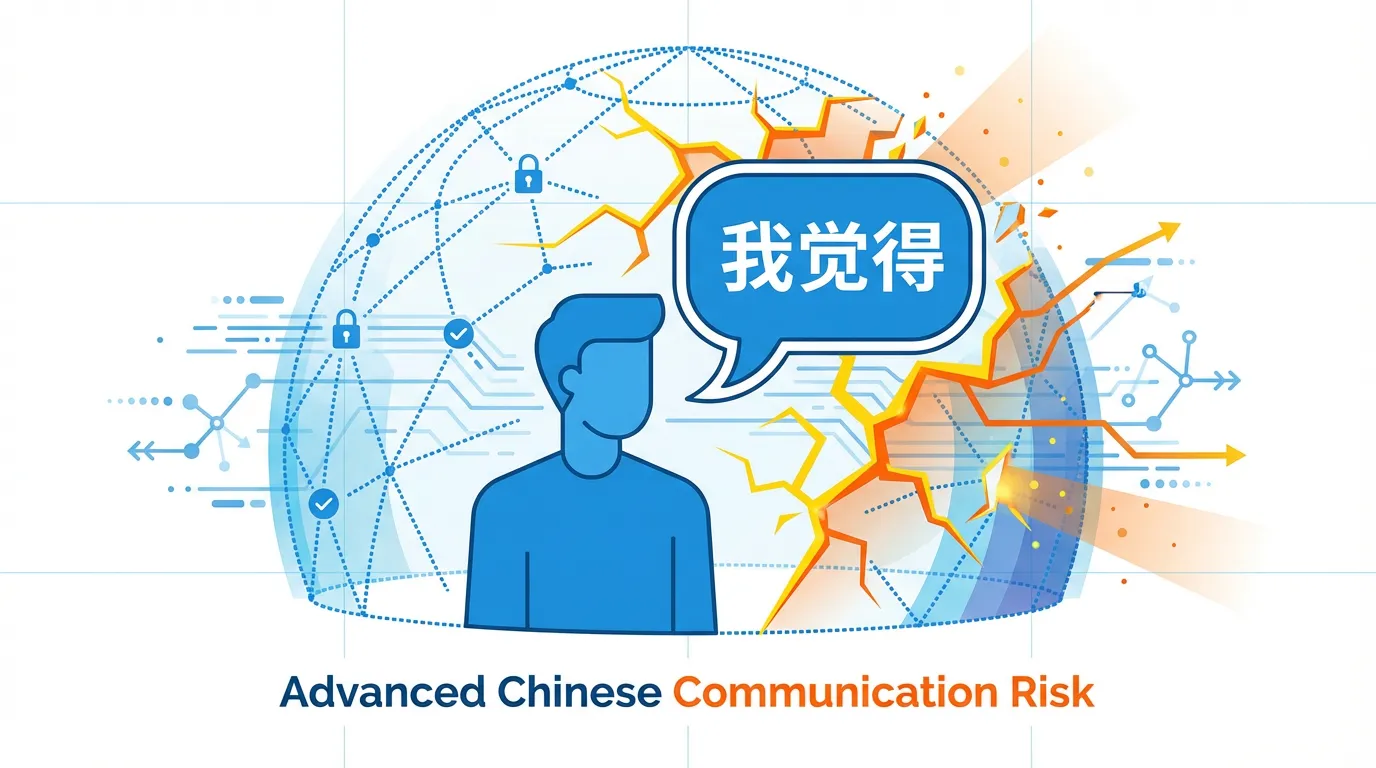
A Subtle Risk in Advanced Chinese Communication
1. Introduction: Language vs Signal
For many learners, 我觉得 (wǒ juéde, “I think”) feels like verbal bubble wrap. It sounds polite, cautious, and safe. At beginner and intermediate levels, it often is. At advanced levels, however, 我觉得 is not a cushion—it is a signal. Sometimes, it can even be a liability.
2. Why Learners Rely on “Wǒ Juéde”
Most learners are taught that 我觉得 helps to:
- ● Soften opinions
- ● Avoid sounding aggressive
- ● Show humility
- ● Reduce responsibility
Textbooks and learning materials frame it as a politeness tool—a way to express opinions without committing too strongly. At lower levels, this works well. It emphasizes clarity, politeness, and basic communicative success.
3. How Native Speakers Interpret “Wǒ Juéde”
Native speakers hear more than just a personal opinion. Depending on context, 我觉得 can imply:
- ● The opinion is personal, not structural
- ● The view is not fully owned
- ● The claim is open to retreat
- ● The speaker is protecting themselves
In professional or high-stakes contexts, this can subtly downgrade your authority. Even when grammar and vocabulary are correct, habitual cushioning may make phrasing sound unanchored.
4. When “Wǒ Juéde” Becomes Risky
Situations to watch:
- 1. When a clear judgment is expected (“What’s your view on this?”)
- 2. When professional input is required (meetings, evaluations, analyses)
- 3. When your sentence is already decisive but still softened
Example Comparison:
- ● With “我觉得”: 我觉得这个方案不太合理。 (I think this plan is not very reasonable—personal opinion-centered)
- ● Without “我觉得”: 这个方案在执行层面存在问题。 (This plan has issues in its implementation—structure-centered, professional)
Advanced Chinese favors anchoring your statement in the situation rather than your personal perspective.
5. Advanced Contexts: Pressure and Professional Use
Under disagreement or challenge, hedging with 我觉得可以 reveal hesitation or retreat. At advanced levels, mastering "我觉得" is about knowing when to speak and when to stay silent. This relates closely to why silence in Chinese has direction.
Example: 我觉得可能是这样吧……
Signals uncertainty or unwillingness to hold a position.
Strategic use:
- ● Keep it for personal experiences or emotional responses
- ● Omit it when giving analysis, evaluation, or decisive judgment
- ● Align tone and stance with context for clarity and authority
6. Balancing Softness with Stance
Understanding how expressions like "其实" (qíshí) subtly influence conversation can escalate meaning helps you use "我觉得" more strategically. Why "其实" (qíshí) is a risk word explores this dynamic in detail.
Advanced Chinese rewards:
- ● Judgment awareness
- ● Clear positioning
- ● Strategic softening
Practical guidance:
- ● Use 我觉得 deliberately, not habitually
- ● Evaluate if your statement truly needs personal cushioning
- ● In professional scenarios, consider dropping it to sound confident and anchored
7. One-Sentence Takeaway
In advanced Chinese, 我觉得 does not automatically make you safer. It signals the distance you place between yourself and your words. Knowing when to use it—and when to let your statement stand alone—is a hallmark of true Chinese proficiency.
FAQ
Q: When should I use 我觉得 in advanced Chinese?
A: Use 我觉得 deliberately for personal experiences, emotional responses, or when signaling subjectivity. Avoid it in professional or decisive statements to sound anchored and confident.
Q: Why can 我觉得 be risky at advanced levels?
A: At advanced levels, 我觉得 signals hesitation, distance, or lack of ownership. Overusing it can make your statements sound unanchored or weaken credibility in professional contexts.
Q: How does using 我觉得 affect perception by native speakers?
A: Native speakers interpret it as your level of commitment to the statement. Excessive use may suggest uncertainty, avoidance of responsibility, or borrowed opinions.
Q: Can I ever remove 我觉得 completely?
A: Yes. In professional, analytical, or high-stakes scenarios, removing 我觉得 centers your statement on the situation rather than your personal opinion, which often sounds more confident.
Q: How do I balance politeness and authority?
A: Softening your language is useful, but advanced Chinese rewards judgment awareness and clear positioning. Use 我觉得 strategically, not habitually, to maintain both politeness and authority.