
Why Silence in Chinese Has Direction
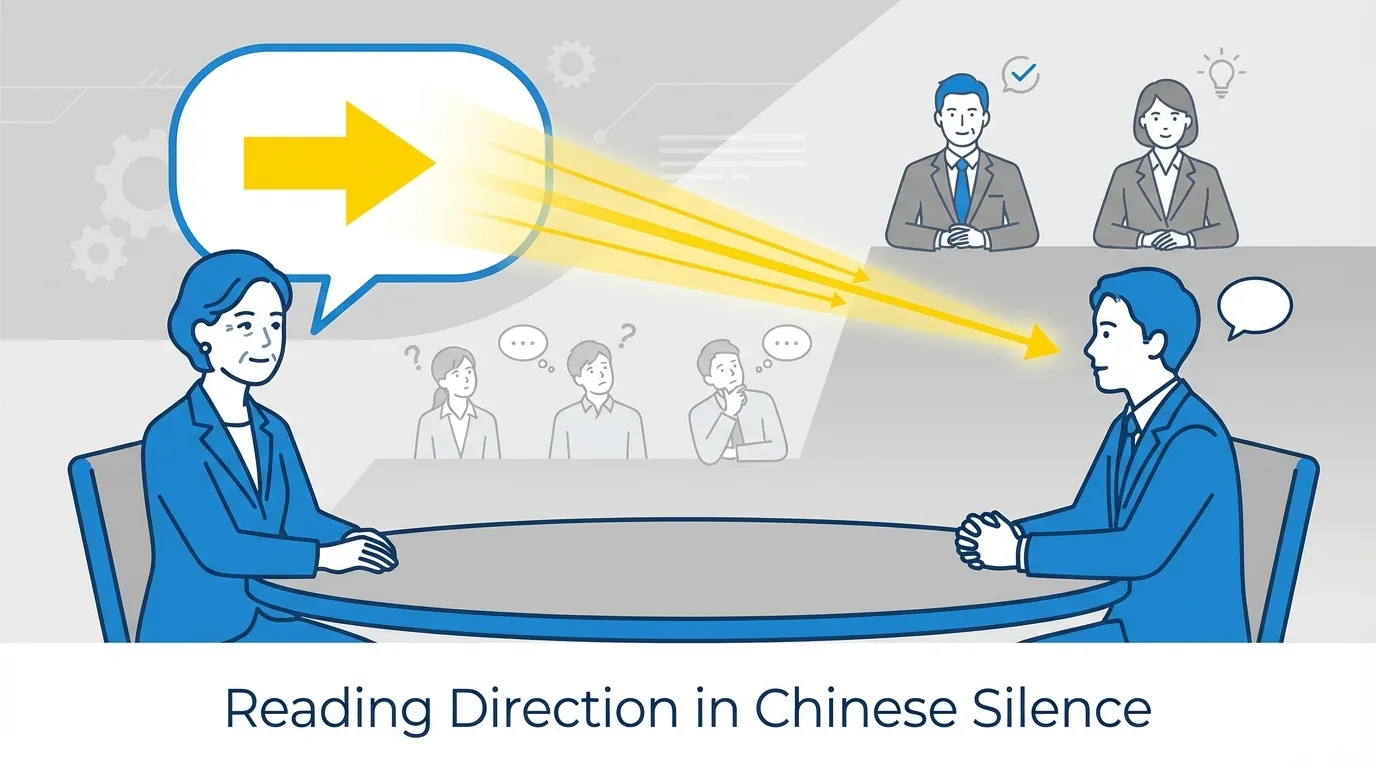
What Advanced Chinese Learners Misread When Nothing Is Said
1. Introduction: Silence Is Not Empty
In Chinese learning, silence is often treated as absence. No words. No meaning. No data. At beginner levels, this assumption works. At advanced levels, it fails. Silence in Chinese is directional. It points somewhere. Advanced learners are judged by whether they know where it points.
2. Why Silence Confuses Learners
Most CSL learners are trained to fill gaps:
- ● Clarify misunderstandings
- ● Explain intent
- ● Respond quickly
- ● Avoid awkward pauses
In real interaction, silence signals:
- ● Restraint
- ● Evaluation
- ● Positioning
- ● Refusal to escalate
Rushing to fill silence can move learners against its direction.
3. Silence in Chinese Is Rarely Neutral
Reading silence correctly helps advanced learners avoid pitfalls from phrases like "我觉得" (wǒ juéde), which can signal hesitation if overused.
Silence often indicates:
- ● Assessment is happening
- ● A boundary has been reached
- ● Responsibility is being transferred
None invite immediate speech—but learners speak anyway.
4. The Directional Function of Silence
Silence functions like an arrow:
“It does not say I have nothing to say. It says, let’s see what you do next.”
Speaking too quickly risks:
- ● Overexplaining
- ● Retreating unnecessarily
- ● Weakening your position
- ● Signaling insecurity
5. Silence as a Boundary Marker
Silence often follows:
- ● Strong statements
- ● Disagreements
- ● Proposals pushing limits
It signals the next move carries consequences. Advanced speakers wait and let silence hold.
6. Silence Tests Advanced Learners
Native speakers observe:
- ● Whether you panic
- ● Whether you retreat
- ● Whether you overcorrect
- ● Whether you hold your ground
Silence reveals more than words. Errors are often directional, not linguistic.
7. Hierarchy and Control
Silence also complements understanding of "其实" (qíshí) as a risk word, because both silence and subtle expressions influence direction of conversation.
Silence varies with status:
- ● Higher-status speakers remain silent without explanation
- ● Lower-status speakers must read silence carefully
- ● Speaking into silence without permission signals misalignment
Controlled silence communicates:
- ● Consideration
- ● Composure
- ● Authority
8. One-Sentence Takeaway
In Chinese, silence does not mean nothing is happening—it means something is happening without you. Learning to read that direction—and not rush against it—is a mark of true advanced Chinese proficiency.
FAQ
Q: Does silence mean nothing is happening?
A: No. In Chinese communication, silence is directional. It often signals assessment, boundary-setting, or responsibility transfer. Understanding this direction is crucial for advanced learners.
Q: Why do learners feel uncomfortable with silence?
A: Learners are trained to fill gaps quickly, equating silence with failure. In reality, silence communicates positioning and restraint, and rushing can weaken your own stance.
Q: How does hierarchy affect silence?
A: Higher-status speakers can remain silent without explanation, while lower-status speakers must read the silence carefully. Speaking into silence without permission can signal misalignment.
Q: How can I use silence effectively?
A: Recognize that silence is often the message itself. Wait, observe, and avoid speaking unnecessarily. Controlled silence communicates composure, authority, and awareness of context.
Q: How do I distinguish empty silence from held silence?
A: Uncontrolled silence feels like confusion or insecurity. Held silence signals deliberation, composure, and authority. Native speakers detect this distinction instantly.