
Why Chinese Pronunciation Feels So Scary — And Why Native Speakers Are Not Judging You

Table of Contents
For many foreign learners, Chinese pronunciation feels like a permanent test. You are told that tones matter, that accuracy is everything, and you are warned that one wrong sound can change the entire meaning. Consequently, you speak carefully, you hesitate, and you replay sentences in your head before opening your mouth. And yet, something surprising keeps happening: Native speakers still understand you. They respond naturally, they do not laugh, and they do not correct your every sentence.
This creates a quiet confusion. If pronunciation is so important, why does communication still work? This article is not here to lower standards; it is here to explain what Chinese pronunciation actually does in real life, and why your anxiety is often out of proportion to the risk.
Why Chinese Pronunciation Feels So Scary
There is a familiar pause many Chinese learners know too well. You know the sentence, you have used these words before, and the grammar is fine. And yet, just before speaking, you hesitate—not because you do not know what to say, but because you are suddenly unsure how it will sound. Your mind runs a quick check: Was that third tone or second? Is this syllable rising enough? What if I say it wrong and it becomes another word? As a result, you slow down, soften your voice, or sometimes choose silence instead. This hesitation is not laziness, lack of practice, or fear of communication itself; it is fear of pronunciation exposure.
Pronunciation in Chinese Feels High-Stakes
Chinese pronunciation, especially tones, is often described to learners as fragile: "Change the tone, change the meaning; say it wrong, say something else." This framing is technically true, but psychologically costly. From early lessons, learners absorb an implicit message that pronunciation in Chinese is not forgiving—that every syllable carries risk and every mistake is immediately visible.
Over time, this creates a mental model where speaking Chinese feels like walking on thin ice. In many other languages, pronunciation errors are perceived as an “accent,” but in Chinese, learners are often told they are “wrong.” Not misunderstood, not unclear, but wrong. That distinction matters more than it seems.
How Learning Environments Amplify the Fear
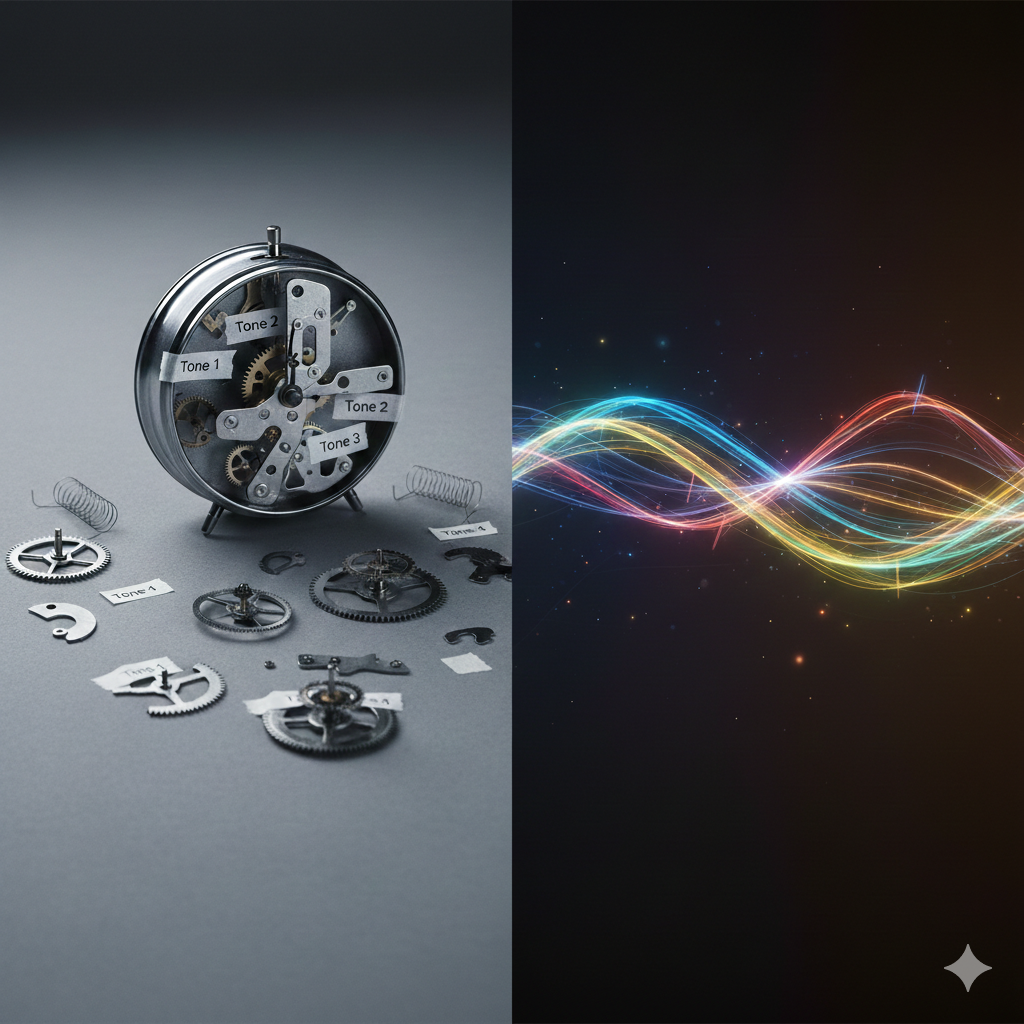
Most Chinese learners do not develop this anxiety in real conversations; they develop it in classrooms, apps, and correction-heavy environments. You repeat a word, the teacher stops you, the tone is corrected, the syllable is isolated, and you repeat again.
While this process is meant to help, it trains something unintended. It teaches learners that speaking equals evaluation, sound equals correctness, and correctness comes before meaning. Consequently, learners begin to self-monitor aggressively, listening to themselves while speaking and interrupting their own sentences. They hesitate not because they are confused, but because they are checking themselves mid-air. This is exhausting and slowly disconnects pronunciation from communication.
What Learners Think Native Speakers Hear
Many learners imagine native speakers listening like examiners. They picture people registering every tone error, noticing every vowel distortion, and silently judging the speaker’s level. This imagined audience is hyper-attentive, precise, and unforgiving.
So, learners prepare accordingly: they speak cautiously, simplify their thoughts, avoid unfamiliar words, and retreat into "safe" expressions. Ironically, this carefulness often makes their speech sound less natural, not because of pronunciation, but because of hesitation.
What Native Speakers Are Actually Listening For
Here is the quiet truth most learners are never told: Native speakers are not tracking your tones syllable by syllable. Instead, they are listening for your intent, rhythm, familiar sound patterns, and contextual meaning.
Yes, tones matter, but they matter within a system of expectation, not in isolation. When a learner says something with imperfect tones, native speakers rarely think, “That tone was wrong.” Instead, they think, “Oh, they mean this,” or “That word, but with an accent.” The brain fills in gaps remarkably well, especially when context is clear. What feels like a catastrophic error to the learner often registers as a minor pronunciation variation to the listener—and crucially, it is not funny.
The Fear of Being Laughed At
Many learners carry a deep, unspoken fear: “What if I sound ridiculous?” This fear is understandable because language is identity-sensitive and your voice feels personal. But in real-life Chinese environments, laughter is rarely about mockery. When laughter happens, it is usually a sign of surprise, warmth, recognition, or encouragement.
More often than not, it is social, not evaluative. Most native speakers remember their own struggles with English or other languages; they recognize effort immediately and hear intention before perfection. Silence, on the other hand, often creates more distance than mispronunciation ever could.
Why This Anxiety Persists Even at Higher Levels
Even advanced learners feel this tension. They understand complex topics and follow fast conversations, but when it is their turn to speak, pronunciation anxiety tightens their throat. This is because the fear is not about ability; it is about visibility. Pronunciation is the most public part of language—you cannot hide it or revise it; it happens in real time. So learners overprotect it, and that protection slowly turns into restraint.
A Reframe That Changes Everything
Chinese pronunciation is not a test you pass or fail; it is a coordination system. Native speakers are not waiting for perfection; they are waiting for enough signal to understand you. Once meaning lands, minor inaccuracies dissolve into the background. This does not mean pronunciation does not matter; it means it does not matter the way learners think it does. The real danger is not sounding wrong—it is letting fear reduce your presence.
How Native Speakers Understand You Even When Your Tones Are Wrong
One of the most surprising discoveries many Chinese learners make is that communication works far more often than they expect. They remember the mistakes vividly, while the listener remembers the meaning. This gap between perception and reality is at the heart of pronunciation anxiety.

Native Speakers Do Not Process Speech One Syllable at a Time
Learners often imagine listening as a linear process: sound → tone → syllable → word → meaning. This is how pronunciation is taught, but it is not how language is understood. Native speakers process speech in chunks. They anticipate patterns and predict intent before the sentence ends. By the time you finish saying a phrase, the listener’s brain has already guessed the topic, narrowed possible meanings, and filled in missing information. Tones are part of this system, but they are not the gatekeepers. Context leads; sound follows.
Why Context Carries More Weight Than Perfect Tones
Consider this simple example: You are in a restaurant and you say something that sounds like “wǒ yào yí ge jī dàn.” Even if the tones are imperfect, the situation limits the possibilities. No one thinks you are making a philosophical statement; they think, “Oh, they want an egg.” Context compresses meaning and protects communication. This is why native speakers rarely freeze when learners mispronounce words—their brains already know what is likely.
Accent vs Error: A Distinction Learners Rarely Make
From the learner’s perspective, a tone error feels like a failure. From the listener’s perspective, it often sounds like an accent. Native speakers subconsciously separate systematic pronunciation patterns from actual confusion. If your tones are consistently “off” in a recognizable way, the brain adapts quickly. After a few sentences, your pronunciation becomes predictable, and once it is predictable, it becomes understandable. This is why conversations often get easier after the first minute—the listener tunes in, not out.
Why Clarification Is Not Rejection
Sometimes, native speakers ask “你是说……吗?” or repeat your word with a corrected tone. Learners often interpret this as “I failed” or “They didn’t understand me.” But clarification is not criticism; it is cooperation. Native speakers want the conversation to continue. They are investing effort and adjusting to you. Silence would be rejection; engagement is the opposite.
The Listener Is Working With You, Not Against You
Communication is a shared task. When a learner speaks, the listener does not sit back and evaluate; they lean in. They use visual cues, shared knowledge, timing, and emotional tone. Even broken sentences can carry clear meaning when intent is aligned. This is why gestures, pauses, and facial expressions matter so much in Chinese—they supplement sound. Pronunciation lives inside this broader system; it is not standing alone on a stage.
Why Tone Anxiety Is Really About Identity, Not Sound
Most learners believe their fear comes from tones. It doesn’t. It comes from exposure.
Speaking Chinese Feels Like Stepping Into the Open
When you speak your native language, you are protected. Your identity is stable and your competence is assumed. When you speak Chinese, that protection disappears. Your voice sounds unfamiliar, your rhythm changes, and your personality feels distorted. You are suddenly visible—not as “yourself,” but as a learner version of yourself. Tone anxiety grows in this gap.
Why Pronunciation Feels More Personal Than Grammar
Grammar mistakes are abstract; they live on paper and can be corrected quietly. Pronunciation mistakes come from your body—your mouth, your breath, your timing. You cannot hide them or pause to fix them; they happen in public. This is why tone errors feel embarrassing in a way grammar never does. They feel like you made the mistake, not your sentence.
Control Kills Natural Rhythm
Tone accuracy depends on flow, but anxiety demands control. So learners slow down unnaturally, isolate syllables, over-emphasize tones, and flatten sentence rhythm. This creates speech that is technically careful but emotionally rigid. Native speakers feel the tension, even if they understand the words. The issue is not that the tones are wrong; it is that the sentence has no "spine."
What Actually Improves Your Pronunciation
By now, one thing should be clear: Your Chinese pronunciation is not failing because you are careless; it is struggling because you are trying too hard to be safe.

The Real Goal Is Not Accuracy; It Is Stability
Clear Chinese comes from stability, not perfection. Stability means your tone patterns are consistent, your sentence rhythm is predictable, your voice is relaxed, and your intention is readable. A stable third tone that is slightly off is more understandable than a perfect one delivered with fear. Listeners forgive deviation, but they struggle with hesitation.
Why Rhythm Matters More Than Individual Tones
Chinese is not spoken tone-by-tone; it is spoken in chunks. Native speakers hear tone combinations, stress patterns, and the rise and fall across phrases. Learners who obsess over single syllables often lose the larger melody. Confidence does not come after good pronunciation; it comes before it. When you allow yourself to sound imperfect, your pronunciation improves.
Conclusion
Chinese pronunciation was never meant to be a gate that locks you out. It is a coordination system, not a purity test. It adjusts, compensates, and relies on context and shared patience. Most native speakers are not listening for perfection; they are listening for continuity. Once you understand this, you stop guarding every syllable. Your rhythm stabilizes, and your voice settles into the language instead of hovering outside it. The language was never asking you to prove yourself; it was asking you to stay in the conversation.
Frequently Asked Questions
Yes, absolutely. Native speakers process speech in contextual chunks rather than isolated syllables. Just as English speakers understand a heavy accent through context, Chinese listeners use your sentence structure and the situation to fill in the gaps. Communication is a collaborative effort, not a purity test.
This is often due to the "fragile tones" myth taught in classrooms—the idea that one wrong pitch changes "mother" to "horse." Because pronunciation is physical and public, it feels like an exposure of your identity. This pronunciation anxiety is a natural response to high-stakes learning environments.
Yes. A steady, natural sentence rhythm is often more intelligible than "perfect" tones delivered with hesitation. When you obsess over single syllables, you lose the "spine" of the sentence. Focusing on the overall melody of the phrase helps native speakers predict your meaning more effectively.
Most native speakers hear an accent as a sign of courage and curiosity, not failure. They are listening for your intent, not tracking your errors. In real-life interactions, a minor tone deviation is viewed as a pronunciation variation rather than a catastrophic mistake.
Realize that laughter in Chinese culture is often social and encouraging, rather than mocking. Native speakers appreciate the effort it takes to learn their language. The best way to improve is to prioritize participation over perfection; once you stop over-monitoring every sound, your voice relaxes and your clarity naturally improves.