
The Meaning and Cultural Significance of the Chinese Character "阴"
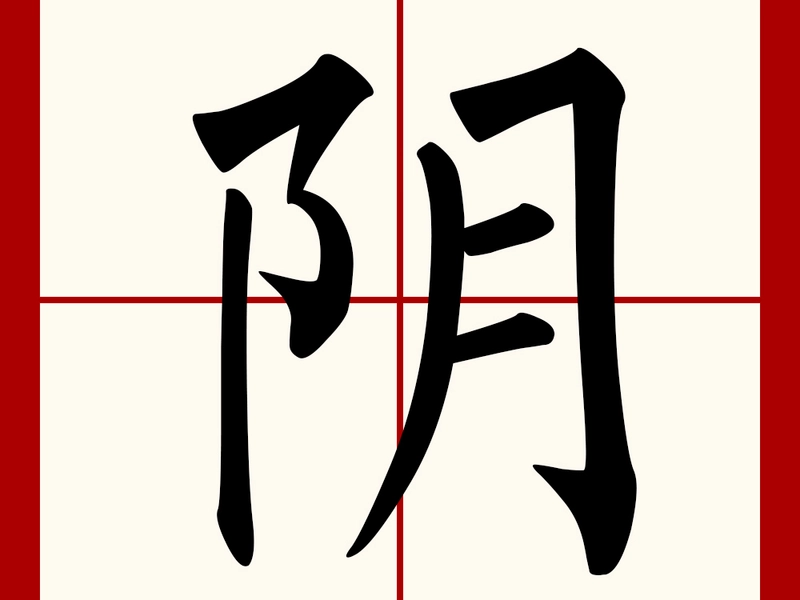
Simplified: 阴
Traditional: 陰
Pinyin: yīn
Meaning: shade; shadow; feminine; negative; the moon; hidden
The Chinese character "阴" (yīn) represents one of the most fundamental concepts in Chinese philosophy and cosmology - the passive, receptive, and hidden aspects of existence. As one half of the primordial duality of yin-yang, it embodies qualities such as darkness, cold, moisture, and inwardness. Understanding "阴" is essential for grasping the Chinese worldview, traditional medicine, and the dynamic balance that underlies all natural phenomena.
Basic Meaning of "阴"
The character "阴" in its traditional form "陰" reveals its etymological roots. It is composed of two main elements: the left radical 阝, which is a variant of 阜 (fù) meaning "mound" or "hill," and the right component 侌 (yīn), which itself represents the concept of "cloudy" or "overcast." This combination powerfully depicts the shady side of a hill - the area blocked from sunlight. The simplified form "阴" replaces the complex "侌" with "月" (yuè), meaning "moon," further emphasizing the association with darkness and the lunar principle. This character perfectly captures the essence of being obscured, sheltered, or removed from direct exposure.
Common Combinations with "阴"
- Natural Phenomena:
- 阴天 (yīn tiān) - cloudy day
- 阴影 (yīn yǐng) - shadow; shade
- 阴凉 (yīn liáng) - shady and cool
- 阴雨 (yīn yǔ) - overcast and rainy
- Philosophical & Medical Concepts:
- 阴阳 (yīn yáng) - yin and yang
- 阴虚 (yīn xū) - yin deficiency (in TCM)
- 阴气 (yīn qì) - yin energy
- 阴功 (yīn gōng) - hidden merit
- Anatomy & Biology:
- 阴道 (yīn dào) - vagina
- 阴部 (yīn bù) - private parts
- 阴蒂 (yīn dì) - clitoris
- Psychological & Social:
- 阴谋 (yīn móu) - conspiracy; plot
- 阴险 (yīn xiǎn) - sinister; treacherous
- 阴郁 (yīn yù) - gloomy; melancholy
These combinations demonstrate how "阴" spans natural observation, philosophical principles, medical theory, and human psychology.
Extended Meanings of "阴"
Beyond its core meanings, "阴" extends into several important domains:
- Geographical Reference: Indicates the north side of mountains or south side of rivers
- Temporal Quality: Associated with night, winter, and declining phases
- Gender Attributes: Represents feminine qualities and principles
- Moral Character: Describes hidden, scheming, or treacherous nature
- Spiritual Realm: Connected to the underworld and ancestral spirits
Cultural and Symbolic Significance
In Chinese culture, "阴" carries profound philosophical and practical significance:
- Cosmological Foundation: The concept of yin-yang represents the fundamental Chinese understanding of the universe as composed of complementary opposites that interact to create all phenomena.
- Medical Framework: In Traditional Chinese Medicine, health is maintained by balancing yin and yang energies in the body. Yin represents the cooling, moistening, and nourishing aspects.
- Gender Philosophy: Yin is associated with feminine qualities - receptivity, intuition, nurturing, and inward focus - which are valued as essential complements to masculine yang.
- Environmental Wisdom: Traditional Chinese architecture and geomancy (feng shui) carefully consider yin aspects like shade, moisture, and protection in siting buildings.
- Literary Symbolism: In poetry and literature, yin elements often represent melancholy, reflection, and the mysterious aspects of human experience.
Example Sentences
- Natural Context:
- 今天阴天,可能下雨。
(It's cloudy today; it might rain.) - 大树下有一片阴凉的地方。
(There's a shady spot under the big tree.)
- 今天阴天,可能下雨。
- Philosophical Context:
- 阴阳平衡是健康的关键。
(The balance of yin and yang is key to health.) - 月亮属阴,太阳属阳。
(The moon belongs to yin, the sun belongs to yang.)
- 阴阳平衡是健康的关键。
- Psychological Context:
- 他这个人很阴险,要小心。
(He is a sinister person; be careful.) - 房间里 atmosphere阴郁。
(The atmosphere in the room is gloomy.)
- 他这个人很阴险,要小心。
Related Vocabulary
| Chinese | Pinyin | English |
|---|---|---|
| 阴 | yīn | shade; yin; feminine |
| 阴阳 | yīn yáng | yin and yang |
| 阴天 | yīn tiān | cloudy day |
| 阴影 | yīn yǐng | shadow |
| 阴谋 | yīn móu | conspiracy |
| 阴险 | yīn xiǎn | sinister |
| 阴凉 | yīn liáng | shady and cool |
| 阴虚 | yīn xū | yin deficiency |
FAQ: Common Questions About the Chinese Character "阴"
Q1: What's the exact relationship between "阴" and "阳"?
A: "阴" and "阳" are complementary opposites that together form a complete whole. Yin represents darkness, cold, moisture, femininity, and passivity, while yang represents light, heat, dryness, masculinity, and activity. Nothing is purely yin or yang - each contains the seed of the other.
Q2: Why is "阴" sometimes used in negative contexts like "阴谋"?
A: While yin itself is not negative in philosophical contexts, its qualities of being hidden, inward, and obscure can be associated with secrecy and deception in human behavior. This reflects how natural characteristics can take on moral connotations in social contexts.
Q3: How important is the concept of "阴" in Traditional Chinese Medicine?
A: Extremely important. Yin represents the substantial, nourishing, and cooling aspects of the body. Conditions like "阴虚" (yin deficiency) are major diagnostic categories, and treatment often aims to nourish yin to restore balance with yang.
Q4: What's the best way to understand and remember this character?
A: Connect it to tangible experiences - think of the cool, shady side of a hill where the sun doesn't reach. Remember that it combines "hill" and "moon" - both associated with shade and darkness. Understanding yin as one essential half of the universal yin-yang duality will help you grasp its profound significance in Chinese thought.