
The Meaning and Cultural Significance of the Chinese Character "阳"
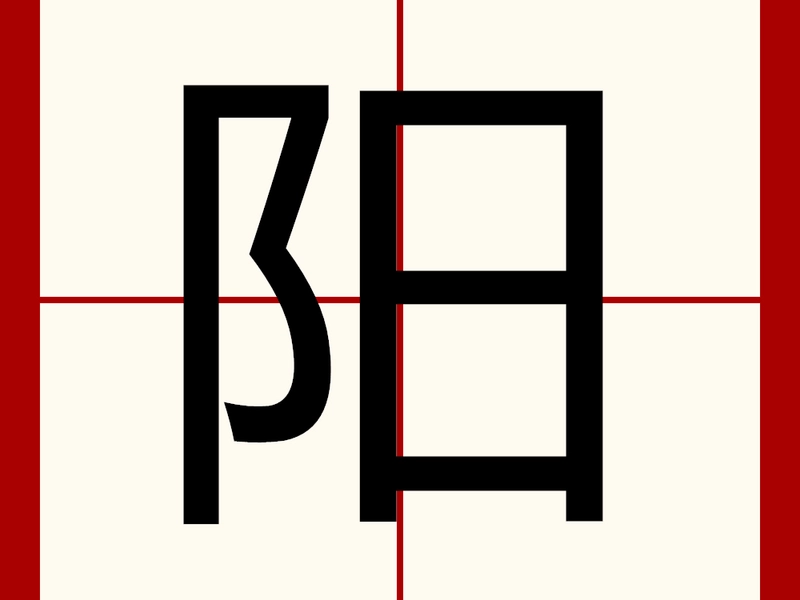
Simplified: 阳
Traditional: 陽
Pinyin: yáng
Meaning: sun; sunlight; masculine; positive; the male principle; in full view
The Chinese character "阳" (yáng) represents one of the most fundamental and vital concepts in Chinese philosophy and daily life - the active, creative, and luminous aspects of existence. As the complementary opposite of "阴" (yīn) in the yin-yang duality, it embodies qualities such as light, warmth, activity, and outward expression. Understanding "阳" is essential for grasping the Chinese worldview, traditional medicine, and the dynamic balance that characterizes all natural phenomena.
Basic Meaning of "阳"
The character "阳" in its traditional form "陽" clearly reveals its etymological origins. It is composed of two main elements: the left radical 阝, which is a variant of 阜 (fù) meaning "mound" or "hill," and the right component 昜 (yáng), which represents "sunlight" or "spreading light." This combination vividly depicts the sunny side of a hill - the area bathed in direct sunlight. The simplified form "阳" replaces the complex "昜" with "日" (rì), meaning "sun," making the solar association even more explicit. This character perfectly captures the essence of being illuminated, exposed, and energized by light.
Common Combinations with "阳"
Natural Phenomena:
太阳 (tài yáng) - sun
阳光 (yáng guāng) - sunlight; sunshine
阳台 (yáng tái) - balcony (sun platform)
阳面 (yáng miàn) - sunny side
Philosophical & Medical Concepts:
阴阳 (yīn yáng) - yin and yang
阳气 (yáng qì) - yang energy
阳虚 (yáng xū) - yang deficiency (in TCM)
阳刚 (yáng gāng) - masculine vigor
Geography & Direction:
山阳 (shān yáng) - south side of a mountain
阳坡 (yáng pō) - sunny slope
Positive Attributes:
阳历 (yáng lì) - solar calendar
阳性 (yáng xìng) - positive (in medical tests)
开朗阳光 (kāi lǎng yáng guāng) - cheerful and sunny (disposition)
Extended Meanings of "阳"
Beyond its core meanings, "阳" extends into several important domains:
- Geographical Reference: Indicates the south side of mountains or north side of rivers
- Temporal Quality: Associated with day, summer, and growing phases
- Gender Attributes: Represents masculine qualities and principles
- Medical Status: Denotes positive test results or active conditions
- Spiritual Quality: Connected to vitality and life force
Cultural and Symbolic Significance
In Chinese culture, "阳" carries profound philosophical and practical significance:
- Cosmological Foundation: The concept of yin-yang represents the fundamental Chinese understanding of the universe as composed of complementary opposites that interact to create all phenomena.
- Medical Framework: In Traditional Chinese Medicine, health is maintained by balancing yin and yang energies in the body. Yang represents the warming, activating, and energizing aspects.
- Gender Philosophy: Yang is associated with masculine qualities - activity, assertiveness, creativity, and outward focus - which are valued as essential complements to feminine yin.
- Environmental Wisdom: Traditional Chinese architecture and geomancy (feng shui) carefully consider yang aspects like sunlight, warmth, and exposure in siting buildings.
- Positive Symbolism: In cultural contexts, yang represents all that is positive, active, and life-affirming, making it an auspicious concept.
Example Sentences
Natural Context:
今天阳光很好,我们出去散步吧。
(The sunlight is beautiful today; let's go for a walk.)
太阳从东方升起。
(The sun rises from the east.)
Philosophical Context:
阴阳调和是中医的基本理论。
(The harmony of yin and yang is the basic theory of Traditional Chinese Medicine.)
白天属阳,夜晚属阴。
(Daytime belongs to yang, nighttime belongs to yin.)
Personal Context:
他的性格很阳光,大家都喜欢他。
(He has a sunny disposition; everyone likes him.)
多晒太阳对身体好。
(Getting plenty of sunshine is good for health.)
Related Vocabulary
| Chinese | Pinyin | English |
|---|---|---|
| 阳 | yáng | sun; yang; masculine |
| 太阳 | tài yáng | sun |
| 阳光 | yáng guāng | sunlight; sunshine |
| 阴阳 | yīn yáng | yin and yang |
| 阳台 | yáng tái | balcony |
| 阳性 | yáng xìng | positive (test result) |
| 阳气 | yáng qì | yang energy |
| 阳刚 | yáng gāng | masculine vigor |
FAQ: Common Questions About the Chinese Character "阳"
Q1: What's the exact relationship between "阳" and "阴"?
A: "阳" and "阴" are complementary opposites that together form a complete whole. Yang represents light, warmth, activity, masculinity, and outward expression, while yin represents darkness, coolness, receptivity, femininity, and inwardness. Each contains the seed of the other and transforms into its opposite in a continuous cycle.
Q2: Why is "阳" considered positive in Chinese culture?
A: Yang is associated with life-giving qualities like sunlight, warmth, growth, and activity - all essential for survival and flourishing. However, in Chinese philosophy, neither yang nor yin is superior; both are necessary and valuable in their proper balance.
Q3: How important is the concept of "阳" in Traditional Chinese Medicine?
A: Extremely important. Yang represents the warming, activating, and energizing functions of the body. Conditions like "阳虚" (yang deficiency) are major diagnostic categories, and treatment often aims to warm and strengthen yang to restore balance with yin.
Q4: What's the best way to understand and remember this character?
A: Connect it to tangible experiences - think of the warm, sunny side of a hill bathed in sunlight. Remember that it combines "hill" and "sun" - both associated with light and warmth. Understanding yang as one essential half of the universal yin-yang duality will help you grasp its profound significance in Chinese thought.