
The Meaning and Cultural Significance of the Chinese Character "重"
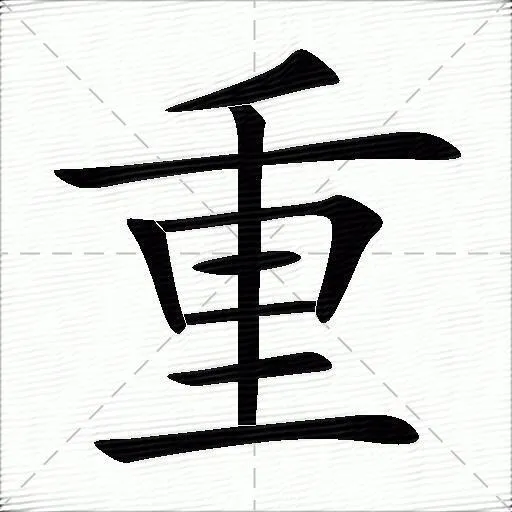
Simplified: 重
Traditional: 重
Pinyin: zhòng (heavy; important), chóng (again; double)
Meaning: heavy; weighty; important; to repeat; again; double
The Chinese character "重" (zhòng/chóng) embodies two profound and seemingly contrasting concepts: substantial weight and meaningful repetition. It represents both the physical quality of heaviness and the abstract notions of significance and recurrence. Understanding "重" is essential for discussing matters of gravity, importance, and cyclical patterns in Chinese language, philosophy, and culture.
Basic Meaning of "重"
The character "重" presents a fascinating case where one character carries two distinct but related meanings, distinguished by pronunciation. Its earliest form in bronze inscriptions depicted a person standing on the ground, bearing a heavy burden on their back. This powerful imagery of carrying weight directly conveys the concepts of heaviness (zhòng) and, by extension, importance. The meaning of repetition (chóng) likely emerged from the idea of one load piled upon another, or the repeated act of bearing burdens.
Common Combinations with "重"
With reading "zhòng" (Heavy/Important):
- 重要 (zhòng yào) - important; significant
- 重视 (zhòng shì) - to value; to attach importance to
- 重量 (zhòng liàng) - weight; heaviness
- 严重 (yán zhòng) - serious; severe
- 尊重 (zūn zhòng) - to respect (to give weight to)
- 重心 (zhòng xīn) - center of gravity; heart (of a matter)
With reading "chóng" (Again/Double):
- 重新 (chóng xīn) - again; anew
- 重复 (chóng fù) - to repeat; repetition
- 重叠 (chóng dié) - to overlap; to superimpose
- 双重 (shuāng chóng) - double; dual
- 重阳节 (Chóng Yáng Jié) - Double Ninth Festival
These combinations show how "重" forms the core of words related to significance, gravity, and recurrence across various contexts.
Extended Meanings of "重"
Beyond its core meanings, "重" extends into several important domains:
- Moral Weight: Describes serious character or deep responsibility
- Strategic Importance: Used in military and strategic contexts (重地 - strategic point)
- Economic Value: Appears in financial terms (重金 - huge sum of money)
- Layered Complexity: Indicates multiple layers or levels (重重困难 - layer upon layer of difficulties)
Cultural and Symbolic Significance
In Chinese culture, "重" carries deep philosophical and social significance:
- Confucian Values: The concept of "重" appears in Confucian teachings about the importance of serious demeanor and thoughtful action, as in "君子不重则不威" (If the gentleman isn't serious, he won't command respect).
- Family and Tradition: Chinese culture places "重" on family bonds and ancestral traditions, evident in terms like 重视家庭 (valuing family).
- Cyclical Worldview: The meaning of "chóng" (repetition) reflects the traditional Chinese cyclical view of time and history, where patterns recur and renew.
- Balance and Stability: The physical concept of 重心 (center of gravity) extends metaphorically to seeking balance and stability in life and society.
- Festival Culture: 重阳节 (Double Ninth Festival) embodies the cultural significance of the "double" meaning, celebrated as a day for respecting the elderly and climbing mountains.
Example Sentences
With "zhòng":
- 这是一个重要的决定。
(This is an important decision.) - 这个箱子的重量是多少?
(What is the weight of this box?) - 情况非常严重。
(The situation is very serious.)
With "chóng":
- 我需要重新考虑这个问题。
(I need to reconsider this problem.) - 请不要再重复这个错误。
(Please don't repeat this mistake again.) - 重阳节是中国的传统节日。
(The Double Ninth Festival is a traditional Chinese holiday.)
Related Vocabulary
| Chinese | Pinyin | English |
|---|---|---|
| 重 | zhòng/chóng | heavy/again |
| 重要 | zhòng yào | important |
| 重量 | zhòng liàng | weight |
| 重视 | zhòng shì | to value |
| 重新 | chóng xīn | again; anew |
| 重复 | chóng fù | to repeat |
| 严重 | yán zhòng | serious |
| 尊重 | zūn zhòng | to respect |
FAQ: Common Questions About the Chinese Character "重"
Q1: How do I know when to read "重" as "zhòng" or "chóng"?
A: The reading is determined by context. When the meaning relates to weight, importance, or seriousness, read "zhòng." When it indicates repetition, duplication, or "again," read "chóng." Memorizing common word combinations is the most reliable method.
Q2: What's the difference between "重要" and "主要"?
A: Both can be translated as "important," but "重要" emphasizes significance and consequence (重要会议 - important meeting), while "主要" means "primary" or "main" (主要原因 - main reason).
Q3: What's the cultural significance of the Double Ninth Festival (重阳节)?
A: This festival on the 9th day of the 9th lunar month emphasizes the "chóng" (double) meaning. It's a day for mountain climbing (for protection), enjoying chrysanthemums, and most importantly, honoring the elderly - reflecting the cultural value of respecting seniority.
Q4: What's an effective way to remember this character and its meanings?
A: Remember the original pictograph of a person carrying a heavy burden - this explains the "zhòng" readings. For the "chóng" meaning, think of piling one burden upon another, creating repetition. The character itself can be seen as composed of "千" (thousand) and "里" (mile) - a journey of a thousand miles is both "heavy" with importance and may need to be done "again" if one fails.