The Meaning and Cultural Significance of the Chinese Character 退
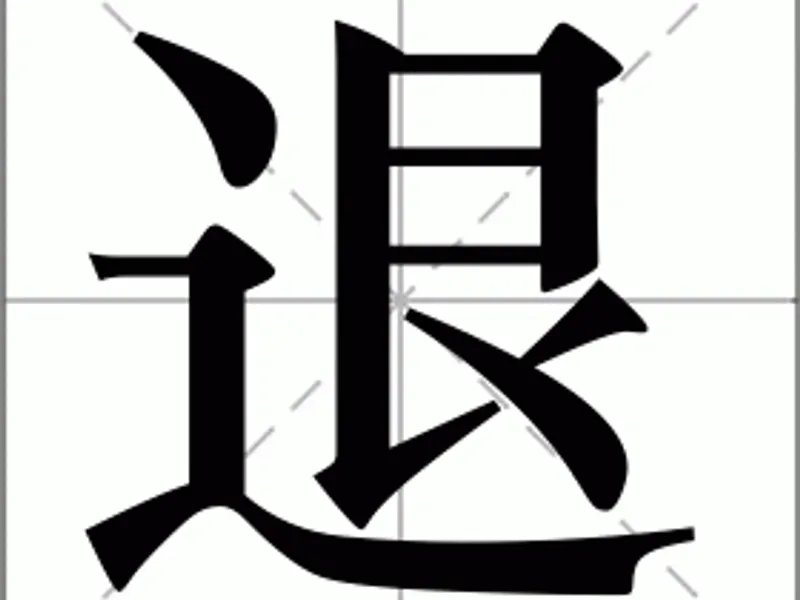
Simplified: 退
Traditional: 退
Pinyin: tuì
Meaning: to retreat; to withdraw; to decline; to refund; to fade
The Chinese character 退 (tuì) represents the concept of backward movement, withdrawal, and retreat. As the direct antonym of 进 (jìn, advance), it encompasses both physical withdrawal and abstract concepts of decline and reversal. Understanding 退 provides crucial insight into Chinese strategic thinking, philosophical wisdom, and the cultural appreciation for strategic withdrawal as a form of advancement.
Basic Meaning of 退
The character 退 in its traditional form maintains a clear and logical structure. It is composed of two primary components: the radical 辶 (chuò), which is a variant of 辵 meaning "to walk" or "movement," and 艮 (gèn), which represents "stopping" or "limit." This combination vividly depicts the idea of moving away from a limit or boundary or walking backward from a forward position. The character perfectly captures the concept of reversal and withdrawal from an advanced position. Some interpretations also suggest that "艮" may have originally represented a looking-backward gesture, reinforcing the notion of moving away from something.
Common Combinations with 退
- Physical Movement:
- 后退 (hòu tuì) - to move backward; to retreat
- 退出 (tuì chū) - to withdraw from; to exit
- 退步 (tuì bù) - to step backward; to regress
- 进退 (jìn tuì) - advance and retreat
- Social & Economic:
- 退休 (tuì xiū) - to retire
- 退学 (tuì xué) - to drop out of school
- 退货 (tuì huò) - to return goods
- 退款 (tuì kuǎn) - refund
- Quality & State:
- 衰退 (shuāi tuì) - to decline; to deteriorate
- 退色 (tuì sè) - to fade; to lose color
- 退化 (tuì huà) - to degenerate; degeneration
- Military & Strategy:
- 撤退 (chè tuì) - to withdraw; retreat
- 退兵 (tuì bīng) - to withdraw troops
These combinations demonstrate how 退 forms the core of words related to backward movement, withdrawal, and decline across various contexts.
Extended Meanings of 退
Beyond its core meanings, 退 extends into several important domains:
- Career Transition: Retirement and withdrawal from active work
- Academic Withdrawal: Leaving educational institutions
- Commercial Reversal: Returning goods and refunding money
- Biological Regression: Evolutionary degeneration
- Strategic Withdrawal: Tactical retreat in conflict situations
Cultural and Symbolic Significance
In Chinese culture, 退 carries profound philosophical and strategic significance:
- Strategic Wisdom: The concept of "以退为进" (retreat in order to advance) represents a sophisticated strategic approach where temporary withdrawal is used to create better conditions for future advancement.
- Daoist Philosophy: Daoism values the soft and yielding, as expressed in "柔弱胜刚强" (the soft and weak overcome the hard and strong). Strategic retreat aligns with this principle of achieving goals through apparent yielding.
- Confucian Moderation: The phrase "进退有度" (knowing the proper measure in advancing and retreating) reflects the Confucian value of appropriate action according to circumstances.
- Military Strategy: Sun Tzu's "The Art of War" emphasizes the importance of knowing when to retreat, stating that there are roads not to follow and armies not to attack.
- Modern Applications: In contemporary business and politics, the ability to make strategic retreats is often seen as a mark of wise leadership rather than weakness.
Example Sentences
- Movement Context:
- 请后退一步。
(Please step back one step.) - 军队决定撤退。
(The army decided to retreat.)
- 请后退一步。
- Social Context:
- 他去年退休了。
(He retired last year.) - 如果不合适,可以退货。
(If it doesn't fit, you can return the goods.)
- 他去年退休了。
- Quality Context:
- 他的学习退步了。
(His studies have regressed.) - 这种布料不容易退色。
(This kind of fabric doesn't fade easily.)
- 他的学习退步了。
Related Vocabulary
| Chinese | Pinyin | English |
|---|---|---|
| 退 | tuì | to retreat; to withdraw |
| 退休 | tuì xiū | to retire |
| 后退 | hòu tuì | to move backward |
| 退出 | tuì chū | to withdraw from |
| 退货 | tuì huò | to return goods |
| 退步 | tuì bù | to regress |
| 撤退 | chè tuì | to withdraw |
| 进退 | jìn tuì | advance and retreat |
FAQ: Common Questions About the Chinese Character 退
Q1: What's the difference between 退 and "回" when meaning "return"?
A: 退 emphasizes withdrawal or reversal from a position (退后 - move backward), while "回" focuses on returning to an original point (回家 - return home). 退 often carries a sense of undoing or withdrawing, while "回" is more neutral.
Q2: Is 退 always negative in Chinese culture?
A: Not at all. While 退 can indicate decline or regression, it's also valued as a strategic wisdom. The concept of "以退为进" (retreating in order to advance) is highly respected in Chinese philosophy and military strategy.
Q3: How is "退休" (retirement) viewed in Chinese society?
A: Traditionally, "退休" represents a respected transition to a more leisurely life stage. However, modern attitudes are changing, with many seeing it as an opportunity for new pursuits rather than complete withdrawal from active life.
Q4: What's an effective way to remember this character?
A: Remember that 退 combines movement ("辶") with stopping/limit ("艮") - suggesting moving away from a boundary or limit. Think of walking backward from a forward position. This visual of reversing direction helps capture the character's essence of withdrawal and retreat.