
The Meaning and Cultural Significance of the Chinese Character 进
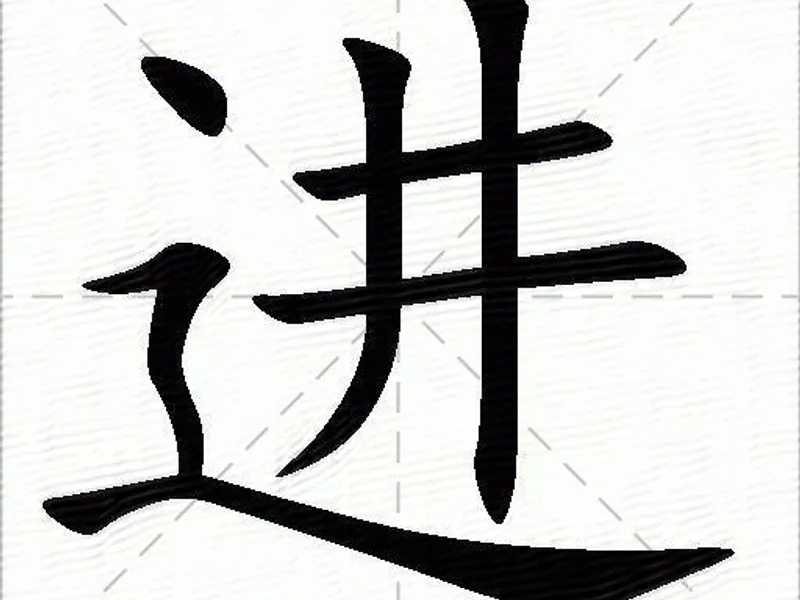
Simplified: 进
Traditional: 進
Pinyin: jìn
Meaning: to advance; to enter; to progress; to promote
The Chinese character 进 (jìn) represents the fundamental concept of forward movement, progress, and entry. It embodies the ideas of advancement, improvement, and penetration into new realms. Understanding 进 is essential for grasping Chinese values related to progress, development, and the dynamic nature of movement in both physical and abstract contexts.
Basic Meaning of 进
The character 进 in its traditional form "進" reveals a clear and logical structure. It is composed of two primary components: the radical 辶 (chuò), which is a variant of 辵 meaning "to walk" or "movement," and 隹 (zhuī), meaning "short-tailed bird." This combination vividly depicts a bird moving forward. Birds naturally move ahead step by step as they walk, rarely retreating. This imagery perfectly captures the character's core meaning of progressive forward movement. The simplified form 进 replaces "隹" with "井" (jǐng, well), which primarily serves as a phonetic component while possibly suggesting the idea of moving toward a specific destination like a well.
Common Combinations with 进
- Physical Movement:
- 前进 (qián jìn) - to advance; forward movement
- 进入 (jìn rù) - to enter; to go into
- 进口 (jìn kǒu) - entrance; import
- 进出 (jìn chū) - to enter and exit
- Development & Improvement:
- 进步 (jìn bù) - progress; improvement
- 先进 (xiān jìn) - advanced; sophisticated
- 促进 (cù jìn) - to promote; to advance
- 改进 (gǎi jìn) - to improve; improvement
- Social & Economic:
- 进攻 (jìn gōng) - to attack; offensive
- 进化 (jìn huà) - evolution
- 进展 (jìn zhǎn) - progress; development
- Modern Usage:
- 推进 (tuī jìn) - to propel; to push forward
- 进程 (jìn chéng) - process; course
These combinations demonstrate how 进 forms the core of words related to forward motion, development, and improvement across various domains.
Extended Meanings of 进
Beyond its core meanings, 进 extends into several important domains:
- Academic Advancement: Progress in studies or learning
- Technological Development: Advancement in technology
- Economic Growth: Economic progress and development
- Social Mobility: Upward movement in social status
- Sports Context: Forward movement in games or competitions
Cultural and Symbolic Significance
In Chinese culture, 进 carries profound philosophical and social significance:
- Progressive Values: The concept of "进步" (progress) reflects the Chinese emphasis on continuous improvement and development, both personally and socially.
- Educational Emphasis: "进取心" (enterprising spirit) is highly valued in educational contexts, encouraging students to constantly advance their knowledge and skills.
- Modernization Drive: In contemporary China, "改革开放" (reform and opening-up) has made "进步" a key societal value, driving economic and technological advancement.
- Military Strategy: The concept of "进攻" (offense) in military thought reflects the strategic importance of taking initiative and moving forward.
- Balance Philosophy: While emphasizing advancement, Chinese culture also values the balance between 进 (advancing) and 退 (retreating), as expressed in "进退有度" (knowing when to advance and when to retreat).
Example Sentences
- Movement Context:
- 请进房间。
(Please enter the room.) - 车辆前进缓慢。
(The vehicles are advancing slowly.)
- 请进房间。
- Development Context:
- 他的中文有很大的进步。
(His Chinese has made great progress.) - 这是一个先进的技术。
(This is an advanced technology.)
- 他的中文有很大的进步。
- Economic Context:
- 我们需要促进经济发展。
(We need to promote economic development.) - 这个项目进展顺利。
(This project is progressing smoothly.)
- 我们需要促进经济发展。
Related Vocabulary
| Chinese | Pinyin | English |
|---|---|---|
| 进 | jìn | to advance; to enter |
| 进步 | jìn bù | progress |
| 进入 | jìn rù | to enter |
| 先进 | xiān jìn | advanced |
| 前进 | qián jìn | to advance |
| 促进 | cù jìn | to promote |
| 进口 | jìn kǒu | entrance; import |
| 进攻 | jìn gōng | to attack |
FAQ: Common Questions About the Chinese Character 进
Q1: What's the difference between 进 and "入"?
A: Both can mean "to enter," but 进 emphasizes the action of moving inward, while "入" focuses more on the state of being inside. 进 is often used for physical movement, while "入" can be more abstract.
Q2: How is "进步" used in educational contexts?
A: "进步" is commonly used to describe academic improvement or learning development. Teachers often use it to encourage students, as in "你很有进步" (You've made good progress).
Q3: Why is the concept of 进 so important in modern Chinese society?
A: 进 represents the values of development and modernization that are central to contemporary China's national goals. The character embodies the spirit of continuous improvement driving China's rapid development.
Q4: What's an effective way to remember this character?
A: Remember the traditional form showing a bird ("隹") walking forward ("辶") - this perfectly captures the idea of progressive movement. For the simplified form, think of moving toward a well ("井") as a destination. The character fundamentally represents purposeful forward motion toward a goal.