
The Meaning and Cultural Significance of the Chinese Character "轻"
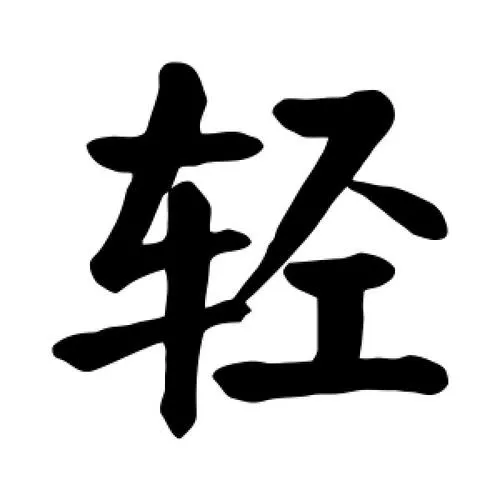
Simplified: 轻
Traditional: 輕
Pinyin: qīng
Meaning: light; lightweight; unimportant; gentle; easy; to belittle
The Chinese character "轻" (qīng) represents the concept of lightness in both physical and abstract senses. As the direct antonym of "重" (zhòng, heavy), it is essential for describing physical weight, insignificance, ease of action, and gentle qualities. Understanding "轻" provides crucial balance in Chinese expression, enabling descriptions ranging from physical properties to moral judgments and emotional states.
Basic Meaning of "轻"
The character "轻" is a pictophonetic character composed of two elements: the radical 车(車, chē) meaning "cart" or "vehicle," and 巠 (jīng), which serves primarily as a phonetic component. The character originally related to light carriages or carts - vehicles designed for speed and agility rather than carrying heavy loads. This core imagery of lightweight, nimble transportation effectively conveys the concepts of lightness, ease, and insignificance that define this character's meanings.
Common Combinations with "轻"
Physical Properties:
- 轻重 (qīng zhòng) - light and heavy; weight
- 轻松 (qīng sōng) - relaxed; easy
- 轻便 (qīng biàn) - lightweight; portable
- 轻声 (qīng shēng) - soft voice; light tone
Attitudes & Behavior:
- 轻视 (qīng shì) - to despise; to look down on
- 轻浮 (qīng fú) - frivolous; flighty
- 轻率 (qīng shuài) - rash; hasty
- 年轻 (nián qīng) - young (light in years)
Movement & Action:
- 轻轻 (qīng qīng) - gently; lightly
- 轻快 (qīng kuài) - brisk; light-footed
- 轻手轻脚 (qīng shǒu qīng jiǎo) - gently and carefully
Degree & Intensity:
- 轻微 (qīng wēi) - slight; minor
- 轻伤 (qīng shāng) - minor injury
- 轻工业 (qīng gōng yè) - light industry
These combinations demonstrate how "轻" extends from physical descriptions to behavioral characteristics and qualitative assessments.
Extended Meanings of "轻"
Beyond its literal meaning, "轻" has important extended applications:
- Moral Judgment: Describes frivolous or disrespectful attitudes
- Age Reference: Indicates youthfulness and inexperience
- Economic Classification: Used in industrial categorization
- Medical Assessment: Describes minor medical conditions
- Social Behavior: Reflects casual or insincere conduct
- Emotional State: Conveys relaxation and lack of burden
Cultural and Symbolic Significance
In Chinese culture, "轻" carries nuanced symbolic meanings that reflect complex social values:
- Daoist Idealization: Daoist philosophy often praises the value of "lightness" and "easiness," as expressed in the concept of "无为" (non-action) and the ideal of moving through life without heavy burdens.
- Confucian Caution: While Confucianism values seriousness and gravity, it also warns against being "轻" in speech and action, as expressed in sayings about the importance of thoughtful, measured behavior.
- Youthful Energy: "年轻" (youth) represents both the positive energy and the inexperience associated with being "light" in years.
- Social Hierarchy: The ability to "轻视" (look down on) others reflects power dynamics and social stratification in traditional society.
- Modern Values: In contemporary contexts, "轻松" (relaxed) has become an increasingly valued state in fast-paced modern life, representing work-life balance and stress reduction.
Example Sentences
- 这个箱子很轻,我可以自己拿。
(This box is very light; I can carry it myself.) - 请不要轻视这个问题。
(Please don't underestimate this problem.) - 周末在家感觉很轻松。
(It feels very relaxing to be at home on the weekend.) - 他年轻的时候去过很多国家。
(He traveled to many countries when he was young.) - 她轻轻地关上了门。
(She closed the door gently.)
Related Vocabulary
| Chinese | Pinyin | English |
|---|---|---|
| 轻 | qīng | light; unimportant |
| 轻松 | qīng sōng | relaxed; easy |
| 年轻 | nián qīng | young |
| 轻视 | qīng shì | to despise; look down on |
| 轻重 | qīng zhòng | weight; severity |
| 轻微 | qīng wēi | slight; minor |
| 轻声 | qīng shēng | soft voice |
| 轻便 | qīng biàn | lightweight; portable |
FAQ: Common Questions About the Chinese Character "轻"
Q1: What's the difference between "轻" and "薄" when describing thinness?
A: "轻" describes light weight (轻的包裹 - light package), while "薄" describes small thickness (薄的书 - thin book). "轻" focuses on weight, "薄" on dimension.
Q2: Is "年轻" only for people?
A: Primarily yes, "年轻" specifically describes human age. For objects, we use "新" (new) or other terms. However, metaphorically, it can describe organizations or movements that are newly established.
Q3: Why does "轻" have both positive and negative meanings?
A: This reflects the character's semantic range. In positive contexts, "轻" suggests ease, agility, and youthfulness. In negative contexts, it suggests insignificance, frivolity, and disrespect. Context determines the connotation.
Q4: What's an effective way to remember this character?
A: Remember that "轻" contains "车" (vehicle) - think of a lightweight carriage that moves easily and quickly. This connects the character's form with its core meaning of lightness and ease of movement. The association with nimble transportation makes "轻" logically memorable.