
The Meaning and Cultural Significance of the Chinese Character 赢
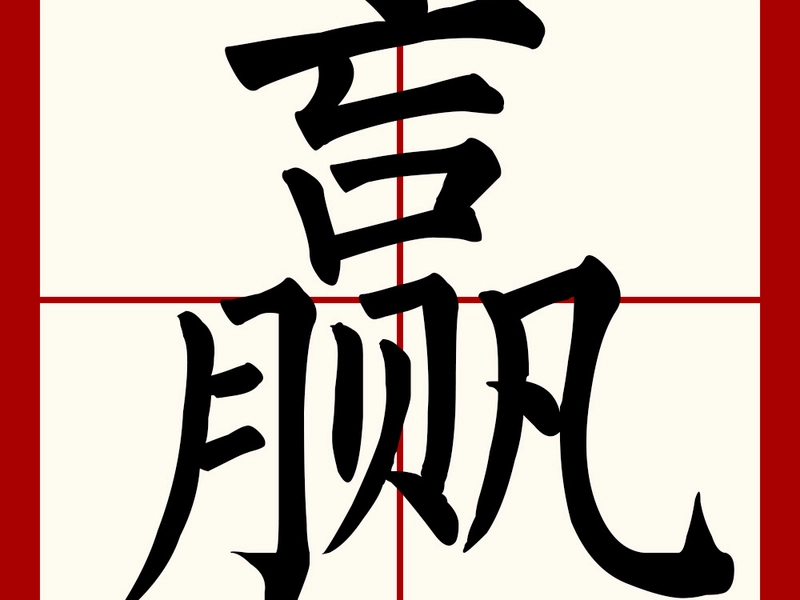
Simplified: 赢
Traditional: 贏
Pinyin: yíng
Meaning: to win; to gain; to profit; victory
The Chinese character 赢 (yíng) represents the coveted concept of victory, success, and profitable gain. It embodies the ultimate positive outcome in competitive endeavors, business ventures, and personal achievements. Understanding 赢 provides crucial insight into Chinese values surrounding success, competition, and the strategic mindset required to attain favorable results.
Basic Meaning of 赢
The character 赢 is one of the most structurally complex and philosophically rich characters in common usage. It is composed of five distinct components, each contributing to its overall meaning of achieving victory:
- 亡 (wáng): Meaning "death" or "to perish," representing the risk and peril inherent in any competitive situation
- 口 (kǒu): Meaning "mouth," symbolizing communication, command, and persuasion
- 月 (yuè): Meaning "moon" but originally representing 肉 (flesh), indicating the physical embodiment and personal commitment required
- 贝 (bèi): Meaning "shell" or "currency," representing financial resources and material foundation
- 凡 (fán): Meaning "ordinary" or "common," suggesting the methodical, step-by-step process needed for success
This intricate composition presents a profound formula for success: victory requires awareness of risks (亡), effective communication (口), physical commitment (月), adequate resources (贝), and systematic execution (凡).
Common Combinations with 赢
Competition & Success:
- 赢家 (yíng jiā) - winner; victor
- 输赢 (shū yíng) - winning and losing; victory and defeat
- 赢得 (yíng dé) - to win; to gain
- 共赢 (gòng yíng) - win-win situation
Business & Economics:
- 盈利 (yíng lì) - profit; earnings
- 赢利 (yíng lì) - to make a profit
- 双赢 (shuāng yíng) - mutually beneficial; double win
Social & Personal:
- 赢取 (yíng qǔ) - to win; to gain (trust, respect)
- 赢回 (yíng huí) - to win back; to regain
These combinations demonstrate how 赢 permeates competitive, commercial, and interpersonal contexts, always maintaining its core association with favorable outcomes.
Extended Meanings of 赢
Beyond its core meaning, 赢 extends into several important domains:
- Strategic Advantage: Gaining upper hand in negotiations or conflicts
- Trust Building: Winning confidence and loyalty
- Resource Acquisition: Obtaining benefits and advantages
- Reputation Enhancement: Achieving recognition and respect
- Relationship Building: Creating mutually beneficial partnerships
Cultural and Symbolic Significance
In Chinese culture, 赢 reflects important philosophical and social values:
- Strategic Heritage: The character's complex structure mirrors the sophisticated strategic thinking found in Chinese military classics like Sun Tzu's "The Art of War," where victory requires multiple coordinated elements.
- Modern Business Philosophy: Concepts like "双赢" (win-win) and "共赢" (shared victory) reflect the Chinese approach to business that emphasizes long-term relationships over zero-sum competition.
- Educational Competition: The intense focus on 赢 in academic contexts, particularly in gaokao (national college entrance exams), demonstrates the cultural emphasis on achieving success through comprehensive preparation.
- Balance and Moderation: While valuing victory, Chinese culture also emphasizes the wisdom of knowing when not to compete, as expressed in the saying "不赢一时,赢一世" (don't win the moment, win the lifetime).
- Collective Success: The modern emphasis on "共赢" represents an evolution from individual victory toward collective prosperity, aligning with both traditional values and contemporary global business practices.
Example Sentences
Competition Context:
- 我们队赢了比赛。
(Our team won the match.) - 他是这次辩论的真正赢家。
(He is the true winner of this debate.)
Business Context:
- 这个项目为公司赢得了很多利润。
(This project earned substantial profits for the company.) - 我们寻求双赢的合作模式。
(We seek a win-win cooperation model.)
Personal Context:
- 她赢得了大家的尊重。
(She won everyone's respect.) - 输赢并不重要,重要的是你尽力了。
(Winning or losing isn't important; what matters is that you tried your best.)
Related Vocabulary
| Chinese | Pinyin | English |
|---|---|---|
| 赢 | yíng | to win; victory |
| 赢家 | yíng jiā | winner |
| 输赢 | shū yíng | victory and defeat |
| 赢得 | yíng dé | to win; to gain |
| 共赢 | gòng yíng | win-win situation |
| 盈利 | yíng lì | profit |
| 双赢 | shuāng yíng | mutually beneficial |
FAQ: Common Questions About the Chinese Character 赢
Q1: What's the difference between 赢 and 胜?
A: Both mean "to win," but 赢 is more comprehensive, often involving gaining something concrete (money, advantage), while 胜 is more about defeating an opponent. 赢 focuses on the benefit gained, while 胜 emphasizes the act of overcoming.
Q2: Why is 赢 so complex compared to other characters?
A: The complexity reflects the multifaceted nature of true victory. Success rarely comes from a single factor but requires the combination of risk awareness, communication, physical effort, resources, and systematic approach represented by the five components.
Q3: How is the concept of "双赢" (win-win) particularly important in Chinese business culture?
A: "双赢" represents the preferred approach to business negotiations, emphasizing that sustainable success comes from creating value for all parties rather than trying to dominate. This reflects both traditional values of harmony and modern pragmatic business sense.
Q4: What's the best way to remember this complex character?
A: Use the five-component success formula: remember that to 赢 (win), you need: 亡 (risk awareness) + 口 (communication) + 月 (physical effort) + 贝 (resources) + 凡 (systematic process). This not only helps memorization but also understanding the Chinese philosophy of success.