
The Meaning and Cultural Significance of the Chinese Character "败"
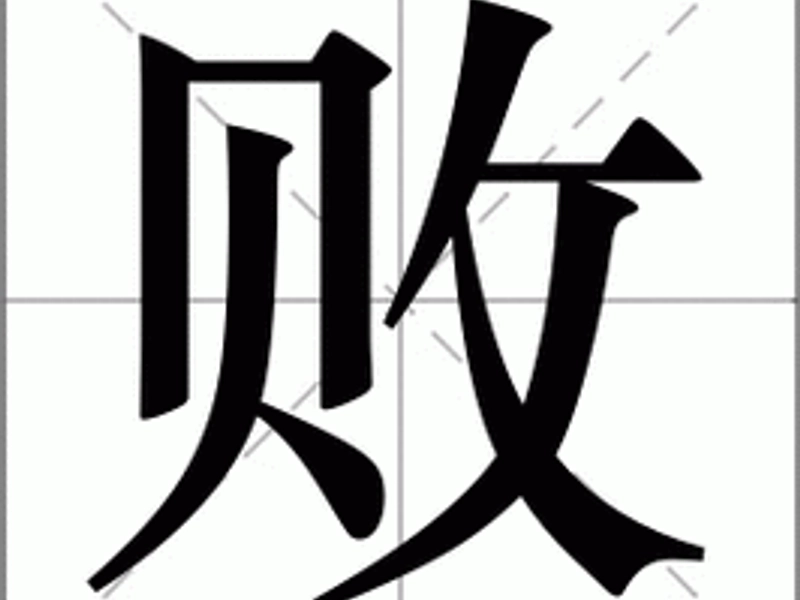
Simplified: 败
Traditional: 敗
Pinyin: bài
Meaning: to defeat; to fail; to spoil; to decay
The Chinese character "败" (bài) represents the fundamental concepts of failure, defeat, and deterioration. As the direct antonym of "胜" (victory), it encompasses both the objective state of being defeated and the subjective experience of failure. Understanding "败" provides crucial insight into Chinese perspectives on setbacks, learning from mistakes, and the inevitable cycles of success and failure in human endeavors.
Basic Meaning of "败"
The character "败" in its traditional form "敗" vividly reveals its etymology. It is composed of two primary elements: the radical 贝 (貝, bèi), meaning "shell" or "currency" (representing value and wealth), and 攵 (pū), a variant of 攴, depicting a hand holding a stick and meaning "to strike" or "to hit." This powerful combination graphically represents striking and damaging valuable objects, conveying the core ideas of destruction, loss, and ruin. The character's composition perfectly captures the essence of something valuable being broken or spoiled.
Common Combinations with "败"
Failure & Defeat:
- 失败 (shī bài) - failure; defeat
- 打败 (dǎ bài) - to defeat; to beat
- 败局 (bài jú) - lost game; losing situation
- 胜败 (shèng bài) - victory and defeat
Deterioration & Spoilage:
- 腐败 (fǔ bài) - corruption; decay
- 败坏 (bài huài) - to corrupt; to ruin
- 败血病 (bài xuè bìng) - sepsis (blood corruption)
- 枯败 (kū bài) - withered and decayed
Economic Loss:
- 败家 (bài jiā) - to squander family fortune
- 败财 (bài cái) - financial loss
Military Context:
- 败北 (bài běi) - to suffer defeat (in battle)
- 败退 (bài tuì) - to retreat in defeat
These combinations demonstrate how "败" spans competitive failure, moral corruption, physical decay, and financial loss across various domains.
Extended Meanings of "败"
Beyond its core meanings, "败" extends into several important domains:
- Moral Degeneration: Describes ethical corruption and moral decay
- Biological Decay: Refers to physiological deterioration and disease
- Financial Ruin: Indicates economic loss and bankruptcy
- Aesthetic Decline: Describes the loss of beauty or quality
- Strategic Loss: Represents failure in planning or execution
Cultural and Symbolic Significance
In Chinese culture, "败" carries profound philosophical and practical significance:
- Learning from Failure: The concept of "失败是成功之母" (failure is the mother of success) reflects the pragmatic Chinese attitude toward setbacks as essential learning opportunities rather than final endpoints.
- Moral Warning: "腐败" (corruption) represents one of the most serious social and political concerns, reflecting the deep cultural aversion to the abuse of position for personal gain.
- Military Wisdom: Chinese military philosophy, as expressed in Sun Tzu's "The Art of War," emphasizes understanding both victory and defeat, with "知己知彼,百战不殆" (know yourself and your enemy, and you will never be defeated).
- Cyclical Understanding: The pairing of "胜败" (victory and defeat) reflects the fundamental Daoist concept of cyclical change, where all conditions are temporary and interdependent.
- Family Values: "败家子" (spendthrift; literally "family-ruining son") represents one of the strongest cultural condemnations, reflecting the importance placed on preserving family legacy and resources.
Example Sentences
Failure Context:
- 这次实验虽然失败了,但我们学到了很多。
(Although this experiment failed, we learned a lot.) - 我们的球队打败了对手。
(Our team defeated the opponent.)
Deterioration Context:
- 反腐败斗争非常重要。
(The fight against corruption is very important.) - 食物已经腐败,不能吃了。
(The food has spoiled and cannot be eaten.)
Economic Context:
- 他赌博败光了所有家产。
(He gambled away all the family fortune.)
Related Vocabulary
| Chinese | Pinyin | English |
|---|---|---|
| 败 | bài | to defeat; to fail; to decay |
| 失败 | shī bài | failure |
| 打败 | dǎ bài | to defeat |
| 腐败 | fǔ bài | corruption |
| 胜败 | shèng bài | victory and defeat |
| 败家 | bài jiā | to squander family fortune |
| 败局 | bài jú | losing situation |
| 败血病 | bài xuè bìng | sepsis |
FAQ: Common Questions About the Chinese Character "败"
Q1: What's the difference between "败" and "输" for "losing"?
A: While both can mean "to lose," "败" often carries a more serious connotation of decisive defeat or complete failure, while "输" is more neutral and commonly used for everyday competitions like games and sports. "败" emphasizes the state of being defeated, while "输" focuses on the act of losing.
Q2: How is "失败是成功之母" representative of Chinese attitude toward failure?
A: This proverb encapsulates the pragmatic Chinese view that failure provides essential lessons that lead to future success. Rather than seeing failure as final, it's viewed as a necessary step in the learning process and eventual achievement.
Q3: Why does "败" have meanings related to both failure and decay?
A: Both meanings stem from the core concept of something valuable being damaged or destroyed. In competition, it's the destruction of hopes for victory; in physical terms, it's the destruction of quality or integrity. The character fundamentally represents the transition from a valued state to a devalued one.
Q4: What's an effective way to remember this character?
A: Remember the vivid imagery of the character's composition: a hand with a stick (攵) striking and damaging valuable shells/currency (贝). This powerful visual of valuable things being broken will help you recall the meanings of failure, defeat, and decay. The character represents the moment when value is destroyed and success turns to failure.