The Meaning and Cultural Significance of the Chinese Character "胖"
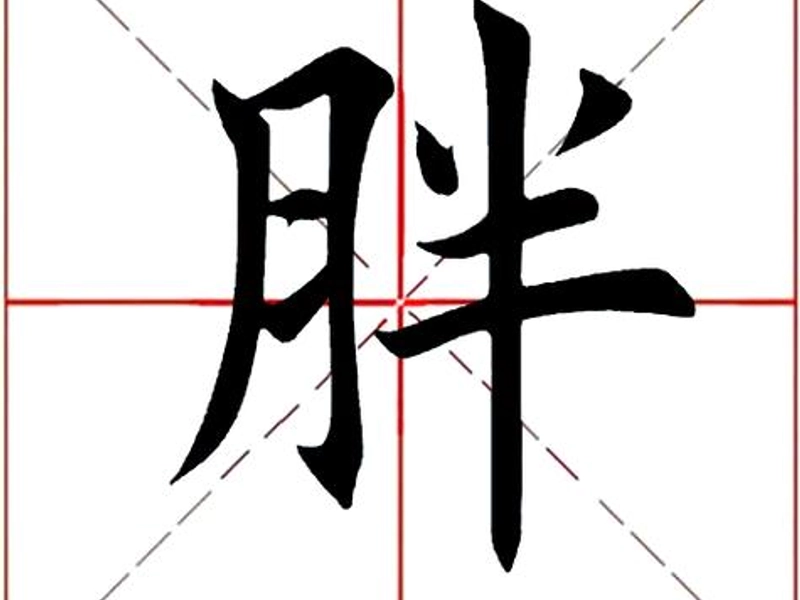
Simplified: 胖
Traditional: 胖
Pinyin: pàng (fat; plump), pán (comfortable; at ease)
Meaning: fat; plump; corpulent; comfortable; at ease
The Chinese character "胖" (pàng/pán) represents the dual concepts of physical plumpness and psychological comfort. It describes both the physical state of being well-nourished and the mental state of being content and at ease. Understanding "胖" provides insight into the evolving cultural attitudes toward body image, health, and the pursuit of contentment in Chinese society.
Basic Meaning of "胖"
The character "胖" is a pictophonetic character composed of two elements: the radical 月 which is actually a variant of 肉 (ròu), meaning "meat" or "flesh," and 半 (bàn), meaning "half." The character originally depicted the idea of "half meat" or "divided meat." One interpretation suggests that in ancient sacrificial ceremonies, meat was divided into two halves, and those who received their share felt satisfied and content. Another interpretation posits that "半" serves as a phonetic component while also suggesting the idea of being "half-made-of-meat," hence plumpness. This connection between physical fullness and psychological satisfaction beautifully captures the character's dual nature.
Common Combinations with "胖"
- With reading "pàng" (Plump/Fat):
- 胖子 (pàng zi) - fat person; chubby person
- 肥胖 (féi pàng) - obese; overweight
- 胖乎乎 (pàng hū hū) - plump and cute
- 胖墩墩 (pàng dūn dūn) - stout; chubby
- 发胖 (fā pàng) - to gain weight
- With reading "pán" (Comfortable):
- 心广体胖 (xīn guǎng tǐ pán) - carefree and comfortable; literally "heart broad and body comfortable"
- Descriptive Usage:
- 胖脸 (pàng liǎn) - chubby face
- 胖娃娃 (pàng wá wa) - chubby baby
These combinations demonstrate how "胖" describes physical appearance while also conveying states of comfort and contentment.
Extended Meanings of "胖"
Beyond its core meanings, "胖" extends into several important domains:
- Health Indicator: Historically signified wealth and good health
- Aesthetic Quality: Describes cute or endearing plumpness
- Psychological State: Denotes freedom from worry and anxiety
- Economic Status: Traditionally indicated prosperity and abundance
- Developmental Health: Used positively for describing healthy babies and children
Cultural and Symbolic Significance
In Chinese culture, "胖" carries complex and evolving symbolic meanings:
- Historical Prestige: In traditional agricultural society, being "胖" was often seen as a sign of wealth, health, and prosperity, as only affluent families could afford ample food.
- Modern Health Awareness: With modernization and increased health consciousness, the perception of "胖" has become more nuanced, often associated with health risks while still retaining positive connotations in certain contexts.
- Aesthetic Evolution: The traditional appreciation for plumpness as beautiful (particularly in Tang dynasty art) has gradually shifted toward preference for slimmer figures, influenced by global beauty standards.
- Cultural Wisdom: The idiom "心广体胖" reflects the deep understanding of the mind-body connection in Chinese philosophy - that mental peace naturally leads to physical comfort and well-being.
- Family Values: Terms like "胖娃娃" (chubby baby) and "胖小子" (chubby boy) continue to carry positive connotations of health, vitality, and family happiness.
Example Sentences
- Physical Description:
- 他最近胖了很多。
(He has gained a lot of weight recently.) - 这个胖娃娃真可爱!
(This chubby baby is so adorable!)
- 他最近胖了很多。
- Health Context:
- 过度肥胖对健康有害。
(Excessive obesity is harmful to health.) - 她担心自己会发胖。
(She worries about gaining weight.)
- 过度肥胖对健康有害。
- Psychological Context:
- 他现在心广体胖,过着悠闲的生活。
(He is now carefree and comfortable, living a leisurely life.)
- 他现在心广体胖,过着悠闲的生活。
Related Vocabulary
| Chinese | Pinyin | English |
|---|---|---|
| 胖 | pàng/pán | fat; plump; comfortable |
| 胖子 | pàng zi | fat person |
| 肥胖 | féi pàng | obese; overweight |
| 胖乎乎 | pàng hū hū | plump and cute |
| 发胖 | fā pàng | to gain weight |
| 心广体胖 | xīn guǎng tǐ pán | carefree and comfortable |
| 胖娃娃 | pàng wá wa | chubby baby |
FAQ: Common Questions About the Chinese Character "胖"
Q1: What's the difference between "胖" and "肥"?
A: "胖" is generally used to describe people and carries a relatively neutral or sometimes affectionate tone (especially for children). "肥" typically describes animals or inanimate objects and can be offensive when applied to people. However, "肥胖" is the formal term for obesity.
Q2: Is calling someone "胖子" considered rude?
A: It can be, depending on context and relationship. While used affectionately among close friends or family, it may be considered impolite in formal situations or when used by strangers. More neutral terms like "丰满" (plump) or "富态" (portly) are often preferred.
Q3: Why does "胖" have such different pronunciations and meanings?
A: The "pán" reading preserves the ancient meaning related to comfort and satisfaction from having one's share of meat, while "pàng" evolved to specifically describe physical plumpness. This reflects how characters can maintain multiple layers of meaning from different historical periods.
Q4: What's an effective way to remember this character?
A: Remember that "胖" shows "半" (half) of "月/肉" (meat) - suggesting either having one's fair share (leading to satisfaction) or being made substantially of meat (hence plump). The connection between material satisfaction and physical fullness makes the character logically memorable.