The Meaning and Cultural Significance of the Chinese Character 瘦
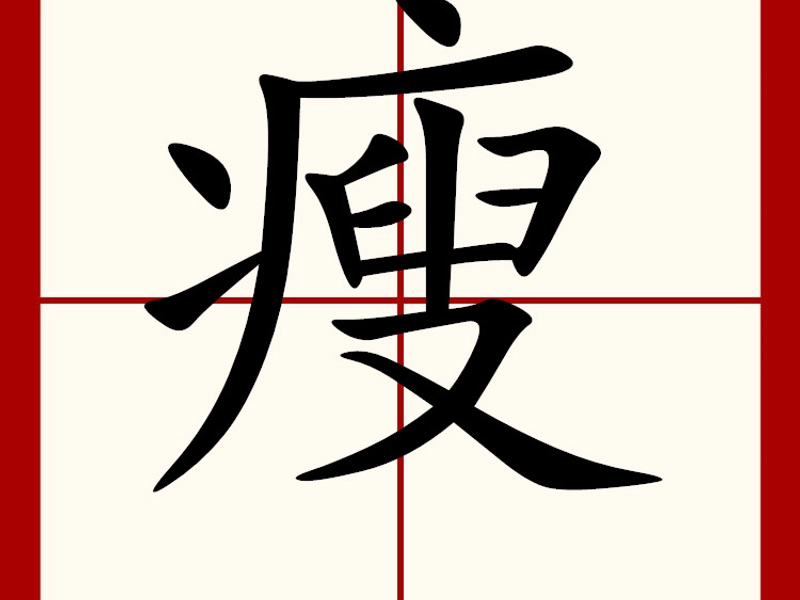
Simplified: 瘦
Traditional: 瘦
Pinyin: shòu
Meaning: thin; lean; emaciated; tight (of clothing)
The Chinese character 瘦 (shòu) represents the concept of thinness, leanness, and lack of plumpness. As the direct antonym of "胖" (pàng, fat), it describes both physical slenderness and, in some contexts, scarcity or tightness. Understanding 瘦 provides important insights into evolving Chinese aesthetics, health concepts, and the complex social attitudes toward body image.
Basic Meaning of 瘦
The character 瘦 is a pictophonetic character composed of two elements: the radical 疒 (nè), meaning "sickness" or "disease," and 叟 (sǒu), meaning "old man," which primarily serves as a phonetic component. This composition originally depicted the physical condition of an ailing elderly person - typically characterized by frailty and thinness. The character's structure powerfully conveys the association between thinness and poor health or aging, reflecting traditional views where being thin was often linked to sickness or malnutrition rather than intentional fitness.
Common Combinations with 瘦
- Physical Description:
- 瘦弱 (shòu ruò) - thin and weak
- 瘦小 (shòu xiǎo) - thin and small
- 瘦长 (shòu cháng) - tall and thin
- 瘦削 (shòu xuē) - gaunt; emaciated
- Health & Body:
- 消瘦 (xiāo shòu) - to become thin; emaciation
- 瘦骨嶙峋 (shòu gǔ lín xún) - all skin and bones
- 精瘦 (jīng shòu) - lean and fit
- Modern Contexts:
- 减肥 (jiǎn féi) - to lose weight
- 瘦身 (shòu shēn) - slimming; body shaping
- 瘦腿 (shòu tuǐ) - slimming legs
- Other Usage:
- 瘦肉 (shòu ròu) - lean meat
These combinations demonstrate how 瘦 describes physical appearance, health conditions, and modern beauty practices.
Extended Meanings of 瘦
Beyond its core meaning, 瘦 extends into several domains:
- Economic Condition: Describes poverty or scarcity (as in "瘦田" - poor farmland)
- Textile Quality: Refers to tight-fitting clothing
- Aesthetic Preference: Indicates deliberate slimming for beauty
- Health Status: Suggests weight loss due to illness
- Character Description: Metaphorically describes sparse or minimal style
Cultural and Symbolic Significance
In Chinese culture, 瘦 reflects evolving attitudes and deep philosophical concepts:
- Historical Aesthetics: Traditional Chinese aesthetics often appreciated slender beauty, as evidenced by the saying "楚王好细腰" (The King of Chu favored slender waists), though this was sometimes criticized as excessive.
- Literary Symbolism: In classical poetry and painting, 瘦 was used to convey elegant fragility, as seen in descriptions of "瘦梅" (slender plum blossoms) representing resilience in harsh conditions.
- Health Perception: Traditional Chinese medicine recognizes different body types, with "瘦人多火" (thin people tend to have excessive internal heat) being a common diagnostic concept.
- Modern Transformation: Contemporary society has seen 瘦 transition from indicating poor health to representing fashionable fitness, reflected in the booming "瘦身" (slimming) industry.
- Agricultural Reference: The term "瘦肉" (lean meat) reflects changing dietary preferences in modern China, where lean meat is often preferred for health reasons.
Example Sentences
- Physical Description:
- 他病后瘦了很多。
(He became much thinner after his illness.) - 她身材很瘦,穿什么都好看。
(She has a very slim figure and looks good in everything.)
- 他病后瘦了很多。
- Health Context:
- 你最近消瘦了,要注意身体。
(You've been losing weight recently; take care of your health.) - 他瘦骨嶙峋的样子让人心疼。
(His bony appearance is heartbreaking.)
- 你最近消瘦了,要注意身体。
- Modern Context:
- 很多女性追求瘦身美容。
(Many women pursue slimming and beauty treatments.) - 我喜欢吃瘦肉,不喜欢肥肉。
(I prefer lean meat over fatty meat.)
- 很多女性追求瘦身美容。
Related Vocabulary
| Chinese | Pinyin | English |
|---|---|---|
| 瘦 | shòu | thin; lean |
| 瘦弱 | shòu ruò | thin and weak |
| 瘦小 | shòu xiǎo | thin and small |
| 消瘦 | xiāo shòu | to become thin |
| 瘦身 | shòu shēn | slimming |
| 瘦肉 | shòu ròu | lean meat |
| 精瘦 | jīng shòu | lean and fit |
| 瘦长 | shòu cháng | tall and thin |
FAQ: Common Questions About the Chinese Character 瘦
Q1: What's the difference between 瘦 and "细"?
A: 瘦 describes overall thinness of the body or objects, emphasizing lack of flesh. "细" describes slenderness in diameter or fineness, used for waist, fingers, or other narrow dimensions. 瘦 focuses on substance, while "细" focuses on circumference.
Q2: Is being called 瘦 a compliment in Chinese culture?
A: It depends on context and tone. In traditional contexts, it might express concern about health. In modern settings, particularly among youth, it's often taken as a compliment on one's figure. The term "精瘦" specifically conveys a positive, fit thinness.
Q3: How has the perception of 瘦 changed in modern China?
A: Traditionally associated with poverty or illness, 瘦 has largely transformed into a beauty ideal in urban areas, driven by global media influences. However, traditional concerns about health implications of excessive thinness persist, creating a complex social attitude.
Q4: What's an effective way to remember this character?
A: Remember that 瘦 shows a sick (疒) old man (叟) - the traditional image of frailty and thinness. This vivid association helps recall both the character's composition and its core meaning of thinness often linked to poor health or aging.