
The Meaning and Cultural Significance of the Chinese Character 是
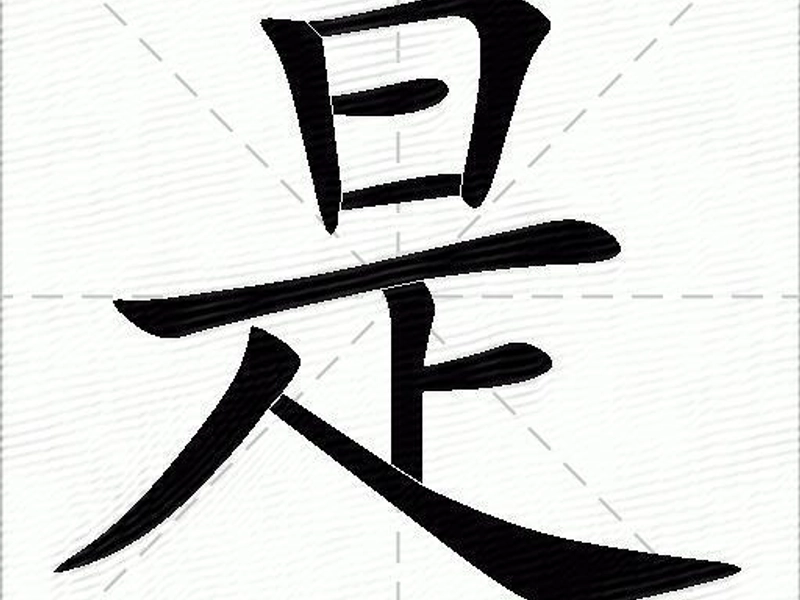
Simplified: 是
Traditional: 是
Pinyin: shì
Meaning: to be; yes; correct; this
The Chinese character 是 (shì) serves as the fundamental verb of identification and affirmation in the Chinese language. Functioning primarily as the equivalent of the English verb "to be," it connects subjects with predicates and expresses existence, identity, and characteristics. Beyond its grammatical role, 是 carries deeper philosophical meanings related to truth, correctness, and the nature of reality in Chinese thought.
Basic Meaning of 是
The character 是 evolved from a compound of 日 (rì, sun) positioned above 正 (zhèng, upright/correct). This composition originally depicted the sun being directly overhead at noon, when shadows are shortest and direction is most clearly discernible. This visual representation beautifully conveys the concept of straightforward correctness and unambiguous truth. From this concrete image of solar precision emerged the abstract meanings of affirmation and identification that characterize 是 in modern usage.
Common Combinations with 是
Grammatical Functions:
- 我是学生。 (Wǒ shì xuéshēng.) - I am a student.
- 这是书。 (Zhè shì shū.) - This is a book.
- 今天是星期一。 (Jīntiān shì xīngqīyī.) - Today is Monday.
Affirmation & Negation:
- 是不是 (shì bù shì) - is or isn't? (forming yes/no questions)
- 不是 (bù shì) - is not; no
- 是的 (shì de) - yes; that's right
Abstract Concepts:
- 可是 (kě shì) - but; however
- 还是 (hái shì) - or; still
- 总是 (zǒng shì) - always
- 要是 (yào shì) - if
Philosophical Terms:
- 是非 (shì fēi) - right and wrong
- 实事求是 (shí shì qiú shì) - seek truth from facts
These combinations demonstrate how 是 forms the backbone of Chinese syntax while also participating in expressions of contrast, condition, and moral judgment.
Extended Meanings of 是
Beyond its core functions, 是 extends into several important domains:
- Existential Assertion: Confirms existence or identity
- Moral Judgment: Distinguishes right from wrong
- Emphasis: Strengthens statements (我是不知道 - I really don't know)
- Contrastive Function: Creates adversative relationships
- Conditional Marker: Introduces hypothetical situations
Cultural and Symbolic Significance
In Chinese culture, 是 carries profound philosophical weight:
- Confucian Precision: The character embodies the Confucian value of "正名" (zhèng míng - rectification of names), which emphasizes the importance of things being properly identified and named according to their true nature.
- Legal and Moral Framework: "是非" (right and wrong) represents the fundamental moral binary that underpins Chinese ethical systems and legal reasoning.
- Scientific Spirit: "实事求是" (seek truth from facts) has become a cornerstone of modern Chinese scientific and political discourse, emphasizing practical, evidence-based approaches to problem-solving.
- Linguistic Identity: As the primary copula, 是 reflects the Chinese preference for clear, unequivocal statements of identity and characteristic.
- Historical Evolution: The character's development from a solar reference to an abstract verb mirrors the philosophical advancement from concrete observation to abstract reasoning in Chinese intellectual history.
Example Sentences
Basic Identification:
- 他是我的老师。
(He is my teacher.) - 北京是中国的首都。
(Beijing is China's capital.)
Question Formation:
- 你是不是中国人?
(Are you Chinese?) - 这是你的手机吗?
(Is this your mobile phone?)
Moral Context:
- 我们要明辨是非。
(We must clearly distinguish right from wrong.) - 他总是实事求是。
(He always seeks truth from facts.)
Related Vocabulary
| Chinese | Pinyin | English |
|---|---|---|
| 是 | shì | to be; yes |
| 不是 | bù shì | to not be; no |
| 是的 | shì de | yes; that's right |
| 是不是 | shì bù shì | is or isn't? |
| 可是 | kě shì | but; however |
| 还是 | hái shì | or; still |
| 是非 | shì fēi | right and wrong |
| 总是 | zǒng shì | always |
FAQ: Common Questions About the Chinese Character 是
Q1: When should I use 是 and when is it omitted?
A: Use 是 when connecting nouns (我是老师), in emphatic statements, and in most identification sentences. It's often omitted in descriptive sentences with adjectives (他很高兴 - He is very happy, without 是).
Q2: What's the difference between 是 and "有"?
A: 是 indicates identity or characteristic (我是学生 - I am a student), while "有" indicates possession or existence (我有书 - I have a book).
Q3: How does "是非" reflect Chinese cultural values?
A: "是非" represents the fundamental Confucian concern with moral clarity and proper judgment. The concept emphasizes the cultural importance of distinguishing right from wrong in both personal conduct and social governance.
Q4: What's the best way to remember this character?
A: Connect it to its original meaning: the sun (日) directly overhead, creating the most "correct" (正) shadow and providing perfect clarity. This image of solar precision will help you remember that 是 deals with unambiguous truth and identification.