
The Meaning and Cultural Significance of the Chinese Character "悲"
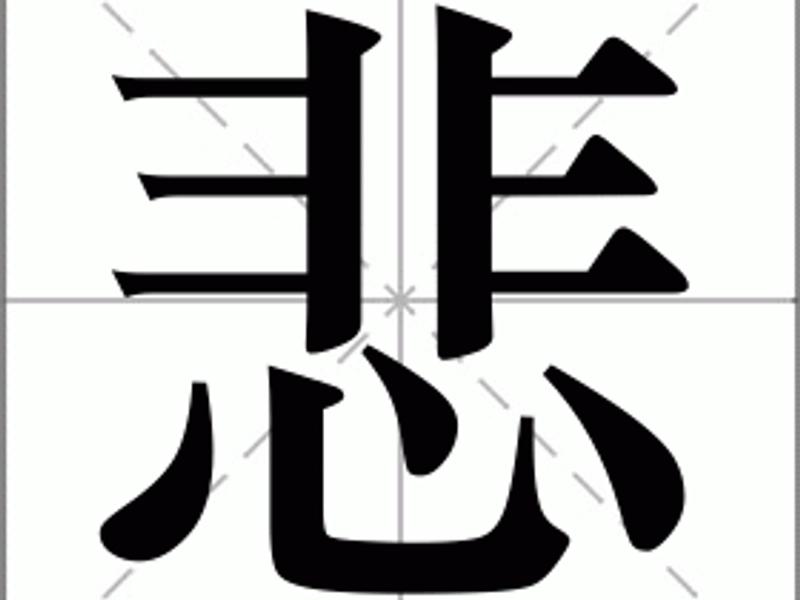
Simplified: 悲
Traditional: 悲
Pinyin: bēi
Meaning: sadness; sorrow; grief; compassion
The Chinese character "悲" (bēi) represents the profound and universal human experience of sadness, sorrow, and grief. It conveys not only personal emotional pain but also the compassionate response to others' suffering. Understanding "悲" provides deep insight into Chinese philosophical perspectives on suffering, the human condition, and the emotional depth that complements the experience of joy.
Basic Meaning of "悲"
The character "悲" possesses an elegant and poignant structure that poetically reflects its meaning. It is composed of two components: the upper part 非 (fēi), meaning "not" or "wrong," and the lower part 心 (xīn), meaning "heart." This combination creates a powerful conceptual image of a "heart that is not at peace" or a "heart experiencing what should not be." The character visually represents the disruption of the heart's natural state of equilibrium, capturing the essence of emotional distress and the profound sense of wrongness that often accompanies deep sadness.
Common Combinations with "悲"
- Emotional States:
- 悲伤 (bēi shāng) - sorrow; grief
- 悲哀 (bēi āi) - grief; lamentation
- 悲痛 (bēi tòng) - grievous; heartbroken
- 悲观 (bēi guān) - pessimistic
- Compassionate Response:
- 慈悲 (cí bēi) - compassion; mercy
- 悲悯 (bēi mǐn) - compassionate pity
- 悲天悯人 (bēi tiān mǐn rén) - to bewail the times and pity the people
- Artistic Expressions:
- 悲剧 (bēi jù) - tragedy
- 悲歌 (bēi gē) - sad song; elegy
- 悲壮 (bēi zhuàng) - solemn and stirring
- Situational Contexts:
- 悲惨 (bēi cǎn) - miserable; tragic
- 悲欢离合 (bēi huān lí hé) - joys and sorrows, separations and reunions
These combinations demonstrate how "悲" encompasses personal grief, compassionate response, and artistic representation of sorrow.
Extended Meanings of "悲"
Beyond its core meanings, "悲" extends into several profound domains:
- Philosophical Reflection: Representing contemplation of life's suffering
- Moral Compassion: Denoting the virtue of empathy for others' pain
- Aesthetic Category: Serving as an important concept in literary and artistic criticism
- Spiritual Practice: In Buddhism, representing the fundamental recognition of universal suffering
- Existential Awareness: Conveying deep understanding of human fragility
Cultural and Symbolic Significance
In Chinese culture, "悲" carries rich philosophical and aesthetic significance:
- Buddhist Foundation: In Buddhism, "悲" is a central concept, particularly in the term "慈悲" (compassion), which represents the heartfelt desire to relieve all beings from suffering. This makes "悲" not just an emotion but a spiritual virtue.
- Literary Tradition: Chinese literature, from classical poetry to modern fiction, deeply explores "悲" as an essential human experience. The ability to express and evoke "悲" is considered a mark of literary mastery.
- Philosophical Balance: While Chinese culture celebrates joy ("喜"), it also recognizes "悲" as an inevitable and meaningful part of life. The phrase "悲欢离合" acknowledges that sorrow and joy, parting and reunion, are all integral to the human experience.
- Aesthetic Value: In traditional Chinese aesthetics, "悲" has its own beauty and depth. A well-expressed "悲" in art or poetry is appreciated for its emotional authenticity and philosophical depth.
- Medical Perspective: In Traditional Chinese Medicine, balanced expression of "悲" is considered healthy, while repressed or excessive grief is believed to damage the lungs.
Example Sentences
- Personal Grief:
- 听到这个消息,她非常悲伤。
(She was very sad to hear this news.) - 他的去世给我们带来了巨大的悲痛。
(His death brought us great sorrow.)
- 听到这个消息,她非常悲伤。
- Compassionate Context:
- 佛教强调慈悲为怀。
(Buddhism emphasizes having a compassionate heart.) - 她对贫困儿童充满悲悯之情。
(She feels great compassion for impoverished children.)
- 佛教强调慈悲为怀。
- Artistic Context:
- 《哈姆雷特》是一部著名的悲剧。
("Hamlet" is a famous tragedy.) - 这首悲歌表达了诗人深沉的情感。
(This elegy expresses the poet's deep emotions.)
- 《哈姆雷特》是一部著名的悲剧。
Related Vocabulary
| Chinese | Pinyin | English |
|---|---|---|
| 悲 | bēi | sadness; sorrow |
| 悲伤 | bēi shāng | sorrow; grief |
| 悲剧 | bēi jù | tragedy |
| 悲观 | bēi guān | pessimistic |
| 慈悲 | cí bēi | compassion; mercy |
| 悲痛 | bēi tòng | grievous; heartbroken |
| 悲哀 | bēi āi | grief; lamentation |
| 悲欢离合 | bēi huān lí hé | joys and sorrows |
FAQ: Common Questions About the Chinese Character "悲"
Q1: What's the difference between "悲" and "哀"?
A: Both mean sorrow, but "悲" often conveys deeper, more profound grief and philosophical sadness, while "哀" typically refers to more immediate, acute mourning or lamentation. "悲" has broader philosophical connotations, while "哀" is more situational.
Q2: How can "悲" be a positive concept in Buddhism?
A: In Buddhism, "悲" (compassion) is one of the highest virtues. While it begins with recognizing suffering, it transforms into active compassion - the heartfelt desire to alleviate suffering in all beings. This makes "悲" a profoundly positive and active spiritual quality.
Q3: Why is "悲剧" (tragedy) appreciated in Chinese culture?
A: Chinese appreciation for "悲剧" stems from the understanding that representing sorrow and suffering in art provides catharsis, moral reflection, and deep emotional connection. It's valued for its emotional truth and philosophical depth rather than just for being sad.
Q4: What's an effective way to remember this character?
A: Remember the poignant imagery: "非" (not/negative) + "心" (heart) = a heart that is not at peace. This beautifully captures the essence of sadness as a heart experiencing distress or disharmony. The character visually represents the emotional weight of a troubled heart.