
The Meaning and Cultural Significance of the Chinese Character 否
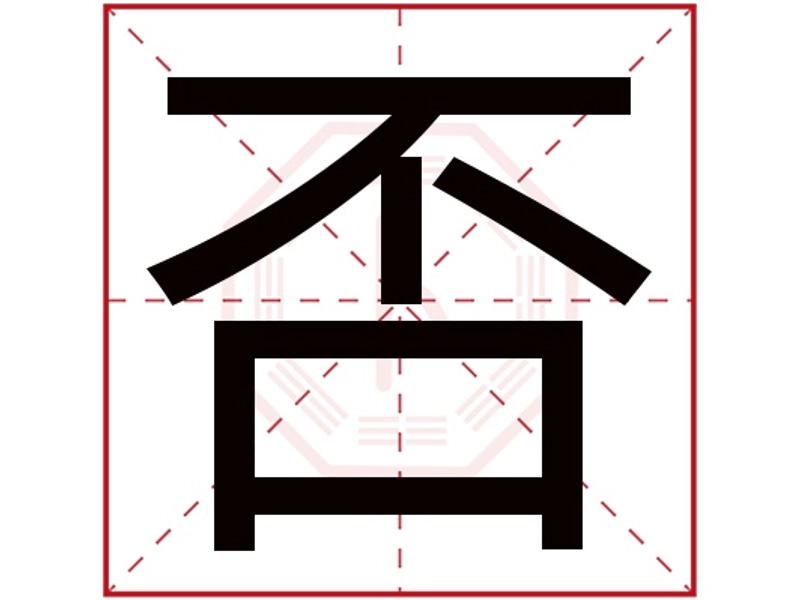
Simplified: 否
Traditional: 否
Pinyin: fǒu (negation), pǐ (stagnation)
Meaning: no; not; to deny; to negate; stagnation (in I Ching)
The Chinese character 否 (fǒu/pǐ) represents the fundamental concept of negation and denial. As an important negative marker in classical and modern Chinese, it conveys refusal, disagreement, and the reversal of affirmation. Beyond its grammatical function, 否 carries profound philosophical significance in the context of the I Ching (Book of Changes), where it represents a state of stagnation that inevitably precedes transformation.
Basic Meaning of 否
The character 否 is a compound ideograph composed of two elements: 不 (bù), meaning "not" or "no," placed above 口 (kǒu), meaning "mouth." This graphic combination powerfully depicts words of refusal emerging from the mouth - a direct visual representation of verbal denial and negation. The character's structure perfectly captures its core function of expressing contradiction and rejection through speech.
Common Combinations with 否
With reading "fǒu" (Negation):
- 是否 (shì fǒu) - whether or not
- 否认 (fǒu rèn) - to deny; to repudiate
- 否定 (fǒu dìng) - to negate; negative
- 否则 (fǒu zé) - otherwise; or else
- 否决 (fǒu jué) - to veto; to reject
With reading "pǐ" (Stagnation):
- 否极泰来 (pǐ jí tài lái) - after extreme bad luck comes good luck
- 泰否 (tài pǐ) - prosperity and adversity (from I Ching)
Modern Usage:
- 是否可行 (shì fǒu kě xíng) - whether it is feasible
- 是否同意 (shì fǒu tóng yì) - whether to agree or not
These combinations demonstrate how 否 functions both as a crucial grammatical particle for forming questions and expressing negation, and as a philosophical concept representing cyclical change.
Extended Meanings of 否
Beyond its core meanings, 否 extends into several important domains:
- Logical Negation: Represents the negative in binary oppositions
- Legal Rejection: Used in formal contexts of denial and refusal
- Philosophical Concept: Symbolizes the necessary counterpart to affirmation
- Conditional Marker: Introduces alternative consequences
- Cyclical Understanding: Represents the inevitable downturn that precedes renewal
Cultural and Symbolic Significance
In Chinese culture, 否 carries deep philosophical implications:
- I Ching Philosophy: In the Book of Changes, 否 (pǐ) represents one of the 64 hexagrams, symbolizing a time of stagnation and obstruction. However, this is understood not as permanent misfortune but as a necessary phase in the cyclical nature of existence.
- Daoist Perspective: The concept of "否极泰来" (pǐ jí tài lái) embodies the core Daoist belief in the continuous transformation of opposites - that when adversity reaches its extreme, it naturally gives way to prosperity.
- Confucian Balance: While Confucianism generally emphasizes positive affirmation, it recognizes the importance of appropriate negation in maintaining social harmony and moral integrity.
- Modern Governance: The term "否决权" (veto power) reflects how the concept of negation has been institutionalized in modern political systems.
- Linguistic Heritage: 否 preserves the classical Chinese negative function while continuing to serve important roles in modern formal and written language.
Example Sentences
With "fǒu":
- 你是否同意这个计划?
(Do you agree with this plan or not?) - 他否认了所有的指控。
(He denied all the accusations.) - 快点出发,否则我们会迟到。
(Let's leave quickly, otherwise we'll be late.)
With "pǐ":
- 不要灰心,否极泰来。
(Don't lose heart - after extreme bad luck comes good luck.) - 易经中的否卦代表困境。
(The Pi hexagram in the I Ching represents adversity.)
Related Vocabulary
| Chinese | Pinyin | English |
|---|---|---|
| 否 | fǒu/pǐ | no/negation/stagnation |
| 是否 | shì fǒu | whether or not |
| 否认 | fǒu rèn | to deny |
| 否定 | fǒu dìng | to negate; negative |
| 否则 | fǒu zé | otherwise |
| 否决 | fǒu jué | to veto |
| 否极泰来 | pǐ jí tài lái | after misery comes happiness |
FAQ: Common Questions About the Chinese Character 否
Q1: What's the difference between 否 and "不" as negatives?
A: "不" is the general negative used with verbs and adjectives (不去 - not going). 否 is more formal and is typically used in fixed patterns like "是否" (whether or not) or in classical Chinese contexts. 否 often functions as a standalone negative reply in formal contexts.
Q2: How is "是否" used in modern Chinese?
A: "是否" is placed before a verb to form a formal yes-no question, equivalent to "whether or not" in English. For example: "你是否明白?" (Do you understand or not?).
Q3: What is the philosophical significance of "否极泰来"?
A: This proverb embodies the fundamental Chinese philosophical belief in cyclical change - that all conditions are temporary and that extreme adversity necessarily contains within it the seeds of future prosperity. It provides hope and perspective during difficult times.
Q4: What's an effective way to remember this character?
A: Remember that 否 shows "不" (no) coming from a "口" (mouth) - it's the graphic representation of saying "no." For the "pǐ" reading, connect it to the I Ching concept where 否 represents the stagnant phase that must occur before the prosperous "泰" phase can emerge.