
Why Mount Emei Should Be on Your China Travel List
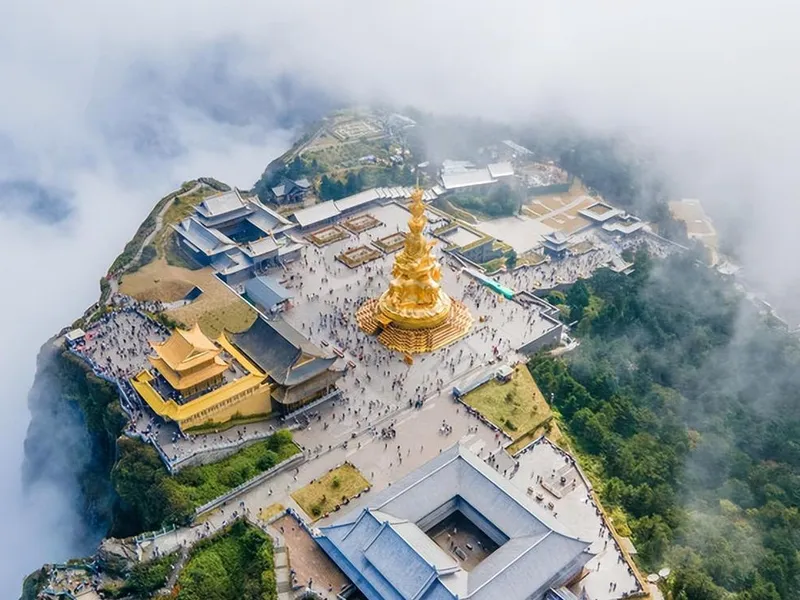
The Mountain Shrouded in Clouds: Understanding the Spirit of Mount Emei
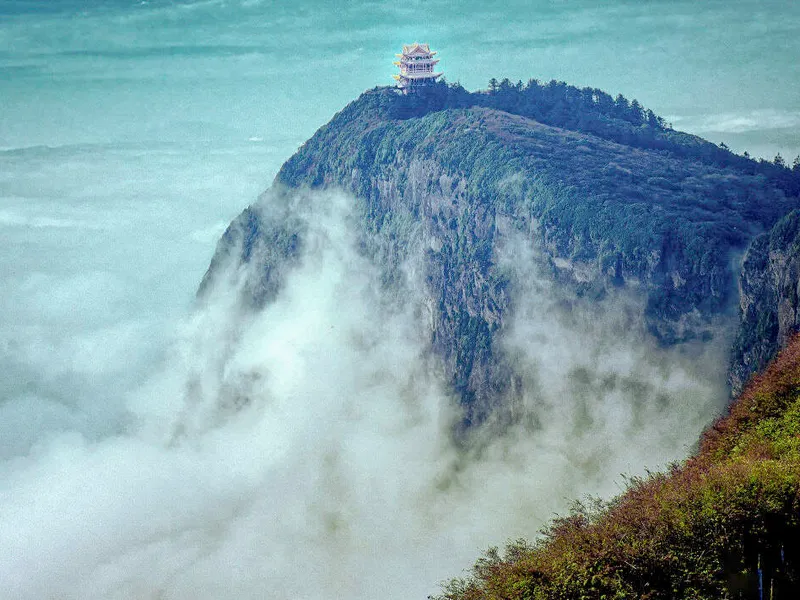
Before a traveler even steps onto the stone steps of Mount Emei, the mountain already begins telling its story. Rising from the lush landscape of Sichuan Province, 峨眉山 stretches to an elevation of 3,099 meters, making it one of the highest of China's Four Sacred Buddhist Mountains. But height alone is not what defines Emei. The mountain's power comes from its atmosphere—the way mist curls around cliffs, the way sunlight falls on ancient pines, the way temples seem to float between heaven and earth.
Emei does not present itself all at once. Most travelers first encounter the foothills, where rice fields, small villages, and hot spring towns lie quietly at the mountain's edge. These gentle beginnings give no hint of the dramatic peaks and spiritual intensity awaiting above. Yet the people who live at the foot of Emei often speak of the mountain as though it breathes—alive with weather, seasons, and centuries of footsteps.
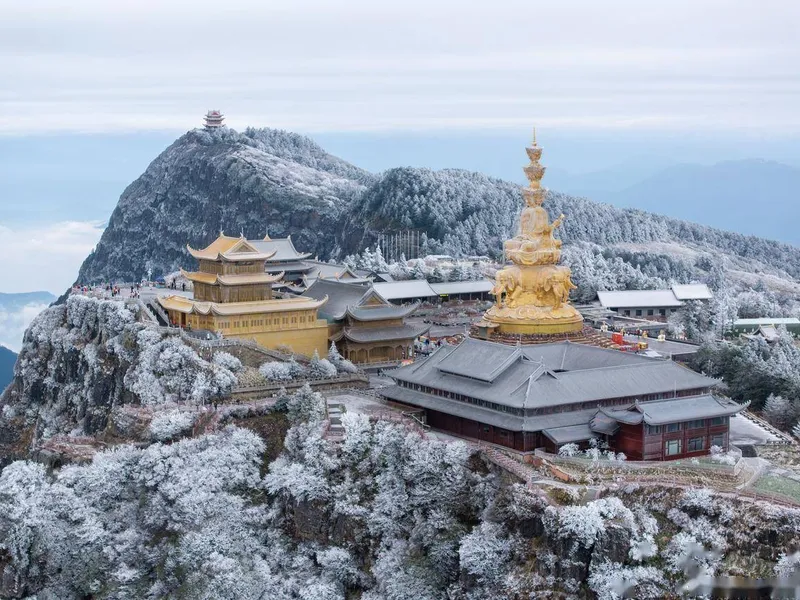 A Sacred Mountain with a Living History
The cultural roots of Mount Emei reach back over two thousand years. Long before it became a Buddhist sanctuary, Emei was already revered by local communities as a place touched by divine presence. With the arrival of Buddhism during the Eastern Han Dynasty, monks carried scriptures through Sichuan's mountains, and Emei quickly became a center of meditation and study. By the Tang and Song dynasties, it had grown into one of the most important Buddhist landscapes in China, drawing pilgrims from every corner of the empire.
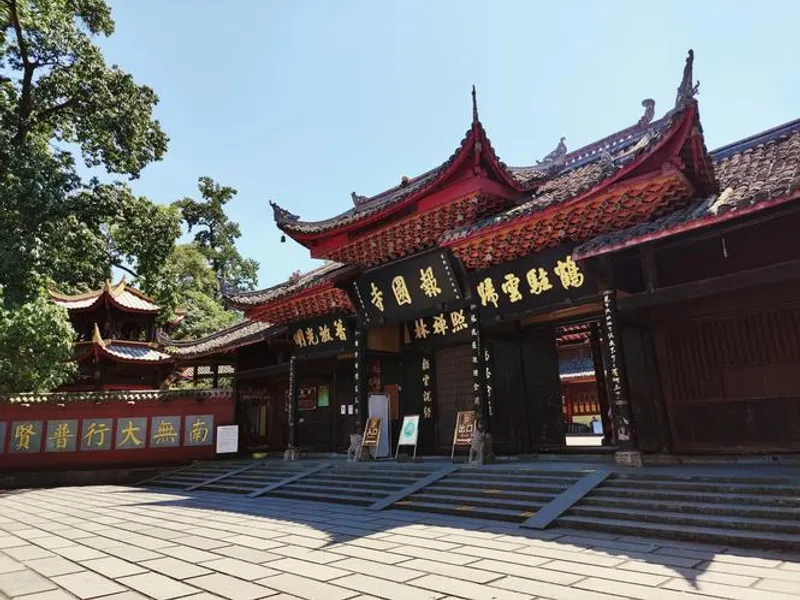
The temples here are not simply buildings—they are layers of history. Each dynasty left traces: wooden halls rebuilt after fires, bronze statues cast by emperors, inscriptions carved by wandering poets. Even today, the mountain holds more than 30 temples, each with its own story. Baoguo Temple stands as the gateway, grand yet calm. Fuhu Temple hides in a forest of tall trees, where the smell of incense mixes with the scent of moss. Higher up, Qingyin Pavilion sits beside flowing water, a place where the sound of streams becomes part of spiritual reflection.
Where Nature and Faith MergeOne quality makes Mount Emei different from many other sacred mountains: its biodiversity. Emei is one of the richest ecological zones in China, home to thousands of plant species, rare animals, and microclimates that change with altitude. As travelers ascend, they pass from subtropical forests into temperate zones, then finally into alpine meadows. This natural layering gives the mountain an energy that feels constantly shifting.
Monkeys roam freely near the midsections of the mountain. They are bold, curious, and sometimes mischievous, watching visitors from moss-covered branches or following hiking groups with surprising confidence. Streams cross the trails, waterfalls echo between cliffs, and clouds drift so quickly that the landscape can change within minutes. On some mornings, hikers find themselves above the clouds, watching mist move like ocean waves beneath the peaks.
For many pilgrims, this blend of nature and spirituality is what gives Emei its power. Meditation halls overlook valleys; chanting rises and fades with the wind. Whether one is religious or not, the mountain creates a sense of peace that comes naturally, simply by being in its presence.
The Path Up the Mountain: Travel Routes, Trails, and Practical Ways to Explore Emei
Reaching Mount Emei is easier today than it has ever been. For most travelers, the journey begins in Chengdu, the capital of Sichuan Province. From the city center, one can reach Emeishan City by high-speed rail in about 1 to 1.5 hours. The station sits close to the mountain's tourist transportation system, making the transition from modern urban life to sacred natural landscape almost seamless.
How to Get from Chengdu to Mount Emei- High-speed train: The most convenient method. Trains depart frequently from Chengdu East Railway Station and Chengdu South. The ride ends at Emeishan Station, from which buses and taxis can take visitors directly to Baoguo Temple, the main entrance area.
- Long-distance buses: Depart from Chengdu Xinnanmen Bus Station; slower but direct.
- Private car or taxi: Flexible but more expensive; ideal for groups.
Upon arrival, the mountain offers a system designed to balance tourism with preservation. Shuttle buses travel deep into the scenic area, cable cars carry passengers up steep cliffs, and well-maintained stone steps guide hikers who prefer to walk the traditional way.
Walking the Ancient Trails
Hiking is the oldest and most rewarding way to explore Emei. The routes wind through bamboo forests, across wooden bridges, and past temples that appear at unexpected turns. The most classic route stretches from Baoguo Temple all the way to the summit, a journey that takes two days on foot. Many travelers choose to stay overnight at a monastery, where simple vegetarian meals and peaceful evenings create a unique cultural experience.
Key sections along the way include:
- Baoguo Temple to Fuhu Temple — gentle and introductory
- Qingyin Pavilion to Wannian Temple — lush forests, waterfalls, and steep steps
- The Monkeys' Eco-Area — lively, amusing, and occasionally challenging
- Xixiangchi (Elephant Bathing Pool) — where legend says Samantabhadra's white elephants once bathed
- The final ascent to Jinding (Golden Summit) — a dramatic rise above the clouds
Every path on Emei feels like part of a story, shaped by countless generations of pilgrims.
Modern Routes for Modern Travelers
Not every visitor wants to spend days climbing steep stone paths, especially those with limited time. Fortunately, buses and cable cars make it possible to reach the summit in just a few hours. From Baoguo Temple, shuttle buses travel to Leidongping, where a cable car glides up over cliffs to the Golden Summit. Even without hiking, the spiritual and scenic richness remains breathtaking.
The beauty of Mount Emei is that it offers something for everyone. The adventurous can climb every step; the leisurely can enjoy the same temples and views with less physical effort. Both paths lead to the same cloud-covered world at the top.
The Golden Summit: Light, Clouds, and the Heart of Mount Emei
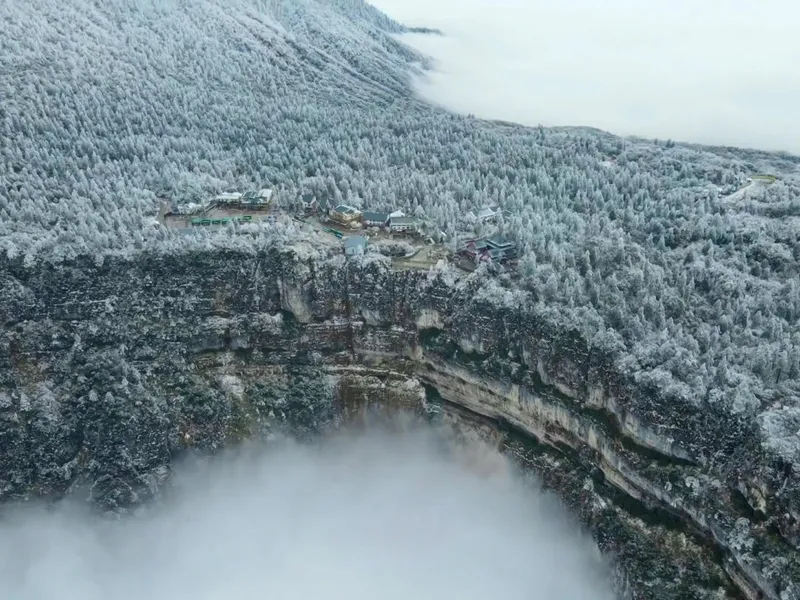
If the lower and middle sections of Mount Emei are about forests, monasteries, and nature, the Golden Summit (金顶, Jīndǐng) is about sky, light, and spiritual awe. At 3,079 meters above sea level, the summit sits high enough that clouds form and disperse around visitors, sometimes revealing bright sunlight, other times engulfing everything in white mist.
A Place Where Light Becomes a Spiritual Experience
The Golden Summit is home to the massive multi-faced golden statue of Samantabhadra (普贤菩萨, Pǔxián Púsà), who is closely associated with Mount Emei. Shining in the sun and glowing even through fog, the statue stands as one of China's most iconic Buddhist sculptures. Pilgrims light incense, bow respectfully, and circle the statue clockwise, a practice believed to bring blessings.
The summit is famous for several natural phenomena:
- The Sea of Clouds — waves of mist creating a rolling white ocean below the peaks
- Sunrise — an unforgettable moment when the first light turns the sky gold
- Buddha's Halo (佛光) — a rainbow-like ring that sometimes appears around one's shadow
- Holy Lanterns — flickering lights sometimes seen at night in the valley fog
These phenomena contribute to Emei's spiritual reputation. Many travelers spend the night at summit hotels just to witness the sunrise above the clouds, an experience that feels almost supernatural.
A Meeting Point of Pilgrims and Travelers
Unlike the quiet forest trails, the Golden Summit is full of life. Monks in grey robes walk across the platform with calm steps. Pilgrims chant sutras in the dawn air. Tourists from every part of China and the world gather with cameras ready. The atmosphere is a meeting of devotion and curiosity, tradition and modernity.
Even those who do not practice Buddhism often describe a sense of peace here. The combination of altitude, silence, and vast sky seems to lift the mind above everyday concerns. Standing at the summit, one feels not simply on top of a mountain, but at the edge of a different world.
Stories, Culture, and the End of a Journey: What Mount Emei Leaves Behind
Every traveler leaves Mount Emei carrying something different. Some leave with photographs of peaks rising above the clouds; others leave with memories of temples where incense smolders quietly. But every visitor leaves with a sense of having encountered a place where nature, culture, and spirituality overlap in a rare harmony.
Legends That Shape the Mountain
One of the most enduring stories comes from Buddhist tradition. Mount Emei is said to be the dwelling place of Samantabhadra, the Bodhisattva of practice and meditation. His presence symbolizes wisdom that arises through action and discipline. In Chinese culture, he is often depicted riding a white elephant—symbolizing purity, strength, and compassion. Many of the mountain's temples, sculptures, and rituals revolve around this symbolism.
There are also folk legends: monkeys believed to be protected by mountain spirits, waterfalls where immortals once meditated, and caves where monks discovered enlightenment. These stories blend with history, giving the mountain a mythic dimension that adds depth to every trail.
A Mountain That Shapes People
Traveling through Emei is not just sightseeing. It is a gradual shift from the familiar world to something quieter. Many travelers describe a moment—often somewhere between forest and cloud—when they feel unexpectedly moved. It may come from hearing temple bells in the distance, from the shock of cold mountain air, or from the sight of the sky opening after thick fog. Whatever the cause, Emei has a way of slowing the mind and expanding the senses.
Leaving the Mountain
Descending Emei always feels different from climbing it. The journey down allows time for reflection, a chance to process everything the mountain offered: the ancient pathways, the spiritual stories, the encounters with nature. Whether one hiked or took the cable car, the experience lingers.
Back in the foothills, travelers often seek out Emei's hot springs, letting warm mineral water ease the muscles after long hours of climbing. It is a gentle transition back to daily life—and a reminder that the journey is not only about reaching the summit, but about everything seen and felt along the way.
Mount Emei does not demand belief, nor does it offer simple answers. Instead, it presents itself honestly: a mountain of clouds and cliffs, temples and forests, ancient faith and modern footsteps. For those who come with an open heart, Emei gives something rare—the feeling of having stepped briefly into a world where nature and spirit meet.