
Why Do Chinese People Drink Hot Water? (History, Health & Cultural Reasons)
I. A Cultural Conflict in a Cup of Water
Table of Contents
- I. A Cultural Conflict in a Cup of Water
- II. The Historical Starting Point: The Civilizational Leap from Fire to Water
- III. The Decisive Turning Point: How the State Shaped Drinking Habits
- IV. Culture and Body View: Why Hot Water was "Rationalized">
- V. The Scientific Perspective: Is Hot Water Actually Useful?
- VI. Contemporary Changes: What is Happening to Hot Water Culture?
- VII. The Chinese Logic Behind a Cup of Hot Water
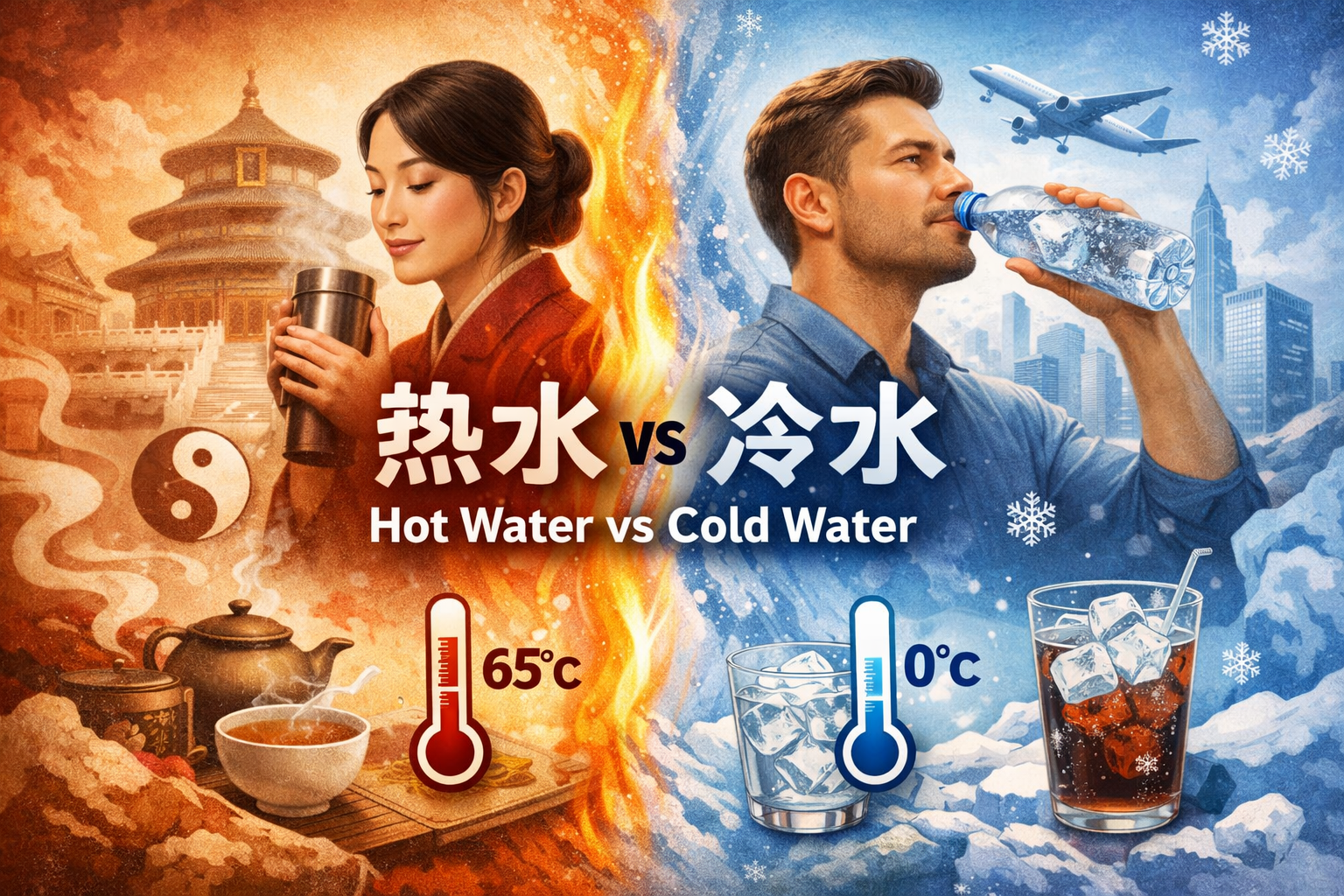
Water is the same, but the temperature reveals two entirely different worldviews.
If you have ever wondered why Chinese people drink hot water, the answer goes far beyond simple habit. It reflects a deeply rooted Chinese hot water culture shaped by history, health beliefs, and survival strategies.
In an airport in Beijing or an office building in Shanghai, you can easily witness this scene. A Western traveler, fresh off a plane, pulls a bottle of mineral water from the cooler, beads of condensation clinging to its surface. They twist off the cap, take a large gulp of ice water, and seem to reboot their system. Just a few steps away, a Chinese colleague sits quietly, holding a thermos. They gently unscrew the lid, allowing a wisp of steam to rise, then take a small sip of warm liquid. It is as if they are giving their body time to gradually restore its order.
If the traveler coughs at that moment, they are likely to hear a concern from the Chinese person nearby: "Drink more hot water."
The fate of this phrase differs drastically across cultures. In many Western contexts, it sounds like a perfunctory dismissal. But in China, this phrase is an extremely common form of care. Its subtext is clear: "I hope you restore your balance."
This raises several questions that define the cultural differences hot water vs cold water:
- Why are Chinese people so obsessed with hot water?
- Why is ice water the default in most countries, while many Chinese prefer warm water instead of cold water?
- Why do Chinese people rarely drink ice water, even in summer?
Many offer simple answers: habit, or perhaps constitution. But these explanations are insufficient. The Chinese drinking hot water habit is not a naturally formed preference. It is more akin to a behavioral pattern that has been repeatedly reinforced and gradually internalized. From the dependence on fire to the popularization of tea culture; from survival choices amidst water crises to state-level public health campaigns; and finally to the Traditional Chinese Medicine hot water theory—all of these have collectively shaped a daily behavior that seems "taken for granted."
This is not just a habit; it is an instinct that has been trained.
When a Chinese person lifts a cup of hot water, they are not just drinking a liquid of moderate temperature. Inside that cup lies memories of disease, defenses against risk, and a long-term preference for "safety." To understand why Chinese people don’t drink ice water as a default, one must understand this unique cultural expression.
II. The Historical Starting Point: The Civilizational Leap from Fire to Water
1. Fire and the Birth of the "Cooked": Civilization's First Line of Defense
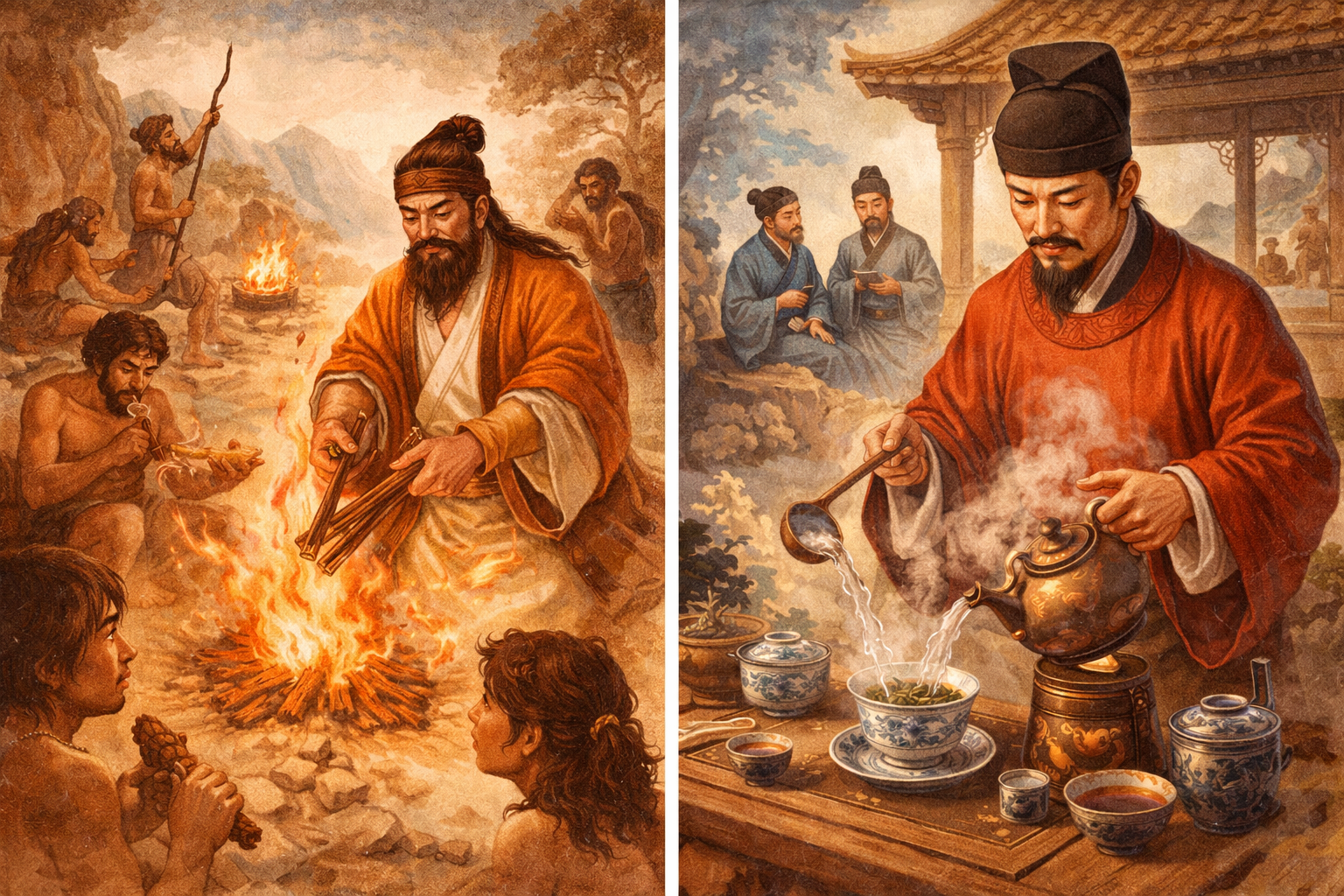
To understand the Chinese obsession with hot water, one must turn the clock back to the dawn of human civilization. Among all ancient civilizations, Chinese culture holds a particularly significant reverence for "fire" and the "cooked." As recorded in Han Feizi: "In the ancient times... a sage appeared who drilled wood to make fire, transforming the raw and bloody, pleasing the people, and was made ruler, titled Suiren (the Fire Maker)."
Cooked food was seen as the hallmark of civilization. Raw food represented barbarism, danger, and uncontrollability, while cooked food symbolized safety, order, and improved digestibility. This worship of the "cooked" naturally extended to the realm of drinking water. Raw water in ancient China was viewed as a "sinister substance" full of unknown risks, potentially harboring invisible "evil qi" or pathogens. In contrast, "cooked water" (boiled water), baptized by fire, was endowed with a sacred attribute of purification.
At this stage, "boiling water" was not merely a physical heating process; it was humanity's first active control over environmental risks. Ancient people might not have understood the theory of bacteria under a microscope, but through long trial and error, they discovered: those who drank raw water were prone to abdominal pain, diarrhea, and even death, while those who drank boiled water were more likely to survive and reproduce. This naive observation based on survival probability formed the bottom-most logic of Chinese drinking culture—safety above taste.
Throughout the long years of agrarian society, the risk of water source pollution was extremely high due to dense populations. Rivers and wells were often shared by humans and livestock, making them susceptible to fecal contamination. Families that insisted on boiling their water possessed higher survival rates during plague-ridden eras. This survival advantage was passed down through generations via both genetic and cultural selection. Drinking boiled water was initially not about good taste, but about staying alive. It is a survival instinct carved deep into the national memory.
2. Tea Culture: Turning "Boiling Water" into a Daily Ritual
If the fear of the "raw" was the starting point for drinking hot water, the flourishing of tea culture solidified "boiling water" into a universal daily behavior.
Before the Tang Dynasty, tea drinking was largely a pastime for the aristocracy or monks. It was not until Lu Yu wrote The Classic of Tea that tea drinking became truly systematized and popularized, becoming a lifestyle penetrating all strata of Chinese society. The Classic of Tea was not just a guide to tea art; it was an encyclopedia of water. Lu Yu had nearly obsessive requirements for the heat of boiling water and the size of bubbles (the theory of "Three Boils").
Here lies a key logical chain: To drink tea, one must boil water.
As tea became the national beverage, boiling water ceased to be an occasional epidemic prevention measure and became a basic household skill performed daily. Whether in the teahouses of bustling markets, the studies of scholars, or the fields where farmers toiled, the stove fire burned all day, and the kettle always boiled. The spread of tea culture effectively completed a massive social mobilization: it elevated the act of "boiling water" from a mere survival need to an aesthetic, a ritual, and a life interest.
Chinese people did not fall in love with hot water first; they fell in love with tea first. For the sake of unfurling a single tea leaf, countless families developed the habit of keeping boiled water ready at all times. Over time, even when not drinking tea, people became accustomed to consuming the warm liquid from the pot. Tea became the gentlest promoter of the hot water habit, packaging a survival strategy into the poetry of life.
By the Song Dynasty, the fashion of whisked tea prevailed, demanding even more exquisite control over water temperature. In the Ming and Qing dynasties, loose-leaf brewing became mainstream, with rolling boiling water as the standard action. This thousand-year history of tea culture is, in essence, a "national boiling water training history." It ensured that every Chinese person, regardless of wealth or status, mastered the skills of controlling fire and discerning water temperature. These skills were passed down generation after generation, eventually internalizing into an unthinking daily norm.
3. Empirical Hygiene Awareness: Science Without Theory
In ancient China, although modern microbiology did not exist, a hygiene awareness based on experience was already deeply rooted. TCM classics frequently recorded warnings such as "drinking cold harms the spleen" and "raw and cold causes disease." Ancients observed that drinking well or river water in summer led to high rates of dysentery, while drinking boiled water significantly alleviated the condition.
This cognition is termed "empirical hygiene awareness." It is a "science without theory." The ancients did not know the names of E. coli or Vibrio cholerae, but they knew "raw water is poisonous, boiled water is safe." This knowledge was passed down through word of mouth, family instructions, and clan rules. In ancient societies lacking public water supply systems, the family was the smallest unit of hygiene defense. Mothers warning children "do not drink raw water" and housewives insisting "water must be boiled" were seemingly trivial family rules, yet they served as the first line of defense against disease.
This empirical wisdom provided Chinese people with an effective mechanism to cope with water pollution. In contrast, many other civilizations continued to drink directly from rivers or wells for a long time, leading to frequent plague outbreaks. The ancient Chinese obsession with "cooked water," though inexplicable by scientific principles at the time, objectively protected a vast population base and facilitated the continuity of civilization.
III. The Decisive Turning Point: How the State Shaped Drinking Habits
1. The Water Crisis of the Early 20th Century: A Choice of Life and Death
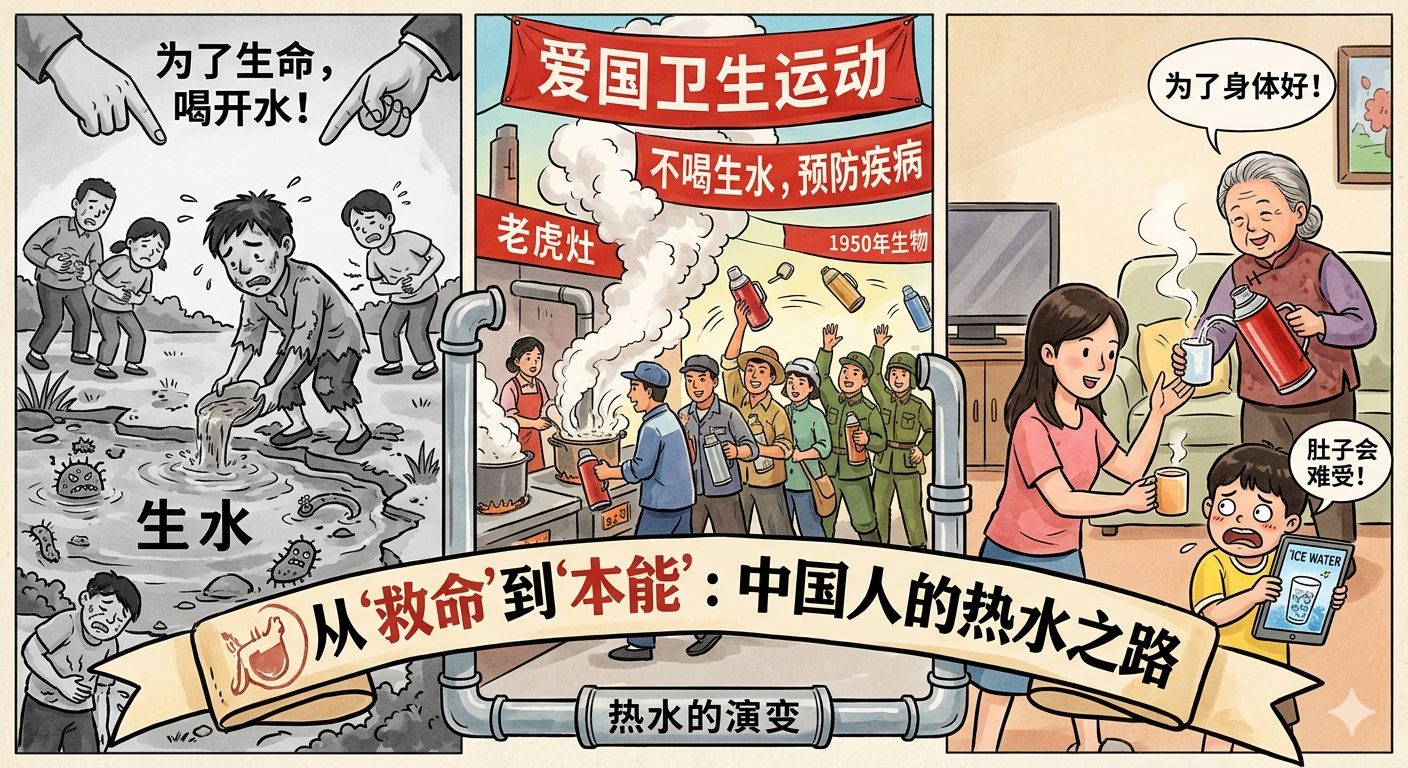
Entering the 20th century, China faced unprecedented survival challenges. Frequent wars and the nascent urbanization process were accompanied by extremely backward infrastructure. Waterborne infectious diseases such as cholera, typhoid, and dysentery ran rampant, with each outbreak claiming tens of thousands of lives. Drinking water safety was no longer just a personal health issue; it was a public crisis concerning the survival of the nation.
Data from that period showed alarmingly high mortality rates caused by drinking unclean raw water. Western missionaries and early Chinese public health pioneers began introducing the concept of "boiling for disinfection." However, what truly embedded this concept into the hearts of hundreds of millions was a series of subsequent state actions.
2. Policy Intervention: A Top-Down Hygiene Revolution
The 1930s: The Bud of Modern Hygiene Standards
During the Nanjing National Government period, the Ministry of Health began promoting modern hygiene standards, and "do not drink raw water" was written into official slogans for the first time. However, due to war and social turmoil, this concept was only promoted among urban intellectuals and in a few regions.
The 1950s: The Patriotic Health Campaign and the Forced Cultivation of "Drinking Boiled Water"
The true turning point occurred after 1949. In the early days of the New China, facing severe epidemics and backward hygiene conditions, the government launched an unprecedented "Patriotic Health Campaign." This was not merely a cleaning campaign; it was a profound social transformation.
In this campaign, "drinking boiled water" was elevated to a political height. Core measures included:
- Nationwide Promotion of "Drinking Boiled Water": Streets, factories, schools, and government offices posted banners everywhere. "Do not drink raw water, prevent disease" became a slogan known to every household. Radios, newspapers, and bulletin boards were filled with propaganda about the benefits of drinking boiled water.
- Establishment of Public Boiled Water Supply Systems: In urban communities, numerous "boiled water rooms" or "Tiger Stoves" (traditional coal-fired water boilers) were established. Paying a few cents to fill a bottle with boiled water became a collective memory for generations of Chinese people. This not only solved the problem of insufficient household fuel but also ensured centralized disinfection of water sources. For many ordinary families, going to the Tiger Stove to fetch water was an indispensable part of daily life.
- Thermos Flasks Enter Households: As one of the "Three Major Items" for marriage, the thermos flask rapidly popularized in Chinese households. It made "having hot water available at any time" possible, completely changing the rhythm of Chinese drinking habits. The thermos was not just a container; it was a symbol of an era, representing warmth, safety, and care.
This was a successful, large-scale practice of "behavioral engineering." The state apparatus, through administrative power, propaganda education, and infrastructure support, forcibly reversed the habit of drinking raw water that some populations had held for thousands of years. This top-down driving force was unmatched by any natural evolution.
3. The Result: Intergenerational Transmission of Habit
The effect of this public health project was astonishing.
- The First Generation was Educated: Under the propaganda of cadres and the warnings of slogans, they passively accepted the regulation of drinking boiled water. For them, drinking boiled water was a political task and a survival necessity.
- The Second Generation Formed Habits: Influenced by their parents, they grew up watching thermos flasks, considering drinking hot water a matter of course. Tea buckets in schools and insulated barrels in factories constantly reinforced this habit.
- The Third Generation Took it for Granted: For the post-80s, post-90s, and even post-00s generations, drinking hot water requires no reason; it is as natural as breathing. If someone hands them a glass of ice water, their bodies may even instinctively react with rejection, feeling "uncomfortable in the stomach."
The key conclusion is obvious: Chinese people drinking hot water is essentially the historical legacy and internalization of an extremely successful national-level public health project. It evolved from a life-saving emergency measure into a cultural instinct that requires no thought. The state used a few decades to complete a civilization reshaping regarding drinking methods. This reshaping was so thorough that later generations often forgot its origins, viewing it as an innate national characteristic.
IV. Culture and Body View: Why Hot Water was "Rationalized"
1. The TCM Perspective: The Body Philosophy of Yin-Yang Balance
If history and policy are the "skeleton" of drinking hot water, then traditional culture and body views are its "flesh and blood." It is precisely TCM theory and folk beliefs that provide a self-consistent logical explanation for drinking hot water, elevating it beyond the utilitarian level of "disease prevention" to the heights of philosophy and aesthetics.
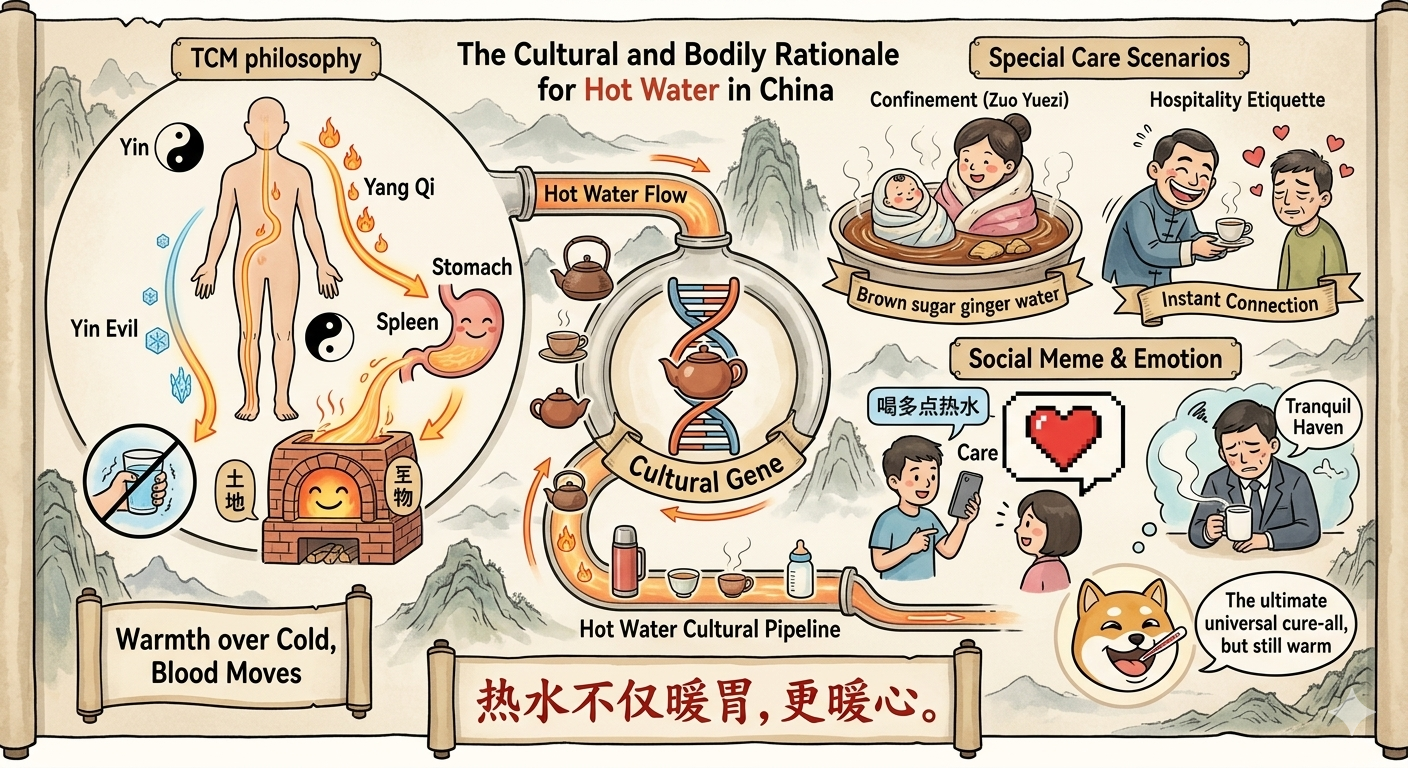
In the TCM theoretical system, the human body is a micro-universe, emphasizing the balance of Yin and Yang and the harmony of Qi and blood.
- Preferring Warmth, Averting Cold: TCM believes that the human spleen and stomach belong to the element of Earth, preferring dryness over dampness and warmth over cold. Cold water is viewed as a "Yin evil"; entering the body directly, it damages "Yang Qi," weakens the transportation and transformation functions of the spleen and stomach, generates dampness, and subsequently triggers various diseases.
- Flow of Qi and Blood: Hot water is viewed as "Yang," capable of warming and unblocking meridians and promoting the circulation of Qi and blood. The saying "blood moves with warmth and congeals with cold" suggests that drinking hot water helps maintain the body's vitality and metabolism.
Although this theory lacks direct molecular biological evidence from the perspective of modern biomedicine, as a "body philosophy," it profoundly influences Chinese self-perception. When a person feels cold, tired, or unwell, drinking a cup of hot water indeed brings a sense of warm comfort. This subjective feeling of comfort, in turn, validates the correctness of TCM theory, forming a powerful psycho-physiological positive feedback loop.
2. Reinforcement in Special Scenarios: Guardianship of Women and Family
In Chinese families, hot water is often closely linked to specific care scenarios, especially concerning women and vulnerable groups.
- Menstruation and Confinement (Zuo Yuezi): During menstruation or postpartum confinement, women are strictly prohibited from contacting cold water or consuming raw and cold foods. Brown sugar ginger water, hot soups, and hot meals are not just nutritional supplements but protective rituals. This extreme worship of "heat" makes hot water a concrete symbol of family care.
- Hospitality Etiquette: In traditional Chinese etiquette, the first thing a host does when a guest arrives is often to "pour tea" or "pour hot water." This is not just about quenching thirst; it is a gesture of acceptance and respect. A steaming cup of water instantly bridges the distance between people.
3. Emotion and Language: From Physiological Behavior to Social Currency
The reason "drink more hot water" became an internet meme, even mocked, precisely illustrates its high-frequency usage and deep emotional connotation in the Chinese context.
- Low-Cost Care: In the fast-paced modern life, people often cannot accompany friends and family at all times. When the other party is sick or in trouble, "drink more hot water" becomes the simplest, most immediate, and lowest-cost way to show concern. It conveys the message: "Although I cannot do more for you at this moment, I hope you take care of your most basic bodily needs."
- Social Language: Hot water has transcended the material level and entered the cultural expression system. It represents a gentle, conservative, and steady attitude towards life. Amidst fierce social competition, a cup of hot water symbolizes a return to the inner self and a haven seeking tranquility.
The conclusion is that hot water has not only entered the Chinese body but also the Chinese cultural gene and emotional structure. It is a complete system of meaning that explains the world and settles the mind.
V. The Scientific Perspective: Is Hot Water Actually Useful?
1. Hardcore Scientific Support: Sterilization and Disease Prevention
Undoubtedly, historically, boiling was the most effective and cheapest means of water purification.
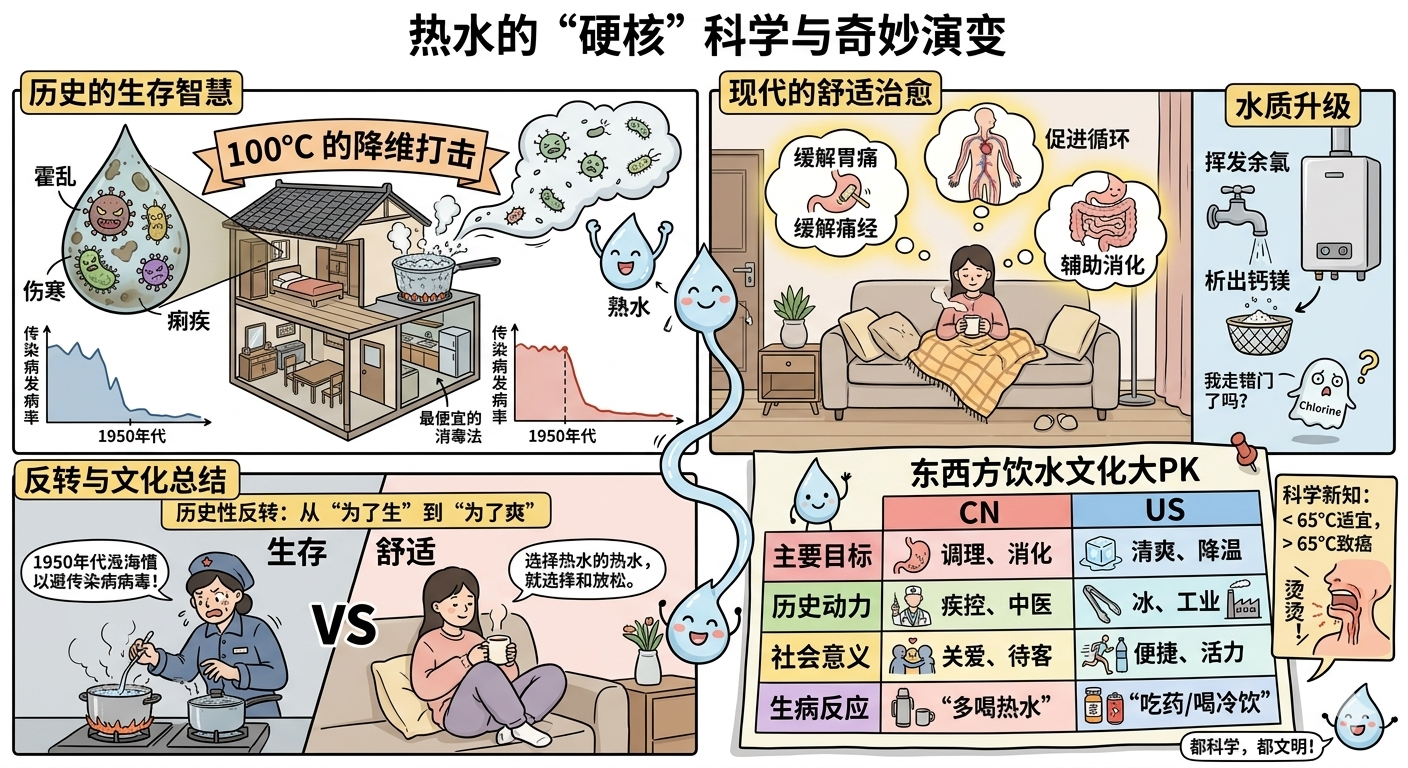
- Sterilization and Disinfection: Heating water to 100°C and maintaining a boil can kill the vast majority of pathogenic bacteria, viruses, and parasite eggs. Before the popularization of tap water disinfection technology, and even today in some remote areas, drinking boiled water remains the most effective means of preventing waterborne infectious diseases such as cholera, typhoid, and dysentery.
- Data Proof: Since the 1950s, the cliff-like decline in the incidence of infectious diseases in China has a direct positive correlation with the promotion of the "drink boiled water" campaign. This is the strongest endorsement of this habit by "hardcore science."
2. Physiological Comfort: The Healing Effect of Warm Water
Modern medical research also confirms that warm water of appropriate temperature (approximately 35°C-45°C) indeed has positive physiological effects on the human body:
- Promoting Blood Circulation: Warm stimulation can cause vasodilation, improve microcirculation, and help relieve muscle tension and spasms.
- Relieving Pain: For pain caused by smooth muscle spasms such as stomachaches and dysmenorrhea, hot compresses or drinking warm water can play a significant relieving role. This is because heat can reduce the sensitivity of nerve endings and relax tense muscles.
- Assisting Digestion: Warm water helps soften and decompose food, promoting gastrointestinal peristalsis. Compared to ice water, it stimulates the digestive system less and is more suitable for people with weaker gastrointestinal functions.
3. Water Quality Factors: A Historical Legacy of Taste Memory
Besides sterilization, boiling can also improve taste.
- Removing Chlorine: In the past, tap water had high chlorine content; boiling could volatilize residual chlorine and reduce odors.
- Precipitating Impurities: During boiling, calcium and magnesium ions in the water form scale precipitates, thereby reducing water hardness and making the taste softer and smoother.
This preference for a "softened" and "chlorine-free" taste is also deeply rooted in the taste memory of a generation.
4. The Key Reversal: From "Surviving" to "Being Comfortable"
There is a key reversal to point out here: In the past, people drank hot water to survive; today, they drink hot water to be more comfortable.
With the modernization of urban tap water treatment processes (such as deep purification and ozone disinfection), directly drinking cold water that meets standards is theoretically safe in many large Chinese cities. However, the power of habit is immense. Modern people choose hot water more out of a pursuit of comfort and a psychological defense against potential risks. This is a shift from "survival necessity" to "quality of life."
Of course, science has also issued new warnings: Overly hot water (above 65°C) is carcinogenic. The International Agency for Research on Cancer (IARC) under the World Health Organization has classified hot drinks above 65°C as Group 2A carcinogens; long-term consumption increases the risk of esophageal cancer. This is also prompting a slight adjustment in contemporary health concepts: shifting from "the hotter the better" to "warm and appropriate."
Hot Water vs Cold Water: A Cultural Difference Summary
| Feature | Chinese Hot Water Culture | Western Cold Water Norm |
|---|---|---|
| Primary Goal | Internal balance, digestion, safety | Refreshment, cooling, hydration |
| Historical Driver | Disease prevention, TCM theory | Availability of ice, industrial refrigeration |
| Social Meaning | Care, healing, hospitality | Convenience, energy, sport |
| Reaction to Illness | "Drink more hot water" | "Take medicine / Drink cold fluids" |
This table highlights the cultural differences hot water vs cold water, showing that neither is inherently "wrong," but they serve different cultural logics.
VI. Contemporary Changes: What is Happening to Hot Water Culture?
1. The Shift of the Younger Generation: The Counterattack of Ice Water and Cold Drinks
For Generation Z (post-95s and post-00s), who grew up in an era of extreme material abundance, they have never experienced the fear of water crises.
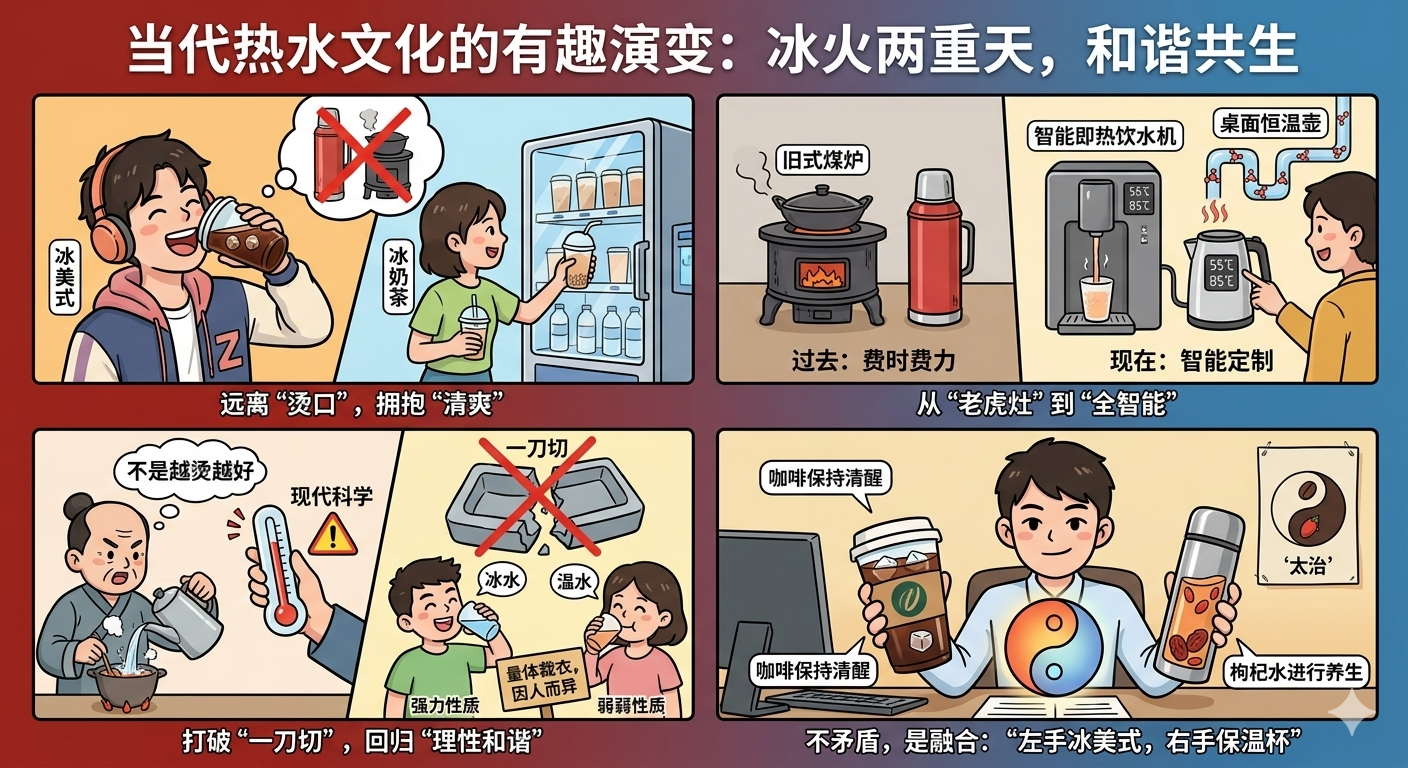
- Globalization Influence: Influenced by Western dietary culture and Japanese/Korean trends, iced coffee, iced milk tea, and carbonated drinks have become the social standard for young people.
- Re-recognition of Constitutional Differences: Many young people find that drinking ice water causes them no discomfort; they even feel that a glass of ice water is the "redemption of the soul" after a hot summer day or a hot pot meal.
- Symbol of Rebellion: In certain contexts, refusing hot water and choosing cold drinks has even become a tiny rebellion to showcase individuality and break free from traditional constraints.
2. Technological Upgrades: From Coal Stoves to Constant-Temperature Kettles
Although habits are changing, "hot water" itself is also evolving.
- Equipment Iteration: From bulky coal stoves and fragile thermos flasks to ubiquitous water dispensers, and now to exquisite "constant-temperature kettles" and "instant hot water dispensers."
- Readily Available: Technological progress has made hot water unprecedentedly convenient. You can precisely control the water temperature (45°C for formula, 55°C for honey water, 85°C for tea). Hot water is no longer a scarce resource but an on-demand customized service.
- Scenario Segmentation: Mini desktop water dispensers in offices, free boiled water supplies on high-speed trains, and even warm water flushing in smart toilets—hot water has permeated every capillary of life.
3. New Health Cognition: The Game Between Science and Tradition
With the popularization of health knowledge, people's cognition of hot water has become more rational.
- Rejecting Overly Hot Temperatures: More and more people are paying attention to the "65°C red line," no longer blindly pursuing the feeling of "scalding the mouth."
- Individual Differences: The public is beginning to accept the view that "different constitutions require different drinking habits." People with strong stomachs can drink ice water, while those with weak constitutions continue to drink hot water, moving away from a "one-size-fits-all" approach.
4. Cultural Tension: Goji Berries in a Thermos vs. Iced Americano
Contemporary Chinese society presents an interesting cultural tension: "When the Thermos Meets the Iced Americano."
In office buildings, you might see such a scene: holding a Starbucks Iced Americano in the left hand and carrying a thermos filled with red date and goji berry tea in the right. This is not a contradiction but a fusion. Young people are beginning to switch modes in different scenarios: needing the cold stimulation of caffeine to stay awake at work, and needing the warmth of hot water to soothe themselves during wellness routines.
This is not a battle of right versus wrong, but a collision and coexistence of two life logics. Hot water culture has not disappeared; it has completed its self-renewal in the process of modernization, becoming more inclusive and diverse.
VII. The Chinese Logic Behind a Cup of Hot Water
Looking back at history and forward to the future, we can clearly see that the Chinese habit of drinking hot water is by no means an accidental physiological preference, but a complex process of social construction.
Summary: The Combined Force of Multiple Powers
- Survival Experience: Stemming from the ancient worship of the "cooked" and the naive cognition of raw water causing disease.
- National Policy: The magnificent Patriotic Health Campaign of the mid-20th century solidified drinking boiled water into a national instinct.
- Medical Culture: The TCM theory of "Yin-Yang Balance" provided a self-consistent philosophical explanation and emotional support for this habit.
- Life Inertia: Thermos flasks, teahouses, and family care wove this behavior into the fabric of daily life.
This cup of hot water is China's long-term response to safety, health, and order. It bears witness to the nation's journey from poverty, weakness, and rampant epidemics to prosperity, strength, health, and longevity.
Sublimation of Meaning: Safety Boiled by History
On a deeper level, hot water represents a Chinese survival wisdom: prevention is better than cure. Unlike the common Western cultural approach of "solving problems after they arise" (such as taking medicine when sick), Chinese culture tends to maintain system stability through daily, preventive behaviors (such as drinking hot water, keeping warm, and dietary therapy). This is an introverted, long-term, and holistic thinking mode focused on balance.
For wanderers far from home and Chinese people living in foreign lands, a cup of hot water can instantly evoke nostalgia. Because it is not just a beverage; it is a confirmation of identity and a sense of cultural belonging.
The Final Blow
So, the next time you see a Chinese person holding a thermos, or hear that slightly clichéd phrase "drink more hot water," please do not mock or misunderstand.
Please understand: Hot water is not just a choice of temperature; it is a sense of safety that has been boiled by history.
In this rising steam hides a nation's reverence for life over thousands of years, its trust in the power of the state, and its most simple love for ordinary days. This cup of water is very hot, yet very warm; very ancient, yet very modern. It flows in the blood of Chinese people, warming every step of this ancient nation's forward march.
To understand a cup of hot water is to understand how the Chinese people, in the long river of history, guarded their lives and dignity in the simplest way. This is not just about water; it is about how a nation seeks certainty amidst uncertainty and tranquility amidst turmoil. Hot water is that certain tranquility, that tangible warmth.
FAQ
Why do Chinese people drink hot water instead of cold water?
Chinese people tend to drink hot water instead of cold water because of historical hygiene practices, cultural habits, and the influence of Traditional Chinese Medicine. Boiling water was once essential for safety, and over time, this practice became a daily routine associated with comfort and health.
Why do Chinese people not drink ice water, even in summer?
Many Chinese people avoid ice water, even in hot weather, because cold drinks are traditionally believed to disrupt the body's internal balance. Warm water is considered gentler on digestion and more aligned with long-standing health beliefs in Chinese culture.
Is drinking hot water actually healthier than cold water?
Drinking hot water is not universally “healthier” than cold water, but it does have certain benefits. Warm water can aid digestion, improve circulation, and provide comfort. Historically, boiling water also made it safer to drink by killing bacteria, which contributed to the habit in China.
What does “drink more hot water” mean in Chinese culture?
In Chinese culture, “drink more hot water” is a common expression of care and concern. While it may sound vague to outsiders, it reflects a practical and culturally rooted way of encouraging someone to take care of their health in a simple, accessible way.
Do young Chinese people still drink hot water today?
Younger generations in China are more open to cold drinks like iced coffee and milk tea, especially in urban areas. However, the habit of drinking hot water still exists alongside these trends, showing a blend of traditional culture and modern lifestyle.