Understanding the Lunar Calendar: A Cultural and Scientific Exploration
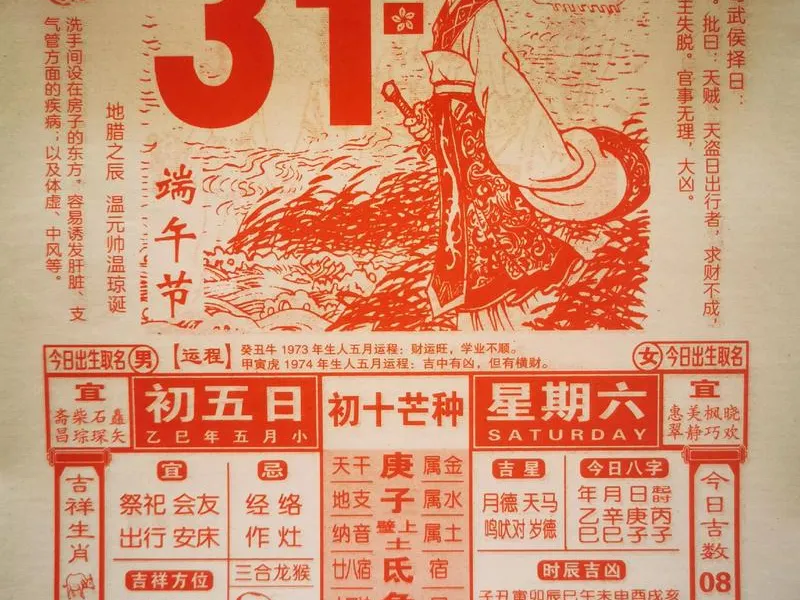
The lunar calendar has been a cornerstone of Chinese life for thousands of years. From marking festivals and agricultural cycles to influencing cultural rituals, the lunar calendar is far more than a method of keeping time—it is a reflection of humanity’s connection to the moon, nature, and the cosmos. In this article, we will explore the lunar calendar in depth, addressing key questions such as what is a lunar calendar, how does it work, how accurate is it, and its significance in Chinese culture.
What Is the Lunar Calendar and How Does It Work?
When someone asks, “what is a lunar calendar,” the answer is deceptively simple: it is a calendar system based on the cycles of the moon. Unlike the solar calendar used internationally today, which measures time according to the Earth’s orbit around the sun, a lunar calendar tracks the phases of the moon. The word “lunar” itself derives from luna, the Latin term for the moon, highlighting its celestial origin.
In Chinese, the lunar calendar is often referred to as 农历 (nónglì), literally meaning “agricultural calendar,” underscoring its historical role in guiding planting and harvesting. Farmers in ancient China relied on the lunar calendar to determine when to sow seeds, irrigate fields, and reap crops. The moon’s predictable cycles were more visible and practical for daily life than the sun’s slower progression.
A lunar month begins with the new moon, progresses through the waxing crescent, first quarter, waxing gibbous, and reaches the full moon, before waning back to a new moon. Each complete cycle takes roughly 29.53 days, slightly shorter than a solar month. Because of this, a purely lunar calendar would fall out of sync with the solar year, causing seasonal drift.
To address this, the traditional Chinese lunar calendar incorporates intercalary months, or “leap months,” added approximately every three years to realign lunar months with the solar year. This is why the lunar calendar does not have a fixed correspondence to the Gregorian calendar; the dates of festivals like Chinese New Year shift each year relative to January 1.
A full lunar year typically contains 12 months, each with 29 or 30 days, depending on the moon’s phases. Occasionally, a leap month is added, resulting in a 13-month year. This complex system balances the lunar cycle with the solar cycle, maintaining seasonal consistency while staying faithful to the moon’s rhythm.
The accuracy of the Chinese lunar calendar is remarkable, especially considering its ancient origins. Developed thousands of years ago, it combines careful astronomical observation with mathematical calculation. Ancient Chinese astronomers, such as those in the Han dynasty, tracked the moon and sun to develop rules for leap months, ensuring that festivals and agricultural activities fell at appropriate times.
From a practical perspective, the lunar calendar is not just a scientific tool—it is a living cultural framework. For millennia, it has guided daily life, festivals, and rituals, including ancestor worship, weddings, and seasonal celebrations. The lunar calendar’s influence can still be felt today, as millions of Chinese people follow it to determine holidays, birthdays, and even auspicious days for important events.
Ancient Chinese scholars used meticulous observation, recording the first appearances of the crescent moon, tracking eclipses, and noting seasonal changes. They developed intricate formulas, combining solar terms (二十四节气, èrshísì jiéqì) with lunar months, creating a lunisolar calendar that harmonizes moon and sun.
The lunar calendar’s design reflects a worldview in which humans are interconnected with the cosmos. Each new moon, full moon, and seasonal shift is a reminder of nature’s rhythm, and following the calendar became a way to live in harmony with the environment.
The Historical Origins of the Lunar Calendar
Questions like “who invented the lunar calendar” or “how does the lunar calendar work historically” open a window into Chinese civilization’s intellectual achievements. The earliest known lunar calendars in China date back to the Xia dynasty (c. 2070–1600 BCE). Archaeological evidence, including oracle bones and bronze inscriptions, suggests that ancient Chinese societies were already tracking lunar phases to guide agricultural cycles.
By the Shang dynasty, lunar calendars had become more formalized, marking months, festivals, and ceremonial observances. These early calendars were predominantly lunar, with months alternating between 29 and 30 days. However, discrepancies between the lunar year and the solar year eventually necessitated refinement.
During the Han dynasty, Chinese astronomers made significant advances, incorporating solar terms into the lunar calendar. These 24 solar terms divide the solar year into segments reflecting seasonal changes, such as the beginning of spring (立春, Lìchūn) or the winter solstice (冬至, Dōngzhì). This innovation allowed the lunar calendar to stay synchronized with the agricultural year, preventing crops from being planted too early or too late.
The lunar calendar’s development was not just technical but deeply cultural. Chinese emperors used calendars to assert authority and coordinate festivals. Accurate calendars signified a ruler’s wisdom and legitimacy. Astronomical knowledge and calendar-making were thus closely tied to politics and social order.
Through dynasties, the lunar calendar continued to evolve. Mathematicians and astronomers refined intercalary month rules and adjusted month lengths to reflect precise moon cycles. Even today, many modern Chinese calendars retain these ancient principles, demonstrating a continuity of knowledge spanning thousands of years.
Lunar calendars were not unique to China—many ancient civilizations observed the moon. However, the Chinese system’s sophistication, combining lunar months with solar terms, is unique. Its blend of practicality, culture, and astronomy set it apart, making it highly accurate for its time and remarkably resilient to modern calendrical reforms.
Lunar Calendar in Modern Life and Cultural Significance
Even in today’s digital and globalized world, the Chinese lunar calendar continues to play a central role. Millions of people consult it for festivals, birthdays, and cultural rituals. Events like Chinese New Year, the Mid-Autumn Festival, and Dragon Boat Festival are all determined by the lunar calendar, rather than the Gregorian calendar.
Understanding how the lunar calendar works also reveals its cultural resonance. For example, Chinese New Year is celebrated on the first day of the first lunar month, typically falling between late January and mid-February. Families reunite, feasts are prepared, and rituals are observed—all timed according to the moon’s cycles.
The lunar calendar also guides agricultural traditions. Farmers historically depended on it for planting and harvesting. Modern lunar-based festivals, such as the Lantern Festival or Qingming Festival, are rooted in these cycles, even if urbanization has lessened direct agricultural dependence.
For foreigners exploring Chinese culture, learning the lunar calendar offers insight into how time, nature, and tradition intertwine. It explains why festivals “move around” relative to the Western calendar, and why certain months carry symbolic meanings. For instance, the eighth lunar month is celebrated as the harvest moon month, central to Mid-Autumn festivities, while the fifth lunar month historically carries dragon boat rituals to ward off evil spirits.
From a scientific standpoint, the lunar calendar demonstrates remarkable precision. Even with its intercalary months, it remains aligned with the solar year to prevent drift. The combination of 29- and 30-day months and leap months ensures that festivals occur in the correct seasons. In comparison with other ancient lunar calendars worldwide, the Chinese lunar system is among the most mathematically refined.
Culturally, the lunar calendar embodies philosophical and spiritual values. Its cycles symbolize life’s impermanence and renewal, while the phases of the moon are associated with reflection, celebration, and family unity. In Chinese literature and poetry, moon phases are recurring metaphors for longing, beauty, and time itself.
Even in daily life, many people consult the lunar calendar for auspicious dates, especially when planning weddings, starting businesses, or performing religious rites. This continuity underscores the calendar’s enduring relevance, bridging ancient tradition and modern practice.
Finally, the lunar calendar also plays a role in international cultural exchange. Chinese festivals attract global attention, while the calendar’s unique design inspires curiosity about astronomy, mathematics, and anthropology. For anyone learning Chinese or exploring Chinese culture, understanding the lunar calendar is an essential step toward appreciating the rhythm, symbolism, and ingenuity embedded in daily life.
Conclusion
The Chinese lunar calendar is far more than a system of timekeeping. It is a sophisticated scientific instrument, a cultural compass, and a living tradition that continues to influence life in modern China. From tracking the moon’s phases to guiding agricultural cycles, from defining festivals to shaping family life, it exemplifies the interplay of astronomy, culture, and daily practice.
Whether one asks, “what is the lunar calendar,” “how many months in the lunar calendar,” or “how accurate is the Chinese lunar calendar,” the answer is clear: it is a testament to human ingenuity, cultural continuity, and the timeless fascination with the moon. For foreigners and Chinese learners alike, the lunar calendar offers not only practical knowledge but a deeper understanding of China’s historical and contemporary life—a bridge between the cosmos and culture, observed one moon phase at a time.