
The Chinese Phoenix: Fenghuang, Beauty, and Harmony in Chinese Culture
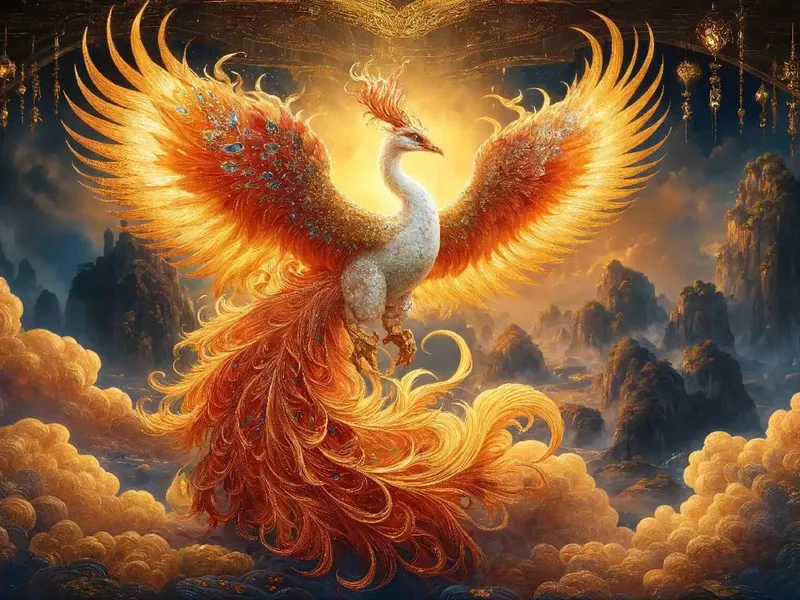
The Chinese Phoenix: Fenghuang, Beauty, and Harmony in Chinese Culture
When most people think of mythical birds, the first image that comes to mind is the Western phoenix: a fiery creature rising from its own ashes, symbolizing rebirth. But in China, there is another phoenix — the Fenghuang (凤凰) — a creature of grace, virtue, and celestial harmony. Unlike the Western phoenix, which thrives on the drama of fire and resurrection, the Chinese phoenix symbolizes moral perfection, balance, and beauty, resonating with centuries of Chinese aesthetics and philosophy.
Whether you encounter a Chinese phoenix bird carved into jade, painted on silk scrolls, woven into wedding decorations, or even referenced in the modern Chinese Phoenix Express, understanding the Fenghuang gives insight into how the Chinese perceive harmony, femininity, and elegance in both myth and everyday life.
I. The Origins of the FenghuangThe Fenghuang is ancient, with origins traced back to Neolithic China. Early artifacts, including jade carvings and bronze patterns, feature bird-like figures with long flowing tails and intricate plumage. These were not merely decorative; they were spiritual symbols, representing connection between humans and the divine.
Unlike the Western phoenix, which is reborn from its ashes, the Fenghuang is everlasting in symbolism. It embodies the perfect combination of virtues:
• Benevolence (Ren, 仁)
• Righteousness (Yi, 义)
• Courtesy (Li, 礼)
• Wisdom (Zhi, 智)
• Sincerity (Xin, 信)
Every feather, every curve of the Fenghuang is imbued with moral significance, transforming it from a mythical creature into a cultural guidepost for proper conduct and beauty.
The Fenghuang is rich in symbolism. It represents virtue, grace, and harmony, often appearing in pairs with the Chinese dragon. In this pairing:
• The dragon represents yang, masculine energy
• The phoenix embodies yin, feminine energy
Together, they symbolize marital harmony, balance, and prosperity.
1. Virtue and Moral Perfection
In Chinese lore, the Fenghuang only appears when the world is at peace and ruled by virtue. It is a sign of a wise and just reign, signaling that morality and harmony prevail. For centuries, emperors and scholars regarded the phoenix as a symbol of ethical excellence, grace, and refinement.
2. Harmony and Balance
Fenghuang also represents balance in life and nature. It embodies the philosophy that virtue must be complemented by wisdom, that beauty without grace is incomplete. In traditional weddings, dragon-phoenix motifs are common, symbolizing the perfect union of opposites.
3. Elegance and Beauty
Perhaps the most apparent quality of the Fenghuang is its ethereal elegance. Descriptions of the bird in classical texts emphasize long flowing tail feathers, colorful plumage, and gentle demeanor. Unlike the fiery Western phoenix, Fenghuang inspires admiration through poise, refinement, and the quiet power of beauty.
III. Fenghuang in Chinese ArtThe Fenghuang appears in virtually every form of traditional Chinese art:
• Paintings: Often portrayed soaring among clouds, perched on blossoming branches, or dancing above rivers, emphasizing elegance and motion.
• Ceramics and Porcelain: Motifs on vases, plates, and teapots symbolize good fortune, prosperity, and harmony, making them traditional gifts for weddings and celebrations.
• Embroidery and Textiles: Silk robes, wedding gowns, and ceremonial banners feature phoenix motifs representing nobility, virtue, and grace.
• Architecture and Woodwork: Carvings adorn temple beams, palace roofs, and screens, often combined with dragons for protection and harmony.
IV. Fenghuang in LiteratureFrom Confucian classics to Tang poetry, the phoenix is a recurring symbol of virtue, beauty, and auspicious times. Famous idioms include:
• 凤求凰 (fèng qiú huáng): “The phoenix seeks its mate,” representing romantic devotion.
• 龙凤呈祥 (lóng fèng chéng xiáng): “Dragon and phoenix bring prosperity,” often seen in weddings or festive decorations.
The Fenghuang appears in festivals, celebrations, and even modern culture:
• Weddings: Dragon-phoenix motifs decorate invitations, cakes, and gowns.
• Chinese Phoenix Express: Modern branding uses the phoenix motif for speed, elegance, and reliability.
• Temple Decorations and Public Art: Carvings and statues celebrate virtue, beauty, and peace.
The phoenix is written as 凤凰 (fènghuáng) in Chinese.
• 凤 (fèng): traditionally male, modern usage neutral
• 凰 (huáng): traditionally female
This word appears in idioms, poetry, and names, emphasizing its cultural and linguistic significance.
Step-by-step guide:
• Start with the head: Draw a slender beak, expressive eyes, and flowing crest feathers.
• Sketch the body and wings: Elegant curves suggest movement, grace, and lightness.
• Draw long tail feathers: Layered and flowing, central to the bird’s elegance.
• Add decorative elements: Clouds, flowers, and water motifs symbolize virtue, harmony, and beauty.
• Use meaningful colors: Red for good fortune, gold for nobility, blue and green for vitality and nature.
In Chinese philosophy and Feng Shui, the phoenix represents renewal, grace, and auspicious energy. Paired with the dragon in household decorations, it balances yin and yang and symbolizes harmony in relationships.
IX. Fun Facts About the Chinese Phoenix• The phoenix is considered eternal in virtue, not a firebird reborn from ashes.
• Fenghuang feathers often contain five colors, representing the Five Virtues.
• Seeing a phoenix in art or architecture traditionally signified peace and prosperity.
• Modern references, like Chinese Phoenix Express, connect cultural symbolism with daily life.
Ways to experience the Fenghuang:
• Museums: Ancient jade carvings and paintings showcase cultural significance.
• Temples and palaces: Architectural carvings reveal symbolic meanings.
• Weddings: Traditional motifs illustrate Fenghuang symbolism in daily life.
• Art and tattoos: Modern interpretations merge tradition with personal expression.
The Chinese phoenix (Fenghuang) is more than a mythical bird. It is a symbol of virtue, balance, and timeless beauty, inspiring artists, poets, and everyday people for thousands of years. Encountering a Fenghuang — in a painting, in architecture, or even on a train called the Chinese Phoenix Express — invites appreciation of the elegance, moral depth, and aesthetic harmony of China. The phoenix teaches us that beauty is not just in power or might, but in virtue, balance, and the quiet strength of grace — a lesson that remains relevant across centuries and borders.