
Ten Midday Wonders: Exploring the Heart of Chinese Lunch Culture
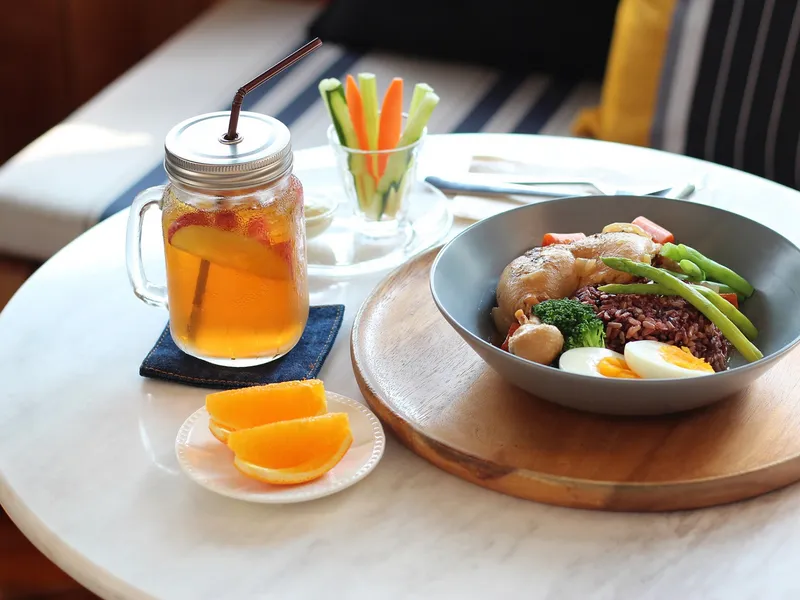
If you’ve ever wandered through a Chinese city at noon—whether it’s a glass-tiled business district in Shanghai or a humid alleyway in Chengdu—you’ll notice that Chinese lunch is not a quiet affair. It is a living, breathing moment of the day, full of steam, clatter, people, and appetite. Office workers spill out of buildings with the same urgency as students running out of school. Delivery scooters swarm like bees. Vendors shout over bubbling woks. And somewhere in this tapestry of noise and aroma, you discover one truth: lunch in China is an entire cultural landscape.
For foreigners or new Chinese learners searching online for “chinese lunch specials near me” or trying to understand how to say lunch in Chinese language, the experience is always the same. You arrive expecting a simple meal. What you get is a world.
To say “lunch” in Mandarin Chinese, you use the word wǔfàn (午饭)—but that single syllable hardly captures the range of flavors and stories behind it. In China, lunch is rarely just one dish; it is a mood, a rhythm, a social pulse. It’s nourishment for both the body and the day ahead. And if you ask locals about the best Chinese lunch specials, they will not point you to a menu—they will point you to memories.
What follows is not a list, but a journey through ten dishes that define the Chinese midday table. These lunches are not arranged by level of fame or price or region. They appear the way they do in life: suddenly, vividly, and full of character.
1. Char Siu Rice — A Cantonese Noon Under Soft Sunlight
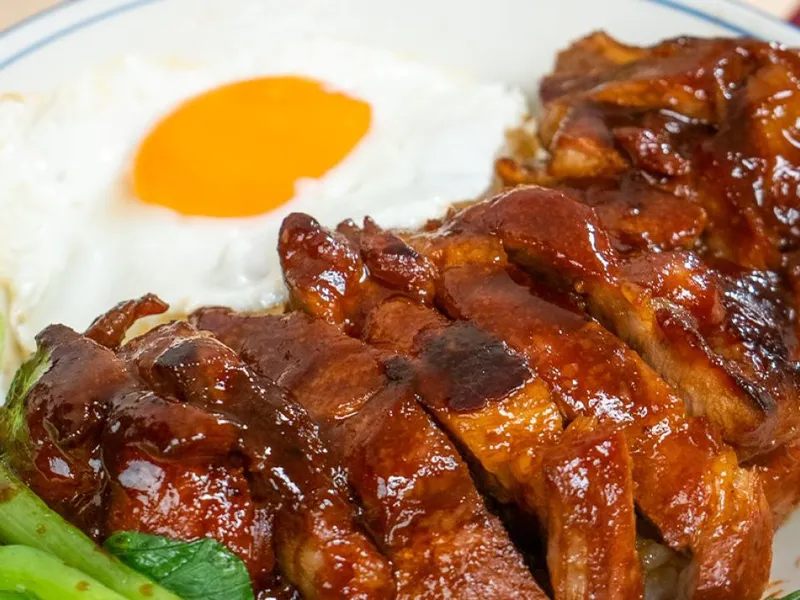
Lunchtime in Guangzhou often begins with a faint sweetness in the air. Step near any roasted-meat shop and you’ll see glistening slabs of char siu hanging in the window like edible lanterns. A plate of char siu rice arrives unpretentiously: perfect slices of caramelized pork arranged over white rice, a drizzle of glossy sauce pooling at the edges.
It is both humble and deeply comforting. The flavor—sweet, smoky, a little sticky—lingers like a warm memory. If someone ever asks you what Chinese food lunch tastes like in its most universal, lovable form, you could simply hand them this plate.
2. Mapo Tofu — A Midday Earthquake from Sichuan
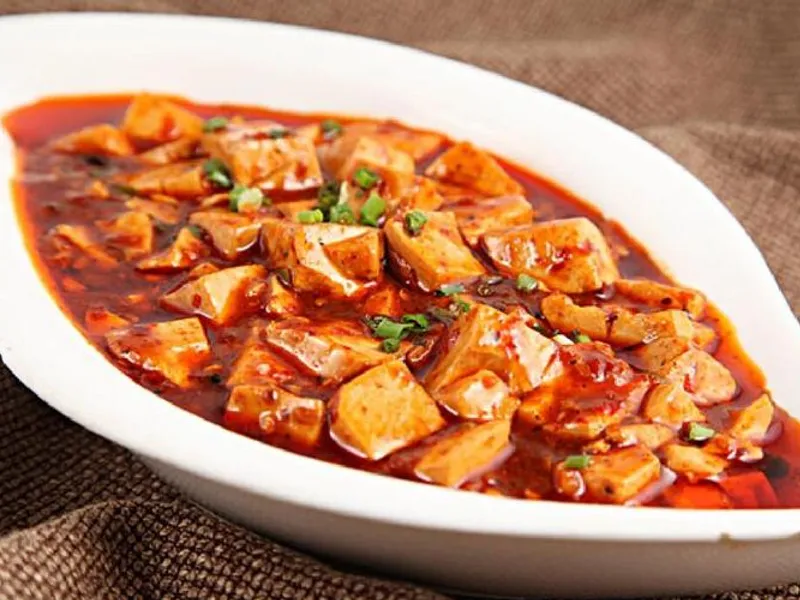
To eat mapo tofu at lunch is to willingly let your tongue catch fire. The dish is a constellation of minced beef, tofu cubes, doubanjiang, and Sichuan peppercorns. When the peppercorns bloom on your tongue, the world briefly vibrates. Yet it’s not spice for punishment—it’s spice for thrill, for awakening, for the jolt everyone needs before afternoon meetings.
3. Lanzhou Beef Noodles — A Cross-Country Story in a Bowl
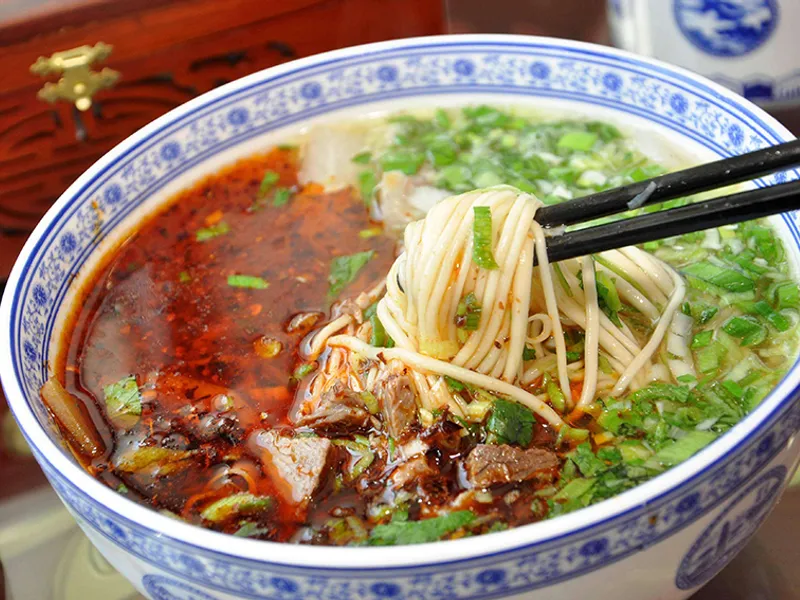
No discussion of Chinese lunch special dishes is complete without the rhythmic slapping sound of hand-pulled noodles. Lanzhou beef noodles are a quiet masterpiece: clear broth, thin noodles, bright red chili oil, and fresh herbs. Almost every city in China has a Lanzhou noodle shop run by Hui Muslims, and eating it feels like traveling without leaving your seat.
4. Dumplings and Vinegar — Northern China’s Midday Ritual
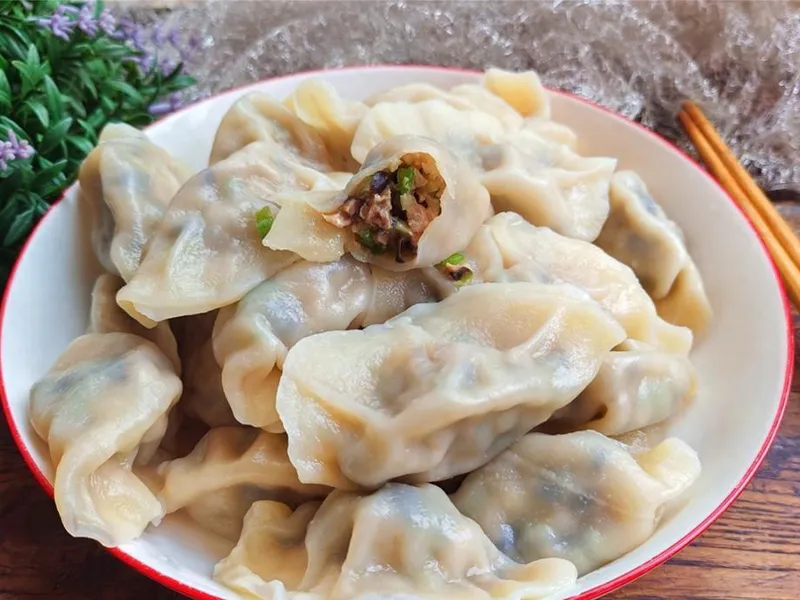
Dumplings are not reserved for dinner, New Year, or family reunions. In northern cities—Shenyang, Harbin, Tianjin—dumplings at lunch are practically a lifestyle. Workers gather around round tables, dipping freshly boiled jiaozi in black vinegar, sometimes with raw garlic for extra intensity. Dumplings embody the Chinese idea of “home.” Yet in a busy lunch shop, they also represent camaraderie. A dozen dumplings shared with colleagues can say everything that words don’t.
5. Clay Pot Rice — The Comfort of Slow Fire
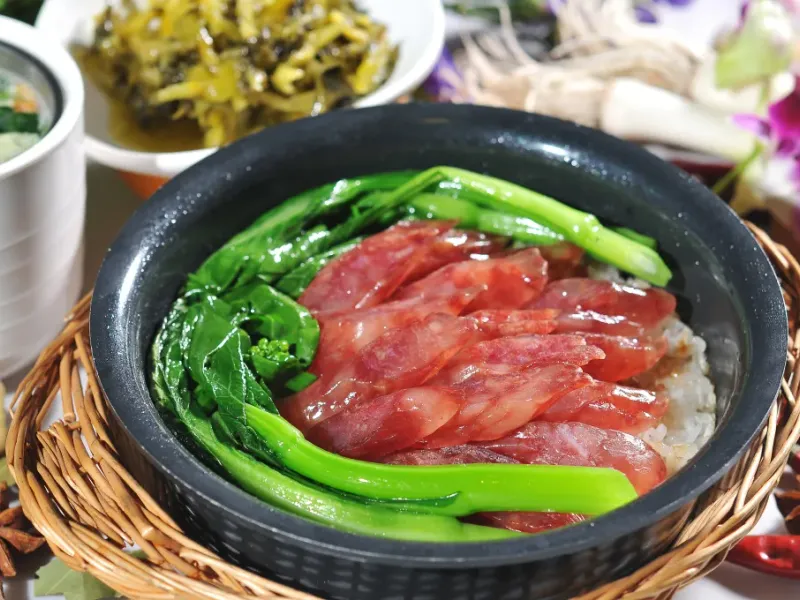
In Hong Kong and many southern cities, clay pot rice is a noon treasure. Served in its original pot, the rice forms a crispy layer at the bottom—treasured like gold. Sausages, chicken, or mushrooms sit on top, their flavors seeping into the grains. People argue endlessly about the best pot rice shop in every district. The winner usually has a line stretching down the street at 12:30 p.m.
6. Biangbiang Noodles — Shaanxi’s Lunchtime Thunder
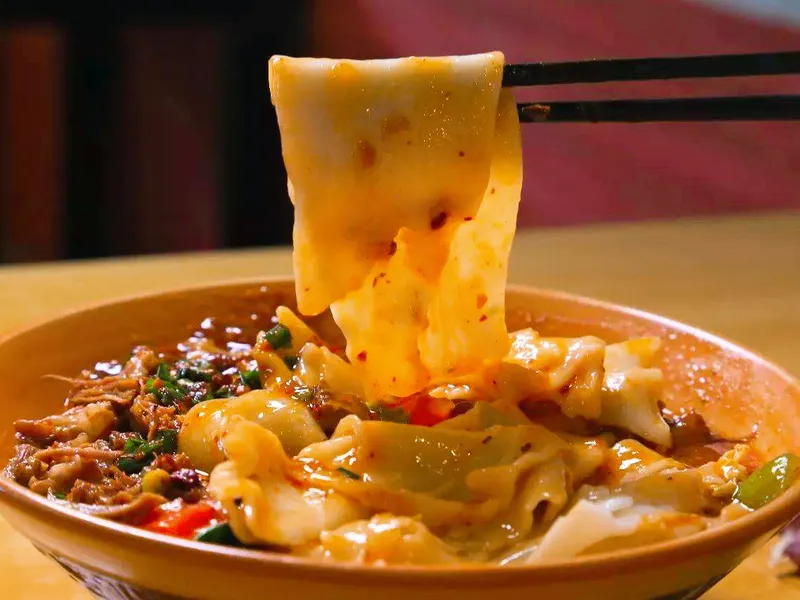
Wide as belts and long as stories, biangbiang noodles are dramatic. Made from thick dough slapped against wooden counters, they are drenched in chili, garlic, and vinegar. Each strand looks impossible to eat neatly—but that is the charm. Foreigners learning lunch in Mandarin Chinese may memorize “wǔcān,” but biangbiang noodles teach a different kind of language: the language of bold flavors, hearty textures, and unapologetic messiness.
7. Cantonese Dim Sum — Lunch as a Social Gathering
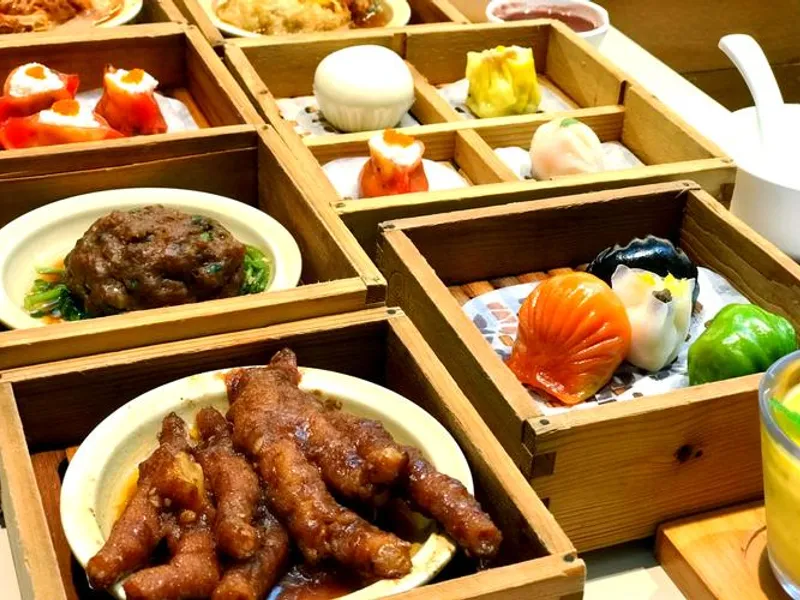
Dim sum is often seen as brunch, but in southern China it effortlessly becomes lunch. Bamboo steamers filled with har gow, siu mai, and soft buns arrive like a parade. Elderly uncles play cards, friends refill tea, and waiters push trolleys stacked high with choices. Eating dim sum is less about the dishes and more about the unhurried pace—an antidote to the fast urban grind.
8. Yunnan’s Crossing-the-Bridge Noodles — A Warm Escape
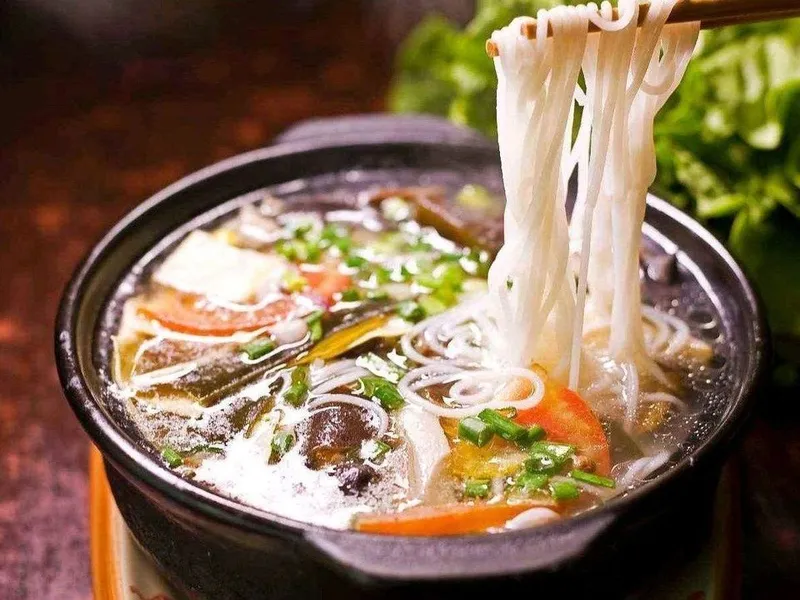
This dish tells a legend: a scholar studying on an island, his wife carrying noodles across a long bridge to keep him fed. The broth, enriched with chicken and pork fat, remains hot for hours. Today, the dish is served by bringing raw ingredients to your table—noodles, quail eggs, thin meats—and letting you assemble them in steaming broth. A Chinese lunch special built from folklore feels like lunchtime theater.
9. Hainanese Chicken Rice — Purity in Every Bite
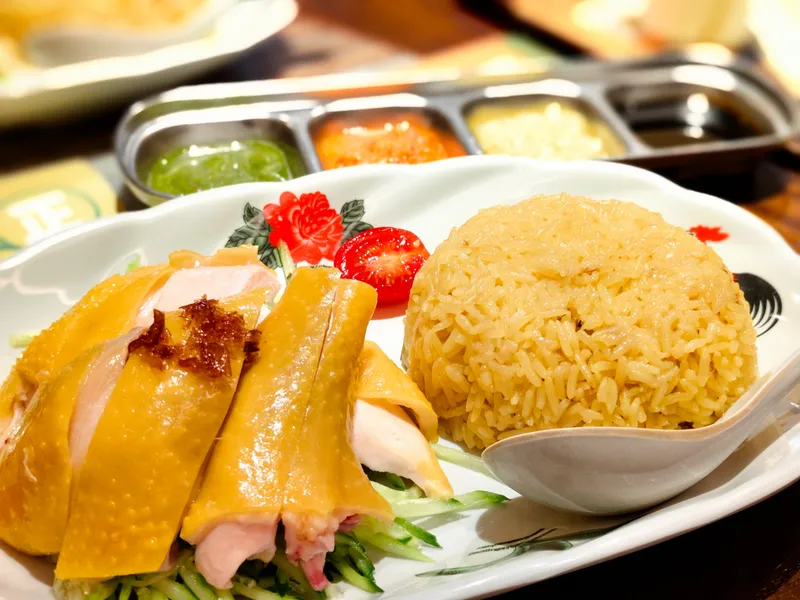
In southern China, particularly Hainan, lunch can be deceptively simple: boiled chicken, fragrant rice cooked in chicken broth, and a trio of sauces. The magic is not complexity but clarity—clean flavors, fresh ingredients, confidence in restraint. This dish shows a truth about Chinese cuisine: nothing needs to shout to be unforgettable.
10. Stir-Fried Beef Ho Fun — The Taste of Urban Speed
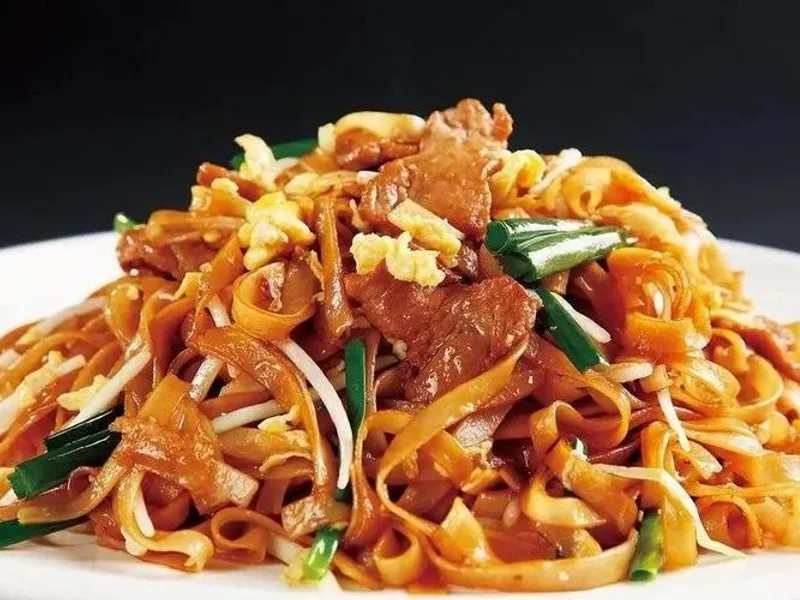
In any city’s business district, you’ll smell ho fun being fried in oversized woks. The technique requires high heat and speed; otherwise, the noodles stick. When done right, the dish carries the smoky “wok hei”—the soul of Cantonese stir-fry. Workers grab it in takeout boxes, often while refreshing delivery apps to check if the best Chinese lunch specials near me have sold out.
Lunch in China: More Than a Meal
So what does all of this say about Chinese lunch? It tells us that lunch in China is a cultural anchor. It adapts to climate, region, work rhythm, and personal history. It can be fast, like a bowl of noodles inhaled between classes. It can be slow, like dim sum shared over gossip. It can be fiery, sweet, clean, or heavy. But it is always sincere, always connected to the day’s energy.
And for foreigners navigating menus, learning how to say lunch in Chinese, or scrolling apps for chinese lunch specials, these dishes provide more than calories—they open a window into a country. To say lunch in Mandarin Chinese—wǔfàn—is to say a word that carries the weight of generations, migration, creativity, and everyday life.
Why Chinese Lunch Feels Different
Western lunch often works as a functional break: a sandwich, a salad, maybe a soup. But in China, lunch remains emotionally rooted. You see:
- Students lining up for rice plates with vegetables and pork.
- Elderly neighbors sharing noodles under trees.
- Office workers arguing gently over which noodle shop is better.
- Delivery riders carrying dozens of orders tied to their scooters.
- Grandmothers buying fresh dumplings for their grandchildren.
Lunch becomes an invisible thread connecting cities, families, strangers, and the landscape itself.
The Invisible Art of the Chinese Lunch Special
Foreigners are often surprised by the phrase “Chinese lunch special.” In the West, it’s associated mostly with American-Chinese restaurants offering discounted plates between 11 a.m. and 3 p.m. But in China, lunch specials appear in another form: vendor habits, seasonal dishes, daily menus handwritten in chalk, or lunchboxes assembled by restaurants that know their crowds.
You won’t always see a discount sign. You just see people. If a line forms at noon, that is the lunch special.
Lunch, Language, and Learning
For Chinese learners, even the language around lunch becomes part of the journey. Beyond wǔfàn, you learn:
- “I’m going to lunch” → Wǒ qù chī wǔfàn.
- “What’s for lunch?” → Wǔfàn chī shénme?
- “Where should we eat?” → Wǒmen qù nǎr chī?
But vocabulary only scratches the surface. The real fluency comes from experiences: sitting at a plastic table, feeling the weight of a hot rice bowl, hearing chopsticks scrape porcelain, and watching someone pour vinegar over dumplings.
Conclusion: Ten Dishes, One Story
These ten dishes do not represent all of China. They represent moments—tiny windows into a country that has millions of lunch stories happening every single day. Each dish carries a region’s history, a city’s rhythm, a family’s tradition, or a cook’s pride.
To explore Chinese food lunch is to explore a living archive of culture. And next time you search for Chinese lunch specials near me, remember that you’re not just choosing a meal. You’re choosing a chapter in the continuing story of China.