
Lantern Festival: A Radiant Finale to the Lunar New Year
A vibrant scene of Lantern Festival celebrations with colorful lanterns illuminating the night sky.
Table of Contents
Lanterns are the unmistakable heart of the Lantern Festival, a fact already written into its very name. From ancient times to the present, light has symbolized hope, blessing, and connection between the human world and the heavens.
The Lunar New Year celebrations reach their glowing finale with the Lantern Festival, known in Chinese as 元宵节 (Yuánxiāo Jié). In 2026, this vibrant festival will be observed on March 3 according to the Gregorian calendar.
With a history spanning more than two millennia, the Lantern Festival has evolved into a richly layered celebration. At its heart, it symbolizes reunion, harmony, and the return of social life after the New Year period. Deeply rooted in ancient spiritual customs, the festival also carries romantic undertones and is sometimes affectionately referred to as the “real” Chinese Valentine’s Day.
On this night, cities and towns come alive with glowing lanterns and festive energy. People gather to admire the full moon, light and release lanterns, solve clever lantern riddles, enjoy lively lion dances, and savor tangyuan (sweet glutinous rice balls), a dish that represents unity and togetherness.
According to the lunar calendar, the Lantern Festival always falls on the 15th day of the first lunar month, marking the first full moon of the new year. Below are the Gregorian calendar dates for recent and upcoming Lantern Festivals:
- • 2018: February 16
- • 2019: February 19
- • 2020: February 8
- • 2021: February 26
- • 2022: February 15
- • 2023: February 5
- • 2024: February 24
- • 2025: February 12
- • 2026: March 3
- • 2027: February 21
Cultural Meaning of the Lantern Festival
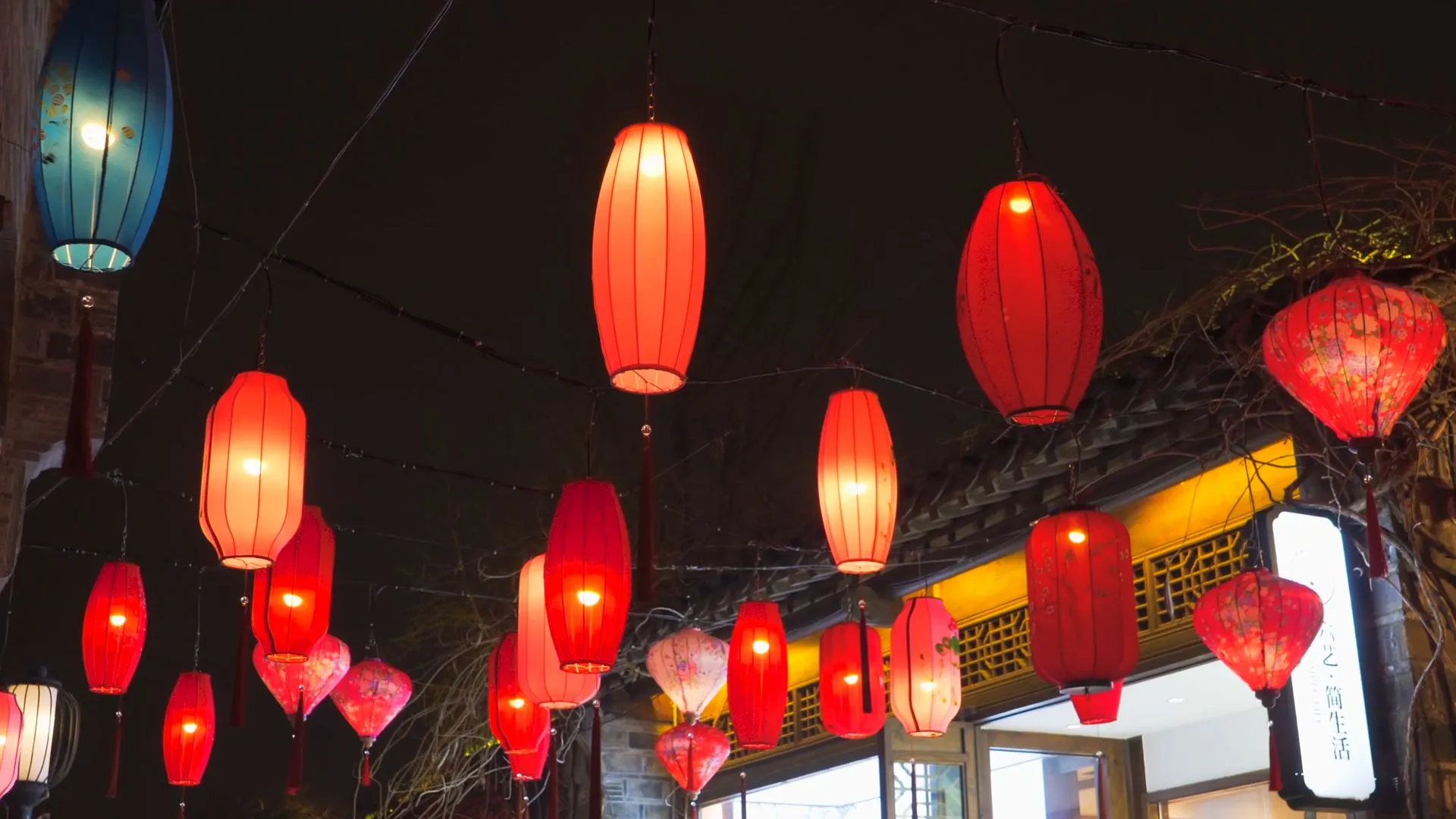
Intricate and vibrant lanterns on display during the Lantern Festival, showcasing traditional Chinese craftsmanship and design.
The Spring Festival period traditionally centers on family. From the New Year’s Eve reunion dinner to拜年 (bài nián) visits with relatives, in-laws, and neighbors over the following days, the early part of the holiday is largely spent within close social circles. By the fifth day of the lunar new year, most businesses reopen and daily life gradually returns to its usual rhythm.
The Lantern Festival, held on the 15th day of the lunar month, marks a shift in atmosphere. On this night, people of all ages step outside to celebrate together. While the festival continues the theme of reunion, it also represents openness, social interaction, and a rare sense of freedom. Streets fill with lantern light, laughter, and communal energy, transforming public spaces into places of shared celebration.
Historically, this night carried special meaning for women. In ancient China, social conventions often restricted women’s movement in public. During the Lantern Festival, however, these boundaries loosened. Women could walk freely through the streets, admire lantern displays, take part in games, and interact with others. These rare moments of social freedom gave rise to countless romantic legends, which is why the Lantern Festival is sometimes regarded as the “true” Chinese Valentine’s Day, even more so than Qixi (七夕).
Beyond its social and romantic associations, the Lantern Festival also holds spiritual importance. In ancient times, it played a role in folk religious practices, and today it continues to be observed within Buddhist traditions as well as in the cultural customs of various ethnic minority groups. Together, these layers of meaning make the Lantern Festival a celebration that blends family, society, romance, and belief into a single luminous night.
Origins and Historical Background
Most scholars agree that the Lantern Festival dates back over 2,000 years to the Western Han dynasty. One of its earliest recorded origins is linked to Emperor Wu of Han (汉武帝 / Hàn Wǔdì), who designated the 15th day of the first lunar month as a time to perform grand sacrificial rituals in honor of Taiyi (太一神 / Tàiyī Shén), a supreme deity associated with the cosmos and universal order.
Following Emperor Wu’s reign, the empire experienced political turbulence and power struggles. Stability was eventually restored under Emperor Wen of Han (汉文帝 / Hàn Wéndì). To commemorate the return of peace and unity, he declared the 15th day of the lunar new year a national celebration. On this occasion, households across the country lit candles and lanterns, filling the night with light and festivity. This lively tradition came to be known as 闹元宵 (nào yuánxiāo), with “nào” conveying a sense of joyful bustle, excitement, and communal celebration.
The festival later absorbed strong Buddhist influences during the Eastern Han dynasty. Emperor Ming of Han (汉明帝 / Hàn Míngdì), a devoted supporter of Buddhism, learned that Buddhist monks traditionally lit lanterns on the 15th day of the lunar month to honor the Buddha. Inspired by this practice, he ordered lanterns and candles to be lit in the imperial palace and temples, and encouraged ordinary citizens to hang lanterns as well.
Over time, these imperial rituals, folk customs, and Buddhist traditions blended together. Through centuries of adaptation and celebration, they evolved into the Lantern Festival as it is recognized today: a luminous night shaped by history, belief, and collective joy.
Lantern Festival Celebrations Through Time
The length and intensity of Lantern Festival celebrations have changed considerably over the course of Chinese history. In modern China, the Lantern Festival is no longer an official public holiday, meaning there are no days off work or school. As a result, celebrations today are usually concentrated on the evening of the 15th day of the lunar month, with festivities often limited to a single night.
Historically, however, the Lantern Festival was a much grander and longer affair. The most extravagant celebrations are often associated with the Ming dynasty, when Lantern Festival activities could last for nearly an entire month. Cities and towns were illuminated with elaborate lantern displays, nightly performances, and public gatherings that turned the festival into one of the most anticipated social events of the year. For people living in that era, the Lantern Festival was not just a finale to the New Year celebrations, but a prolonged season of joy, entertainment, and communal life.
Over time, as social structures, work schedules, and urban life evolved, the scale of the festival gradually became more compact. Even so, many traditions remain deeply rooted, and the Lantern Festival continues to blend seamlessly with other seasonal observances. In some regions, it overlaps with local temple fairs, folk performances, or religious rituals, which are now celebrated alongside Lantern Festival customs. These combined celebrations keep the spirit of the festival alive, ensuring that even in its shorter modern form, the Lantern Festival remains a vibrant and meaningful conclusion to the Lunar New Year season.
Lighting the Lanterns
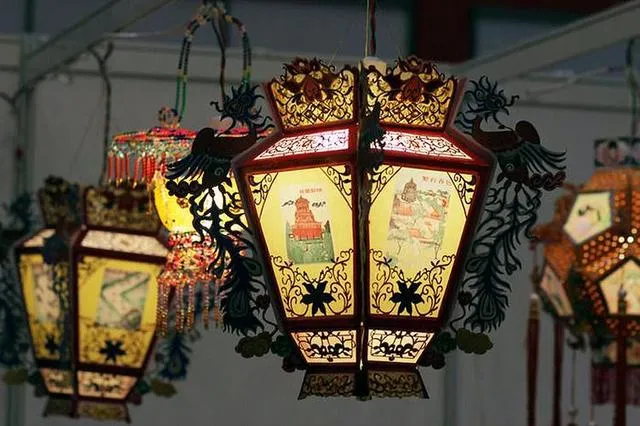
Beautiful lanterns being lit during the Lantern Festival, symbolizing hope, blessing, and connection between the human world and the heavens.
Lanterns are the unmistakable heart of the Lantern Festival, a fact already written into its very name. From ancient times to the present, light has symbolized hope, blessing, and connection between the human world and the heavens.
In its earliest form, the Lantern Festival was also known as Shangyuan (上元), a celebration dedicated to the Heavenly Palace (天宫 tiāngōng). Families would set up offerings in their courtyards to honor the gods, and a lit lantern placed beside the altar symbolized a divine presence or seat. Light, in this sense, was both sacred and symbolic, serving as a bridge between mortals and deities.
Over the centuries, lantern designs have evolved into an astonishing variety of forms. Some are small enough to cradle in one hand, while others are massive creations comparable to parade floats. Many lanterns are shaped like animals, flowers, mythological figures, or characters that convey wishes for luck, longevity, or prosperity.
One particularly well-known type is the Kongming lantern (孔明灯 kǒngmíng dēng), also called a sky lantern (tiāndēng 天灯). Historically, these lanterns were used as military signals to indicate safety after battles. Today, they have taken on a more romantic and hopeful role, with people releasing them into the night sky while making wishes for happiness, success, and good fortune.
The sky lantern also carries deeper linguistic symbolism. The term tiāndēng (天灯) sounds similar to tiān dīng (添丁), meaning “adding a child to the family.” Because of this wordplay, lanterns were traditionally gifted to newlyweds or couples hoping for children, as a way of passing on blessings of fertility and family continuity. Pregnant women were sometimes given a pair of small lanterns, symbolizing wishes for the health and safety of both mother and baby.
In certain regions, lantern customs even extend into folk divination. Some families burn lanterns and interpret the shape of the remaining ashes to predict the gender of a future child, blending symbolism, language, and belief into a single ritual.
Through these traditions, lanterns remain far more than decorative objects. They illuminate wishes, preserve ancient beliefs, and continue to light the path between tradition and modern celebration.
Traditions and Activities
The Lantern Festival offers far more than a sea of glowing lights. Across China, the celebration unfolds through dynamic customs that combine sound, motion, craftsmanship, and communal joy, transforming towns and cities into living stages of tradition.
In Shanxi, shehuo (社火) performances take center stage during the Lantern Festival period. These folk spectacles feature costumed performers reenacting legends, historical tales, and mythical scenes. Accompanied by gongs and drums, the performances are loud, colorful, and highly theatrical, symbolizing blessings for good harvests and peace in the coming year. Entire villages often participate, making shehuo a powerful expression of collective identity.
In Zhejiang, the festival is marked by elaborate lantern parades. Locals carry handcrafted lanterns shaped like fish, flowers, or zodiac animals through streets and waterways. These lanterns are not merely decorations but moving artworks, reflecting regional craftsmanship and aesthetic traditions. The slow procession creates a calm yet magical atmosphere, emphasizing harmony and continuity.
Beyond these regional highlights, the Lantern Festival is celebrated nationwide through a variety of shared traditions, each contributing a distinct rhythm and character to the night. Whether through performance, procession, or playful interaction, these activities bring people together and ensure that the festival remains vibrant, immersive, and deeply rooted in everyday life.
Lantern Riddles (猜灯谜 / cāi dēng mí)
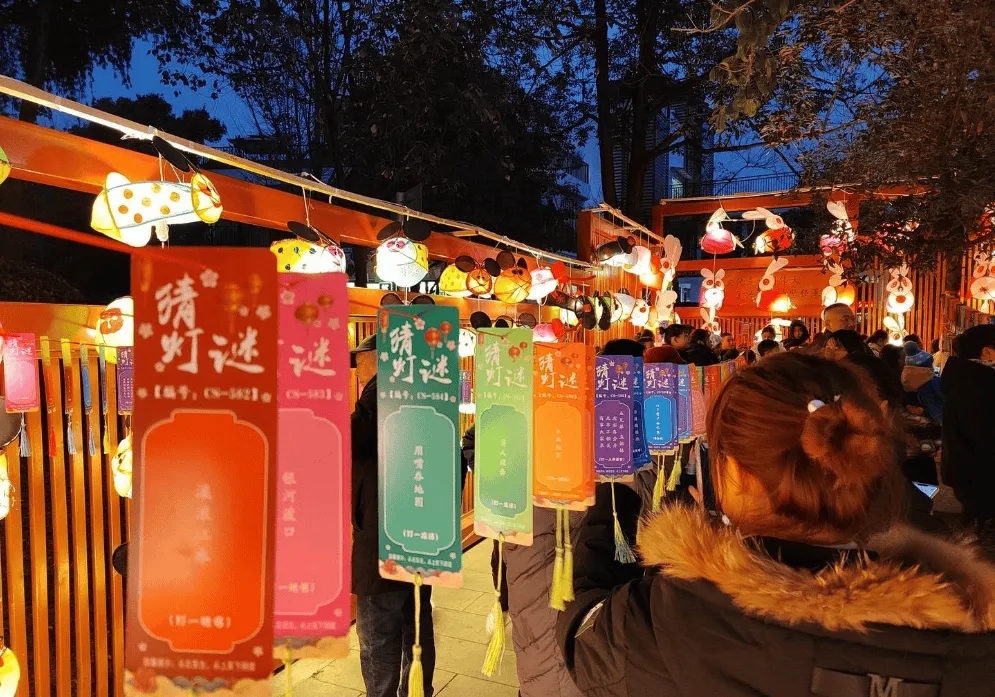
Lanterns decorated with riddles during the Lantern Festival, inviting people to solve puzzles and win prizes.
Lantern riddles turn the festival into a game of wit. Riddles are written on slips of paper and attached to lanterns, inviting passersby to stop, think, and guess. The answers often involve clever wordplay, homophones, or cultural references, making them both entertaining and intellectually stimulating. Successfully solving a riddle brings pride, applause, and sometimes small prizes. Historically, this tradition reflects the value placed on intelligence and literacy, turning public spaces into shared classrooms filled with laughter and curiosity.
Dragon Dance (耍龙灯 / shuǎ lóng dēng)
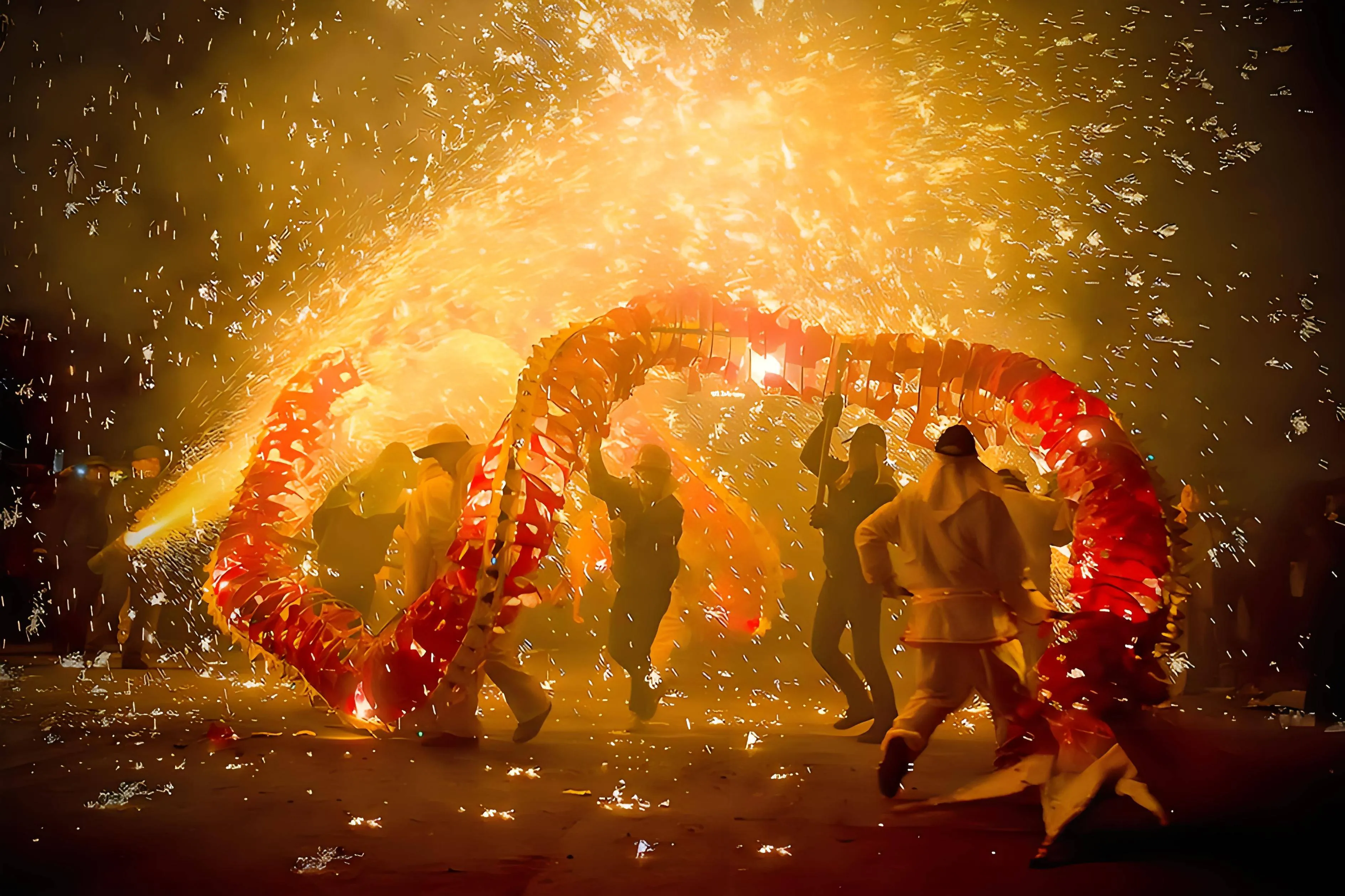
Performers dancing with a long, illuminated dragon during the Lantern Festival, a tradition believed to bring good luck and prosperity.
The dragon dance is a powerful symbol of vitality and prosperity. Performers manipulate a long, illuminated dragon using poles, making it ripple and twist like a living creature. Accompanied by drums and cymbals, the dance is believed to summon good weather, luck, and protection for the coming year. During the Lantern Festival, dragon dances often take place at night, with glowing lanterns enhancing the sense of movement and magic, as if the dragon itself were woven from light.
Lion Dance (舞狮子 / wǔ shī zǐ)
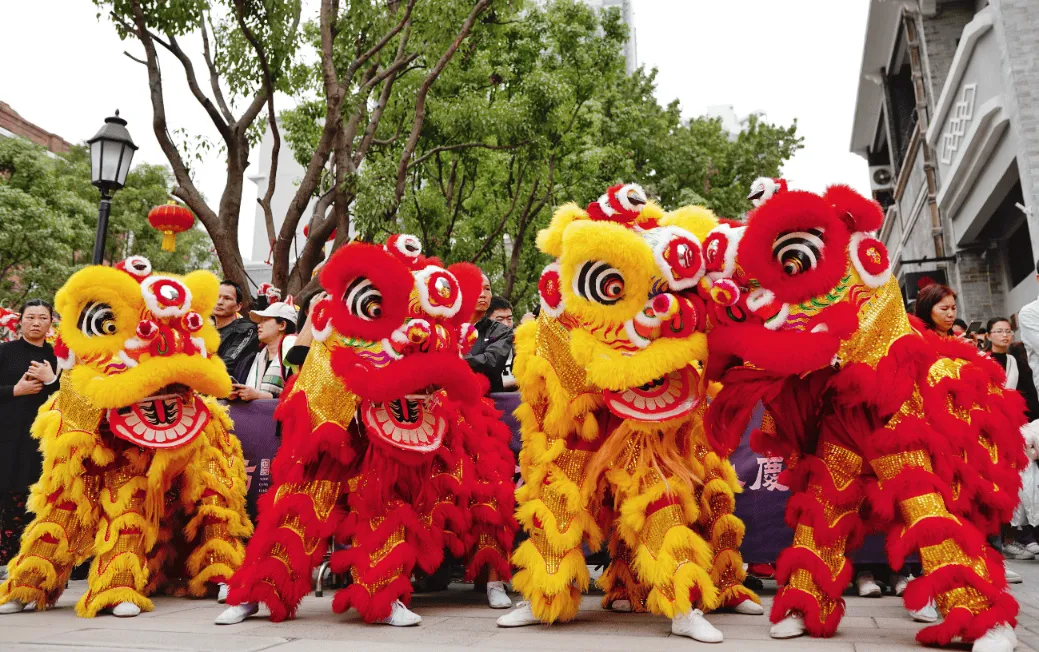
Performers in lion costumes during the Lantern Festival, dancing to bring good luck and scare away evil spirits.
The lion dance brings joy and excitement to the celebrations. Two performers animate a lion costume, mimicking playful, curious, and sometimes mischievous behavior. The lion is thought to scare away evil spirits and bring blessings, wealth, and happiness. During Lantern Festival events, lion dances frequently visit shops and homes, where firecrackers and applause welcome them. The interaction between the lion and the crowd creates a festive atmosphere filled with humor, rhythm, and shared optimism.
Stilts (踩高跷 / cǎi gāo qiāo)
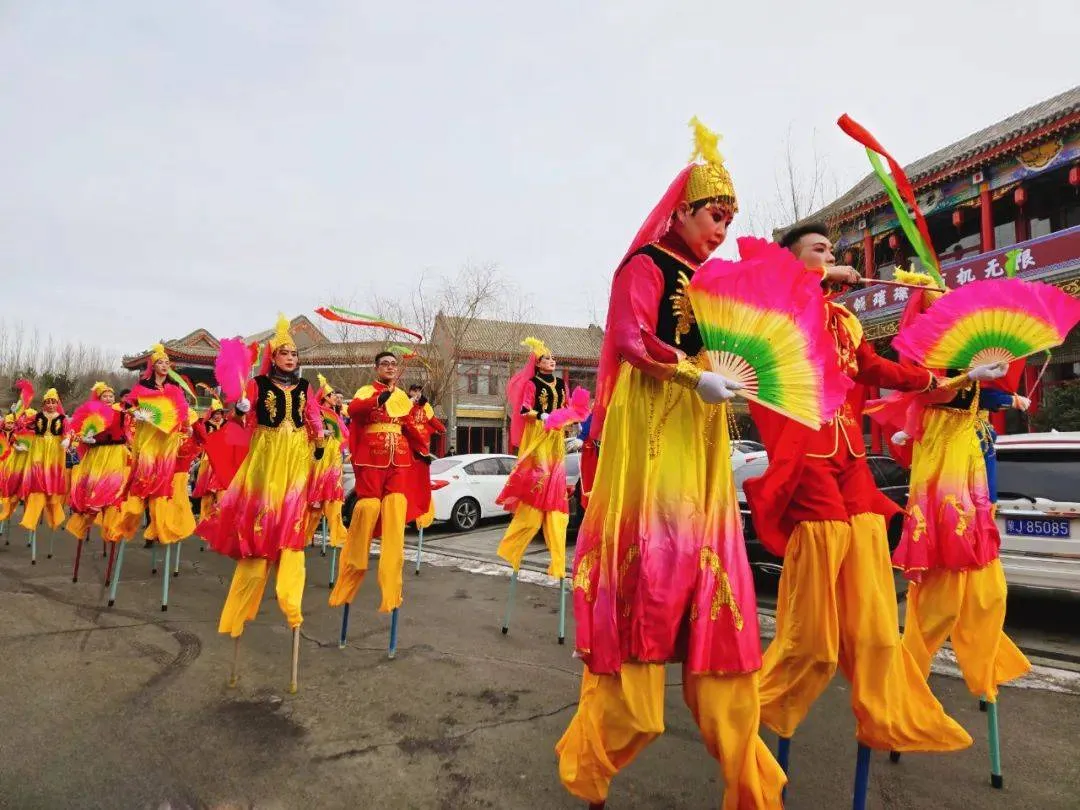
Performers walking on stilts during the Lantern Festival, adding height and spectacle to the celebrations.
Stilt walking adds height and spectacle to the festival streets. Performers stride above the crowd, often dressed as historical figures, gods, or folk characters. Balancing skillfully while dancing or performing tricks, they embody courage and control. Traditionally, stilts symbolized rising fortunes and looking ahead to a brighter future. For spectators, especially children, these towering figures create a sense of wonder, turning ordinary streets into scenes of fantasy and celebration.
Together, these traditions transform the Lantern Festival into a dynamic blend of light, movement, intellect, and joy, where ancient customs continue to shine in modern life.
Lantern Viewing (赏花灯 / shǎng huā dēng)
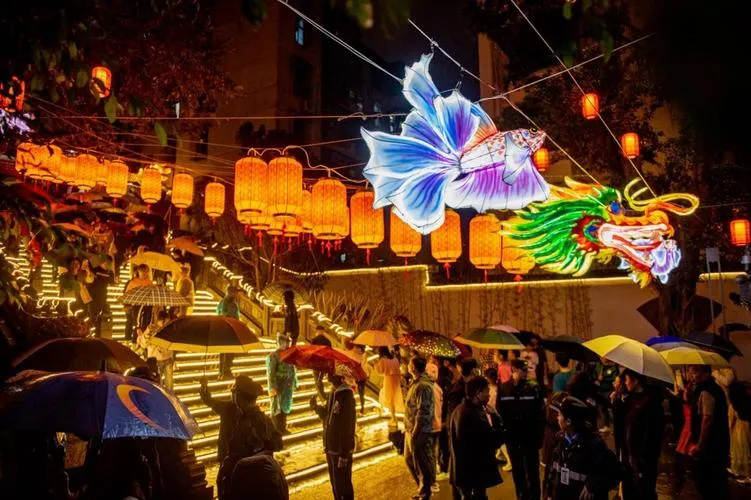
People admiring colorful lantern displays during the Lantern Festival, a central activity of the celebration.
Lantern viewing is one of the core traditions of the Lantern Festival. People stroll through streets, parks, or temple fairs to admire decorative lanterns in various shapes and themes, such as animals, myths, historical figures, or zodiac signs. These lanterns are made from paper, silk, or fabric and lit from within, creating a festive and dreamlike atmosphere. Traditionally, lantern viewing was also a social activity, allowing families, friends, and couples to gather and enjoy the celebration together.
Fireworks Displays (放烟火 / fàng yān huǒ)
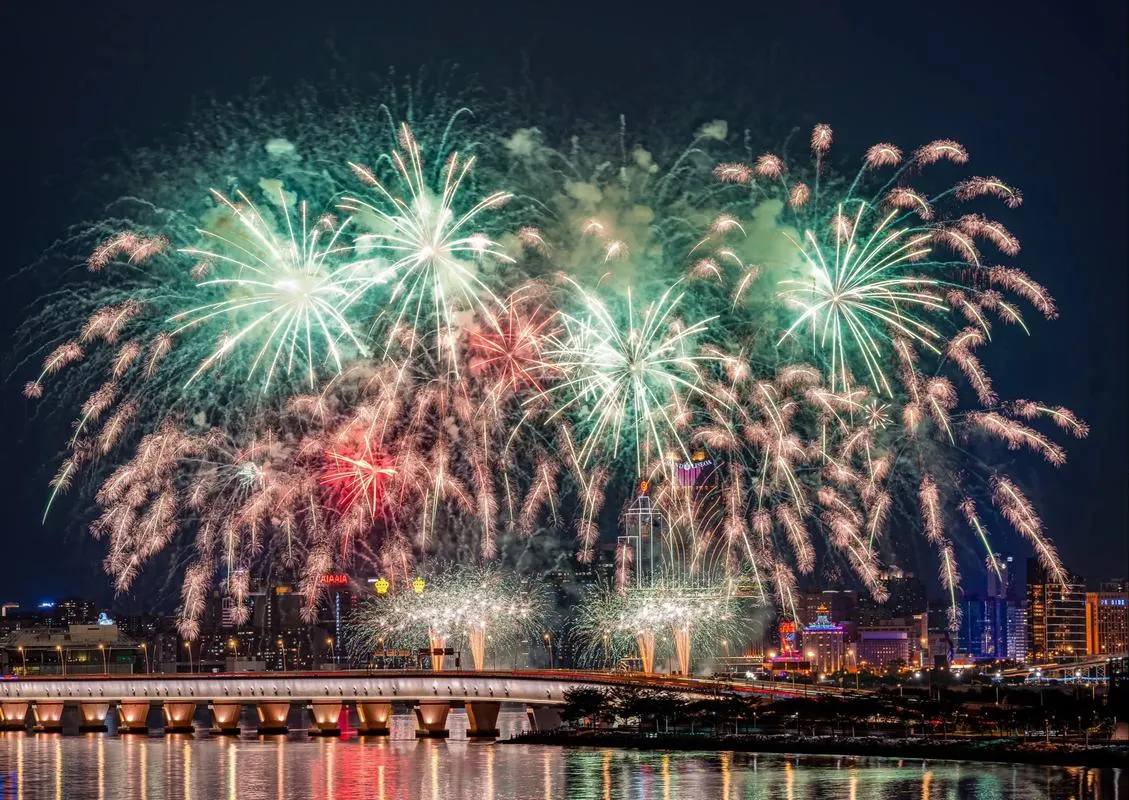
Fireworks lighting up the night sky during the Lantern Festival, symbolizing celebration, renewal, and the warding off of evil spirits.
Fireworks have long been associated with the Lantern Festival and the end of the Lunar New Year celebrations. The bright lights and loud sounds were believed to drive away evil spirits and bring good luck for the year ahead. In the past, families would set off firecrackers together during lantern gatherings and temple fairs. Although fireworks are now restricted in many cities, organized displays or symbolic celebrations continue to reflect their traditional meaning of joy, renewal, and celebration.
Food: Tangyuan (汤圆)
The most iconic food of the Lantern Festival is tangyuan (汤圆), known as yuanxiao (元宵) in northern China. These soft, glutinous rice balls are a classic seasonal dessert and a symbolic way to mark the final chapter of the Lunar New Year celebrations.
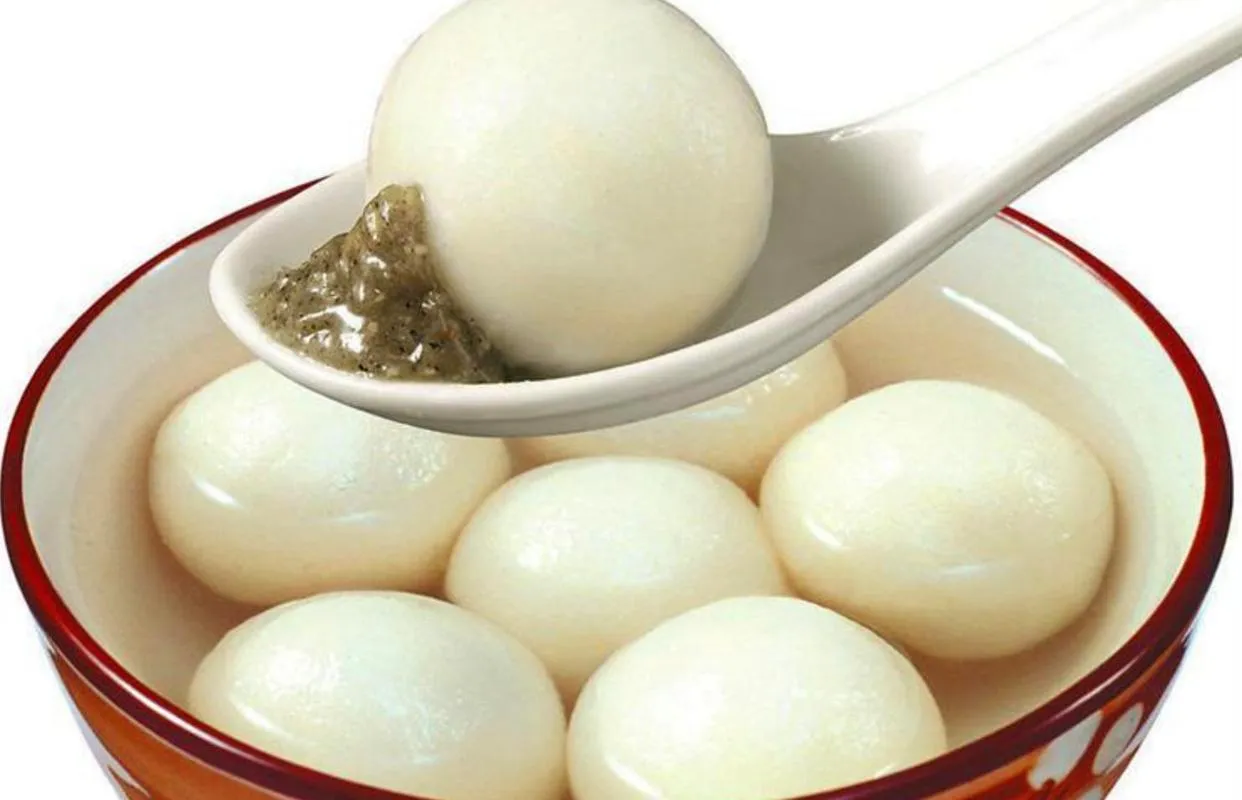
Sweet glutinous rice balls known as tangyuan, served in warm soup, symbolizing family reunion and harmony during the Lantern Festival.
Tangyuan are traditionally filled with sweet ingredients such as black sesame paste, red bean paste, peanut butter, or syrupy sugar mixtures. They are most commonly boiled and served in a warm, lightly sweetened soup, though steaming or pan-frying also exists in some regions. Their smooth, round shape and delicate texture make them especially comforting on a winter night.
More than just a dessert, tangyuan carry deep cultural meaning. The pronunciation of “tangyuan” closely resembles “tuányuán” (团圆), meaning reunion. Because of this wordplay, eating tangyuan symbolizes family togetherness, harmony, and completeness. In business culture, they are sometimes affectionately called “yuanbao” (元宝), or gold ingots, as a wish for wealth and good fortune.
On Lantern Festival night, families gather once more after weeks of New Year celebrations. Sharing a bowl of tangyuan becomes a quiet, meaningful ritual—an invitation to slow down, reconnect, and enjoy the warmth of home under lantern light and the full moon.
The Year Truly Begins
As the final full moon of the Lunar New Year rises, the Lantern Festival gently draws the holiday season to a close. From glowing lanterns and lively performances to riddles, dances, and a warm bowl of tangyuan shared at home, every tradition reflects a single enduring theme: reunion. It is a night when public celebration and private emotion meet, when streets shine with color while families come together in quiet harmony.
More than a visual spectacle, the Lantern Festival is a living expression of Chinese values—patience, balance, hope, and continuity. Its customs remind us that joy is meant to be shared, that light is brightest when gathered together, and that every ending is also a beginning.
As lanterns fade into the night sky and the New Year festivities finally come to rest, what remains is a sense of wholeness. In that soft glow, the year truly begins.
FAQ
Q: What is the Lantern Festival and when is it celebrated?
A: The Lantern Festival, known in Chinese as 元宵节 (Yuánxiāo Jié), marks the final day of the Lunar New Year celebrations. It falls on the 15th day of the first lunar month, when the moon is full, symbolizing reunion, completeness, and new beginnings.
Q: Why are lanterns so important during the Lantern Festival?
A: Lanterns represent light, hope, and the guiding of the future. Historically, lighting lanterns was believed to ward off bad luck and invite blessings. Today, lantern displays also serve as a visual celebration of creativity, community, and cultural continuity.
Q: What food is traditionally eaten during the Lantern Festival?
A: The most iconic food is tangyuan (汤圆), glutinous rice balls filled with sweet ingredients such as black sesame or red bean paste. Their round shape symbolizes family unity and harmony, making them especially meaningful on this festival of togetherness.
Q: What activities are commonly associated with the Lantern Festival?
A: Popular activities include viewing lantern displays, solving lantern riddles (猜灯谜), watching traditional performances such as lion dances, and enjoying festive foods with family. In some regions, fireworks and folk dances also play a role.
Q: What are lantern riddles and why are they popular?
A: Lantern riddles are puzzles written on slips of paper and attached to lanterns. Visitors try to solve them for fun or small prizes. This tradition blends entertainment with language play, reflecting the Chinese love for wordplay, wit, and collective participation.
Q: Is the Lantern Festival still important in modern China?
A: Yes. While modern life has changed how people celebrate, the Lantern Festival remains culturally significant. It continues to be observed through public lantern shows, family meals, school activities, and media events, serving as a gentle, joyful conclusion to the Lunar New Year season.