
The Art of Silent Thunder: How to Argue Elegantly in Chinese

Table of Contents
Introduction: The Strategy of Style
In the intricate landscape of Chinese social interaction, losing your temper is more than an emotional lapse; it is a strategic surrender. The moment you raise your voice or resort to blunt insults, you effectively hand over the "director’s chair" of the conversation to your opponent. In the Chinese hierarchy of social grace and professional etiquette, the one who remains calm is the one who leads.
True mastery of the language lies in "Silent Thunder" —a masterpiece of high-context communication where the most devastating strikes are delivered with a smile and a steady pulse. In this arena, "arguing" is redefined through the lens of social game theory. By maintaining an air of detached elegance, you signal that your internal peace is impenetrable, instantly placing yourself on the Moral High Ground . This frames the other party’s outburst not as a threat, but as a desperate, unpolished performance of someone who has lost their emotional intelligence
The true charm of Mandarin Chinese, however, is its profound regional diversity. To argue effectively is to be a linguistic chameleon: you must navigate the intellectual "logic traps" of the Jiangnan elite, the blunt yet rhythmic irony of the Northeast, and the sharp, spicy wit of Sichuan. This is not merely about winning a debate; it is about Cultural Intelligence and mastering linguistic nuance. Understanding these regional temperaments allows a learner to move beyond literal translation and tap into the "collective unconscious" of the locale. When you master the subtle art of the "Surgical Strike"—using local humor and high-context metaphors to disarm an opponent—you aren't just speaking Chinese; you are orchestrating a masterpiece of human social maneuver.
The Regional Styles: A Masterclass in Subtext
The landscape of interpersonal conflict in China is not a monolith; it is a colorful map of psychological temperaments. As you move across the country, the "weapon of choice" in social navigation shifts from heavy industrial irony to sharp, needle-like sarcasm. Mastering these regional communication styles is like learning different martial arts: one requires brute force disguised as humor, while another relies on the fluid grace of a lethal whisper.
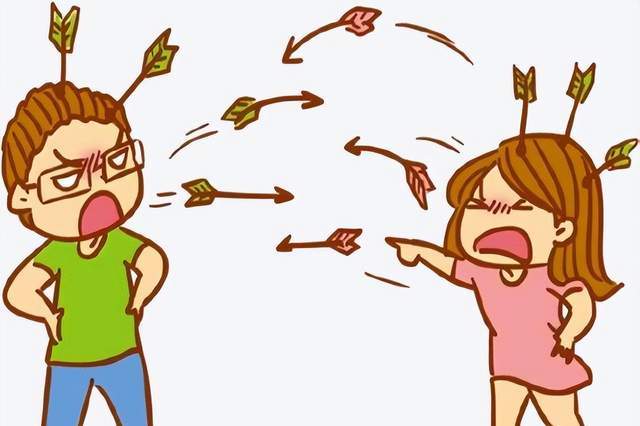
The Northeastern "Irony": The Heavy Industry of Sarcasm
In the Northeast, confrontation is treated like a comedy roast where the stakes are your social dignity. This style relies on a strange, disarming familiarity—a cornerstone of Northern Chinese social dynamics. Even when someone is professionally dismantling your logic, they might call you "Brother" (哥) or "Old pal." The goal isn't to escalate through aggression, but to use humorous reframing to make the opponent’s behavior seem so absurd that it becomes a joke.
A classic "Surgical Strike" sounds like this:“Brother, I’ve got to hand it to you—your IQ is impressively stable. You never leave me even a tiny sliver of a surprise, do you?” By complimenting your "stability," they are actually highlighting a consistent lack of intelligence. This is a heavy-handed blow delivered with a grin, making it impossible for the opponent to react with anger without appearing to lack a sense of humor.

The Sichuanese "Spicy Wit": Rapid-Fire Hooks
If the Northeast is a heavy hammer, Sichuan is a shower of poisoned needles. Known for its "Spicy Wit", Sichuanese confrontation is fast, rhythmic, and incredibly sharp. This is a prime example of how dialect-driven communication can hide "hooks" within a bouncy, musical quality.
A master of Sichuanese wit might say:“Look at you, just glowing with brilliance! I suppose you won't be satisfied until you’ve talked a literal hole into the sky?” (看把你灵得,怕是硬要把天都要说个窟窿出来才安逸哦?) Here, the sarcasm is found in the hyperbolic praise. By reframing the opponent's talkativeness as a celestial power, they paint the person as a delusional chatterbox. The rhythm of the dialect ensures the sting feels like a quick slap—the recipient feels the "heat" of the insult long after the conversation has moved on.
The Cantonese "Pragmatic Dismissal": High-Level Indifference

Cantonese confrontation is the art of "Pragmatic Dismissal." In the high-speed, business-minded environment of Southern China, wasting energy on a heated argument is seen as "low value." This style is characterized by a chilling, relaxed indifference—a form of social de-escalation that borders on contempt.
The most famous, albeit slightly salty, example is:“It would have been better to give birth to a piece of BBQ pork than to you.” (生旧叉烧好过生你。) While it sounds humorous, the underlying logic of utility is devastating: BBQ pork provides nutritional value and joy; your presence, however, is a net loss. This "diminished value" logic is a hallmark of the South—reducing a heated conflict to a simple matter of ROI (Return on Investment). If you aren't providing value, you are simply dismissed.
The Jiangnan "Hidden Needle": Cold Steel in Soft Silk
Finally, we arrive in the Yangtze Delta, the land of "Wu" dialects and scholarly refinement. The Jiangnan style is arguably the most dangerous because it utilizes positive framing to deliver a lethal blow. This is "Mian Li Cang Zhen" (绵里藏针)—a needle hidden in silk. It is soft, waxy, and utterly freezing.
An elegant Jiangnan-style rebuttal might be:“It is truly a privilege to witness the breadth of your knowledge. Ideas like yours... well, we ordinary mortals wouldn't even dare to dream of them.” By elevating the opponent to a "superior" status while demoting themselves to a "humble mortal," the speaker creates a gap so wide that the opponent’s idea is framed as utter insanity. It is the ultimate intellectual exile, delivered with a polite bow and perfect professional etiquette.
The Physics of Sound: Mastering Tone and Tempo

In the high-stakes theater of Chinese social confrontation, words are merely the script; your delivery is the direction. Because Mandarin is a tonal language, the subtle shifting of pitch and speed doesn't just change the literal meaning—it recalibrates the "atmospheric pressure" of the room. Mastering these paralinguistic cues allows you to dismantle an opponent’s confidence without ever breaking a sweat.
The Decibel Drop: The Calm of the Storm
There is a common misconception in cross-cultural communication that "winning" an argument requires higher volume. In Chinese culture, however, the person shouting is perceived as the one who has already lost their "Qi" (energy) and, more importantly, their dignity.
The most lethal maneuver is the Decibel Drop. When your opponent’s voice rises in a crescendo of frustration, you respond by dropping your volume to a near-whisper and slowing your tempo to a crawl. This creates a psychological "vacuum." By refusing to match their frequency, you apply a conflict de-escalation tactic that makes them look like a frantic street performer while you remain the calm observer. This signals a terrifying level of emotional self-regulation.
The Logic: "I am so confident in my position that I don't need to compete for airtime. I’ll just wait here in the silence for you to realize how embarrassing you look."
The "Sticky" Sarcasm: The Tempo of Mockery
If you want to project intellectual superiority, look to the Yangtze Delta. The Jiangnan style of confrontation involves a certain "stickiness" in speech—a deliberate stretching of vowels and a refusal to be rushed. In linguistic psychology, this is known as the Tempo of Mockery.
Imagine a cat playing with a mouse; the predator is never in a hurry. By lengthening your words (the "sticky" effect), you are utilizing non-verbal communication to signal: "I have all the time in the world to watch you fail." * The Art: Instead of a quick "I don't agree," you might say, "W-e-l-l, if you tr-u-l-y believe that is the case..." (那~您~硬~是~要~这~么~想~的话~).
The Effect: It feels like being stuck in conversational quicksand. The slower you go, the more the other person struggles, eventually suffocating under the weight of your "polite" attention.
The Particle Sting: The "Nuclear" Sentence Enders
In Mandarin, the "sting" is always in the tail. Sentence-final particles (Modal Particles) are the nuclear warheads of linguistic warfare. They aren't just grammar; they are tools for emotional branding.
- ● The "Ma" (嘛 - The Shrug): The sound of "inevitability." Usage: "You want to be like that, so be it ma." (你非要这样想,那我也没办法嘛。) Subtext: A verbal shrug that dismisses the opponent as a lost cause.
- ● The "Lo" (啰 - The Obvious): The sound of "arrogant compliance." Usage: "You're the expert, so what you say goes lo." (你是专家,你话点就点啰。) Subtext: "I'll let you 'win' because arguing with someone of your 'level' is beneath me."
- ● The "Ha" (哈 - The Cold Breath): Do not confuse this with laughter; it is a chilling pragmatic marker. Usage: "You sure are something, ha." (那你可真是太厉害了哈。) Subtext: A dry puff of air that acts as a full stop, leaving the opponent in a conversational arctic wasteland.
The General Techniques: Conversational Aikido

In the martial art of Aikido, the goal is to use your opponent’s momentum against them. In Chinese linguistic strategy, this translates into a strategic lack of resistance. Instead of meeting a blow with a blow, you yield with such exaggerated grace that the opponent loses their balance and falls into their own logical trap. These are the "Universal Techniques" of conflict management that work in any environment, from the high-stakes boardrooms of Beijing to the traditional tea houses of Hangzhou.
The "Nín" (您) Paradox & Honorific Warfare
The word "Nín" (您) is the ultimate double-edged sword of Advanced Mandarin Rhetoric. To a novice, it is a sign of respect; to a master, it is a weapon of "Cold Isolation." In the heat of a dispute, suddenly switching from the casual Nǐ (你) to the formal Nín (您) creates an instant, insurmountable wall of ice.
This is what we call Honorific Warfare or Strategic Politeness. By being "too polite," you are non-verbally announcing: "I am severing our personal connection. You are no longer a peer; you are a distant entity I must handle with professional caution." When you say, “Nín qǐng jiǎng” (您请讲 — Please, speak on), you aren't complimenting them. You are placing them on a lonely pedestal where their anger appears unrefined. It is a psychological demotion—treating the opponent like a difficult client or a tantrum-throwing child whom you are "managing" with saint-like patience.
The Socratic Trap: The Art of the Leading Question
The most effective way to win an argument in Chinese is to never make an assertion. A statement can be attacked, but a question forces the opponent to do the heavy lifting. The "Socratic Trap" in Mandarin relies on three lethal rhetorical connectors: "Nándào" (难道 — Is it possible that...?), "Jìrán" (既然 — Since/Given that...), and "Xiǎngbì" (想必 — Surely/Presumably...).
These words are used to build a Logical Closed Loop. For instance, instead of saying "You are wrong," you say: “Since (既然) you are such a seasoned expert in this field, surely (想必) you’ve already considered this glaringly obvious flaw, haven’t you?” This initiates a "Self-Destruction" sequence. If they agree, they admit the flaw; if they disagree, they admit incompetence. By framing your attack as a polite inquiry into their brilliance, you leave them no room to retreat without losing face (丢脸). You are simply "inviting them to explain their own contradictions."
The "White Space" Victory: The Power of Intentional Echoing
The final move in Conversational Aikido draws from Chinese aesthetics: "White Space" (留白). In a confrontation, the most powerful response to a flurry of excuses is a calculated silence.
When you meet an aggressive outburst with a simple, calm "Shì ma?" (是吗? — Oh, is that so?) or "Suǒyǐ ne?" (所以呢? — And therefore...?), you are employing Psychological Mirroring. Human nature abhors a vacuum; the opponent will feel an overwhelming urge to fill the silence, leading them to over-explain, stutter, and eventually trip over their own words. This technique turns the conversation into a mirror, making the opponent’s irrationality echo so loudly that they eventually silence themselves out of sheer awkwardness.
Scenario-Based Mastery: Put the Art into Practice

The true test of "Silent Thunder" isn't in a vacuum; it’s in the chaotic, high-stakes environments of everyday Chinese life. Whether you’re navigating the complex hierarchy of a business dinner or dodging a "grenade" thrown by a colleague in a meeting, the goal remains the same: use strategic communication to maintain your poise while neutralizing the threat. Here is how you apply these linguistic "Surgical Strikes" in the wild.
The Banquet Battle: Declining with "Face"
The Chinese banquet is a battlefield disguised as a feast. In Chinese business etiquette, you may often face "unreasonable requests"—be it excessive drinking (劝酒 - Quànjiǔ) or prying personal questions. The amateur makes the mistake of a blunt "No," which shatters the Mianzi (Face) of the host.
The master uses "The Cushion Technique." When pressured, you don't reject the person; you reject the "circumstance" with exaggerated regret. Use the phrase: “I’m truly terrified that my lack of ability (or health) will spoil your wonderful mood today” (我真怕我这点酒量/笨拙,扫了您的兴). By framing your refusal as an act of consideration for their happiness, you’ve turned a rejection into a compliment. You are now so "polite" that if they keep pushing, they become the ones violating social decorum. It’s a flawless defensive maneuver that protects your boundaries while leaving the atmosphere intact.
The Office Duel: Returning the "Pot"
In the Chinese workplace, "throwing the pot" (甩锅 - Shuǎiguō, or shifting blame) is a common tactical move. When a colleague tries to pin a failure on you, your natural instinct is to defend yourself. Don't. Instead, use "The Professional Pedestal." Respond with: “I’ve always admired your unique way of handling things; it’s so 'pioneering' that a traditional mind like mine simply couldn't keep up with your pace” (您的办事风格确实领先,我这老实思维确实跟不上您的节奏). Here, the word "pioneering" (领先) is the needle in the silk. It’s a professional-sounding euphemism for "you went rogue and messed up." By "praising" their erratic behavior as being "too advanced" for you, you’ve effectively tied the failure to their hands while appearing as the humble, diligent teammate. The "pot" is returned to its rightful owner, delivered with a smile and a bow.
The Digital Stand-off: Winning the Group Chat
In 2026, the most frequent "battles" happen in the silence of a WeChat group. When someone sends a passive-aggressive comment, the urge is to type a paragraph in retaliation. Resist it. In digital conflict resolution, the ultimate victory is the "Visual Vacuum."
If someone attacks you, reply with a single, respectful, yet utterly hollow phrase like: “Received with thanks, your feedback is truly 'unforgettable'” (收到,您的建议确实让人‘难忘’). Then, stop. By refusing to engage in a "wall of text" war, you demonstrate high social intelligence—showing you are too focused on high-value tasks to be bothered by pettiness. In the high-context world of Chinese social media, the person who types the least is often perceived as the person with the most power. You haven't just won the argument; you've won the audience.
Conclusion: The Zen of Controlled Conflict
The journey through the art of Chinese confrontation brings us to a singular realization: mastering "Silent Thunder" is not about the destruction of an opponent, but the self-mastery of one’s own emotions. In the Chinese linguistic universe, an argument is a delicate search for Dynamic Balance (动态平衡). It is a social high-wire act where you balance firm boundaries with social grace, and sharp logic with cultural empathy. To argue elegantly is to prove that you possess a depth of character—a Shūyǎng (修养)—that remains unshaken even when the atmosphere turns cold.
However, we must remember that these linguistic "surgical strikes" and regional ironies are merely spices in the grand recipe of human connection. They serve as safety valves for our frustrations and intellectual exercises for our wits. At the end of the day, the ultimate goal of high-context communication is not to build walls, but to navigate them.
Once the "battle" is over and the point is made, the master of Chinese social art knows how to retract the needle and return to a state of harmony. This reflects the core of Chinese philosophy: conflict is temporary, but relationships are enduring. The most powerful thing you can do after a heated exchange is to offer a genuine, warm gesture of kindness, proving that your heart is as spacious as your mind is sharp.
Call to Action: Find Your Dialect Soul
Now, the brush is in your hand. Whether you find yourself drawn to the Northeastern Irony, the Cantonese Dismissal, or the cold, silken elegance of Jiangnan, start experimenting with these "Dialect Souls" (方言灵魂). Use them as tools to protect your peace and as windows to develop deeper intercultural competence.
But always keep this golden rule in mind: Argue with wit, but live with heart. Use your new skills to navigate conflicts with a smile, ensuring that even when you "win," everyone leaves the table with their dignity (面子) intact.
Pick your weapon, choose your rhythm, and begin your journey into the elegant world of Chinese Game Theory (博弈). The next time a conflict arises, don't just speak—perform.
The Art of Silent Thunder: FAQ
What is "Silent Thunder" strategy in Chinese communication?
"Silent Thunder" is a high-context strategy where the speaker maintains an air of detached elegance. In Chinese hierarchy, remaining calm signals that your internal peace is impenetrable, placing you on the Moral High Ground. It frames the opponent's outburst not as a threat, but as a lack of emotional intelligence.
How do regional dialects like Cantonese or Sichuanese differ in arguing?
It's about "Cultural Intelligence." Northeastern style relies on humorous irony; Sichuanese uses "Spicy Wit" (fast and rhythmic); Cantonese focuses on "Pragmatic Dismissal" (indifference based on value); and Jiangnan (Yangtze Delta) uses "Mian Li Cang Zhen"—cold steel hidden in soft silk.
Why is the formal "Nín" (您) sometimes used as a "weapon"?
This is Honorific Warfare. By switching from "Nǐ" to the formal "Nín" (您), you create a "Cold Isolation." You are non-verbally announcing that the opponent is no longer a peer, but a distant entity you are "managing" with professional and saint-like patience.
What are "the most effective modal particles for winning a debate?
The "sting" is in "the tail. Use "Ma" (嘛) to signal a verbal shrug of inevitability; "Lo" (啰) for arrogant compliance (suggesting "the argument is beneath you); and "Ha" (哈) as a cold, pragmatic full stop that leaves "the opponent in a conversational arctic wasteland.
How can I politely decline a request at a Chinese business banquet?
Use "the "Cushion Technique." Don't reject "the person; reject "the "circumstance" with exaggerated regret. Say: "I'm terrified my lack of ability will spoil your wonderful mood." This turns a refusal into a compliment, ensuring everyone leaves with their Mianzi (Face) intact.