
Have you heard of the Dragon Raises Its Head (Longtaitou) festival in China?
Table of Contents
- Spring Returns, and the Divine Dragon Awakens
- I. Origins: Cultural Accumulation from Astronomy to Legend
- II. Customs: Inviting the Dragon to Bring Fortune and Renewal
- III. Cuisine: The "Dragon Culture" on the Tip of the Tongue
- IV. Regional Differences: Distinct Customs Between North and South
- V. Modern Significance: Contemporary Inheritance of Traditional Culture
- Conclusion: Striding Forward, Not Betraying the Spring Light
- FAQ
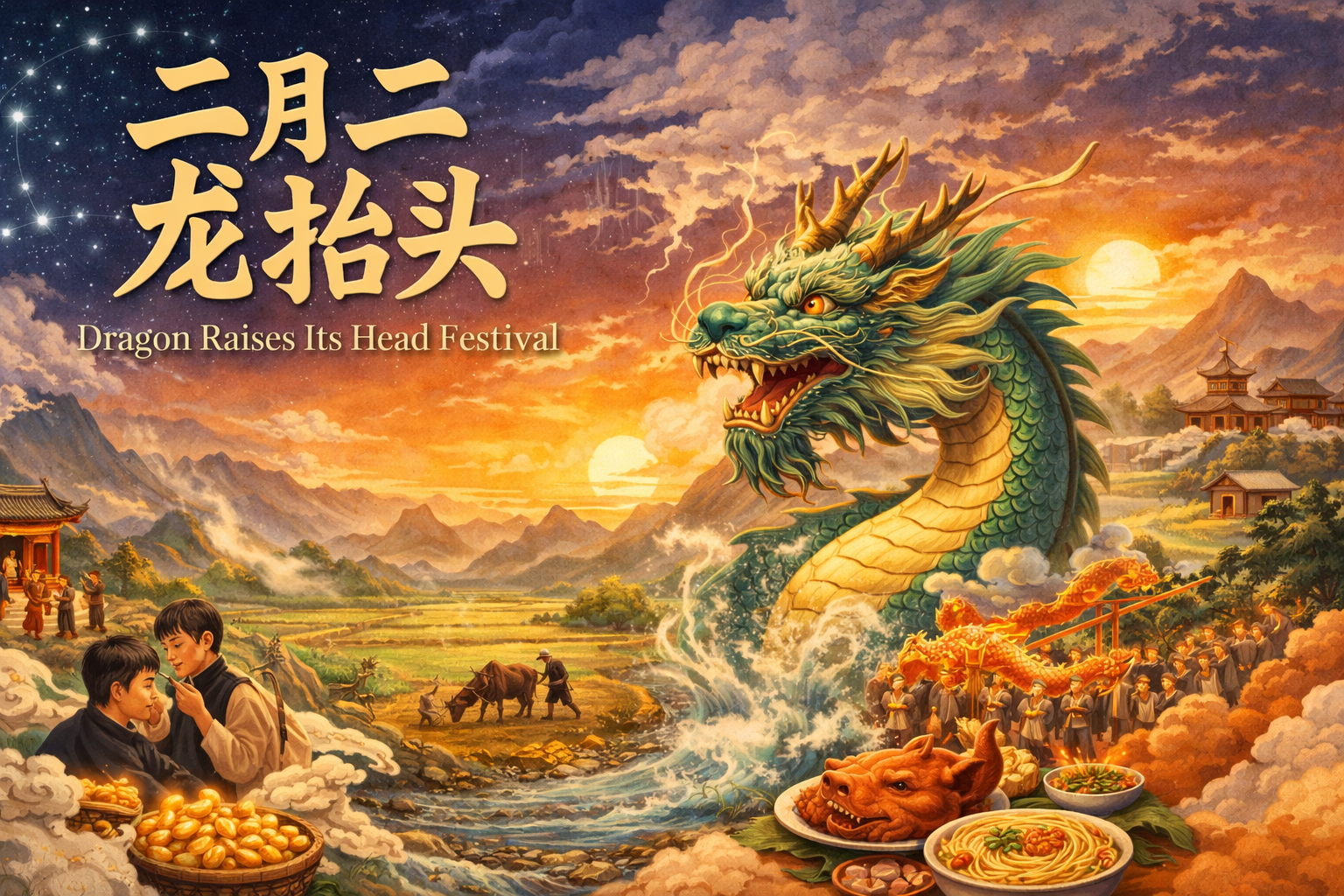
Spring Returns, and the Divine Dragon Awakens
On the second day of the second lunar month, the biting chill of winter has receded. The east wind thaws the earth, and distant rumbles of thunder can be heard. In the traditional map of Chinese agrarian civilization, this day marks a pivotal node: "February 2nd, the Dragon Raises Its Head" (Longtaitou), a unique and symbolic Chinese traditional festival.
As the old proverb goes: "On February 2nd, the dragon raises its head; the big granaries are full, and the small granaries overflow." This is not merely a catchy rhyme but a heartfelt prayer from the Chinese people over thousands of years for favorable weather and abundant harvests, reflecting the deep cultural meaning of the Dragon Raises Its Head festival.
Astronomically, "the dragon raising its head" refers to the "Horn" mansion (Jiao Xiu) of the Azure Dragon constellation (comprising seven mansions: Horn, Neck, Root, Room, Heart, Tail, and Winnowing Basket). After hiding throughout the winter, this star cluster rises above the eastern horizon at dusk, resembling a giant dragon lifting its head. This celestial event, closely associated with the February 2 Dragon Raises Its Head festival, signals the birth of Yang energy, the arrival of rain, and the revival of all living things.
For the ancients, the dragon was the deity of water, governing rain and rivers. As spring plowing begins and all things await renewal, the "raising of the dragon's head" signifies that the Dragon King has awakened and is about to bring clouds and rain to nourish the earth. Therefore, this day is not just a shift in astronomy but a bugle call for agricultural activities. It carries people's reverence for nature, their longing for harvest, and reflects the essence of Chinese customs and traditions.
I. Origins: Cultural Accumulation from Astronomy to Legend
The formation of the "February 2nd" festival, also known as the Longtaitou festival (Dragon Raises Its Head festival), was not an overnight occurrence but the result of a long fusion of astronomical calendars, agricultural needs, and mythological legends rooted in Chinese folklore.
Before the Tang Dynasty, the second day of the second lunar month was primarily a day for sacrificing to the Earth God and praying for rain. As history progressed into the Song and Yuan dynasties, this date gradually solidified into a fixed festival, merging somewhat with the "Flower Morning Festival" (the birthday of a hundred flowers), adding elegant customs like outing and flower appreciation. By the Ming and Qing dynasties, the customs of "February 2nd" were fully established, becoming a grand celebration participated in by the entire population.
One of the most widely circulated legends regarding the origin of "Longtaitou," often used to explain what the Longtaitou festival is, involves Wu Zetian changing the Tang dynasty to Zhou. Legend has it that Wu Zetian's ascent to the throne angered the Jade Emperor, who ordered no rain for three years. Drought ravaged the land, causing immense suffering. The Dragon King, unable to bear the plight of the living, defied heavenly orders to bring life-saving rain.
Upon learning of this, the Jade Emperor crushed the Dragon King under a mountain, erecting a tablet that read: "The Dragon King shall not be released unless golden beans bloom." To save the Dragon King, the people fried corn and soybeans on February 2nd. The popping beans resembled blooming golden beans, tricking the heavens and allowing the Dragon King to return to the sky to bring rain. Since then, the customs of frying beans and worshipping the Dragon King on this day have been passed down through generations.
While these legends are mythological, their core always revolves around "water" and "agriculture." In ancient societies dependent on the weather, rain was the lifeline. The February 2 Dragon Raises Its Head festival reflects the wisdom of aligning with natural timing and guiding farming through ritual.
II. Customs: Inviting the Dragon to Bring Fortune and Renewal
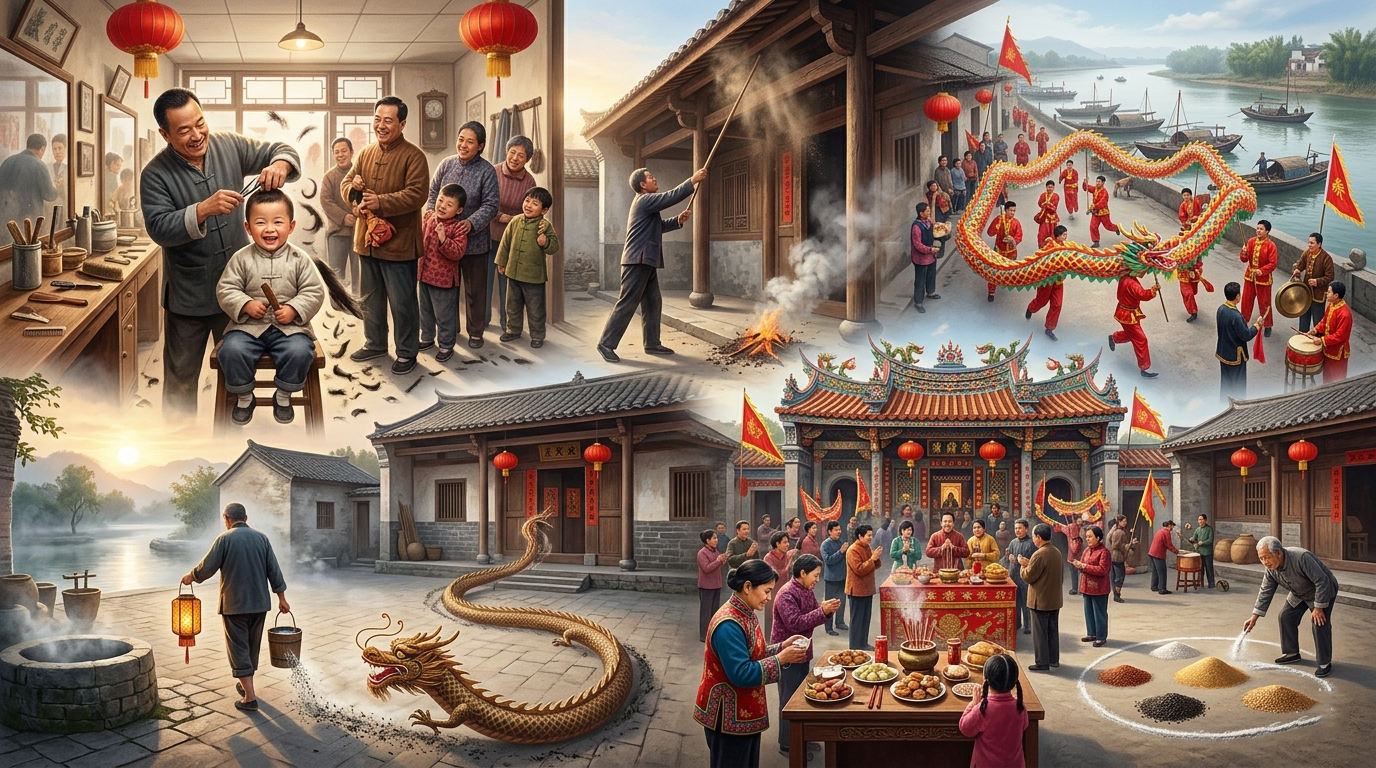
If astronomy is the skeleton of "Longtaitou," then the rich and colorful folk activities are its flesh and blood. On this day, from north to south, from cities to villages, people use various rituals that define Chinese customs and traditions during the Dragon Raises Its Head festival, hoping to absorb some "dragon qi" (dragon energy) and pray for good luck in the coming year.
1. Shaving the Dragon's Head: Bidding Farewell to the Old and Welcoming the New
Among all customs, "shaving the dragon's head" is undoubtedly the most popular and ritualistic, and it also explains why people cut hair on February 2 in China.
Folk belief holds that getting a haircut during the first lunar month is unlucky (a misconception originating from "thinking of the old" being misheard as "causing the uncle's death"), so everyone waits until February 2nd to get a trim.
"On February 2nd, shave the dragon's head, and you will have spirit and energy all year round." On this day, everyone from young children to the elderly visits barbershops. For children, this is called "shaving for joy," symbolizing that by taking advantage of the auspicious time of the dragon raising its head, they will grow up healthy, stand out from the crowd, and achieve greatness. For adults, shaving means bidding farewell to the old and welcoming the new, cutting away past bad luck and troubles to greet the new year with good fortune.
Every February 2nd, barbershops across the country are often packed, requiring appointments days in advance. Barbers work tirelessly; amidst the flying scissors, they trim not just hair but also shape people's expectations for a better life.
2. Leading the Dragon Back and Worshipping the Earth God: A Dialogue Between Humanity and Nature
Besides haircuts, various regions have customs of "leading the dragon," with slight differences between the north and south.
In the North, especially in the Yellow River basin, people traditionally carry lanterns to rivers or wells early in the morning to fetch water. On the way back, they scatter ash while walking, leading the water into their homes and pouring it into water jars, known as "leading the money dragon" or "leading the dragon back." Some places also use plant ash to draw a winding long dragon in the courtyard, with the dragon's head facing the water jar or the main gate, symbolizing inviting the dragon into the home to guard the house and bestow blessings. Simultaneously, people beat the roof beams with sticks, chanting: "On February 2nd, shine on the roof beams; scorpions and centipedes have nowhere to hide." This serves both to awaken the hibernating dragon and to use sound waves and smoke to drive away winter pests, reflecting the hygienic wisdom of the ancients in disease and pest control.
In the South, particularly in the Jiangnan and Lingnan regions, February 2nd is often the birthday of the "Earth God" (She Ri). People gather before Earth God temples, setting up offerings to worship the deity. Since "the dragon raising its head" implies the arrival of spring rain, and the Earth God manages the local soil and water, worshipping him is a prayer for fertile land and bumper crops. In some coastal fishing villages, people hold grand dragon lantern dances. Long dragon lanterns tumble and dance amidst the sound of gongs and drums, symbolizing the dragon soaring over the four seas, ensuring safe voyages and abundant catches of fish and shrimp.
3. Other Unique Activities
Additionally, there are some interesting niche customs. For instance, in the past, women were forbidden from doing needlework on this day, fearing they might prick the "dragon's eye" and invite disaster. Although this taboo has gradually faded, it reflects the ancients' caution and reverence for deities. In Shandong and other areas, there is a custom of "encircling the granary," where ash is used to draw circles on the threshing floor with grains placed in the center, symbolizing full granaries and freedom from hunger.
These customs may seem tedious, but they are full of life's warmth and wisdom. They transform the abstract "dragon" into concrete actions and wisps of smoke in daily life, allowing ordinary people to feel the solemnity and joy of resonating with nature through participation.
III. Cuisine: The "Dragon Culture" on the Tip of the Tongue
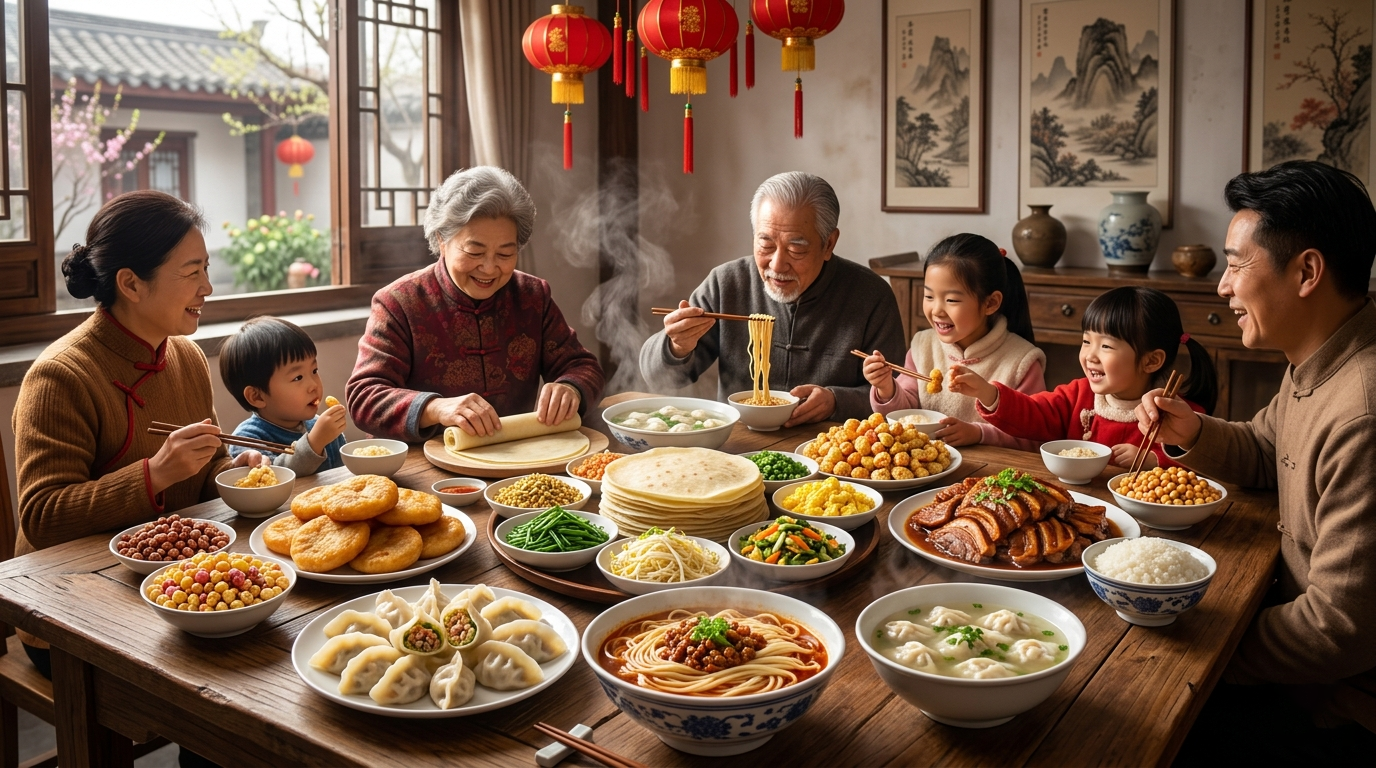
Chinese festivals are inseparable from food, and the Dragon Raises Its Head festival food traditions are particularly elaborate. On this day, ordinary ingredients are endowed with "dragon" names, forming a vivid expression of Chinese food culture.
1. The Glamorous Transformation of Staple Foods
- Eating Noodles – "Supporting the Dragon's Whiskers": On the morning of February 2nd, the first meal for many families must be noodles. The long, thin noodles symbolize the dragon's whiskers. Eating them is called "supporting the dragon's whiskers" or "eating dragon whisker noodles," implying that everything will go smoothly and successfully in the new year. Especially in the North, hand-rolled noodles are chewy and robust. Topped with rich sauce and served steaming hot, people hope their lives will be as long-lasting and smooth as these noodles.
- Eating Dumplings – "Eating the Dragon's Ears": Dumplings, shaped like ingots and with folds resembling dragon ears, are known as "dragon ears" on February 2nd. Eating dumplings symbolizes "attracting wealth and treasure." There is also a saying that eating dragon ears makes one sharp-eared and bright-eyed, able to hear good news. The choice of filling is also significant, usually containing both meat and vegetables, signifying "having both wealth and talent." Families sit together to make dumplings, and every fold pinched represents a beautiful expectation for the future.
- Eating Wontons – "Eating the Dragon's Eyes": In some regions, wontons are eaten on February 2nd. Round and full, floating in clear soup, wontons resemble dragon eyes. Eating them is called "eating dragon eyes," symbolizing keen vision to see the path ahead clearly, and hoping that everything in the new year will be distinct and free of confusion.
- Eating Rice – "Eating the Dragon's Seeds": Some southern regions habitually eat rice on February 2nd, calling it "eating dragon seeds." This is not only a tribute to agrarian civilization but also implies many children and grandchildren, and a flourishing family.
2. Auspicious Meanings of Snacks and Side Dishes
- Fried Oil Cakes and Spring Pancakes (油饼 ,yóu bǐng and 春饼, chūn bǐng) – "Swallowing the Dragon's Gallbladder" and "Biting the Dragon's Scales": Golden, crispy fried oil cakes, due to their color and round shape, are compared to the "dragon's gallbladder." Eating them implies having courage and making decisions with boldness. Spring pancakes, thin as cicada wings and layered, rolled with mixed vegetables, resemble pieces of dragon scales. Taking a bite of a spring pancake is "biting the dragon's scales," symbolizing wearing armor and facing wind and rain without fear. The side dishes in spring pancakes are also meaningful, typically including chives (long-lasting wealth), bean sprouts (as wished), and eggs (completeness), rolling all kinds of auspicious words into the mouth.
- Eating Pig Head Meat (吃猪头肉 ,chī zhū tóu ròu) – "Lifting the Dragon's Head": This is the most "hardcore" dish of February 2nd. In ancient times, pig heads were important offerings for sacrificing to the Dragon King and the Earth God. After the sacrifice, people would share and eat the pig head meat, calling it "eating the dragon's head" or "lifting the dragon's head." This signifies that the Spring Festival celebrations officially end, and people must put away their playfulness to begin the hard work of the new year. Pig head meat is fatty but not greasy, with a rich sauce flavor. Eating it not only satisfies the palate but also gives a psychological hint of "good luck arriving at the head." Today, although sacrificial rituals have simplified, the habit of buying pig head meat on February 2nd remains in many places, with long queues outside delicatessen stores serving as proof.
- Fried Beans (炒豆子, chǎo dòu zi) – "Golden Beans Blooming": Corresponding to the legend of saving the Dragon King, fried beans are an indispensable traditional snack for February 2nd. Whether it's fried corn, soybeans, or sugar-coated beans, when the beans burst open in the pot with a crackling sound, blooming into "golden flowers," children cheer and adults smile. This is not only a commemoration of the "golden beans blooming" that saved the Dragon King in the legend but also symbolizes life rising step by step and days becoming prosperous. Flavors vary by region—five-spice, sweet, salty, and spicy—but that crispy and sweet taste is the most profound flavor in many people's childhood memories.
This "Dragon Feast" is about more than just food; it is a cultural identity. By naming ordinary foods after the "dragon," people integrate sacred beliefs into daily necessities, elevating the festival's atmosphere to its climax amidst the lingering fragrance on the lips and teeth.
IV. Regional Differences: Distinct Customs Between North and South
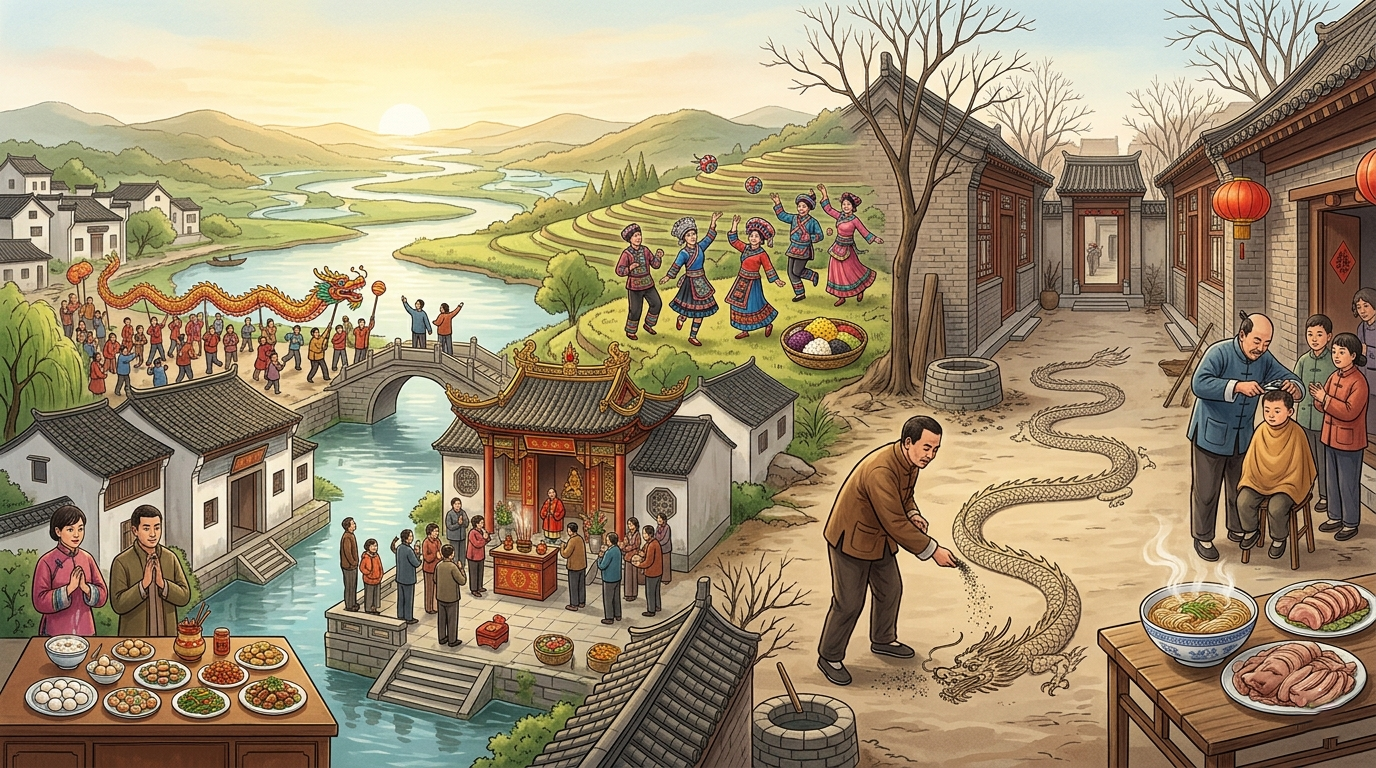
China is vast, with different winds every ten li and different customs every hundred li. These regional differences also reflect the diversity of Chinese folklore and regional traditions within the Longtaitou festival.
1. The North: Bold and Heroic, Emphasizing "Leading" and "Shaving"
Northern regions, especially the Huang-Huai-Hai Plain, have a relatively dry climate with little spring rain. Thus, the desire for rain is more urgent. Customs here carry a strong color of "praying for rain," with a bold and heroic style.
- Core Activities: The core in the North lies in "leading the dragon" and "shaving the head." As mentioned, scattering ash to draw dragons and fetching water to lead dragons are the most common scenes in northern rural areas. People believe these rituals can bring the dragon from the sky to the earth to bring sweet rain.
- Culinary Features: Northern "dragon food" is mainly wheat-based, such as dragon whisker noodles, dumplings, spring pancakes, and pig head meat. The portions are large, and the taste is substantial, reflecting the generous character of northerners.
- Atmosphere: February 2nd in the North is lively. Streets and alleys are filled with the buzzing of barber clippers and the cracking sound of frying beans. Neighbors visit each other, sharing pig head meat, full of strong human warmth.
2. The South: Delicate and Gentle, Emphasizing "Worship" and "Gathering"
Southern regions, with developed water systems and relatively abundant rainfall, focus less on "begging for rain" and more on "worshipping the society (Earth God)" and "gathering dragon qi," with a more delicate and gentle style.
- Core Activities: In Jiangnan, Fujian, Guangdong, and other places, February 2nd is often the "Earth God's Birthday." People meticulously prepare offerings to worship at Earth God temples, thanking the deity for protection and praying for favorable weather and family safety in the new year. In ethnic minority areas like Guangxi and Guizhou, there are also celebrations like antiphonal singing and throwing embroidered balls. Additionally, the South has the custom of "gathering dragon qi," where people wake up early, face east, and take deep breaths to absorb the first fresh air of spring, symbolizing drawing the essence and spirit of the dragon.
- Culinary Features: Southern "dragon food" is more exquisite and diverse. Besides rice (dragon seeds), there are tangyuan (dragon pearls), mustard green rice (symbolizing abundant wealth), and waist-supporting cakes (symbolizing a strong backbone). Ingredients lean more towards seasonal vegetables and river fresh, with light and fresh flavors.
- Atmosphere: Celebrations in the South are often more ritualistic. Activities like dragon lantern dances and dragon boat racing (preparations begin early in some areas) are spectacular, combining solemn sacrifice with joyful entertainment.
3. Unique Splendor of Ethnic Minorities
Besides the Han majority, many ethnic minorities also have traditions for celebrating February 2nd. For example, the Zhuang people regard this day as "First Tooth," making five-colored sticky rice to worship ancestors and spirits. The Miao people hold the "Flower Jumping Festival," where young men and women dress up to find partners through singing and dancing. These rich and colorful ethnic customs jointly constitute a multicultural tapestry of the Chinese nation.
V. Modern Significance: Contemporary Inheritance of Traditional Culture
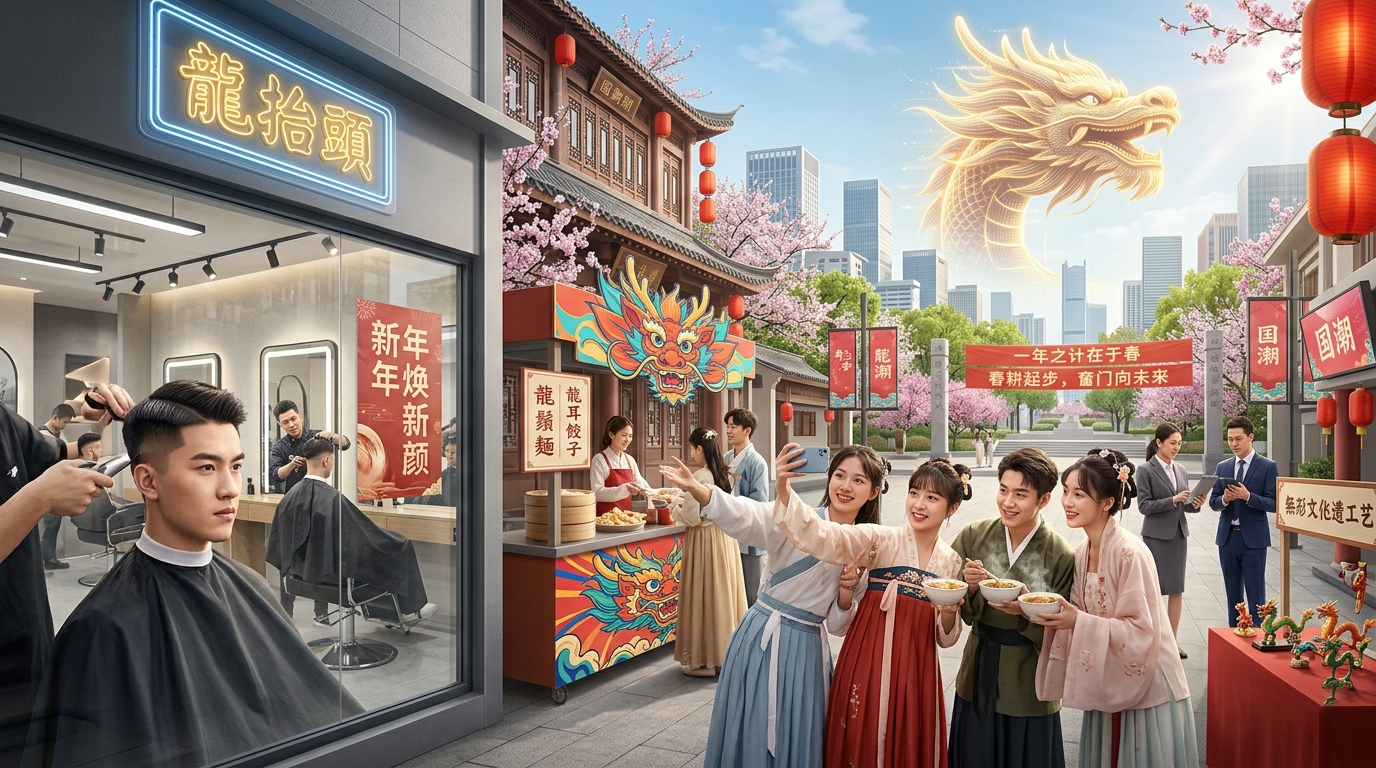
Time flows, and seasons change. In today's rapidly developing modernization, does the Dragon Raises Its Head festival still matter in modern China? The answer is affirmative.
First, the transformation from superstition to blessing. Modern people celebrate February 2nd not to pray for the Dragon King to bring rain to solve droughts but to transform it into a psychological hint and spiritual sustenance for a better life. "Shaving the dragon's head" is no longer about fearing harm to one's uncle but about getting a new hairstyle to face work with a fresh look. "Eating dragon food" is no longer for avoiding disasters but for enjoying delicious food and feeling family warmth. This inheritance, which strips away feudal superstitious colors while retaining the positive core, is precisely where the vitality of traditional festivals lies.
Second, the spirit of struggle encapsulated in "The whole year's work depends on a good start in spring." February 2nd falls exactly during the spring plowing season. It reminds us that spring is the season for sowing hope. No matter how advanced technology becomes, the foundation of human survival remains diligence and hard work. At this node, reviewing tradition is actually revisiting the agrarian spirit of complying with natural timing and diligent cultivation. It encourages us to make plans at the beginning of the new year, stride forward confidently, and welcome challenges with strength like the head-raising dragon.
Finally, a vivid manifestation of cultural confidence. In recent years, with the rise of "Guochao" (China Chic), more and more young people have begun to pay attention to and love traditional festivals. Hanfu outings, traditional food check-ins, and intangible cultural heritage experiences have given February 2nd a new youth. This is not just a return of culture but an enhancement of cultural confidence. In the process of celebrating festivals, we re-understand the wisdom of our ancestors and strengthen national cohesion.
Conclusion: Striding Forward, Not Betraying the Spring Light
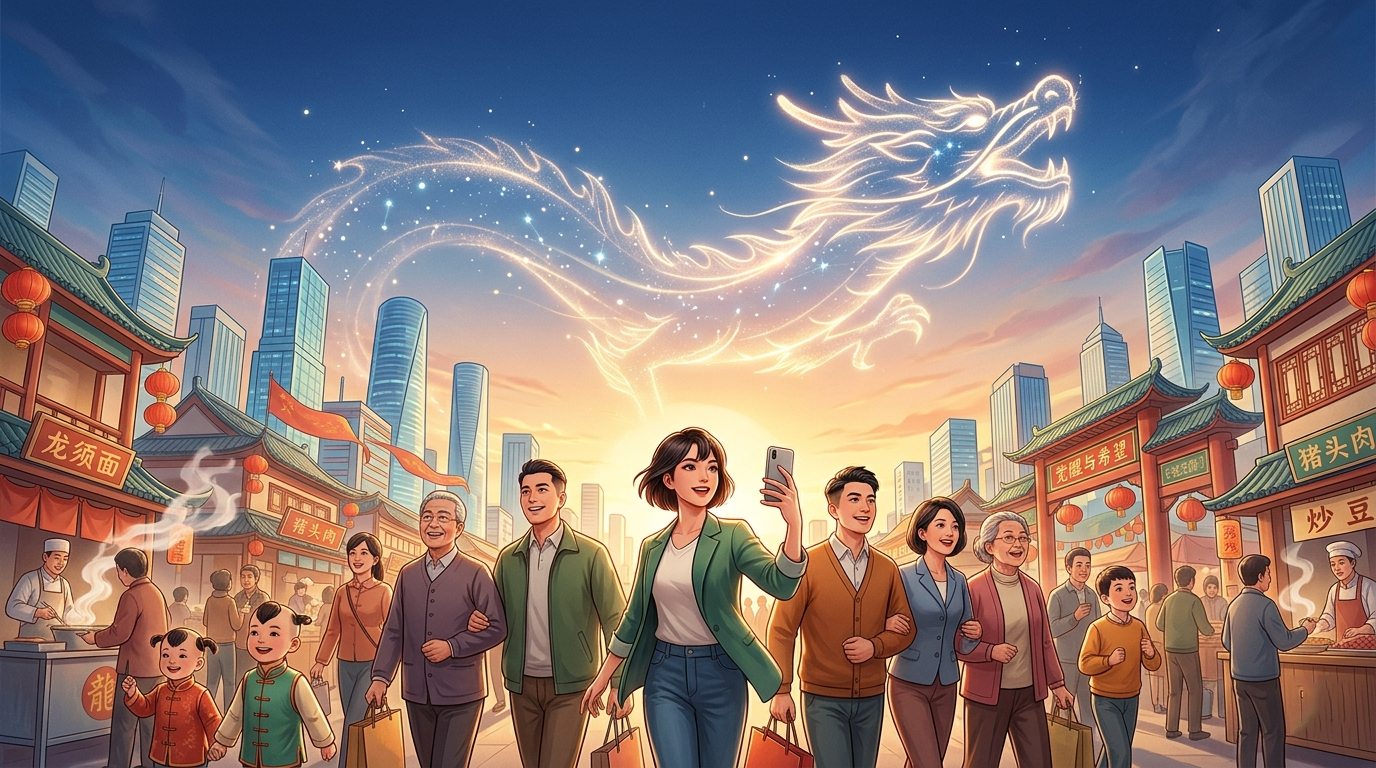
February 2nd, the Dragon Raises Its Head, also known as the Longtaitou festival, is not just an ancient festival but a metaphor for awakening, hope, and power.
When the Azure Dragon constellation slowly rises above the eastern horizon, when the sound of scissors clicks in barbershops, and when the aroma of pig head meat and fried beans wafts from kitchens, we know that spring has truly arrived.
May every Chinese person lift their head and move forward with strength.
The Dragon Raises Its Head festival has arrived. Are you ready?
FAQ
What is the Dragon Raises Its Head (Longtaitou) festival?
The Dragon Raises Its Head, also called Longtaitou (龙抬头), is a traditional Chinese festival on the second day of the second lunar month. It marks the arrival of spring and symbolizes the awakening of the dragon, which brings rain, growth, and new life.
Why is it called Dragon Raises Its Head?
The name comes from ancient Chinese astronomy. A group of stars rises in the eastern sky in early spring, resembling a dragon lifting its head. This signals warmer weather, rainfall, and the start of the farming season.
Why do people get haircuts on this day?
Getting a haircut on this day is called shaving the dragon’s head (剃龙头). It symbolizes a fresh start and good luck for the year. People avoided cutting hair during the first lunar month, so February 2 became the first lucky day for haircuts.
What foods are traditionally eaten during this festival?
Foods are given symbolic dragon meanings: noodles as dragon’s whiskers, dumplings as dragon ears, and wontons as dragon eyes. Eating these foods wishes for good fortune, success, and a smooth year.
Is the Dragon Raises Its Head festival still celebrated today?
Yes. The festival is now more about cultural symbolism than superstition. People celebrate by getting haircuts, enjoying dragon-themed foods, and reconnecting with Chinese traditions, marking a fresh start and motivation for the year ahead.