
What is Chinese Valentine's Day and How is it Celebrated?
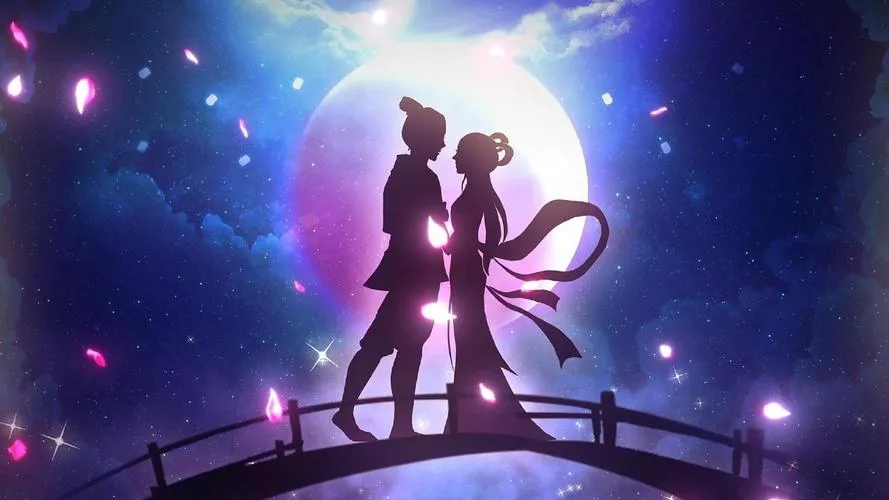
Table of Contents
What is Chinese Valentine’s Day?
Chinese Valentine’s Day, known as 七夕节 (Qīxìjié), is celebrated on the 7th day of the 7th month of the Chinese lunar calendar. Also called the Qixi Festival (literally, “Evening of Sevens Festival”), this romantic holiday is steeped in folklore and centers around the legendary love story of Zhinü (織女, the Weaver Girl) and Niulang (牛郎, the Cowherd).
The Legend of the Weaver Girl and the Cowherd
According to legend, Zhinü, the daughter of the Jade Emperor, lived a life of order and duty in heaven. Yearning for something more, she descended to earth, where she defied heavenly rules and fell in love with Niulang, a humble mortal.
Zhinü’s mother, the Goddess of Heaven, discovered their forbidden love and sent soldiers to bring her back to the celestial realm. Heartbroken, the lovers were tragically separated. Determined to reunite with his wife, Niulang carried their two children to the heavens. In response, the Goddess created a vast celestial river—the Milky Way—to keep them apart forever.
Touched by the devotion of the lovers, a flock of magpies formed a bridge over the Milky Way on the 7th day of the 7th lunar month, allowing the couple to meet once a year. This magical reunion, known as the “Magpie Bridge”, is at the heart of Qixi Festival and is celebrated as a day of romance in China, symbolizing enduring love and devotion.
When is Chinese Valentine’s Day on the Gregorian Calendar?
Since Qixi Festival (七夕节 Qīxìjié) is based on the lunar calendar, its date changes every year on the Gregorian calendar. For example:
- In 2021, Qixi fell on August 14.
- In 2022, it was celebrated on August 5.
The festival always lands on the 7th day of the 7th lunar month, but the exact Gregorian date varies, so couples often check the calendar each year to plan their celebrations.
How is 七夕节 (Qīxìjié) Celebrated in China?
Chinese Valentine’s Day is a romantic holiday where couples express love through gifts, quality time, and traditional customs. Much like Western Valentine’s Day, couples may enjoy:
- A special dinner at a favorite restaurant or homemade meal
- Exchanging gifts, such as flowers, chocolates, or jewelry
- Going out together, including movies or evening walks under the stars
The festival brings an air of romance and magic to the streets, as couples often look to the night sky in search of the stars Vega (Zhinü) and Altair (Niulang), hoping to connect with the love story of the Cowherd and Weaver Girl.
A unique tradition during Qixi is eating 巧果 (qiǎoguǒ), a type of sweet, fried pastry. The name is rich with symbolism:
- The character 巧 (qiǎo) sounds like 桥 (qiáo), meaning bridge, representing the Magpie Bridge that reunites the lovers.
- 巧 also means skillful or clever, so by making and eating these pastries, women traditionally pray to Zhinü for wisdom, dexterity, and a happy married life.
In some regions, women also perform needlework or craft competitions, demonstrating their skill and dexterity, as a nod to Zhinü’s talent as a weaver. These customs reflect the festival’s origin as a day for romance, skill, and devotion, combining folklore with heartfelt celebrations that continue to this day.
Other Romantic Holidays in China
In addition to Qixi, there are a few other romantic holidays celebrated each year in China:
February 14: Valentine’s Day (情人节 Qíngrénjié)
Valentine’s Day in China, known as 情人节 (Qíngrénjié), is primarily celebrated by younger generations, as the holiday was imported from the West and only became widely popular in recent decades. Unlike in many Western countries where both partners exchange gifts equally, in China the custom often places the initial focus on women giving gifts—typically chocolates, flowers, or small personalized presents—to show their affection and appreciation for their partners.
On this day, romantic restaurants, shopping malls, and entertainment venues are decorated with hearts, balloons, and red accents, creating a festive atmosphere for couples. It’s also common for young people to post messages of love on social media, buy plush toys, or write heartfelt notes for their significant others.
Men, meanwhile, are culturally expected to reciprocate the gesture one month later on White Valentine’s Day (白色情人节 Báisè Qíngrénjié), giving gifts such as chocolates, jewelry, or other thoughtful presents in return. This staggered exchange of gifts reinforces the idea of mutual appreciation and creates two months of romantic celebration for couples in China.
Overall, Valentine’s Day in China blends Western traditions with local customs, emphasizing both romantic expression and the importance of thoughtful reciprocity in relationships.
March 14: White Valentine’s Day (白色情人节 Báisè Qíngrénjié)
White Valentine’s Day, or 白色情人节 (Báisè Qíngrénjié), is celebrated exactly one month after Valentine’s Day and is traditionally the day for men to reciprocate the gifts they received from their partners on February 14th. On this day, men often give white chocolates, flowers, jewelry, or other meaningful presents to demonstrate their affection and gratitude.
A key expectation of White Valentine’s Day in China is that men’s gifts should match or exceed the value of the gifts they received previously, emphasizing thoughtfulness and the idea of reciprocation in romantic relationships. While it is less widely known than Valentine’s Day itself, White Valentine’s Day has gained popularity among young couples in China, particularly in urban areas.
Although this holiday was originally created by the confectionery industry in Japan in the 1970s, it quickly spread throughout East Asia, including China, and is now considered an extension of Valentine’s Day, creating a two-step celebration of love that strengthens bonds between couples and adds an extra layer of romance to the early spring season.
May 20: 520 Festival (五二零节 Wǔ’èrlíngjié)
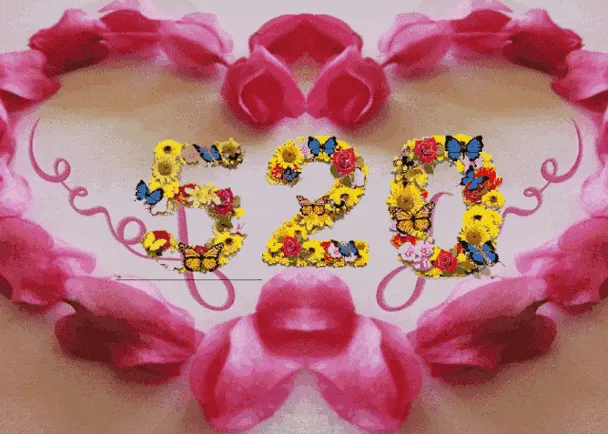
The 520 Festival, celebrated on May 20th, is a uniquely modern Chinese celebration of love that emerged thanks to the abundance of homophones in the Chinese language. The numbers "520" (五二零 wǔ èr líng) are pronounced similarly to "I love you" (我爱你 wǒ ài nǐ) in Mandarin, which has made this day a symbolic opportunity for couples to express their feelings.
Although not as historically rooted as Qixi Festival, the 520 Festival has quickly gained popularity in contemporary China, especially among younger generations who are active online and on social media. Couples often celebrate by exchanging love notes, small gifts, and sometimes money-filled red envelopes, while romantic messages flood digital platforms across the country.
This numerical holiday demonstrates how modern Chinese culture creatively blends language, technology, and romantic tradition, offering yet another way for lovers to celebrate their relationships throughout the year.
Celebrating Love Across Time in China
From the ancient legend of Zhinü and Niulang celebrated on Qixi Festival, to the modern expressions of affection on Valentine’s Day, White Day, and the playful 520 Festival, China offers a rich tapestry of romantic traditions. These holidays reflect both the enduring power of love in Chinese culture and the ways in which contemporary society creatively adapts new customs to express it.
Whether through romantic gestures, thoughtful gifts, or heartfelt words, each festival provides couples with a chance to honor their feelings and celebrate their relationships. By understanding these traditions, you gain insight not only into Chinese culture but also into the universal human desire to connect, express, and cherish love in all its forms.
Love in China, it seems, is timeless, adaptive, and always worth celebrating.
FAQ
Q: What is the origin of Chinese Valentine’s Day (Qixi Festival)?
A: Chinese Valentine’s Day, known as 七夕节 (Qīxìjié), originates from the legendary love story of Zhinü (the Weaver Girl) and Niulang (the Cowherd). According to folklore, their love was forbidden, and they were separated by the Milky Way. Once a year, on the 7th day of the 7th lunar month, a flock of magpies forms a bridge so they can reunite. This festival symbolizes enduring love, devotion, and the magical reunion of lovers, making it one of China’s oldest romantic holidays.
Q: How do people traditionally celebrate Qixi Festival in China?
A: Couples celebrate Qixi Festival with romantic gestures similar to Western Valentine’s Day, such as special dinners, gift exchanges, and evening walks. Unique Chinese customs include eating 巧果 (qiǎoguǒ), sweet pastries symbolizing the Magpie Bridge, and women practicing needlework to honor Zhinü’s weaving skills. Many also gaze at the night sky, seeking the stars Vega and Altair, connecting the celestial love story with their own relationships.
Q: How does Qixi Festival differ from Western Valentine’s Day?
A: While both are celebrations of love, Qixi Festival is rooted in ancient Chinese folklore and lunar calendar traditions. It emphasizes skill, devotion, and symbolic gestures, such as making pastries or demonstrating dexterity in crafts. Western Valentine’s Day, by contrast, focuses more on romantic gifts and public displays of affection. In China, the two holidays coexist, offering couples both traditional and modern ways to express love.
Q: What is the significance of Valentine’s Day (February 14) and White Valentine’s Day (March 14) in China?
A: Valentine’s Day (情人节 Qíngrénjié) was imported from the West and is mainly celebrated by younger generations, with women often giving gifts first. White Valentine’s Day (白色情人节 Báisè Qíngrénjié), celebrated one month later, is traditionally when men reciprocate with equal or more thoughtful gifts. Together, these two dates create a two-step celebration of love, blending Western customs with Chinese cultural emphasis on reciprocity in relationships.
Q: What is the modern 520 Festival, and why is it celebrated?
A: The 520 Festival (五二零节 Wǔ’èrlíngjié) on May 20th is a modern, internet-driven celebration of love. The numbers “520” sound similar to “I love you” (我爱你 wǒ ài nǐ) in Mandarin. Couples exchange gifts, love notes, and even red envelopes, often sharing their feelings online. Unlike Qixi Festival, it has no historical roots, but it demonstrates how language, technology, and contemporary culture shape new ways of expressing affection in China.
Q: How do these romantic holidays reflect Chinese culture and values?
A: Chinese romantic holidays, from Qixi Festival to modern celebrations like 520, blend folklore, morality, creativity, and social norms. They emphasize devotion, skill, thoughtfulness, and reciprocity rather than only material gifts. By combining ancient legends, seasonal rituals, and contemporary practices, these holidays offer insight into how Chinese society values love, connection, and shared emotional expression across generations.