
Sweet Traditions of Chinese New Year: A Guide to Festive Desserts
Table of Contents
Chinese New Year is the most important holiday in Chinese culture, marked by traditions centered on family, reunion, and renewal. At the heart of the celebration is the New Year’s Eve reunion dinner, known as 年夜饭 (Nián yèfàn) or 团年饭 (tuán niánfàn), often regarded as the most meaningful meal of the entire year.
No matter how far they live, family members are expected to return home for this dinner. When someone cannot be present, families traditionally leave an empty seat and place a spare set of chopsticks at the table, symbolizing unity and the hope of reunion.
According to legend, the origins of the Spring Festival trace back to the fearsome monster Nian, who was believed to appear at the end of each year to terrorize villages. To protect themselves, people stayed indoors, prepared lavish meals, and made offerings to ancestors and gods, praying for safety and good fortune.
Just like Chinese New Year decorations and customs, the dishes served during the festival are rich in symbolism. Their names, shapes, and ingredients are carefully chosen to represent wishes for prosperity, happiness, longevity, and good luck in the year ahead.
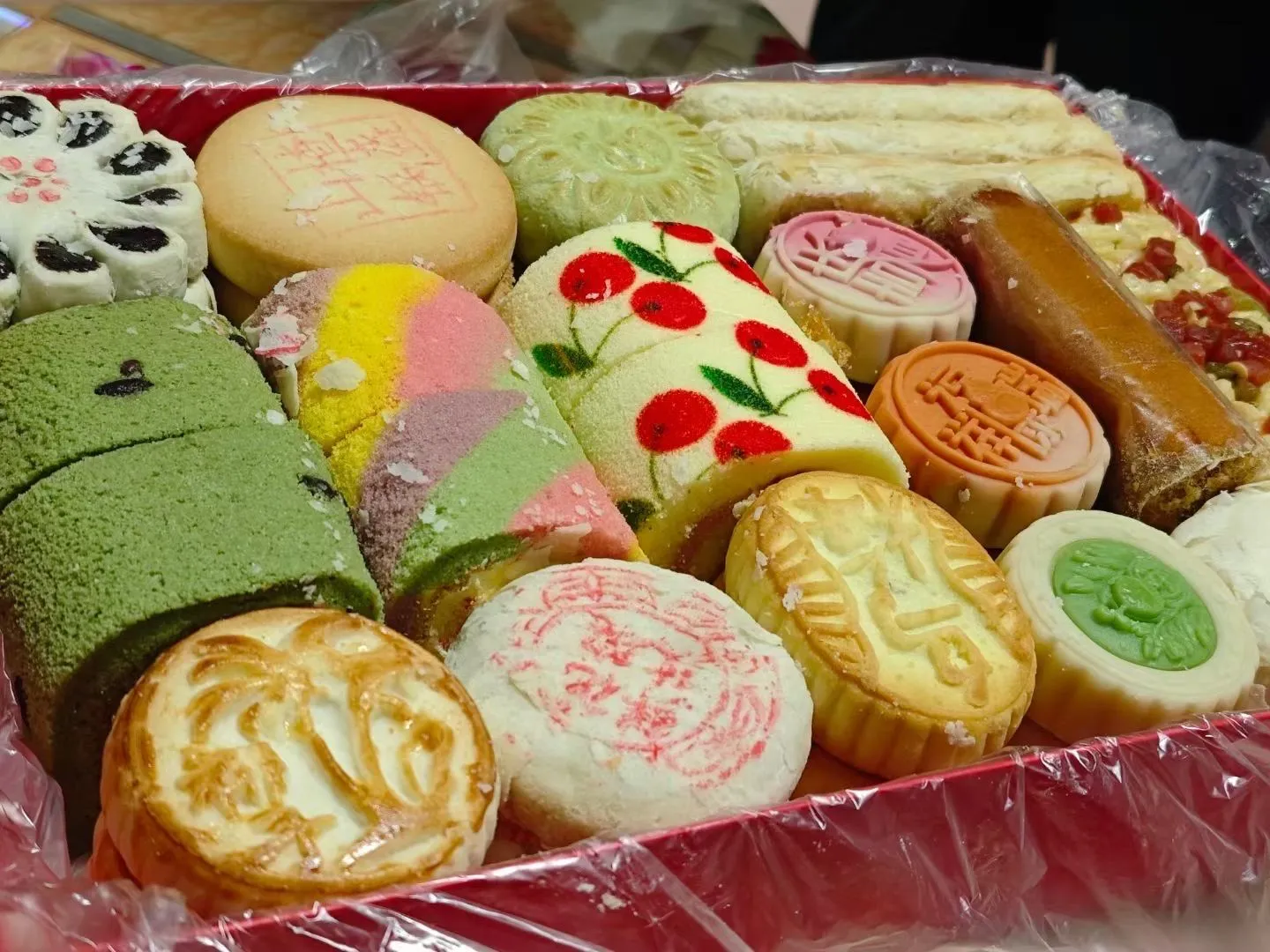
The same symbolism continues with Chinese New Year desserts, which are enjoyed after the main meal. While dessert names may be more literal, each sweet treat is designed to be visually appealing and pleasantly flavorful. Most desserts are sweet, reflecting the wish for a sweet and successful year ahead.
Although dessert traditions vary by region and even by household, several classic Chinese New Year desserts are widely recognized and enjoyed across the country. Below are some of the most popular and unique festive sweets you’re likely to encounter during the Lunar New Year.
Nian Gao 年糕 (nián gāo)
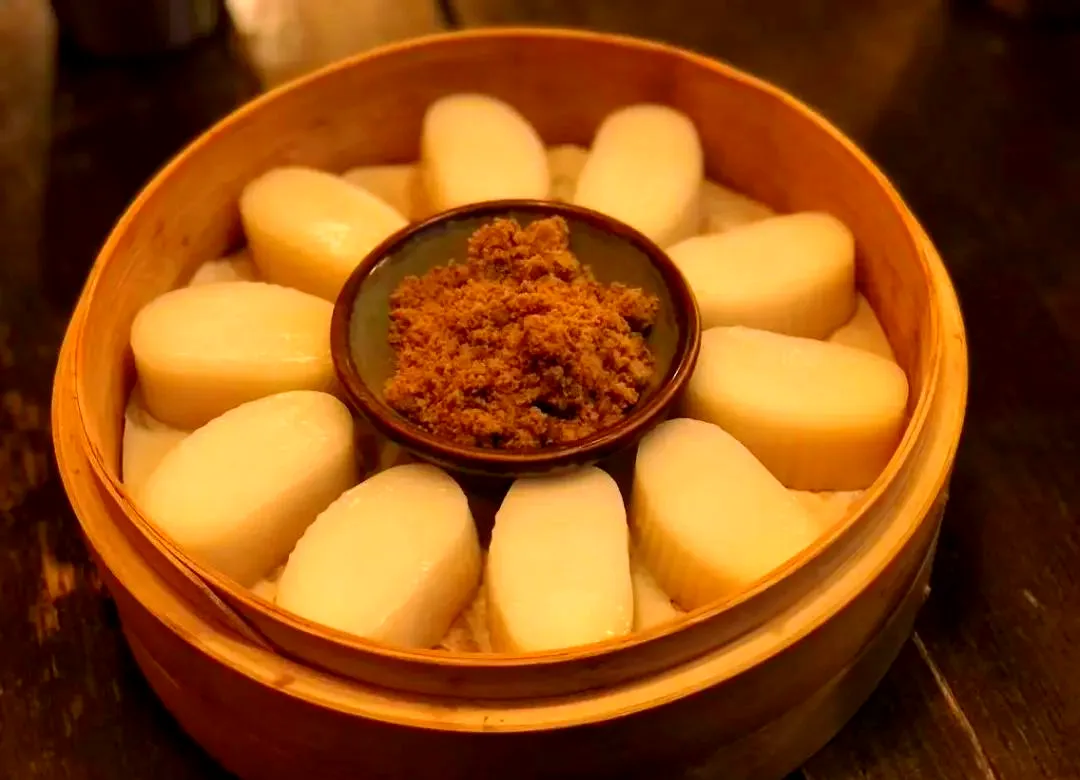
Nian gao, often translated as “rice cake” or “New Year cake,” is one of the most iconic foods eaten during Chinese New Year. Its popularity is closely tied to wordplay: the word gāo (糕) sounds identical to gāo (高), meaning “high” or “to rise.” Eating nian gao therefore symbolizes progress, promotion, and improvement, carrying the hopeful message that each year will be better than the last. Some parents even joke with their children that nian gao will help them grow taller.
Traditionally made from glutinous rice or yellow rice, nian gao comes in different textures and colors. Its shape often resembles gold or silver ingots, reinforcing its association with wealth and prosperity. Historical records show that nian gao was already enjoyed as early as the Wei and Jin dynasties (220–420 AD), making it a dessert with deep cultural roots.
Over more than two thousand years, nian gao has evolved into countless regional variations, to the point where northern and southern versions can feel like entirely different dishes. In southern China, nian gao is commonly sliced and stir-fried with meat and vegetables, creating a savory dish rather than a dessert. In contrast, sweet versions are more popular in other regions.
Suzhou is famous for its lard nian gao (猪油年糕 zhū yóu nián gāo), made from glutinous rice flour, sugar, and lard, resulting in a rich and fragrant treat. In Beijing, red jujube nian gao (红枣年糕 hóng zǎo nián gāo) is a favorite. These cakes are steamed in decorative molds and topped with a single jujube at the center. Meanwhile, in Shanxi and Inner Mongolia, people prefer deep-fried nian gao filled with red bean paste or mashed jujube.
For those with an extra sweet tooth, there’s also a delightfully simple option: dipping plain nian gao directly into white sugar. The sweetness is believed to promise a sweet, successful year ahead and conveniently doubles as a festive excuse to indulge.
Fa Gao 发糕 (fā gāo)
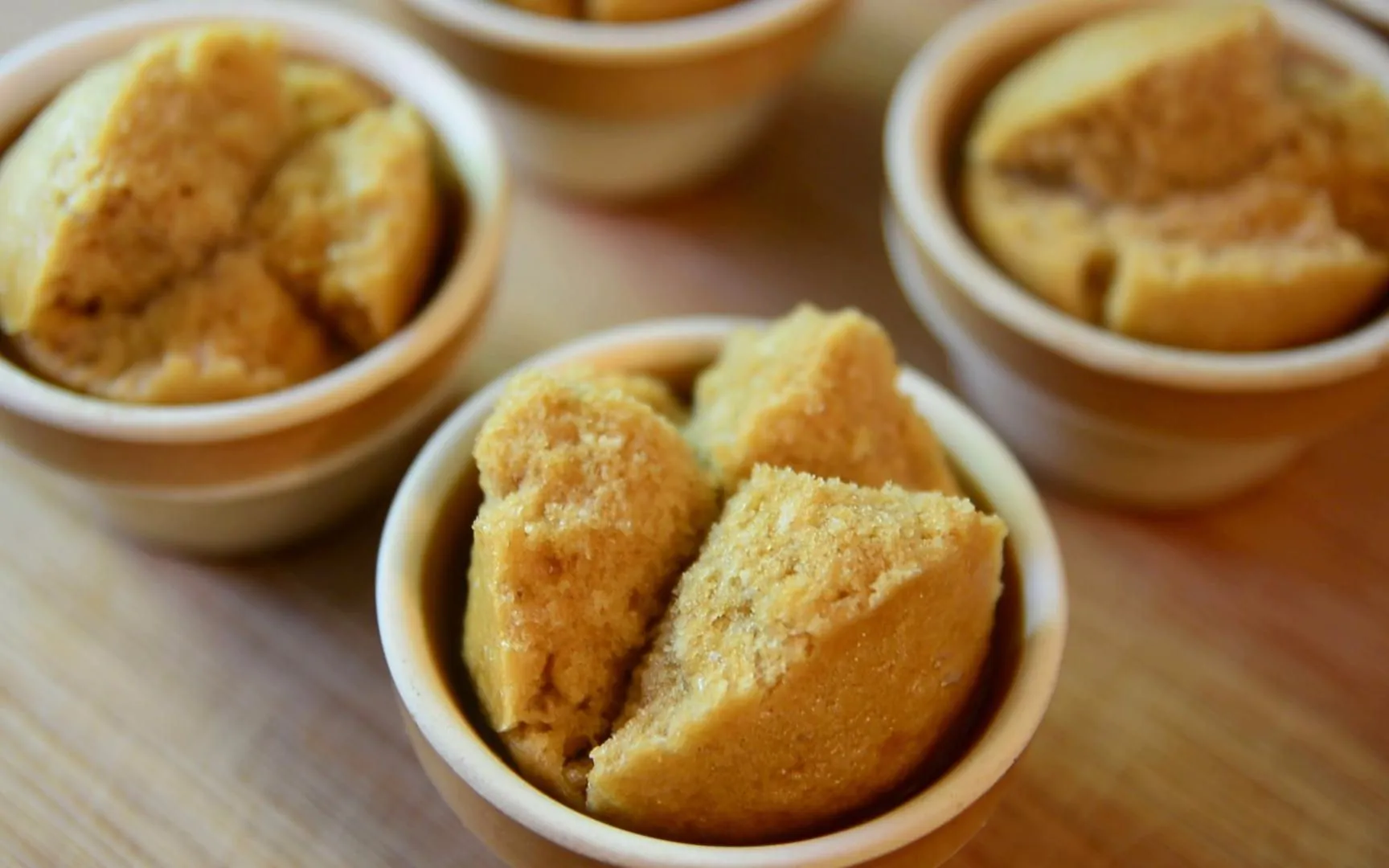
Like nian gao, fa gao carries the auspicious character gāo (糕), symbolizing growth, progress, and rising fortunes. What truly sets fa gao apart, however, is the character fā (发). It is the same fa found in fā cái (发财), meaning “to get rich” or “to make a fortune,” making fa gao one of the most explicitly wealth-focused desserts of Chinese New Year.
Fa gao is traditionally made by soaking rice and grinding it into a smooth paste. The most critical stage of the process is fermentation. If the batter is not fermented long enough, the cake will fail to rise and “bloom.” During this stage, careful attention is required, with the mixture stirred regularly to ensure proper air development.
The batter is then steamed, and this is where anticipation peaks. When the lid is finally lifted, everyone watches closely. A successful fa gao splits open at the top, forming a natural “crack” or blossom. The fluffier the cake and the more pronounced the splits, the stronger the symbolism of prosperity and good fortune for the coming year.
Fa gao also comes in a variety of colors, each adding to its festive appeal. Corn flour produces a warm golden hue, carrots lend a bright red-orange tone associated with luck, and green tea powder creates a fresh, spring-like green. Ingredients such as red jujubes, dates, and hawthorn are often added, enhancing both the flavor and the health symbolism of the cake.
Light, airy, and rich in meaning, fa gao is more than a dessert—it’s a steamed wish for wealth, growth, and a year that rises beautifully from start to finish.
Turnip Cake 萝卜糕 (luóbo gāo)
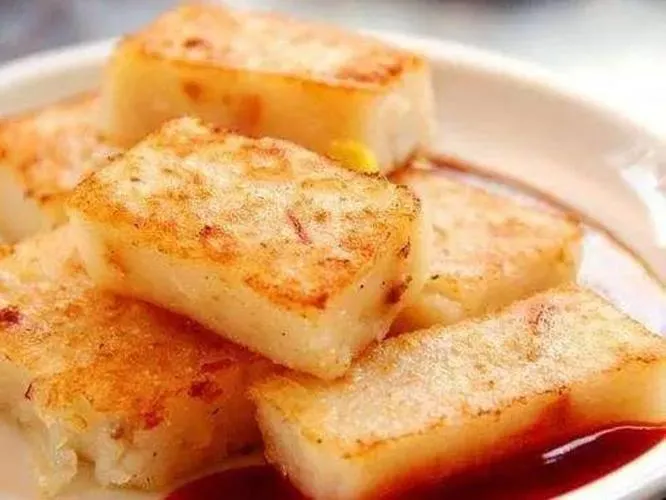
Turnip cake is another classic gāo enjoyed during Chinese New Year, especially in southern China, with Fujian and Guangdong being its heartlands. Known in English as radish cake, daikon cake, or sometimes carrot cake, it is a staple at festive tables and dim sum restaurants alike.
The star ingredient is shredded Chinese white radish. In Cantonese and some regional dialects, radish is called cài tóu (菜头), which sounds similar to hǎo cǎi tóu (好彩头), meaning “good luck” or “a promising start.” Because of this homophonic blessing, turnip cake is believed to bring good fortune and smooth beginnings in the new year.
The radish shreds are mixed with rice flour and gently seasoned, creating a batter that is both savory and aromatic. Many versions include additional ingredients such as Chinese sausage, peanuts, dried shrimp, or shiitake mushrooms, each adding depth and texture. After steaming, the cake can be sliced and pan-fried, forming a thin, crispy crust while remaining soft and tender inside.
Turnip cake is wonderfully versatile. It can be enjoyed simply, dipped into soy sauce, kumquat jam, or chili sauce, or elevated into a main dish. In Hong Kong, slices are often stir-fried with rich and fragrant XO sauce. In Taiwan, turnip cake is commonly eaten as a comforting breakfast food.
Within Hakka culture, turnip cake holds special significance on the seventh day of the Spring Festival. According to legend, the goddess Nüwa (女娲) created humanity on this day. As a result, Hakka families prepare turnip cake to mark humanity’s birthday and to invite good fortune. Chinese radish is also known as the “poor man’s ginseng,” valued for being affordable, nourishing, and sustaining. This symbolism made turnip cake especially beloved in ancient times.
Hakka-style turnip cakes tend to be simpler and more rustic than their Cantonese or Taiwanese counterparts. After steaming, they are lightly garnished with chopped scallions and served as is. Modest in appearance yet rich in meaning, turnip cake remains a reminder that true prosperity lies not in extravagance, but in nourishment, tradition, and shared beginnings.
Osmanthus Jelly 桂花糕 (guìhuā gāo)
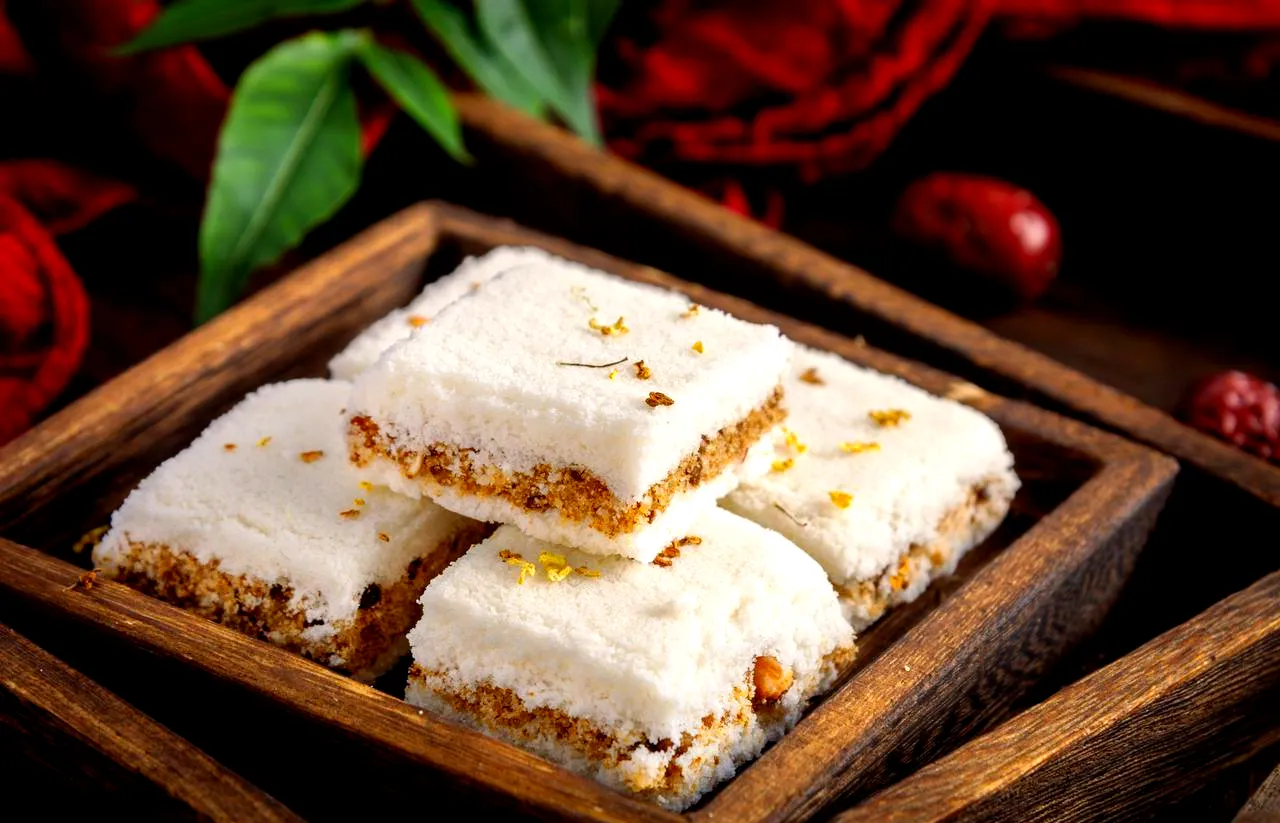
Flowers have long played a delicate role in Chinese desserts, adding both fragrance and symbolism. Roses folded into lard nian gao are one example, but few blossoms are as beloved as osmanthus.
Sweet-scented osmanthus, also known as the “may flower,” frequently appears in Chinese festivals and celebratory foods. In Chinese, guì (桂) sounds like guì (贵), meaning “noble” or “precious.” In traditional flower symbolism, osmanthus represents auspiciousness, friendship, and success, making it an especially fitting ingredient for Spring Festival desserts.
Osmanthus jelly boasts a history of more than 300 years. Authentic versions rely purely on natural ingredients, without artificial flavorings or additives. At its core, the dessert is made from glutinous rice flour, fresh or preserved osmanthus petals, and crystalline sugar. The result is a cake that is lightly sweet, gently floral, and soft to the bite.
One of the most famous varieties is Crystal Osmanthus Jelly (水晶桂花糕 / shuǐjīng guìhuā gāo), a classic Shanghainese New Year treat. Its translucent appearance and delicate aroma make it as visually elegant as it is flavorful.
In Xianyang, a more elaborate version is prepared using a special osmanthus jam. The petals are carefully preserved for up to three years and infused with traditional Chinese herbs. The glutinous rice is stir-fried, finely ground, steamed, and blended with the fragrant jam. White sugar, black sesame, and a touch of salt water are added to balance the flavors. The finished jelly is tender and aromatic, offering a refined contrast of sweetness and savoriness.
Light yet luxurious, osmanthus jelly captures the spirit of the New Year itself—graceful, hopeful, and filled with quiet blessings.
Jujube Flower Cakes 枣花糕 (zǎo huā gāo)
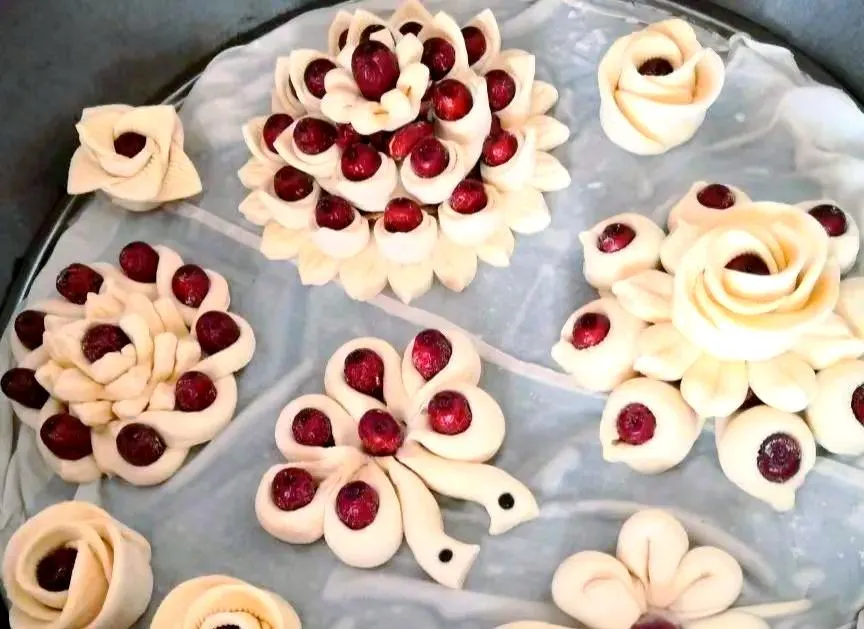
Jujubes (枣 zǎo) are a staple ingredient in Chinese New Year desserts, prized not only for their sweetness but also for their auspicious meaning. The word zǎo is a homophone for 早 (“early”), making jujubes a symbol of early success, fulfilled wishes, and, most commonly, the hope of having children soon. For this reason, they frequently appear in festive cakes prepared for weddings, family celebrations, and the Spring Festival.
To make jujube flower cakes, cooks often select plump, meaty red dates and wrap them in soft dough. Some versions are arranged into multi-tiered cakes, while others shape the dough into blossoms, pressing whole jujubes into the center or along the petals. After steaming, the dough rises into a light, spongy texture, transforming the cake into a blooming “bouquet” of jujube flowers that is as symbolic as it is visually charming.
Another popular variation uses a flaky, pastry-like dough to form smaller flower-shaped cakes. These are filled with smooth jujube paste, with the center of each blossom delicately dotted with red coloring for a festive touch. The contrast between the tender pastry and the rich, naturally sweet filling makes this style especially appealing.
No matter the form, adding jujubes enhances both flavor and meaning. Their presence turns an ordinary dessert into a wish for prosperity, harmony, and new beginnings. As seen in nian gao and other New Year treats, jujubes are a quiet but powerful symbol woven into celebratory food.
In Fujian, jujube paste is also incorporated into Chinese yam cakes (枣泥山药糕 / zǎo ní shān yào gāo). After steaming, the yams become soft enough to mash into a smooth, pliable dough that can hold intricate molds and patterns. These cakes are often elaborately shaped, so beautiful they almost feel like edible works of art—sometimes admired longer than they are eaten.
Ai Wo-Wo 艾窝窝 (ài wō wo)
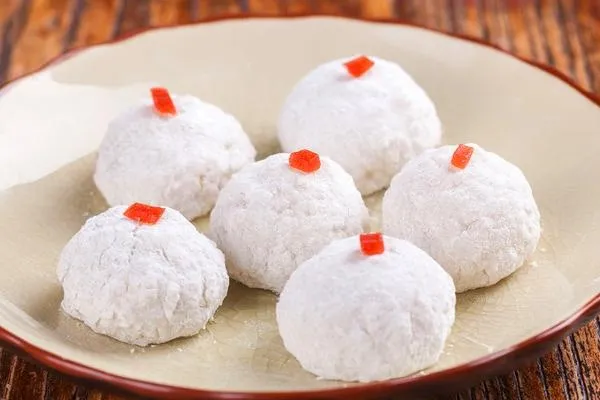
Ai wo-wo is a classic Beijing dessert whose formal English name, “steamed rice cakes with sweet filling,” hardly does it justice. Like many traditional Chinese sweets, it is made primarily from glutinous rice, but what makes ai wo-wo unique is that it is traditionally halal, reflecting the culinary influence of China’s Hui Muslim community.
In Beijing, ai wo-wo has a long seasonal presence. It typically appears around the Spring Festival and continues to be sold well into the summer months, making it one of the few festive desserts enjoyed far beyond the New Year period.
According to popular folklore, ai wo-wo was introduced to Beijing during the Qing dynasty by Concubine Xiang, a woman of Hui ethnicity brought to the capital to serve Emperor Qianlong. Far from her hometown and separated from her husband, she struggled with deep homesickness. To comfort her, her former husband recreated the sweet treats from her homeland and secretly sent them to Beijing. Over time, these humble rice cakes found their way into palace kitchens and eventually into everyday Beijing cuisine.
Ai wo-wo is instantly recognizable by its snow-white appearance and slightly rough exterior. Unlike smooth rice cakes, its outer layer is made by mixing glutinous rice with steamed rice flour, creating a delicate, grainy texture that resembles freshly fallen snow. Beneath this soft shell lies a rich, sweet filling that offers warmth and comfort with every bite.
Traditional fillings include sugar, black sesame paste, walnuts, hawthorn bits, and Chinese yam. For added symbolism, jujubes are often pressed onto the top, bringing blessings of good fortune, prosperity, and harmony. Simple in appearance yet layered with cultural meaning, ai wo-wo is a perfect example of how Chinese New Year desserts blend taste, tradition, and storytelling into a single bite.
Rice Balls 汤圆 / 元宵 (tāng yuán / yuán xiāo)
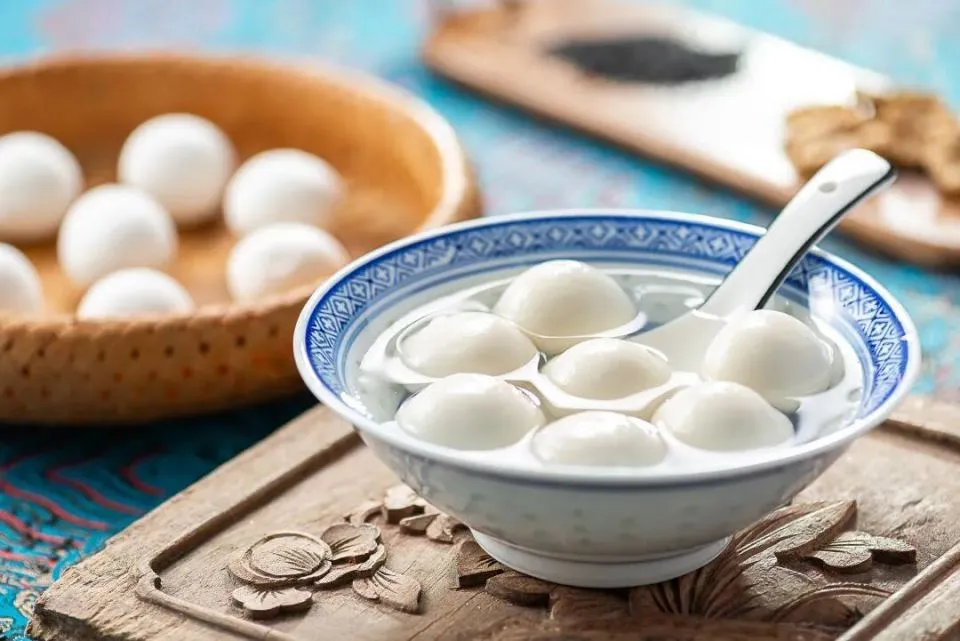
Rice balls are one of the most symbolic desserts of the Chinese New Year season, representing unity, completeness, and family reunion. Though they appear similar, rice balls take on different names, preparation methods, and meanings in northern and southern China.
Southern Rice Balls: Tāng Yuán 汤圆
In southern China, these glutinous rice dumplings are known as tāng yuán, literally “soup balls.” They are traditionally eaten as the first breakfast of the new year, especially in Jiangsu, Zhejiang, and Shanghai, marking a smooth and harmonious beginning to the year ahead.
Southern rice balls are typically boiled and served in hot water or sweet soup. Because the dish originated in Ningbo, they are also called Ningbo rice balls (宁波汤圆 / níngbō tāngyuán). The outer skin is soft and elastic, made from glutinous rice flour, while the fillings are rich and fragrant.
Classic sweet fillings include red bean paste, black sesame paste, mashed jujube, peanut paste, and molten sugar. Modern variations have expanded to include cream, butter, and even chocolate. In some regions, savory fillings such as vegetables or minced meat can also be found. Beyond boiling, tāng yuán may also be steamed or lightly fried, adding even more textural variety.
Sichuan offers one of the most unusual interpretations: xīn fèi tāng yuán (心肺汤圆), or “heart-and-lung rice balls.” These savory dumplings are filled with dried tofu and vegetables stir-fried in lard, combined with braised pork heart and lungs. They are often served with chopped green onions, garlic, and chili, creating a bold and distinctly local flavor profile.
Northern Rice Balls: Yuán Xiāo 元宵
In northern China, rice balls are called yuán xiāo, a name shared with the Lantern Festival itself. While the ingredients may be similar, the preparation method is entirely different.
Tāng yuán are shaped like dumplings by wrapping the filling inside dough. Yuán xiāo, however, begin with the filling alone. The filling is rolled repeatedly in dry glutinous rice flour and gently shaken until it naturally forms a round ball. This process creates a slightly rougher exterior and a lighter texture once cooked.
Yuán xiāo are traditionally eaten on the 15th day of the lunar calendar, during the Lantern Festival (元宵节 / yuánxiāojié), which marks the official end of Chinese New Year celebrations. While the Lantern Festival once lasted up to ten days during the Ming dynasty, today most festivities are concentrated into a single vibrant evening.
Lantern displays, lantern riddles (猜灯谜 / cāi dēng mí), dragon dances, and moon-gazing fill the streets. Under the full moon, families gather to enjoy bowls of steaming rice balls, bringing the New Year season to a warm and meaningful close.
A Shared Meaning of Reunion
Whether called tāng yuán or yuán xiāo, both names contain the sound yuán (圆 / 元), which means “round” and echoes 团圆 (tuán yuán), meaning reunion. The perfectly round shape symbolizes family togetherness, harmony, and completeness.
No matter the region or recipe, rice balls remain one of the most emotionally resonant Chinese New Year desserts—simple in form, yet rich in meaning, warmth, and tradition.
Other Delicious Desserts
Beyond the headline sweets, the parade of Chinese New Year desserts stretches far beyond any single table. After the main dishes are cleared, families continue to bring out plates of traditional treats, each carrying its own flavor, texture, and auspicious meaning. Here are a few more classics commonly enjoyed during the festival season.
Taro Balls 芋圆 (yù yuán)
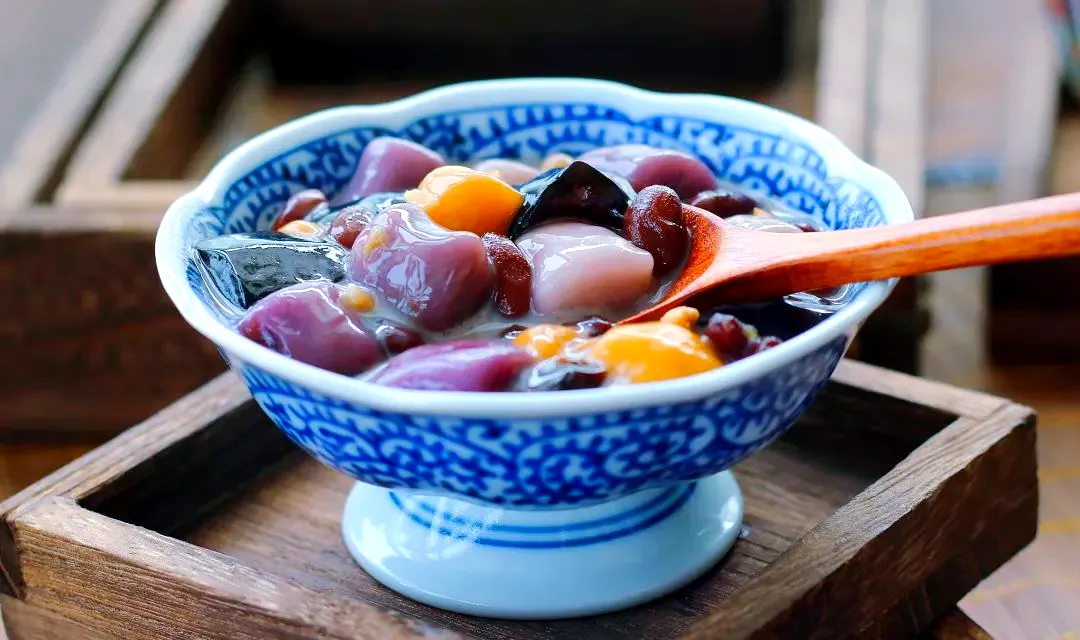
Taro balls are made by steaming taro until soft, mashing it into a smooth paste, and rolling it into small balls before boiling. Their round shape mirrors that of rice balls, symbolizing family reunions and completeness. Because taro is also associated with upward movement and growth, taro balls are often seen as a blessing for career success and steady progress in the coming year.
Song Muffin Cakes 松糕 (sōng gāo)
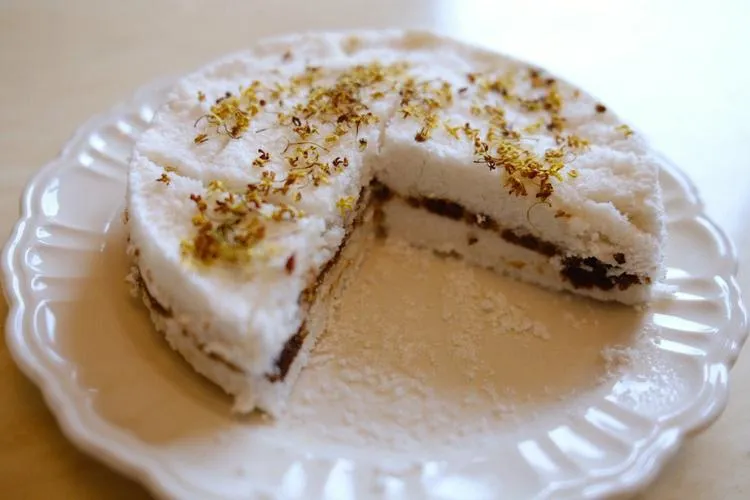
Song gao are light, fluffy steamed cakes with a gently crumbly texture. Traditionally, they were served at weddings, symbolizing sweetness and harmony in married life. Over time, they became a dessert for all kinds of celebrations, including Chinese New Year, where they represent a life filled with sweetness and joy.
Yellow Pea Cakes 豌豆黄 (wān dòu huáng)
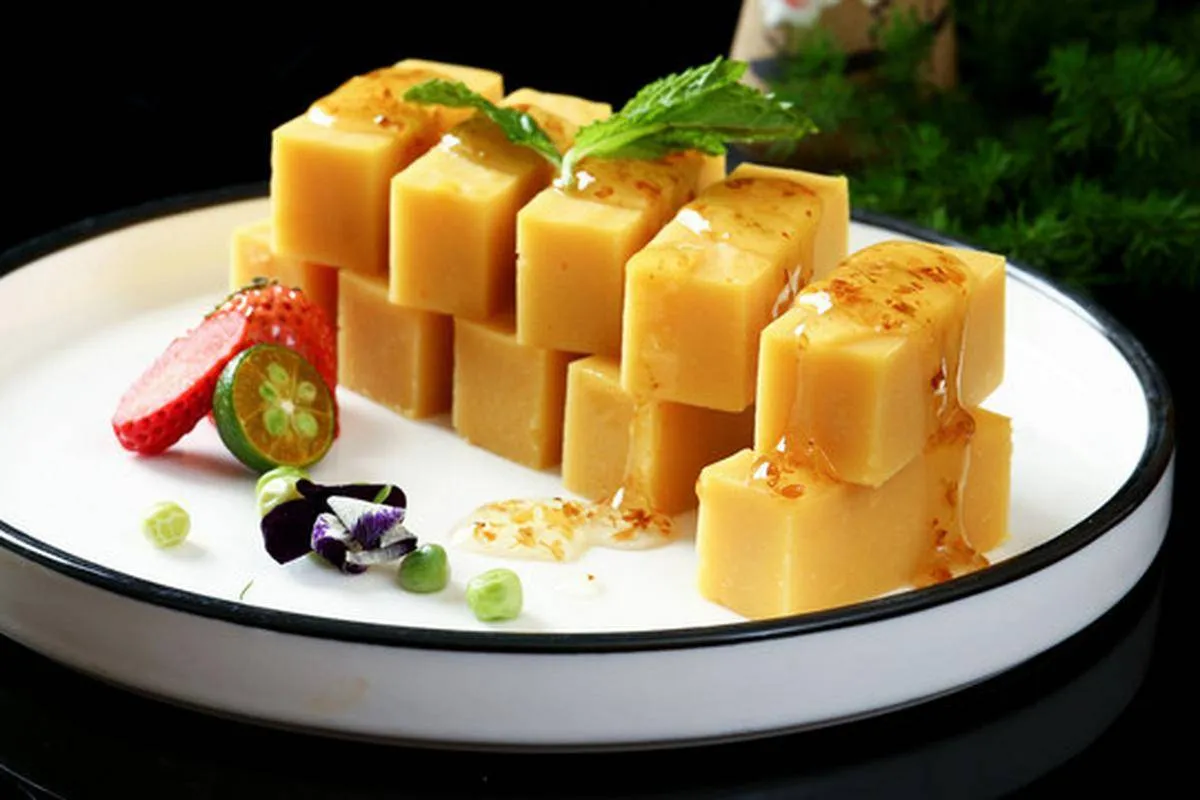
This iconic Beijing dessert was once a palace delicacy reserved for royalty. Made from peeled yellow peas and sugar, the cake has a smooth, dense texture and a naturally bright color. In imperial times, it was sometimes decorated with gold leaf, reinforcing its association with wealth and prosperity. Today, it remains a nostalgic symbol of elegance and abundance.
Sesame Balls 煎堆 (jiān duī)
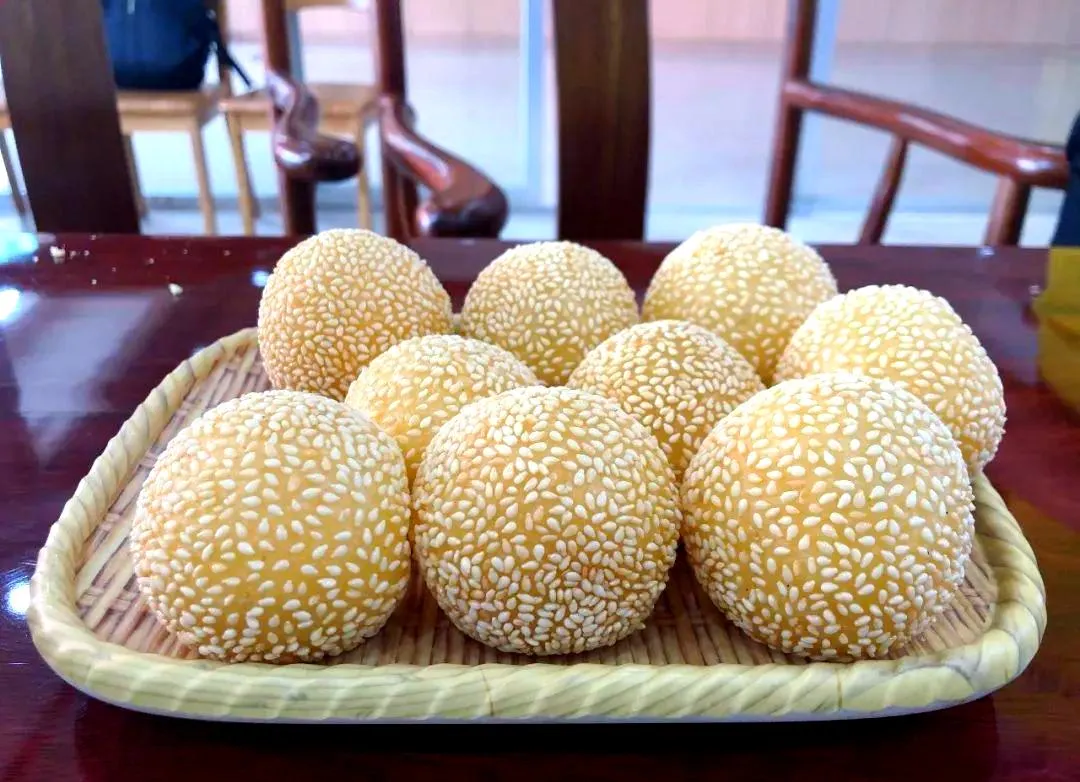
Sesame balls are made from glutinous rice dough mixed with sesame seeds, filled with sweet red bean paste, and deep-fried until golden. As they cook, the balls expand and puff up, a visual metaphor for growing fortune and flourishing families. Crispy on the outside and warm and chewy on the inside, they are both a comfort food and an auspicious symbol of reunion.
Almond Cookies 杏仁饼 (xìng rén bǐng)
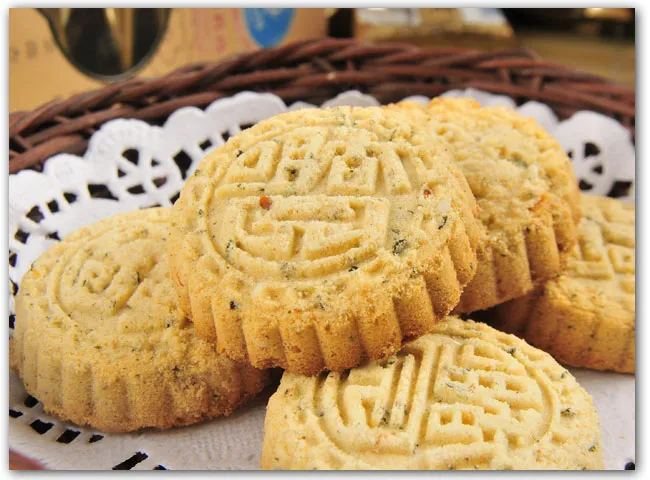
These crumbly, aromatic cookies are a classic Cantonese dessert. Outside of China, they are often served at Chinese restaurants as an alternative to fortune cookies, which, despite their name, do not actually exist in China. Almond cookies are valued for their rich flavor and satisfying crunch, making them a popular festive snack.
There is something deeply satisfying about a complete holiday meal followed by dessert, especially when those desserts are crafted with care and layered with meaning. During the Spring Festival, celebrations fill the days, but meals anchor the experience. Between banquets, family visits, and festive outings, people snack, sip tea, and share sweets.
Together, the main dishes, desserts, and snacks form a rich and symbolic menu, turning Chinese New Year into not just a celebration of time, but a celebration of taste, tradition, and togetherness.
Sweet Endings, Sweet Beginnings
As the New Year celebrations wind down, the sweetness of Chinese desserts lingers far beyond the last bite. From glutinous rice cakes and tang yuan to fragrant osmanthus jelly and jujube flower cakes, each treat carries more than flavor—it carries wishes for prosperity, reunion, and happiness. Every bite tells a story of tradition, regional diversity, and centuries of cultural wisdom. Whether enjoyed in bustling family kitchens, festive markets, or quiet moments with loved ones, these desserts remind us that Chinese New Year is not just a feast for the body, but a celebration of the heart, of togetherness, and of the hopes that bind generations. In the end, savoring these treats is a sweet way to taste history, honor customs, and welcome a year filled with joy and abundance.
FAQ
Q: What desserts are traditionally eaten during Chinese New Year?
A: Popular Chinese New Year desserts include nian gao (年糕, sticky rice cake), tangyuan (汤圆, glutinous rice balls), fa gao (发糕, prosperity cake), sweet rice balls, candied fruits, and peanut or sesame sweets. Each dessert carries symbolic meanings related to luck, unity, and prosperity.
Q: Why is nian gao considered an essential Chinese New Year dessert?
A: Nian gao sounds like “higher year” (年高) in Chinese, symbolizing growth, promotion, and progress. Eating it during the New Year expresses the wish for a better year ahead, whether in career, studies, or personal life.
Q: Is tangyuan eaten during Chinese New Year or only the Lantern Festival?
A: Tangyuan is most closely associated with the Lantern Festival, but many families also eat it during Chinese New Year. Its round shape represents family reunion and completeness, making it meaningful throughout the entire holiday period.
Q: What is fa gao and why is it popular during New Year celebrations?
A: Fa gao (发糕) is a steamed sponge cake that naturally splits open on top. The character “发” means “to prosper,” so the cracking surface symbolizes wealth, expansion, and good fortune in the coming year.
Q: Are Chinese New Year desserts usually very sweet?
A: Compared to Western desserts, many Chinese New Year sweets are mildly sweet rather than sugary. The emphasis is on texture and symbolism rather than richness, using ingredients like glutinous rice, red beans, dates, sesame, and peanuts.
Q: Do different regions of China have different New Year desserts?
A: Yes. Southern China favors sticky rice–based desserts like nian gao and tangyuan, while northern regions often enjoy fried pastries and flour-based sweets. Coastal areas may feature coconut or peanut desserts, reflecting local ingredients and tastes.