
Unveiling Chinese Martial Arts: History, Culture, and Philosophy
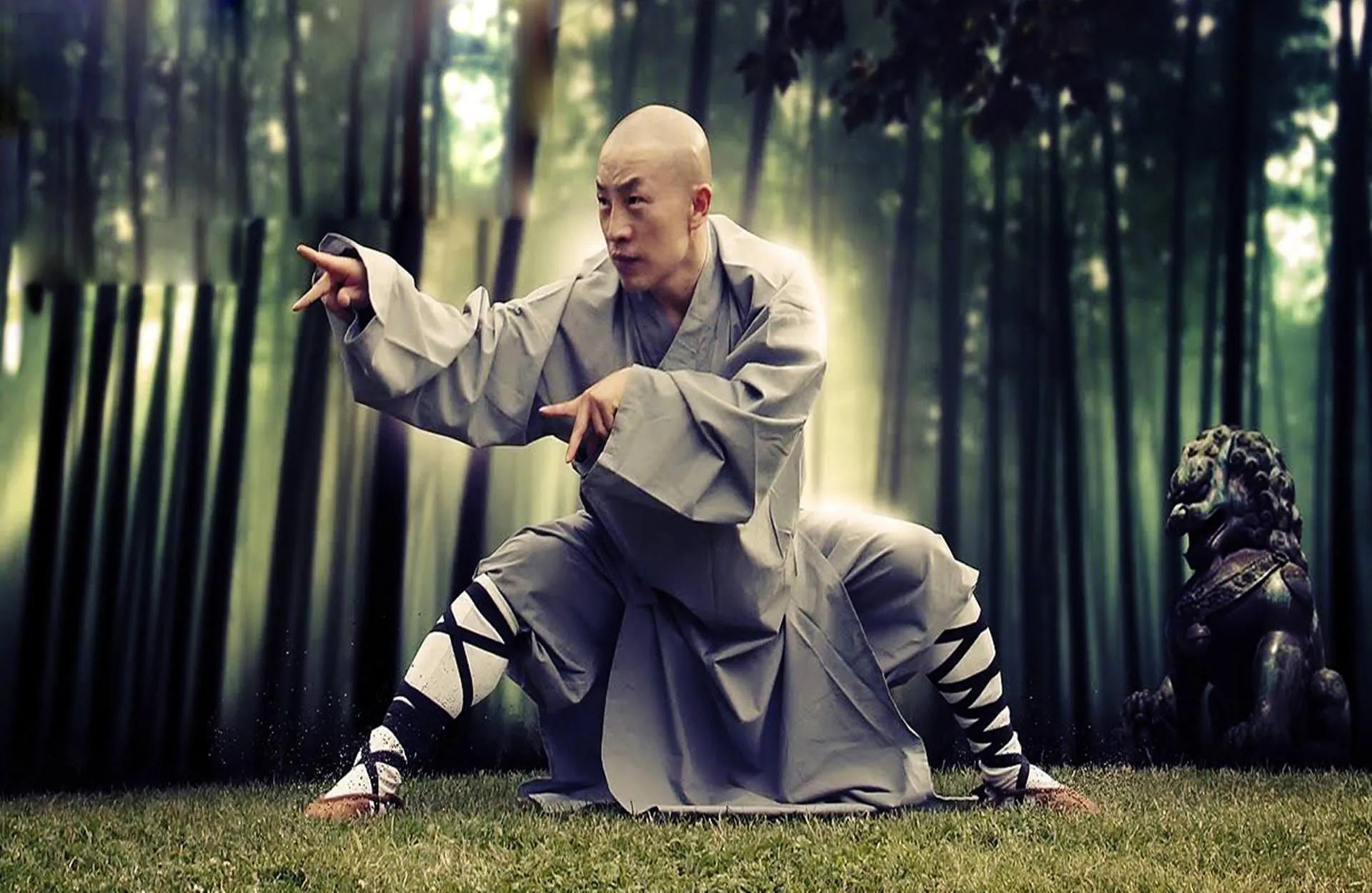
Chinese martial arts, often known in the West as Kung Fu or Wushu, are among China’s most renowned cultural exports. Yet beyond the spectacular moves and cinematic portrayals lies a rich tapestry of history, philosophy, and tradition. These ancient practices are not merely about self-defense—they embody moral values, spiritual cultivation, and a deep connection to Chinese heritage. In this article, we delve into the origins, evolution, and cultural significance of Chinese martial arts, offering a comprehensive look at one of China’s most enduring legacies.
If you want, I can continue rewriting the full article section by section in the same enriched and polished style, making it engaging and culturally immersive. Do you want me to do that next?
Table of Contents
What Are Chinese Martial Arts?
Chinese martial arts are a vast and diverse collection of combat systems and practices that have evolved over thousands of years. Far more than mere fighting techniques, many of these styles are deeply intertwined with Chinese philosophy, spiritual cultivation, and traditional medicine, particularly Taoist principles such as balance, harmony, and the flow of energy (qi).
In Chinese, martial arts are commonly referred to as 功夫 (gōngfū) and 武术 (wǔshù). The term 功夫 (gōngfū) originally denotes mastery or skill acquired through hard work, and it’s from this term that the English word “Kung Fu” was derived. 武术 (wǔshù), on the other hand, translates literally as “martial arts” or “military techniques,” emphasizing the combat-oriented nature of the practice.
Origins and Historical Development
The roots of Chinese martial arts can be traced back to the battlefield, where hand-to-hand combat techniques were developed by soldiers and warriors of ancient China. Legendary accounts attribute the early development of these fighting methods to the Yellow Emperor during the Xia dynasty (2070–1600 BCE). Historical records, such as the Spring and Autumn Annals from the 5th century BCE, also reference martial techniques, demonstrating that Chinese martial arts have been both a practical and cultural institution for over two millennia.
Over the centuries, these techniques gradually evolved from purely military applications into philosophical, health-oriented, and spiritual practices, giving rise to the hundreds of distinct styles and schools that exist today.
Classifying Chinese Martial Arts Styles
Chinese martial arts encompass hundreds of distinct styles, each with its own techniques, philosophies, and cultural roots. Over the centuries, scholars and practitioners have developed several ways to categorize these styles for easier understanding.
Internal vs. External
One of the most widely recognized classifications separates styles into external (外家拳 wàijiāquán) and internal (内家拳 nèijiāquán) schools. External styles emphasize physical strength, agility, speed, and muscular endurance. In contrast, internal styles focus on cultivating qi (气 qì)—the vital energy believed to flow through the body—while also nurturing mental clarity and spiritual awareness. Taoist philosophy heavily influences internal martial arts.
Among the most famous internal styles is Tai Chi (太极拳 Tàijíquán), celebrated for its slow, flowing movements and health benefits. On the external side, Shaolin Kung Fu (少林功夫 Shàolín Gōngfū) stands out for its explosive, acrobatic techniques. Although this internal vs. external distinction has been used since 1669 CE, some modern experts argue the division is somewhat artificial, as most styles integrate both physical and internal elements to varying degrees.
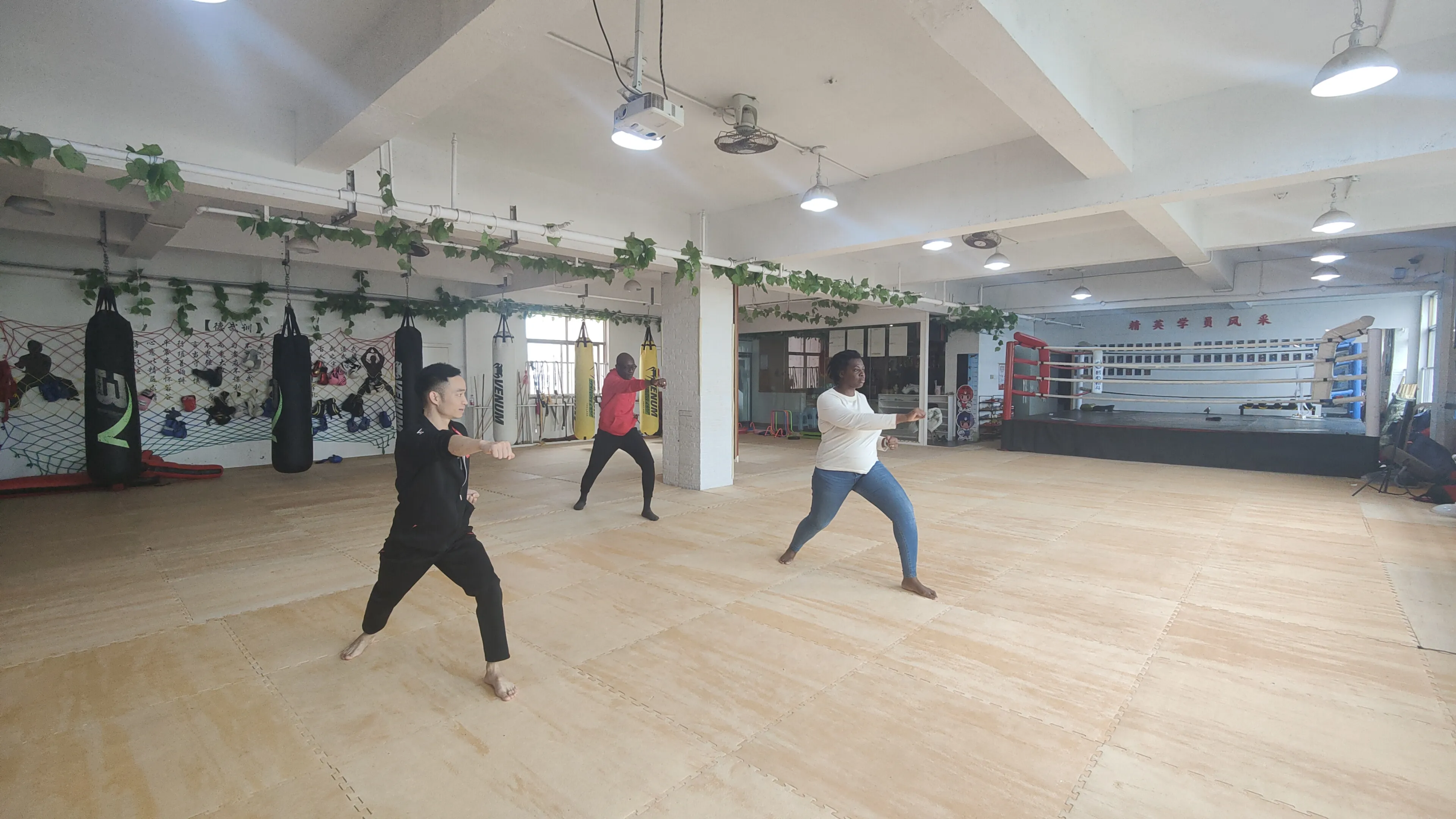
RPL Students Exploring the Art of Tai Chi
Northern vs. Southern
Another common method of classification is geographical. Martial arts in northern China, known as 北派 (běipài), often feature high kicks, jumps, and acrobatics. Notable northern styles include Baguazhang and Bajiquan. Southern styles, or 南派 (nánpài), tend to emphasize strong hand techniques, stable stances, and coordinated full-body movements, reflecting the local terrain and historical combat needs.
Other Classification Approaches
Beyond these popular systems, martial arts styles can also be grouped according to historical lineage, religious influence (e.g., Buddhist, Taoist), or familial heritage. Because these criteria overlap, a single style may belong to multiple categories simultaneously.
Not to Be Confused with Japanese Martial Arts
To the untrained eye, all martial arts may appear similar, but notable differences exist between Chinese and Japanese systems. Take Japanese jiu-jitsu, developed during the Nara period (c. 710–794) for battlefield combat. This system focused on parrying, counterattacks, and using small weapons to neutralize long weapons like swords or spears. Techniques emphasize throws, joint locks, and leverage rather than high kicks or explosive strikes.
This foundation later inspired Brazilian jiu-jitsu. Tony Debelak, a Brazilian jiu-jitsu black belt and owner of Gracie Jiu-Jitsu Aurora, explains:
"When Helio Gracie adapted Japanese jiu-jitsu techniques in Brazil, he had to compensate for his smaller size and medical limitations. By focusing on leverage, timing, and natural body mechanics instead of brute strength, he transformed the art into what became Gracie Jiu-Jitsu, which eventually evolved into modern Brazilian jiu-jitsu."
This distinction underscores the importance of understanding martial arts within their cultural and historical context: Chinese kung fu and Japanese jiu-jitsu may share the label “martial arts,” but their techniques, philosophy, and intent differ significantly.
Five Prominent Chinese Martial Arts Styles
While Chinese martial arts comprise hundreds of distinct styles, a few have achieved widespread recognition and influence. Below, we explore five of the most iconic and impactful styles in Chinese martial arts history.
1. Shaolin Kung Fu
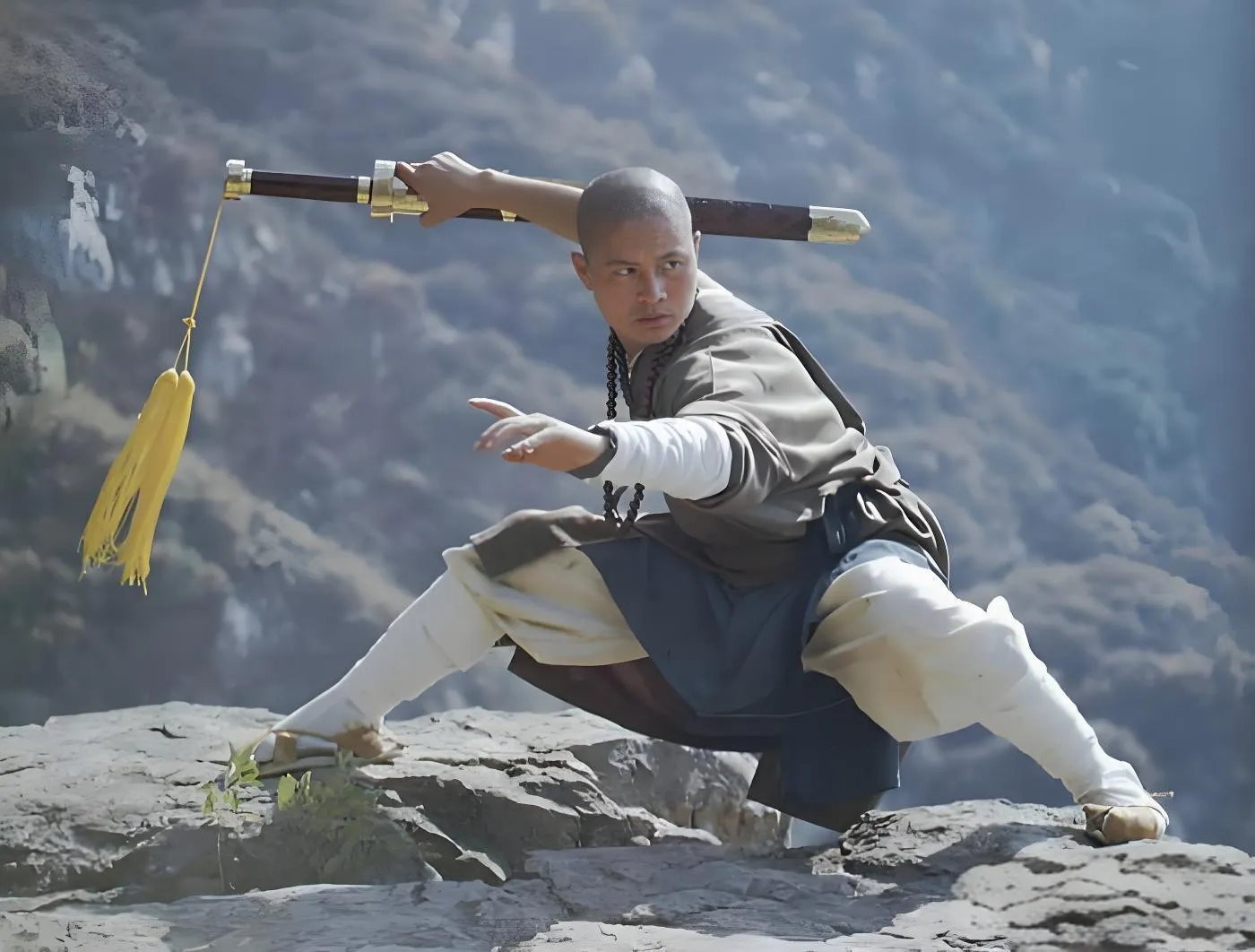
Shaolin Kung Fu Warrior Monks Demonstrating Traditional Techniques
Shaolin Kung Fu (少林功夫 Shàolín Gōngfū) is arguably the most famous and widely recognized style of Chinese martial arts, celebrated both in China and around the world. Classified as an “external style,” Shaolin Kung Fu emphasizes powerful, rapid movements and combines striking techniques with impressive agility and acrobatics. Its practitioners are also well-versed in a variety of traditional weapons, including the spear, sword, and most famously, the staff (棍 gùn).
The origins of Shaolin Kung Fu trace back over 1,500 years to the monks of the Shaolin Temple in Henan Province. Legendary accounts credit Bodhidharma, an Indian monk who introduced Chan Buddhism (the foundation for modern Japanese Zen), with influencing the early development of Shaolin martial techniques. The monks trained rigorously to strengthen both body and mind, integrating spiritual practice with martial discipline.
Shaolin Kung Fu has long held a semi-mythical status in Chinese culture, partly due to the temple’s “warrior monks” who actively participated in historical conflicts. During the founding of the Tang dynasty, Shaolin monks reportedly aided imperial forces in securing the throne. Later, in the Ming dynasty, they were enlisted to combat pirate incursions along China’s coastal regions, demonstrating the practical power and adaptability of their martial training.
Despite its legendary reputation, the Shaolin Temple also faced periods of hardship. During the Qing dynasty, it was accused of harboring anti-Qing sentiment and was partially destroyed, only to be restored in later years.
Today, Shaolin Kung Fu encompasses over 1,000 sub-styles, each with unique forms, techniques, and philosophical emphasis. Its influence extends far beyond China, inspiring martial arts schools in Japan, Korea, and other countries, and continuing to shape modern perceptions of kung fu through films, television, and international tournaments. Shaolin Kung Fu remains a symbol of discipline, resilience, and the rich fusion of physical and spiritual cultivation in Chinese culture.
2. Wing Chun
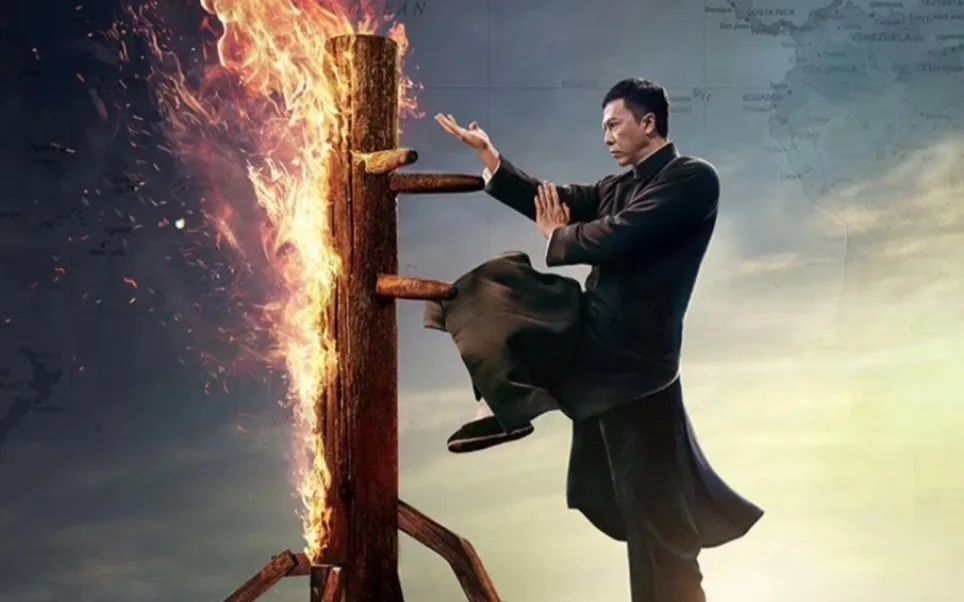
Wing Chun Martial Arts Practitioner Demonstrating Techniques
Wing Chun (咏春 Yǒngchūn) is a celebrated southern Chinese martial art that traces its roots back to Shaolin Kung Fu, yet it has developed into a unique and highly specialized fighting style. Unlike many external styles that emphasize raw strength and flashy movements, Wing Chun focuses on precision, technique, and efficiency. Practitioners are trained to remain relaxed during combat, cultivating a supple, flexible power—much like bamboo, which bends without breaking. This approach allows a Wing Chun fighter to redirect energy, exploit an opponent’s weaknesses, and respond with fluid speed rather than brute force.
Legend credits the creation of Wing Chun to two women: Ng Mui, a Shaolin survivor and martial arts master, and Yim Wing-chun, a young woman living in the border region between Yunnan and Sichuan. According to tradition, Ng Mui fled the destruction of the Shaolin Temple by Qing forces and sought refuge in the countryside. There, she encountered Yim Wing-chun, who faced being forcibly married to a local warlord. Ng Mui imparted a condensed, adaptive form of Shaolin Kung Fu to Yim, enabling her to defend herself effectively. The techniques emphasized economy of motion, close-quarters combat, and practical defense over theatrical displays.
Wing Chun later gained prominence through its association with the Red Boat Opera Troupes, traveling performers who doubled as covert agents in anti-Qing uprisings. These performers used the style to maintain self-defense and, at times, to aid local resistance movements.
In modern times, Wing Chun gained international fame thanks to the legendary Ip Man (Yip Man), who not only preserved the style but also taught it to Bruce Lee. Lee would go on to revolutionize martial arts cinema, introducing global audiences to the speed, precision, and philosophy of Wing Chun through the iconic Hong Kong kung fu films of the 20th century. Today, Wing Chun is practiced worldwide, revered for its practical applications, elegant mechanics, and enduring legacy as a symbol of adaptability and resilience in Chinese martial arts.
3. Tai Chi
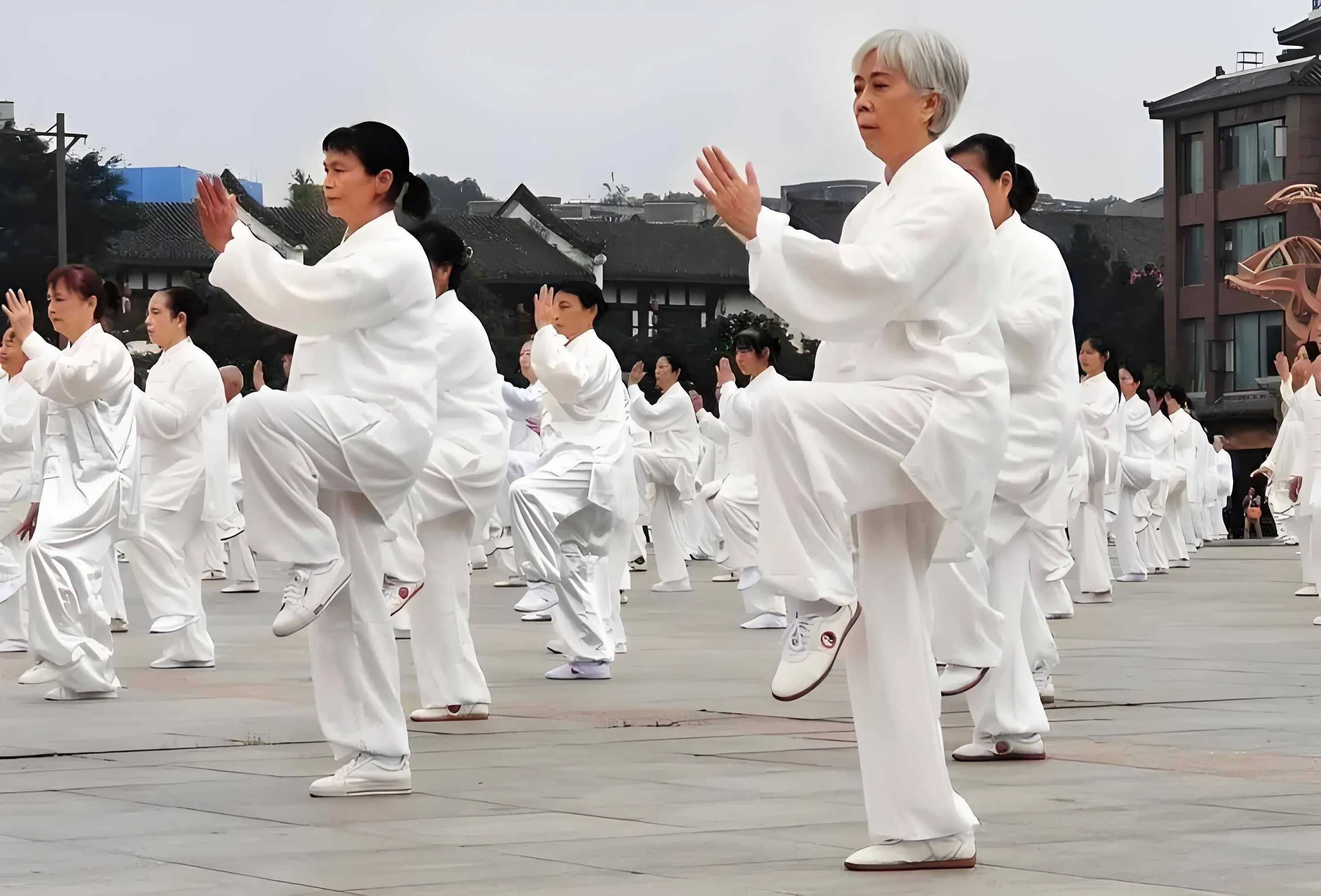
Tai Chi Practitioners Performing Traditional Movements in Park
Tai Chi (太极拳 Tàijíquán) stands as the most renowned of the “internal” Chinese martial arts, celebrated both for its martial applications and its meditative, health-promoting qualities. While modern practitioners often approach Tai Chi as a graceful, slow-moving exercise, its origins lie in practical self-defense techniques designed to cultivate skill, balance, and internal energy. Often referred to as “shadow boxing,” Tai Chi combines fluid motion with precise body mechanics, and some styles even incorporate faster, more vigorous sequences.
At its core, Tai Chi is deeply intertwined with traditional Chinese philosophy, drawing from Taoism, Buddhism, and Confucian thought. Central to its practice is the Taoist principle of yin (阴 yīn) and yang (阳 yáng), representing opposing yet complementary forces in the universe. Yin embodies softness, darkness, and receptivity, while yang represents hardness, brightness, and assertiveness. Tai Chi teaches practitioners to harmonize these forces, emphasizing that using a hard force against another hard force results in stalemate. Instead, softness should meet hardness, and vice versa, allowing energy to flow naturally and efficiently.
The historical origins of Tai Chi remain a topic of debate. Some scholars trace its creation to a 12th-century Taoist monk, while others suggest it developed more recently, evolving over centuries through the contributions of multiple martial artists and scholars. Regardless of its precise beginnings, Tai Chi has flourished as both a martial discipline and a holistic practice.
Today, Tai Chi is widely celebrated not just in China but around the globe for its numerous scientifically recognized health benefits. It improves balance, flexibility, and cardiovascular health while also reducing stress and promoting mental clarity. Even the Mayo Clinic recommends Tai Chi as an effective and gentle practice to enhance overall well-being, proving that this centuries-old martial art has enduring relevance in modern life.
4. Bajiquan
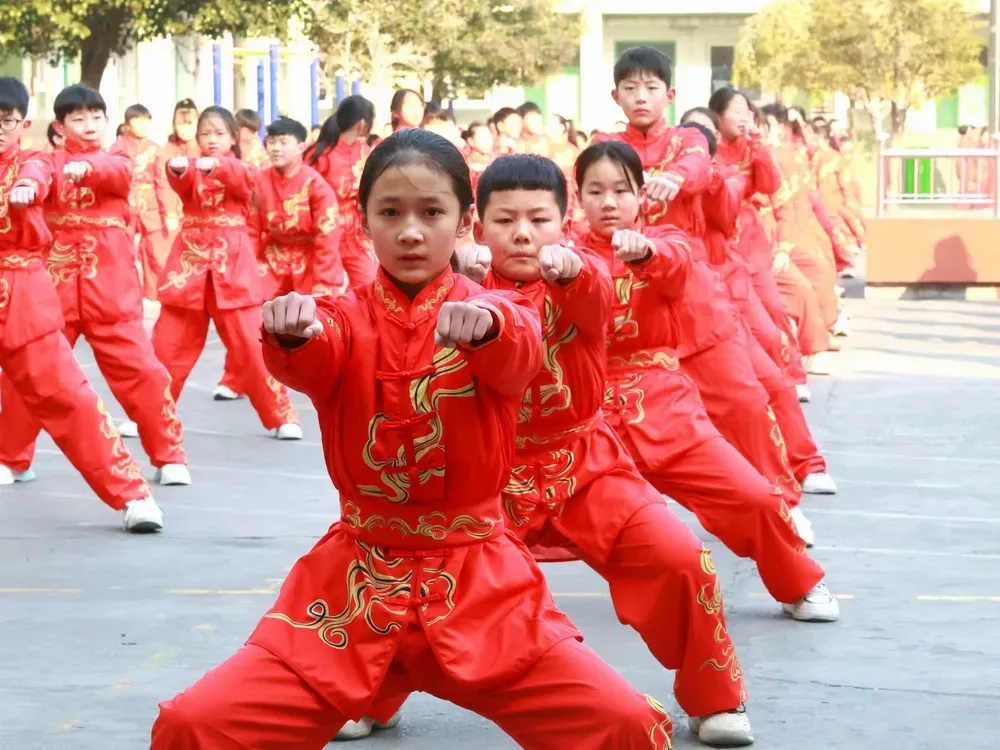
Bajiquan Martial Arts Practitioner Demonstrating Powerful Techniques
Bajiquan (八极拳 Bājíquán) is a highly dynamic Chinese martial art, renowned for its explosive, close-range techniques and devastating power. Emerging in the 18th century, it was originally known as Baziquan, or “rake fist,” named for its signature rapid, downward strikes executed with partially open fists.
The full name, 开门八极拳 (Kāimén Bājíquán), translates roughly to “Open-Door Fist of the Eight Extremes.” The “open-door” concept reflects the style’s tactical emphasis on forcing an opponent’s arms aside to create openings for strikes, while the “eight extremes” refers to the broad range of angles and techniques employed in combat. Bajiquan is characterized by its explosive elbow and fist attacks, close-quarter power, and lightning-fast footwork, making it exceptionally effective in short-range combat scenarios.
Bajiquan has also made a notable impact on popular culture. Its striking movements have inspired martial arts sequences in films, television, and video games, not only in China but internationally. The style can be seen in iconic works such as The Matrix and video games like Mortal Kombat: Deadly Alliance. Japanese manga and anime frequently reference or incorporate Bajiquan-inspired techniques, showcasing its global influence and the visual appeal of its powerful, precise movements.
5. Baguazhang
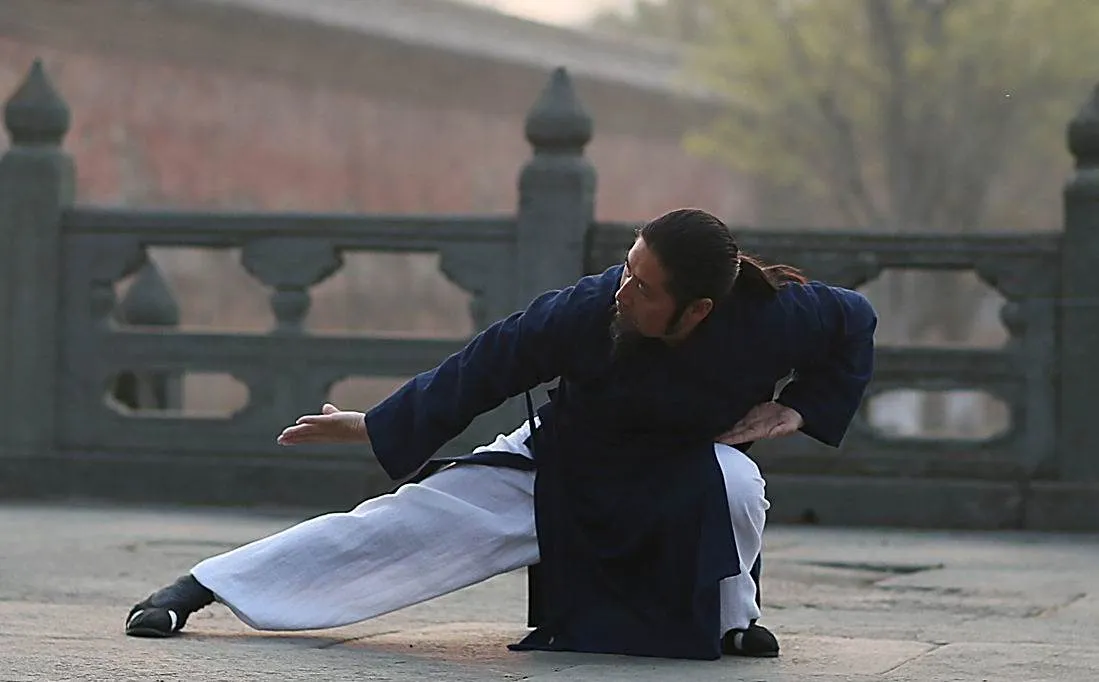
Baguazhang Practitioner Demonstrating Traditional Circle Walking
Baguazhang (八卦掌 Bāguàzhǎng) is another prominent “internal” style of Chinese martial arts, sharing philosophical roots with Tai Chi in its deep connection to Taoist concepts, particularly yin and yang. Its name comes from the Taoist bagua, or trigrams, which symbolize fundamental principles of the universe and balance.
The style was founded in the early 19th century by Dong Haichuan, who combined techniques learned from both Taoist and Buddhist practitioners during his travels across rural China. This synthesis gave rise to a martial art that emphasizes fluidity, adaptability, and strategic movement.
Baguazhang is most recognizable for its signature practice of circle walking, in which practitioners move continuously in circular patterns while executing a wide variety of techniques. These include strikes, kicks, throws, joint locks, and grappling maneuvers. The constant circular motion trains agility, evasion, and the ability to control the battlefield from multiple angles.
Additionally, Baguazhang incorporates a diverse arsenal of weapons, with large broadswords being particularly iconic. The style is also celebrated for its effectiveness against multiple opponents, making it not only visually impressive but tactically sophisticated. Its flowing movements, strategic footwork, and adaptability continue to make Baguazhang a revered and influential style within Chinese martial arts.
The Enduring Legacy of Chinese Martial Arts
From the thunderous strikes of Shaolin Kung Fu to the flowing circles of Baguazhang, Chinese martial arts are far more than a collection of fighting techniques—they are a window into China’s history, philosophy, and culture. Each style carries with it centuries of tradition, spiritual insight, and practical wisdom, reflecting the values and worldview of the people who developed them.
Today, Chinese martial arts continue to thrive, both in China and across the globe. They are practiced as forms of self-defense, physical fitness, artistic expression, and meditation. Whether you are drawn to the explosive power of Bajiquan, the precise efficiency of Wing Chun, or the meditative grace of Tai Chi, these arts offer more than mastery of the body—they cultivate balance, discipline, and harmony of mind and spirit.
In an increasingly fast-paced, digital world, Chinese martial arts stand as a reminder of the enduring importance of tradition, the beauty of human movement, and the unbroken thread connecting past and present. They invite us not only to learn how to fight, but to understand how to live with intention, resilience, and grace.
FAQ
Q: What is the difference between Kung Fu and Wushu?
A: Kung Fu (功夫) traditionally refers to skill or mastery gained through long-term practice and is often used in the West to describe traditional Chinese martial arts styles. Wushu (武术) is a broader term meaning “martial arts” and today often refers to standardized, performance-oriented forms promoted in modern competitions.
Q: How old are Chinese martial arts?
A: Chinese martial arts have a history spanning over two thousand years. Early forms developed from battlefield combat techniques used by ancient soldiers, later evolving into philosophical, spiritual, and health-oriented practices.
Q: What is the difference between internal and external Chinese martial arts?
A: External styles focus on physical strength, speed, and explosive power, while internal styles emphasize balance, breath control, and the cultivation of internal energy (qi). In practice, many styles combine both approaches rather than strictly belonging to one category.
Q: Is Tai Chi a martial art or just a health exercise?
A: Tai Chi is both. While it is widely practiced today for health, stress reduction, and balance, it originated as a martial art with practical self-defense applications rooted in Chinese philosophy and body mechanics.
Q: Are Chinese martial arts still practiced today?
A: Yes. Chinese martial arts are actively practiced worldwide as systems of self-defense, physical training, meditation, cultural expression, and competitive sport. Many styles continue to be taught in traditional schools as well as modern training centers.
Q: How are Chinese martial arts different from Japanese martial arts?
A: Chinese martial arts often emphasize fluid movement, circular techniques, and philosophical balance, while Japanese martial arts traditionally focus on structured forms, linear techniques, and battlefield efficiency. Each reflects the historical and cultural context in which it developed.