
Chewing Through Life: The Survival Wisdom on the Chinese Tongue
Table of Contents
- I. Introduction: The Linguistic Projection of "Food is Heaven">
- II. Historical Origins: From Survival Instinct to Cultural Totem
- III. Deep Analysis: Three Typical Metaphors of "Eating">
- IV. Generalization Mechanism: "Eat" as a Cognitive Schema of a Versatile Verb
- V. Deep Reflection of National Psychology and Survival Philosophy
- VI. Conclusion: The National Soul on the Taste Buds
- FAQ about Chinese "Eating" Culture
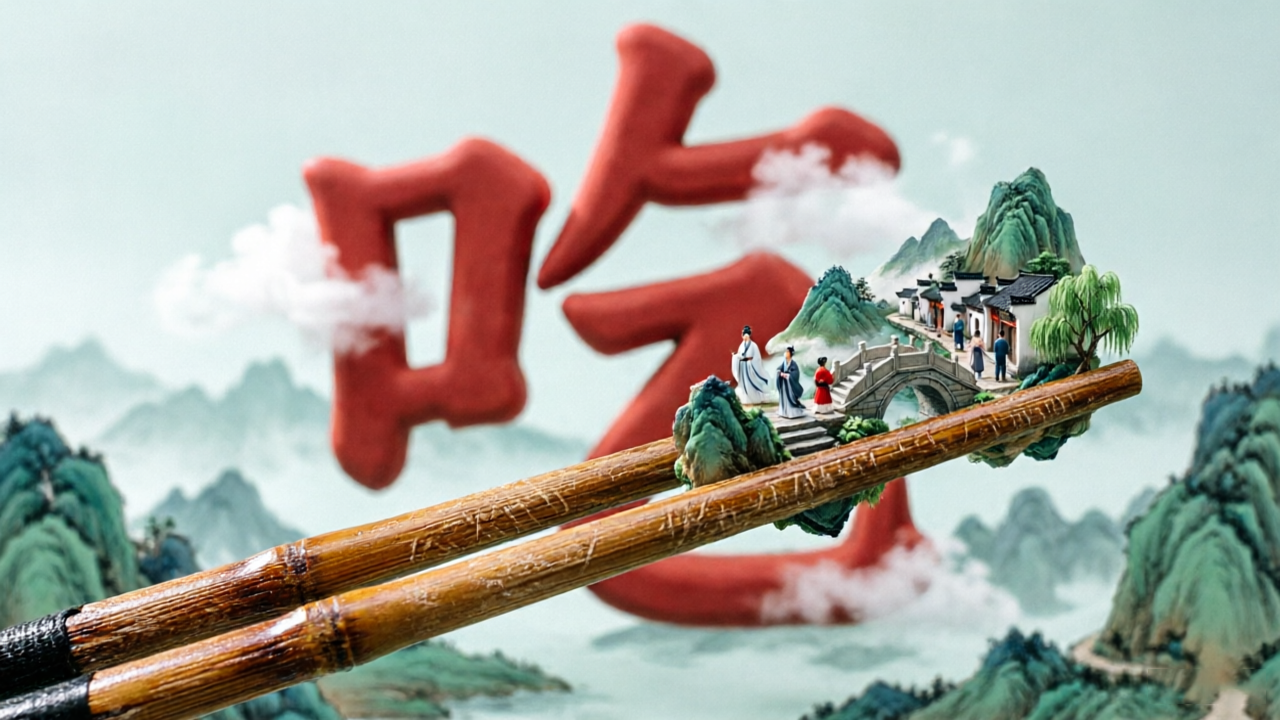
I. Introduction: The Linguistic Projection of "Food is Heaven"
In the linguistic world of Chinese culture, "eating" (chi, 吃) is far more than a physiological act to sustain life; it is a master key unlocking the doors to emotions, social relationships, and even life philosophy. Looking around, one finds that the Chinese language is saturated with food metaphors centered on "eating": we say "eating vinegar" (chi cu, 吃醋) to describe jealousy; "eating fragrance" (chi xiang, 吃香) to describe popularity or promising career prospects; and "suffering a loss" (chi kui, 吃亏, literally "eating loss") to describe being at a disadvantage. Furthermore, expressions like "being socially adept" (chi de kai, 吃得开), "living off past glories" (chi lao ben, 吃老本), "being rejected" (chi bi men geng, 吃闭门羹, literally "eating closed-door soup"), and "having more than one can handle" (chi bu liao dou zhe zou, 吃不了兜着走) abound. These Chinese idioms have long transcended the realm of diet, becoming the preferred vocabulary for Chinese people to describe abstract concepts, judge social phenomena, and express inner feelings.
Why would a nation with such a long history of written characters so persistently reduce all things to "eating"? This is no accident but a natural outflow of deep-seated cultural psychology. China has always been a great agricultural power; its thousands of years of agrarian civilization are, to a large extent, a history of struggling against hunger. In those long years, the acquisition of food directly determined the survival of individuals and the rise and fall of families. This extreme focus on survival elevated "eating" to the level of faith, forming a collective subconscious that "food is heaven" (min yi shi wei tian, 民以食为天). In this context, language, as the carrier of thought, inevitably projects the most core survival experiences into every corner of cognition.
When facing complex social interactions and subtle emotional fluctuations, Chinese people tend to concretize them into an experience of "ingestion." Happiness is "sweet," pain is "bitter," jealousy is "sour," and loss is "swallowing a bitter fruit." This linguistic phenomenon reveals a core thesis: "eating" in Chinese has completed a magnificent transformation from a physiological behavior to a cognitive metaphor. It is not only a yardstick for measuring material abundance but has become a universal currency for gauging spiritual satisfaction, social status, and life's fortunes. Through the act of "eating," abstract social rules are transformed into perceptible bodily experiences, and complex interpersonal games are simplified into the distribution and swallowing of resources. To understand this linguistic analysis is to understand how the Chinese people transform survival anxiety into life wisdom, and how they taste the sweetness, sourness, bitterness, and spiciness of the entire world between their lips and teeth. This is not merely a rhetorical habit but a unique national survival philosophy, reflecting a pragmatic, resilient, and dialectical Chinese mindset.
II. Historical Origins: From Survival Instinct to Cultural Totem
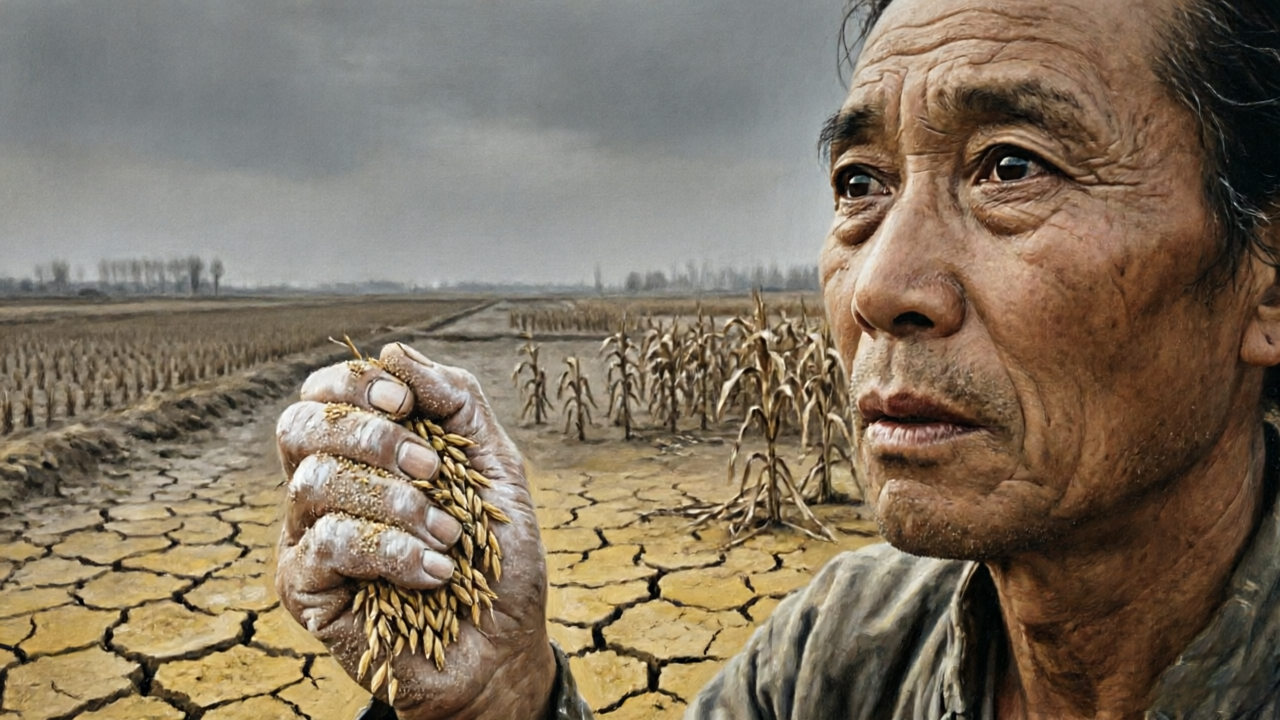
1. The Memory of Hunger: Survival Anxiety Etched in Genes
To deeply understand the generalization of "eating culture" in Chinese, one must trace back to the depths of the nation's long history and touch that collective memory filled with famine and longing. Located in a monsoon climate zone with frequent floods and droughts, coupled with incessant warfare throughout history, food shortage has always been a sword of Damocles hanging over the heads of the Chinese people. For the vast majority of ancient Chinese, "having a full stomach" was not just a luxury of life but the highest goal of existence. This profound survival anxiety caused "eating" to transcend mere physiological needs, evolving into a cultural totem concerning fate. In the Book of Han, the assertion that "food is heaven" (民以食为天) was not a simple slogan but a cruel summary of the social reality of the time. Whoever controlled the grain controlled power; whoever could guarantee the people had rice to eat gained the legitimacy of the Mandate of Heaven. Thus, "eating" was subconsciously endowed with supreme value, becoming the ultimate yardstick for measuring the importance of all things. This extreme craving for food, like a collective traumatic memory, is deeply imprinted in the genes of the nation, causing later generations to subconsciously link any abstract concept to the core survival task of "acquiring food."
2. The Feast Before the Collapse of Rites: The "Dining Table-ization" of Politics and Society
As society evolved, the function of "eating" gradually expanded from mere sustenance to etiquette and politics, forming a unique "politics of the dining table." In ancient China, sacrifice was the foremost state affair, and its core was offering food to gods and ancestors. As the Zuo Zhuan states: "The great affairs of the state are sacrifice and war." The abundance of offerings directly reflected the nation's strength and sincerity. Meanwhile, banquets became the most important scene for political diplomacy and social interaction. Whether it was the flashing swords at the Hongmen Banquet, Zhao Kuangyin's political wisdom of "releasing military power over a cup of wine," or the weddings and funerals among neighbors, all social relationships were established, consolidated, or broken over drinks and toasts. "Eating" became the primary medium for confirming identity, dividing ranks, and allocating resources. In this cultural atmosphere, whether a person "had rice to eat" meant not only survival but also whether they were accepted by the social network and possessed a certain social identity. The bureaucracy was called a "rice bowl" (饭碗,fan wan), positions were called "seats" (席位,xi wei), and unemployment was "smashing the pot" (砸锅,za guo). This linguistic habit of completely mapping political careers onto dining scenarios is a vivid portrayal of the reality that "the dining table is a battlefield" throughout Chinese history.
3. Psychological Compensation for an Economy of Scarcity: From "Nothing to Eat" to "Wanting to Eat Everything"
This historical accumulation profoundly shaped the national psyche, forming a unique "psychological compensation mechanism for an economy of scarcity." Due to long-term existence in an environment of relative resource scarcity, the Chinese people have an extraordinary sensitivity and emphasis on "eating." Any abstract benefit, opportunity, or risk is subconsciously transformed into the concept of "food." Gaining a benefit is "getting to eat meat" (吃到肉了,chi dao rou le); missing an opportunity is "not catching the hot meal" (没赶上热乎的,mei gan shang re hu de); suffering injustice is "having one's rice bowl snatched away" (被人抢了饭碗,bei ren qiang le fan wan). This mindset naturally led to the generalization of the character "chi" (吃) into every corner of the language. It no longer merely refers to ingesting food but denotes all forms of acquisition, endurance, digestion, and rejection. The hunger memory left by history makes Chinese people habitually examine the world through the lens of "eating." This perspective contains both an extreme desire for survival resources and the cunning and wisdom required to survive in harsh environments. It can be said that behind every Chinese idiom containing "chi" stands an ancestor who struggled desperately for food in the historical wind and snow, telling us with their life experience: In this world, nothing is more important than "eating," and nothing cannot be metaphorized by "eating."
III. Deep Analysis: Three Typical Metaphors of "Eating"
1. Internalization and Exclusivity of Emotion: The Logic of Possessiveness Behind "Eating Vinegar"

First is "eating vinegar" (chi cu, 吃醋), an excellent case of concretizing intangible emotions, hiding a rigorous emotional logic behind it. Jealousy is a complex and indescribable psychological state containing loss, anger, reluctance, and sourness. The Chinese cleverly borrow the taste of "sourness" to correspond to this psychology. When seeing a loved one close to another, the uncontrollable feeling surging in the heart is just like swallowing a jar of aged vinegar—sour and unbearable, rushing straight to the brain. This metaphor reflects the characteristic of "unity of body and mind" (身心一元,shen xin yi yuan) in Chinese philosophy, where psychological activities are inevitably accompanied by physiological reactions. Emotions are no longer ethereal soul fluctuations but real bodily sensations. On a deeper level, "eating vinegar" also implies strong possessiveness and exclusivity. In traditional agrarian society, the family was the basic production unit, and resources (including spouses) were often viewed as private property. Food is often private; once shared by others, the owner feels discomfort. Viewing a lover as exclusive "food," the intervention of a third party becomes "sharing the soup" (分羹,fen geng), triggering a "sour" reaction. This reflects that in intimate relationships, Chinese people tend to establish a relationship of deep attachment and monopoly; any third-party intervention is seen as a threat to the original "nutritional supply," thus triggering the instinctive defense mechanism—"eating vinegar."
2. Struggle for Resources and Identity: The Social Evaluation System Reflected in "Eating Fragrance"
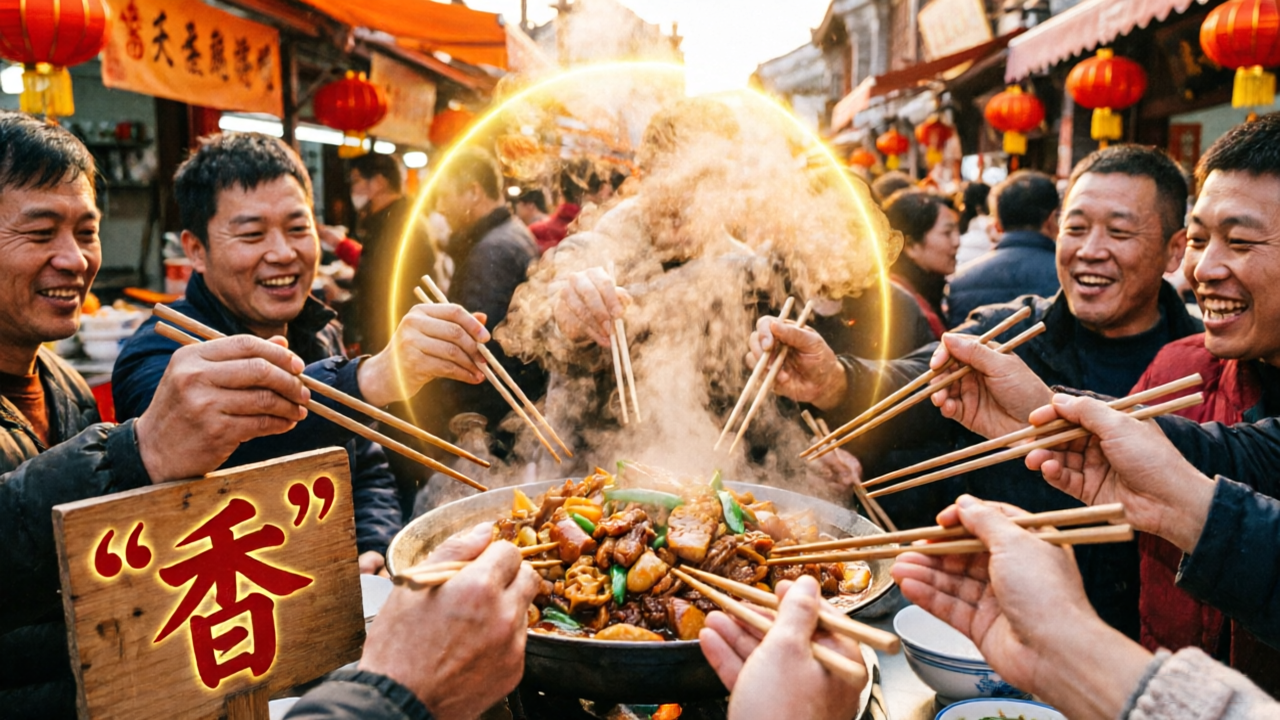
Secondly, "eating fragrance" (chi xiang, 吃香) vividly depicts the logic of social resource allocation and the mechanism of group identity; it is the linguistic externalization of utilitarian values. "Fragrance" (xiang, 香) is originally an adjective for the enticing smell of food, extended to mean something good and popular. Saying someone or an industry is "eating fragrance" means they are like a delicious dish emitting an enticing aroma, sought after, craved, and accepted by the masses. Behind this lies a competitive mentality in an environment of scarce resources. In a society with limited resources, things that everyone "fights to eat" must be high-quality and rare. A person who is "eating fragrance" indicates that they hold core resources or that their abilities meet the needs of mainstream values, thereby gaining widespread social support and security. Conversely, if no one is interested, they are on the "cold stool" (冷板凳,leng ban deng). This metaphor transforms abstract social status and career prospects into a synesthetic experience of smell and taste, intuitively expressing an individual's popularity and degree of being needed within the social network. It reveals the essence of the Chinese social evaluation system: value lies in "being needed," in whether one can become a "delicacy" fought over by the crowd. This logic of "eating fragrance" drives countless people to chase hot industries and cling to the powerful, just to get a share of the pie at that huge social dining table.
3. Dialectics of Gain and Loss: The Great Wisdom of Life Contained in "Eating Loss"

Finally, there is "eating loss" (chi kui, 吃亏), perhaps the most dialectical term in Chinese philosophy of life, embodying extreme survival resilience. "Kui" (亏) originally means defect or insufficiency; comparing suffering losses or unfair treatment to "eating" something deficient vividly expresses the pain of passive endurance. However, the magic of Chinese culture lies in its second half: "Suffering a loss is a blessing" (chi kui shi fu, 吃亏是福). Here, the act of "eating" is endowed with the deep meaning of "digestion" and "transformation." Just as taking bitter medicine can cure illness despite its bitterness, temporary losses and forbearance are seen as a necessary "intake." After being "digested" by time, they can eventually transform into personal cultivation, accumulation of experience, or future blessings. This way of thinking embodies extreme resilience and long-term vision, a perfect combination of the Taoist idea that "softness overcomes hardness" and the Confucian spirit of "bearing humiliation to fulfill a mission." It teaches people that when facing injustice, they should not rush to confront but swallow and dissolve it like eating, thereby preserving themselves in the complex world, and even turning misfortune into fortune. In interpersonal interactions, those willing to "eat loss" are often considered honest and reliable, thus winning long-term trust and more cooperative opportunities. Therefore, "eating loss" is not only a description of loss but also an active strategic choice, a brilliant survival strategy of advancing by retreating.
IV. Generalization Mechanism: "Eat" as a Cognitive Schema of a Versatile Verb
1. Dependence on Profession and Survival: From "Eating Imperial Grain" to "Eating Soft Rice"
The generalization of the character "chi" (吃) in Chinese is first reflected in the description of professional and survival dependence, constructing a complete "livelihood metaphor system." We refer to relying on a certain profession or resource for living as "eating... rice." For example, "eating imperial grain" (chi huang liang, 吃皇粮) refers to being supported by state finance, implying a stable but possibly unfree life within the system; "eating a technical rice" (chi ji shu fan, 吃技术饭) means making a living based on professional skills, emphasizing the irreplaceability of personal ability; "eating old capital" (chi lao ben, 吃老本) refers to relying on past savings or achievements, carrying a warning tone. Even more strikingly, the term "eating soft rice" (chi ruan fan, 吃软饭) vividly portrays the state of relying on women for survival, full of moral judgment. Here, "eating" is not just acquiring energy but represents a stable relationship of attachment and a mode of survival. This expression intuitively reveals the feeding relationship between people and resources: resources are food, humans are diners; once the food source is cut off, life (career) cannot continue. This metaphor concretizes abstract economic dependency, allowing people to quickly understand the survival logic and risk coefficients behind different professions.
2. Limits of Ability and Endurance: From "Cannot Digest" to "Can Open Up"
Secondly, "chi" is widely used to describe the limits of ability and environmental adaptability, forming a set of "physical fitness test metaphors." When we say "cannot digest/endure" (chi bu xiao, 吃不消), we compare huge pressure, heavy work, or strong emotional impact to excessive or indigestible food, vividly expressing the limits of physiology and psychology, implying that the subject is on the edge of "indigestion" or even "poisoning." Conversely, "can open up" (chi de kai, 吃得开) describes someone who is at ease in society and handles interpersonal relationships well, as if possessing powerful "digestive ability" to swallow various complex situations and transform them into momentum for self-development. Saying someone "guesses accurately" (chi de zhun, 吃得准) compares judgment to precise tasting ability, meaning they can distinguish truth from falsehood and quality, just like a seasoned gourmet tasting subtle differences in ingredients. These expressions transform abstract ability qualities into concrete physiological functions, making evaluations of others intuitive and vivid. It implies that in Chinese society, survival ability is essentially a "digestive ability"; whoever can digest more difficulties and adapt to more complex environments will live better.
3. Cognition That Everything Can Be Eaten: Comprehensive Mapping of Nature and Society
Even more, natural phenomena and object attributes are included in the category of "eating," demonstrating the grand cognitive schema of the Chinese people that "everything can be put into the mouth." For instance, the depth a ship "eats water" (chi shui, 吃水) indicates how deep the hull immerses, as if the ship is devouring water to gain buoyancy; here, "eating" precisely conveys the relationship between load and submersion. Cars and machines "eating oil" (吃油,chi you) or "eating electricity" (吃电,chi dian) describe energy consumption, comparing mechanical operation to biological feeding; even soil "eating fertilizer" (吃肥,chi fei) describes its ability to absorb nutrients. This generalization shows the unique worldview of the Chinese: when all things in the world interact with the subject, they are viewed as substances that can be absorbed, endured, or rejected by the subject. From the perspective of cognitive linguistics, this is a systematic mapping from the "source domain" (the act of eating) to the "target domain" (various abstract or concrete interactions). Using humanity's most primitive and instinctive experience of "eating" to understand complex physical phenomena and social rules greatly reduces cognitive costs. This "embodied cognition" method makes the language full of vitality and imagery, indicating that in the Chinese mind, the world is not a cold logical system but a huge dining table. We are all diners, confirming our existence and position through the "tasting" interaction with the world.
V. Deep Reflection of National Psychology and Survival Philosophy
1. Extreme Pragmatism: Rejecting Void, Seeking Only "Benefit"
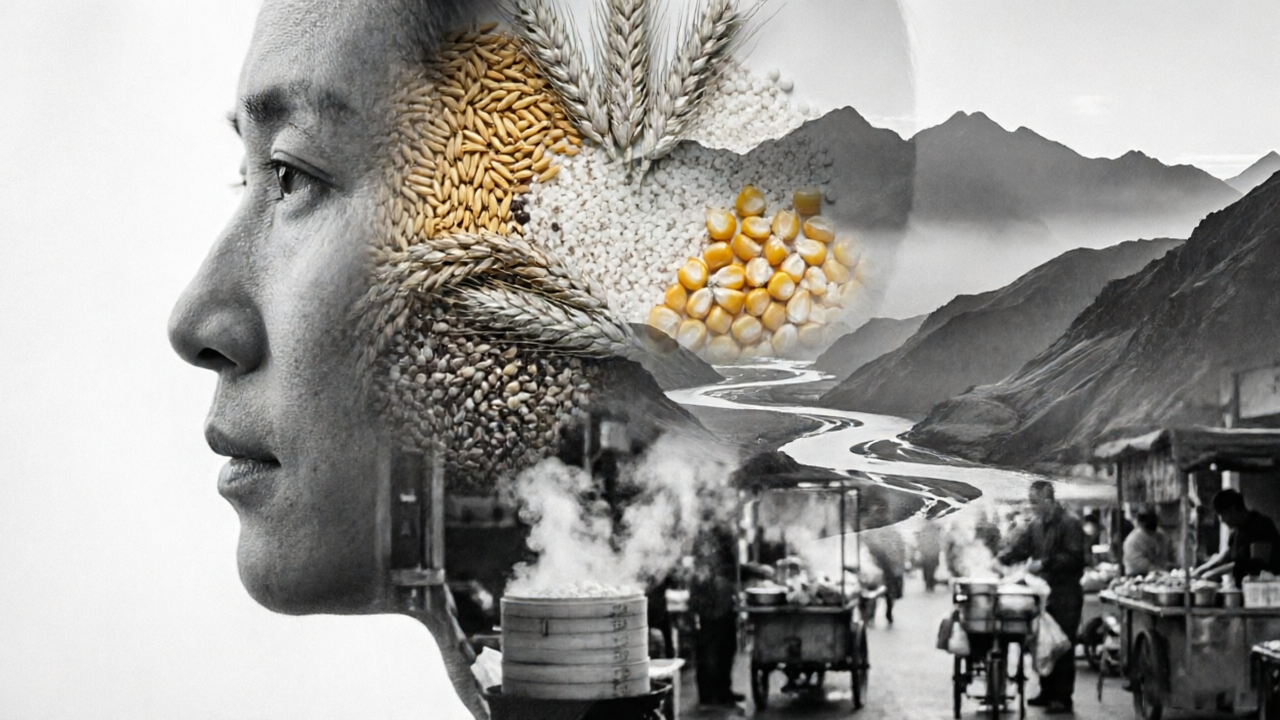
The generalization of "eating" culture in Chinese first reflects the extreme pragmatism of the Chinese nation. Unlike some cultures that tend to construct grand abstract theories or pursue pure metaphysical speculation, Chinese thinking is always rooted in the earth, focusing on actual gains and losses. In the "eating" metaphor system, all value judgments ultimately land on "whether it can be eaten," "whether it is nutritious," and "whether it is conducive to survival." Whether evaluating a person (eating fragrance), a relationship (eating vinegar), or an experience (eating loss), the standards are extremely realistic and utilitarian. This pragmatic spirit stems from the agrarian civilization's dependence on land and expectation of harvest. It teaches people not to talk about empty, ethereal words but to orient everything towards actual results. Whether anything in the world has value depends on whether it can be transformed into "food" that sustains life or improves quality of life. This way of thinking enables Chinese people, when facing crises, to quickly strip away red tape, hit the core of the problem, and find the most feasible survival solution. In this philosophy, truth is not a dogma written in books but practical experience that can be "chewed thoroughly and swallowed" in life.
2. Holism of Body-Mind Unity: Embodied Expression of Emotions
Secondly, this reflects the holistic philosophy of body-mind unity in traditional Chinese culture. In the Western dualistic tradition, body and spirit are often separated, but in Chinese culture, body and mind are integrated. Psychological activities directly correspond to physiological reactions; spiritual trauma is often described as physical discomfort. Terms like "full of anger" (qi bao le, 气饱了), "heart chilled" (han xin, 寒心), "eating bitterness" (chi ku, 吃苦), and "sour and bitter" (xin suan, 辛酸) indicate that the emotional experience of Chinese people is embodied. We do not just think about jealousy or pain in our brains; we feel them in our guts. This philosophy holds that humans are not isolated rational subjects but living beings closely connected to nature and society. Through the act of "eating," which connects the inside and outside, information from the external world is internalized as the body's energy or burden. This holistic view makes Chinese people pay more attention to intuitive experience and holistic understanding. When dealing with interpersonal relationships, they care more about whether the "flavor" is right and whether the atmosphere is harmonious, rather than whether the logic holds. This "synesthetic" thinking makes Chinese emotional expression more implicit and profound, often conveying the tremor of the soul through bodily sensations.
3. Optimistic Survival Resilience: Digestion and Transformation of Suffering
Finally, this is the ultimate embodiment of optimistic survival resilience. Although the "eating" metaphors contain many negative terms such as "eating loss," "eating bitterness," and "tightness" (chi jin, 吃紧), there is often hope for transformation hidden behind these words. Chinese culture believes that "extreme misfortune turns into blessing" and that suffering can be "digested." Just as food, no matter how rough or bitter, can be transformed into qi and blood that nourish life once swallowed and processed by the spleen and stomach, proverbs like "Suffering a loss is a blessing" (吃亏是福,chi kui shi fu) and "Only by eating the bitterest of bitters can one become a man above men" (吃得苦中苦,方为人上人,chi de ku zhong ku, fang wei ren shang ren) reveal a powerful psychological elasticity. Even facing the tricks of fate, Chinese people are accustomed to viewing it as a meal that is hard to swallow but must be swallowed, firmly believing that as long as vitality remains and one can still "eat," there is no hurdle that cannot be crossed. This ability to transform passive endurance into active digestion is the spiritual code that has allowed the Chinese nation to thrive through endless hardships. It is not merely self-consolation but an active philosophy of action: facing difficulties, do not escape or complain, but accept and decompose them like eating, finally turning them into part of one's own bone and blood, achieving a stronger self.
VI. Conclusion: The National Soul on the Taste Buds
Looking at the whole article, from the subtle emotions of "eating vinegar" (吃醋) to the social pursuit of "eating fragrance" (吃香), and then to the wisdom of life in "eating loss" (吃亏), the generalized use of the character "chi" (吃) in Chinese has constructed a magnificent linguistic edifice. The cornerstone of this building is the reverence and desire for survival held by the Chinese nation for thousands of years; its pillars are the pragmatic, dialectical, and affectionate national psychology. We find that "eating" has long transcended the scope of the oral cavity; it has become the core paradigm for Chinese people to understand the world, handle relationships, and settle their bodies and minds. In this paradigm, abstract truths are reduced to concrete flavors, complex social games are simplified into the intake and output of resources, and the long journey of life is metaphorized as an endless banquet.
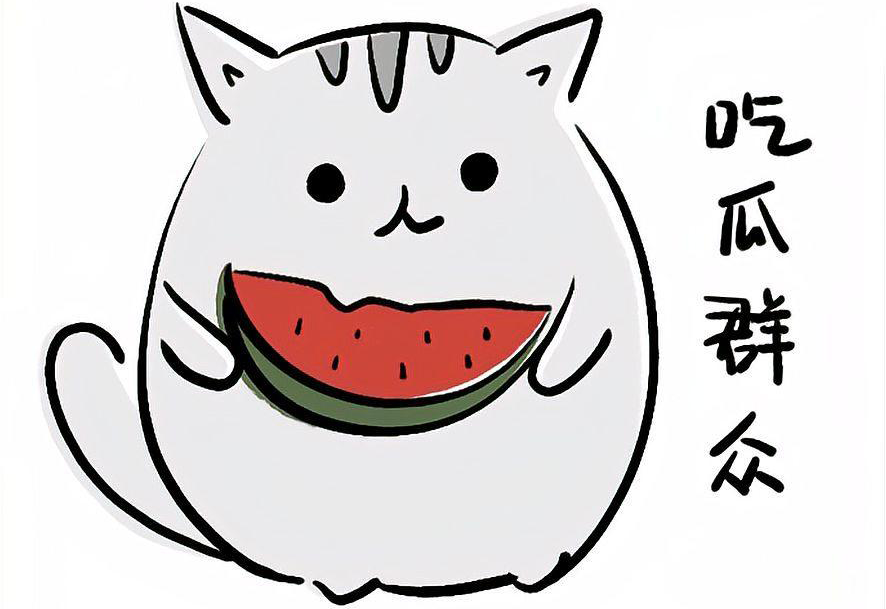
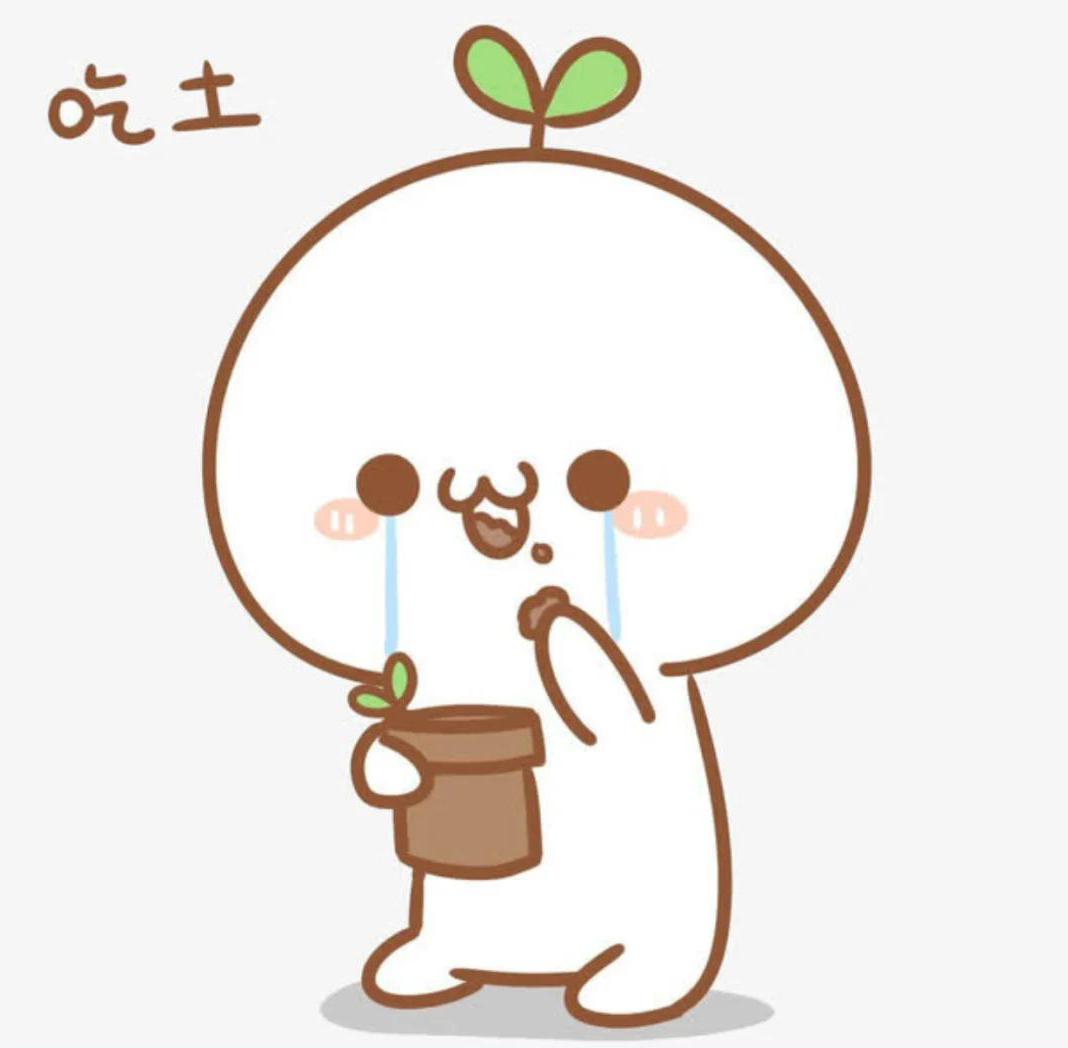
This unique linguistic phenomenon is not only an art of rhetoric but also a profound cultural gene with amazing capacity for evolutionary adaptation. Even in modern society, where digitalization and consumerism prevail, the metaphor of "eating" remains active and has spawned new meanings with distinct contemporary characteristics. When netizens watch hot events unfold, they call themselves the "melon-eating masses" (chi gua qun zhong, 吃瓜群众), transforming originally serious social news into "spiritual snacks" for entertainment, vividly portraying the alienation and mockery of modern people as bystanders. When young people find themselves penniless after the "Double Eleven" shopping carnival, they mock themselves as "having to eat dirt" (chi tu, 吃土), transforming economic pressure into a survival state with a sense of humor. From the traditional "eating bitterness" (吃苦) to the modern "eating melon" (吃瓜) and "eating dirt" (吃土), the metaphor of "eating" has always kept pace with the social pulse, proving that this cultural gene has not faded with the resolution of food and clothing issues. Instead, it has radiated even more vibrant vitality in new contexts, becoming a unique bond connecting tradition and modernity, seriousness and entertainment.
If we cast our vision globally for a cross-cultural examination, the uniqueness of Chinese "eating" culture becomes even more prominent. In Western languages like English, although there are similar expressions such as "bite off more than one can chew" or "food for thought," these metaphors are mostly limited to describing limits of ability or mental activities, presenting a characteristic of localization and functionality. In contrast, Chinese "eating" demonstrates an all-encompassing permeability: it can not only describe ability (chi bu xiao, 吃不消) but also define emotions (chi cu, 吃醋), determine social status (chi xiang, 吃香), interpret fate (chi kui, 吃亏), and even explain physical phenomena (chi shui, 吃水). This difference profoundly reflects the different underlying colors of Chinese and Western thinking: Western culture tends to dichotomize matter and spirit, body and society, while Chinese culture, through the act of "eating," connects all things, constructing an integrated world where body and mind are united, and objects and self blend.
This "key on the tip of the tongue" will ultimately help us open the door to the social intricacies and spiritual core of Chinese society. It reminds us that no matter how technology advances, humans are ultimately flesh and blood; our joys and sorrows remain closely linked to the most primitive sensory experiences. To understand "eating culture" (吃文化) is to understand the soul of the Chinese people—that is a life force rooted in the earth, loving life, good at self-adjusting amidst sweetness, sourness, bitterness, and spiciness, and forever holding an "appetite" for the future. At this huge cultural dining table, Chinese people savor the survival philosophy unique to the East, chewing profound meaning out of every ordinary day.
FAQ about Chinese "Eating" Culture
1. Why are there so many Chinese idioms and metaphors related to "eating" (Chi, 吃)?
Answer: The prevalence of "eating" metaphors in the Chinese language stems from thousands of years of agrarian civilization and a historical struggle against famine. For ancient Chinese people, food acquisition was the primary determinant of survival. This deep-seated survival anxiety elevated "eating" from a mere physiological act to a core cultural value ("Food is Heaven" / 民以食为天,min yi shi wei tian). Consequently, abstract concepts like emotions, social status, and life fortunes were naturally mapped onto the most fundamental human experience: eating. This linguistic phenomenon reflects a pragmatic mindset where complex social rules are simplified into the tangible logic of acquiring and digesting resources.
2. What does the Chinese idiom "Chi Kui" (吃亏,chī kuī) mean, and why is it considered wise?
Answer: Literally translating to "eating loss," Chi Kui describes suffering a disadvantage or unfair treatment. However, in Chinese philosophy, it carries a profound dialectical wisdom often summarized by the proverb "Suffering a loss is a blessing" (Chi Kui Shi Fu, 吃亏是福). Unlike Western views that might see loss as purely negative, Chinese culture views it as a form of spiritual "intake" that can be "digested" and transformed into future blessings, experience, or moral character. It represents an active survival strategy of advancing by retreating, emphasizing long-term harmony and resilience over short-term gains.
3. How does the metaphor "Chi Cu" (吃醋,chī cù) explain jealousy in Chinese culture?
Answer: "Eating vinegar" (Chi Cu, 吃醋) is a unique Chinese metaphor for jealousy, particularly in romantic relationships. It relies on the concept of embodied cognition, where psychological states are felt physically. Just as vinegar tastes sour and sharp, the feeling of jealousy creates a similar "sour" sensation in the heart. Culturally, it also implies a sense of exclusivity and possessiveness; since food (and historically, spouses) was viewed as a private resource, a third party intervening is seen as "sharing the soup" (分羹,fēn gēng), triggering a defensive, sour reaction. This illustrates the unity of body and mind (身心一元,shēn xīn yī yuán) in traditional Chinese thought.
4. What is the difference between Western and Chinese food metaphors?
Answer: While Western languages (like English) use food metaphors (e.g., "food for thought," "bite off more than one can chew"), they are often functional and limited to specific contexts like ability or thinking. In contrast, Chinese eating culture demonstrates an all-encompassing permeability. The verb "Chi" (吃) in Chinese acts as a universal cognitive schema that can describe emotions (Chi Cu, 吃醋), social status (Chi Xiang, 吃香 - eating fragrance/popularity), career dependence (Chi Huang Liang, 吃皇粮 - eating imperial grain), and even physical phenomena (Chi Shui, 吃水 - a ship eating water). This reflects a holistic worldview where the boundary between the physical body, society, and nature is blurred, unlike the dualistic tendency in Western thought.
5. Are modern Chinese people still using "eating" metaphors in the digital age?
Answer: Yes, the "eating" cultural gene remains highly active and has evolved with the times. Modern Chinese internet slang has spawned new metaphors like "Chi Gua" (吃瓜,chī guā - eating melon), referring to bystanders watching scandals unfold as if consuming entertainment (often called the "melon-eating masses" / 吃瓜群众,chī guā qún zhòng), and "Chi Tu" (吃土,chī tǔ - eating dirt), humorously describing being broke after overspending. These new terms prove that the survival philosophy embedded in "eating" has not faded with economic prosperity. Instead, it adapts to describe modern social dynamics, consumerism, and digital behaviors, continuing to serve as a vital lens for understanding contemporary Chinese society.