The Witness of History — The Forbidden City
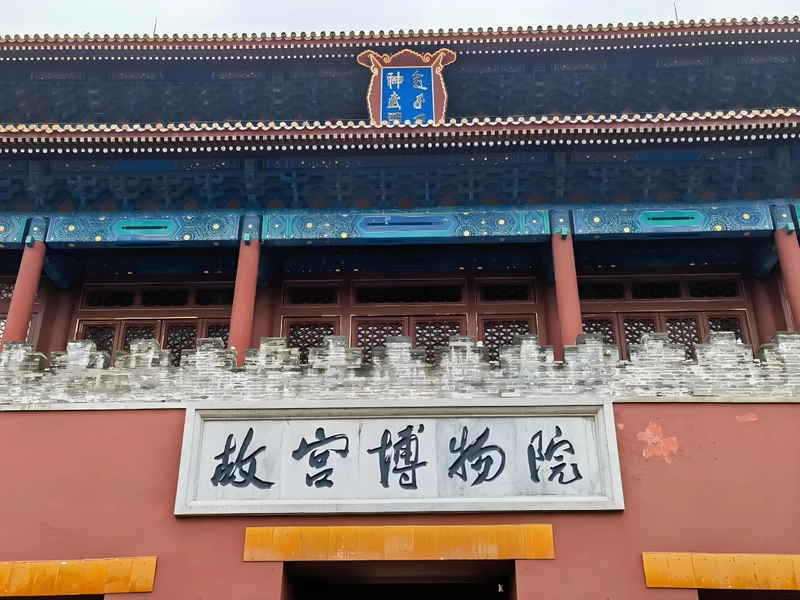
I. A Land of Profound Historical Heritage
Walking into the Forbidden City Beijing, the first impression is not just the grandeur of red walls and yellow roofs, but a solemnity that seems to traverse time itself. Its name is steeped in heavenly significance — “Zi” (紫) comes from the Purple Forbidden Enclosure (紫微垣), the residence of the Emperor of Heaven, symbolizing supreme power; “Jin” (禁) indicates a place forbidden to ordinary people. Every gate, every wall, reminds you that this was once a meeting place between the mortal world and the divine, and every step places you on the pulse of emperors and history.
The Beijing Palace Museum, located at 4 Jingshan Front Street, Dongcheng District, served as the imperial palace for the Ming and Qing dynasties (1420–1912) and was home to 24 emperors. The complex consists of nearly 980 buildings and approximately 8,700 rooms, meticulously aligned along a central axis, showcasing grand symmetry and order. Once the private domain of emperors, accessible only to royal family members, eunuchs, and high-ranking officials, the palace now opens its gates to all, allowing visitors to experience the full grandeur of the Chinese imperial palace and the majesty of the Forbidden City.
Strolling in front of the Hall of Supreme Harmony (Taihe Dian), the golden roofs sparkle under the sunlight, and the carved beams and flying eaves outline the magnificence and refinement of Forbidden City architecture. Morning light on the yellow tiles seems to illuminate the authority of the emperor and the splendor of court life; a gentle breeze almost carries the sound of palace maids’ footsteps and eunuchs’ commands. At the corner, the watchtower silently bears witness, whispering the secrets of centuries past, letting one sense six hundred years of power struggles, laughter, and tears lingering in the air.
The Forbidden City is not merely a museum; it is a three-dimensional time capsule encapsulating the last six centuries of imperial glory and vicissitudes. Every brick, hallway, and window bears the authority of the emperor, the lives of consorts, the daily routines of palace maids and eunuchs, and countless palace anecdotes. Here, one does not just view architecture — one touches history and experiences civilization: the gentle ripples of the Golden Water River reflect the solemnity of court gatherings; the gardens echo the footsteps and poetry of Emperor Qianlong. Every whisper of wind across the eaves tells a six-century-old imperial story, allowing visitors to explore Forbidden City Beijing, experience Chinese imperial history, and connect the present with the past, power with life, in a spiritual dialogue.
II. An Empire Built of Wood and Stone
Entering the Forbidden City Beijing, what impresses most is not any single palace but the sense of order and ritual conveyed by the entire complex. The palaces are arranged along a central axis, a straight “spine of the emperor,” reflecting the ancient Chinese principle of “centrality in residence” and symbolizing absolute imperial authority. Moving forward along the axis is the Outer Court, where state affairs and grand ceremonies were conducted; behind lies the Inner Court, home to the emperor’s private life and family matters. Red walls, yellow roofs, the Golden Water River, and exquisitely carved beams and eaves all incorporate the Five Elements, colors, and Yin-Yang Feng Shui principles, seamlessly merging cosmic order with imperial power. The Forbidden City architecture showcases this grand design and serves as a prime example of Chinese imperial palace planning.
The Three Main Halls of the Outer Court: Symbols of Power
At the core of the Outer Court are three main halls: Taihe Dian (Hall of Supreme Harmony), Zhonghe Dian (Hall of Central Harmony), and Baohe Dian (Hall of Preserving Harmony).
Taihe Dian, known as the pinnacle of imperial authority, is the grandest hall in the Beijing Palace Museum. Inside, tall pillars, intricately carved golden dragons, and red walls beneath sweeping eaves display the emperor’s supreme power. Coronations, weddings, court assemblies, and investiture ceremonies were all held here. During major Qing dynasty ceremonies, thousands of officials lined up with drums and gongs resounding, making the hall feel like the center of the universe — solemn and awe-inspiring. Each stone step in front of the hall has borne countless footsteps, from ministers to generals, princes to envoys, as if the weight of history is embedded in the stones. Visitors exploring the Forbidden City sightseeing experience this remarkable combination of ritual and authority firsthand.
Zhonghe Dian is the most refined of the three halls and served as a preparation hall for ceremonies. The emperor reviewed ceremonial attire, arranged court proceedings, and prepared for formal events here. Though smaller than Taihe Dian, its layout and decoration are equally meticulous. Its presence ensured that every court assembly and ceremony followed a precise, orderly process, demonstrating the sophistication of ancient Chinese imperial history and the careful operation of power within the Forbidden City.
Baohe Dian hosted banquets, imperial examinations, and grand award ceremonies, making it one of the liveliest spaces in the Outer Court. During the Ming and Qing dynasties, candidates in the imperial exams received assignments from the emperor here, and the hall echoed with the sounds of writing and recitation — solemn yet culturally rich. The hall’s gilded decorations, dragon carvings, and exquisite murals immerse visitors in the combination of power and culture. Tourists following a Forbidden City travel guide or Palace Museum tour can fully appreciate this blend of ceremony, artistry, and imperial tradition.
The Inner Court: The Three Rear Palaces and the Six Palaces of the Concubines
The Inner Court was the private domain of the emperor and empress, revealing the most intimate aspects of palace life. Its core comprised the Three Rear Palaces: Qianqing Gong (Palace of Heavenly Purity), Jiaotai Dian (Hall of Union), and Kunning Gong (Palace of Earthly Tranquility), reflecting the intersection of power, marriage, and religion.
Qianqing Gong was the emperor’s sleeping quarters and the political center of the Inner Court. By day, the emperor met with court officials or handled secret affairs; by night, he rested in this solemn and private palace. Every piece of furniture, screen, and display reflected imperial identity and ritual. Important ceremonies, such as investitures and audiences with the empress, were held here, making it not only a residence but the heart of imperial authority in Forbidden City Beijing.
Jiaotai Dian, situated between Qianqing Gong and Kunning Gong, served as the empress’s ceremonial hall. It hosted court rituals and symbolized the harmonious union of the emperor and empress. Weddings, celebrations, and religious ceremonies took place here, with gilded decorations and painted screens conveying solemnity and elegance, providing the empress and concubines with a dignified space.
Kunning Gong was the empress’s sleeping quarters and also served ritual functions. The courtyard was deep and secluded, and furnishings were grand yet not extravagant, reflecting royal prestige while being suitable for daily life. Shamanic rituals and major empress ceremonies were conducted here, and concubines engaged in weaving, reading, calligraphy, or painting, giving a strong sense of daily life within the Palace Museum.
The Six Eastern and Western Palaces housed concubines, combining privacy with hierarchical order. Courtyards, corridors, bedrooms, and small gardens were arranged with care. Here, concubines lived, learned court etiquette, participated in festivals, and created cultural works. Walking through these halls, with sunlight casting patterns through the latticed windows and occasional music echoing, one feels transported back to a courtly world both regulated and intimate. Tourists can experience this through Visit Forbidden City China itineraries or Chinese palace museum guides.
Imperial Leisure: Ningshou Palace, Cining Palace, and the Imperial Garden
Beyond the main halls and Inner Court, the Forbidden City also included spaces for royal leisure. Ningshou Gong was the residence of Emperor Qianlong after abdication; Cining Gong served as the retirement home for the empress dowager and senior consorts. The Imperial Garden, with pavilions, exotic trees, streams, and rockeries, blended royal elegance with natural beauty. Walking here, one can almost hear palace maids and eunuchs, see the emperor inspecting the garden, and feel imperial order silently flowing through wood and stone. Exploring these areas is part of Forbidden City cultural experience tours.
Every brick, corridor, and hall of the Forbidden City represents not only architecture but also imperial authority, cultural ideology, and aesthetic pursuit. The grandeur and ritual of the Outer Court, the privacy and order of the Inner Court, and the elegance and natural beauty of the leisure areas together form a three-dimensional palace ecosystem. Even today, visitors can sense how the emperor’s world operated six centuries ago, experiencing the pulse and dignity of imperial governance through Forbidden City exhibition tickets, Palace Museum highlights, or Beijing historical attractions tours.
III. The Shifts of Power and Ambition
The history of the Forbidden City Beijing has been intertwined with the rise and fall of imperial China since its very construction. In 1406, the Yongle Emperor (Zhu Di) of the Ming Dynasty ordered the capital moved to Beijing, and it took 14 years to complete this grand Chinese imperial palace. Zhu Di was not only the first occupant of the Forbidden City but also one of its chief planners. He personally inspected the construction, designed the layout, and emphasized axial symmetry and ritual order, intending to manifest the emperor’s supreme authority through magnificent Forbidden City architecture. The craftsmanship of artisans like Kuai Xiang and Song Yingchang left enduring marks in the beams and tiles: upturned eaves, carved beams, and painted rafters, each detail reflecting imperial will and the ideals of the empire. From then on, the Beijing Palace Museum site became not only the emperor’s residence but also a symbol of Chinese imperial history and political power.
During the prosperous reigns of Kangxi, Yongzheng, and Qianlong, the Forbidden City reached its zenith. The palaces glimmered with gold and lacquer, ceremonial guards maintained strict order, and daily governance and grand ceremonies were conducted in flawless rhythm. Emperor Kangxi handled state affairs and inspected the Inner Court from Qianqing Gong; Emperor Yongzheng meticulously regulated court etiquette; and Emperor Qianlong enjoyed life as a retired emperor in Ningshou Palace, sipping tea and appreciating flowers in the Forbidden City Imperial Garden — exemplifying the integration of imperial authority and culture. This era not only showcased the empire’s splendor but also revealed the personalities, preferences, and governing philosophies of the emperors themselves. Visitors today following a Forbidden City sightseeing tour can still feel the rhythm of court life and the ceremonial grandeur.
However, as history shifted, the Forbidden City witnessed the twilight of the empire. At the end of the Qing Dynasty, Puyi became the last occupant of the Forbidden City Beijing. Ascending the throne as a child, he experienced the whims of fate within these walls. In the Palace Museum, he grew up and received an education, yet he also felt the futility of power: a once supreme world was utterly transformed with the emperor’s abdication. In 1925, the Forbidden City exhibitions opened officially to the public, and for the first time, the Forbidden City became accessible to all people. Transitioning from a symbol of imperial authority to a national cultural heritage site, it witnessed China’s great transformation from feudal monarchy to modern nation-state, becoming a prime Beijing historical attraction.
The history of the Forbidden City is also filled with legendary stories. During the Second Sino-Japanese War, to protect national treasures from the ravages of war, a large number of artifacts were transported south in an extraordinary cross-country operation. Countless cultural relics, paintings, and imperial treasures were secretly moved to safe locations across China. Their survival not only preserved historical memory but also became symbols of the nation’s cultural spirit, showcased today in Palace Museum highlights and Chinese heritage sites.
Today, walking along the wide stone steps, passing through the grand Three Main Halls, visitors can feel as though they are traversing time — breathing in the ambition of Zhu Di, sensing the solitude and helplessness of Puyi. Every door, pillar, and stone carries the stories of imperial glory and decline, the joys and sorrows of the royal family, and the enduring power of cultural preservation. The Forbidden City Beijing is not merely a former palace; it is a living history. From its first occupant, Zhu Di, to its last, Puyi, from a private imperial domain to a public Beijing Palace Museum, the Forbidden City has continuously told the story of China’s emperors and reflected the historical memory of each era, making it a must-visit Forbidden City travel guide destination and an essential Chinese imperial palace tour experience.
IV. A Treasury of Chinese Civilization
Entering the Forbidden City and the Palace Museum is like opening a three-dimensional history of Chinese civilization. Every artifact in the Beijing Forbidden City is a slice of time, embodying the taste of the imperial family, the ingenuity of artisans, and the weight of history. Exquisite paintings and calligraphy captivate visitors — “Along the River During the Qingming Festival” captures the bustling urban life of Northern Song’s Bianjing, with hurried figures, noisy streets, and merchants’ cries seemingly leaping off the scroll. “A Thousand Li of Rivers and Mountains” unfolds the empire’s majestic landscapes in green and blue hues; winding rivers and layered mountains reflect the worldview of ancient scholars and the ideals of the imperial court. Walking through the Forbidden City Beijing painting galleries, one can almost hear streams flowing and city noises echoing across six centuries, engaging in a dialogue with history.
The art of Chinese ceramics is equally breathtaking. The Palace Museum collection spans the entire history of Chinese porcelain: the gentle refinement of Song dynasty Ru ware, the grandeur of official kiln wares, the crisp elegance of Ming blue-and-white, and the delicate Qing famille rose. Each piece is the culmination of skill and aesthetic taste. Bowls, plates, and vases reveal the emperor’s preferences as well as palace ritual needs — wine vessels, tea sets, and ceremonial porcelain all had specific purposes. Bronze vessels, jade objects, clocks, and various treasures display the pinnacle of Chinese craftsmanship — the solemnity of a bronze tripod, the vitality of a jade pendant, the mechanical marvel of a clock — reflecting artisans’ pursuit of perfection.
The peak of court craftsmanship is seen in the so-called “Eight Treasures of Yanjing.” The bright enamel of cloisonné features intricate patterns, each copper base fired multiple times to achieve its brilliance. Jade carvings show lifelike animals and delicate lines; miniature ivory carvings narrate stories; gilded lacquer inlay adorns furniture, vessels, and Palace Museum decorations with dazzling elegance. These techniques not only showcase aesthetics but also convey the luxury, ritual, and beliefs of the Chinese imperial palace.
Every artifact in the Forbidden City carries a “life story.” Court garments are meticulously embroidered, with each stitch symbolizing ritual and status. The scholar’s tools — inkstones, brushes, and desks — reflect the daily life and refined tastes of emperors and literati. Even porcelain bowls and tea sets used for imperial meals reveal royal aesthetics and ceremonial principles. In the Forbidden City exhibitions, Palace Museum galleries, and painting displays, visitors encounter not just objects but the ritualized and culturally rich life of the Beijing Palace Museum.
In the Forbidden City, each artifact is more than art — it is history, a story, a cultural memory. They allow today’s visitors to traverse time and engage with the imperial world of six centuries ago, experiencing the aesthetics, power symbolism, and cultural confidence of that era. Whether quietly observing a painting or examining a jade carving, each piece softly narrates the empire’s glory, palace life, and the enduring charm of Chinese civilization. The artistic essence of the Forbidden City Beijing is not merely visual pleasure but a profound cultural journey through history.
V. Life and Intrigue Within the Walls
The Forbidden City, also known as the Palace Museum or Beijing Forbidden City, was not only a symbol of imperial power but also a “living palace.” Every brick and tile in the Forbidden City Beijing recorded the rhythms of daily life. At dawn, the emperor rose in his study; attendants respectfully offered greetings, and the main halls resonated with the reading of classical texts before official business began. At the same time, the empress and concubines followed strict routines in their respective palaces, attending to morning lessons, dressing, and ceremonial preparations. The entire Chinese imperial palace functioned like a finely tuned clock, with each activity governed by precise schedules and procedures, blending life and governance seamlessly.
Festivals and ceremonies represented the highlights of life in the Forbidden City, reflecting both imperial authority and court ritual. The enthronement ceremony was solemn and grand, with music and rituals performed before the resplendent Hall of Supreme Harmony (Taihe Dian). Imperial weddings were joyous occasions: palace ladies, eunuchs, and civil and military officials donned ceremonial attire, creating a scene of vibrant splendor. Banquets for longevity celebrations and New Year gatherings illuminated the palace, showcasing the power of imperial rites. Colorful silk drapes, gilded pillars, and the sounds of drums and bells transported participants to an era of strict ritual and ceremony. Visitors today can learn about these traditions through Forbidden City tours, Palace Museum exhibitions, and guides on Forbidden City historical significance.
Yet life in the Beijing Palace Museum was not solely the emperor’s. Hidden corners of the palace were equally fascinating and real: eunuchs and palace maids moved along corridors and courtyards, delivering orders and tending to daily tasks; imperial physicians provided diagnostics and medicinal meals; chefs prepared elaborate palace dishes in spacious kitchens; artisans repaired beams, painted decorations, and maintained the grandeur of the palace. These daily labors made the Forbidden City not just a symbol of authority, but a truly “living” Chinese palace.
Today, walking along the stone paths, the wind rustling past the eaves seems to carry sounds of dressing and music; sunlight on the golden tiles and red walls evokes the hurried footsteps of eunuchs and maids, the clamor of palace banquets. The Forbidden City Beijing is not merely the emperor’s home — it is a stage of historical life, where every corner once witnessed joy, sorrow, power, and ritual. It offers us a rare glimpse into the real life of the imperial court six centuries ago and remains one of the most important Beijing cultural attractions, Forbidden City sightseeing sites, and Chinese heritage sites today.
VI. From the Personal to the Global
The Forbidden City Beijing, also known as the Palace Museum, is not only a witness to history but also a site of renewed vitality in the modern era. These six-century-old wooden palaces carry countless memories of Chinese imperial palace power and culture, while contemporary society is finding new ways to let them “breathe.” To preserve this monumental heritage, the Beijing Palace Museum launched a “century-long restoration” project. Every brick, beam, and glazed tile undergoes scientific restoration, blending traditional craftsmanship with modern conservation techniques. Through this careful preservation, the ancient palaces remain as sturdy as ever, offering future generations a tangible connection to history, as if one could hear the echoes of the court six hundred years ago.
At the same time, the Forbidden City demonstrates vibrancy and creativity in cultural innovation and modern communication. Palace Museum cultural products ingeniously merge ancient elements with contemporary life: from exquisite calendars and stationery to clothing and home goods, each item carries historical stories and Forbidden City cultural experience, allowing ancient civilization to live on in everyday life. The emergence of the Digital Forbidden City breaks the boundaries of time and space: through VR immersive experiences, online exhibitions, and interactive maps, audiences around the world can virtually enter the Hall of Supreme Harmony, the Imperial Garden, and even the hidden depths of the inner court. Documentaries such as I Repair Artifacts in the Forbidden City reveal the stories of artisans behind restoration and the challenges of heritage conservation, giving ancient civilization a renewed sense of relevance and vitality.
Moreover, as a World Cultural Heritage site, the Forbidden City’s value has long surpassed national borders. It is not only a treasure of Chinese civilization but also a shared cultural memory of humanity. Within its walls, the resplendent gilded halls, intricately carved beams, precious collections, and exquisite Chinese palace museum crafts are all manifestations of human wisdom in architecture, art, and historical preservation. Today, countless tourists, scholars, and culture enthusiasts linger here—taking photos, quietly observing, or participating in Forbidden City exhibitions and academic exchanges. They are not merely admiring magnificent buildings but also experiencing a cultural force that transcends time.
From an emperor’s residence to a world-class museum, the story of the Forbidden City has never ceased. Every restoration, exhibition, and cultural innovation represents a dialogue between history and the present, and a testament to the continuity of civilization. Here, the ancient blends with the contemporary, tradition resonates with technology, and every visitor can feel the majesty of an empire while experiencing the warmth and vitality of culture within the red walls and golden roofs of Beijing Forbidden City.
VII. Time Flows Yet Remains
The Forbidden City is not merely a grand Chinese imperial palace built of wood and stone—it is a spiritual universe. It has witnessed supreme power and ritual, and also carries the joys and sorrows of ordinary human life. Every door, every stone slab, every glazed tile quietly tells a story of history, inspiring awe while allowing one to feel the warmth of time.
Today, the palace walls still stand majestically, but their master is no longer the emperor of old; it is every visitor who comes seeking history. The Forbidden City Beijing and the Beijing Palace Museum have transformed from the center of an empire into a bridge connecting us with ancient civilization, offering every guest the chance to touch history and experience the depth and beauty of culture.
Walking through this never-closing palace, you can gaze at the sweeping eaves atop the Hall of Supreme Harmony, or pause along the winding paths of the Imperial Garden to listen to the whispers of the wind. Every step becomes a dialogue with six centuries of history. The Palace Museum tells us: history has never truly gone, civilization has never slept, and all we need to do is step through its gates to hear the empire’s stories and cultural pulse flowing through every tile, every corridor, and every corner.
Related Vocabulary
| Chinese | Pinyin | English |
|---|---|---|
| 紫禁城 | Zǐjìnchéng | Forbidden City |
| 皇帝 | huángdì | emperor |
| 皇后 | huánghòu | empress |
| 太监 | tài jiàn | eunuch |
| 宫廷 | gōngtíng | court / palace life |
| 皇宫 | huánggōng | imperial palace |
| 内廷 | nèi tíng | Inner Court |
| 外廷 | wài tíng | Outer Court |
| 太和殿 | Tàihé Diàn | Hall of Supreme Harmony |
| 乾清宫 | Qiánqīng Gōng | Palace of Heavenly Purity |
| 坤宁宫 | Kūnníng Gōng | Palace of Earthly Tranquility |
| 金水河 | Jīnshuǐ Hé | Golden Water River |
| 皇家花园 | huángjiā huāyuán | imperial garden |
| 文物 | wénwù | cultural relic / artifact |
| 青铜器 | qīngtóngqì | bronze vessel |
| 玉器 | yùqì | jade object |
| 礼仪 | lǐyí | ritual / etiquette |
| 科举 | kējǔ | imperial examination |
FAQ — The Forbidden City
1. What is the Forbidden City and where is it located?
It is a historic Chinese imperial palace in Beijing, serving as the residence of Ming and Qing emperors, now open to the public as the Palace Museum.
2. Why is it called the “Forbidden City”?
“Zi” (紫) refers to the Purple Forbidden Enclosure, symbolizing supreme power, and “Jin” (禁) indicates a place forbidden to ordinary people.
3. What are the main sections of the Forbidden City?
The complex includes the Outer Court (ceremonial halls), Inner Court (emperor’s private residence), and leisure areas such as the Imperial Garden and palaces for retired emperors.
4. What are the Three Main Halls in the Outer Court?
Taihe Dian (Supreme Harmony), Zhonghe Dian (Central Harmony), and Baohe Dian (Preserving Harmony) were used for ceremonies, banquets, and imperial exams.
5. What treasures and artifacts can visitors see?
The museum houses paintings, calligraphy, ceramics, jade, bronze, and court garments, showcasing six centuries of Chinese imperial culture and craftsmanship.
6. How was daily life in the Forbidden City?
Life was highly organized, with emperors, empresses, concubines, eunuchs, and artisans following strict routines for governance, ceremonies, and palace upkeep.
7. How is the Forbidden City preserved today?
Ongoing restoration projects and modern conservation techniques maintain the wooden palaces, tiles, and artifacts, while digital and VR experiences allow global audiences to explore the site.
8. Why visit the Forbidden City?
Visitors experience Chinese imperial history firsthand, from grand architecture and ceremonies to private palace life, connecting past culture with the present.