The Great Wall of China: An In-Depth Guide to History, Dimensions, and Cultural Significance
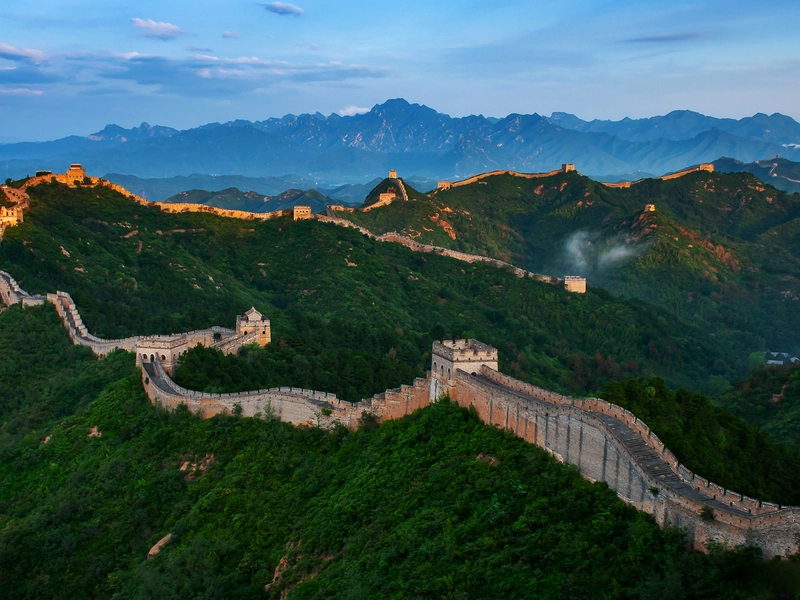
The Great Wall of China, one of the most iconic landmarks in the world, stretches across mountains, deserts, and plains, symbolizing the strength, perseverance, and ingenuity of ancient Chinese civilization. Whenever people ask, “how long is the Great Wall of China?” or “how big is the Wall of China in miles?” they are often astonished by both its scale and the human effort behind its construction. The Great Wall is not just a defensive structure; it embodies the history, culture, and identity of China.
History of the Great Wall of China
Construction of the Great Wall of China spans over 2,000 years, with various dynasties contributing to its expansion and reinforcement. The earliest walls were built during the Warring States period (475–221 BCE) by individual states to protect against invasions. However, it was Emperor Qin Shi Huang of the Qin Dynasty (221–206 BCE) who first connected these walls to form a unified defense system, marking the birth of the Great Wall of China.
During the Han Dynasty (206 BCE–220 CE), the wall was extended further into northern territories to defend against nomadic tribes. Later dynasties, particularly the Ming Dynasty (1368–1644 CE), reconstructed, fortified, and expanded large portions of the wall. The Ming Dynasty is responsible for the majority of the wall that still stands today, with bricks and stones replacing older rammed-earth structures in mountainous regions.
The wall served primarily as a military defense structure, protecting Chinese states from invasions. It also functioned as a border control mechanism, helping regulate trade and migration. Over time, the Great Wall of China became a powerful symbol of unity and perseverance.
How Long is the Great Wall of China?
One of the most common questions people ask is “how long is the Great Wall of China?” Modern archaeological surveys estimate that the total length of the Great Wall, including all branches, stretches approximately 21,196 kilometers (13,171 miles). The main wall built during the Ming Dynasty alone spans about 8,850 kilometers (5,499 miles).
The wall is not continuous in a single straight line; it winds across mountains, rivers, deserts, and valleys. The Great Wall’s distance varies depending on which sections are measured, including secondary walls, trenches, and natural barriers integrated into the defensive system. For tourists looking for maps of the Great Wall in China, understanding its overall distance provides context for planning visits and appreciating its massive scale.
Dimensions and Architecture
Questions like “how big is the wall of China?” or “how long and tall is the Great Wall of China?” often lead to surprising answers:
- Height: Most sections range between 6 to 7 meters (20–23 feet), though some mountainous areas make it appear taller.
- Width: The top of the wall ranges from 4 to 5 meters (13–16 feet), allowing soldiers to patrol and transport supplies.
- Watchtowers: Over 25,000 watchtowers and beacon towers were strategically placed along the wall for communication and military surveillance.
Construction materials vary depending on local resources. In plains and deserts, rammed earth was commonly used. In mountainous areas, builders used stone, bricks, and tiles for durability. Each segment often included fortified gates, walls, and guard towers, designed to resist invaders and endure harsh weather.
Construction Techniques
Building the Great Wall of China required massive human effort. Soldiers, peasants, and even prisoners contributed to the construction, which spanned several dynasties. Workers transported materials across challenging terrains, often using manual labor without modern machinery.
During the Ming Dynasty, bricks were baked and transported to high-altitude locations, stone slabs were cut to fit mountain ridges, and walls were reinforced to withstand sieges. Sentries patrolled the top of the wall while signals were transmitted using smoke, fire, and flags. This sophisticated communication system allowed rapid alerts across long distances, making the wall both a defensive and strategic marvel.
Regional Differences
The Great Wall of China is not uniform. Its construction reflects regional geography and local building techniques.
- Northern China: Walls are taller and built from stone and brick to withstand Mongol invasions. Key sections include Badaling, Mutianyu, and Jinshanling.
- Western China: Sections like Jiayuguan in Gansu province integrate desert landscapes with fortified gates.
- Eastern China: Built along hills and plains, these walls are often lower and reinforced with rammed earth.
These regional differences demonstrate the ingenuity and adaptability of ancient Chinese engineers, showing how the wall was tailored to meet environmental and military challenges.
Cultural Significance
Beyond its military function, the Great Wall of China has profound cultural and symbolic meaning. Questions like “how many miles is the Wall of China?” highlight not only its physical length but also its cultural impact.
The wall represents resilience, unity, and national identity. Chinese poets, historians, and artists have celebrated it for centuries, and it is often cited as one of the greatest architectural achievements in human history. For travelers, walking the Great Wall is not only a physical journey but also a cultural experience, connecting modern visitors with China’s ancient past.
Tourism and Modern Interest
The Great Wall is a major tourist attraction, drawing millions from around the world. Popular sections near Beijing, such as Badaling and Mutianyu, are easily accessible and feature restored paths, cable cars, and visitor facilities. Tourists often ask “how far is the Great Wall of China?” or “how long is the Great Wall in miles?” to appreciate its vastness.
Maps of the Great Wall in China are essential tools for travelers, helping plan routes and visualize the wall’s sprawling reach. Hiking sections of the wall provides spectacular views of mountains, valleys, and countryside, making it a favorite destination for adventure travelers.
Historical Events and Legends
The Great Wall has been the backdrop for countless historical events. During the Ming Dynasty, it repelled invasions from northern tribes and served as a frontier for trade and diplomacy. Legends of soldiers, secret passages, and hidden treasures have been passed down through generations, adding to the wall’s mystique.
One famous story involves Meng Jiangnu, whose husband died while building the wall. Her tears supposedly caused a section of the wall to collapse, symbolizing loyalty and human emotion intertwined with monumental construction.
Preservation Efforts
Preserving the Great Wall of China is a challenge due to natural erosion, weather, and human activity. Many remote sections are deteriorating, while restored areas attract tourists. Preservation programs focus on maintaining structural integrity, restoring damaged segments, and educating the public about the wall’s historical and cultural importance.
UNESCO has designated the Great Wall as a World Heritage Site, recognizing its global significance. Conservation efforts ensure that future generations can experience its grandeur and learn about ancient Chinese engineering, defense, and culture.
Visiting the Great Wall
Visitors planning to explore the wall often want to know:
- Best sections to visit: Badaling, Mutianyu, Jinshanling, Simatai, Jiayuguan.
- Distance and hiking difficulty: Sections range from easy walks to strenuous hikes with steep inclines.
- Cultural activities: Many locations host exhibitions, reenactments, and cultural events to immerse visitors in history.
Understanding “how many miles is the Great Wall of China” helps travelers gauge the scale and select the right section based on interest, fitness level, and time.
Fun Facts About the Great Wall
- Total length including branches: ~21,196 km (13,171 miles)
- Height varies: 6–7 meters, up to 23 feet in some areas
- Watchtowers: ~25,000 across different sections
- Materials: rammed earth, bricks, stone
- Human effort: millions of workers contributed over centuries
The Great Wall of China is not only a defensive marvel but also a cultural icon that embodies Chinese history, architecture, and national pride. Whether you are curious about “how long is the Great Wall in miles,” “how big is the Wall of China,” or “what is the Great Wall of China,” exploring this monumental structure provides insight into China’s past, present, and identity.
From its origins during the Warring States period to the extensive fortifications of the Ming Dynasty, the Great Wall has fascinated generations. Today, it continues to attract millions of tourists, inspiring awe with its scale, architectural brilliance, and cultural significance.
Related Vocabulary
| Chinese | Pinyin | English |
|---|---|---|
| 长城 | Chángchéng | Great Wall of China |
| 万里长城 | Wànlǐ Chángchéng | The Great Wall of China |
| 城墙 | Chéngqiáng | Wall |
| 砖 | Zhuān | Brick |
| 石头 | Shítou | Stone |
| 哨塔 | Shàotǎ | Watchtower |
| 关口 | Guān kǒu | Gate / Pass |
| 士兵 | Shìbīng | Soldier |
| 防御 | Fángyù | Defense |
| 历史 | Lìshǐ | History |
| 旅游 | Lǚyóu | Tourism |
| 建筑 | Jiànzhù | Architecture |
| 里程 | Lǐchéng | Mileage / Distance |
| 高度 | Gāodù | Height |
| 宽度 | Kuāndù | Width |